| Rank | Name | Country | Group | Speeches | |
|---|---|---|---|---|---|
| 1 |
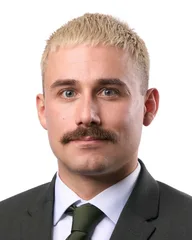
|
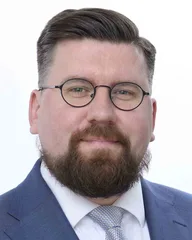
Lukas Sieper | Germany DEU | Non-attached Members (NI) | 390 |
| 2 |
|
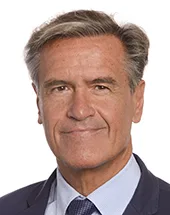
Juan Fernando López Aguilar | Spain ESP | Progressive Alliance of Socialists and Democrats (S&D) | 354 |
| 3 |
|
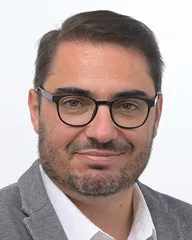
Sebastian Tynkkynen | Finland FIN | European Conservatives and Reformists (ECR) | 331 |
| 4 |
|
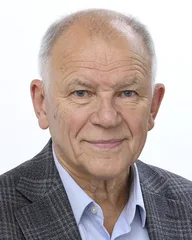
João Oliveira | Portugal PRT | The Left in the European Parliament (GUE/NGL) | 232 |
| 5 |
|
Vytenis Povilas Andriukaitis | Lithuania LTU | Progressive Alliance of Socialists and Democrats (S&D) | 227 |
All Contributions (51)
Situation in Northeast Syria, the violence against civilians and the need to maintain a sustainable ceasefire (debate)
No text available
European response to the attacks on the Ukrainian energy system causing a humanitarian crisis (debate)
Mr President, ladies and gentlemen. Indeed, we are currently experiencing a dramatic humanitarian crisis in Ukraine. But we should not forget that this humanitarian crisis has been going on for four years. The destruction of the country continues every day. Every day on the battlefields of Ukraine, civilians die almost every day. What is Europe doing? At the peace negotiations in Abu Dhabi, the European Union is not even sitting at the cat table. When Americans and Russians come forward with a draft peace treaty, European leaders travel to Washington to beg Mr Trump to continue the war. And now the Union is also in debt with 90 billion that Ukraine can buy more weapons, especially in the US. This war could have ended much earlier, on terms that would have been more favorable to Ukraine. The fact that this opportunity has been missed also gives Europe a considerable degree of responsibility. But it is never too late for peace. Europe must finally ensure that this senseless war and humanitarian catastrophe is brought to an immediate end.
One-minute speeches on matters of political importance
Mr President, ladies and gentlemen. On Thursday, almost a dozen European heads of government will meet very close to here. It is about the future of Europe. To increase competitiveness, reduce bureaucracy, make decision-making structures more efficient, create a common capital market, revive the idea of a defence union, etc. Most of it sounds reasonable. The most important thing is missing from the agenda: How can we end the war on our continent? How can we overcome the division of Europe? How can we – to quote the German chancellor – find a balance with our biggest European neighbour, Russia, and develop partnership relations again in the future? An integrated capital market may be the technocrats' dream. The common European house from Lisbon to Vladivostok, of which Mikhail Gorbachev and Helmut Kohl once spoke, could be a vision with which to inspire the people of Europe again.
European Council meeting (joint debate)
Mr President, ladies and gentlemen. The war in Ukraine has already cost the lives of hundreds of thousands of people and destroyed large parts of the country. But now he is also destroying Europe and the European Union. While the American president wants to end the war in order to enrich himself with the natural resources of Ukraine, which President Zelenskyy promised him, the European Union is in debt to enable Ukraine to purchase arms in the order of 60 billion euros. The EU will remain seated on these debts, because the hope of Russian reparations payments is absurd wishful thinking. The winner is again Donald Trump, because a large part of the money will end up in the American arms industry. And this at a time when the US President is threatening EU Member States and reviling Europe as a continent in decline. Europe needs to think about itself. It is up to Europe to end the war on its continent, to overcome the division of Europe and to build bridges again to the largest country in Europe by population and area.
Implementation of the rule of law conditionality regime (debate)
Madam President, Commissioner! Dear colleagues! The conditionality regime is supposedly about protecting the EU budget, which is known to be adopted by Parliament and the Council. And that is indeed very important. The aim is to ensure that the funds made available by the European Union are spent in accordance with the law and regulations. As a rule, this should be conclusively regulated in the laws on the basis of which the money is distributed. And these laws are made by the legislator, that is, first and foremost by this Parliament. With the conditionality regime, however, another vehicle is now available to withhold funds that have already been approved by Parliament, without Parliament being able to influence them, solely on the basis of a Commission proposal and a qualified majority of the Council. There may be concerns about the rule of law in some Member States. But anyone who allows the Commission and the Council to withhold funds beyond the rules set by Parliament and without its consent is putting the axe to Europe's rule of law. Merry Christmas to you!
Presentation of the automotive package (debate)
No text available
EU response to the continuous airspace violations and sabotage of critical infrastructure in the EU originating from Russia and Belarus (debate)
No text available
EU response to the continuous airspace violations and sabotage of critical infrastructure in the EU originating from Russia and Belarus (debate)
No text available
EU response to the continuous airspace violations and sabotage of critical infrastructure in the EU originating from Russia and Belarus (debate)
No text available
EU response to the continuous airspace violations and sabotage of critical infrastructure in the EU originating from Russia and Belarus (debate)
No text available
EU response to the continuous airspace violations and sabotage of critical infrastructure in the EU originating from Russia and Belarus (debate)
No text available
2026 budgetary procedure: joint text (debate)
Mr President, ladies and gentlemen. It seems that Parliament can be celebrated for giving the Council a little more money for the budget. The question is whether this is really a success for Parliament. It is not in the interest of the citizens we represent here if more and more money is turned over to Brussels, which could be spent much more efficiently and transparently by the Member States, their regions or municipalities. More and more money for the Commission does not strengthen the role of this Parliament, but weakens it. What the Commission is planning for the next multiannual financial framework should be a warning to us. It is not a question of common rules, common standards and an approximation of living conditions in the Union, but rather of assuming new competences and governing the Member States more or less unchecked by Parliament. We are doing a disservice to Europe.
General budget of the European Union for the financial year 2026 – all sections (debate)
Mr President, Commissioner, ladies and gentlemen! Why do we want to give more and more money to the Commission? As a Parliament, it is our task to supervise and control the Commission. Our task is to ensure that the Commission does not exceed its competences, and it is also our task, in any case, not to give the Commission administrative competence and budgetary resources where the corresponding tasks can be carried out more transparently, efficiently and democratically at the level of the Member States, the provinces and the municipalities. The Commission's draft multiannual financial framework should be a warning to us. What Ms von der Leyen is striving for is a domination of the bureaucracy, which, with the golden reins of money, is governing Member States in order to enforce its so-called reform agenda. The money is to be approved by Parliament, otherwise it does not have much to say. Dear colleagues, I can only recommend not to participate. We should not be under suspicion of being the useful idiots of the Commission.
One-minute speeches on matters of political importance
Madam President, ladies and gentlemen, Poland has not extradited the suspect for the attacks on the Nord Stream pipelines to the Federal Republic of Germany, but released them. This is a scandal, because the decision of the Polish court is a blatant breach of law. The fact that the Ukrainian is urgently suspect is not disputed in Poland either. That's why he should have been extradited. This is a terrorist attack on critical infrastructure, which is also owned by companies and Member States of the European Union. An attack that not only endangered Europe's security of supply with natural gas, but also released a large amount of climate-damaging greenhouse gases. The fact that Poland apparently has no sanctions against the European Union and that even the German government is prepared to accept this verdict shows how hypocritical all the chatter about the rule of law in the European Union is. If law is broken and acts of terrorism go unpunished, then this is not an advertisement for the alleged European community of values.
EU strategy with regard to Iran’s nuclear threat and the implementation of EU sanctions resulting from the snapback mechanism (debate)
Madam President, ladies and gentlemen, One wonders: Why does the so-called Snapback Actually now? Why – and this seems to be what this is all about – do sanctions against Iran need to be tightened again in order to prevent the country from developing nuclear weapons? I would like to remind you that it was only three months ago that the United States, with a military strike according to President Trump, caused serious damage to Iran's nuclear program and threw it back for years. There is no point in reinforcing sanctions now. It's not about Iran's nuclear program. Rather, it is about Russia, with which Iran has now allied itself. Perhaps Europe would also like to make itself popular with the American president, who has never thought of the nuclear agreement with Iran and who, with such good behavior, can perhaps be persuaded to supply weapons to Ukraine again. Isn't that pathetic? In the past, Europe was a power of peace. Today, Europe seems to prefer to ignite and fuel conflicts.
Revision of the Visa Suspension Mechanism (debate)
No text available
Implementation of EU-US trade deal and the prospect of wider EU trade agreements (debate)
Mr President, Commissioner, ladies and gentlemen! It has been pointed out several times that Ursula von der Leyen and Donald Trump's tariff deal is unbalanced and violates European interests. More serious, however, is the fact that the President of the Commission has made promises that are not only absurd in terms of content, but also that she cannot keep at all. If it promises the American president that the European Union will buy $750 billion worth of oil and gas in the US over the next three years, it would mean that we are completely dependent on expensive American fracking LNG for gas. But she could not promise that anyway, because it is not paid from the budget of the European Union. And I can hardly imagine that European energy companies are so stupid as to buy natural gas only in America. In this respect, the breach of contract is pre-programmed, which Donald Trump will take as an opportunity to blackmail us again. Mrs. von der Leyen should take her hat; She's just not fit for the job.
One-minute speeches on matters of political importance
Mr President, ladies and gentlemen. The European Union is committed to the fight against disinformation. A committee has even been set up in this Parliament to act as a shield of democracy and to protect the people of Europe from disinformation and malicious propaganda. I recommend that this committee deal once with the Vice-President/High Representative of the Union for Foreign Affairs and Security Policy, Ms Kallas. It seems that the claim that Russia defeated the Nazis is a questionable narrative. It is not a questionable narrative, but a historical fact, that the Soviet Union, which at that time included, in addition to Russia, Ukraine, had to bear the greatest casualties of the Second World War with over 25 million deaths and played a decisive role in liberating Europe and Germany from fascism. Those who deny this either have no idea of the story or engage in ideology-driven disinformation. In any case, such a person is incapable of representing the Union in foreign and security policy. Therefore, Ms Kallas should resign and study a little history following her own recommendation.
The EU’s post-2027 long-term budget: Parliament’s expectations ahead of the Commission’s proposal (debate)
Madam President, Madam Minister, Commissioner, ladies and gentlemen! According to the presentation of the Commission and the expectations of at least a majority of this House, significant funds will probably continue to flow into Ukraine after 2027 – for weapons and for the reconstruction of the country after a terrible war. But we should be careful that Europe does not become the paymaster, while others do business. With the deal, which Ukraine signed with the US at the end of April, President Trump allegedly wants to earn around $350 billion with raw material deals and infrastructure contracts. That would be more than twice what his country has done to Ukraine so far. It is time to make it clear to President Zelensky that Europe's aid is not unconditional, but in the expectation of a fair partnership. Instead of bragging about unwavering support, Ms von der Leyen should finally also keep an eye on the interests of the European Union. Here, too, the money is scarce.
Institutional and political implications of the EU enlargement process and global challenges (debate)
Mr President, Commissioner, ladies and gentlemen! The enlargement debate is detrimental to the European Union mainly because it is dishonest. It is dishonest because it is politically motivated. For example, we would not discuss Ukraine’s EU membership without the Russian war of aggression, because it would mean the end of the common agricultural policy – no one wants that, and that is why it will not happen. The discussion is also dishonest because we cannot afford it. No Member State will be willing to increase its contribution to the EU budget or to forego Union benefits. As well, if 5% of national budgets are to be spent on defence spending! And thirdly, it is dishonest because in reality no one wants it, not even the people of the candidate countries. Just look at the latest election results in Georgia and Moldova! The growth pains of the European Union are already unmistakable today. Even more Member States are not suitable therapy – on the contrary, it makes them even worse.
Implementation report on the Recovery and Resilience Facility (debate)
Madam President, Mr Executive Vice-President, ladies and gentlemen! Three quarters of the RRF's duration is now over, and it is indeed time to take stock – and it is quite pathetic. So far, just under half of the funds made available have been mobilised by the Member States and there are reasonable doubts as to whether they have been used as intended. Now the flexibility is to be further increased. I don't think we should join in. Let's not forget: From the outset, the Facility has been quite a stand-alone initiative of the Commission. The coronavirus crisis was only a cheap occasion; The real issue was, more or less, to get past Parliament, with hundreds of billions of joint debts, to synchronise the policies of the Member States in the sense of the Commission, yesterday in the sense of the Green DealToday, for the rearmament of Europe. The fact that not all Member States can be bought is reassuring. And we as parliamentarians should not drink the cocoa through which Mrs von der Leyen wants to draw us.
One-minute speeches on matters of political importance
Mr President, ladies and gentlemen. Yesterday, in the ECON and BUDG Committees, the own-initiative report on recovery and Resilience facility adopted, in essence, extending the deadline for the submission of projects and broadening the scope of eligible projects. Should the Commission follow this request and, for example, so-called dual-use projects or the establishment of a common defence industry via the RRF In order to be funded, she is legally on thin ice. After all, this has little to do with what the Council decided in July 2020. In the summer of 2023, the German Constitutional Court put an end to a similar request by the German traffic light government – at that time, corona funds should be misused for climate protection. Let's see if the European judges also set limits to the Commission's arrogance.
Russian energy phase-out, Nord Stream and the EU's energy sovereignty (debate)
Mr President, Commissioner, ladies and gentlemen! The Commission's decision to end all gas purchases from Russia by 2027 is a very stupid decision. Firstly, because we are still dependent on natural gas for decades to come. The new German Minister for Economic Affairs has just announced the construction of new gas-fired power plants with a capacity of at least 20 gigawatts in order to ensure security of supply. Secondly, the alternatives are not attractive. Iran, Qatar and Azerbaijan might be ready as suppliers, but do they really prefer us to Russia? This is more likely to drive out the devil with the Beelzebub. Remains liquefied fracking gas from the USA: This is ecologically and climate-politically a disaster and would stipulate that energy in Europe will remain more than twice as expensive in the long run as in America. And thirdly, energy sovereignty It is likely to remain an illusion in Europe for the time being. And that is why the Commission should ensure a diversified gas supply portfolio, including Russian gas, of course, especially since we should not give up hope that the war in Ukraine will eventually – and hopefully soon – come to an end.
Order of business
(Start of speech off mic) ... of the Rules of Procedure of this Parliament, I would like to raise the following point. A joint meeting of the LIBE, CONT and BUDG Committees took place on 13 May, during which two professors presented their views on the Smart Rule of Law Conditionality presented. In the debate on this subject, the representatives of the political groups first took the floor. I then spoke as a non-attached Member. The chair of the meeting, Mr Zarzalejos, refused me the right to ask questions and to speak, apparently also because of an intervention by the representative of the committee secretariat. I accepted his apology, of course. I would like to take this opportunity to remind you all, and in particular the Bureau of this Parliament and the Conference of Committee Chairs, that all Members of this House, whether they belong to a political group or not, must be able to exercise their rights and duties as freely elected Members.
The role of gas storage for securing gas supplies ahead of the winter season (debate)
Mr President, Commissioner, ladies and gentlemen! If you look at the turbulence in the European gas markets, you can only say: Something like that comes from something like that. At the instigation of the European Commission, gas markets were liberalised, with the result that most long-term contracts, such as those with Norway, were dissolved. At the same time, the door and gate were opened to the producers. Gazprom was able to acquire the largest gas storage facility in Germany. And in the panic after the start of the war in Ukraine, traders and speculators in particular became rich, because the Commission's fill level specifications have led to the fact that gas prices have been bought at any price and, of all things, in the summer, gas prices have exploded. The regulation now proposed creates even more bureaucracy without solving the problem. We depend on natural gas. We can live with this as long as we have many different suppliers. And it is, of course, completely absurd to want to permanently exclude the most important, potent and cost-effective supplier – and that is Russia – from the market. Commissioner, this is really not a good idea.