
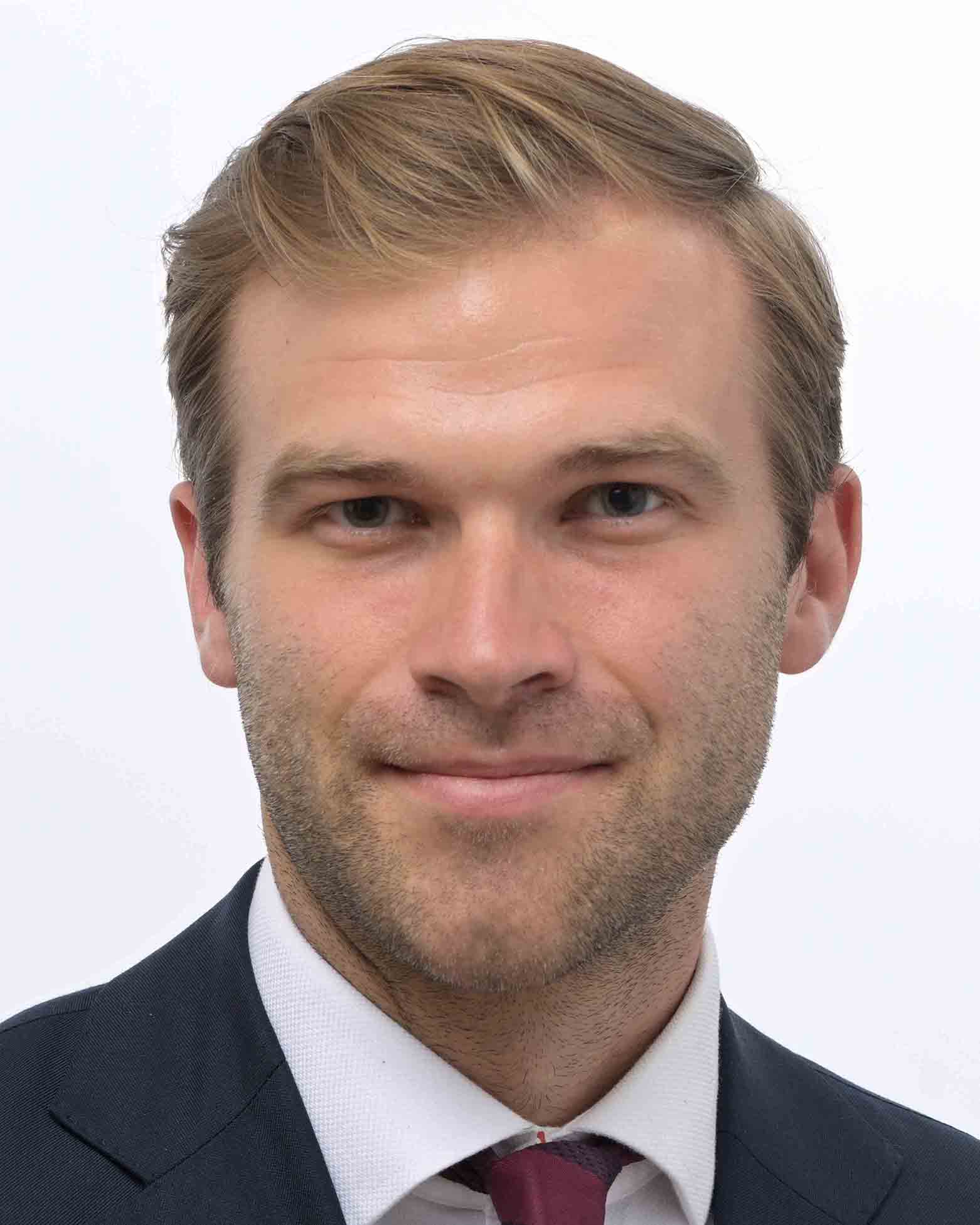


| Rank | Name | Country | Group | Speeches | |
|---|---|---|---|---|---|
| 1 |

|
Lukas Sieper | Germany DE | Renew Europe (Renew) | 487 |
| 2 |

|
Juan Fernando López Aguilar | Spain ES | Progressive Alliance of Socialists and Democrats (S&D) | 454 |
| 3 |

|
Sebastian Tynkkynen | Finland FI | European Conservatives and Reformists (ECR) | 451 |
| 4 |

|
João Oliveira | Portugal PT | The Left in the European Parliament (GUE/NGL) | 284 |
| 5 |

|
Vytenis Povilas Andriukaitis | Lithuania LT | Progressive Alliance of Socialists and Democrats (S&D) | 273 |
All Speeches (36)
Further deterioration of the political situation in Georgia (debate)
Date:
21.01.2025 19:57
| Language: EN
Speeches
Mr President, dear colleagues, last week we just heard former Georgian Prime Minister Giorgi Gakharia was brutally attacked by a group of government thugs, including a Georgian Dream so-called MP armed with a gun. Gakharia was left bleeding, with broken bones, and had to be hospitalised. Colleagues, sadly, this is not an isolated incident. Over the past weeks and months, more than 400 Georgians – politicians, journalists, but also ordinary citizens – have been arrested, tortured and imprisoned. Their crime: taking to the streets for 55 days now to demand a European future for their country. I have seen these people's courage first-hand during our visit in December. Georgians of all ages and all walks of life – young and old, rich and poor, conservative and progressive – stand together, united in their fight for a future in this European Union and for the right to be represented on this very floor in the European Parliament. And they do so knowing full well that no one is safe in Georgia any more from the repression and threats of Georgian Dream – no former prime minister, not even the President herself, who spoke to us so passionately just one month ago. But Georgians are not allowing themselves to be intimidated by that and neither should we, because this escalation of violence is not a sign of strength, but a sign that Georgian Dream is panicking. They are panicking because they have underestimated the will of the Georgian people and the power of the European idea. They thought that they could rig the elections and play the Russian playbook with disinformation and intimidation to cement their power. But they have slowly realised now that this has been a pact with the devil. Putin is not looking for partners or allies, but for vessels and colonies. And we've seen in Syria that suppressing your own people, relying on Putin, will lead you nowhere but into Russian exile. There is still time for Georgian Dream to end this Georgian nightmare. The gates of Europe, the gates of freedom remain open. But for this, the Georgian Government needs to cease the violence against its own people. It must allow Georgians to express their will in new and fair elections. And they need to do so now!
Need for actions to address the continued oppression and fake elections in Belarus (debate)
Date:
21.01.2025 18:09
| Language: EN
Speeches
Mr President, dear colleagues, imagine a country where a strongman was about to enter his fourth decade of absolute rule while grooming his own son to become his successor. To be honest, to me this sounds much more like a medieval monarchy than 21st century Europe. But here we are. Aleksander Lukashenka, widely known as Europe's last dictator – at least until Putin vied for that title – is now preparing for another sham election to secure his seventh term in office. But let's be clear: this is no election worthy of its name. Instead, with unparalleled suppression, with arbitrary imprisonment of political opponents and with an oligarchic regime that makes the Ancien Régime look almost progressive, Lukashenka is dragging his country further back into the dark ages. Yet there is one key weakness. Whereas medieval kings could have invoked the divine to justify their rule, Lukashenka has nothing but Vladimir Putin. Already at the last election in 2021, a majority of Belarusians defied the repressions, defied disinformation and voted for Sviatlana Tsikhanouskaya as their President. They took to the streets in their tens of thousands to fight for their European future, and it was only thanks to Putin's tanks that Lukashenko could cling on to power. This is why today both Lukashenko and Putin are terrified of the Belarusian people, and they are right to be so, because no propaganda, no intimidation and no gun barrel can extinguish the Belarusian people's thirst for freedom. And this is why we have this resolution here. This is why we show our solidarity. This is why we call for the immediate and unconditional release of all 1 250 political prisoners, and, finally, for free and fair elections. Because, colleagues, Belarusians are not the Kremlin's serfs; Belarusians are a proud European people and their rightful place is here among us, the free societies of Europe, and in the 21st century.
Need to detect and to counter sabotage by the Russian shadow fleet, damaging critical undersea infrastructure in the Baltic Sea (debate)
Date:
21.01.2025 16:19
| Language: EN
Speeches
Mr President, dear colleagues, I wouldn't usually recommend watching Russian television, but in the last couple of days it has offered some revealing insights into Russia's view on the Baltic Sea. Because in talk show after talk show, we can watch Russian commentators discussing which undersea cables and pipelines connect European countries in the Baltic Sea, and also which would cause the greatest harm if destroyed. Sadly, this isn't just television drama, but it's a grim reality. In recent months, we've seen the destruction of critical energy and data infrastructure in the Baltic Sea. One incident involved a Chinese vessel. Another one, a ship from Putin's so-called shadow fleet. So let's call this what it is: sabotage. Putin is testing us. Putin is testing our resolve. So let's show him our resolve through decisive measures to strengthen our resilience, through greater naval presence in the region and through, finally, tougher sanctions on the owners of Putin's shadow fleet. Colleagues, it's time to push Putin's hybrid warfare back to where it belongs: into Russian TV fiction.
Crackdown on peaceful pro-European demonstrators in Georgia (debate)
Date:
17.12.2024 11:40
| Language: EN
Speeches
Mr President, dear colleagues, I, too, just got back from Tbilisi, and what I saw there was honestly bone-chilling: a government that, after rigging the elections, is cracking down on its own population and trying to turn a European democracy into a Belarusian-style authoritarian regime under the shadow of the Kremlin. It is a Russian playbook, all too familiar by now – a playbook of disinformation, manipulation, intimidation, violence and even torture. But, colleagues, what I saw in Georgia also gave me hope. Hope because tens – perhaps hundreds – of thousands of Georgians are taking to the streets every day and every night right now, across the country, in the cities, in the villages. Georgians are fighting for their country. They are fighting for their democracy. They are fighting for their freedom. These people are fighting in Georgia. But they do so under a blue banner with golden stars. The banner of Europe is for Georgians the banner of freedom, and Georgians are risking their lives for this blue banner. Wherever we went as MEPs, people came up to us waving this European banner, cheering us, but also asking us, 'Where is Europe in this hour of truth?' Colleagues, the eyes of the Georgians are on us right now, and not just of the Georgians – also Ukrainians, Moldovans and so many others who yearn for freedom. They are looking to us here in Strasbourg right now. So let us show to them that in the hour of need, Europe is capable of acting. Let us impose impose real sanctions on those suppressing their own population. Let us welcome here on this floor President Salome Zourabichvili to address the Plenary. And let us support the Georgian people in their wish for new and fair elections on their path to Europe, on their path to freedom. Georgians are acting right now to defend the values that this banner represents. So let us do the same.
Toppling of the Syrian regime, its geopolitical implications and the humanitarian situation in the region (debate)
Date:
17.12.2024 10:44
| Language: EN
Speeches
Mr President, dear colleagues, dear High Representative Kaja Kallas, the fall of Bashar al-Assad was one of those rare occasions of unexpected good news these days. Good news because nobody will miss this bloody dictator, and good news because his fate sends a clear message to despots all around the world that suppressing your own people while relying on Vladimir Putin will lend you nowhere but in Russian exile. But there is a problem with this unexpected good news, namely, that it was exactly that: unexpected. Once again, like in Afghanistan, we found ourselves fully taken by surprise, fully unprepared to deal with the situation. We are lacking the presence on the ground, we are lacking the local expertise, we are lacking diplomatic contacts. And yet what do we hear from the Commission? Rumours about cutting down funding to the European External Action Service, cutting down on our diplomatic muscle. I am sorry, but that is like a milk farmer selling all his cows to make space for more milk. What we need is more diplomatic muscle, more diplomatic presence on the ground, not less. We need more EEAS also to support you in your task over the next years. I am a big fan of of good news, but I do not want it to come unexpectedly ever again.
Enhancing Europe’s civilian and defence preparedness and readiness (debate)
Date:
14.11.2024 10:42
| Language: EN
Speeches
Madam President, colleagues, on Tuesday, we marked 1 000 days since Putin's invasion of Ukraine. I still remember very vividly those who, in February 2022, said that Ukraine won't survive for three days, that it is not worth sending weapons, but Ukraine has proven those people wrong. For almost 1 000 days, the Ukrainian David is resisting the Russian Goliath, and why? Because the Ukrainian people were prepared, because they are resilient, because they have recognised the threat and they have not allowed themselves to be divided. And these, colleagues, are the lessons that we must draw from the Niinistö report as well. We are threatened by Russia, by climate change, by pandemics. That is reality. But reality is also that we can overcome these challenges if we recognise them openly, if we believe in our own strength, and if we do not allow ourselves to be divided. Social cohesion and unity in diversity, that is resilience, and that, colleagues, is Europe.
Foreign interference and hybrid attacks: the need to strengthen EU resilience and internal security (debate)
Date:
23.10.2024 19:36
| Language: EN
Answers
Thank you very much for the blue card. And I think that's the absolutely essential question. I think the first thing is to stop being naive and to be honest to our populations, to tell them that this is happening. I have full trust in our societies. I don't want to fight propaganda with counter propaganda. What I want is to tell people what is happening and they can make up their own minds. The Russians are playing with foul game, but we stand above that. We must be very clear. And this is what we should do as politicians, what the media should do, what civil society should do and it is to show these cases, these blatant cases of Russian interference. And to be honest in the debate about that, and I'm very confident that this will be the best way to challenge that.
Foreign interference and hybrid attacks: the need to strengthen EU resilience and internal security (debate)
Date:
23.10.2024 19:34
| Language: EN
Speeches
Madam President, dear colleagues, we've just heard that disinformation is vague and not really a threat to our society, that we can't measure it, and that we might not be able to see that it's all a fluke made up by Eurocrats. But I just came back from the electoral mission in observing the elections in Moldova, and I can tell you it's real. What we saw there, not just on Election Day, but over the weeks and months ahead, is a whole new level of very concrete Russian hybrid warfare, of large scale disinformation, illicit funding of pro-Russia candidates and, most staggeringly, unprecedented levels of vote buying. And let's not be naive, this is not just about Moldova. This is not just about Georgia in its upcoming elections. This is about our very own countries. It's about Germany's elections next year. And it's about every single election in Europe, because Putin is scared of every single society which is democratic and therefore successful, and he will do his utmost to sabotage it. And this is why, colleagues, we must do our utmost to strengthen our democracies, to strengthen our resilience, and to demonstrate to Putin that he is no match for the free societies of Europe.
The democratic backsliding and threats to political pluralism in Georgia (debate)
Date:
08.10.2024 18:18
| Language: EN
Speeches
Mr President, foreign agents law to curtail the rights of civil society, an offshore law that favours shady oligarchs and helps them avoid sanctions, a law for family values that curtails the rights of minorities, systematic disinformation sponsored by the Kremlin. What is happening in Georgia right now is not only a dangerous moment of democratic backsliding, but it is a stark reminder of the broader struggle between democratic values and authoritarian control not just in Georgia, but in Europe and across the globe. Certain powerful actors within Georgia seem to believe that by flouting democratic principles, they can provoke us, the EU, to close the door on Georgia's European aspirations. They hope to turn the Georgian dream of Europe into a Georgian nightmare under the shadow of the Kremlin. But this plan will fall. It will fall because the gates of Europe, the gates of freedom, will always remain wide open to the Georgian people, and because the heart of the Georgian people keeps beating for Europe. It is our duty to ensure that the Georgian people have the right to walk through these gates freely, without coercion, because that is what it means to be European.
Continued financial and military support to Ukraine by EU Member States (debate)
Date:
17.09.2024 10:45
| Language: EN
Answers
Thank you. Yes, thank you very much. The first question, very briefly: I'm a diplomat by training, and I can tell you that diplomacy only works if you have strength. Diplomacy without strength is submission, is capitulation. So I think it's very clear that if we want peace, we have to support Ukraine to achieve peace, and that only works if we put Ukraine into a strong position. And to your second question, which is currently debated, I think it is very clear, in terms of international law, that it is possible. So it is for the countries that have delivered these weapons to decide whether they do that. It makes military sense and it is definitely possible in humanitarian law.
Continued financial and military support to Ukraine by EU Member States (debate)
Date:
17.09.2024 10:43
| Language: EN
Speeches
Madam President, dear colleagues, this is my first speech on this floor and I am proud to use these first words here to say loudly and clearly that Europe stands with Ukraine, however long it takes. We stand with it in its fight for freedom over tyranny, for democracy over dictatorship and for its fight for peace over Putin's war. But we are doing this not out of altruism. We are doing this because we know very well that it is our security and our freedom that is at stake here, and that we only can guarantee if Putin understands that he cannot win this war and that he will not win this war. That is why we must support Ukraine with all our strength, with humanitarian aid, with diplomacy, also with the delivery of weapons. For its struggle for peace, but not the peace of the graveyard, not the peace of the dictator, but for peace that deserves its name. For peace in freedom, for peace with self-determination for the Ukrainians and with security for Europe.