





| Rank | Name | Country | Group | Speeches | |
|---|---|---|---|---|---|
| 1 |
|
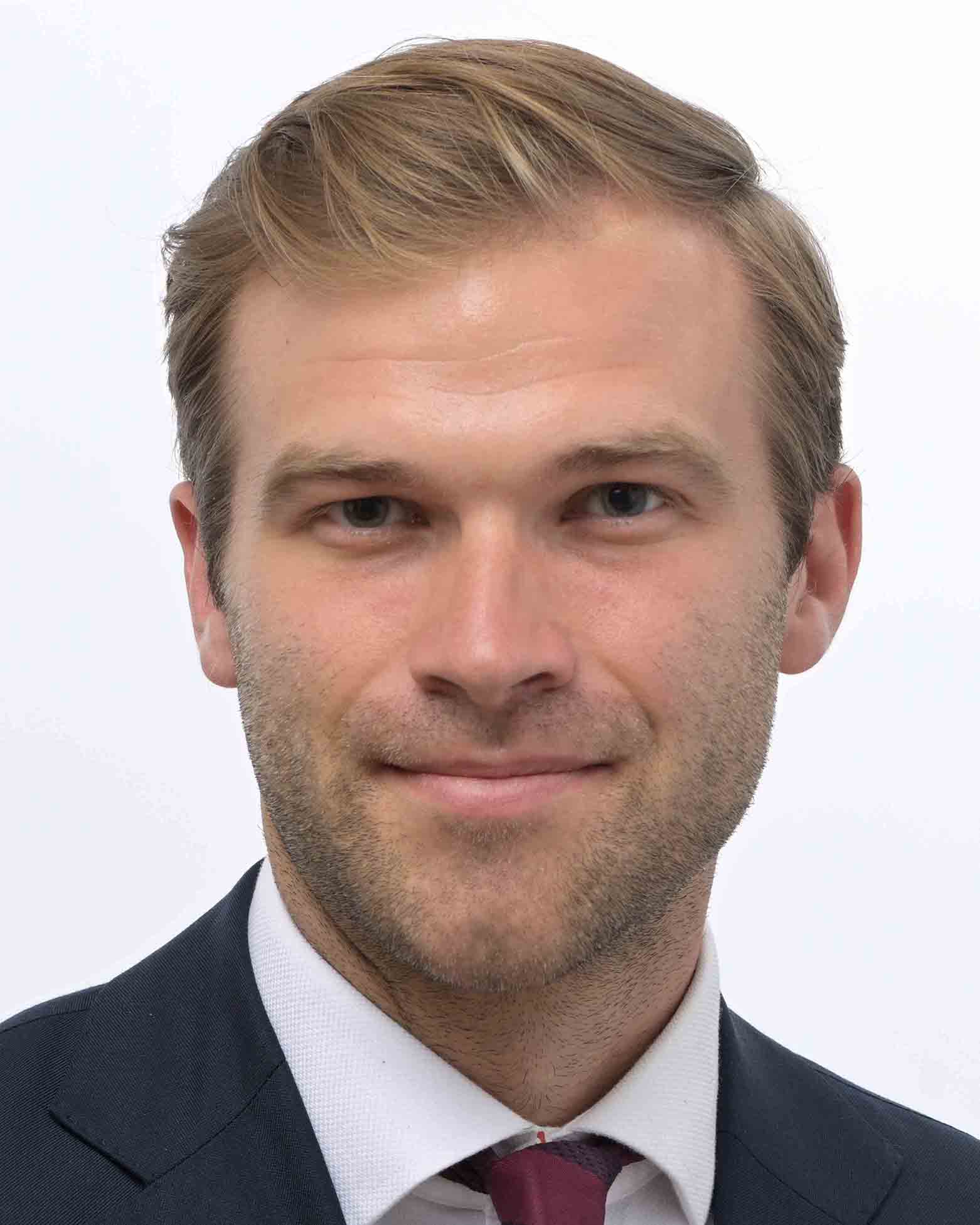
Lukas Sieper | Germany DEU | Non-attached Members (NI) | 390 |
| 2 |
|
Juan Fernando López Aguilar | Spain ESP | Progressive Alliance of Socialists and Democrats (S&D) | 354 |
| 3 |
|
Sebastian Tynkkynen | Finland FIN | European Conservatives and Reformists (ECR) | 331 |
| 4 |
|
João Oliveira | Portugal PRT | The Left in the European Parliament (GUE/NGL) | 232 |
| 5 |
|
Vytenis Povilas Andriukaitis | Lithuania LTU | Progressive Alliance of Socialists and Democrats (S&D) | 227 |
All Contributions (42)
Tackling barriers to the single market for defence - Flagship European defence projects of common interest
Madam President, Commissioner, thank you very much, and thank you for all of those who have really, very clearly and pragmatically contributed to this report, because this report is beyond, and should be beyond, ideology. The first post-war president of the SPD in Germany once said that politics begins with the recognition of reality. Unfortunately, I think some in this House live in a parallel reality, whether it be a reality where it is just the EU, or Europe is the source of all evil, or on the far right, where it all goes under the tunes of Radio Moscow. We see very clearly the threats we are facing right now from Russia, but also from other actors. We need to be able to defend ourselves. And if you don't believe me, trust our citizens. 80 % of European citizens are saying they want more defence common in Europe – let's deliver, let's do what they want! 80 % – it's clear. If you don't believe us, believe them. I'm very glad that we have Andrius Kubilius as a commissioner, who listens to citizens and not to those on the far left and on the far right who live in parallel universes.
Tackling barriers to the single market for defence - Flagship European defence projects of common interest
Madam President, 2026 is barely two months old, and yet, even in these few weeks, Europe has already been caught off‑guard several times. First, we were helpless bystanders during Donald Trump's attack on Venezuela. Then we were caught off‑guard by America's threats to annex Greenland. At the same time, we continue to be kept out of the loop during the so-called peace negotiations between Russia, Ukraine and the US. And now on Iran we appear once again to be without leverage as Trump's war continues to escalate across the region. These conflicts are directly affecting the prosperity and the safety of our citizens. So why has Europe, the world's second‑largest economy, not been able to bring its weight to bear here? Why are decisions being made about Europe without Europe? Part of the answer is our own cumbersome decision‑making process and the vetocracy that is abused by people like Viktor Orbán, and I only hope that will come to an end soon. But I fear that there is also a deeper and more structural reason: namely, that whether we like it or not, we now live in a world where our abilities to deter our enemies, to defend ourselves and to back up our ambitions with capabilities, matter. But it is precisely in this domain of hard power that Europe continues to punch below its weight. And why? Not because we don't have the potential – we have the economic muscles, we have the engineers, we have the ideas. But when it comes to defence, we have for too long foregone the power of European integration. We have kept it out of the single market and we have instead allowed for fragmentation, for weakness and for dependency. And today we are paying the price for this. We are paying the price politically, when we are not at the negotiating table, but on the menu. We are paying the price militarily – and it is not just Ukraine, but our own soldiers who are waiting for equipment that arrives too little and too late. And we are paying the price financially, when we are paying prices that are up to 30 % too high at times when families in Europe are struggling to make ends meet. Colleagues, this is unacceptable and it is unworthy of our great continent. Europe deserves better, and that is exactly what this own‑initiative report seeks to deliver. It presents a coherent and ambitious roadmap towards a genuine European single market of defence, and it does so in five very concrete steps. First, we commit to making the Buy European approach the new standard in defence procurement, because European taxpayers' money should primarily strengthen European industry, create European jobs and build European capabilities. Second, we call for a thorough revision of the Procurement Directive. We want to tailor to today's defence realities and rapid innovation cycles, because our rules must enable and not hinder joint projects and technological leadership. Third, we need mutual recognition of certifications in security clearance, as well as, finally, the removal of all other unnecessary barriers to inter-EU transfers, because, colleagues, it is simply absurd if a civilian lorry can easily cross borders, but the same lorry, painted in camouflage and used by our troops, cannot. Fourth, we propose a dedicated joint funding device for innovative technologies, because Europe's best ideas need to be able to scale up and to deliver real capabilities, but they need to be able to do so without making themselves dependent on non-European investors. Fifth and finally, we call for a European comprehensive EU‑NATO cooperation agreement, one that allows common norms and NATO standards to be effectively integrated and – yes – enforced by EU law. Because honestly, what's even the point of having common standards if we cannot properly enforce them? If several European countries proudly coordinate to make sure they are sending the same sort of tanks or artillery to Ukraine, only then to notice that one country's model often cannot even properly use the ammunition of another country's system of the same type. Colleagues, fragmentation is inefficient. It is expensive. But on today's battlefield we see that it can even be deadly. This is exactly why this own‑initiative report and a genuine European common market of defence are so urgently needed today. And our objective here is simple: to build a competitive European defence ecosystem where every euro invested delivers maximum innovation, maximum security and maximum value for money. Colleagues, in this new world order of great power politics, Europe has a choice. We can cling to old habits, keep defence out of the single market, take things for granted and continue to pay more for less while others shape our future. Or we connect, recognise our strengths, unleash the power of the single market and turn Europe's economic power into real security and strategic autonomy. For that, we need a single market of defence and we need it now.
Recommendation on enhanced EU-Canada cooperation in the current geopolitical context, including the threats to Canada’s economic stability and sovereignty (debate)
Mr President, dear colleagues, dear Commissioner, dear Marta, thank you all for this very positive debate. Sometimes transatlantic relations can seem complicated, tricky and even a little bit uncomfortable. This transatlantic relationship does not: it's straightforward; it's clear; it's in our interest to cooperate. And I thank all the rapporteurs who have really shown qualities that the Canadians have shown us as well: that is courage, that is clarity and that is also the ability to see the bigger picture. Colleagues, let us understand the situation we are in. In this report, we can make clear that Europe has understood the challenge we are facing, and we can show the same courage as the Canadians have done in this moment of rupture. And if some colleagues, like Mr Tynkkynen, think that it's far-left rhetoric to seize this moment, I recommend first actually reading the report. Second, if you are still unhappy, talk to your rapporteur – who supported this very clearly – and the ECR, because there are some people, even in your party, who understand the necessity in this moment to cooperate with Canada.
Recommendation on enhanced EU-Canada cooperation in the current geopolitical context, including the threats to Canada’s economic stability and sovereignty (debate)
Mr President, 'in a world of great power rivalry, the countries in between have a choice – compete with each other for favour, or to combine to create a third path with impact.' Colleagues, these were the words that Mark Carney used to give us accepted the clearest description yet of the challenge that Europe is facing today. And Carney is right. The international order is in rupture. War has returned to our continent and is showing its ugly face around the world. Long-standing assumptions about free trade, collective security and international law are being tested as they haven't been in decades. But Europe still has a choice. Today, right here on this floor and tomorrow during the vote, we have a unique opportunity to respond to our Canadian friends by saying clearly and loudly that when faced with the choice between simply lamenting the fading of an old world or acting together to shape a better one, Europe chooses action. We choose action for our citizens and our values, and we choose action not alone, but together with our partners – Canada chief among them. Colleagues, today Canada is perhaps the most European country outside Europe – although an Australian friend recently reminded me that Canada has not yet joined Eurovision. We are still united, not only by our common heritage, by the languages we share and by our common values, such as democracy, free trade and a strong social model. No, today, Canada is also, in a sense, European by its strategic interests and by the challenges we share together. In a world shaped by a war-addicted Russia, an assertive China and an increasingly erratic American ally, Europeans and Canadians know full well that we can only safeguard our interests in security – whether it be in the Arctic, in Ukraine, with regard to climate change, or in Greenland – by standing together and by deepening our cooperation. So it is high time for this close strategic alignment to be translated into a deeper Euro-Canadian alliance. It is high time to put meat on the good of the commitments made last year at the EU-Canada Summit, and it is high time for this Parliament to take a clear position, with the first report in over a decade laying out a roadmap of where we want this partnership to go. It's a roadmap on security, where at a time of growing conflict and threats of annexation, Canada and Europe must uphold the most fundamental principle that no country – no country – has the right to invade or annex its neighbour. But we are also clear-eyed and recognise that, in this new world order, our ambitions must be matched by our capabilities. That is why this report strongly welcomes Canada's participation as the only non-European country in the SAFE programme, and we support its further integration into the European defence technological-industrial base. Second, this report is a roadmap on multilateralism. Europe and Canada remain committed to defending international institutions such as the UN, the ICC and the WTO, not out of idealism, but we know it is in the interests of our people. But we also recognise that these institutions need reform. And this is why this report urges Europe and Canada to take the lead in these reforms, build alliances and coalitions to address the most urgent collective action problems we have, like AI, cybersecurity or climate change, that no single great power can address alone. Third, this is a roadmap on trade. While others declare trade wars, practise short sighted protectionism, and weaponise supply chains, Europe and Canada must choose open, fair and equitable trade. This means completing the ratification of CETA, and it also means exploring deeper integration of critical supply chains from raw materials to energy. Finally, it's a roadmap for our civil societies, because where others retreat behind walls and embrace fearful isolationism, Europe and Canada stand tall and take pride in the attractiveness and openness of our societies. So, through Horizon Europe, Erasmus+ and other labour mobility initiatives, we bring Canadians and Europeans even closer together because we know that alliances work best when it is not just governments cooperating, but people. Colleagues, I began with a quote from Prime Minister Carney. So let me end with another: 'We know the old order is not coming back. We shouldn't mourn it. Nostalgia is not a strategy, but we believe that from the fractures, we can build something better, stronger and more just.' Colleagues, Europe and Canada have a historic opportunity to lead that effort right now. So let us sixteen that by voting for this report and by mainly Prime Minister Carney to this floor so we can discuss together to take the Euro-Canadian alliance to a new level. Because, let's be honest, if we can't deepen our cooperation with Canada right now, with whom can we?
European response to the attacks on the Ukrainian energy system causing a humanitarian crisis (debate)
Mr President, colleagues, I just got back from Kyiv myself. And to all those who still doubt Putin's intention, I can tell you his terror against the population is real. Unable to win the battle on the field, Putin targets the civilian population – women, children, the elderly. At -27°C, Ukrainians are now without heating, without energy, without water. And yet, colleagues, I did not meet a single Ukrainian who was ready to surrender. On the contrary, even as the Russian bombs and drones were raining down on them, Ukrainians are standing tall, showing kindness to their neighbours, building invincibility centres, even improvising parties on frozen rivers, showing Putin what a defiant European people look like. They do so because they know that surrender and appeasement will only mean more bombs and more aggression, and that peace with Russia is only possible from a position of strength. Colleagues, this is the moment for Europe to show some strength ourselves. So let's approve the Ukrainian support loan. Let's pass the 20th sanctions package and deliver the urgently needed air defence. This is the moment.
Building a stronger European defence in light of an increasingly volatile international environment (debate)
Madam President, colleagues, for too long we have treated defence as somebody else's problem. Kept it outside of European integration, allowed for fragmentation, weakness and dependency. Today we are paying the price: politically, when we are not at the negotiating table but on the menu; militarily, when it is not just Ukraine, but our own soldiers waiting for equipment that arrives too little and too late; and financially, when fragmented procurement means that we are paying prices that are 30 % too high at times when European families are struggling to make ends meet. This, colleagues, is unacceptable and it is unworthy of the second biggest economy in the world. Europe deserves better. So let's finally stop talking and start acting by creating a real European Defence Union where we have the power to protect our way of life, where we pool procurement and spend not just more, but better, on defence, where we create a true single market of defence, where we have maximum security at maximum value for money, and where we democratise our decision-making so that single veto players cannot stop security for all. Colleagues, today, Europe still faces a choice between independence and irrelevance. Let us choose independence before it is too late.
The deepening democratic crisis in Georgia (debate)
Mr President, colleagues, imagine a substance that robs you of your breath, that sets your skin on fire, that causes violent coughing and vomiting, and not just for a few minutes or hours, but for days and weeks. A substance so monstrous that when you try to wash it off, it only burns more fiercely. Colleagues, these are the effects of camite, a World War One-era chemical weapon used for trench warfare. And today we see independent reporting that suggests that it's being used again here in Europe. According to the reports, Georgia's authorities put it into water cannons that they directed, not at an invading army, but against their own people, against women and children, students and nurses, workers and journalists. And why? Because for over a year now, Georgians still dare to protest peacefully for democratic regime, for the rule of law, but most importantly for their European future. Colleagues, we must say it clearly that if these reports are true and this regime uses chemical weapons against its own population, then they have given up all pretence and all ambitions to join this European family. But, colleagues, that does not mean that we should give up on Georgia itself, because we can still see another Georgia, a Georgia that stands tall in the face of repression, that will not sell its European soul to become a puppet of the Kremlin. We see this Georgia in the streets of Tbilisi, and we see this week here in Strasbourg, embodied by Mzia Amaglobeli, the winner of this year's Sakharov Prize, a journalist imprisoned on fabricated charges, but whose courage and quiet defiance exposes every day the weakness of her oppressors. Colleagues, let us be inspired by this courage and bring about an independent international investigation into the use of such chemical weapons by the Georgian Dream Government. Let us finally impose real and targeted sanctions, not just on a few diplomatic passports, but on the de facto ruler Ivanishvili himself, and on every single one of his accomplices involved in such heinous crimes. Colleagues, Georgians are showing real courage every day in fighting for a free and democratic Europe. Let us do the same.
EU position on the proposed plan and EU engagement towards a just and lasting peace for Ukraine (debate)
Madam President, I want nothing more than these peace negotiations to succeed. But let's be honest, these 28 points weren't a peace plan, they were Putin's Christmas list to Santa Claus. They asked Ukraine to surrender what Putin has failed to conquer in a decade, and to weaken Ukrainian defences in a way that will only invite future war, future aggression from Russia. And dismantling Ukraine wasn't even the biggest gift under little Vladimir's Christmas tree; the real prize is that this plan would have not just thrown Ukraine, but Europe under the bus. Colleagues, we keep saying, 'Nothing about Ukraine without Ukraine, nothing about Europe without Europe.' But we are not acting like it. Instead, we keep hoping that the Americans might sweep in and save the day. But spoiler alert: they won't. If we want real peace in Europe, we cannot count on Trump any more than we can on Santa Claus. If we want real peace in Europe, we must take responsibility ourselves and force Putin to the negotiating table, but not through appeasement, but through strength. If we want real peace in Europe, we need to take the initiative now as Europe and use Russia's frozen assets as a leverage for peace. Colleagues, the time for wishlists is over. Now is the time to act.
European Defence Industry Programme and a framework of measures to ensure the timely availability and supply of defence products (‘EDIP’) (debate)
Madam President, colleagues, honestly, I'm a bit sick of it. I'm sick of watching foreign leaders decide about the future of our continent, while our own leaders learn about it only from the newspapers. In international politics, you have a saying: 'if you aren't at the table, you're on the menu'. Unfortunately, right now it looks like Europe is on the menu. But, colleagues, it doesn't need to be that way. We actually have enormous untapped potential in our continent. Our economy is 10 times bigger than that of Russia, for example. But our problem is that when it comes to defence, we have failed to translate this enormous potential into actual strength, into a language that bullies like Putin actually understand. Instead, when it comes to defence, we continue to spend too little, too nationally and too inefficiently – wasting taxpayer money without getting a bang for our buck. EDIP is designed to change exactly that. It provides a concrete plan to make our Member States not just spend more, but better, smarter, and together on defence. It creates the conditions for a real European defence industry to emerge that delivers the capabilities we need and in a way that benefits citizens, and not just shareholders. EDIP can help turn Europe from an economic giant into a political superpower that can determine its own future. Colleagues, I do not want our continent to be carved up over some Christmas dinner between Trump and Putin. So let's give ourselves the means to get our place at the table.
The need for a united support to Ukraine and for a just and durable peace concluded on Ukraine's terms, with Europeans and without surrendering to Vladimir Putin's conditions ahead of the foreseen Budapest summit (debate)
Mr President, colleagues, this whole thing felt like Groundhog Day. Another phone call between Putin and Trump, another summit, and yet again, much ado about nothing. Just more strikes on Ukraine, more dead civilians, no Russian willingness for peace, no compromise. Yet even this depressing cycle had a silver lining, and not just that this time our American friends recognised Putin's bad faith before rolling out the red carpet, but that twice now, the threat of tougher sanctions and weapons for Ukraine actually made Putin move. This shows how terrified the Kremlin is vis-à-vis a strong and united West. This shows that the 'peace through strength' strategy actually works. But we can't just rely on an American knight in shining armour to do that work for us, colleagues. No, this is about European security. So, Europe must act by passing the 19th sanction package, by using Russia's frozen assets as a leverage for peace, and by putting out a plan, together with Ukraine, for a European just and lasting peace, because Ukraine cannot afford another Groundhog Day. And seriously, neither can we.
Stepping up funding for Ukraine’s reconstruction and defence: the use of Russian frozen assets (debate)
Madam President, dear colleagues, for too long, Putin has escalated this war because he believed that time is on his side. For too long, he has mistaken our readiness to negotiate as weakness, and responded only with more escalation, more bombs and more drones of our own cities. Colleagues, this vicious cycle has to end now! We must finally change Putin's calculus about this war and show him that time is not on his side. The good news is that we have the tool to do that right at our hand. We have EUR 200 billion of Putin's own money frozen in European bank accounts. And by using these assets to create a reparations loan for Ukraine, we can put Putin's money into a leverage for peace, we can give Ukraine the means to defend itself as long as it needs and we can create a clear incentive for Putin to end the war quickly. Because the longer he drags it out now, he not only pays with the lives of soldiers that he doesn't care about, but with money that he does care about. Colleagues, this is Putin's war: he wanted it; he prolongs it; he escalates it. It's time he starts paying for it!
United response to recent Russian violations of the EU Member States’ airspace and critical infrastructure (debate)
It is very clear that the Nord Stream project was a mistake. And it is good that we do not have it anymore. But at the same time I believe in the rule of law, and this is the difference between us and Putin. I trust our courts to prosecute and pursue any sort of crime. The difference is that Putin does not, and Radio Moscow over there does not care about the rule of law. And that makes the difference between Europe, Russia and the far right.
United response to recent Russian violations of the EU Member States’ airspace and critical infrastructure (debate)
Madam President, dear colleagues, Russian fighter jets are violating NATO airspace, Putin's shadow fleet is sabotaging undersea cables, cyberattacks are shutting down our airports, armies of disinformation bots are interfering in our elections, and swarms of drones are spying on our forces and paralysing our infrastructure. Colleagues, especially those on the far left and the far right: what more do you need to call this the reality that it is? That Putin is conducting a large‑scale hybrid war against our citizens, and that it is our and your responsibility to protect our citizens. And we know that Putin will continue to escalate as long as he thinks that we are weak, divided and ready to be scared. So let's prove him wrong. Let's keep our cool and show our resolve. Let's build a drone wall and secure our skies. But let's also invest in the resilience of our economies and of our societies, so that we don't go into panic mode every time Putin tries to provoke us. And let's be smart about our response by striking Putin where it hurts: that is his bank account. So now is exactly the right time to use the frozen Russian assets to support Ukraine and to show the schoolyard bully that while we do not want to escalate, we do have the means to protect freedom and security and our citizens in Europe.
Ukraine (joint debate)
Madam President, colleagues, I want to begin by thanking Donald Trump. Seriously. Because this summer he's disproven once and for all a zombie theory that some in this House have been riding like a dead horse and have been riding again today, that we, if only we accommodated Putin, only reached out to him, we could have an easy peace. That's what Trump tried and he failed. He has given everything to Putin. He rolled out the red carpet. He made concessions. And what did he get? Nothing. Nothing at all. No ceasefire. No compromise. Only more attacks, more escalation, more aggression. And in a despicable mockery of diplomatic solutions, Putin bombed our own embassy in Kyiv, endangering the very men and women who sacrifice their life, and who dedicate their life to diplomatic solutions. So what more do we need to finally understand that the only language that Putin speaks is strength, strength and strength? So let's finally show some strength and strengthen Ukraine's armed forces, strengthen our sanctions regime, and strengthen Western unity by showing European rather than Trumpian leadership. Appeasement has failed. Now it's time to get real about strength in peace.
2023 and 2024 reports on Georgia (debate)
Madam President, dear colleagues, if you are looking for a definition for democratic backsliding, you can forget the dictionary; you can just look at what Georgian Dream has been doing to its own population over the last few years. Not long ago, Georgia was a beacon of hope on the Caucasus, but what we are seeing today are foreign agent laws, rigged elections, brutal crackdowns on peaceful protesters. Georgian Dream is applying the Russian playbook of intimidation, disinformation, manipulation to the letter. Let's be absolutely clear: this is not a distant or abstract problem, but a direct challenge to Europe itself and a real living nightmare for the people of Georgia, for the journalists thrown into jail, for the opposition leaders beaten in the streets, but especially for those millions of ordinary Georgians – students, nurses, farmers, workers, teachers – for the 80 % of Georgians who still yearn for a European future, who still believe in their freedom, and who still stand up to the authorities and protest over 200 days later. This report is also our opportunity to give these Georgians a voice and to tell them: 'We hear you, we see you, and we stand with you on your path to Georgia's European future'.
Media freedom in Georgia, particularly the case of Mzia Amaglobeli
Mr President, dear colleagues, media freedom is not a luxury, it is a democratic necessity. It shines light where corruption and autocracy hide. And that is precisely why the Georgian authorities have imprisoned one of the country's most respected journalists, Mzia Amaglobeli, for over 150 days now. And Mzia's is not an isolated case. Over 400 Georgians – journalists, opposition figures, but also ordinary citizens – have been arrested, tortured or jailed. Colleagues, the ruling Georgian Dream party fears the free press like a vampire fears the light, because they know that they can only survive in the shadows. In the shadow of the oligarch Bidzina Ivanishvili, who does not dare to step into the open because he knows the Georgians don't want him, and in the shadow of Putin's regime, which uses disinformation, intimidation and manipulation, because it knows that Georgians would never choose to live like Russians have to if they have the free vote. Colleagues, the light of a free press and a free society is the strongest weapon against tyranny, so we can only appeal to the Georgian authorities to step out of the shadows, drop the politically motivated charges and let Georgian people choose their future freely – in the light.
Upcoming NATO summit on 24-26 June 2025 (debate)
Madam President, dear colleagues, I grew up in a Lutheran vicarage that was shaped by the peace movement. I understand the longing to live in a different time, one where we can speak about disarmament instead of deterrence. I, too, would sometimes prefer to live in a different time. But colleagues, we don't. The post-war leader of the SPD, Kurt Schumacher, once said that politics begins with the recognition of reality. And reality today is stark. Europe faces the most serious threat to our safety in a generation. Putin is rearming on a massive scale, and his sights are not only set on Ukraine, he wants to test NATO, break apart the EU and erode our democracies from within. He has made that clear time and time again, and he is preparing to act not in the far distant future, but in this decade. And why? Not because he is scared of NATO. Putin actually thinks that NATO is weak, and that's actually part of the problem. But what Putin is afraid of is our way of life. Because successful, free and democratic societies expose the lies that his rule is built upon. That is why we are already subject to his hybrid warfare, disinformation, cyber attacks, sabotage and contract killings on European soil. Colleagues, that is not fiction, but a grim reality. Even if some in this House don't want to acknowledge it. Colleagues, the people of Europe rightly expect us to protect their safety, and that is why it is good that NATO leaders are meeting in The Hague, and it is good that we are mobilising more resources. But let me be clear – drones and tanks are not enough. What ultimately makes our society strong is the social cohesion they are built upon. That is what Putin fears and that is what he targets. So let us embed our defence spending in a broader security strategy. Focus on infrastructure, on resilience, and on the social fabric and solidarity that make our societies worth defending in the first place.
The human cost of Russia’s war against Ukraine and the urgent need to end Russian aggression: the situation of illegally detained civilians and prisoners of war, and the continued bombing of civilians (debate)
Madam President, dear colleagues, on my last trip to Ukraine, I met a remarkable young man named Vlad. Vlad is not a Rambo‑like soldier, but a skinny teenager from Kherson. But still, Putin fears Vlad so much that, alongside 20 000 other Ukrainian children, he had him abducted from his home, sent him into a re-education camp deep inside Russia and submitted him to violence and solitary confinement. Colleagues, why is Putin so afraid of Ukrainian children? It's because this isn't a normal war against a government or against an army. It's a war conducted against the Ukrainian civilian population. Putin is so afraid of these children because they are the future of Ukraine's European future. They symbolise the freedom that cannot be broken. Vlad himself has shown this will to freedom when one night in the camp, he went up to the flagpole and tore down the Russian flag and pulled up his own underwear instead. In this sign of resistance that could have cost him his life, he has shown real courage and real strength. Colleagues, if Western leaders had shown even half of that courage in their support for Ukraine that Vlad and so many Ukrainian civilians have shown to their tormentors, this war could already be over. So let us finally muster up our own courage, put Ukraine in a position of strength, seize Russia's frozen assets and force Putin to the negotiating table, so that Vlad and every single Ukrainian child can regain not only their freedom, but the future of their country.
EU support for a just, sustainable and comprehensive peace in Ukraine (debate)
Madam President, dear colleagues, as the son of a German Lutheran pastor, I'm not usually one to believe in miracles produced in the Vatican. Yet, at Pope Francis's funeral, something of that sort seems to have happened to Donald Trump because, after weeks of echoing Kremlin propaganda, on his flight back from the Vatican, he suddenly tweeted that maybe Putin doesn't want to end the war and that maybe he has to be dealt with differently. Colleagues, I don't know whether this revelation came to Donald Trump via the Holy Spirit or via Volodomyr Zelenskyy, but I am grateful for it because it is a truth that we must all face now, especially as we are about to mark 80 years since the end of the Second World War, and that is that tyrants are not deterred by appeasement, but by strength alone. And while I pray for peace, I also know that to achieve peace, we cannot simply rely on divine intervention nor, for that matter, on Trumpian diplomacy, but that this responsibility, colleagues, lies with us here in Europe. So let us act accordingly and put Ukraine in a position of strength, and seize Russian frozen assets, and show Putin that he cannot win this war, because only then can we recreate the real miracle that is a lasting and just peace for Europe for the generations to come.
EU Preparedness Union Strategy (debate)
Madam President, store several dozen litres of drinking water. Keep a 72-hour supply of canned food. Have torches ready and know your nearest shelter. Colleagues, to many, these instructions might sound like a bad joke, especially on April Fool's Day, but unfortunately they're not. They reflect a growing need to prepare for the many threats we are facing today, from Russian aggression to natural disasters, from hybrid warfare to future pandemics, Europe must be prepared and so must every European. But let us be clear being prepared does not mean being fearful. On the contrary, preparedness should give us peace of mind and courage. And most importantly. Preparedness is not just the job of a household or a family. It's a whole of society effort. Because real resilience comes from strong communities knowing whom to call, where to turn, and how to help one another in the case of crisis. That is why social cohesion and civil society, sports clubs, unions, churches and associations must be at the heart of our preparedness strategy. True preparedness isn't what we store in our basement. True preparedness is the strength of the connections we build aboveground.
CFSP and CSDP (Article 36 TUE) (joint debate)
Madam President, dear colleagues, we have to be crystal clear. Europe is facing today the greatest geopolitical challenge in a generation. According to the latest assessment of Germany's security services, Russia will be in a position to attack NATO and EU territory by the end of this decade. I myself received this latest report during a trip to Washington DC last week, and while the tone of the discussions was friendlier, it was no less sobering in terms of content. For the first time in 80 years, we have to confront this threat without the certainty of America doing the heavy lifting for us. And this new reality of Russian aggression and American retreat requires a fundamental reassessment of our strategic priorities. This is the aim of the CSDP, but this report is also the chance to develop a positive and forward looking strategic vision of the Europe we want to live in, in the Europe we want to defend. Because here in Europe, security has never been just about military strength. Our security is built on social cohesion, economic fairness and solidarity between Member States just as much as it is built on military progress. This is the foundation of our resilience and the true source of our soft power. And that's why defence spending must always go hand in hand with investment in infrastructure, competitiveness and the social fabric of our societies. Colleagues, at this geopolitical turning point, Europeans rightly expect their governments and the EU to protect their physical safety, but they also expect us to invest in a future that is worth defending.
White paper on the future of European defence (debate)
Mr President, dear colleagues, Vance, Musk and Trump have achieved in just about one month what Stalin, Khrushchev and Putin have failed to do in 80 years: they have undermined the transatlantic alliance, they have surrendered America's claim to global leadership and dismantled the legacy of US presidents from FDR to Ronald Reagan. I am a committed transatlanticist, and I still refuse to believe that this is the end. I still have faith that America will be back, but I also know that Europe cannot wait for that. This is why it is good that European leaders are finally waking up. It is good to invest EUR 800 billion in defence. It is good that countries like Germany are finally breaking free from self-imposed fiscal straitjackets. But funds alone are not enough: we must anchor this investment in a broader security strategy, one that recognises that, in an era of hybrid warfare, social cohesion and resilience are just as vital for our security as tanks and drones. This white book offers the opportunity for us to do just that, to be a blueprint for a whole-of-society approach to defence. One that defends Europe, regardless of who is sitting in the White House.
Continuing the unwavering EU support for Ukraine, after three years of Russia’s war of aggression (debate)
Mr President, dear colleagues, as the Trump administration is about to unveil its plans for European security, Vladimir Putin continues to arm Russia for future attacks against NATO territory. And Europeans across all our countries are asking themselves, will Europe rise to the challenge? Or will we once again allow others to determine the future of our continent? Colleagues, for nearly three years, Ukrainians have shown what is possible when courage means unity. For nearly three years, they have been defying the doubters and showing Putin that war only ends in disaster. So let us be courageous and united today. Let us move from the ad hoc decision-making to a long-term strategy of funding Ukraine in a socially sustainable way. Let us build a European defence industry that is capable of defending Ukraine and deterring future attacks from Russia, and let us clear the path for Ukrainian EU membership. Only thus can we prove to Putin, to Trump and to every European that in this moment of truth, Europe stands united ...
Uniting Europe against actors hostile to the EU: time to strengthen our security and defence (topical debate)
Madam President, dear colleagues, a lot of people have called Trump's re-election a wake‑up call, also in this Chamber. But when it comes to defence, Trump's election is not a wake‑up call; it's the alarm sounding again after us hitting the snooze button over years, again and again. So this is not the time for Europe to merely wake up, but to finally get up and to face up to the new geopolitical realities that the United States will increasingly turn its attention towards Asia, and that we must take greater responsibility for our own security right here. And, colleagues, we must not interpret every Trumpian provocation literally. But when it comes to defence, you must finally take him seriously. And that means that we need to get our own house in order. We need to spend more and better on defence while strengthening our social cohesion and resilience. We need to streamline and democratise our decision‑making processes in the defence area, and we need a strong and united Europe that has the capacity, but also the courage to act boldly. Such a Europe is in our own self-interest, but it is also a strong ally that even Mr Trump will not want to lose.
Further deterioration of the political situation in Georgia (debate)
Mr President, dear colleagues, last week we just heard former Georgian Prime Minister Giorgi Gakharia was brutally attacked by a group of government thugs, including a Georgian Dream so-called MP armed with a gun. Gakharia was left bleeding, with broken bones, and had to be hospitalised. Colleagues, sadly, this is not an isolated incident. Over the past weeks and months, more than 400 Georgians – politicians, journalists, but also ordinary citizens – have been arrested, tortured and imprisoned. Their crime: taking to the streets for 55 days now to demand a European future for their country. I have seen these people's courage first-hand during our visit in December. Georgians of all ages and all walks of life – young and old, rich and poor, conservative and progressive – stand together, united in their fight for a future in this European Union and for the right to be represented on this very floor in the European Parliament. And they do so knowing full well that no one is safe in Georgia any more from the repression and threats of Georgian Dream – no former prime minister, not even the President herself, who spoke to us so passionately just one month ago. But Georgians are not allowing themselves to be intimidated by that and neither should we, because this escalation of violence is not a sign of strength, but a sign that Georgian Dream is panicking. They are panicking because they have underestimated the will of the Georgian people and the power of the European idea. They thought that they could rig the elections and play the Russian playbook with disinformation and intimidation to cement their power. But they have slowly realised now that this has been a pact with the devil. Putin is not looking for partners or allies, but for vessels and colonies. And we've seen in Syria that suppressing your own people, relying on Putin, will lead you nowhere but into Russian exile. There is still time for Georgian Dream to end this Georgian nightmare. The gates of Europe, the gates of freedom remain open. But for this, the Georgian Government needs to cease the violence against its own people. It must allow Georgians to express their will in new and fair elections. And they need to do so now!