
| Rank | Name | Country | Group | Speeches | |
|---|---|---|---|---|---|
| 1 |
|
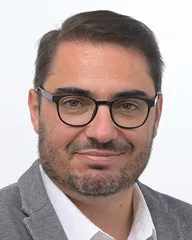
Lukas Sieper | Germany DEU | Non-attached Members (NI) | 390 |
| 2 |
|
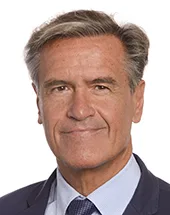
Juan Fernando López Aguilar | Spain ESP | Progressive Alliance of Socialists and Democrats (S&D) | 354 |
| 3 |
|
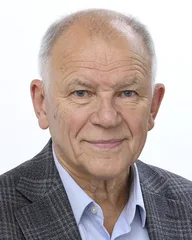
Sebastian Tynkkynen | Finland FIN | European Conservatives and Reformists (ECR) | 331 |
| 4 |
|
João Oliveira | Portugal PRT | The Left in the European Parliament (GUE/NGL) | 232 |
| 5 |
|
Vytenis Povilas Andriukaitis | Lithuania LTU | Progressive Alliance of Socialists and Democrats (S&D) | 227 |
All Contributions (64)
The future of European competitiveness (debate)
The Draghi report comes as a collection of concerns and possible solutions raised by various entities through the years. The direst point remains an EU shortfall in its competitiveness vis-à-vis its trading partners. Despite major EU funding programmes agreed upon in the last decade, the EU still needs to invest heavily in crucial areas, including innovation research, business start-ups, connectivity and climate. The report concludes that a fit-for-purpose competitiveness agenda would require annual funding of circa EUR 800 billion to reach agreed EU objectives. It is clear that private financing will not be enough to fill this massive gap, especially since progress on a capital markets union remains slow. Therefore, the EU will need a continued public investment approach. Policymakers now have an obligation to analyse the possible next steps towards a renewed investment facility, which I am ready to support as long as youth and their wellbeing are given the deserved priority. Indeed, the enhancement of EU investment in youth start-ups will be decisive for economic growth on the continent. Final point of clarification: remarks on EU defence remain problematic for representatives of citizens adhering to a constitution based on a policy of non-alignment and refusing to participate in any military alliance.
Tackling AI deepfakes and sexual exploitation on social media by making full use of the EU’s digital rules (debate)
Technology and innovation are accompanied by progress. They are helpful.And they should remain a priority. But we have to fight the abdomen. The fraudulent use of manipulation of AI photos and videos is a weapon. Arm that is being used to: > in cases it destabilises or raises fears, leading gibs and fake realities, > in other cases, to remove people’s dignity, by sexually exploiting. A false photo of your naked child or your manipulated video tells things you didn't say, or things you didn't do... ...scattered throughout the world in seconds. > You were suddenly crushed. > Reputation destroyed. > Mental health threatened... And too often, there is no responsibility... ...and there is no justice. Victims should be protected, and not forced to fight alone. European rules are in place. We do not have the strong enforcement conviction. 1)Sexually exploitative content It should be removed immediately. 2) Platforms tolerating abuse must respond. 3)Action against the manipulator must be carried out. Technology must serve people, and strengthen the well-being of our communities. And where it threatens dignity, Europe must intervene > with strength, > courageously, and > unscrambled.
Ban on the sale of nitrous oxide to the general public (debate)
Does she want to address them? That was the question.
Ban on the sale of nitrous oxide to the general public (debate)
Thank you, colleague, for accepting the blue card. I felt that it was a good opportunity that we have a Hemicycle with youth – around 50, if I can count well over there – to make the point that here we are debating about their future, we are debating about how we can make the world safer, our Europe safer for them. So maybe it can be also an opportunity that we can address the youth that are actually here with us right now on a debate that is targeted specifically for them, and how we, as a European Parliament, can try to do our best to make their lives safe.
Ban on the sale of nitrous oxide to the general public (debate)
Mr President, when we speak about nitrous oxide, many people still think of something harmless: a chocolate mousse, a painless dentist appointment, a brief moment of fun. But laughing gas is not a laughing matter. Young people across Europe are inhaling the substance in ways it never intended to be used and the consequences can be severe: loss of consciousness, damage to the nervous system and even spinal injuries in repeated use. These are not some improbable side effects. This happened to real people in Europe. A 17‑year‑old girl in France found lifeless among dozens of canisters. A young man killed by a driver under the influence of the substance. A 19‑year‑old girl in Malta temporarily paralysed for hours. This should be a reminder that what may appear harmless can quickly become harmful. Although my country, Malta, may be a small island, we are not shielded from this reality. In recent months we have seen several media reports about nitrous oxide cylinders confiscated by police in Paceville. A place where many of our young people go to meet their friends and spend some leisure time. Many parents today are asking a simple and legitimate question: how could a substance, which was intended for medical and industrial use, be so easily purchased and unchecked? Because the truth is one: Nitrous oxide was never intended to be used as a means of entertainment. When large industrial cylinders are sold out of control, we are creating a dangerous situation. A situation where something that was meant for hospitals and kitchens ends up easily in the hands of our young people, and this is a reality we are seeing in Gozo, Malta and throughout Europe. And in fact as I move to Parliament in Brussels, I always find crates running on the ground. Let me be clear that it is not about beginning to demonise a substance, nor about banning something that has a valid and important use. This is a question of a sense of responsibility and also of education. Responsibility for ensuring that products intended for professional use no longer circulate in places where they can be harmful and in the hands of vulnerable people. And that's why I, together with other MPs, are working together to make the sale of this product more responsible. Today, large quantities of nitrous oxide can be purchased easily, even online and without any oversight, and the evidence is clear. According to public health data, most reported users consume the substance in large quantities. Many use it repeatedly and often through industrial canisters. This is why Europe must act carefully but decisively, not through panic, but through smart regulation, through better control of how these products are placed on the market. The Union has already had tools. Under the REACH Regulation, we can act when a substance creates an unacceptable risk to human health. Laughing gas is creating a risk for young people, for public safety, and yes, even for the environment, with thousands of canisters being discarded and appearing in our streets and shores. The substance must be listed under Annex VII of the REACH Regulation and prohibit its placing on the market to the general public because protecting young people does not mean punishing, it means responsibility on the seller and regulation of the market. And I warmly thank various organisations across Europe, including in my own countries: Caritas and Oasi. Because not only must we work to protect and regulate but we must also raise awareness of the realities around us, alleviate the difficulties that are plaguing our lives and educate in order to be better informed about the risks that exist. Because colleagues, in the end, this discussion is not about a chemical substance. This discussion is about people, about the society around us, about the lives of our young people and our responsibility to act to protect them.
Savings and Investments Union: time to accelerate the process to deepen market integration (debate)
Madam President, we have not yet successfully created a single market that is adapted to the different European realities and that is able to compete in the global scene. The real struggle lies in the first step: building a genuine European investor culture. This requires building trust in the system, strengthening financial literacy, and creating transparent and tangible opportunities – opportunities that are accessible to ordinary citizens so that they can invest directly and be part of the game – to be able to enhance their financial independence and unlock their aspirations for the future. For this to happen, we must change the rules to give priority to our retail investors, and we cannot underestimate the value of investing in educating our people. We, as policymakers, must do everything in our power to facilitate, to create the right conditions and to foster a financially educated population that is ready to seize the opportunities and to access instruments that we specifically design for them. Let us place our citizens at the heart of the savings and investments union.
EUCO and situation in the Middle East (joint debate)
No text available
European Semester for economic policy coordination 2026 - European Semester for economic policy coordination: employment and social priorities for 2026 (joint debate)
On behalf of the S&D ECON shadow, I would like to thank the rapporteurs and shadows for their efforts and cooperation. There is no doubt that in an interdependent economy such as that of the Union it is necessary to have coordination between Member States. But we cannot forget that the well-being of the citizen must come first. These recommendations often seem to forget a simple principle: people. Such as recommendations to remove energy subsidies for European households, or recommendations to increase the retirement age for our workers. And then, at the same time, like some general command to increase defence spending by Member States instead of investing in people. And now, in the next multi-annual budgetary framework, we seem to be moving towards a system of European funds, based on the European Semester. A weak system of methodology, poor transparency, lacking democratic accountability, and focused mainly on increasing GDP, often forgetting social investment. And so I cannot accept that the European Semester would have a binding nature on the next European budget.
Housing crisis in the European Union with the aim of proposing solutions for decent, sustainable and affordable housing (debate)
Mrs President, when we talk about housing, we are not just talking about prices or statistics. We are talking about people's lives. We are talking about a young man who works, does everything well and still can't build his own life, about a small family who lives every month with the anxiety of how to cope, and about elderly people who after a full working life fear losing their home. Because the house is not just a building. It is stability, peace of mind and the place where we build our lives. And this is a European crisis and therefore Europe can no longer look and make plans to stay on the shelf. Europe must mobilise its resources to tackle this crisis. Actions are needed that are tangible, with European financial support in the next budget and facilitating investment, to give people more access to a decent and affordable roof over their heads. Housing is not just an economic issue; it is a matter of dignity, justice and security for the future.
Presentation of the action plan against cyberbullying (debate)
No text available
Presentation of the action plan against cyberbullying (debate)
No text available
Presentation of the action plan against cyberbullying (debate)
A colleague, thank you for explaining what you think. Let me tell you a story. When I was younger, I opened a website. It was the time of WordPress. It was a great innovation that could capture and open a website and write about it. It was a website written on me only: 14-year-old boy at school. Today, with AI innovation you can do what you want on everyone, even amending your photo and making you bikini. Today, you, according to what you are saying, how can we fight this situation faster, faster than the past that things were more lens, and still have a psychological impact on children?
Extreme weather events in particular in Portugal, southern Italy, Malta and Greece: European response in strengthening readiness, preparedness and solidarity mechanisms (debate)
No text available
European Central Bank – annual report 2025 (debate)
No text available
Presentation of the EU Cardiovascular Health Plan (debate)
Cardiovascular diseases remained the leading cause of death in Europe, including Malta, with nearly two million people losing their lives every year, three deaths until the end of this intervention. After each number there is a family whose destiny changes forever. Many of these deaths are preventable. I'm fighting in my own family. But we have to ask ourselves honestly: Are we doing enough to prevent or still react too late? We are tackling social inequalities, by offering early screening for everyone, not just who is able to pay? Are we taking good food, physical activity and mental health seriously? Commissioner, I welcome this plan, but I stress, if we truly believe in a Europe of well-being, heart health should not remain just a medical issue, but should be a social and human investment. We must move from cure to prevention, from fragmented actions to a single European vision. A fair health service should ensure dignity, social justice and a better future.
Outcome of the UN Climate Change Conference - Belém (COP30) (debate)
Mr President, it's personal. For small countries, coastal nations and island communities, climate change is not happening tomorrow, it's happening right now. When global ambition is weakened, it's us who feel it first. The COP in Belém was not what the world needed. Major players were willing to settle for minimal progress, while citizens across the globe carry the weight of inaction. Even worse, while Europe was preaching ambition in Belém, President Ursula von der Leyen was sending mixed messages at the G20. That is not leadership – that's confusion. What Europe needs is consistency. What our citizens deserve is honesty. And the truth is simple: there is no prosperity without a transition towards a cleaner future. And I want to stress this shouldn't be about ideology, it's about the people – their health, their children and their future. Europe should not jeopardise standards by bending to the pressure of the big players. Leadership is not measured by caution but by the courage to put our people's future ahead of political agendas.
30th anniversary of the Barcelona Process and the new pact for the Mediterranean (debate)
Madam President, I am a son of the Mediterranean, born 31 years ago in the heart of this region wedged between north and south. As we mark 30 years since the Barcelona Process, it is time to speak and act with one Mediterranean voice. A voice that reflects who we truly are: a region rich in history and opportunity, a community of peoples with common fears, common hopes and common responsibilities. At this moment of global fragility, the Mediterranean must rediscover what has always made it strong: our deep cultural roots, our vibrant trade ties and our sea that connects, not divides. Yes, we must confront the difficult issues, but we must begin with what unites us to build a future worthy of the next generation. Colleagues, this region is my home and I believe it can become once again a place of prosperity for all. And who knows, this moment may be remembered as the time when the Mediterranean rose again, thriving, leading and offering hope to a world that desperately needs it.
Conservation and sustainable use of marine biological diversity of areas beyond national jurisdiction (debate)
Madam President, the ocean is our planet's largest living system. It stabilises our climate; it sustains fisheries that feed billions of people; it protects our coastal communities across the globe. Yet the ocean is vulnerable to exploitation, to degradation, to irreversible harm. This House will be voting to translate what Member States signed two years ago into real and enforceable action. The ENVI Committee has done its work. The compromises reached are balanced – thank you, rapporteur – the legal text is ready and this Parliament is ready. Nevertheless, after more than 20 years of negotiations on an agreement that will come into force in 66 days, we are told to wait: wait while biodiversity collapses; wait while deep-sea ecosystems are destroyed; wait while the rest of the world moves ahead. This isn't caution. This is the political choice of the Council to delay what has already been promised. We need marine protected areas on the high seas. We need to ensure that the common fisheries policy and RFMO frameworks align with this new global framework. We need science, not short-term politics, to guide every decision. In 1967, just three years after becoming independent, Malta boldly called living marine resources beyond national jurisdiction 'the common heritage of mankind'. And I quote: 'The dark oceans were the womb of life: from the protecting oceans life emerged. We still bear in our bodies – in our blood, in the salty bitterness of our tears – the marks of this remote past'. Arvid Pardo's words now resonate in this House, and right now this House is acting. So let me say this clearly: Council, do not block this file. Respect the treaty that you have signed. Because the deep sea does not pause for political indecision and neither should we!
First anniversary of the DANA floods in Spain: improving EU preparedness (debate)
Mr President, the deadly floods that we had in Spain a year ago reminded us how fragile life can be. Let's be honest, dear colleagues, Europe could be drowning and burning at the same time. Europe is not prepared. Europe is not adapting to the changing climate. As the rapporteur on European water resilience, I speak on behalf of all Europeans, especially those most vulnerable, those who adapt every single day to survive and to live with dignity at the frontline of climate disaster. We must be prepared when the next disaster strikes, and that means investing in water systems that store, reuse and protect. That means making health preparedness a cornerstone of our climate response. That means mapping risks across borders and funding prevention. Climate resilience must now become Europe's new growth model, anchored in prevention, powered by innovation and guided by solidarity. Because climate resilience is not about resisting climate and climate change, it is about shaping it together before it reshapes how we are today.
General budget of the European Union for the financial year 2026 – all sections (debate)
Madam President, let's stop beating around the bush: Europe is facing an environmental breaking point. Our rivers are dying, our soils depleted, our coasts eroding. It's not only me saying this; the European Environment Agency has clearly stated it in its recent state of the environment report, and yet we still draft budgets as if the health of our planet, and our livelihoods, were optional. Weakening climate and nature funding now would not only be backtracking, but also a betrayal for future generations, a betrayal of Europe's competitiveness and growth. From ENVI's side, we are very clear: this budget must deliver for climate, biodiversity and water resilience. No excuses for missing the 10 % biodiversity target, no backsliding on the 30 % climate commitment and no weakening of the LIFE programme. The economy depends on a stable climate, our competitiveness depends on innovation, and both of them depend on a healthy planet. Climate ambition is not a burden for Europe. It is our greatest advantage, and this budget must finally take that into account and prove it.
Delayed justice and rule of law backsliding in Malta, eight years after Daphne Caruana Galizia’s assassination (debate)
Mr President, year after year, this Parliament was asked to debate this macabre murder. At the same time, among others, the car bomb attack on Sigfrido Ranucci took place in Rome and the murder of two hundred and seventy-two journalists in Gaza. All this further shows that journalism, that is, the search for truth, is under threat, everywhere. I believe everyone wants justice. As we have worked for it as Maltese, now is the time to work, as Europeans, for justice for every journalist. Because if we really want to give justice to Daphne, we must give justice to all journalists and not just by the rule of law when it fits. Let us go beyond partisan politics, beyond the EPP against Socialist governments, beyond Nationalists and Labour and, instead, let us give hope to people, not pics and confrontation. Let's protect all journalists in search of the truth. Let's always be together and not just when it fits us, in order to truly achieve European justice.
State of the Union (debate)
Ms President, "the very Europe that Erasmus has given me to grow and dream, today speaks of arms rather than the future of my daughter". This is the voice of a young Maltese mother who believed in the European project. But what are we seeing today? Young people who feel forgotten, families who are left alone, elderly people who want to choose between a meal and a roof over their heads and institutions that surround them in the face of genocide and injustice. This is not a Europe that inspires, it is not a Europe of peace, prosperity and equality. Ms President, look around you and listen to our young people who want a Europe that embraces its peoples and not fills them with fear. A Europe where no one is left behind, where every child has a future and every elder lives a worthy life. This is the Europe I believe in. A Europe of peace, social justice and hope for each of us.
Amending Regulation (EU) No 1026/2012 on certain measures for the purpose of the conservation of fish stocks in relation to countries allowing non-sustainable fishing (A10-0070/2025 - Thomas Bajada) (vote)
Dear colleagues, today we are not just voting on yet another regulation; we are voting on a principle of social justice, responsibility and solidarity at sea. As rapporteur, I approached this file with two aims in mind: to safeguard marine ecosystems, but also to stand with fishers, who have been forgotten for so long. And today this House will deliver. Together we are making a Union that is stronger – not just in legal terms, but also in meaning. During negotiations with the Council, we made this regulation to protect all European fisheries – from the North Sea to the Mediterranean. And in the name of the islands you grew up in, in the name of those who are not heard, today we are bringing their voice here because the realities of the Mediterranean can no longer be ignored. And finally we came. We are writing them here today in European law. This law will empower Europe to act and to stand up for it and tell third countries where they are: "If you do not fish with respect for your neighbour and environmental sustainability, you will face the consequences". And we will use the best tools we have, the European market. And Europe can no longer turn its face off the small fisherman who comes out before the beautiful day without a guarantee of catch and with great risks at sea. Therefore, I thank all shadows and their teams who believed that this could be done in quick time and with cross-party support. This is not only a win for Europe; this is a win for every fisher who feels abandoned and violated, and for every coastal child – just like I was – who deserves to inherit a living sea. Dear colleagues, I trust in your support.
The EU’s post-2027 long-term budget: Parliament’s expectations ahead of the Commission’s proposal (debate)
Mr. Commissioner, while visiting a village in Malta, a person told me something that stayed with me. We have worked all our lives, paid taxes, built a family and today I have no reassurance for myself or my children. Where I don't know. When I look at what is being said in the corridors in Brussels about the proposals for the European budget, I understand this person more. Priorities are shifting from investing in education, health, culture and the environment towards a strong focus on military industry, as if only that is needed for the economy and quality of life. But economic resilience is not built with the weapons of killing. It is built with families living with the serene roof over their heads, with young people able to meet their aspirations, with the elderly remaining the backbone of society, and when we forget families, workers, society, we will not continue to build Europe, but we will be ourselves allowing it to be broken from within. First investment, the first priority should be people.
European Ocean Pact (debate)
Thank you for the attempt to speak in my language. I think we need to look at the ocean as one. It is one ocean: what happens from one side of the ocean will affect the other. It will affect communities. It will affect people. It will affect our livelihood. Therefore, we need to look at it not only as a European Union; we need to look beyond. We need to work with different countries, with different regions in order to see that we all together protect the ocean that is there for our own livelihood, and for generations to come, but also to bring communities together and to protect our livelihood. And therefore we need action. Commissioner, I beg you on pollution and seeing that we can prevent pollution from its source.