
| Rank | Name | Country | Group | Speeches | |
|---|---|---|---|---|---|
| 1 |
|
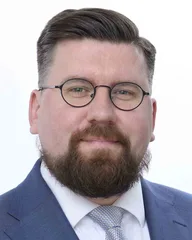
Lukas Sieper | Germany DEU | Non-attached Members (NI) | 390 |
| 2 |
|
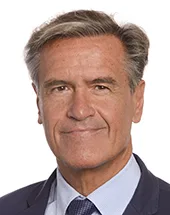
Juan Fernando López Aguilar | Spain ESP | Progressive Alliance of Socialists and Democrats (S&D) | 354 |
| 3 |
|
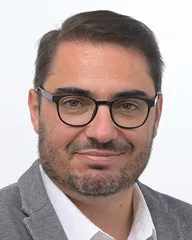
Sebastian Tynkkynen | Finland FIN | European Conservatives and Reformists (ECR) | 331 |
| 4 |
|
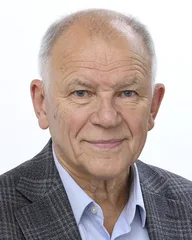
João Oliveira | Portugal PRT | The Left in the European Parliament (GUE/NGL) | 232 |
| 5 |
|
Vytenis Povilas Andriukaitis | Lithuania LTU | Progressive Alliance of Socialists and Democrats (S&D) | 227 |
All Contributions (31)
The arbitrary detention of President Mohamed Bazoum by the junta in Niger
No text available
Tackling barriers to the single market for defence - Flagship European defence projects of common interest
Madam President, Commissioner, ladies and gentlemen, the single market in defence is a false promise that opposes the European project. Because let's get back to the goal. Our work has identified six priorities for our defence industry: industrial concentration, interstate cooperation, innovation, competitiveness, less dependence and easier transfers within Europe. However, a single defence market will not achieve this objective for a number of reasons. First, the free movement of arms. Weapons are not refrigerators. Free movement would weaken the control of ultra-sensitive transfers and increase the risk of espionage and technological leakage. Secondly, strict control of State aid and mergers. This would weaken the industrial champions Europe needs, when, precisely, we want strategic concentrations such as the Bromo space alliance between Airbus, Leonardo and Thales. Thirdly, export control by the Commission. For Member States with a defence industry, arms exports are a central element of their national strategy. Finally, the qualified majority, which would simply mean the end of the veto. War is at Europe's doorstep, is it time to weaken the sovereignty of the Member States? European defence does not need a single market, but an intergovernmental defence market based on voluntary cooperation, joint procurement and a Commission that remains in its place, facilitator and non-coordinator.
Building a stronger European defence in light of an increasingly volatile international environment (debate)
No text available
CFSP and CSDP (Article 36 TEU) (joint debate)
No text available
EU Defence Readiness (joint debate)
No text available
EU Defence Readiness (joint debate)
No text available
Rule of law and human rights situation in Tunisia, particularly the case of Sonia Dahmani
No text available
EU position on the proposed plan and EU engagement towards a just and lasting peace for Ukraine (debate)
No text available
Recent peace agreement in the Middle East and the role of the EU (debate)
Thank you, dear colleague, for your question. It seems to me that before recognising the State of Palestine – and I am in favour of recognising two states – the Palestinians would have to recognise the State of Israel. Hamas, in fact, continues to kill its opponents. We've seen pictures. Intelligence services have proven it. So yes, Hamas is a terrorist movement that continues to kill its opponents and sow terror.
Recent peace agreement in the Middle East and the role of the EU (debate)
Madam President, ladies and gentlemen, Commissioner, the European Union has never had the real means to influence the Israeli-Palestinian conflict. His voluntarist rhetoric maintains an illusion of power quickly dissipated by reality and American action. Almost half of the Member States of the European Union have recognised the Palestinian State. It is symbolism without effect, a magical thought that neither protects civilians, nor regional stability, nor makes it possible to establish peace. Meanwhile, taking advantage of the ceasefire, Hamas continues to eliminate its opponents and reign terror. Donald Trump's brutality may have shocked us, but it has produced results, freed hostages, recovered bodies, a fragile but real ceasefire. And Europe, what does it propose? It wants to terminate the EU-Israel Association Agreement, calls for sanctions. When it sends weapons to Ukraine, but refuses to support Israel in the face of terrorism, it contradicts itself. Because this terrorism is not confined to Gaza, it circulates, it inspires, it imposes itself, it infiltrates our societies through networks or solitary wolves, radical or insidious speeches of the Muslim Brotherhood, via also the migratory flows of uncontrolled illegal immigrants. To ignore this link is to ignore the threat. What is the role of the European Union? The Union's role is to coordinate more diplomacy, to mobilise it, to define a credible position and to establish its authority in favour of real peace in the Middle East and in Europe.
Urgent need to protect religious minorities in Syria following the recent terrorist attack on Mar Elias Church in Damascus
Mr President, ladies and gentlemen, on several occasions in plenary I have warned. A new massacre targeting a minority took place in Syria, under the chairmanship of Ahmed al-Charaa, a former Islamist terrorist leader from Al-Qaida. Counter-terrorism experts are formal: Islamist terrorists do not confess or repent. I am probably one of the few here to have fought them directly. After the Kurds and Alawites, the 400,000 Christians in Syria are targeted. In addition to the daily persecution, this terrible suicide attack on 22 June, committed in a crowded church in Damascus itself, killed 25 people – including several children – and injured many more. Christians have every reason not to feel protected in the fourth most corrupt country on the planet, which is led by former Islamist terrorists – who have neither expressed regret nor admitted responsibility. Despite all this, the European Union, in its great generosity, does not regret having paid EUR 2.5 billion in March over a weekend for the country’s economic development. Now, who can ignore the pyramid of Maslow? There will be no economic development in Syria without meeting the country’s security needs. I therefore call for our relationship to be adapted to the reality on the ground. We need to speed up democratic elections to help build a man of peace, instead of supporting a terrorist. Let us not forget that al-Charaa, aka Abu Mohammed al-Joulani, and his government are terrorists, with a lot of blood on their hands.
Urgent need to protect religious minorities in Syria following the recent terrorist attack on Mar Elias Church in Damascus
Mr President, ladies and gentlemen, on several occasions in plenary I have warned. A new massacre targeting a minority took place in Syria, under the chairmanship of Ahmed al-Charaa, a former Islamist terrorist leader from Al-Qaida. Counter-terrorism experts are formal: Islamist terrorists do not confess or repent. I am probably one of the few here to have fought them directly. After the Kurds and Alawites, the 400,000 Christians in Syria are targeted. In addition to the daily persecution, this terrible suicide attack on 22 June, committed in a crowded church in Damascus itself, killed 25 people – including several children – and injured many more. Christians have every reason not to feel protected in the fourth most corrupt country on the planet, which is led by former Islamist terrorists – who have neither expressed regret nor admitted responsibility. Despite all this, the European Union, in its great generosity, does not regret having paid EUR 2.5 billion in March over a weekend for the country’s economic development. Now, who can ignore the pyramid of Maslow? There will be no economic development in Syria without meeting the country’s security needs. I therefore call for our relationship to be adapted to the reality on the ground. We need to speed up democratic elections to help build a man of peace, instead of supporting a terrorist. Let us not forget that al-Charaa, aka Abu Mohammed al-Joulani, and his government are terrorists, with a lot of blood on their hands.
Arbitrary sentencing of Franco-Algerian writer Boualem Sansal and journalist Christophe Gleizes (debate)
Madam President, Commissioner, ladies and gentlemen, on 16 November 2024, Boualem Sansal, an 80-year-old French writer, was arrested in Algiers. His wrong? To have exercised his freedom of thought and speech. He was sentenced to five years in prison for undermining national unity, following a political trial held behind closed doors. As Boualem Sansal is seriously ill, his life is in danger. On 1 July, the Court of Appeal confirmed his sentence and, on the occasion of the Algerian National Day on 5 July, 6 800 detainees were pardoned. He doesn't. President Tebboune personally chose not to grant him his pardon. It is a political act, a clear break, assumed, with France, with Europe. This refusal is an affront, an affront to freedom of expression, to democratic culture, an affront to France, an affront to Europe. Our Parliament largely adopted a resolution on 23 January 2025, and yet what is the Commission doing? What is Commissioner Kaja Kallas doing? We sent him a letter on 3 June 2025. In the reply we received from her last week, not a single concrete measure. Words, words, but no act: “We all share the same objective, which is the release of Boualem Sansal, and I consider that a constructive dialogue with the Algerian authorities is the most appropriate and effective way to achieve it.” The same passivity as in the case of journalist Christophe Gleizes, sentenced on 29 June by the Tizi Ouzou court to seven years in prison with a detention warrant. His imprisonment for apology for terrorism also illustrates the arbitrary justice that reigns in Algeria and the inability of both France and Europe to secure his release, such as that of Boualem Sansal. Boualem Sansal embodies courage, dignity and fidelity to the ideals of freedom. He is the voice of all those who want to be silenced. Then no! We can no longer continue to lie down or pretend in front of authoritarian regimes whose sole purpose is to humiliate us. It is no longer time for soft diplomacy, bureaucratic compromises or permanent repentance. Let's regain our power and greatness and be respected. It is time to bring our actions into line with our principles and to stop suffering.
Arbitrary sentencing of Franco-Algerian writer Boualem Sansal and journalist Christophe Gleizes (debate)
Madam President, Commissioner, ladies and gentlemen, on 16 November 2024, Boualem Sansal, an 80-year-old French writer, was arrested in Algiers. His wrong? To have exercised his freedom of thought and speech. He was sentenced to five years in prison for undermining national unity, following a political trial held behind closed doors. As Boualem Sansal is seriously ill, his life is in danger. On 1 July, the Court of Appeal confirmed his sentence and, on the occasion of the Algerian National Day on 5 July, 6 800 detainees were pardoned. He doesn't. President Tebboune personally chose not to grant him his pardon. It is a political act, a clear break, assumed, with France, with Europe. This refusal is an affront, an affront to freedom of expression, to democratic culture, an affront to France, an affront to Europe. Our Parliament largely adopted a resolution on 23 January 2025, and yet what is the Commission doing? What is Commissioner Kaja Kallas doing? We sent him a letter on 3 June 2025. In the reply we received from her last week, not a single concrete measure. Words, words, but no act: “We all share the same objective, which is the release of Boualem Sansal, and I consider that a constructive dialogue with the Algerian authorities is the most appropriate and effective way to achieve it.” The same passivity as in the case of journalist Christophe Gleizes, sentenced on 29 June by the Tizi Ouzou court to seven years in prison with a detention warrant. His imprisonment for apology for terrorism also illustrates the arbitrary justice that reigns in Algeria and the inability of both France and Europe to secure his release, such as that of Boualem Sansal. Boualem Sansal embodies courage, dignity and fidelity to the ideals of freedom. He is the voice of all those who want to be silenced. Then no! We can no longer continue to lie down or pretend in front of authoritarian regimes whose sole purpose is to humiliate us. It is no longer time for soft diplomacy, bureaucratic compromises or permanent repentance. Let's regain our power and greatness and be respected. It is time to bring our actions into line with our principles and to stop suffering.
Dissolution of political parties and the crackdown on the opposition in Mali
Mr President, ladies and gentlemen, in Mali, Europe has paid the price of blood. Our continent has paid a heavy price: 67 European soldiers – 58 French, one Spanish, two Germans, five Dutch, one Portuguese – fell in the fight against Islamist terrorism. Let's not forget their sacrifice. We intervened in 2013, at the request of the Malian government at the time, to prevent the arrival of Islamists in power and the creation of a corridor for Islamist terrorists to Europe. In 2020, a coup brought to power Colonel Assimi Goïta, who geopolitically brought his country closer to Russia. And on May 13, 2025, the ruling military junta dissolved the political parties, plunging the country into an officially dictatorial regime. As such, the European Parliament is voting this week on a resolution to oppose this serious violation of fundamental rights, which further exposes Mali to its total invasion by Islamist groups. Africa and Europe are more than partners. We are neighbors, bound by history, geography, economy and peoples. The porosities between our two continents are very strong, for better, but also for worse. More than 800,000 Malians live in Europe, mainly on its western flank, and to this figure could soon be added hundreds of thousands of illegal migrants fleeing the dictatorship and the advance of Islamist groups towards Bamako. We have sacrificed too much in this country to accept the erasure of their freedom. Out of solidarity, out of responsibility, Europe must hold the line: the line of a renewed link with the African Union through a strengthened and balanced strategic partnership. For Africa will have nearly 2.5 billion people by 2050, or one in four men, and by 2100 it will be one in two. Being bystanders without acting in Mali could lead to contagion among its neighbours, raise the risk of importing the terrorist threat into Europe and dangerously increase the flow of illegal migrants.
White paper on the future of European defence (debate)
Madam President, Commissioner, ladies and gentlemen, I am a French general who knows the world of defence and the defence industry well. Europe’s founding treaties, those that protect our unity, remind us that defence is not a competence of the European Union. We do not need a European army; We need weapons designed, produced and sold by Europeans and to Europeans. This will bring coherence to our national armies. Let’s not be afraid to face the challenges we face: a very hostile Russia; The United States is distancing itself and dividing us. a liberticide Turkey that occupies a third of Cyprus and supports jihadists in Syria and Azerbaijan against Christians in Armenia; radical Islamism that threatens us both externally and internally; finally, an increasingly powerful China, on which we are the most economically dependent, because it accounts for 21% of our imports. Let's be concrete: each country must make this effort of coherence by purchasing European. Indeed, foreign arms purchases can prevent us from carrying out the military actions we would have decided. Above all, six Member States have 120 to 4 000 defence companies able to meet our needs. These six countries need to be able to sell more in Europe and develop common industrial policies. It is at this price alone that we will become independent and autonomous.
Need for targeted support to EU regions bordering Russia, Belarus and Ukraine (debate)
Madam President, ladies and gentlemen, in the regions of the Union bordering Russia, let us not forget Georgia, where I have come from. It is not the European Union, but a country whose population claims to belong to the European family, which has written in its Constitution its firm desire to join the European Union, and which the European Union has supported for 16 years with nearly 100 million euros per year and the presence of EUMM and NATO. Nevertheless, Georgia has had a pro-Russian government since November, following major electoral irregularities. No longer having this country in our area of influence poses a triple threat to the European Union: the first, the loss of a strategic ally that allows us to have an appreciation of unique situations at the gates of Europe; the second, the risk to the security of a friendly country, Armenia; The third is a political victory for Russia. What is the best support that the European Union can give to this country? It's being credible, which means being much stronger at deterring and keeping our promises. With Ukraine, we have discredited ourselves in the face of Putin, in my opinion. It also means being more independent, especially when you want to defend the independence of others. Being credible means, right now, increasing our defence budgets, spending on the European market and not American or South Korean, being sincere between European countries, creating a European pillar within NATO, defending our European champions and having sovereign digital infrastructures independent of GAFAM.
Case of Boualem Sansal in Algeria
Madam President, ladies and gentlemen, on 16 November 2024, Boualem Sansal, a 75-year-old Franco-Algerian writer, multi-award-winning novelist and winner of the Grand Prix du roman de l'Académie française in 2015, was arrested in Algiers. Extremely ill, he was hospitalized several times. His life is in danger. His crime? Try to understand what is happening in your country and say it. This imprisonment is not an isolated case. According to Amnesty International, nearly 300 political prisoners are being held in Algerian prisons. The crackdown on journalists, activists and religious minorities has intensified. Last week, 47 Christian churches were closed under seal. My knowledge of this country, in my previous duties, invites me to alert you to the worrying deterioration of the situation. It is unthinkable to allow this regime to further intimidate Algerian and European citizens. A Parliament resolution can really save Boualem Sansal's life. In May 2023, we secured the release of Algerian journalist Ihsane El Kadi through a resolution. Our silence would therefore be complicity. With François-Xavier Bellamy, I call on you to support this resolution and to vote tomorrow noon for the immediate and unconditional release of the Frenchman Boualem Sansal. In addition, the agreement between Europe and Algeria, signed in 2005 and in which Algeria undertakes to respect democratic principles and fundamental rights, is being renewed. The resolution stresses that this renewal, like the European funds granted, will henceforth be based on the country's democratic progress. Finally, I would like to point out that this resolution enjoyed the exceptional support of all the political groups in Parliament during yesterday's negotiating meeting. It is a demonstration of unity that will, I hope, save the life of a righteous man.
Uniting Europe against actors hostile to the EU: time to strengthen our security and defence (topical debate)
Madam President, ladies and gentlemen, our world order is being shaken up by Donald Trump. 350 million Americans are no longer willing to pay for 450 million Europeans. Where is Europe? Some are unsubscribing from X, others are already playing American rather than European solidarity. Trump is moving forward without a mask: He wants to divide us and turn us into a market place for Americans. I therefore call for a European awakening and sincere cooperation between us. To buy more American in Europe is to destroy any hope of strategic autonomy. Take the example of space: These are our data, our navigation, our communications, our observation of the Earth. Without space, Ukraine could no longer wage war. Our autonomy in space should therefore be our priority, and our cooperation a matter of course. Still, what's going on? Our champions are in trouble. In 2024, the Italian Vega launched two rockets, the French ArianeGroup only one, when SpaceX launches one every two and a half days. What are we waiting for to concentrate our forces and prioritise the use of our European launchers? Finally, having them is good, provided that you also know how to protect them. This is a related topic, to be dealt with as a matter of urgency.
Russia’s disinformation and historical falsification to justify its war of aggression against Ukraine (debate)
Madam President, ladies and gentlemen, disinformation has always been a weapon. It is part of what is now called cyber warfare. The Internet is now a natural place of conflict for modern armies. Some EU countries have cyber military units. France itself has a cyber command. As a soldier, I can tell you that this weapon is a strategic weapon, because it has the means today to tip a conflict and influence international relations, or even to decide the outcome of an election. In other words, the scandal is not that Putin distorts history, falsifies information and develops a narrative to justify his war – we are indeed in the midst of an information war. No, the scandal, in my opinion, is that we count the points too much without taking action. We seek too little to know what is really going on and to cross-reference our information. Why, for example, do we not rely more on the Intcen, the European Union’s intelligence agency, which feeds on information from the agencies of the Member States? Knowing better what is happening autonomously, without being influenced by others, would allow us to act better. The scandal is also that we do not have a counter-narrative. What is our war of influence, and what tools do we have, we who do not even have powerful and sovereign social networks? This should be our priority to protect our democracies.
Toppling of the Syrian regime, its geopolitical implications and the humanitarian situation in the region (debate)
Mr President, Madam High Representative, ladies and gentlemen, the consequences of the fall of Bashar al-Assad's regime are geopolitical, but they are also human, with a real risk of this country continuing to fragment: the Alawites in the west with the Russians, the Free Syrian Army in the north, the Kurds in the north-east, the Druze in the south, the HTC in the centre, the Christians in the big cities, not to mention the Daesh fighters spread throughout the country. Behind an appearance of calm transition, the country remains plunged into chaos. Tensions are ubiquitous, Israel continues its raids on the military bases of the former Syrian army, Kurdish and pro-Turkish militias are fighting in the north, assassinations continue, looting is ongoing, not to mention the Americans hitting Daesh bases. I repeat: Let us not be naive and, above all, let us remain cautious: The HTC has given us no evidence of its distance from Islamist terrorism, from which it originated. Turkey is expanding its influence, and we can see where this imperialist resurgence can lead – just talk to our Cypriot friends. In this divided country, Kurds, Christians and women will, believe me, be the main victims of a regime that does not yet say its name. Beyond sending a representative of the European Union, it is essential to deploy an observer mission and, above all, to maintain sanctions against that country as long as we do not have a fairer view of what is happening there.
Reinforcing EU’s unwavering support to Ukraine against Russia’s war of aggression and the increasing military cooperation between North Korea and Russia (debate)
No text available