
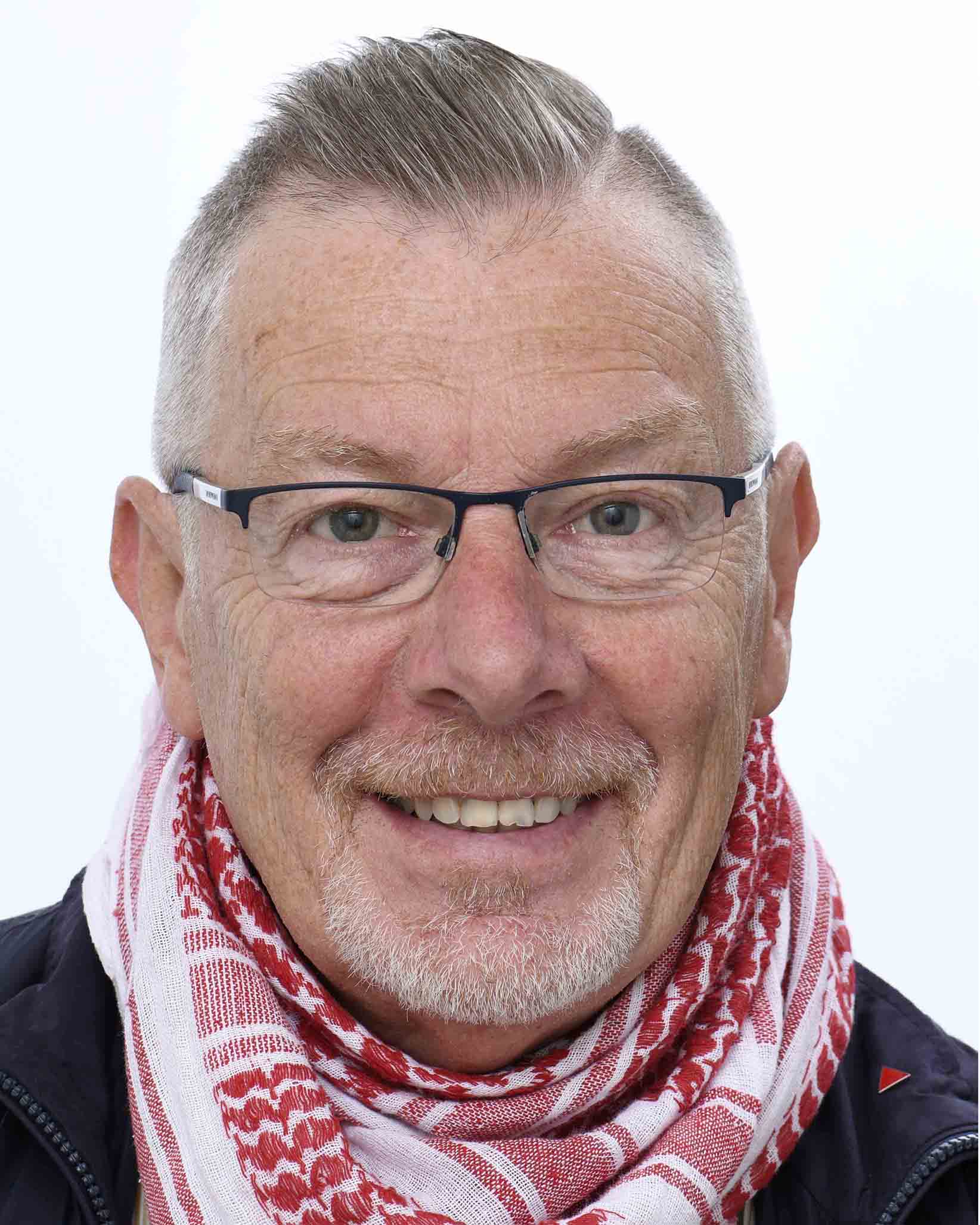

| Rank | Name | Country | Group | Speeches | |
|---|---|---|---|---|---|
| 1 |

|
Lukas Sieper | Germany DEU | Non-attached Members (NI) | 390 |
| 2 |

|
Juan Fernando López Aguilar | Spain ESP | Progressive Alliance of Socialists and Democrats (S&D) | 354 |
| 3 |

|
Sebastian Tynkkynen | Finland FIN | European Conservatives and Reformists (ECR) | 331 |
| 4 |

|
João Oliveira | Portugal PRT | The Left in the European Parliament (GUE/NGL) | 232 |
| 5 |

|
Vytenis Povilas Andriukaitis | Lithuania LTU | Progressive Alliance of Socialists and Democrats (S&D) | 227 |
All Contributions (60)
Preparedness for a new trade era: multilateral cooperation or tariffs (debate)
Madam President, 'you get a tariff and you get a tariff and you all get a tariff'. This is Donald Trump's new favourite threat. At least when he's not threatening to buy or even invade your country, of course. He just announced a tariff on aluminium and steel which will have serious consequences for the European industrial sector and for industrial workers. And what's the European response? We deeply regret. Like Trump will care. It's ridiculous. Trump tariffs will hit Europe's working class hard, with higher prices and massive loss of jobs. But the EU does not care to protect its workers. No, no, no. They only care to please wealthy people like Trump, Musk and the other billionaires in the United States Government. We cannot be weak against Trump attacks. Europe needs to be strong and not by doing the same stupid things like Trump, but instead to work with other countries and partners around the globe. To fight for the working class of Europe, we need a foreign policy other than just being the lapdog of the United States.
Geopolitical and economic implications for the transatlantic relations under the new Trump administration (debate)
Mr President, ladies and gentlemen, Donald Trump once said that the word rates The best word was in the dictionary. He already announces that he will continue this policy with additional tariffs against Canada, Mexico and China. He calls for this to make America stronger, but let's be honest: It's just an attack on working people worldwide. Who pays the price? Not the billionaires and his cabinet, but ordinary people, because of higher prices and more uncertainty. Trump is waging an aggressive battle and dragging the rest of the world into his cold war. Its tariffs affect not only Chinese and Canadian goods, but also European industry. Our future is at stake here. This is not economic protection. These are the last convulsions of a system in decline, capitalism. Fortunately, change is in our hands. The world is changing and it is up to us to fight for fair trade, a fairer socialist perspective. So no Trump tariffs, no economic blackmail. Together and resolutely, we say: No way, we won’t pay!
One-minute speeches on matters of political importance
Mr President, the Swiss pharmaceutical company Novartis announced last week that it wants to cut 170 jobs in its branch in Puurs, Belgium, where more than 1000 employees work. Not a happy new year for employees and their families. They are faced with uncertainty. Novartis is one of the largest pharmaceutical companies in the world and is very profitable. It is only recently that workers in the pharmaceutical sector were considered essential during the COVID crisis and that flexibility was requested to deliver vaccines quickly. But if sales stagnate a little, if the billion-dollar gain is not expected, then the staff is the first to be saved. Guarantees were given to maintain employment. Governments have created a tax-friendly regime. But it all turns out to be worthless today. For these multinationals, profits are never high enough. It is unacceptable that such profitable companies should be forced into employment. We are again calling for a moratorium on redundancies in profitable companies. All my support to the trade unions, workers, servants and their families for the preservation of their jobs.
Ceasefire in Gaza - the urgent need to release the hostages, to end the humanitarian crisis in Gaza and to pave the way for a two-state solution (debate)
Mr President, ladies and gentlemen, after 15 months and more than 50,000 deaths, 70% of which are women and children, a ceasefire is finally under way. At last the people in Gaza can breathe and humanitarian aid enters Gaza. The European Union welcomes the ceasefire, but the EU has done nothing to achieve it. The EU has done nothing to stop the killings. And let's be honest, a ceasefire is still not peace. This ceasefire was achieved thanks to the global mobilisation for solidarity with Palestine, without which this Parliament would have long forgotten the existence of the ongoing genocide. Will the EU do anything this time to end the war? In that case, the European Union must now impose sanctions on Israel and denounce the Association Agreement. In that case, the EU must stop supplying arms and help bring Mr Netanyahu and the other war criminals to justice. The illegal settlements must be dismantled and the occupation stopped. What are you guys waiting for, anyway?
Tackling abusive subcontracting and labour market intermediaries (debate)
Mr President, in Antwerp we have already seen the consequences of subcontracting at Borealis and PostNL. A jumble of subcontracting where a cat can no longer find its young. Recently, a university study showed that there are an average of sixteen subcontractors with up to seven different layers of subcontracting. The European Union's arbitrary austerity rules force Member States and local authorities to award public contracts to the cheapest bid. This creates a whole chain of subcontractors who do not care about collective agreements. The result? Employees come into precarious jobs with poor pay and working conditions. The EU urgently needs to review the austerity rules and the Public Procurement Directive and legislate on subcontracting. We really need to limit outsourcing and subcontracting as much as possible. What we need is a blacklist of companies that refuse to abide by collective bargaining agreements. We also need to make more money available for labour inspectorates. We cannot allow the so-called free market to destroy the rights of our workers or our public services. Equal rights for all workers now.
Promoting social dialogue and collective bargaining and the right to strike in the EU (debate)
Mr President, I am very concerned about the large number of European politicians who are trying to restrict workers' rights to strikes and collective agreements. Just as we are facing unprecedented corporate greed and direct attacks on workers' rights. Take the Arizona coalition in Belgium, for example. They're not even in government yet, and yet they're already talking about restricting the right to strike and attacking the unions. In addition, they want to weaken the protection of trade union representatives. Finally, they want to promote individual negotiations to divide the working class. It is not much better in Europe. Wherever the right, and certainly the extreme right, comes to power, we see attacks on workers' rights. They are the enemies of the workers, despite what they say during the elections. All progressive forces must fight together against these authoritarian attacks and continue to stand up for the right to protest, collective bargaining and democracy at work. We must never forget that the trade unions were always the first goal of fascists. We'll never let that happen again. No pasará.
Rise of energy prices and fighting energy poverty (debate)
Mr President, Commissioner, energy prices are skyrocketing once again. And do you know what that means for ordinary people in Europe? This means that more and more people have to make the choice between a hot meal or heating their home. This is a disaster for ordinary families, who face fears every time they expect their energy bills. But it is also a disaster for the industry. Only the largest multinationals can conclude more or less long-term contracts today. But ordinary people and SMEs depend on the whims of the free market you so acclaimed. There is a threat of a tsunami of company closures, largely due to the current high energy prices in Europe. It is very important to re-establish public control for that energy, and therefore for prices, so that we can offer everyone lower and more stable energy prices. Because that's good for the people, that's good for the families, but it's also good for the industry. Here in the European bubble it is of course nice and warm. But out here, it's a completely different story. What are you going to do about it?
Order of business
Mr President, I did indeed want to intervene on the basis of Rule 136, but you have already referred to the reason why the President of the European Council is not here. I would have liked to ask a few questions in connection with the European Council meetings that have passed, but I cannot ask my question. I note that it is not only today that there is apparently a structural problem with Mr Michel. He has only been here once this year and that is a structural problem. I think we are paying Mr Michel enough to at least show a little respect for this Parliament. That is why I believe that Parliament should demand that he come here. Why do we pay him so much if he is not accountable in this House? And soon he will get a win for life for all that beauty, something that ordinary Europeans can only dream of. Madam President, that is really not okay.
Tackling the steel crisis: boosting competitive and sustainable European steel and maintaining quality jobs (debate)
Mr President, the European steel industry is faltering and it is time for action. Steel is the backbone of construction, the transport sector and actually the entire industry. With three hundred thousand direct jobs and two million indirect jobs, the steel industry is of enormous importance. Nevertheless, ArcelorMittal, the largest steel producer in Europe, risks relocating its production outside Europe, mainly due to high energy prices. That's why we need to intervene now. Stable and cheap renewable energy is crucial for the future of industry and for the necessary industrial transition. This requires massive public investment. But we must also dare to look at the profit. Operating profit of €10 billion has been achieved in the last three years. The main question is: What happened to that? Instead of investing, the company is now threatening to leave. We cannot accept that at all. Those profits should go back to society so that the jobs stay here, and especially to the people who made the company successful. I am therefore on the side of the trade unions and all the people who are trying to prevent these plans.
The crisis facing the EU’s automotive industry, potential plant closures and the need to enhance competitiveness and maintain jobs in Europe (debate)
Mr President, ladies and gentlemen, Audi Forest in Brussels has received considerable public support to build electric cars, but has chosen to use it to build an expensive luxury model that is inaccessible to ordinary consumers. As a result, the sales figures are disappointing. Audi is now considering closing the plant, putting thousands of jobs at risk. Above all, we condemn Audi's policy. Audi refuses not only to consult with the trade unions, but also with governments. This is unacceptable to us. How can a company that has received so much from the community shut down today and refuse to engage in dialogue with that same community? This problem transcends Brussels and Belgium. All over Europe, automotive factories are under pressure. Audi Forest could be the first domino to fall. That is why the European Commission must act now. The need for a plan is high and that plan is there. Our plan contains concrete measures such as a European moratorium on the closure of such companies. We are going to need these kinds of companies to be able to realize the necessary transition tomorrow. A legal obligation is needed for car manufacturers to maintain existing jobs in the sector and, in particular, the obligation for European manufacturers to produce affordable electric cars. We propose this plan because it would be a shame that today the working class has to pay again for the failure of the so-called free market economy. So the situation calls for immediate action and we have a plan. Where is your plan, Mrs von der Leyen?