
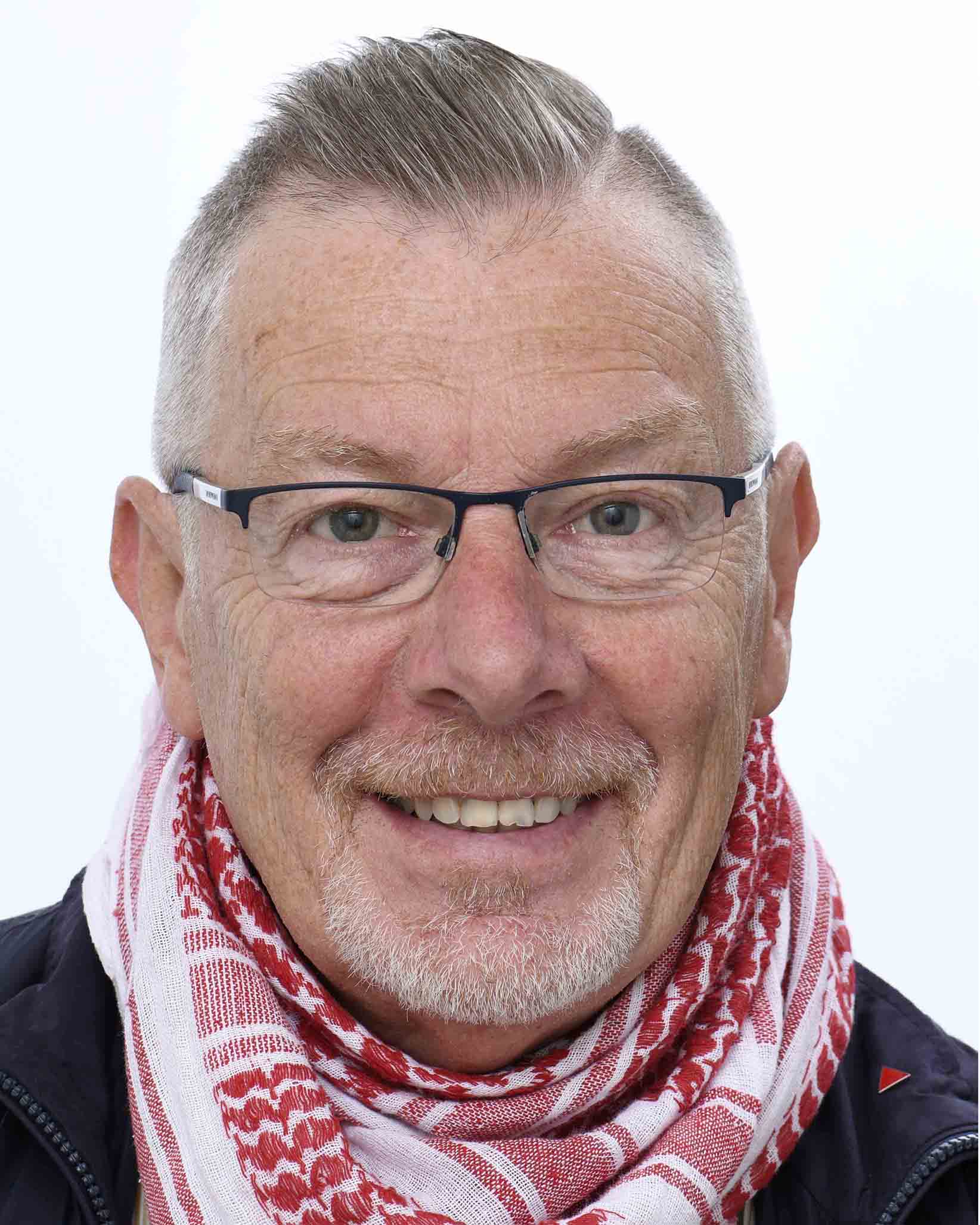






| Rank | Name | Country | Group | Speeches | |
|---|---|---|---|---|---|
| 1 |
|
Lukas Sieper | Germany DEU | Non-attached Members (NI) | 390 |
| 2 |
|
Juan Fernando López Aguilar | Spain ESP | Progressive Alliance of Socialists and Democrats (S&D) | 354 |
| 3 |
|
Sebastian Tynkkynen | Finland FIN | European Conservatives and Reformists (ECR) | 331 |
| 4 |
|
João Oliveira | Portugal PRT | The Left in the European Parliament (GUE/NGL) | 232 |
| 5 |
|
Vytenis Povilas Andriukaitis | Lithuania LTU | Progressive Alliance of Socialists and Democrats (S&D) | 227 |
All Contributions (60)
Cutting red tape to enable a competitive and clean transition – the urgent need to shorten and simplify permitting (debate)
Mr President, this business-friendly Commission continues to say that if we abolish regulation, our economies will flourish and everything will be great. Of course, none of that is true. Rules are not an obstacle to success, on the contrary. It's not science fiction. Decades ago we had social protection, good wages, a good standard of living and strong economies. Now we are ruled by pathetic people who would let an employee die for a few euros. Without regulation, companies always choose the cheapest: continue to burn fossil fuels, drop health and safety standards, force truck drivers into unsafe situations and even kill workers. Many companies only care about profits. So let's not fool ourselves. Efficiency, simplification and digitalisation are all okay, but have nothing to do with deregulation. The legislation for an industrial accelerator and the Omnibus plans will make us more unsafe, unsafe and poorer. So we cannot allow companies to win such an offensive against our employees. We can make a green transition and keep people safe. So leave deregulation where it belongs: The graves of Maggie Thatcher and Ronald Reagan.
Gender pay and pension gap in the EU: state of play, challenges and the way forward, and developing guidelines for the better evaluation and fairer remuneration of work in female-dominated sectors (debate)
Mr President, the facts tell us that every year women work two months more than men. Despite this, they earn 16% less and their pension is a quarter lower. We have a directive on this, but it remains a dead letter. The current EU austerity measures that harm everyone have an even more negative impact on girls and women. You would expect that with the pro-family rhetoric we hear here, people would opt for policies that actually help women and partners. But not so. Many EU countries still want women to take care of children, parents and households and sacrifice their career, financial security and work opportunities with all the consequences for their physical and mental health. Women end up in poverty because we continue to opt for a policy that is only focused on business. Done with this! No more symbolic flowers, one day a year on March 8th. Women need action every day. And finally, a word about the women in Iran, Palestine, Venezuela, Cuba and Ukraine: war and European hypocrisy – that does not help women either.
Addressing subcontracting chains and the role of intermediaries in order to protect workers’ rights (debate)
Mr President, tomorrow this Parliament will vote on a crucial report calling on the Commission to finally regulate temporary employment agencies and put an end to endless subcontracting. In more and more sectors, shadowy constructions have become the norm. The target? Reduce costs and make work even more uncertain. But on the right side of this Chamber, we are once again trying to get as much out of this report as possible. Full chain liability: they do not want; binding legislation: they do not want; limit subcontracting to two layers: They don't want to. And then I hear the right here today say again that we need to check the existing rules better. Well, in all your Member States, these controls are being phased out because of austerity and other budgetary measures. We simply want measures that prevent workers from being the victims of employers evading their responsibilities. In Spain, for example, similar legislation has shown that this works for 20 years. Why? This protects employees. But there seems to be a majority in this House that defends the interests of business at the expense of workers' safety. Well, we'll keep an eye on you and tomorrow we'll see who's really on the side of the employees and who's not.
A new action plan to implement the European Pillar of Social Rights (debate)
Mr President, in 2017, the European Union made a promise to its citizens with the Pillar of Social Rights. The European Union would be more than a market, more than just a tool for big capital. It was a promise of social protection and decent work. Almost nine years later, the result is painfully clear. Not much has come of that promise. As multinational profits hit record highs and defense budgets exploded, workers saw their purchasing power evaporate and their rent become unaffordable. We have always known that social rights in this Union are subordinate to market logic and stifling fiscal rules, but today the Commission is not even trying to keep up appearances. Mrs Mînzatu, do not let the promise of social rights die a silent death. Show that the European Union can also mean something for workers. Take advantage of the upcoming fair labour mobility package and the Quality Jobs Act to come up with binding legislation for workers. We've had enough of good words and promises by now.
One-minute speeches on matters of political importance
Mr President, many people here think that a war economy would be the solution to our industrial decline. But do we really want our industrial strategy to be based on the production of surveillance, violence and death tools? Have we not had enough war deaths in the twentieth century? Is permanent war our only option? That's madness. To fund von der Leyen's defense plan, our governments are abandoning people who can't afford housing, childcare, food, bills and transportation. We waste billions fighting imaginary threats while our people die of real threats: forest fires, floods, pollution, accidents at work, heat waves, waiting lists in hospitals. We could invest in what we really need: in peace and prosperity. Instead, we choose to follow the US and NATO and burn our ethics and our money by supporting genocide and senseless wars. We slide into a spiral of self-destruction and violence. It is high time to find our soul, invest in the future and give our citizens a new perspective.
Just transition directive in the world of work: ensuring the creation of jobs and revitalising local economies (debate)
Mr President, Commissioner, for decades trade unions have accused companies of shutting down factories, making millions of people unemployed and moving production abroad to exploit foreign workers. We see the consequences of that today. We hardly produce anything. Our economies are not competitive and we are desperately trying to protect what is left of our industry by imposing tariffs on those who have been smarter than us. Many in this House blame the green transition, but that is wrong. That's a lie. We cannot continue to rely on fossil fuels, nor can we avoid modernity. The debt lies entirely with the companies and governments who, despite knowing what investments were needed, have wasted a large part of our taxpayers' money. Our employees deserve at least the recognition that they have already paid for these mistakes. The EU needs to put things right and take action to support them. Companies have responsibilities. They must invest, retrain workers, consult with them and prevent redundancies. If the companies have no obligations, they simply do nothing. It is the job of this Parliament to represent the workers and ensure that the costs of the transition are passed on to those who can afford it. That is why we need a directive. That is why you must all vote in favour tomorrow. And if you don't, please stop telling your constituents that you do care about them.
The urgent need to combat discrimination in the EU through the horizontal anti-discrimination directive (topical debate)
Mr President, the anti-discrimination directive has been in place since 2008. Seventeen years. A number of Member States are blocking progress and earlier this year the Commission even wanted to withdraw the proposal. That's unacceptable. There are major gaps in European anti-discrimination rules. Discrimination based on religion, disability or sexual orientation is not sufficiently protected, so that many people in the housing market, in access to social security or in education still experience discrimination based on their religion, disability or sexual orientation. Research continues to show this. That is why we need this directive to close these gaps, because those same studies also show that discrimination is increasing today. This cannot be separated from the racism that has normalized the far right. More and more we hear the story of people who would no longer feel at home in their own country. But that has nothing to do with migrants, LGBTQ+ or any other marginalized group. It has everything to do with the alienation, fear and uncertainty created by an economic model that only reduces people to cost items, to disposable labour or consumers. Addressing these issues requires much more ambition, at all levels. We must continue to fight for stronger rules and more protection. That is why I would like to call on the Member States to break the blockade in the Council. For let us be clear: Combating discrimination is not an afterthought. It's a class struggle. For as long as we allow ourselves to be divided, the rich laugh in their fist and the system that divides us all remains.
Presentation of the automotive package (debate)
No text available
One-minute speeches on matters of political importance
No text available
EU strategy for the rights of persons with disabilities post-2024 (debate)
No text available
Effective use of the EU trade and industrial policy to tackle China’s export restrictions (debate)
Madam President, dear Commissioner, every time China imposes a kind of trade restriction, the EU response is to escalate, as if we are not doing exactly the same thing. Doesn't China have the right to protect its interests in the same way that we protect ours? And why is our protectionism justified, but theirs is called aggressive? We should have invested more strategically, built up stronger supply chains, developed a proper industrial strategy, but we did not. We relocated, closed and sold out factories, and we fired millions of workers. What did we expect? China simply did what we should have done: invest in our economy, in our infrastructure and, above all, in our people. The question should not be how do we fight China, but how do we rebuild our industry and our economy? The other question is: how do we engage with other competitive economies? The correct answer should be instead of organising trade wars, we have to build a fair trading system based on multilateralism, dialogue and cooperation.
Enhancing police cooperation in relation to the prevention, detection and investigation of migrant smuggling and trafficking in human beings; enhancing Europol’s support to preventing and combating such crimes (debate)
No text available
General budget of the European Union for the financial year 2026 – all sections (debate)
Mr President, Commissioner, you said the EU budget is nothing more than politics expressed in numbers, a reflection of choices and priorities. I agree. Over EUR 130 billion for defence – five times more. EUR 18 billion for military mobility – ten times more. Border management tripled and EUR 15 million extra for the wine sector. Your concerns are not those from the European people. You invent imaginary threats to divert attention from the real threats: not being able to pay your bills, healthcare and housing. Not one word on wages and pensions, and nothing for the 1.3 million homeless people. You vilify and demonise migrants, but you know they are escaping our wars and climate disasters. They look after our elderly, they clean our hospitals, they cook in our canteens. Without them, our economies and societies would collapse. You say you want an independent Europe, but then you take your orders from NATO. We can make Europe a place where everybody is treated with respect, or we can let it be a racist fortress. You make your choices – we will continue to fight them.
Establishment and functioning of European Works Councils - effective enforcement (debate)
Mr President, these are not good times for workers' rights. The von der Leyen Commission has decided to launch the attack on all fronts. But tomorrow we will vote on the revision of the directive on European Works Councils. This is a huge opportunity to achieve an improvement from Brussels for workers across Europe, an improvement for which we, together with the trade unions, have been fighting for sixteen years. Will it be perfect this time? Probably not. But it is definitely a step forward. This review will strengthen employee participation in their company. As former Vice-President of the European Works Council of General Motors Europe, I know perfectly well what is needed to improve employee participation. And that is crucial, because employee participation is good for the entire industry. Employees know their businesses better than anyone else and know what needs to be done to improve business. Research shows that companies that better involve their employees in important decisions work better than companies that don't. Employees have much more to offer their companies than just their hands. We must therefore not miss this opportunity and must finally give workers what they are entitled to. I look forward to the vote. At last it will become clear which parties are actually committed to the interests of working people and the question will be answered whether the right side of this parliament will betray those workers as always. I already have a suspicion.
Europe’s automotive future – reversing the ban on the sale of combustion cars in the EU (topical debate)
Mr President, on the right side of this Parliament we hear that the future ban on cars with internal combustion engines must be reversed. This would supposedly be necessary to save European production and European jobs. But nothing is less true. This reversal serves only to secure the automotive industry’s short-term quarterly profits – an industry which, moreover, was hopelessly late in investing in green production and therefore missed the boat. Instead of investing in cheap electric cars, they continued to focus massively on heavy, polluting cars, while moving their production en masse to countries where workers are hardly paid and have little to no rights. Should European car workers pay the price, now that it turns out that this industry is not ready for the future at all? Definitely not. We must not be deceived by the lies of the right. European car workers do not benefit from a car industry that is heading towards the abyss at full speed. They need an industry that is ready for the future.
The EU’s role in supporting the recent peace efforts for Gaza and a two-state solution (debate)
Mr President, Commissioner, what was the role of the EU in supporting peace efforts for Gaza? Nihil, zero, noppes, nada. European powers are repeating today the most abhorrent colonial racism that we thought would finally be a thing of the past. Not only are European leaders today redrawing the borders of Palestine without the Palestinians, but they are also simply watching women and children being massacred, without doing anything. Babies left in incubators to die do not form a red line. People in the Middle East are treated like mosquitoes, with no right to exist or defend themselves. Their struggle for survival is just an annoying stick in the wheel of our arms sales. These two years will therefore be remembered as an era in which this Commission and our governments tacitly authorised genocide and ethnic cleansing in the West Bank. They should be ashamed. History will not acquit them and I hope that the judges in The Hague will not.
Devastating wildfires in Southern Europe: the need to strengthen EU aid to restore the massive loss of forests and enhancing EU preparedness (debate)
Mr President, I would also, of course, like to thank, on my behalf, all the firefighters and all those who have worked for civil protection and the like for all that they have done during this summer's catastrophe. After all, many of them have paid a high price, even with their lives. I am pleased that much is now being said and promised, but I also hope that something is actually being done. I am Belgian, just like the Commissioner. There were no forest fires with us, but some time ago we had floods. These are also natural phenomena. Many promises can be made, but I see in many Member States that emergency services are being cut back. It should be borne in mind that the protection of civilians is not only done by soldiers, but also by emergency services, by firefighters and by civil protection personnel. I therefore hope that a little more thought will be given here: less blind spending on military equipment and more investment in emergency services.
One-minute speeches on matters of political importance
Mr President, ladies and gentlemen, I do not know how you feel, but at least I am very ashamed. We have apparently already forgotten all the victims, as well as all the sacrifices made by our parents and grandparents to build a Europe of peace and justice after the chaos, hatred and the more than 80 million deaths during the two world wars. I thought we were done with colonialism, with white supremacy, with torture, with a waste of billions of guns. And yet we're here today and we're just looking on our cell phones at children and patients being burned alive, disabled civilians being torn apart by army-trained dogs, babies being left in incubators to die, doctors being tortured, hospitals and schools being bombed, journalists being killed and prisoners being raped, caesarean sections to be administered without anaesthesia. Colleagues, I appeal to your sense of ethics. We cannot and should not allow our leaders to make us complicit in all of this. We can't leave the world to psychopaths again. Our representatives must work for a world of peace and prosperity, not death and destruction.
80 years after the end of World War II - freedom, democracy and security as the heritage of Europe (debate)
Mr President, today we remember the millions who died fighting against fascism. And yet colleagues here wanted to give the Nobel Prize to a billionaire who does the Roman salute. Those nostalgic of fascism has no idea what it was like. The brutality, starvation and terror. The similarities today are worrying: criminalisation of dissent, militarism, poverty, disdain for workers and human rights. Fascism come back at times of economic and moral crisis when people's basic needs are not met they get frustrated. They are told they should blame refugees and not the greed of billionaires and the corruption of politicians. They think that the right wing populist will take care of them. Well they won't. Just like in the 1930s, fascist and liberal work together only in the interest of capital. If we really want to pay homage to the heroes who died for our freedom, we must stop sliding towards World War III and instead invest in our economies and societies. Anti-fascism today means promoting a Europe of peace and prosperity and saying no to war. Long live the Europe of peace born out of the resistance!
Control of the financial activities of the European Investment Bank – annual report 2023 (debate)
No text available
Protection of the European Union’s financial interests – combating fraud – annual report 2023 (debate)
No text available
European Steel and Metals Action Plan (debate)
Mr President, ArcelorMittal made a profit of EUR 1.2 billion last year. In January 2024, the company received €850 million to decarbonise its production. In November 2024, the company announced its intention to close two plants and relocate jobs outside Europe. Flanders gave ArcelorMittal 600 million euros for the production of green steel, but this effort is now postponed due to energy insecurity. As a result, many jobs are expected to be lost in Ghent and Charleroi. Do we really need to give ArcelorMittal even more money, knowing that the company will do what it wants with it? Dismissing employees is a choice. Companies always prefer profit over people. This is capitalism. The privatisation of strategic sectors has already cost millions of jobs. These reforms imposed by the EU have not worked. The energy, automotive and steel sectors are interlinked. There is a need for an industrial policy that puts public ownership and workers at the centre. Companies, not people, have to pay for the transition through taxes. We need to demand that multinationals reinvest their profits to ensure a just transition.
One-minute speeches on matters of political importance
Madam President, last week, the workers of the catering services in Parliament protested because management outsourced their work to private companies, and the way these companies treat them is simply not worthy of an institution that always complains about labour rights violations, but only abroad. Catering is currently outsourced to a British multinational. How do multinationals win these contracts? They place the lowest bid – which means low salaries and bad services. Today it is the catering, yesterday it was the creche, tomorrow the cleaning and also now the teachers. They all described a shocking situation: precarious contracts, huge workloads, low pay, high turnover and no certainty. These people are desperate, tired and feel humiliated. The EU should give a good example and not give contracts to these kind of industry cowboys. We want to see these services insourced, permanent good jobs, good pay and good working conditions. We will support these workers and their unions until they get what they deserve.
Social and employment aspects of restructuring processes: the need to protect jobs and workers’ rights (debate)
Madam President, Commissioner, colleagues, 'restructuring' – it's a kind of newspeak, isn't it? Companies are ashamed to say 'massive firing', so they call it 'restructuring'. In Belgium, we've had a few of them – in Limburg, 3 000 people fired in Liège, in Namur 500 people. How long will we allow the lives of workers to be collateral damage? Restructuring also happens in the public sector, which has been privatised. Automotive, steel, energy, chemical, airlines, communications, railways, mail, banks, insurance – you name it. Privatised and then restructured. No job security any more. Bosses want no rules, no administrative burdens. Governments want to run everything like a business, including healthcare. There is no funding for public services, but always for weapons. This cannot go on. You can't fix neoliberalism by putting a plaster on it, just like you cannot put lipstick on a pig. We need to put ordinary people at the heart of Europe. If you have a bad employer, it shouldn't be you who pays for their mistakes. They should respect the rules and cooperate with trade unions. We can develop a 21st century industrial policy. We can take back our public services and natural resources. We can create quality jobs and provide good services. Europe has the choice now. Continue to create uncertainty or invest and bring back a good standard of living for all.
Action Plan for the Automotive Industry (debate)
Madam President, honourable Members, Commissioner, millions of jobs were lost in the automotive sector in the last 20 years – in Spain, Italy, France, Belgium and now also Germany. In the Commission's plan, there is one page about workers. They want to give them a little bit of unemployment benefits, then give them random jobs and waste their skills. Like Audi Brussels, for example: highly qualified workers trained to produce electric cars, now all fired. Instead of making electric cars, now they want to build weapons and move the production to Mexico. Absurd. It is the same with Van Hool, an ultra-modern bus company going bankrupt because the Flemish Government decided to buy buses outside of the EU. And the EU wakes up now, but this crisis started a long time ago, and they want again to give billions of your taxpayers' money to the same companies that created this crisis. As a former car worker, I refuse to be silent while my colleagues are getting fired by the thousands. We can make electric cars here for modern, clean mobility. We have the capacity, we have the skills, so let's do it.