
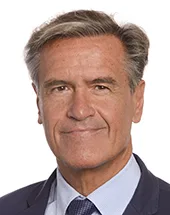
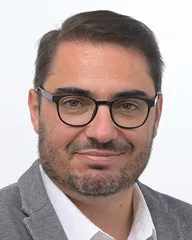
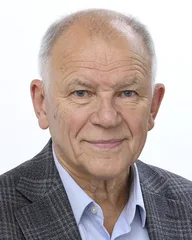
| Rank | Name | Country | Group | Speeches | |
|---|---|---|---|---|---|
| 1 |
|
Lukas Sieper | Germany DEU | Non-attached Members (NI) | 390 |
| 2 |
|
Juan Fernando López Aguilar | Spain ESP | Progressive Alliance of Socialists and Democrats (S&D) | 354 |
| 3 |
|
Sebastian Tynkkynen | Finland FIN | European Conservatives and Reformists (ECR) | 331 |
| 4 |
|
João Oliveira | Portugal PRT | The Left in the European Parliament (GUE/NGL) | 232 |
| 5 |
|
Vytenis Povilas Andriukaitis | Lithuania LTU | Progressive Alliance of Socialists and Democrats (S&D) | 227 |
All Contributions (40)
Single Market: how to move from an incomplete single market to one market for one Europe (debate)
Mr President, ladies and gentlemen, I think my statement was very clear. One internal market, one internal capital market, one energy market and, where necessary, other ways of working together. Because together we must stand strong in a geopolitical world where we would otherwise be supplanted among other imperial forces. So yes, we need to be strong together.
Single Market: how to move from an incomplete single market to one market for one Europe (debate)
Mr President, Minister, Commissioner, today we are talking about a single European internal market. But is it there? What is an internal market without a single capital market? Without a single energy market? Our entrepreneurs experience 27 different markets every day. We can only regain strength in these geopolitical, turbulent times if all obstacles to a single internal market are removed. I am therefore firmly in favour of accelerating the integration of the internal market. If we cannot do this with the 27 Member States, let us do it with a smaller group, with the willing, from below. The Benelux cooperation can be a pioneer in this, a laboratory. The EU Treaty offers the opportunity to first deepen that market as a stepping stone and to develop an economic dynamic that motivates other Member States to join. Let us seize every opportunity to complete our internal market together. More unity, more decisiveness and more future for our citizens and entrepreneurs.
Addressing subcontracting chains and the role of intermediaries in order to protect workers’ rights (debate)
Mr President, social dumping and unfair competition are a real scourge, because people, companies, but also our internal market suffer greatly. After all, our internal market is built on mutual trust. Free movement of people and services can only exist if we take each other seriously in our rules and our enforcement. That is why, tonight, I would also like to call for the mutual recognition of professional disqualifications. It cannot be the case that someone who has made it so furious in one country that he is subject to a professional ban can continue to operate without problems elsewhere in the EU. Bona fide professionals are disadvantaged, consumers are at risk and unfair competition is free. A professional ban is therefore an important part of enforcement and free movement therefore requires enforcement that goes beyond national borders. If not, we mop open with the crane and pay a high price as a society. Take it.
One-minute speeches on matters of political importance
Mr President, Commissioner, the informal European summit on competitiveness will take place in Alden Biesen on Thursday and the third industrial summit in Antwerp the day before, where industry will come up with very concrete proposals. And whether it is necessary! I am disappointed to see that European policy continues to drag or even persist in anger. For example, tomorrow, this Parliament will – probably, but not by me – approve the 90% reduction of our greenhouse gases by 2040, while the industry makes it clear that this is not feasible. Moreover, with ETS, the EU stubbornly continues to eradicate free allowances and makes our companies pay heavily, while goods enter from outside the EU without us knowing whether those carbon emissions have indeed been paid for. So please, freeze that phasing out. Decarbonisation is at risk of becoming deindustrialisation, and we really do not want that.
Preparations for the EU-India summit (debate)
Mr President, High Representative, next week's EU-India summit offers a historic opportunity to reach a trade agreement after 18 years of negotiations. An agreement with India would be extremely important in these turbulent geopolitical times, given what Trump has said today, and from an economic point of view. The potential for cooperation with this huge country is largely underexploited. An ambitious trade agreement with India would act as a lever for growth, innovation and prosperity, but also as a driver for combating climate change and improving human rights. I wanted to build my intervention. But with what happened here in Parliament today with Mercosur, I very much doubt these words. Allies must be earned and potential allies must inspire your confidence by making agreements in a respectful way. Do we do that? Trust comes on foot and goes on horseback. Can we show the world that it can be done differently?
Brutal repression against protesters in Iran (debate)
No text available
Grids package and tackling raising energy prices through robust infrastructure (debate)
No text available
One-minute speeches on matters of political importance
No text available
Effective use of the EU trade and industrial policy to tackle China’s export restrictions (debate)
Let China sleep, because when China wakes up, the whole world will tremble. Commissioner, Napoleon Bonaparte taught us this more than 200 years ago, but with the help of the West, China has become a giant that is now using its dominant position to put pressure on our economy and our industry through export restrictions on critical raw materials and technologies. I am not calling for the decoupling of trade relations, but for much stronger action by the EU. The tools at our disposal today, both internally and externally, are too slow and reluctant. New trade agreements with new countries and unity in our policies are essential to reduce China's looming influence on other continents. A more assertive and consistent trade and industrial policy to secure its own strategic autonomy is the only answer to China's power-thinking. In this way, we can remain reliable partners and become a powerful opponent.
One-minute speeches on matters of political importance
No text available
Time to complete a fully integrated Single Market: Europe’s key to growth and future prosperity (debate)
Mr President, the completion of our European single market is absolutely crucial for growth and strategic resilience. Due to insufficient integration in areas such as digital services, energy and capital, the EU remains overly dependent on external actors. The cost of the fragmented internal market is also too high. We are talking about the trade deal with the United States, but the IMF calculated that the cost of the barriers within the internal market corresponds to a trade rate of 45 % for goods and 110 % for services. We need to unleash our own economic potential, with ambition, structural reforms and cooperation between Member States to overcome the obstacles. Nevertheless, I would also like to warn, Minister, Commissioner, that these reforms could be hijacked by national interests and tailored to the big Member States with the deepest pockets. We should avoid that. Completion should benefit everyone, businesses and consumers.
One-minute speeches on matters of political importance
No text available
Need for the EU to scale up clean technologies (debate)
Mr President, Commissioner, today our policy is still going too far wrong. I regret that. Firstly, we need to realise that a transition that is necessary is not going to happen from today to tomorrow. Copenhagen was not built in one day. But don’t let ‘best’ stand in the way of ‘better’. Fnuik, for example, the business case for blue hydrogen not through restrictive regulation that only embraces green hydrogen. Second, embrace technology neutrality. The industry is begging for it. I would also like to reiterate my call for a stable policy framework for nuclear energy. Investors want clarity on this. Thirdly, safeguard the level playing field in the internal market. The relaxation of state aid rules is detrimental to small Member States. Finally, many investments in decarbonisation are now delayed by the strict regulatory framework. I hear it every day and it costs nothing. Meeting these four points, Commissioner, will support an investment in clean technology.
Choose Europe for Science (debate)
Mr President, Commissioner, I am pleased that there is a realisation that investment in research and innovation is an absolute necessity for our competitiveness. I am also proud that Flanders is a frontrunner in this and even expresses the ambition to evolve from 3.5% to 5% of GDP. The average in the European Union is now around 2.2%, which is far from sufficient. Our productivity suffers. In this way, we cannot compete globally and we risk losing prosperity. So it is good that the Commission is taking action. But allow me, Commissioner, to make three important points: 1) Don't let go of basic research. This puts European competitiveness at risk in the long term; 2) maintain the very valuable bottom-up approach in the Marie Curie programme. Political guidance is not desirable; 3) pay attention to regulating academic freedom, because the only framework for protecting academic freedom is that there is no framework. Conclusion: Choosing research and innovation is choosing the future.
A unified EU response to unjustified US trade measures and global trade opportunities for the EU (debate)
Mr President, the announcement by the US President about the new trade tariffs has undeniably caused a major shockwave worldwide, including here in the EU. In a short period of time, we have moved from a rules-based trade policy to a trade policy based on power and shamelessly used as a means of pressure. I call on the Commission, above all, to keep a cool head and to negotiate constructively and confidently. As mentioned above, a zero-for-zero tariff on industrial goods and rapid customs clearance are a win-win for both parties. Above all, as an EU, we must not allow ourselves to be dismantled or ourselves to erect walls that are too high without thought. Let's not forget one thing: From both a historical and an economic point of view, high trade tariffs always return to the sender as a boomerang. Let's prevent that.
One-minute speeches on matters of political importance
No text available
Preparation of the EU-UK summit (debate)
No text available
Energy-intensive industries (debate)
Mr President, our industry is losing the competitive battle. The text before us is therefore not sufficient. Too little, but hopefully not too late. We have to keep going and be realistic. The phasing out of the free CO2Emissions allowances for European industry are currently too high a risk that we cannot afford without a well-functioning system for taxing what comes from outside the EU. Furthermore, the principle of technology neutrality must be upheld not only in words but also in deeds. We need to move away from ideology and give market-driven innovation every opportunity. In addition, protective measures are needed, but no mandatory ‘buy European’ clause should be added. After all, this would lead to skyrocketing costs for consumers and businesses. Finally, the level playing field in the internal market needs to be ensured. If we do not do this, it will be disastrous for the small Member States. Let's put all our sails together for our industry.
Action Plan for Affordable Energy (debate)
Mr President, Commissioner, the cost of energy in the EU is too high, and that is why citizens and our businesses are suffering. So the question is: "how do we make this energy cheaper, while we also need more and more electricity?" I follow the Commission when it comes to realising the Energy Union and, among other things, better connecting the European grid. What am I missing in this note? That is the place of nuclear energy, even in the short term, which is certainly affordable, efficient and clean. The price of electricity is determined by the most expensive production. It needs to be replaced and that is not done by shutting down nuclear power plants. Let me give you an example: in February, a Belgian family and a Belgian SME paid 50% more for electricity than a French family or a French SME. And yes, where's the difference, do you think? I therefore urge you, Commissioner, to stop the ideological bias that is costing Europeans a lot of money and to look at the full system cost of every technology.
EU-Mercosur Trade Agreement (debate)
Mr President, Commissioner, I welcome the agreement with Mercosur with open arms, because it is not only the largest trade agreement the EU has ever concluded, but it is also important for three reasons. At a time when US President Trump is imposing tariffs on our steel and aluminium, it is high time to tap into new markets and not leave that area to China alone. Secondly, it confirms our belief in free, rules-based trade and gives oxygen to our businesses. Finally, the agreement does offer opportunities to improve working conditions and the fight against climate change. But I also understand the concerns of our farmers when it comes to possible increased competition. It is therefore clear to us that there must be agreements for this, that there must be continuous monitoring, that European safety and health standards must also count for their products and, ultimately, that there can be a support package if necessary. In this way, we believe in this agreement with Mercosur.
US AI chip export restrictions: a challenge to European AI development and economic resilience (debate)
Mr President, Commissioner, it has taken us a pandemic to realise how crucial the continuity of the chip supply is. With the European Chips Act, we have focused on research and development, something that is crucial for a knowledge region and open economy like Flanders, where I come from. But after the measures taken by the Americans, we must first make it clear to them that our internal market is one and indivisible, like theirs, and that we are presenting ours as a common force. Therefore, let's use the Trade and Technology Council, which we co-founded in 2021, as a forum to strengthen our transatlantic partnership and jointly define AI standards. On the other hand, this is another wake-up call for us to continue investing in technological leadership. This means strengthening the capital market and taking on an indispensable role in the value chain. Examples such as Imec in Flanders and ASML in the Netherlands prove that we can.
Powering Europe’s future - advancing the fusion industry for energy independence and innovation (debate)
Mr President, Commissioner, the EU urgently needs a merger policy based on facts and science rather than dogmas, which is now often affecting our policy. A realistic policy adapted to today's geopolitical context, with key drivers such as energy security, security and affordability. Let's be clear: Nuclear fusion is of a completely different order than nuclear fission. Nuclear fusion requires less fuel and produces less waste. That is why I call on the Commission, firstly, to stop the dismantling of the JET tokamak in Culham. It is the most efficient reactor and it is located on the European continent. He is the key to the success of the ITER in Cadarache. Secondly, I call on the Commission to encourage and fund fusion research, even wider than ITER, and to ensure a stable framework that attracts private investment. The EU must not miss the fusion train, of which we are the locomotive. I therefore call for our scientists to be able to carry out research and development on European soil. We must not let years of investment go to waste and we must no longer hold on to outdated views. Finally, let go of naivety. A robust fusion policy in addition to a repositioning of nuclear fuel for electricity production in the short term is not a choice, but a necessity.
Restoring the EU’s competitive edge – the need for an impact assessment on the Green Deal policies (topical debate)
Mr President, Minister, Commissioner. Climate change alone is not the culprit. However, the lack of attention to its impact on competitiveness, industry and transport. The cost of overregulation is enormous. Graydon calculated that 30% of our companies are threatened by the reporting obligations of the ESG criteria. European legislation is too detailed, too coercive and often incoherent. Today we are discussing the impact of the Green Deal. But wouldn't we have done it more thoroughly and in a more balanced way at first? At least let it be a lesson for the future. And that is why, Commissioner, this committee must make much better impact assessments before a legislative proposal is launched, which also carry out assessments at Member State and state level, and thirdly, take into account the cumulative impact of all that legislation. Finally, I call for policy to be based on scientific knowledge, not ideology, as in the case of nuclear energy, for example. Then you have an ally in us.
Topical debate (Rule 169) - Budapest Declaration on the New European Competitiveness Deal - A future for the farming and manufacturing sectors in the EU (topical debate)
Mr President, Minister, Commissioner, ladies and gentlemen, we all have a crushing responsibility to increase our competitiveness. The problems are known. And let's be honest: the solutions as well. We urgently need to reduce the regulatory burden with excessive reporting obligations. We have to make haste with an Industrial Deal that should already have been there together with the Green Deal. We need to invest more and better in research and development, so we need to be smarter about the EU budget. We need to complete the single market with a single capital market – which offers huge opportunities. But I also want to warn, because for me, more investment does not equate to European taxes. After all, I come from a country with no less than fifty percent government seizures. And enough is enough. Activate the money of the European saver. Let those euros pay off here in Europe. The EU should not only braindrain against it, but also the money drain, to the United States, among others. This is how we build a prosperous Europe on our own.
Closing the EU skills gap: supporting people in the digital and green transitions to ensure inclusive growth and competitiveness in line with the Draghi report (debate)
Mr President, Commissioner, I come from a country that does not have raw materials, but does have a brain. This is the best human capital. What applies to Flanders applies to a large extent to the whole of Europe. However, PISA results show us time and time again that the study results of our young people do not improve. On the contrary. We must therefore call on our Member States – not to replace them, but to call on and support them – to fundamentally improve the quality of our education and bring it to excellence. To achieve this, we must strive for excellence, with a focus on knowledge transfer among children and schoolchildren. We need to give teachers and educators the space to do their work: teaching. We need to use modern digital technologies in all training. We need universities to cooperate and exchange, for example with the Erasmus+ programme, across borders. We have to make technical education and art education fertilize each other. We must provide researchers and scientists in the EU with the necessary framework and infrastructure so that they do not leave. We must not allow projects in which we have invested a lot of money to bleed to death as long as there are results, as is now the case with the JET fusion reactor. Good education is the foundation for a strong Europe.