
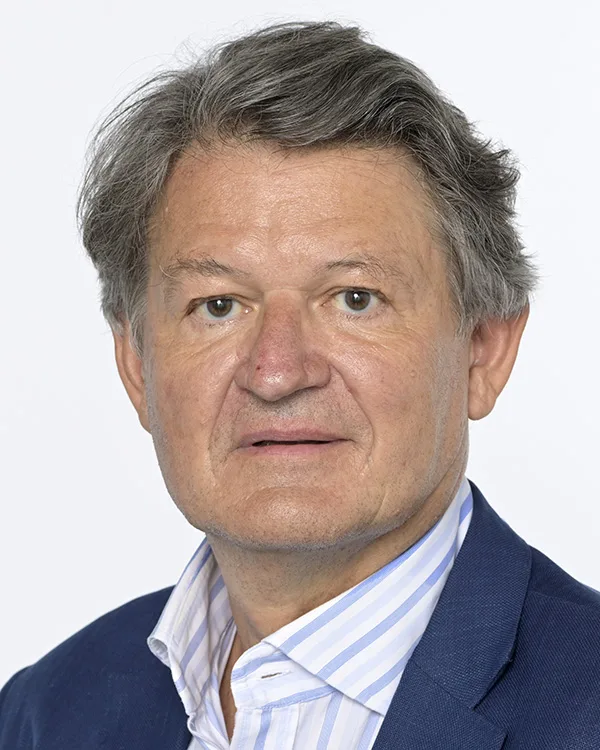






| Rank | Name | Country | Group | Speeches | |
|---|---|---|---|---|---|
| 1 |
|
Lukas Sieper | Germany DEU | Non-attached Members (NI) | 390 |
| 2 |
|
Juan Fernando López Aguilar | Spain ESP | Progressive Alliance of Socialists and Democrats (S&D) | 354 |
| 3 |
|
Sebastian Tynkkynen | Finland FIN | European Conservatives and Reformists (ECR) | 331 |
| 4 |
|
João Oliveira | Portugal PRT | The Left in the European Parliament (GUE/NGL) | 232 |
| 5 |
|
Vytenis Povilas Andriukaitis | Lithuania LTU | Progressive Alliance of Socialists and Democrats (S&D) | 227 |
All Contributions (140)
Human trafficking and grave human rights violations linked to the recruitment of non-Russian nationals, in particular from Africa, for Russia’s war of aggression in Ukraine
Madam President, Russia is a terrorist state. Their list of abhorrent crimes is endless. Russia's deportation and forced transfer of 20 000 Ukrainian children amount to crimes against humanity. These children – stolen, renamed, forced into Russian families – are victims of a systematic campaign. The Vice‑President of the Duma proudly showed himself with a baby that he 'adopted' – no, which he had stolen – and now he is proud he has a new baby. Across Africa and other regions, vulnerable men are being lured with false promises of work, of education, only to find themselves forced onto the front lines of a brutal war. One video, uploaded by the Russians themselves, shows an African mercenary, Francis, with a landmine attached to his body – a horrifying illustration of how the Kremlin dehumanises its recruits. Russia's actions are a shameful stain that will never wash away. We stand on the right side. We want to help Ukraine. We want to help those poor people. I am very sad that in this House there are Members of this Parliament who are still on the side of the war criminal Putin.
AccessibleEU and the strategy for the rights of persons with disabilities: state of play and the future of EU accessibility policy (debate)
No text available
Immunity of International Criminal Court officials and the activation of the EU Blocking Statute to strengthen EU strategic autonomy (debate)
No text available
EU enlargement strategy (debate)
Mr President, dear Commissioner, dear colleagues, what an attractive community we are, the European Union. The Brits want to come back, in the majority, Iceland will have a referendum and there are many countries in the Western Balkans, Moldova and Ukraine that also want to join us. To all Ukraine haters: they are making, like all the other countries, a lot of reforms. They know what the rule of law is. And, by the way, money robbers should be in prison, but not in government. So what do we have to do? We have to support these countries in their work for these reforms because they are necessary and, as I said, we know they are doing it. But we also have to ensure that one or another would-be autocrat cannot stop the process, because that is what they want to do for their political reasons. So what I say is: this veto is wrong. So let us build an even stronger European Union. We need it and we can do it.
One-minute speeches on matters of political importance
Mr President, ladies and gentlemen. The mullahs' terror regime has killed many, many thousands of people in recent weeks alone. And, of course, there are now many innocent victims in the recent Middle East war. But we also have to see that many people in Europe are now also affected. We have also noticed that the energy supply is essential through Putin's attack on Ukraine. Now we notice: Oil is becoming more and more expensive. And there are many people affected, including by the unjustified, rapid increases in oil companies. The Commission should also come up with something. But above all: Now, hopefully, everyone has understood the importance of alternative energy sources, that we – whether it is water, whether it is electricity, whether it is wind, hydrogen – must promote this. And we need an Energy Union in Europe. People will then realise how essential the European Union is. And one more thing: If President Macron says that we need to do geopolitics, that is, to accompany ships through the Strait of Hormuz, we can do so only as a part of Europe – i.e.: Yes to a united Europe for the people of Europe.
Systemic oppression, inhumane conditions and arbitrary detentions by the regime in Iran
Mr President, dear Commissioner, dear colleagues, the courageous people of Iran must know we in the European Parliament do not forget you. We stand with you. We have a resolution now, again. Thank you to all parties for the cooperation. The resolution is very clear – again, we say that the Revolutionary Guards, the IRGC, are terrorists. But that's only the beginning. Now we need the consequences. Now we have to do something. So the resolution also says, and it calls on all states, that we have to ban trade with those organisations. We have to know that the backbone of the Iranian industry and the Iranian economy are those Revolutionary Guards, and they are making money in Europe in order to destroy their people. That has to stop. Here we have to be very clear. I really have to say it's European banks, it's Germany and Italy foremost having this trade. That has to stop. And sanctions against persons as well. One more thing, because some people ask me, 'why are you doing something for Iran? It's not important for Europe.' Oh yes, it is. What Iran is doing is also destabilising the whole region – killing their own people, destabilising the region and also Europe with sabotage acts and so on and so forth. So it is also important for us in Europe. Thank you very much for your cooperation.
European response to the attacks on the Ukrainian energy system causing a humanitarian crisis (debate)
Mr President, dear Commissioner, dear colleagues, it was a very impressive but also sad experience to go to the Holodomor museum in Kyiv. Holodomor was Stalin's genocide through famine, and now we have Putin's genocide through cold. He is Stalin II – he is a copy of Stalin, he wants as many people as possible killed because he sees he cannot win the war how he had planned it. He wants to destroy the spirit of the Ukrainians – he wants to kill as many people as possible. It is important that we help as far as we can help for Ukraine. Then I hear these people from the right wing who say: 'no, we don't want to help'. So what does that mean? They want people to die – we have to say that very clearly. There are people here in this European Parliament who say: 'no, no support for Ukraine, we don't mind if Europeans die from the cold because the dictator wants that'. Thank you very much, Commissioner Marta Kos. Europe stands with Ukraine – you said it, and I think the majority in this House mean it.
European response to the attacks on the Ukrainian energy system causing a humanitarian crisis (debate)
Did Mr Orbán say Ukraine is our 'enemy', and why did he say it?
European response to the attacks on the Ukrainian energy system causing a humanitarian crisis (debate)
Thank you Mr Dömötör, I just have a question – is it right that Mr Orbán said Ukraine is our 'enemy'? And is it right that you are buying a lot from Russia, so, you know, you are also financing all these war crimes of Russia?
Building a stronger European defence in light of an increasingly volatile international environment (debate)
Madam President, Commissioner Kubilius, thank you for your words, but especially thank you for your work. Finally, we are building up a European defence, and I say that coming from a neutral country. The Austrian liberals already said in 2019 that we need a common European defence. And, by the way, there is also a strong defence industry in Austria, so we will work together on that as well. But there is one more thing – that is disinformation. And today we heard again that the people from the right wing are against the support for Ukraine. Yes, of course, because they're for the support of Russia and that's dangerous for us. And I tell you one more thing: in the Financial Times, the headline was 'Germany's painful estrangement from the US'. We also have to talk about that. 81 % of Germans say they are afraid that the Russians want war all over, but 65 % are afraid of the US as well. So we have to have a strong Europe. And thank you for your work again.
Amending Regulations on agricultural products as regards market rules and sectoral support measures in the wine sector and for aromatised wine products (debate)
No text available
Attempted takeover of Lithuania’s public broadcaster and the threat to democracy in Lithuania (debate)
Mr President! I want to bring in a bit of calm, because we live in times when disinformation is stronger than information. This means that people's trust in information must be increased. We know that it has fallen sharply, unfortunately also in the public broadcasters – and I am also talking about Austria here. We know that in many countries, the greater the influence of government policy, the more people's trust in these media decreases. And that is why it is so important that we, together among ourselves in Europe, ensure that free broadcasting is guaranteed in all countries, that journalists can work independently. And ultimately, we do that for our good. Why? Because if the media no longer has trust, then politics no longer has trust either. And this is dangerous for all of us, especially in this challenge we are facing. We are witnessing this in America, where all of a sudden alternative facts become facts. We have the extreme disinformation of Russia, we have the algorithms that often work against us. This makes independent media all the more important, especially for public service broadcasting.
Pending approval of the Hungarian national plan for Security Action for Europe (SAFE) funding in light of persistent concerns around the allocation of public funding (debate)
No text available
Human rights and democracy in the world and the European Union’s policy on the matter – annual report 2025 (debate)
Madam President, I am very grateful that I lived in this Europe. We have the European Convention on Human Rights and last year we had the 75th birthday, but we have to realise it is not a turning point, a Zeitenwende, as Scholz said; it is a Zeitenende, the end of the world how we knew it. It is now four years of Putin's war; he commits all possible crimes and what he is planning is a genocide. We know it. Then we have Mr Trump and I quote Stephen Miller, one of his most important advisors; he says the world is governed by strength, by force, by power. Just a few minutes ago, Trump said on the American television he wants to destroy the United Nations. And what says Soloviev, one of Putin's friends? Humans are made for war. In war, you see the good characteristics of humans. That is the world we live in. But here we have our Europe. We have a strong, united Europe and we can keep our human rights here in Europe. We will work for it. We will fight for it.
Brutal repression against protesters in Iran (debate)
(Start of speech when microphone is switched off) ... Mr President, High Representative, ladies and gentlemen! The figures we hear from Iran are frightening, with 20,000 dead and many injured. What I heard today: This terror regime has apparently also brought Hezbollah fighters to assassinate even more people in Iran. We have to face the realities. However, one thing is also the case: This regime has lost something, namely that people are no longer afraid. People take to the streets. That is why we need to support them all the more in different areas. Now I'm sometimes asked: Why? What do we care about Iran? And here I say: Yes, there are many reasons. Firstly: We are also threatened. There has been talk of cyberattacks. Secondly: Many people from Iran live with us, work with us, help us and are a very important part of our society. Of course, human rights also apply to us. Of course we have to look closely there. That is why we must support the opposition even more. And I also ask that it be discussed, is it Reza, are there others? In any case, I believe that we should invite opposition members to join us in the committee to discuss with the people how we can support Iran even more.
European Democracy Shield – very large online platform algorithms, foreign interference and the spread of disinformation (debate)
Mr President, Commissioner, dear colleagues, Elon Musk is doing a lot of research on self-driving cars. Just imagine a system in which the strongest, most aggressive car will always have priority. It is impossible. It would be a lot of dead people. But what is happening right now on X is exactly that: the most hateful, the worst postings have the most viewers because of the algorithm. So the algorithm he is organising is against us. And the next thing: he's buying politicians in the United States, even judges. And that's what he wants to do in Europe as well. He wants to buy European politicians and he already tries to influence European politics. And we are standing here and saying, 'no, that's fine'? No, it's not fine. We will not accept it. If the right-wing people say there is censorship, yes, there is censorship right now, because the algorithms of Mr Musk, they are they are censorship. People cannot see what they want. They have to see what Musk gives them. And that is hateful. I tell you, as a former journalist, that as an editor‑in‑chief you have a lot of responsibility. And Musk has everything, but no responsibility. He doesn't care. On the contrary, he wants hate speech, and if you had that on a normal medium, you would go to jail. So that's the point. Mr Musk must accept he has to have responsibility, and that's the only way we can do that. Mr Commissioner, we need very strong legislation and we need a strong Commission, and he has to pay for that.
30th anniversary of the signing of the Dayton-Paris Peace Agreement (debate)
Mr President, Commissioner, colleagues, 30 years ago the world watched as the guns fell silent in Bosnia and Herzegovina. The Dayton-Paris Agreement was not just a document; it was a lifeline, a promise of peace after years of unspeakable suffering. And for that, we always must be grateful for Dayton. But let us be clear: Dayton was never meant for 30 years. It was an emergency solution, a framework to stop the bloodshed and create space for healing. The people of Bosnia are resilient, determined and European. They deserve more than the political system they have now, and now I have a strong plea to those politicians in Bosnia. We have been on a delegation in Sarajevo and we talked to many politicians, and they all talked only about the past, they talked about their groups. They did not talk about a common Bosnia. But then we talked to so-called normal people. We talked to NGOs, we talked to young people, and they asked, 'What is our future? How can we have a common European future?' And that must be our message: yes, there is a common European future, but only if the political class in Bosnia finally understands that they have to work together, that they have one country, that they have different problems – I know, they have a lot of problems, but they can do it. And of course, it needs trust, it needs working together. I know it; you know, in Austria also, we had difficult situations, but then people finally understood that you cannot conquer the future with the past. So please, politicians of Bosnia and Herzegovina, come together and understand that you have to work for your people, and they are strong, they are resilient, they are European. And then we can work together.
Cases of pro-Russian espionage in the European Parliament (debate)
No text available