


| Rank | Name | Country | Group | Speeches | |
|---|---|---|---|---|---|
| 1 |
|
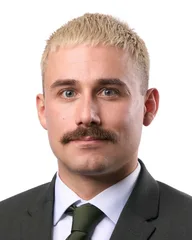
Lukas Sieper | Germany DEU | Non-attached Members (NI) | 390 |
| 2 |
|
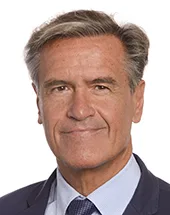
Juan Fernando López Aguilar | Spain ESP | Progressive Alliance of Socialists and Democrats (S&D) | 354 |
| 3 |
|
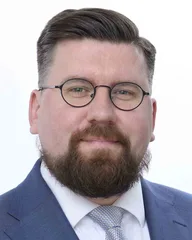
Sebastian Tynkkynen | Finland FIN | European Conservatives and Reformists (ECR) | 331 |
| 4 |
|
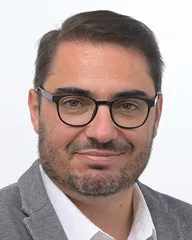
João Oliveira | Portugal PRT | The Left in the European Parliament (GUE/NGL) | 232 |
| 5 |
|
Vytenis Povilas Andriukaitis | Lithuania LTU | Progressive Alliance of Socialists and Democrats (S&D) | 227 |
All Contributions (19)
Rail transport safety in the EU – lessons learnt from the Adamuz accident and three years after the Tempi tragedy (debate)
Madam President, dear Commissioner, ladies and gentlemen, The EU has one of the safest warning systems in the world. The truth, however, is: In recent years, there have been tragic train accidents with many victims. Our thoughts are with you and your family today. But remembering alone is not enough. When a train accident happens, the causes need to be fully clarified, and mistakes need to be learned in order to prevent future tragedies. In aviation, it has long been a matter of course that every incident is evaluated throughout Europe. This is not yet the case for the railways. This is why a common European reporting system for rail safety incidents is finally needed. Because it is often the small warning signals that precede major accidents, and those who recognize and share them prevent disasters. Trains cross borders every day. Our safety standards should do the same, because more Europe on the rails also guarantees us more safety.
Presentation of the action plan against cyberbullying (debate)
Mr President, Commissioner, ladies and gentlemen! Today on Safer Internet Day One thing is particularly clear: The digital revolution offers us numerous opportunities, but also risks. Without clear rules and protection, it becomes a burden, especially for children and adolescents. It is our responsibility to protect children and young people. Protection in the online sector must be our top priority. Unfortunately, the figures speak a clear language. One in six young people in the European Union is affected by online ‑ bullying. Cyberbullying is no longer an exception, but is part of the sad everyday life for many. It leaves hard marks: Mentally, socially, but also in terms of health. Online, you always think you're connected. But those affected are often alone. Anyone who is bullied online can hardly defend themselves. Cyberbullying must never be left without consequences, neither for the perpetrators nor for the platforms. Anyone who incites, insults and bullies must feel the consequences. I welcome the Commission's actions, but one thing remains central to me: Anonymity must not be a shield for perpetrators. We finally need a clear name obligation on social media, and anyone who bullies online must drop the mask of anonymity.
2030 Consumer Agenda (debate)
Madam President, Dear Commissioner, Dear colleagues! Many of us know this situation: Shopping in the neighbouring country – and suddenly the same product as a toothpaste or hair shampoo is much cheaper. Same brand, same quality, same content and same size. But it's a very different price. What's that about? This is due to territorial supply restrictions. Manufacturers dictate to retailers where they can buy and keep prices artificially high. This has extremely large consequences for each individual consumer and consumer prices. Without these supply restrictions, a household purchase of EUR 100 would, on average, be EUR 7 cheaper. Across Europe, there is an enormous potential for savings of up to EUR 28 billion per year. And especially in times of high inflation, we must use every measure that brings a necessary and urgent relief for our citizens. My colleagues, I believe we are clear and agreed that we need to work on concrete improvements for our citizens. And it is all the more important that the Commission takes action here so that we no longer have these price differences in the future. Because price differences should not depend on kilometers, but should be determined by fair competition.
Development of an industry for sustainable aviation and maritime fuel in Europe (debate)
No text available
Development of an industry for sustainable aviation and maritime fuel in Europe (debate)
No text available
Europe’s automotive future – reversing the ban on the sale of combustion cars in the EU (topical debate)
Mr President, Commissioner, ladies and gentlemen! Sustainable transport is our goal. But those who turn off the combustion engine also turn off the European economy. This definitely does not save the climate, but costs jobs and competitiveness. The automotive industry is an important lifeline of our European economy. It represents millions of jobs and progress. We definitely need to share that strength. And one thing is clear to me: Climate protection does not come through paternalism. It takes inventiveness, openness to technology and common sense. Europe must be the continent where visions, big ideas and bold solutions dominate. But in recent years, far too often we have fallen into a competition of prohibitions and overregulation. And especially in challenging times, we must not park in the ideology lane, but must rise to the innovation gas. It is therefore high time for the ban on combustion engines to be lifted this year. Only those who remain open will remain competitive. And those who work on solutions are also driving Europe into a good future.
Latest developments on the revision of the air passenger rights and airline liability regulations (debate)
Madam President, dear Commissioner, Minister, ladies and gentlemen! Many of us know it: An important flight journey is imminent, the suitcase is packed, you are checked in and arrive at the airport. And then the nasty surprise: A delay of several hours is announced, or the flight is completely cancelled. The consequences are manifold: You miss appointments, and your nerves are blank. But then the real hurdle begins. Forms are filled out, you wait for hours in hotlines and only hope that you still arrive at your destination. It is precisely at such moments that our passenger rights take effect. These were hard fought and also negotiated and are now indispensable in the European Union. They are not a luxury at the gate, but can no longer be imagined without it. A reform of these passenger rights, which weakens them, I personally firmly reject. When we talk about change, it's definitely just an upgrade, not a downgrade.
The importance of trans-European transport infrastructure in times of stalling economic growth and major threats to Europe’s security (debate)
I think it's important that we use all the ways to transport. Personally, it is very important to me to strengthen the rail in particular. That's what I'm working on personally. I believe that the task of our Parliament is to focus on sustainable mobility in general.
The importance of trans-European transport infrastructure in times of stalling economic growth and major threats to Europe’s security (debate)
Mr President, dear Commissioner, ladies and gentlemen! Europe needs an efficient transport infrastructure, because only functioning transport routes guarantee our prosperity. But we can't just think about traffic on the road. This is especially true for alpine regions, which suffer massively from transit traffic. This is precisely why we need to focus on the modal shift from road to rail and, above all, drive it forward. To this end, the European Union and its Member States must invest more money in rail. At the same time, we need to remove regulatory barriers. The motto is clear: Build rail infrastructure and reduce bureaucratic hurdles. Because a strong infrastructure means a strong Europe, and we have to ensure that.
Need to enforce the Digital Services Act to protect democracy on social media platforms including against foreign interference and biased algorithms (debate)
Madam President, dear Vice-President of the European Commission, ladies and gentlemen! Digitalization is changing the way we live, how we communicate, how we work and how we inform ourselves. It offers us numerous opportunities, but definitely also risks. Fake news and hatred online endanger our democracies and also reduce trust in the media and institutions. The DSA is now the tool to seize the opportunities and protect against risks. In doing so, we are making the European Union a world leader and obliging social media to take action against fake news and disinformation. There have been worrying cases in the recent past, which are now being reviewed by the European Commission. With these results, we will make the DSA Shield even stronger – for a free and secure democracy in Europe.
Towards a shared vision for European tourism, its sustainable growth and brand Europe (debate)
Dear Presidium! Dear Commissioner, welcome to the European Parliament! Dear colleagues! The European Union is a world leader in tourism. No other destination attracts more tourists than the European Union, and no other destination offers as much diversity as the European Union. This means that tourism also plays an essential role for the economy in the European Union. In my home region of Tyrol, for example, every third euro is generated in tourism. However, tourism is facing major challenges, ranging from labour shortages, the effects of climate change to growing competition on the global market. It is now our responsibility to find answers to these challenges. On the one hand, there needs to be a broad acceptance of tourism and a clear commitment to sustainability at all levels. We must not only measure the success of tourism by numbers. One thing is clear to me: Quality comes before quantity. I therefore ask the Commission to implement this European tourism strategy. A common approach and common solutions are needed to solve the challenges of tourism and to lead tourism into a sustainable, resilient and digital future.
A European Innovation Act: lowering the cost of innovating in Europe (debate)
Mr President, dear Commissioner, ladies and gentlemen! We in the European Union have long been known for our innovations. In recent years, however, we have lost a lot of innovative strength and competitiveness. The good news: We can tackle the trend reversal together with a strong effort. The path to the goal is clear: On the one hand, less bureaucracy and reporting requirements are needed and, on the other hand, more money is needed for research and development. Instead of fear of change, we need trust in innovation. It is up to us to create the conditions for a strong and competitive Europe. Together, let's seize the opportunities offered by new technologies such as quantum computing and artificial intelligence. This is how we bring the European Union back to the top.
Need to strengthen rail travel and the railway sector in Europe (debate)
Mr President, Commissioner, ladies and gentlemen! A drive from Innsbruck to Schwaz is 34 kilometers long and takes about 30 minutes, depending on the traffic situation. Every forced and control-related break of a train at the Brenner lasts just as long. The reason for this: In Austria and Italy, the same rules do not apply to rail transport. While the trucks rush past on the motorway and jam through the valleys, the railway is literally at the siding. Too many national regulations still hamper cross-border rail traffic, and rail as an alternative to transit-plagued roads therefore remains unattractive and unused. For many, Tyrol is a pure transit axis – for us, it is our precious habitat and our homeland. Only by shifting freight transport to rail can we relieve such regions. For this, we need important decisions. On the one hand, we need to remove the legal hurdles; Drivers still have to perform brake tests at border crossings. On the other hand, we need to develop the necessary infrastructure; The European core network and, above all, the access routes to the Brenner Base Tunnel are particularly necessary here. It must not be that regions like my homeland suffer from the failures of EU transport policy. I therefore call on all of you to work together for a unified and expanded European railway area.
Implementation of the Single European Sky (recast) (debate)
Madam President, Commissioner, ladies and gentlemen! Today we travel almost without borders through Europe. But above the clouds, where freedom seems boundless, we still encounter many invisible border bars in EU airspace, which severely restricts European air traffic. Airplanes often fly unnecessary detours because outdated national regulations force this. This leads to delays, costs and 10% more CO2-emissions per year. The reason for this: The European airspace currently resembles a complicated patchwork of many national regulations. Instead of a common European system with uniform provisions, each Member State currently monitors its airspace independently, without sufficient cooperation with other EU countries. With this legislative package, we are now creating the basis for more cooperation with other EU countries that we so desperately need, and thus we will be able to fly cheaper, faster and more sustainably in the future. This is a win-win situation for all of us. Despite this, much remains to be done. We are taking an important step with this package of legislation, but we still have many miles to go.
The crisis facing the EU’s automotive industry, potential plant closures and the need to enhance competitiveness and maintain jobs in Europe (debate)
Mr President, Mr Vice-President of the European Commission, ladies and gentlemen! It is something very special to be standing here for the first time, at the hemicycle lectern, especially on a topic that moves us all: the traffic. And transport is sometimes also the main problem for CO2emissions in the European Union. In solving this problem, however, our car manufacturers and the suppliers, who are employers, must not become a problem themselves. Currently, we are well on our way there due to the ban on combustion engines and the decision to rely on e-cars. Thus, the car manufacturers and our business location were massively damaged. What we need now is a real change of direction. And don't worry, my main focus will continue to be on the shift of freight transport to rail. Nevertheless, we will all continue to drive on roads in the future. And this requires real openness to technology, innovation, e-cars and clean fuels in Europe, not bans. And so we will also make the way back to the track of success and, above all, to the wheel.