

| Rank | Name | Country | Group | Speeches | |
|---|---|---|---|---|---|
| 1 |
|
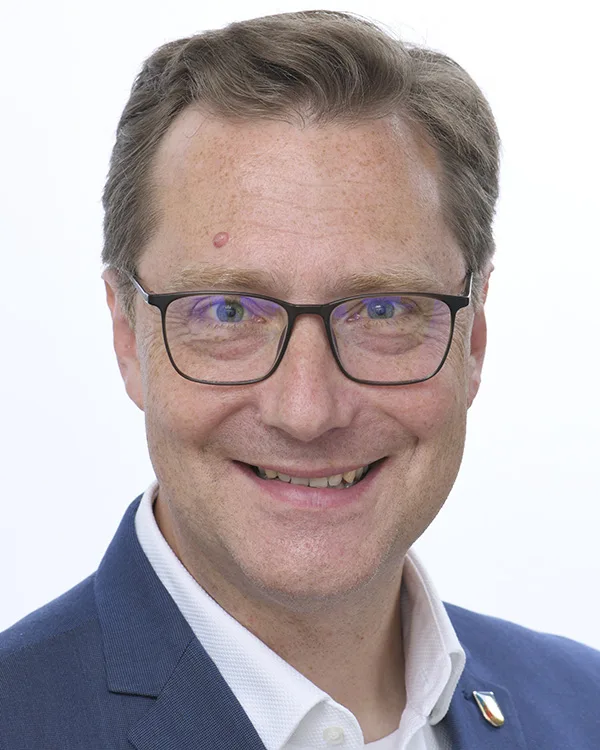
Lukas Sieper | Germany DEU | Non-attached Members (NI) | 390 |
| 2 |
|
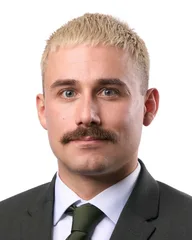
Juan Fernando López Aguilar | Spain ESP | Progressive Alliance of Socialists and Democrats (S&D) | 354 |
| 3 |
|
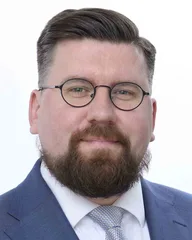
Sebastian Tynkkynen | Finland FIN | European Conservatives and Reformists (ECR) | 331 |
| 4 |
|
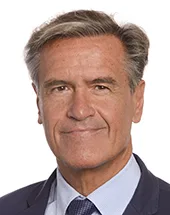
João Oliveira | Portugal PRT | The Left in the European Parliament (GUE/NGL) | 232 |
| 5 |
|
Vytenis Povilas Andriukaitis | Lithuania LTU | Progressive Alliance of Socialists and Democrats (S&D) | 227 |
All Contributions (42)
Targeted expulsions of foreign journalists and foreign Christians in Türkiye under national security pretexts
Mr. President! Under the leadership of the ACP and President Erdogan, democracy in Turkey is gradually being degraded. Courts no longer protect rights, they protect the regime. Journalism is criminalized. A different opinion is treated as a betrayal. The rule of law was replaced by the rule of law. This authoritarianism does not stop only at the Turkish borders. In Syria, Turkey is responsible for deepening instability. Kobani, the city that helped defeat ISIS, has been besieged for three weeks. Water, electricity, food, fuel and medicines are blocked, and Turkey has closed its southern border. More than half a million civilians are now facing an artificial humanitarian catastrophe. The repression continues within the country. Key figures of the opposition, such as Ekrem İmamoğlu and Osman Kavala, remain in prison. We therefore need decisive European action, not concessions. Of course, we want to deepen our cooperation with Turkey, certainly, but this must be conditional on the progress of democracy.
Extreme weather events in particular in Portugal, southern Italy, Malta and Greece: European response in strengthening readiness, preparedness and solidarity mechanisms (debate)
No text available
Preparations for the EU-India summit (debate)
Madam President! At a time of geopolitical crisis, Europe is clearly and finally expressing its desire for new alliances. In this context, India is extremely important. As has been said, this is a democracy with a population of 1400 million and is a growing economic power. Together, the European Union and India already account for almost a quarter of the world’s population and almost a fifth of the world’s GDP. Our bilateral trade exceeds €120 billion per year and continues to grow. As the European Parliament's standing rapporteur on India, I am proud to see this happen. After years of negotiations, we are now at the right moment, and the moment in geopolitical terms is actually everything. This agreement is a good basis. It opens doors, builds trust and puts Europe more firmly in the Indo-Pacific. But the agreement is not perfect. We need to be more ambitious in terms of sustainability, labour rights, access to markets and standards that define who we are. If we want this agreement to stand the test of time, we need to strengthen, improve and, above all, use it. Because when Europe and India come together, it's not just about trade, it's also about shaping the global order for the better.
30th anniversary of the signing of the Dayton-Paris Peace Agreement (debate)
No text available
EU strategy for the rights of persons with disabilities post-2024 (debate)
No text available
Polarisation and increased repression in Serbia, one year after the Novi Sad tragedy (debate)
Madam President! Dear Commissioner. Corruption kills. And nowhere is this more obvious than in Novi Sad. 16 innocent people died because someone simply stole money for their safety. This is not negligence. It's a corruption homicide. Today, the streets of Serbia are loudly calling for change. The biggest student protests in the history of this country demand only one thing - justice. This can only be expected in the case of truly free and fair elections. They are the only ones that can be disrupted by the impact of corruption and organised crime. We welcome the stricter tone of the European Commission. Maybe a little late, but very, very important. But words alone, of course, will not be enough. The European Parliament must also send an observation mission to Serbia immediately. Let me be clear: no euro from the growth plan until the full implementation of the independent functioning of the REM media regulator, a transparent electoral roll, freedom for all political prisoners and an end to media intimidation. And my message to my colleagues from the European People's Party. If last year was not enough to stop working with the SNS, then today is the last time to take action and put yourself on the right side of history.
Institutional consequences of the EU enlargement negotiations (debate)
Mr. President! If we are serious about the next enlargement, we must allow our partners to participate actively in this process. As national legislators, they must take responsibility for the implementation of the European acquis in the candidate countries. This means that, already today in this House, we must give our colleagues from the Western Balkans observer status. Even with small steps, it is also right to open up parts of our Single Market. Only an increase in prosperity in the candidate countries will prove that the European Union believes in them. Of course, we agree that we should not let more new Orbans into the European Union, but we cannot remain rigid in the enlargement process. By 2030, the Western Balkans must be sitting at the same table with us, even if at first they do not have full voting rights. See what enlargement has brought to Central and Eastern Europe. Europe has not weakened, it has become stronger. Enlargement is not a risk, it is the completion of our Union. Let us show that we are ready not only to answer about the future, but also to co-create it.
New Strategic EU-India Agenda (debate)
Dear Colleagues, Dear Colleagues! The new strategic agenda between the European Union and India is a vision of a partnership that will determine Europe's role in the Indo-Pacific region. India is the largest democracy and the fastest growing large economy in the world. Europe cannot afford to just watch from the sidelines. We need India in terms of trade, security and energy. However, time is crucial. As the standing rapporteur for India, I strongly call for the conclusion of the negotiations by the end of 2025. Together, we can scale up renewable energy production, lead the global race for green hydrogen and provide affordable clean energy for European industry and households. In a world of uncertainty and new geopolitical competition, India is a partner with whom Europe must shape a more stable future. Now is the time for bold decisions. We need new friends and India must be at the top of this list.
A new vision for the European Universities alliances (debate)
Mr President. Dear Sir/Madam, The future of European Universities and the Union lies in knowledge and cooperation, and European Universities networks are a cross-section of both. They are a space for the exchange of knowledge and the development of pedagogical practices, research and the strengthening of scientific cooperation. The results of this cooperation are innovations that make the European Union competitive and, above all, an area of academic freedom. When it is threatened elsewhere in the world, when academics and students are closed, Europe invites them, knowing that investing in knowledge pays the greatest interest. European Universities must therefore be provided with two things: firstly, a clear legal basis for action, which will relieve them of administrative burdens, and secondly, sufficient and stable financial resources, which should not be linked only to the individual financial period of the Erasmus+ programme. In times of instability in the wider region, linking ideas, innovation, knowledge and science is a response to crises. As Bacon said, human sovereignty is in knowledge. I would add that this also underpins the sovereignty of the Union.
Wave of violence and continuous use of force against protesters in Serbia (debate)
Madam President, honourable. Serbia is desperate for help. Instead of progress, its citizens face repression, media control and violence against those who dare to oppose. Students and the democratic opposition bravely insist on the streets, demanding freedom, truth and responsibility. And they need to know something. Europe can hear you! We cannot accept Serbia, where hooligans attack peaceful protesters. We cannot accept Serbia, where President Vučić calls the representatives of this institution a mob. We cannot accept stolen elections, silenced voices and fear as tools of power. Democratic Serbia is not only a need of its citizens, but a European necessity, crucial for a stable, progressive and peaceful region. And let me be clear. The EPP must stop apologizing to Alexander Vučić. Every time his mistakes are ignored, students and citizens pay the price. Serbia deserves democracy, Serbia deserves freedom, and together we need to make sure that they get both. Dear leaders of the Serbian opposition, thank you for being with us today.
Cohesion policy (joint debate)
Madam President, honourable Members, let me conclude by thanking everyone - the shadow rapporteurs, colleagues from the committee, the secretariat and, above all, the many partners from the regions, civil society, who have contributed ideas and amendments. It was really a joint effort and we did a lot of work together. But today is only the beginning, because there are at least two more battles ahead of us. The first is simplification. We must not let cohesion drown in paperwork. Municipalities, small and medium-sized enterprises, civil society organisations, all must be able to access funds without fear of remaining buried under forms and control procedures. Cohesion is about empowerment, not exhaustion; and simplification must mean, first and foremost, partnership, the mandatory involvement of local government, social partners and other local actors at every stage of planning and implementation. Without them, cohesion loses its legitimacy. The second battle is the Multiannual Financial Framework. It will decide whether cohesion will remain the backbone of the European Union's solidarity or whether it will be hollowed out through cuts and redirections of resources. Colleagues, this is essential. Without a strong dedicated budget for cohesion, there will be no convergence, no balanced growth and, ultimately, no confidence in the European Union. Therefore, when you vote on this report, you are not voting only on simplifications. You are voting in favour of preserving the inviolability of cohesion policy as such. You are hereby sending a message to the Council and the Commission: We will not allow cohesion policy to be weakened in the next financial framework. Cohesion is the European Union's promise to its citizens, and we must deliver on that promise.
Cohesion policy (joint debate)
Dear President, Commissioner, dear colleagues. Let me start with a simple question. Will we finally bury cohesion? If so, then the European Union as a whole is at stake. Today we are discussing not only a technical report, but the future of European solidarity. My report on the simplification of cohesion funds comes at a time when the European Union is preparing for the next multiannual financial framework. And let us be honest – there is one cruel truth behind all the debates on efficiency, conditionality and budgetary discipline, and that is the danger to cohesion. Cohesion policy is not just another budget line. It is Europe's promise that no citizen, no region, no community will be forgotten. It is the clearest proof that the Union is not just a market, but a community of solidarity, where everyone should have equal opportunities for development. However, as we approach the next multiannual financial framework, I hear dangerous thinking. "Reduce funding for cohesion. Put them together and centralise them, redistribute them as weapons." Let us be honest – cutting cohesion funding means increasing inequality, it means a two-speed Europe. My report on simplification of cohesion funds therefore does not deal only with forms, procedures or information systems. It is a political statement. Cohesion must be defended, simplified and strengthened. Simplification is not just a reduction in administrative tasks, it is a question of survival. Mayors and entrepreneurs are raising their hands over cohesion and do not benefit from these resources, as applying for European funds has become a race against obstacles in the form of forms, controls and delays. Cohesion should strengthen the regions, not exhaust them. Simplification means abolishing the additional rules of national ministries that are still being imposed on the rules of the European Union. Simplification means the single audit principle. One check, not five. Simplification means actual digitalised contact points that allow even the smallest villages to access European funds. Namely, if cohesion loses credibility on the ground, if it seems too slow and too complicated, then we give arguments to those who want to completely destroy it. Let me be concrete: Slovenia, my country, is living proof of why cohesion is so important. Two decades ago, regional inequality between the capital and the eastern part of the country was increasing. Thanks to cohesion funds, Slovenia has invested in roads, research centres and municipal and water infrastructure. Therefore, it is today among the most successful countries in reducing regional disparities. Let me be crystal clear, cohesion must never be centralised at national level. A single national programme, run from the capitals, would put an end to local politics. And it is at this level that they know best where investments are needed. Simplification is by no means a shortcut to fraud or corruption. We need clever control, not more control. Colleagues, the question is simple: Do we want a Union that leaves its regions aside, promotes inequality and reduces the word solidarity only to a slogan? Or do we want a Union that invests long-term in development and communities and gives a fair opportunity to all? And why does Parliament need to be clear here? Since this is about the future of cohesion and the future of our regions, we must not betray them. These are essential for the stability of our European Union. If we weaken cohesion, we weaken Europe.
European Citizens' Initiative 'Cohesion policy for the equality of the regions and sustainability of the regional cultures' (debate)
Madam President! This initiative aims to protect regional identities. Today, however, we have a much more important issue ahead of us. Commission President von der Leyen plans to significantly cut funds for the regions. Cohesion policy is one of the greatest success stories of the European Union, reducing inequalities and promoting economic integration. How can we talk about a Europe of solidarity if, in some regions, children still do not have basic internet access in schools, while elsewhere they enjoy the full benefits of the digital age? In practice, this is at the heart of cohesion: equal opportunities for all, regardless of their place of residence. Redirecting cohesion funds to defence or other priorities would be a major mistake. These funds are a promise to citizens that no region will be left behind. To deliver on this promise, we need more, not less, resources and more direct involvement of regions and cities, as they are the ones who know the needs of the population the most.
European Citizens' Initiative 'Cohesion policy for the equality of the regions and sustainability of the regional cultures' (debate)
Madam President! This initiative aims to protect regional identities. Today, however, we have a much more important issue ahead of us. Commission President von der Leyen plans to significantly cut funds for the regions. Cohesion policy is one of the greatest success stories of the European Union, reducing inequalities and promoting economic integration. How can we talk about a Europe of solidarity if, in some regions, children still do not have basic internet access in schools, while elsewhere they enjoy the full benefits of the digital age? In practice, this is at the heart of cohesion: equal opportunities for all, regardless of their place of residence. Redirecting cohesion funds to defence or other priorities would be a major mistake. These funds are a promise to citizens that no region will be left behind. To deliver on this promise, we need more, not less, resources and more direct involvement of regions and cities, as they are the ones who know the needs of the population the most.
Institutional and political implications of the EU enlargement process and global challenges (debate)
Mr President, if we are honest and serious about the enlargement of the European Union, then we also need to talk about reforms within the European Union. A successful enlargement is not possible without changes in the functioning and institutions of the European Union. Firstly, there is an urgent need to grant observer status to our fellow Members of the Western Balkans in this House already today. Secondly, more funding from the European Union budget is needed for enlargement. Thirdly, there is a need to change the decision-making process in the negotiation process. Instead of consensus, we propose qualified majority voting. The fact is that after joining the European Union, countries increase prosperity. As a result of its membership, Slovenia has made up for the development deficit by as much as 30%. Enlargement of the European Union is not a risk, but the completion of the construction of the European Union. The funds earmarked for enlargement are an investment in the security and stability of the old continent.
2023 and 2024 reports on Montenegro (debate)
Mr President, honourable Commissioner, esteemed colleagues. Montenegro has taken some impressive steps towards the European Union in recent years since the dismantling of the DPS-led regime. Nevertheless, Montenegro still faces two key challenges, polarisation and corruption. We have mixed feelings about the announced deals with the United Arab Emirates in Ulcinj, as we are talking about the award of deals without public procurement and compliance with transparency procedures. I would like to send a clear message to the people and authorities of Montenegro: We want you in the European Union as soon as possible. But in order for this to happen, we need to see the results: reforms and respect for the rule of law, and in particular concrete developments in the fight against corruption. SWFs and all those who abused state functions and public funds and turned Montenegro into an abducted state must be held accountable. It is therefore time for the efficient and independent functioning of the judiciary.
Choose Europe for Science (debate)
Madam President-in-Office! Dear colleagues and colleagues! As a first-hand professor, I know the transformation to the power of science, which must be free, open to participation and have intellectual dignity. At a time when academic freedoms are under threat in the United States and elsewhere, where facts are politicised and academics silenced, Europe must lead by example. We must be hopeful for those who seek truth, not control. For those who seek cooperation, not censorship. This is why we need to open the door to the world with new programmes, such as Erasmus+ for India and Africa, and establish new partnerships with third countries. These are not only international exchange programs, but can also be a lifeboat for those at risk today at Harvard, Columbia and elsewhere. Europe must accept bright minds from all over the world. Let me be clear: if you believe in free thought and the dignity of knowledge, then choose Europe for science.
2023 and 2024 reports on Serbia (debate)
Mr President. Since the first of November last year, Serbia is no longer the same country. Serbian students carry a flame that not only illuminated the streets of Belgrade, but also awakened the spirit of democracy across Europe and reminded us of what standing up for justice and the future means. Hope exists in the streets, in the classrooms, in the courage of students who insist and demand justice, transparency and a future based on democratic values. When President von der Leyen openly hugs Mr Vučić and the EPP closes its eyes, we are sending the wrong message that our interests are more important than the democratic will of its people. Regardless of who is in power, we want Serbia in the European Union as a democratic and prosperous country. Because of her young people, who deserve their opportunity and freedom. The future of Serbia is European and this future must be based on democracy and not on fear. Dear students and citizens of Serbia, we hear you, we stand with you and I must tell you clearly: You are not alone!
2023 and 2024 reports on Türkiye (debate)
Mr President. 50 days have passed since Istanbul mayor Ekrem Imamglu was detained. It has been seven and a half years since Osman Kavala, a human rights defender and philanthropist, was imprisoned. 1,200 journalists are behind bars. This is Erdogan's Turkey. We need to make it clear: President Erdogan’s relentless crackdown on the opposition, independent media and the judiciary is not only an internal matter for Turkey, it is a direct challenge to the democratic values we claim to uphold. Silence is not neutrality, but complicity. Europe must speak with one voice. We need a strong, principled response, not just with words, but with concrete support for civil society, imprisoned journalists and courageous individuals who still hope to believe in a democratic Turkey. This is not a fight between East and West. It is a question of justice against evil. Let us be clear, the people of Turkey are not enemies. Our message is for them – we hear you, we support you and we will not turn away.
Dramatic situation in Gaza and the need for an immediate return to the full implementation of the ceasefire and hostage release agreement (debate)
Madam President! How long will we watch peacefully the genocide that is taking place in Gaza? How long will Europe, proud of its named values, remain silent as we massacre men, women and children? Just yesterday, fifteen international health workers were killed, people who dedicated their lives to saving others. They weren't warriors. These were nurses, doctors and humanitarian workers who were insidiously murdered. What has Europe done? Nothing, just empty words. This same Europe that promised - never again, now watches hospitals turn into ruins and how hunger is used as a weapon. This is totally unacceptable. We demand action, real action, immediate cessation of weapons, the imposition of sanctions. And we have to bring war criminals to justice. Because if Europe continues to do nothing, we will only remember it as an accomplice in mass murders. History is watching us, the world is watching us, and we cannot and should not be silent.
Crackdown on democracy in Türkiye and the arrest of Ekrem İmamoğlu (debate)
Madam President! Turkey is at a crucial moment. Hundreds of thousands of people across the country have stood up for Ekrem Imamglu's right to run for President of Turkey. But this story is not a Turkish problem, it is primarily ours. To fight for the freedom that unites us as Europeans, the history of Europe is not just an abstract concept. It is a free choice that shapes our societies and lives. There's a lot at stake. Europe cannot trade with Turkish democracy and the future of millions of young people because of its defence, migration or energy needs. Instead, we must send a clear message to Erdoğan. This is unacceptable and we will not allow it. We demand freedom for Ekrem Imamglu, for Osman Kavala and for thousands of journalists, teachers and mayors - immediately. Europe must put an end to established practices and vigorously stand up for the values it claims to promote before it is too late.
100 days of the new Commission – Delivering on defence, competitiveness, simplification and migration as our priorities (topical debate)
Mr. President! Dear Sir/Madam, The real danger to the future of the European Union lies within it. Individual regions are several times more developed than others, and there is a growing belief in first- and second-class Europeans. The principle of reciprocity, where those with more help those with less, is embedded in cohesion policy. Therefore, thinking of devoting these funds to defence instead of regional development means that the less developed will pay for the security of the much more developed. That's intolerable. Today, the procedures are too complicated. In other words, if players start playing football on the field, they have to play basketball in the second half and finally water polo. This is how the rules in the area of cohesion policy change. Instead of uncertainty, we need predictability. Instead of mistrust, trust, and above all, we must give a voice to those who face challenges every day, who are people. This is the Europe we all deserve.
Recent dismissals and arrests of mayors in Türkiye
Mr. President! Dear Sir/Madam, Turkey is a strategically important partner for Europe, but this partnership must be based on common values: democracy, human rights and the rule of law. Instead, the Turkish government ousted democratically elected mayors from the opposition or the Kurdish minority. Let me be clear: The fight against terrorism is a legitimate and urgent task for any government, but it must not be used as an excuse to suppress the political opposition, silence elected representatives and undermine local democracy. The European Union cannot remain silent when fundamental democratic principles are broken. He must send a clear message. The European Union stands firmly behind the democratic rights of the Turkish people. Our support is not for one side or the other. It is about supporting democracy as such. The Turkish authorities must immediately stop their politically motivated arrests. The European Union has the tools at its disposal and it is time to make effective use of the EU Global Human Rights Sanctions Regime.
Political crisis in Serbia (debate)
Madam President! Dear Ladies and Gentlemen! The European Union is founded on democracy, the rule of law and human rights. And for these, today, young people in Serbia are fighting bravely and dignifiedly. They took to the streets to draw attention to systemic corruption and the denial of accountability of the authorities. Their voice is clear: They want a country that respects European values. They just have to be an example to us. The tragedy in Novi Sad has shaken Serbian society, but it would have been a real tragedy if Europe had remained silent. Therefore, today is not a time for silence, but for a clear call to the Serbian authorities for reforms and respect for the fundamental values of democracy. The Serbian people and Serbia as a country deserve a European future. The EU will do its utmost to make this happen. However, the actions of the current Serbian authorities are lacking. They must take responsibility for the current situation. It is state-building that puts the welfare of the nation before its own interests and those of political parties. Now is the time for the Serbian authorities to do so.
Preparation of the EU-Western Balkans Summit (debate)
Madam President. On November 1st this year, a terrible tragedy occurred in Novi Sad with the demolition of a concrete canopy at the railway station, where 15 people lost their lives. This event provoked mass protests across Serbia. Students, professors, citizens and journalists stand up to seek justice and hold those responsible to account. Following mass arrests of activists, Amnesty International reported earlier this week that authorities had been spying on civilians and wiretapping them using Pegasus. I condemn in the strongest terms digital espionage and surveillance of citizens and demand an immediate investigation against those responsible. As a candidate for EU accession, Serbia must align democratic values and the rule of law with us and immediately stop the illegal use of software. Once again, I extend my deepest condolences to the families of the deceased and my sympathy to all affected citizens of Serbia.