
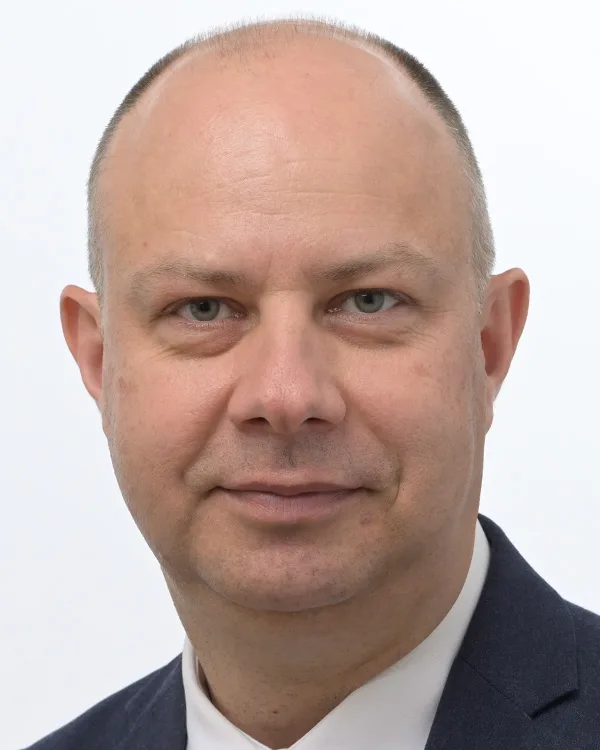






| Rank | Name | Country | Group | Speeches | |
|---|---|---|---|---|---|
| 1 |
|
Lukas Sieper | Germany DEU | Non-attached Members (NI) | 390 |
| 2 |
|
Juan Fernando López Aguilar | Spain ESP | Progressive Alliance of Socialists and Democrats (S&D) | 354 |
| 3 |
|
Sebastian Tynkkynen | Finland FIN | European Conservatives and Reformists (ECR) | 331 |
| 4 |
|
João Oliveira | Portugal PRT | The Left in the European Parliament (GUE/NGL) | 232 |
| 5 |
|
Vytenis Povilas Andriukaitis | Lithuania LTU | Progressive Alliance of Socialists and Democrats (S&D) | 227 |
All Contributions (71)
The need for the EU's continuous support for Ukraine (debate)
It is very important that the newly elected European Parliament, already in its first session, clearly state its position on the large-scale Russian aggression in Ukraine, clearly express its support for Ukraine's membership of the European Union, clearly condemn the Russian aggression, its annexations, the destruction of civilian infrastructure and the killing of civilians, one of the most terrible evidence of which in recent days has been the bombing of hospital Okhmatdyt. The fight for Ukraine's victory, for Ukraine's freedom, for its sovereignty, for the restoration of the annexed territories is also a fight for a democratic Europe as a whole. The weakness of the EU's position must not be allowed to untie the hands of a Russian dictator who is carrying out land-grabbing, killing civilians, which is not justified by any international law. At the beginning of its work, the European Parliament must send a clear signal to Ukrainian politicians, Ukrainian civilians and soldiers that the European Union will stand by Ukraine with all possible diplomatic, legal and financial means. It is also very important to emphasise that we cannot be misled by the imaginary aspirations for peace of an aggressor whose understanding of peace is essentially based on the imperial philosophy that a greater and more powerful one can, without any responsibility at all, take the territory he wants, kill civilians and then demand peace agreements that allow military resources to be restored and new territories to be targeted. I therefore call for support for the resolution on the need for continued EU support for Ukraine and thus send a clear signal to the aggressor that the European Union is not hesitating.
Prevention and treatment of obesity (debate)
Madam President, colleagues, let me ask you a simple question: where does healthy behaviour begin? The answer is not in hospitals or clinics; it begins in our homes, in our schools. Obesity is a growing public health concern linked to diseases such as cancer, type 2 diabetes, cardiovascular diseases. Beyond the human cost, it also places a growing burden on healthcare systems, economies and societies. Obesity rarely develops in isolation; it results from a complex mix of genetics, social conditions, unhealthy diets and low physical activity. Addressing it therefore requires systemic political-level action. Research shows that the foundation of obesity often begins early in life. Preventing it requires addressing factors from childhood through adolescence. This is where we as policymakers play a crucial role. Kindergartens and schools must become environments that actively promote health and where healthy behaviour is formed. We need to not just provide healthy food there, but to also teach how to cook; to not just build gymnasiums, but to form a real culture of physical activity. Addressing obesity is not only a health priority, it is a social, economic and political responsibility. By acting early and decisively, we can prevent disease, reduce healthcare costs and improve the well-being of future generations. The evidence is clear, the tools exist. What is needed now? Commitment to action.
EU enlargement strategy (debate)
Mr President, dear colleagues, the dynamic and ever-changing geopolitical and security situation is forcing us to rethink our vision for the enlargement of the European Union and to decide what we really consider a priority: increased security and political stability or strict compliance with the Copenhagen criteria. If, however, we are aware that EU enlargement is closely linked to EU security and peace in the region, not just economic opportunities, then we need to think about where and how we can apply faster procedures and greater flexibility when deciding on the preparedness of candidates. In this context, it is very important to avoid the rigid requirement of certain ideological objectives, especially in areas where debates and corrections, such as green policies, are taking place within the European Union itself. It is also very important to listen to the concerns expressed by current EU members about the enlargement of the candidate countries and the EU. A Union based on consensus cannot afford confrontation.
One-minute speeches on matters of political importance
Mr President, dear colleagues, an unborn child has no voice and, therefore, no choice, unless responsible adults are eager to pay attention to this. Paradoxically, the very rights that are supposed to protect are often voiced by those whose heads the rights were not applied to, yet they are alive today. For natural population replacement, about 2.1 child per woman are needed. Currently in Europe, the fertility rate is only about 1.3. We are literally facing potential extinction, yet instead of addressing this existential challenge, the European Commission proposes policies that could accelerate it, using EU funds. This is not just policy failure, it is a moral one. Public resources should be directed towards saving every possible child, supporting mothers and families facing critical pregnancies, and providing help where it is most needed. Invest in programmes that give life a chance: comprehensive health care, financial and housing support, access to education. Europe's future depends on our courage today to prioritise life, families. It is almost too late.
Topical debate requested by a political group (S&D) (Rule 169) - State violence in Minneapolis and the rule of law in the United States (topical debate)
Dear President, dear colleagues. Let's see who pours kerosene into the protests. Aren't they the same people who said that Charlie Kirk's murder made the world a better place? Do you think presidents should be shot, not elected? Why, given that arrests of illegal immigrants are taking place in all states, are violent protests taking place in only a few states? Do indignants really agree that coordinated physical resistance, preventing officials from fulfilling their duty, or even attempting to physically injure them, is the right form of democratic protest? It is about the rule of law, but those who speak of it seem to have forgotten that investigations into the circumstances of death are not carried out by politicians, but by law enforcement. Has Europe, which had an open-door policy with the hands of politicians like Angela Merkel, never learned from stories where Sweden, held in an oasis of security, had to use troops to keep order on the streets and German Christmas towns had to be surrounded by concrete barriers as fortresses? We are talking about the rule of law, but it seems that we should talk about common sense.
European response to the attacks on the Ukrainian energy system causing a humanitarian crisis (debate)
No text available
World Cancer Day (debate)
Mr President, colleagues. As life expectancy increases, more and more people are affected by cancer. Modern scientific advances already make it possible to substantially help a large number of patients who have received an oncological diagnosis, and therefore cancer is often no longer a fatal diagnosis. However, it is essential to respond in a timely manner to scientific developments and to increase the availability of screening programmes. The prostate cancer screening programme, which has long been skeptical, now has a solid scientific basis, and the lung cancer screening programme is now being rolled out more and more widely. However, it is regrettable that we have problems at all levels of cancer control. Public health and prevention of risk factors is a priority, at least in words, but a serious integrated approach to disease prevention is lacking. Although we have cancer screening programmes, their use remains unacceptably low and there are several reasons for this. These include the stigma of the disease and the lack of access to healthcare in the regions, among other reasons. However, screening does not cure the disease on its own, and once diagnosed, it is crucial to ensure that patients in every EU Member State have access to modern and effective treatment for the disease, which remains a serious challenge today. The challenge, as shortages of medicines still persist, is that in some Member States the entry of the most modern medicines into the reimbursement system is not a matter of months, but of years. These challenges are being addressed in the European Union through an update of the medicines package, which has already reached trilogues in the Critical Medicines Act. We are also increasingly faced with a shortage of health professionals. There is a shortage not only of doctors, whose attractiveness of specialty gradually begins to decrease, but also of nurses, who are lacking the most. All possible incentives must therefore be put in place to maintain the attractiveness of the profession, including adequate remuneration and good working conditions. It is also essential that the review of the regulation of medical devices strikes a reasonable balance between ensuring patient safety and the ability to develop and deploy state-of-the-art technologies. These diseases, like the treatment of other diseases, cannot become a privilege for the rich. This is a very cross-cutting issue and I hope that in this House, in cooperation with the other institutions of the European Union, we will find the necessary funds for the MFF and the necessary solutions to save more lives.
Attempted takeover of Lithuania’s public broadcaster and the threat to democracy in Lithuania (debate)
Dear colleagues, it is necessary to have a very volatile fantasy, claiming that there is a threat to democracy in Lithuania or claiming that an attempt is being made to seize the national broadcaster. This resolution is a clear interference in the domestic politics of the country. A few facts. The audit of the LRT carried out by the National Audit Office revealed systemic and material violations. In 2024, LRT carried out almost 90% of the programme development and production procurements through unpublished surveys. This means that an agreement has been reached with a single supplier. The value of such purchases amounts to more than half of the amount of public procurement. There is talk of freedom of speech, but for her criticism, the former government minister, LRT, woke up a journalist who had to prove his truth in court, and a few days ago it was publicly announced that one of the ruling politicians would not be invited to live shows. And it was only with the resistance of journalists that such a decision of the leadership was quickly reversed. The Director-General publicly stated that the supreme governing body of the LRT, the Council, is seeking to take control of the LRT. Listen to: those to whom the Director is accountable are accused of subjugation. The politicians who drafted the resolutions selectively emphasize the freezing of the funding of the LRT and mislead you by saying that it is being reduced, but they are silent that the Online Media Association won a case against the European Commission for the application of state aid rules, deliberately silent that the initial proposals for changing the funding model were made by the same politicians who criticize those decisions today. The Seimas is currently considering the possibility of bringing the situation back to 2024: to restore the possibility to vote by secret ballot for the appointment and dismissal of the head, to lay down clear conditions for dismissal and to stipulate that this requires the votes of more than half of the members of the Council. Neither of these proposals is in conflict with the European Media Freedom Act. Don't be fooled. Lithuanians were able to defend democracy and free speech even during the times of Russian and Soviet occupation. And leftist complaints in the European Parliament are not needed for this. Thank you.
Continuous Belarusian hybrid attacks against Lithuania (debate)
Mr President, Commissioner, dear colleagues, Lithuania is facing continuous hybrid attacks originating from Belarus. This is continuous aggression from Lukashenkas's regime, definitely orchestrated by Russia. Belarus has served as a platform for Russia's attack on Ukraine. We all remember the incident in which a civilian plane was forced to land in order to carry out arrests. This was followed by instrumentalisation of migration. Now we are witnessing a new phase. In 2025, Lithuania has experienced a dramatic rise in smuggling balloons entering its airspace – a coordinated activity orchestrated by the Belarusian regime. Only this year, Lithuanian authorities have detected more than 600 smuggling balloons and 256 unauthorised drones in the airspace. Balloons are extremely cheap tool that has a serious impact not only on national security, but also on the everyday lives of ordinary citizens and businesses. In this context, the actions and signals coming from the European Parliament are especially important. They demonstrate unity, reinforce momentum for restrictive measures and affirm that the EU will defend its citizens, its companies and its borders against hybrid threats. By speaking with a single voice, the EU must send a clear message to Minsk. Escalation will deepen Belarus isolation and raise the cost of every hostile act.
EU Defence Readiness (joint debate)
Mr President, dear colleagues, the ongoing war in Ukraine and the changed geopolitical situation have forced Europe to wake up from a long period of lethargy and prepare to take responsibility for its own security. From now on, every decision we make should be assessed in terms of whether it makes us safer or more vulnerable. If we are serious about developing the defence industry, we must seriously reconsider excessive bureaucratic requirements – I am glad that this is gradually beginning to happen. To achieve the necessary level of preparedness, appropriate investments are also required. Lithuania just approved a budget allocating 5.38 % of GDP to defence. This is the necessary response of a country living next to an aggressor. However, similar responses are needed from other EU countries as well. It is not less important to invest in the preparedness of society as a whole, and it is strengthening the will to defend.
Impact of the geopolitical situation on European patients and their access to medicines (debate)
No text available
Discontinuing seasonal time change (debate)
President, Commissioner. We loudly declare that health is our priority and that there is a need to increase trust in the institutions of the European Union. However, the twisting of time, which began more than a century ago and has not yet been completed, is an illustration of the fact that we care neither about the health of citizens nor about trust in the European institutions. Twice a year, society and especially those most vulnerable: Children, their parents, people with mental health problems, especially sleep disorders, are forced to resent the inability of politicians to make such a basic decision. The logic of saving electricity a hundred years ago, without, of course, knowing about the possible impact on human health, may have had a justification, but today, when it is already known that it increases the risk of heart attacks, strokes, sleep disorders, even accidents, such a stirring on the spot is simply unacceptable. For example, a Spanish study of more than twenty years of data found that the number of fatal accidents on the day the arrows turn one hour ahead increased by 30 percent, and the number of fatal accidents on the first day after turning back increased by 16 percent. So is that twisting really, as Martín says, a measure that really justifies the goal? Raising children knows perfectly well how important a regular daily regimen is for a child and how long it takes for children to adapt to a previous move to kindergarten or school. Let's talk about children who have developmental problems. We have more and more children like that. Man is the only biological being in nature who voluntarily commits such foolishness by torturing himself with the self-invented measures of time regulation. Health professionals recommend finally choosing winter time and ending this endless debate. This would not only improve the quality of sleep in people, but also reduce the risk of cardiovascular disease, the risk of being overweight, reduce the use of psychoactive substances, and improve the results of science and work. Therefore, as a politician and as a psychiatrist, I appeal to us and to all of you to concentrate and put an end to this outdated madness, which is devastating to human health and does not bring any economic benefit.
Breast cancer: the importance of screening (debate)
President, Commissioner. The long-standing verdict of breast cancer diagnosis today, due to treatment options, only becomes a problem without timely diagnosis and treatment of the disease, since as many as 90% of first and second stage breast cancers can be cured when diagnosed on time. Today, the debate is a very important part of the education of politicians and at the same time reduces public fear, raises awareness and should motivate health to pay the necessary attention and finances in the European Union and in the future MFF. It is important, of course, not to forget all three levels of problem-solving. First of all, prevention, avoiding possible risk factors. Today, however, we are talking about the importance of breast cancer screening programmes. And everything must be done to make this program accessible to all women, especially in regions where health services are becoming increasingly difficult to access due to a lack of health professionals and technology. Mobile research teams and mobile equipment can also help.
Ending all energy imports from Russia to the EU and closing loopholes through third countries (debate)
Mr President, dear colleagues. The European Union is on the right track. We are seeing decreasing amounts of natural gas and oil imported from Russia, but there is still a lot of work to be done before the ambitious goal of eliminating all imports of energy resources from Russia. Is there an insignificant amount of imports? I think that today, in the context of the war in Ukraine, such a quantity simply does not exist. Every cubic meter of natural gas, every barrel of oil paid for by the members of the European Union, allows Russia to continue the bloody conflict in Ukraine, maintain its military capabilities, produce thousands of drones and missiles that are sent on the heads of peaceful Ukrainian residents or destroy critical infrastructure in Ukraine. We all understand that it will be necessary to help rebuild this infrastructure, so it is simply foolish to finance its demolition with our own money. The history of Nord Stream shows how short-sighted and disastrous the policies pursued by some leaders were. For some, even today, this does not seem to be a value in itself, because it is still difficult to grasp all the potential risks involved.
Key objectives for the CITES COP20 meeting in Uzbekistan (debate)
Commissioner, President. Animals are a complex part of the ecosystem, without which other parts of the ecosystem simply would not be able to function. And the European Union is fully aware of this by supporting research, combating the illegal trade in wild animals, with the aim of conserving species. It is also no coincidence that the resolution tabled by the European Parliament highlights the importance of one health, which combines animal and environmental health. And pandemics have reminded us that diseases often occur where humans go beyond the limits of nature. At the same time, it is very important that there is a greater awareness in the European Union that legal hunting is not only about having more beautiful trophies, but also a very important science-based tool for preserving and regulating biodiversity and can make a significant contribution to the well-being of local communities and the preservation of cultural traditions. It is therefore essential to jointly step up efforts to eliminate all illegal trade in fauna and flora, ensuring that species do not disappear and important ecosystems are preserved.
Europe’s automotive future – reversing the ban on the sale of combustion cars in the EU (topical debate)
President, Commissioner. In order to be able to give up internal combustion engines, it is not enough just to have good wishes and instructions that everyone needs to rearrange and adapt. To date, these desires have not helped as much as they have harmed the competitiveness of car manufacturers in the European Union. Electric cars are still very expensive and are not affordable at all for people with lower incomes in the regions, let alone their charging infrastructure. It is therefore essential that the transition to less polluting vehicles takes place as a natural process whereby these cars are purchased with the necessary infrastructure and, above all, where they work best, where journeys are short, i.e. in cities, for example. It is also essential to maintain technological neutrality, given the safety components, as dependence on one type of car energy can also mean greater vulnerability. When it comes to the competitiveness and viability of the European Union's industry, we need to set realistic goals that actually make our industry more competitive.
United response to recent Russian violations of the EU Member States’ airspace and critical infrastructure (debate)
Madam President, colleagues, Russia is continuously testing Europe's preparedness by sending drones or violating airspace with fighter jets. And what does Russia see? That we are trying to fight back ineffectively using very expensive air defence systems. Only now are we starting to talk about building drone defence systems. This is far too late and we have to rush. When attempts to destroy critical infrastructure in the Baltic Sea started, there was fear to react. The tension of shadow fleet tankers finally demonstrated that the EU countries react not only with words. Now we have Russian fighters violating EU and NATO airspace. There are examples of NATO members who demonstrated that they take it seriously. This time it might come to EU countries also. What needs to be done today? If the airspace becomes unsafe, this will become not just a matter of security, but also will seriously affect the economy. Defence would be cheaper. Stay consistent with sanctions against Russia and finally stop financing Russia's war machine. Last but not least, provide needed financial and other support to eastern border countries for the development of air space defence systems.
European strategy for addressing Alzheimer’s and other types of dementia (debate)
Mr President, colleagues. This is the second time that Parliament only has time for health at the end of the agenda, even though we are loudly saying that health is a priority. But going to the bottom line, actually increasing life expectancy is an undeniable achievement in terms of improving living conditions, improving health care. However, as life expectancy increases, new age-related health risks appear, most often age-related, and one of them is Alzheimer's disease and other forms of dementia. According to the latest data, Alzheimer's disease is a growing health problem in our societies and in Europe alone it affects around 12% of people aged 60 and up to 40% of people over 80. This means that the burden is really heavy. And for people who are inexperienced in what it means to be, caring for such persons, perhaps it is difficult to imagine how great the psychological, economic and social burden it is. It is important to stress that in Western countries Alzheimer's disease ranks third in terms of economic burden, ranking only for cardiovascular diseases and cerebrovascular disorders. However, there is very little talk about these diseases. There is little investment in this. This disease often remains in the shadows, although the impact on the sick, their families and society as a whole is immense. Therefore, we need to change this situation, we need to develop a system of assistance to sick people and their relatives. We must invest more in research and in finding treatments for this disease, because without control of these diseases, without preventing their occurrence, they can become a difficult social, economic and health burden.
Solidarity with Poland following the deliberate violation of Polish airspace by Russian drones (debate)
Well, I think you are absolutely right, recalling that Europe has partly paid for those drones that have flown to Poland, and I do not know whether they should fly any further, so that this would be a sufficient motive, as you say, to give up Russian oil and gas. I don't have to contradict that. I agree with you.
Solidarity with Poland following the deliberate violation of Polish airspace by Russian drones (debate)
President, colleagues. The events in Poland are no coincidence. Polish airspace has been illegally damaged by Russian drones, and this is undoubtedly a well-planned act of aggression, trying to check readiness, response and boundaries. Recently, a drone with explosives also crashed in the territory of Lithuania. If we keep in mind other incidents involving infrastructure damage in the Baltic Sea, arson, information and cyber attacks, it is more than clear that the enemy is testing us. This is not only a violation of the sovereignty, security and international legal norms of Poland, but also of the whole of Europe. Europe cannot and must not tolerate such provocations that threaten the security of every European. It's great that Poland and NATO allies responded well and shot down some of the drones that entered their territory. The European Union must support the countries facing attacks by all means, while responding resolutely to aggression, so that such actions do not remain marked only by political declarations, expressing endless regret and infinite concern.
Cohesion policy (joint debate)
President-in-Office, Commissioner, I would like to talk about the housing crisis, which is manifesting itself differently in every country of the European Union, but the impact of this crisis will be equally bad for everyone. As the European Union faces a demographic crisis, home ownership is only a dream for young families. They often delay the formation of a family and the birth of children. This problem has long been considered a local municipal or national concern, but it does not only concern local solutions. It is not normal for house prices to rise several times faster than wages over the past 15 years. It is essential that the housing affordability crisis is not artificially exacerbated by imposing unsustainable demands on the energy efficiency of housing, as this significantly increases the cost of building new housing. As the price of new homes rises, so does the price of old homes. The European Parliament must make every effort to mitigate this crisis, because it is not only a national problem, but also a European one that directly affects social cohesion, the future prospects of young people and people's trust in the European institutions.
From institution to inclusion: an EU action plan for deinstitutionalisation, family- and community-based care (debate)
President, Commissioner. Deinstitutionalisation is a great idea that I really support and support. It would be perfect if, at any stage of our life, we were among our loved ones and could feel dignified and necessary. However, such a desire will face more and more challenges. An example is the spreading culture of childlessness, which is supported by the strangest explanations, ranging from children aggravating climate change to those more associated with growing individualism and social isolation. In such an environment, even with a high degree of motivation, it can become very difficult to find guardians for children without parents, and it will become increasingly difficult to find those who want to take care of persons with disabilities or those who have reached a decent age. And in order to allow a person to live in an environment that is close and acceptable to him, you need a number of specialists, because the social fabric of society is significantly shattered. It is therefore important that problems in individual areas should not be overlooked and that they should cover all areas. One such problem is the demographic crisis.
From institution to inclusion: an EU action plan for deinstitutionalisation, family- and community-based care (debate)
President, Commissioner. Deinstitutionalisation is a great idea that I really support and support. It would be perfect if, at any stage of our life, we were among our loved ones and could feel dignified and necessary. However, such a desire will face more and more challenges. An example is the spreading culture of childlessness, which is supported by the strangest explanations, ranging from children aggravating climate change to those more associated with growing individualism and social isolation. In such an environment, even with a high degree of motivation, it can become very difficult to find guardians for children without parents, and it will become increasingly difficult to find those who want to take care of persons with disabilities or those who have reached a decent age. And in order to allow a person to live in an environment that is close and acceptable to him, you need a number of specialists, because the social fabric of society is significantly shattered. It is therefore important that problems in individual areas should not be overlooked and that they should cover all areas. One such problem is the demographic crisis.
Implementation report on the Recovery and Resilience Facility (debate)
Madam President, Commissioner, the RRF has become a unique opportunity to help EU countries recover from the pandemic and strengthen their economic, energy and health resilience. However, there are still many issues related to the use of these funds. The first concerns the assessment of the reforms and targets set by the Member States. I believe that the assessment is rather subjective and that a possible negative assessment does not avoid speculation in an attempt to cover up some incompetent political decisions in the Member States. Another issue concerns the timing of the use of funds. And, despite the mutual efforts of the European Commission and member states, there is a considerable risk that some funds may not be available at the right time for various reasons – geopolitical changes, inflation, other challenges. Well, and the third important question is the flexibility of such instruments in response to the changing context. In today's context of strengthening preparedness and defence, the use of some funds could and should be reviewed in the light of the changed geopolitical and security context.
Strengthening rural areas in the EU through cohesion policy (debate)
Mr President, Commissioner. According to Eurostat data, Lithuania’s rural population will decrease by almost fifty percent by 2050. Today, therefore, it is more important than ever to talk about the right to stay in the regions. In the face of demographic challenges, it is important to understand the importance of preserving the education system in the regions. Especially since a lot of investment has already been made in the renewal of educational institutions in the regions, in the training of teachers. Another important area is the provision of health services, which is a growing challenge as the population ages. Primary health care should be as close to the population as possible. However, other services, such as oncological screening programmes, should be as accessible as possible. It is necessary to increase the availability of mobile screening tools, to develop telemedicine, as currently regional residents, due to inequalities in services, are later diagnosed with the disease, it is more difficult to access specialized assistance. As regions are more exposed to medical shortages, it is essential that regions are given sufficient attention in the European Health Programme, the European Cancer Plan and other instruments.