

| Rank | Name | Country | Group | Speeches | |
|---|---|---|---|---|---|
| 1 |
|
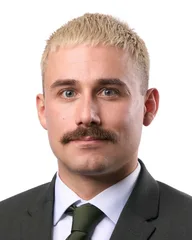
Lukas Sieper | Germany DEU | Non-attached Members (NI) | 390 |
| 2 |
|
Juan Fernando López Aguilar | Spain ESP | Progressive Alliance of Socialists and Democrats (S&D) | 354 |
| 3 |
|
Sebastian Tynkkynen | Finland FIN | European Conservatives and Reformists (ECR) | 331 |
| 4 |
|
João Oliveira | Portugal PRT | The Left in the European Parliament (GUE/NGL) | 232 |
| 5 |
|
Vytenis Povilas Andriukaitis | Lithuania LTU | Progressive Alliance of Socialists and Democrats (S&D) | 227 |
All Contributions (60)
AccessibleEU and the strategy for the rights of persons with disabilities: state of play and the future of EU accessibility policy (debate)
Madam President, the Convention on the Rights of Persons with Disabilities is the only human rights convention that the EU itself has ratified, and I think it demonstrates a strong commitment to improving the rights of persons with disabilities. But this commitment also needs to be seen in action with new flagship initiatives and concrete proposals and, Commissioner, we are still waiting for those. One important task that we have ahead of us is to follow up on the recommendations to the EU from the Committee on the Rights of Persons with Disabilities. One of the key recommendations from last year was to ensure that EU funding is not used in a way that is contrary to this Convention, such as for institutionalisation in the Member States. Therefore, regardless of what political group we belong to, I hope we can work together to add a specific obligation to comply with the UNCRPD as a horizontal principle in the new MFF, as it has been removed from the current MFF proposal. We also need a specific requirement not to use EU funding for institutionalisation.
Housing crisis in the European Union with the aim of proposing solutions for decent, sustainable and affordable housing (debate)
Madam President, the root cause of the housing crisis is complete market failure. The problem is not a general lack of supply, but a shortage of not-for-profit, affordable housing that could balance out the negative effects of this profit-driven market. This point is exactly where this report – that mostly focuses on increasing market supply – falls short, and therefore it constitutes a huge missed opportunity for this Parliament and for the EU to really address this crisis that affects millions of Europeans. For my country, the most acute issue is the new Eurostat classification, which treats interest subsidy loans for state-subsidised housing as government debt, even when the government only acts as a guarantor for the loans. This needs to be changed if we want more incentives for social housing investments for Member States. We need to address the failures created by the financialisation of the housing market, and we need to recognise housing as a human right.
Gender pay and pension gap in the EU: state of play, challenges and the way forward, and developing guidelines for the better evaluation and fairer remuneration of work in female-dominated sectors (debate)
Mr President, the euro for women in Europe is 88 cents. In Finland it is only 84 cents. This indicates that equality does not progress on its own. It requires concrete action and it requires decisions. We know from history that no action for equality would have progressed if women had not dared to organize themselves, demand change, be difficult and stand up to opposition. Wage inequality is partly due to gendered labour markets. This is because women are over-represented in sectors with low wages. Therefore, the EU Minimum Wage Directive was also a very important decision in terms of gender equality. But wage inequality is also due to the fact that we still live in a world where work of the same kind and value is not paid the same. This is precisely the problem that the EU Pay Transparency Directive had to address. That is why I cannot describe in words how disappointed I am that the Finnish Government, as a result of the lobbying of the employer camp, removed the definition of work of equal value from its draft law and will thus completely water down this important pay transparency directive. This shows once again how it is more important for the current Finnish government to implement the wish list of business life than to promote equality and the position of women, bridging the pay gap or fair rules of play in working life. Unfortunately, Finland's example also shows why, here at European Union level, we need to take new binding measures to promote gender equality and equal pay.
Addressing subcontracting chains and the role of intermediaries in order to protect workers’ rights (debate)
Mr President, labour exploitation is, at its worst, modern slavery. We have read many such examples in Finland time and time again: exploiting and exploiting Ukrainian refugees both at Turku Shipyard and at the construction site of Google's new data centre in Hamina, cooks working in Nepalese restaurants and Thai berry pickers. In almost all cases, long chains of subcontractors and various intermediaries have allowed this type of abuse to occur. And that is precisely why these factors need to be tackled, because power and responsibility also include the protection of workers' fundamental rights. It is clear that action is needed both at national and EU level: the criminalisation of underpayment, the right of collective action for trade unions, the liability of subscribers for the entire chain, and restrictions on intermediaries and the length of subcontracting chains. No business should be based on the exploitation of people.
Developing a new EU anti-poverty strategy (debate)
Madam President, I come from Finland, a country where child poverty is on the rise. This is due to the Finnish Government's deliberate decisions to cut social benefits, especially social benefits for families, even though they knew it would mean over 30 000 more children living in poverty. What many Finns are wondering at the moment is what the role of these strategies and these targets is, if Member States deliberately increase child poverty while the EU, at the same time, has targets of reducing the number of children living in social exclusion and in poverty. The most crucial question for the anti‑poverty strategy is: how will we make sure that these targets also become reality for Europeans? We need increased and dedicated funding, especially for the Child Guarantee. We need a very strong and stronger social dimension in the European Semester. But most of all, we need much stronger political commitment from the Commission and from our political leaders.
Urgent actions to revive EU competitiveness, deepen the EU Single Market and reduce the cost of living - from the Draghi report to reality (debate)
Mr President, the Commission has made a historic mistake in reducing the whole issue of European competitiveness to a deregulation agenda. While focusing on deregulation, the Commission has not addressed the main problems of European competitiveness. Where are the proposals for the major investments needed in Europe? Where are the ambitious measures to safeguard our digital sovereignty? Instead, the Commission is retreating and lowering the bar in the green economy, that is, in the sector where we could have had a competitive advantage. Above all, Europeans do not want deregulation guided by the interests of large companies. They want us to have genuine solutions to the cost-of-living crisis. The fact that people can afford to live and get along in everyday life is at the heart of all competitiveness. That is why we need to increase social housing, strengthen collective bargaining and lower the price of energy through investments in renewable energy. There is still time to change direction.
European response to the attacks on the Ukrainian energy system causing a humanitarian crisis (debate)
Mr President, blackouts are a part of the everyday life of Ukrainians. In Kyiv, thousands of homes are without heating or water, while temperatures outside are even -20 degrees. This is a result of Putin's relentless, systematic and targeted attacks on Ukraine's energy infrastructure, with the explicit purpose of freezing the Ukrainians into submission, breaking their resistance and forcing them to accept concessions in negotiations. And for those on the extreme right that were talking about diplomacy: this shows that diplomacy never takes place in isolation. Putin is attacking harder than ever to get a deal that is favourable to him, with the help of his ideological ally, Donald Trump. And this is why we must put more pressure on Russia, sanctions on the shadow fleet, support for energy infrastructure, financial and military support – because only when Putin feels pressure will he ever have a real reason to negotiate. And that is why our support for Ukraine is so needed right now.
A new action plan to implement the European Pillar of Social Rights (debate)
Mr President, Executive Vice-President, dear colleagues, we are living in a time of uncertainty: geopolitical instability, the green and digital transitions, and deep demographic change are reshaping our societies and economies in unprecedented ways. This changing environment affects how we learn, how we work, how we live and, crucially, who benefits and who is left behind. Our labour markets, education and training, and social protection systems are under pressure. And while we can acknowledge that progress has been made towards the 2030 employment target, we must also be honest: progress on poverty reduction and training is far too slow. Inequalities between Member States, regions and social groups are widening, not narrowing, and this is a huge problem for people, societies and the economy as well. These challenges do not affect everyone in the same way: some groups are disproportionately exposed to job insecurity, low-quality work, skills mismatches and poverty. Young people not in education, employment or training, Roma communities, people with disabilities, older workers, single parents and many others still face structural barriers to accessing quality jobs and decent livelihoods. And this is happening at the very moment when employers in many countries across Europe report growing labour and skills shortages. Against this background, Parliament would like to ask the Commission how it intends to respond in a way that is ambitious enough, coherent and socially just. First, on access to labour markets and quality jobs: how will the Commission address the unequal social impact of the green and digital transitions in the new European Pillar of Social Rights Action Plan? How will it ensure that these transitions become a pathway to inclusion? Second, on working conditions and labour mobility: fair labour mobility and decent working conditions are essential for a functioning internal market and for social cohesion, yet too many workers still face exploitation, insecurity and unequal treatment. What measures does the Commission envisage to ensure fair labour mobility and decent working conditions for all? Third, on homelessness and housing: homelessness is one of the most extreme forms of social exclusion, and it is rising in many Member States. This is unacceptable in a Union that claims to put people at its centre. How will the Commission combat homelessness and intend to honour its political commitment to end homelessness by 2030 through the European Affordable Housing Plan and beyond. And fourth, on financing and governance: none of these objectives can be achieved without adequate, stable and predictable funding. How will the Commission ensure consistent and sufficient financial resources to deliver on the objectives of the European Pillar of Social Rights in the context of the next multiannual financial framework and its proposed new structure? Will social conditionalities for EU funding be strengthened and effectively enforced? And what methodology will the Commission use to track national social spending under the next MFF, so that commitments translate into real investment in people? I will close by saying that, in the committee's view, the new action plan to implement the European Pillar of Social Rights must not become a catalogue of good intentions: it must be a plan for concrete action, backed by legislation, by funding and by accountability. The European social model must continue to be at the heart of the European project, and Parliament expects clear answers, concrete measures and a credible timeline.
European Democracy Shield – very large online platform algorithms, foreign interference and the spread of disinformation (debate)
No text available
Presentation of the European Affordable Housing Plan (debate)
Madam President, Commissioner, the financialisation of the housing market has been one of the key drivers of the housing crisis, and therefore it is also one of the key problems that must be addressed. We must regulate short-term rentals and we also need more financing instruments for non-profit housing. For a long time, Finland ensured that a sufficient share of all new rental flats were not-for-profit, through state-guaranteed loans. However, this model is now threatened by lots of different causes, but one of them is that in 2022, Eurostat started counting state guarantees for these loans as public debt, even though they are not. This increased Finland's debt-to-GDP ratio by over six percentage points overnight, making support for non-profit housing less attractive to the government. This needs to change as soon as possible, as we should be removing barriers for affordable housing instead of creating them.
Outcome of the UN Climate Change Conference - Belém (COP30) (debate)
Mr President, 'it could have been worse' – this is a phrase that I hear more and more now every time we talk about climate and environmental policies. But let's be honest: even if – and it's a big 'if' – all countries complete their current pledges, we would still be heading for a planet that is 2.5 degrees warmer. That means we are failing, big time. The COP in Belém failed to deliver clear, sufficiently ambitious decisions on adaptation financing and emission cuts. Above all, countries failed to agree on a roadmap to phase out fossil fuels. What we are seeing and what we saw there is how the EU used to be the driver of international climate action. Now we are fighting internally. We are watering down our own legislation instead of preparing and building strong negotiating positions. As right‑wing forces push for less, we are seeing fewer and fewer results, and it's high time for Europe and the EU to step up our game.
EU strategy for the rights of persons with disabilities post-2024 (debate)
Madam President, today’s debate is about human rights and the everyday lives of over 100 million people in the EU. One in four adults is estimated to have some kind of disability. Some disabilities are visible; some are not. Some people need daily assistance, while many need none. We are talking about a very diverse group with very different types of needs, but our task as decision-makers is to create circumstances, provide support and enact decisions that make equal rights a reality for everyone. We do know that there is a lot of work still to be done. The UN Convention on the Rights of Persons with Disabilities is the first human rights treaty that the EU itself has ratified. Last spring, the CRPD Committee pointed out that EU budget funds are still used for institutionalisation. They pointed out how many children still go to segregated schools in the EU. So, we do need an ambitious disability rights strategy. We need new legal flagship initiatives. We need to make sure that the MFF aligns with our human rights obligations. And above all, we must truly respect the value and the rights of every citizen in the European Union equally.
Communication on the Democracy Shield (debate)
Mr President, the loss of confidence is one of the most dangerous developments for democracy. According to the latest UN data, less than half of the world's population trusts their own government, and less than a third think they trust other people. At the same time, the confrontation based on strong emotions is intensified. That is why we need action to strengthen trust, both in Europe and elsewhere. Platforms like Meta and X are shaping our worldview and society. For example, X is suspected of favouring far-right content. Elon Musk and the new US administration have, among other things, fully openly supported Europe's far-right. Therefore, opening up and weakening EU digital legislation under pressure from US tech giants and governments would be a completely wrong choice for the EU and would also run counter to the idea of the Democracy Shield. We need to create a fair and equitable digital world that supports a pluralistic, democratic and trust-building debate.
Conservation and sustainable use of marine biological diversity of areas beyond national jurisdiction (debate)
Mr President, who protects marine areas that are common to all? The seas cover more than 70% of the Earth, produce more than half of the oxygen we breathe, sequester vast amounts of carbon and produce food. Yet we have allowed them to decay. Therefore, the UN Convention for the Protection and Restoration of International Marine Regions is one of the most important environmental agreements in recent history. Protection requires cooperation and this is why an agreement is needed. This directive is necessary for the implementation of the agreement, because it transposes the obligations into EU law. I very much welcome this outcome of the negotiations, which will improve the Commission's text as a whole and ensure greater consistency with the UN agreement. The directive now needs to be fully and without delay. The EU must act and show leadership in protecting and restoring the seas.
Commission Work Programme 2026 (debate)
Madam President, what were the main reasons Europeans voted in the last European parliamentary election? It was rising prices and the cost of living. And what are the issues that they think the European Parliament should address as the main priority? Inflation, rising prices and the cost of living. I think we have been given a pretty clear message, and a very clear mandate to act. That is why, last year, it was a shock to see zero legal initiatives in the work programme in the field of employment and social policy. This year, luckily, this has been corrected, with several legal and non-legal initiatives for employment and social policy. The quality jobs act will be especially important. We want to see restrictions on subcontracting and rules for using algorithms and AI in the workplace. We want to secure workers' right to training and address psychosocial risks. And we also want to ensure that while we take one step forward, we do not take two steps back. The 28th regime and the citizens' omnibus, whatever that will mean, can in no way mean lowering labour standards. The EU cannot afford to disregard the clear message and mandate from the people. I think this mandate should not be about deregulating for big business. This should be about the rights and the livelihood of the European people.
Second World Summit for Social Development (debate)
Mr President, dear colleagues, in a world plagued by growing contempt for international law and human dignity, by environmental crisis, and by the increasing concentration of wealth and inequality, the UN World Summit for Social Development is more important than ever. It offers a platform, a place to discuss how we can create stronger global action to turn the tide. Equally important is that we get a strong statement from the European Parliament, a strong statement focusing on the three main commitments of the first World Summit for Social Development from 1995. Those are: social justice, poverty eradication, employment and social cohesion, all guided by a commitment to human rights and sustainable development. And I hear many colleagues listing the problems that we see in many countries all over Europe, and social Europe is about finding solutions to those problems. Solutions both on national and on European level. The Europeans support a strong social Europe. So let's get to work both here in the EU and globally.
Establishment and functioning of European Works Councils - effective enforcement (debate)
Mr President, the bigger and more international a company, the harder it is for an individual worker to make his or her voice heard. Legislation on European Works Councils responds precisely to this problem by safeguarding the right of workers to be heard and informed. The larger the size of the companies, the more employees this will affect. In Finland, the first works councils for social enterprises were created last spring, and they are currently being created for private early childhood education and care. Members on the right side of this room: This is a good simulation. Works councils already exist. This legislation already exists, i.e. this Directive only provides clarification improvements to existing legislation and also improves the legal protection of workers. I find it incomprehensible that such a small improvement in the position of workers is not acceptable on the right side of this Chamber.
The EU’s role in supporting the recent peace efforts for Gaza and a two-state solution (debate)
Mr President, two years of genocide in Gaza and now peace is being debated on the basis of a plan that repeats historical injustices by completely bypassing the Palestinians and their right to self-determination. Peace and a two-state solution cannot be achieved without the Palestinians' right to self-determination. It cannot come about without the dismantling of the illegal occupation. 700,000 illegal settlers live in the occupied territories, but the EU has done nothing to stop this. Just as nothing has been done to stop the genocide, and nothing has been done when 500 activists were illegally intercepted and arrested in international waters. Almost 20,000 Finns signed our petition last weekend to support them, but the Finnish government did not say a word. This is a historic shame for the EU.
Time to complete a fully integrated Single Market: Europe’s key to growth and future prosperity (debate)
Madam President, I was expecting this debate to be speech after speech about the successes of the Single Market, and that's why I think it's important to point out that there is also another side to this story. That is the story about all of the Europeans who have not benefited or gotten their share of this success. It is the story of workers who have had to leave their homes to work elsewhere, because there are not enough jobs and no services. It is the story of both EU and non-EU workers who are working here within the European Union, who are not being paid according to collective agreements and our national laws, who are given the most dangerous tasks, the most dangerous jobs, who are subjected to exploitation, to extortion and in many cases also violence. So yes, we would really need a stronger social dimension to the Single Market, but this must mean tougher measures to address labour exploitation. This must mean limiting subcontracting and excluding companies from procurement that do not respect collective agreements. It must mean strengthening our labour inspectorate and also addressing problems such as bogus self-employment. Most importantly, we need a strategy to strengthen trade unions, because the best way to secure workers rights is to strengthen the unions that fight for these rights and for a socially-just single market every single day.
Solidarity with Poland following the deliberate violation of Polish airspace by Russian drones (debate)
Mr President, Putin's drones in Poland and his escalating aggression in Ukraine show what we have already known: Putin is not interested in peace; he is now increasing pressure to the maximum to test how NATO reacts and is trying to improve his position on the front in Ukraine. In addition to the need for close but peaceful coordination between the EU and NATO countries and the creation of a common drone defence, continued support for Ukraine and the strengthening of sanctions remain of paramount importance for Europe as a whole. Putin's illegal attacks will only stop when he has an interest in stopping, and that is what we can contribute with a strong sanctions policy and strong support from Ukraine.
Public procurement (debate)
Mr President, would you spend more than EUR 2 trillion annually to buy from companies that disrespect workers? I certainly hope not. The rules on public procurement affect the wages, the working conditions and the working life of millions of European workers. The EMPL Committee adopted an opinion to this report with a broad political majority, including possibilities to exclude companies that do not respect workers' rights and also to strengthen collective bargaining. I was very disappointed to notice that the EMPL opinion was not included in the IMCO report to the extent that we would have expected, even though the amendments were clearly under EMPL competence. The revision of the rules on public procurement cannot turn into yet another missed opportunity to strengthen workers' rights in Europe. To prevent this, we need a clear message from this Parliament, and to get that we need to vote for the EMPL amendments.
Lessons from Budapest Pride: the urgent need for an EU wide anti-discrimination law and defending fundamental rights against right-wing attacks (topical debate)
Madam President, dear colleagues, Viktor Orbán is at risk of losing political power, and I think he is showing his desperation and his weakness by attacking the Pride and by trying to push through legislation that would shut down many NGOs and many independent media outlets in Hungary. But at the Pride in Budapest in June, the people really showed their strength and power. And I have to say to the extreme right that, yes, many of us were there, but that is not the story. The real story is the fact that hundreds of thousands of Hungarians were there at the Pride, many of them participating and marching in a Pride for the first time ever to oppose this ban and to show that they protest against Viktor Orbán. Our job here now is to make sure that this does not go to waste and I think the Commission really needs to step up and use all of the tools it has. Interim measures must be requested by the Court and new legal proceedings initiated regarding the Pride ban and the 'starve and strangle' laws that have been proposed, and Hungary must be stripped of its voting rights in the Council.
Institutional and political implications of the EU enlargement process and global challenges (debate)
Mr President, right-wing forces are currently doing their best to transform the EU into what it can be at its worst: Only a union of markets and big business. But in Eastern Europe and the Balkans, many people are looking at us for another reason. They seek security through political cooperation. They want strong protection for the rule of law, human rights and adequate environmental requirements. As Putin's authoritarianism intensifies, people are ready to take to the streets to defend their right to choose, their freedom and European values, and that is why enlargement is now such an important issue. It is also about Ukraine. If and when Ukrainians want to join the EU, we must be ready to welcome them. At the same time, we must ensure that the membership criteria are met. We need an open debate on the changes brought about by enlargement to the Union's decision-making and budget. But we also need to learn from the mistakes of previous enlargement processes. We need better tools and common digital systems to combat cross-border labour exploitation. Given how long there has been free movement in the internal market, it is incomprehensible that we have not made any further progress in resolving this problem.
Institutional and political implications of the EU enlargement process and global challenges (debate)
Mr President, right-wing forces are currently doing their best to transform the EU into what it can be at its worst: Only a union of markets and big business. But in Eastern Europe and the Balkans, many people are looking at us for another reason. They seek security through political cooperation. They want strong protection for the rule of law, human rights and adequate environmental standards. As Putin's authoritarianism intensifies, people are ready to take to the streets to defend their right to choose their freedom and also to defend European values. (The President interrupted the speaker.)
Freedom of assembly in Hungary and the need for the Commission to act (debate)
Mr President, Viktor Orbán has been attacking freedoms and fundamental rights by restricting freedom of opinion and by weakening the rights of minorities and workers for years. And now he is doing exactly what authoritarian leaders always do when they are not stopped – he is going further, by giving authorities broad powers to monitor, sanction or even ban activities of civil society, trade unions and media by withdrawing Hungary from the ICC and by attacking diversity and democracy through banning the Pride event. Enough is enough. The EU must be able to act to protect fundamental rights and freedoms of all Europeans, and this is a legitimacy question for the whole Union. As parliamentarians, our most important, job is to support the people in Hungary who are protesting against this, who are organising the Pride march despite the repression, and I, for one, am proud to be joining them.