
| Rank | Name | Country | Group | Speeches | |
|---|---|---|---|---|---|
| 1 |
|
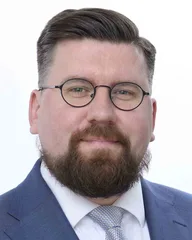
Lukas Sieper | Germany DEU | Non-attached Members (NI) | 390 |
| 2 |
|
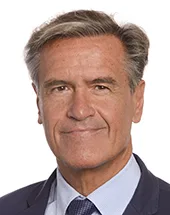
Juan Fernando López Aguilar | Spain ESP | Progressive Alliance of Socialists and Democrats (S&D) | 354 |
| 3 |
|
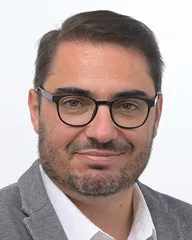
Sebastian Tynkkynen | Finland FIN | European Conservatives and Reformists (ECR) | 331 |
| 4 |
|
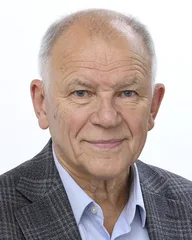
João Oliveira | Portugal PRT | The Left in the European Parliament (GUE/NGL) | 232 |
| 5 |
|
Vytenis Povilas Andriukaitis | Lithuania LTU | Progressive Alliance of Socialists and Democrats (S&D) | 227 |
All Contributions (79)
Upcoming European Research Area (ERA) Act (debate)
Madam President, ladies and gentlemen, I am delighted that we are finally having a debate here on the fact that research is teamwork and that it is not only the Horizon Europe programme that funds research on our continent, but also the Member States and the cities and regions. So, the 3% of GDP mobilization to support research, we reaffirm the goal, but we never do it. Why in Europe we know how to put binding targets on debt or public deficit, and not a binding target on support for research? I would like us to have a binding objective and to hold states to account for their mobilisation rather than pushing for environmental deregulation or funding only – which is also important – the defence effort. And then I would like to stress and recognise the role of cities and regions, the role of territorial research and innovation ecosystems, the funding provided by cities and regions in Europe. This is almost as much as the Horizon Europe programme when everything is cumulative. So let's do this collective work, let's recognize these ecosystems. Let us recognise that it is everywhere in Europe that research, innovation and the products of tomorrow are being invented. And I hope that this European Research Area will make it easier to recognise it.
Order of business
Madam President, my point of order is based on Rule 39 and concerns support for NGOs in the health sector. Thirteen Member States sent a letter to the Commission protesting against the discontinuation of operating grants to health NGOs, without any consultation with the Council. This is a strong and cross-party political signal, and we hope that the European Parliament will also take action to restore this aid in 2027. In particular, NGOs in the health sector represent the sick and their families. They play a crucial role in the implementation of the cancer plan and the cardiovascular plan. We need them and there is no living democracy without strong and independent NGOs. The role of this Parliament, the temple of democracy, is to defend them.
Extreme weather events in particular in Portugal, southern Italy, Malta and Greece: European response in strengthening readiness, preparedness and solidarity mechanisms (debate)
No text available
World Cancer Day (debate)
Thank you, Mr. Castillo. You have just heard my intervention, you have just heard the intervention of your Austrian colleague, from the same group as you, worrying about the explosion in the number of cancers and saying that you do not know the causes. Do you recognize that cancer has extremely important environmental causes? – the so-called exposome. – Do you recognise that there is an absolute need to go much further on environmental and ecological policies? Are you prepared to fight tobacco lobbies - not you personally, the whole of your group - so that tobacco legislation, legislation against vapes and false alternatives to tobacco, arrives very quickly in this Chamber?
World Cancer Day (debate)
No text available
Presentation of the programme of activities of the Cyprus Presidency (continuation of debate)
No text available
Framework for strengthening the availability and security of supply of critical medicinal products as well as the availability of, and accessibility of, medicinal products of common interest (debate)
Ma'am, good morning. I believe that you are aware that the impact of the environment on human health is very important, and that it is also because our living conditions and our environment are degraded that people have diseases that require medicines. And your group proposes to challenge environmental legislation to facilitate the production of medicines through amendments that are tabled in plenary! How do you explain this fundamental contradiction?
Framework for strengthening the availability and security of supply of critical medicinal products as well as the availability of, and accessibility of, medicinal products of common interest (debate)
No text available
Presentation of the EU Cardiovascular Health Plan (debate)
Madam President, Commissioner, this plan is welcome: it complements the Cancer Plan to address the major causes of death in Europe. But you will allow me to raise three questions. The first, Mr Sokol, has just mentioned: Do we have a budget associated with this plan that allows us to live up to the stated ambition? We will discuss this in the MFF, but it would be useful to have the Commission's light on the budgetary ambition that is set. Then there will be no ambitious cardiovascular plan without a large prevention plan: obesity and tobacco, but also with regard to the environment. The European Society of Cardiology highlighted the environmental issue in its colloquium last week as one of the main issues to be addressed. Finally, no effective cardiovascular plan without a legislative program: a programme that would tackle tobacco lobbies and the regulation of derived products that are placed on the market and that mislead young people. So you made a very important announcement: You announced legislation to us in 2026. If that is indeed the Commission’s decision, I welcome it. However, we will be there to ensure that this legislation really happens in 2026 and that it is not, once again, delayed by tobacco lobbies.
Ensuring faster registration and uptake of biological control agents (short presentation)
No text available
General budget of the European Union for the financial year 2026 – all sections (debate)
Mr President, Commissioner, ladies and gentlemen, I should like to make two remarks on the European health budget. This EU4Health programme suffered a 20% decrease during the mid-term review of the Multiannual Financial Framework. One billion has soared, including 620 million in the health component of crisis preparedness. For 2026, the Council proposes a new cut of 95 million, or 15%, which is huge and again undermines the ability to prepare for crises and protect the population. It is now necessary to stop the double speeches. Either health and crisis preparedness are important or they are not. I hope that Parliament's commitment to restore these appropriations will convince the Council. My second point concerns support for NGOs in the field of health. In 2025, the Commission changed its approach by adopting operating grants to replace them with calls for projects, without any justification. This permanently weakens NGOs that no longer have visibility, some of which have had to lay off 40% of their staff. Yet we need NGOs, their free voices, their skills and their contribution to build European health policies. NGOs have referred the matter to the European Ombudsman. Thank you to the Commission for reviewing its copy.
Commission Work Programme 2026 (debate)
Mr President, health, health, that is the great absence of this work programme for the year 2026. However, this is one of the main priorities of Europeans. It is a fundamental right, the foundation of their quality of life. But it is also the bedrock of European competitiveness, because without a healthy population there is no competitiveness. So yes, it is urgent to act, to act in the face of the danger that threatens health. We were waiting for new tobacco legislation, a legislative package on consumer information in food and the very important revision of REACH. Unfortunately, at the moment, none of this. We also expected Europe to turn the corner on prevention, to launch a major European prevention plan in the field of health and, within this framework, to have a plan for mental health, especially for young people, a plan for cardiovascular health, a plan for women's health. Our question today is: Why is all this absent? This clarification is still possible. Improvements are still possible. We expect strong action from the European Commission on health.
Chemicals (joint debate)
Mr President, Commissioner, ladies and gentlemen, we need to do more to protect health and the environment from the impact of chemicals. Where we live, the way we live, the pollution and hazardous products we are exposed to impact ourselves, impact our human health and explain much of the incredible development of noncommunicable diseases: cancers, degenerative diseases, diseases of pain. So yes, we needed this common database for chemicals and it will be a point of support to better evaluate these products. I would really like to thank the rapporteur, Dimitris Tsiodras, for leading our work, but also for bringing Parliament's positions to the Council. Parliament has succeeded in improving this text on key points, from my point of view: a better consideration of the concept of emerging risks to look at the risks that are coming, which are not yet fully known; better consideration of the possibility for citizens, NGOs, independent experts and scientists to contribute to this database so that they are available throughout Europe; and also the possibility for the European Chemicals Agency (ECHA) to order studies from independent science to complete the dossiers that are brought by manufacturers. So yes, it is very good, yes, we will have to go further – and I thus conclude –, further to revise the framework for chemicals – it is the revision of the REACH Regulation that we are waiting for – further to coordinate the agencies involved in the field of health, and further to strengthen ECHA. I will be Parliament's rapporteur for the ECHA legislation and I will continue the collective work with Mr Tsiodras.
Common agricultural policy (joint debate)
Mr President, Commissioner, ladies and gentlemen, the common agricultural policy is in danger. I thank my colleague André Rodrigues for defending useful simplifications, for fighting to keep social conditionality and for always fighting to avoid non-alignment of the CAP with EU environmental legislation. I also thank him for fighting against the deregulation and ultra-liberal fury of the EPP in this House. With 50 billion euros spent per year, we can wonder what is left of ecological conditionality. We now hear the Commissioner – EPP, right – worry about the amendments – EPP, right – and hope that the Council – EPP, right – will, with our help, make it possible to correct these mistakes. Yes, we will help you, but we are worried about the future of the CAP. When we see the proposals for the future multiannual financial framework, we cannot help but think that the common agricultural policy is in danger of death: the absolute renationalisation of the CAP, the reduction of the budget from 20 to 30%, the competition of farmers with the rest of society, the absence of new tools to accompany agro-ecological transformation, the financing of crisis management to face climate crises on the same budget as direct payments. What does this mean? In the coming years, this means no transformation of agriculture and less and less money for farmers. This is not the right direction for Europe and I hope that together we will reject this multiannual financial framework in a few weeks' time.
Summer of heatwaves in the EU: addressing the causes and providing adequate housing and health policies to address record-breaking temperatures (debate)
Thank you, hon. member, for accepting my question. I'd like to understand something. Your Spanish colleague from VOX, from the same group as you, said that in Spain there had not been a larger heat wave than a decade ago and that the data were false. And you, you just said that Portugal has experienced unparalleled heat waves, with the dramatic consequences that you have recalled. So, is there a difference between Portugal and Spain or are there differences in vision within the Patriots group itself?
Summer of heatwaves in the EU: addressing the causes and providing adequate housing and health policies to address record-breaking temperatures (debate)
Mr President, Commissioner, ladies and gentlemen, heat waves are first and foremost social crises. The most vulnerable people are the first to be hit, and this issue needs to be taken much better into account. Obviously, when you live in a thermal kettle, you cannot cool your body and cope with these crises. Therefore, the quality of housing, the quality of life, the quality of social support are absolutely essential. Then, Mr Sokol just said, these are health crises: there is a direct effect on human health, but also an indirect effect. As part of the work on the exposome – how everyone is exposed to all kinds of hazards, chemicals, living conditions – we know that increasing temperature is an amplifier of the effects of other products and a trigger for chronic diseases. We must therefore have a real awareness in terms of public health and collective organization. Last point, we will have to stop distinguishing the battle for the fight against climate change and the battle for the fight for adaptation to climate change. It is a single fight for the ecological transformation of our societies: have a consistent attitude in the city, in health, in housing, to both limit greenhouse gas emissions and allow people to live better.
Presentation of the Stockpiling Strategies - strengthening response capacities for a changing risk and threat landscape (debate)
Mr President, I say congratulations to the Commissioner, congratulations to the teams from HERA and ECHO, the two DGs working with you, congratulations because you are implementing quickly and concretely the preparation strategy that was published three months ago. And things are changing. Three years ago, I was a member of the European Committee of the Regions and when I was defending food stocks, a director from DG AGRI told me: “But, Mr Clergeau, what do you want to do with your food stocks? They will rot in warehouses before they have been used for anything." Well, you are now proposing a real strategy for water, for food and also, of course, for medicines, so that it is available to the population. So I just have a question – or a regret. Why do we have a law for critical drugs, but no strategy or accelerator for other countermeasures? Will we have masks on the day of the outbreak? I think – and this will be my last word – that the Commission should take advantage of the text on critical medicines to broaden its scope and have a real law for all countermeasures, to lift all the locks and to really have masks produced in Europe on the day of the next epidemic.
Presentation of the Stockpiling Strategies - strengthening response capacities for a changing risk and threat landscape (debate)
Mr President, I say congratulations to the Commissioner, congratulations to the teams from HERA and ECHO, the two DGs working with you, congratulations because you are implementing quickly and concretely the preparation strategy that was published three months ago. And things are changing. Three years ago, I was a member of the European Committee of the Regions and when I was defending food stocks, a director from DG AGRI told me: “But, Mr Clergeau, what do you want to do with your food stocks? They will rot in warehouses before they have been used for anything." Well, you are now proposing a real strategy for water, for food and also, of course, for medicines, so that it is available to the population. So I just have a question – or a regret. Why do we have a law for critical drugs, but no strategy or accelerator for other countermeasures? Will we have masks on the day of the outbreak? I think – and this will be my last word – that the Commission should take advantage of the text on critical medicines to broaden its scope and have a real law for all countermeasures, to lift all the locks and to really have masks produced in Europe on the day of the next epidemic.
Presentation of the Chemicals Package (debate)
Madam President, Commissioner, Executive Vice-President of the Commission, you are here because you are committed, together with the whole College, to respecting the achievements of the Green Deal. You are here members of a Guardian Commission of the Treaties, and in particular of Article 168, which states that ‘a high level of protection of human health shall be ensured in the definition and implementation of all Union policies and activities’. So with the chemicals package – at least as far as we know, since nothing is officially published – nothing is going well. I say to you solemnly: the Socialist and Democratic Group in this Parliament strongly condemns this proposal, which orchestrates an extraordinary setback and endangers human health and the environment. This package has nothing to do with simplification unless, for you, simplification means abandoning the use of dangerous products and exonerating companies from their responsibilities. The proposed measures will increase exposure to hazardous products. You do not want to make packaging and labelling more legible and understandable. You waive a reasonable period of time to change the labelling when the classification of a product has changed. You relax the use of carcinogenic, mutagenic and reprotoxic products in cosmetics and remove the obligation to present an analysis of alternative solutions. You authorise the marketing of a cosmetic product containing prohibited products for up to 36 months. I'll tell you again: Nothing's right. By doing so, and I conclude by doing so, the Commission is not doing the industry any good. Rather than perpetuating the authorisation of the use of dangerous products, it would be better to support industrialists who have committed themselves to the development of a sustainable and respectful economy.
Presentation of the Chemicals Package (debate)
Madam President, Commissioner, Executive Vice-President of the Commission, you are here because you are committed, together with the whole College, to respecting the achievements of the Green Deal. You are here members of a Guardian Commission of the Treaties, and in particular of Article 168, which states that ‘a high level of protection of human health shall be ensured in the definition and implementation of all Union policies and activities’. So with the chemicals package – at least as far as we know, since nothing is officially published – nothing is going well. I say to you solemnly: the Socialist and Democratic Group in this Parliament strongly condemns this proposal, which orchestrates an extraordinary setback and endangers human health and the environment. This package has nothing to do with simplification unless, for you, simplification means abandoning the use of dangerous products and exonerating companies from their responsibilities. The proposed measures will increase exposure to hazardous products. You do not want to make packaging and labelling more legible and understandable. You waive a reasonable period of time to change the labelling when the classification of a product has changed. You relax the use of carcinogenic, mutagenic and reprotoxic products in cosmetics and remove the obligation to present an analysis of alternative solutions. You authorise the marketing of a cosmetic product containing prohibited products for up to 36 months. I'll tell you again: Nothing's right. By doing so, and I conclude by doing so, the Commission is not doing the industry any good. Rather than perpetuating the authorisation of the use of dangerous products, it would be better to support industrialists who have committed themselves to the development of a sustainable and respectful economy.
European Ocean Pact (debate)
Mr. member, you are talking about the risk of looting resources. You are talking about areas that fall under the jurisdiction of France, but you are not talking about the international deep seabed. And the main threat today is the decision taken by the United States to exploit the seabed, to launch deep-sea mining at the expense of all international rules. I would like to hear from you on this issue as to whether you condemn this American decision and whether you want compliance with international agreements and legislation in this area to protect the oceans.
European Ocean Pact (debate)
Madam President, Commissioner, a few days ago we were together at the United Nations Ocean Conference and we were able to appreciate all the tremendous mobilization, the citizen momentum, supported in particular by the blue NGOs that I would like to welcome. The presentation of the Ocean Pact by President von der Leyen and by you was also a highlight, and I would like to thank you for that, because it sets an ambitious framework for the future. Now, there is an urgent need to act and I would like here to relay the request of NGOs, which is also ours, to have an action plan 2025-2030 to concretely translate your ambition. Then, there is an urgent need to change ocean governance to succeed where we have failed, especially for the return to good ecological status of the oceans. We have three demands for the Pact for the Ocean, which must be its tool: the first, that the Pact for the Ocean arrives as early as 2026 and not as early as 2027, otherwise we risk not adopting it during this legislature; secondly, that the revision of the Marine Framework Directive be integrated into the Ocean Pact, otherwise there is no coherence; and the third, that the Commission should be able to study all the legislative subjects that would deserve to be included in the Ocean Pact in order to achieve the objectives set out in that Pact. This legislative project, Commissioner, we are committed to bringing it to your side right now.
EU action on treating and preventing diseases such as cancer, cardiovascular neurological diseases and measles (debate)
Madam President, Commissioner, the revolution I want to see is the prevention revolution. Because care is essential and it must be done better, but it is not an end in itself. The goal is to live well and age well, healthy. This involves prevention, which is the best investment, while non-action, on the contrary, results in millions of deaths and billions of euros of unnecessary spending. So yes, we need the major existing public health programmes – such as the one against cancer – or those announced by the Commission. For us, the priority is a great program for mental health and a great program for women's health. However, we must first and foremost prevent diseases by acting on the determinants of health. Act against poverty, precariousness, poor housing, energy and food poverty, rationing of care. Acting against tobacco and junk food: These are health disasters that result from decades of lobbying and manipulation by major economic interests. It is imperative that we revise the tobacco directive to combat false alternatives to cigarettes, which are major dangers to public health. We also need a legislative agenda on food, to combat dangerous practices and products, better inform consumers and ban – yes, ban! – advertising of junk food. Finally, we must act against the cumulative effects of our environment on our organisms, this emerging cause of the explosion of chronic diseases, cancers, but also degenerative diseases or diseases of pain. So yes, pollution, pesticides, chemicals, PFAS are a terrible cocktail that ruins our health. In this area, it is health that must be the guideline of our action. We are on the eve of drastic political choices: Preventing, preventing and preventing is the only possible choice for the well-being of Europeans.
The European Water Resilience Strategy (debate)
Madam President, Commissioner, the European Parliament is today proposing to the European Commission a strong ambition to ensure access to water for all, while respecting the environment and health. Congratulations and thank you to Thomas Bajada for this beautiful result! I want to stress two points: oceans and the quality of drinking water. We must all support the "from source to sea" approach. We need healthy oceans and, for that, to reduce the pollution that affects the coastlines via the waters that come from the continent. It is crucial to protect biodiversity, but also the economic activities of fishing, marine crops and the well-being of local populations. I also welcome the awareness of the issue of water quality, which is recognized as being as important as the issue of water availability. There is an urgent need for action. Ten French municipalities in the south of Alsace, close to here, have just banned the consumption, by fragile people, of so-called drinking water polluted by PFAS. How many municipalities are in this case in Europe today? How many will be in six months or three years? Yes, there is an urgent need to act to drastically reduce the presence of pesticides and PFAS in water.
Discharge 2023 (joint debate)
Mr President, Commissioner, we have come out of six months of fake news and senseless and unfounded attacks on NGOs. This afternoon, with its votes, Parliament did them justice. NGOs are key players in democracy, supported by citizens and committed to them. On the ground, the role of NGOs is to defend and assert their positions. No one can challenge them for this role and especially not silence them when they are financed. The facts have now been re-established. The charges fall because they were not based on anything. The European Court of Auditors has shown that the areas of improvement examined are not new and are linked to the rules laid down by the European Commission, and not to the action of NGOs that have complied with these rules. In reply to Mr Gerbrandy's question, on 14 April, Commissioner Serafin also recalled that the Commission has neither given instructions nor demanded that NGOs put pressure on Members of the European Parliament and that civil society organisations remain fully autonomous and free to have their own views on all political issues. The final point, I hope, is this sad soap opera and long life for NGOs and a free and independent civil society!