

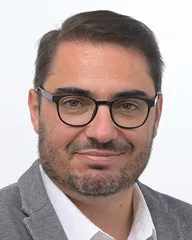
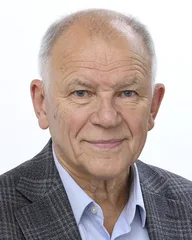
| Rank | Name | Country | Group | Speeches | |
|---|---|---|---|---|---|
| 1 |
|
Lukas Sieper | Germany DEU | Non-attached Members (NI) | 390 |
| 2 |
|
Juan Fernando López Aguilar | Spain ESP | Progressive Alliance of Socialists and Democrats (S&D) | 354 |
| 3 |
|
Sebastian Tynkkynen | Finland FIN | European Conservatives and Reformists (ECR) | 331 |
| 4 |
|
João Oliveira | Portugal PRT | The Left in the European Parliament (GUE/NGL) | 232 |
| 5 |
|
Vytenis Povilas Andriukaitis | Lithuania LTU | Progressive Alliance of Socialists and Democrats (S&D) | 227 |
All Contributions (21)
European Disability Card and European Parking Card for persons with disabilities - European Disability Card and European Parking Card for persons with disabilities for third country nationals legally residing in a Member State (joint debate - Disability cards)
Mr President, Commissioner, what a pleasure it is to be here today, in this plenary, to take a step that is undoubtedly historic and decisive. What many people, many organizations, have been calling for for several decades, may now be a reality. The approval of the European Disability Card and the Parking Card for persons with disabilities is just the recognition of a principle of equality, that there are no first-class citizens, no second-class citizens and that, within this European Union, regardless of the forces that are trying to deny it outside and inside, we all have equal rights. But after this historic step, this decisive and symbolic step, what we have to do is also think about the future. And I hope that, in the next mandate, we can continue this work over the last five years and ensure that this Parliament continues to be composed of a majority of people who believe that, despite the difficulties and the differences with which we are born, we are all truly equal. I hope to see this Parliament represented according to what is the presence of people with disabilities in society, to guarantee them a place of speech, to tell them that their place is not only voting, it is also in here. We have a rights agenda to push forward and push through. And I hope that those who will hold the flag of Europe in the next term of office will live up to that responsibility and know how to do so.
One-minute speeches on matters of political importance
Mr President, the future of Europe does not look very bright. Just like 100 years ago, fratricidal wars proliferate around us. Inequalities are on the rise and 95 million Europeans are living in poverty or at risk of social exclusion. And just like 100 years ago, populisms proliferate, feeding on fear and lack of security in the future. But there is time to reverse this course. There is time, because there is hope. This is not the time to lower your arms. It is not time for politics of interests, nor for interests in politics. It is time to fight, to fight for a fairer economic system that combats inequalities, to fight for sustainability and for the future of future generations, to fight for a democracy that guarantees and respects our fundamental rights, allowing everyone to find the space to realize their dreams, to fight for a dream of community in which we care for others and in which each one of us is free to be what it is, because we are only truly free when we are all free. In my last speech to this plenary, I would like to quote José Mário Branco: "April is a beautiful dream to live when everyone wants it". And we have to. April 25th always!
Preventing plastic pellet losses to reduce microplastic pollution (debate)
Madam President, Commissioner Sinkevičius, please accept my sincere appreciation for your words today. Also to Commissioner Sinkevičius, my apologies for not being able to delay this debate of today, but unfortunately, on Thursday we have a very important day in our democracy, which is the 25 April, the reason for which I will not be able to be here. I want to thank all the comments and all the remarks that were made. I think that we have struck the right balance in our reports, and I hope that in the next mandate, whoever takes the flag and continues this work is able to reach a good compromise with the Council in order to make sure that all the efforts we have made regarding prevention are kept in our in our agreement. We are sensible and sensitive to the arguments of the Commission regarding international maritime transportation, but we also hope that this issue, which is one of the main sources of unintentional pollution from pellets, is also tackled in the best way possible. I want to thank all the work from the rapporteurs and all the good cooperation that we have had. I also thank the Commission, as this is my final intervention regarding this matter also in this plenary, and it was a huge privilege and a huge honour to be here and to serve the European population, especially the Portuguese.
Preventing plastic pellet losses to reduce microplastic pollution (debate)
Madam President, Commissioner, at the end of last year, in the middle of the Christmas season, the news coming to us from Galicia reminded many of the tragedy of the oil tanker. Unfortunately, this environmental disaster, in which 26 tons of plastic pellets have invaded the beautiful beaches of northern Spain, is far from an isolated phenomenon. Pellets are the third leading cause of unintentional microplastic pollution. And we know today that microplastics have already entered our food chain and are therefore already present in our own organisms. Every year, 57 million tonnes of plastic pellets are produced in the European Union alone, and estimates point to the equivalent of 7 300 trucks full of pellets being lost every year in our European area alone. To help us understand the importance of this regulation, I ask you to remember the herculean effort of hundreds of volunteers trying to clean up the sand on their beaches and also to take into account information that has marked me deeply. In a conversation with one of the mayors of Galicia, she told me that in order to clean about 25 kg of pellets, it is necessary to remove a ton of sand. And this is what you can remove. Everything else that is lost in the sea, or that is consumed by animals and that has devastating effects on ecosystems, is missing. For all this, for all these reasons, it is more than evident that, after an unintentional loss of these pellets, their removal from the environment is not only an inglorious and costly process, but also time-consuming and highly disruptive. That is why we have enthusiastically received the European Commission's proposal to draw up a regulation to tackle this environmental and public health problem. So what can we do? For us, the answer was clear: only through measures strongly focused on prevention is it possible to reduce these losses to the environment quite considerably and reduce the negative impact on the environment, human health and also on the economy. With regard to the European Commission's proposal, we welcome the choice of the legal basis and instrument, its vision of integrating the entire supply chain into regulation and the attempts to strengthen the implementation of the measures provided for in this regulation. But the urgency and importance of this legislation forced us to be a little more ambitious. And this was also the signal I received from several Member States. In this sense, as rapporteur for the European Parliament, I have sought to strengthen the Commission's proposal and make it a workable and implementable regulation, rather than just a series of recommendations. The final proposal that we will vote on tomorrow was widely supported by the Committee on the Environment and I would like to highlight the main points that we have sought to introduce into the legislative text: introduce the obligation to label containers in storage and transport containers containing plastic pellets; expand the application of the Regulation to all modes of transport, including maritime transport; include additional measures, applicable to maritime transport, to ensure greater security of containers and prevent their accidental loss; introduce a single certification for small businesses handling more than 1 000 tonnes of plastic pellets per year; reduce the self-declaration period for medium and large enterprises from five to three years; make Annex I mandatory, covering internal assessment measures, while allowing flexibility for companies in their implementation, according to the specificities of their facilities; introduce the possibility for Member States to use the revenues generated by penalties to support projects aimed at cleaning up plastic-polluted areas and preventing plastic pellet pollution; call on the European Commission to monitor developments within the International Maritime Organisation; call on the Commission to assess the possibility of introducing chemical traceability of plastic pellets and, finally, to take into account the specificities of micro and small enterprises, with the introduction of special regimes according to the amount of pellets they handle. In short, and as I have tried to demonstrate, this is a consistent proposal, which balances the strengthening of easy-to-implement and low-cost measures in the area of prevention, while at the same time seeking not to overburden companies in the European pellet industry. More importantly, this regulation strongly focuses on the only three effective ways to combat plastic pellet loss: prevention, prevention and prevention. I am sure that tomorrow I will count on all of you to vote in favour of this proposal and to define Parliament's ambitious position.
Quality traineeships in the EU (debate)
Mr President, five years, five years past and another five years lost. In fact, five more years, added to so many others, without solving one of the main problems affecting young people across Europe. Indeed, it is painful to have to return here, to this plenary, to demand the same things again and again, when this scourge should have been eliminated long ago. Working without being paid is unworthy. It is unworthy and unfit for a Europe that claims to be social and that claims to be on the people's side. And factors such as age or entry into the labour market cannot serve as a justification to make us accept not paying those who work. In addition to not allowing us to emancipate ourselves as young people, it exacerbates the inequalities that exist, because only those who have a good socio-economic basis can benefit from an unpaid traineeship. Almost half of trainees in the European Union do not receive a salary and more than 60% do not have access to any social protection. The President of the European Commission has undertaken to accept the demands of the European Parliament and to legislate on this matter. These young people, these trainees, demand that the President of the European Commission keep her word, that she be ambitious and not hide behind technical ambiguities. Young Europeans, and there are many thousands of them, are asking us for a concrete answer, and that answer is very clear. It is time to end unpaid internships and it is time to end them now.
Recent ecological catastrophe involving plastic pellet losses and its impact on micro plastic pollution in the maritime and coastal habitats (debate)
Mr President, 26 tonnes of small plastic particles lost at sea and on the coasts of Galicia and Asturias. These are tragic images of millions and millions of pellets polluting our environment, and I want to send a word of support and thanks to our brothers in Galicia, who have spent days and days trying to clean up their precious beaches. The report, which I was able to prepare and present publicly, to prevent microplastic pollution from pellets, aimed to improve the Commission’s proposal in three main respects. We have all seen that once lost in the environment, these plastics are very difficult to collect. Therefore, all our efforts must be put into effective prevention measures, which reduce or eliminate completely the losses of this material in the environment. This disaster has also demonstrated the need for us to extend legislation to the regulation of maritime transport. That is why, as the Commissioner said, we must increase pressure on the International Maritime Organisation and seek effective measures for the European maritime space. Finally, the introduction of deterrent measures for the different operators in the value chain has to be done effectively, including by strengthening sanction mechanisms. But let me be clear: no European citizen – and certainly no one in Galicia – will understand if those responsible for these disasters are not also held accountable for the restoration of the affected ecosystems. Finally, here is an appeal: Let's not let this ecological disaster die on the beach. I hope that the unfortunate extent of this tragedy can at least serve to raise the right's awareness of this issue. More ambitious and demanding prevention measures are not a mere whim, they are the solution to prevent the population of Galicia from having to go through another traumatic event 21 years later. I hope to find you on the right side of the story.
Addressing urgent skills shortages and finding the right talents to boost job creation (European Year of Skills) (debate)
Madam President, Commissioner, it is always inspiring to hear progressive leadership from the Commission in this House. Investing in skills is a powerful weapon to tackle the digital and energy transition, and so three points are essential. First, investing in lifelong training for our workers is essential to ensure social fairness and better employment opportunities at a time of green and digital transition. In addition to European and state investment, we must also add the strong investment of our companies. Secondly, we must make a strong commitment to improving working conditions and decent wages as the main means of retaining our workers in the labour market. This was the effort and commitment of the Portuguese Government, with the sustained and progressive increase in the wages of the Portuguese, over the last eight years, decreasing emigration, compared to 2015, and encouraging young Portuguese people to stay in their country. Finally, a point that is very dear to me: it is more than proven that immigrants coming to Europe contribute positively to our social security systems. Instead of letting ourselves be overcome by the fear that others want to impose, count on our full commitment to create safe, regular and dignified conditions for all those who seek Europe to work and for a better life.
Fight against the resurgence of neo-fascism in Europe, also based on the parade that took place in Rome on 7 January (debate)
Mr President, 'I am a man, a father, a grandfather. I'm a fascist. Days after the chilling fascist demonstration in Italy, it was in these terms that a member of the Portuguese far-right defined himself at the congress of his party. What I come here today is a question, eye to eye, with the far-right and the European citizens listening to us: Why so much hate? It is that this hatred that they propagate only serves to divide us, to weaken us. This hatred, so corrosive, destroys us and sometimes even kills us. But we are not doomed to this hatred. We want a Europe of hope, of solidarity, of respect for what makes each of us unique; a Europe of dreams, where when we raise our arms it is to help and embrace our neighbour, not to diminish him. The European Spring is before us. This is what Jacques Delors said. Let us not forget: The most beautiful thing about the present is that it allows us to write the future. And tomorrow's Europe can be whatever we want it to be, not the Europe that wants to impose on us those who just want to destroy it.
EU strategy to assist young people facing the housing and cost of living crisis (topical debate)
Mr President, Commissioner, 95 million people – I have already said this and I would remind you again – 95 million people in the European Union live at risk of poverty, many of them young people. This is a number that should embarrass us and it is imperative that we manage to eliminate it. That is why, in the face of such a blatant crisis disproportionately affecting young Europeans – such as the price of housing and the rampant increase in the cost of living across the Union, aggravated by the blind increase in interest rates by the European Central Bank, which we want to see lowered – we demand a response that is also European. In order to respond to this crisis, what is the European right doing, apart from leaving this plenary empty? What do PSD and CDS do? They mobilise to prevent the creation of taxes on private jets. Bravo! Most young Europeans, certainly private jet owners, thank you for your votes yesterday. Public education, free crèches, a progressive increase in incomes and an unprecedented investment in public housing are now a reality in Portugal. If we want young Europeans to believe in the European project again and Europe to be a path of hope and emancipation, then this is the path we must follow also at European level. We want a European housing strategy and we want it now! Paraphrasing José Mário Branco: Fuck the future, we want to be happy now.
Parliament’s call for the right to disconnect - three years on (debate)
Mr President, today, in this House, we have discussed and adopted a report on mental health, knowing that this mostly affects young Europeans. We cannot advocate a strategy for mental health while aggravating the causes of mental illness, and so it is crucial that we have a strategy for the right to disconnectivity that is consistent with these rights. We must ensure that the same rights that apply to physical and face-to-face work are also transposed to digital work. Ensuring that employers have no control over remote work and ensuring that people can truly disconnect from work when they are at home and enjoy their lives and their families is key to ensuring that we can all enjoy a more dignified and decent life. We know the meaning of the word flexibility. To ensure that there is flexibility at work – much of it as a result of the pandemic – we need to ensure that this flexibility is accompanied by strong rights and strong guarantees, so that people can effectively work in a decent and dignified way.
Children first - strengthening the Child Guarantee, two years on from its adoption - Reducing inequalities and promoting social inclusion in times of crisis for children and their families (joint debate – International Day of the Rights of the Child)
Madam President, on the day we mark World Children's Rights Day, there seems to be little reason to celebrate. One in four children in the European Union lives at risk of poverty and social exclusion. Worldwide, an estimated 333 million children live in extreme poverty and, according to UNICEF, around 1 billion children face what is called multidimensional poverty, meaning they lack a wide range of access to basic needs such as nutritious food or clean water. As if that were not enough, today the number of violent conflicts or wars is the highest in the last 30 years. And, as we well know, children are the main victims of these conflicts. The most recent events are particularly alarming, with more than 5 000 children estimated to have been murdered in Gaza, with around 1 800 still missing and approximately 9 000 injured. We cannot stand by the enunciation of these crimes. This is largely insufficient. It is imperative that international law is complied with and that indiscriminate attacks against children cease. To prevent the use of children as soldiers, to put an end to the calamity that is the exploitation of child labour and to ensure access to education for all children in the world, boys and girls. And above all, ensure a decent life for their families. Let us not forget: There is no child poverty. What there are are poor families that prevent the guarantee of a dignified life for all children.
Classification, labelling and packaging of substances and mixtures (debate)
Mr President, Commissioner, let me start by saying that we have approved the first pillar, or are in the process of approving the first pillar with the CLP, REACH will now be lacking in order to complete the chemicals strategy as well. Classification, labelling and packaging of chemicals at 9:30 a.m. on a Tuesday evening. It is not one of those topics that makes us fall in love with the European Union, but, against initial expectations, it may be one of those topics that helps us to better understand this Union and how the work done here can contribute to improving the lives of each and every European citizen. Desde o início deste processo legislativo, que foi longo, intenso e muito trabalhoso, houve apenas uma questão a que procurámos dar resposta: how can we seize this opportunity of technical revision of such complex legislation regulating chemicals to improve consumer protection and information indexes? We must make it clear, and reinforce as many times as necessary, that throughout this process, this was our primary objective and we were able to do so while listening to the different sectors covered by this legislation – from the detergents sector to cosmetic products, through the essential oils sector, we were able to understand the specificities of each one. We have tried to find solutions that do not compromise European small and medium-sized enterprises by overburdening them with unnecessary bureaucratic adjustments. We have paid attention to the existing practices of small European producers in the impact they have on different regions, accommodating several of their concerns and understanding the specificities of essential oils. We guarantee comprehensive commitment in different key dimensions, such as the need for rapid consumer use every time there are substantial changes in scientific knowledge and its impact on products and consumer health. Ladies and gentlemen, tomorrow, when we are voting on the final report and the last amendments tabled, we must not lose sight of the initial objective we set ourselves. The compromises reached, punctually improved by some of the proposed amendments, cannot be put at risk by the ambition to please commercial interests. In order to improve this regulation for the benefit of Europeans, we must respect the work done in the Committee on the Environment and approve the compromises negotiated earlier. That is why I believe that the agreement we have reached, after much negotiation and work and which compromises the largest political groups in this House, needs to be approved. Finally, I could not end without pointing out that achieving this balance without calling into question the initial objective we set ourselves was only possible thanks to the work carried out by the rapporteur Maria Spyraki and the team of rapporteurs, as well as by the entire S&D team. Only in this way, with this goal in mind, was it possible to make Europe also in the most technical things.
Quality traineeships in the EU (debate)
Madam President, Commissioner, have you ever tried to buy experienced clothes? Or go to a supermarket and pay the bill with experience? Take a bus, the subway or even pay the rent of the house? Can any of these things be paid for with experience? No, and therefore the work cannot be paid for with experience either. Unfortunately, for almost half of European trainees, experience is the only pay they receive. Only 55% of trainees in Europe receive some form of remuneration for the work they do and only one third have full social protection. It must be from the European Parliament, home of European citizenship, that we must defend fair remuneration for young people across Europe. And I would like to thank the Commissioner for his commitment to launch a proposal for a directive by the end of this year. Our requirements are simple: written contracts to establish decent working conditions, a fair wage for traineeships, social protection and that trainees can have access to trade unions. If there's a reason these demands are simple and obvious, it's because they should have been guaranteed long ago. It is time to act and end the plague of unpaid traineeships across Europe.
One-minute speeches on matters of political importance
Madam President, over the years, we have been consistently fighting for more and more powers in the European Parliament. The reason why we do this is because we firmly believe that this is the House of European democracy and that this is the House that truly represents the European citizens and we have to be their voice, but most importantly, this House needs to stand by the high standards it tries to set all Europeans. We need to abide by what we preach. Now, let me tell you this: I have a child coming at the exact same time as another colleague, a female Member of this Parliament. During the time of the parental leave, we will both be deprived from participating in the activities of Parliament. However, despite our situations being the same, we are affected differently. The time for parental leave for fathers and mothers is different and she will be even more harmed than me. Just last week, President Metsola, at the Women Political Leaders Summit, said it was women parliamentarians in this House who ensured that these tough negotiations for equality came through so that, little by little, this world can become a little bit more equal and a little bit more fair. Now it is our time to ask that we implement true equality in this House. President Metsola, we need to have the instruments in place for us to benefit from our parental leave. We should not have to choose between our families or our right to vote. If we want to stand tall in defending equality in society, then we do need to do it also in this House. And we need it now.
Roadmap on a Social Europe: two years after Porto (debate)
Mr President, Commissioner, the adoption of the European Pillar of Social Rights was a historic milestone for the European Union and, after many decades of demand, it was the courage of the socialist governments of Portugal and Sweden that made it possible to enshrine a set of fundamental principles and that are a guarantee of the social protection of the European population. I would therefore like to begin by congratulating the Portuguese Government on its strong commitment to the Porto Social Summit two years ago and by promoting, in a few weeks' time, a new Social Forum in the undefeated city. It is a clear demonstration that social rights are the top political priority of European socialists. As we know, the European Union has recently had a fundamental debate on its political and strategic position in the world. In the confrontation with our partners, who are also our competitors, there is one thing that seems evident to me: Europe's main competitive advantage lies in the high levels of social protection and fundamental rights that we guarantee here and which are unparalleled anywhere in the world. That is why I want to call on the Swedish Presidency and the European right to join the progressive forces in this House in making the objectives of the European Pillar of Social Rights binding and making Europe a social continent. That is what our fellow citizens are asking of us, from the streets of Afurada to the districts of Malmö, for the rights of all and for a better quality of life in the European Union.
Start of the European Year of skills (debate)
Madam President, Commissioner, I reiterate my thanks for the excellent proposal that the Commission has been able to put forward and that we have had the opportunity to work together to improve it. This year's Europe Day has an additional meaning that invites us to reflect together on our own future. Today marks the start of the European Year of Skills and the first note I want to make is that I hope that from now on we can combine Europe Day with the start of the European years. So what do we want from this European Year of Skills now that it has begun? First, that the initiatives that will develop over the next year know how to involve the different stakeholders national and European and that they are at the heart of the discussion and debate. We need to involve businesses, social partners, civil society and public authorities, as they are all necessary for this effort to improve the skills of Europeans. Second, there must be an allocation of resources that goes hand in hand with the level of demand and ambition of the objectives proposed this European year. It was good to hear you mention this and hopefully so. It is crucial that we succeed in ensuring that the year of digital and climate transition does not fall on workers and does not exacerbate people’s socio-economic inequalities, including in access to lifelong education and training. In addition, it is essential to ensure that Europe is attractive to people from third countries and that they are guaranteed all their social protection rights upon arrival in the European Union. Thirdly, we must ensure that there is a combination of training that is available to people and, on the one hand, focusing on skills training within companies, but also ensuring that the skills available to workers are transferable and allow them to better adapt to the challenges of this dual definition. Finally, and I conclude, but not least, we must ensure that the scope of competences is not limited only to the needs of the market. We cannot focus solely on the training of skilled workers or informed consumers. We must ensure that we are also training the citizens of tomorrow, citizens and citizens who are participatory and equipped with the tools and skills necessary for an active life in the communities where they live. It is the future of our democracies and the European project that depends on it. Good European Year of Skills and Europe Day!
Question Time (Commission) - Legacy of the European Year of Youth
Mr President, Commissioner, one of the objectives of this European Year of Youth was to create inclusive societies. In some European countries, three out of ten homeless people are young. Young people are also those who are most affected by access to housing and those who have the most difficulty in obtaining housing, either through the rental market or in access to purchase and housing credit. Within the social pillar of the European Pillar of Social Rights, principle 19 also establishes the principle of access to housing. How does the European Commission, within the framework of this principle, intend to strengthen access to housing for young people and thus reinforce what should also be the legacy of the European Year of Youth when we talk about more inclusive societies?
EUCO conclusions: the need for the speedy finalisation of the Road Map (debate)
Madam President, Mr Rangel has come here to talk about the contradictions of socialist leaders and the question I would like to ask him is whether he is in a position to assume, before this House, that the PSD completely rejects the taboo breaking of its parliamentary leader so that the European Union can finance the construction of walls and barbed wire in the European Union with European funds?
The storming of the Brazilian democratic institutions
Madam President, the symbolic and effective attacks on Brazil's three powers were an event that can only deserve our repudiation, as they deserve from most of the Brazilian population. But these events are not only a problem of Brazil, they are a problem of clarity and a problem of choices. A problem of clarity, because we need to demystify who is behind these attacks and how the international far right is organised to attack democracies around the world. It is a problem of choices, because it is necessary to know how to choose with whom one wants to walk and to whom one wants to give one's hand. On this side, as on the other side of the Atlantic, we will continue our work to reject any effort by the far right to attack our democracy and to ensure that democratic systems and institutions continue to function. It is with this effort that we continue to work, here, as with Lula, in Brazil.
The European Year of Youth 2022 Legacy (debate)
Madam President, Commissioner, just over a month ago the Portuguese Socialists invited 200 young people to come to the European Parliament to express their concerns about the present and the future. Out of thirty proposals, young people have chosen nine priorities which they have been able to present to the President of this Parliament: a European strategy on mental health, free European public transport, access to affordable housing and free vouchers were among these priorities. But there is one that has unequivocally emerged as having a strong impact on your life and that is the biggest obstacle to your emancipation: unpaid work. Commissioner, ladies and gentlemen, let us be clear: there is only one reason why the ban on unpaid internships is not in this resolution and it is the opposition that the whole right maintains. Once again, I would like to make our position clear and call for progress to be made in this direction: It is time to end unpaid traineeships once and for all. On behalf of these 200 young Portuguese and, I am sure, thousands more and all those in the gallery of this Parliament, this would be the best way to end the European Year of Youth and give a sign of great hope to young Europeans.
A post-2020 Global biodiversity framework and the UN Convention on Biological Diversity COP15 (debate)
Mr President, as António Guterres, Secretary-General of the United Nations, said, the world is on a highway towards climate hell and its foot is deep in the accelerator. Despite numerous ongoing efforts, biodiversity is still in global decline, with several targets set in the Strategic Plan for Biodiversity 2010-2020 not being met, and it is more than certain that the scenario will worsen this situation in the coming years. Time is getting shorter and the eyes will once again be on policymakers in December in Montreal at the next COP15. Similarly to what we achieved at COP27, it is essential that we be bold and ensure the effective protection of lands and oceans, where I hope that Brazil, with Lula da Silva, can once again be an essential partner for the preservation of the Amazon. Sustainable use of resources and equitable sharing of benefits and costs is essential to engage frontline communities, which depend on and are in tune with their ecosystems, and to accept their demands and concerns. Go beyond the protection of ecosystems and advance also in their restoration, meeting target two of the existing preliminary agreement and finally ensure the adoption of an action agreement. COP15 must serve to conclude the ongoing negotiations and adopt a new inclusive post-2020 framework. Humanity would not understand if we failed to achieve these goals and it is for it that we must fight.