
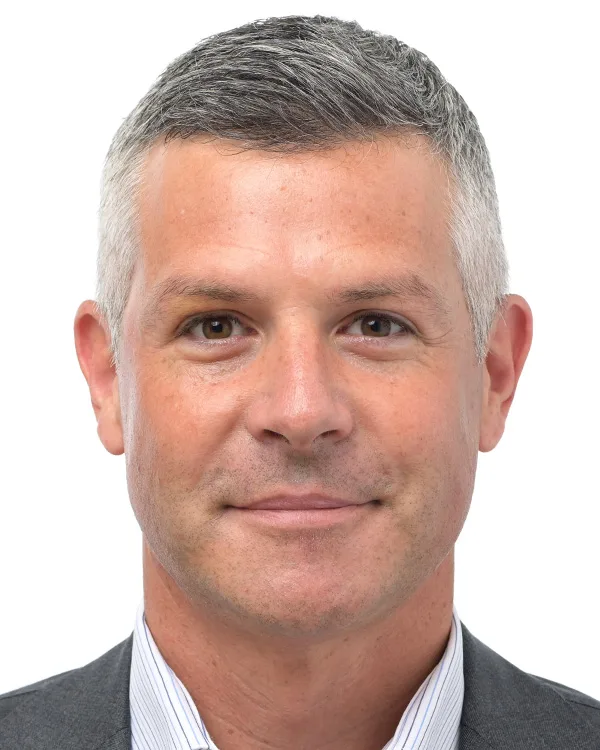

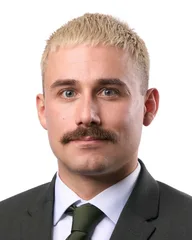
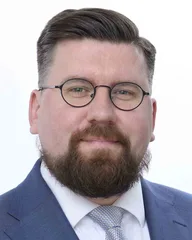
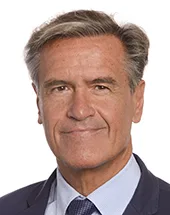
| Rank | Name | Country | Group | Speeches | |
|---|---|---|---|---|---|
| 1 |
|
Lukas Sieper | Germany DEU | Non-attached Members (NI) | 390 |
| 2 |
|
Juan Fernando López Aguilar | Spain ESP | Progressive Alliance of Socialists and Democrats (S&D) | 354 |
| 3 |
|
Sebastian Tynkkynen | Finland FIN | European Conservatives and Reformists (ECR) | 331 |
| 4 |
|
João Oliveira | Portugal PRT | The Left in the European Parliament (GUE/NGL) | 232 |
| 5 |
|
Vytenis Povilas Andriukaitis | Lithuania LTU | Progressive Alliance of Socialists and Democrats (S&D) | 227 |
All Contributions (159)
Gaza at breaking point: EU action to combat famine, the urgent need to release hostages and move towards a two-state solution (debate)
In Gaza, people live in hell. They continue to die in food queues every day. Israel systematically erases Gaza from the map of history, starves the population and commits genocide. This is confirmed by the United Nations, the most respected legal experts, as well as by many Israeli organisations. Israel’s actions must also be clearly condemned by the European Parliament, which has been silent since March 2024. The resolution must therefore be adopted. The European Union must finally take a clear stance on war crimes and impose sanctions on the perpetrators. We need a ceasefire and an end to the blockade of humanitarian aid. We must also give clearer support to the voices of peace and reason that are doing their job despite the sanctions imposed by the United States on judges and prosecutors of the International Criminal Court – including Slovenian judge Betti Hohler. I call on the Commission to activate the EU blocking statute as soon as possible, as requested by Belgium and Slovenia, and to respond to the recent US sanctions against the judges of the International Criminal Court. We must also support Francesco Albanese, a candidate for the Nobel Peace Prize. This week we all have the opportunity to stand on the right side of history. Let's not miss it! Thank you.
Rise of political violence, notably by far-left organisations (debate)
No text available
EU enlargement strategy (debate)
Mr President, Commissioner Marta Kos, colleagues! Enlargement is not a choice, it is a necessity. Socialists and Democrats have been convinced of this for decades. Why? This is one of the EU’s most important geostrategic investments, namely in peace, security, stability and prosperity. Values that everyone around us lives on today: Russia, United States, Iran, Israel. This is why an enlarged and strengthened European Union, led by democracy and solidarity, is needed. There's no time to act and be indecisive, honourable. We need the full commitment of the Commission and the Member States to a credible enlargement process, which must be based on clear rules and tangible progress by the candidate countries. No shortcuts and double standards to full membership, honourable. Equally, the rapprochement of candidates should under no circumstances be subject to unilateral political blockages by Member States due to bilateral disputes and interests or internal political interests. Therefore, the call is clear: we need a qualified majority in the Council to decide on all intermediate steps in the approximation process.
Guidelines for the 2027 budget - Section III (debate)
Mr President, Commissioner, colleagues, we are debating the 2027 budget at a moment of unprecedented global volatility. But if we want the EU to be a credible geopolitical actor, we must put our money where it's truly needed. Yet our external funding remains a drop in the ocean compared to many challenges at our borders. And the current crisis in Iran does not help either. First, we must help resolve the crisis in the east. Second, we must address the human catastrophe in the south, including in Gaza, Lebanon and beyond. And third, we must protect the values Europe was built on. This means long-term support of international organisations, civil society and a budget that systematically promotes the rights of women and girls. We must be the voice of reason and we need to stand up for peace and international law again. Finally, we must stop treating our diplomacy like a luxury we can't afford, including by properly financing our external action and our 144 delegations.
Order of business
Madam President, this one is urgent. Dear colleagues, I have a proposal pursuant to Rule 164 of the Rules of Procedure. In a world where international law and order is being increasingly dismantled by Trump, Putin and Orbán, and is now being rejected even by von der Leyen and Merz, peace is at stake. The future of Europe, too. This is why Pedro Sánchez standing up to Trump in the support of international law and against the war, is crucial – now more than ever. Nobody wants this war, dear colleagues, where Europe will pay the highest price. This is why, on behalf of the S&D Group, I want to propose to amend the title of the second item of Wednesday morning's joint debate on the Middle East by adding, at the end of the title, the following words: 'and support to Pedro Sánchez and Spain in his call for peace and against the economic threats of the USA'. I also request, on behalf of the S&D Group, for this to be taken by roll-call vote.
Recommendation to the Council on EU priorities for the 70th session of the UN Commission on the Status of Women (debate)
Mr President, dear colleagues, gender equality is not a slogan. It is a core European value and condition for real democracy. The EU, in the UN, must speak with a clear voice: women's rights are human rights and access to justice is essential. Too many women and girls still face laws and systems that doubt them and that fail to protect them. We must invest more in fair and gender-sensitive justice. And yes, we also need more women in the legal system at all levels because representation changes perspectives and builds trust for victims seeking justice. The Epstein scandal exposed how wealth and power can shield abusers and silence victims. This is exactly why strong, independent and gender-aware justice matters. This is exactly why we have to fight for initiatives like 'My Voice, My Choice', which reminds us that women demand agency over their bodies and their lives. The EU must lead in this fight so that every woman and every girl can seek justice without fear and decide over her own body. Because a Union of values must deliver justice also in practice.
State violence in Minneapolis and the rule of law in the United States (topical debate)
Madam President! The events in Minneapolis reveal the brutal consequences of the work of ICE. This is institutional racist violence by the Trump administration, which has no accountability, no transparency and no respect for the rule of law. Massive violent deportations, kidnappings and family break-ups are clearly America's new dream of trump. Even the killings of innocent citizens Good and Pretti are not accidents, they are the result of the collapse of a system based on fear, repression and impunity. Some autocrats in the European Union are already openly flirting with the Trump model. Also in Slovenia, MPs from the SDS, which are part of the EPP Group, are announcing the establishment of a deportation office. This is not a security policy, it is a policy of fear, a copy of the xenophobic, racist, dictatorial and violent current American policies. We must stand firm against such threats. Slovenia and Europe must not become laboratories for a trumped-up policy of repression. Violence is never and should not be the answer, but justice, not repression, the rule of law, not the ICE.
Urgent need to address the humanitarian catastrophe in Sudan and to achieve a sustainable peace (debate)
Mr. President! The situation in Sudan represents the largest humanitarian catastrophe and the largest crisis of displaced people in the world. The conflict has already claimed more than 200,000 victims. Like Gaza, Sudan is a moral and political defeat of the international community. The International Criminal Court (ICC) has confirmed that Sudan has witnessed the worst war crimes and crimes against humanity, but they still do not see an end. Both because of the fierce rivalry of military forces and the involvement of external actors such as the United Arab Emirates. Supporting one side of arms, money and logistics is a flagrant violation of the United Nations (United States) arms embargo. Supporting one side and playing a peacemaker on the international stage, while contributing to terror behind the scenes, is inhumane. We therefore call for the establishment of a full arms embargo and sanctions against offenders. We must ensure that Sudanese civilians have immediate and safe access to humanitarian assistance. As a Union, we have a responsibility to prevent genocide and protect the civilian population.
Situation in Northeast Syria, the violence against civilians and the need to maintain a sustainable ceasefire (debate)
Mr. President! Dear High Council! The latest ceasefire agreement is a rare opportunity for peace in Syria. And this should be based on an idea based on dialogue and not on weapons. Stability without justice and peace is not without inclusion. The ceasefire must be fully realised. Every violation means less access to healthcare, more obstacles to humanitarian aid and more suffering for civilians. The stability of northeast Syria is the cornerstone of a successful political transition throughout the country. This must necessarily involve all communities: Kurds, Arabs, Assyrians, Christians, women and young people. Without their voice, there is no democracy. On the other hand, it is important for Europe and the world to control prison centres with former Islamic State fighters. The protection of civilians and local democratic structures is inextricably linked to broader security issues. We must thus offer Syria a hand in a brighter and more democratic future. And let us be honest, without serious resources, including European funds, for humanitarian aid, development and peace-building, this transition will not succeed. Solidarity is not an empty word, it is a political decision.
European Council meeting (joint debate)
Madam President, dear colleagues, since the last Council meeting, the list of brutal violations of the international order and law has grown significantly. The Trump administration abducted Maduro, is seriously threatening the Iranian regime, is announcing an aggressive takeover of Greenland. At the same time, it is maintaining close relations and cooperation with the Zionist Prime Minister of Israel: the one who will go down in history as one of the most brutal leaders of our time; the one who continuously destroys the international order and institutions such as the United Nations and their role. How much more are we willing to tolerate? My message to the European leaders of tomorrow's extraordinary summit is: the era of merely noting, condemning and urging leaders such as Trump, Netanyahu and Putin to respect international law and to act for something greater than their own ego and greed is over. So, colleagues, stop condemning, start acting – bolder, stronger and united.
30th anniversary of the signing of the Dayton-Paris Peace Agreement (debate)
No text available
The deepening democratic crisis in Georgia (debate)
Mr President, Honourable High Council! Today's debate on Georgia is no longer just a warning, it is a description of the reality that the country is very quickly moving from democracy to authoritarianism. The regime systematically undermines the opposition, criminalises civil society, attacks independent media and abuses legislation to silence critical voices. Democracy does not die overnight, it dies when repression begins to be called law and fear is called order. Elections that do not meet international standards, are not merely technical shortcomings, are a political decision, and such elections are incompatible with a potential Member State of the European Union. Despite the repression, the Georgian people persist, protest peacefully, persistently and courageously. When power betrays democracy, it is our duty to stand by the people, not by the authorities. And it is imperative that the Union also react in the area of visas if the situation does not improve. Good luck to Georgia.
Preparation of the European Council meeting of 18-19 December 2025, in particular the need to support Ukraine, transatlantic relations and the EU’s strategic autonomy (debate)
Mr President, dear colleagues, Europe faces the most demanding geopolitical moment in decades. Long-standing partners, including the United States, are stepping back. We struggle to build new alliances, especially to the east. Mercosur comes to mind. Internally, we are deeply divided. Some traditional supporters of a democratic and united Europe, are now aligned with increasingly extreme and destructive forces. Our double standards responding to conflicts are also eroding our credibility. The world around us is becoming more unpredictable, fragmented and dangerous. Unity and responsibility are no longer optional; they are a political necessity. The Western Balkans remain on the agenda, yet without a tangible process. EU enlargement is a strategic investment in peace, security and the future of our continent, and a political promise of our stability, reform and shared values. Meanwhile, the Middle East continues to witness ceasefire violations and escalation of violence. The EU must clearly stand for international law.
Recent developments in Palestine and Lebanon (debate)
Mr President, dear colleagues, there is no ceasefire, if one side breaks it over and over again. The UN warns that, since the beginning of the truce, Israel has violated the ceasefire in Lebanon more than 10 000 times in one year, and in Gaza, in the last 60 days, more than 700 times. How can there be peace when the killing continues, including of children? How can there be peace if systematic violence goes unpunished in the West Bank? How can there be peace if there is an occupation and apartheid persists? How can there be peace when the genocide continues? We must not turn our eyes from the Middle East. The violation of the ceasefire must stop. The killings and the severe human rights violations must stop now. What we need is a meaningful political process that will bring about real, just and lasting peace. The EU has leverage, but it refuses to use it. The sanctions are on the table and must be implemented. The EU can play a role if it is so chooses. It must now.
European Citizens’ Initiative ‘My voice, my choice: for safe and accessible abortion’ (debate)
Mr President, honourable colleagues, we are one day at an extremely important turning point when the European Parliament will decide on the reproductive rights of 230 million women in the European Union, on the right to a safe and dignified abortion. Yes, honourable colleagues, 720 of us will decide on a fundamental human right, on the freedom to decide on our own body, which is taken from at least 20 million women in Europe, including the citizens of Poland and Malta. It is unacceptable that women in Europe continue to die as a result of bans or severe restrictions on abortion, and that they may also face imprisonment in the event of a violation. It is neither democratic nor free. What is more, there is systematic and systematic violence against women, which is also politically instrumentalised. That's why all the alarms have to ring. And they were the first to hear the Slovenian representatives of the pan-European association My Voice, My Choice, who are fighting every day with all their strength to ensure that every woman in the European Union has access to safe abortion. Girls, a deep tribute to your work. The initiative takes nothing away from anyone, but gives everyone the free will to decide. Thank you very much colleagues and colleagues.
2026 budgetary procedure: joint text (debate)
Madam President, dear Minister, dear ministers, tomorrow the European Parliament will vote on the European Union's budget for the next year. A deal was successful in the early morning hours on Saturday 15 November. This is a good deal for Europe and a good deal for our citizens. Iides to sincerely thank the many people responsible for the result, but especially my opinions, you, Commissioner, and the Danish Presidency. extreme financial pressure and the negative margins of the European Union administration, together we did it. In particular, I welcome the fact that the European Parliament's negotiation team teams together, united along the way. The final outcome includes significant results of available resources for key EU programmes, and also, very importantly, key European institutions – particular those fighting for the rule of law and our most fundamental values that the Union is based on. Madam President! Let me now continue in Spanish. The European Union budget is not just a list of figures. It tells us what kind of Europe we want, what kind of Europe we want to build and who we want to help. Next year, total spending will amount to almost €193 billion. But the most important thing is what the money will actually be used for. The key message from Parliament to our citizens is to put environmental protection, science and research at the forefront. We are strengthening the Erasmus+ programme for young people. We are also significantly increasing resources for addressing crises in our neighbourhood and for humanitarian aid. An important part of the agreement is also the additional staffing of institutions to protect the rule of law and the fundamental values of the Union, such as the Court of Justice of the European Union, the European Data Protection Supervisor and the European Ombudsman. This budget is not just a technical document, it is above all a promise: a promise that Europe will not turn a blind eye to challenges, but will invest in people's knowledge, in health, in youth, in humanitarianism, in solidarity, in our common future. This week we have a long way to go. We will adopt a budget that strengthens the European identity as a space, especially a space of opportunities, security, creativity and values. We set this as a goal and we succeeded in achieving it. And together.
Conclusions of the European Council meeting of 23 October 2025 (debate)
Madam President, the meeting of European leaders has brought mixed conclusions. On the one hand, I welcome the first ever discussion on housing, which together with the cost-of-living crisis is one of the most important issues for our citizens. The Commission must now follow up as soon as possible with a concrete plan for affordable housing. Unfortunately, on the other hand, the summit completely forgot about Sudan. It was also a missed opportunity for a more decisive European response in the Middle East. As the occupation and violation persist, Israel continues to carry out attacks even after the ceasefire. Since then, at least 240 Palestinians were killed. Is this what peace looks like, dear colleagues? Europe must not turn away its attention from the region, but it must use its leverage to take meaningful action, including sanctions. Otherwise, Europe just talks about engagement while events move without us.
Allegations of espionage by the Hungarian government within the EU institutions (debate)
Madam President! Today, the European Union is facing an issue that goes beyond a single scandal. If it is established that the Hungarian Government has carried out spying activities within the institutions of the European Union, then we are talking about more than an incident, but an act that undermines the very essence of our common project. These are the trust and values on which the Union stands. It is particularly worrying that these activities took place at a time when Olivér Várhelyi, today a European Commissioner, was serving as the Hungarian Ambassador to the European Union. That connection seriously calls into question his independence and integrity and is contrary to the duties of office laid down in the Treaty on European Union. But it's not just a matter of one person's actions. It is part of a broader pattern – Viktor Orban’s policy of systematically destroying the rule of law, media freedom and loyalty to European values for years and using EU membership as a tool of its own influence. That is why I want to be clear today. It is time for an open debate on Hungary's role in the European Union, including its membership, and whether its conduct is still in line with our common values. That is why the European Union must protect its independence. It is time for serious reflection if Commissioner Várhelyi is still worthy of our trust.
General budget of the European Union for the financial year 2026 – all sections (debate)
Mr President, dear Minister, dear Commissioner, dear colleagues, thank you to Mr Halicki. I listened to all the speakers carefully. With many I can agree and some less. However, I believe that we share a vision with many of you of a better Europe – a more social Europe that delivers for its citizens and that is effective. This Europe is not about individual partial interests, but about a common one, and Europe is strong when it is united. This is our next challenge at hand, finding a compromise that will be based on those principles. Dear colleagues and shadow rapporteurs, I want to thank you for the very constructive work and cooperation so far. I believe tomorrow we will get strong support for the Parliament's position ahead of the conciliation talks. I look very much forward to these discussions and I am hopeful we will find an agreement that will be a good one.
General budget of the European Union for the financial year 2026 – all sections (debate)
Madam President, dear Minister Wammen, dear Commissioner Serafin, dear colleagues, today we will debate on our priorities for next year’s budget of the Union. This is an important moment for the Parliament where we set our policy priorities, and how to finance them. Our common approach reflects our common values. In addition, it sets the course for the future of Europe as we see it. We are of course part of the globalised world, with many ongoing conflicts, including on our borders. We are also exposed to geopolitical events. We also have to respond to the urgent challenges, including cyber security. In the last years, the EU adopted several ground-breaking legislative initiatives, such as the Digital Services Act, the Digital Market Act, or the Artificial intelligence Act, just to name some of them. Consequently, we tasked the EU institutions to implement these initiatives and monitor their application. But to be able to do that, the EU institutions must be able to do their job. And for them to be able to do so, we must give them sufficient resources. If we can talk the talk, but do not walk the walk, we put all our institutions in a difficult situation. And the Union at risk. Dear colleagues, our key priorities are reflected in our budget proposal. And considering the difficult overall financial situation of the EU budget, we are being very responsible in planning it. And I believe that our proposal demonstrates just that. Our position is very focused, very reasonable and targeted to real needs. However, certain difference between our institutions remain. But we have a common task to deliver for our citizens. It is them we serve. Not ourselves. As the rapporteur for other sections, my message is clear. We must enable our institutions to have enough staff to deal with their increased tasks and responsibilities, and mandatory expenses. But also they need to be able to protect themselves from the new realities, such as cybersecurity issues. More efficient and safe EU institutions are in our common interest. So, dear Minister Wammen, dear Commissioner Serafin, I am sure we will be able to find a common ground that will be based on the real needs for each of our institutions. They are the backbone of the EU, working for our citizens, but also the Member States. And that the result in the end will be a good one. I look forward to today’s debate and I thank you for your attention. Thank you also to my colleagues.