

| Rank | Name | Country | Group | Speeches | |
|---|---|---|---|---|---|
| 1 |
|
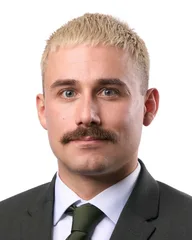
Lukas Sieper | Germany DEU | Non-attached Members (NI) | 390 |
| 2 |
|
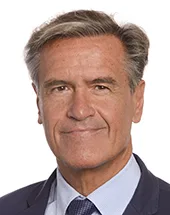
Juan Fernando López Aguilar | Spain ESP | Progressive Alliance of Socialists and Democrats (S&D) | 354 |
| 3 |
|
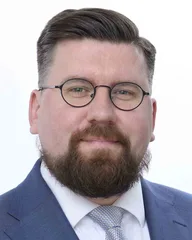
Sebastian Tynkkynen | Finland FIN | European Conservatives and Reformists (ECR) | 331 |
| 4 |
|
João Oliveira | Portugal PRT | The Left in the European Parliament (GUE/NGL) | 232 |
| 5 |
|
Vytenis Povilas Andriukaitis | Lithuania LTU | Progressive Alliance of Socialists and Democrats (S&D) | 227 |
All Contributions (93)
Automated data exchange for police cooperation (“Prüm II”) (debate)
Mr President, dear Marc Angel, Commissioner, dear Ylva Johansson, dear Paul Tang and Paulo Rangel, ladies and gentlemen, together we shadow rapporteurs have worked very well. I would like to welcome the fact that the Europe of police cooperation will become an operational reality. As rapporteur on behalf of my group, I welcome this new Prüm II Regulation, which anchors the EU's internal security strategy in the digital age. In concrete terms, we enable law enforcement in all Member States to consult, compare and exchange key data to identify criminals and collect evidence. Thanks to the secure platform that is created, a police officer or gendarme in Strasbourg will be able to consult the databases of his colleagues in Hamburg or Milan in the context of ongoing investigations and ensuring, colleagues, the protection of personal data. In the face of increasingly sophisticated and agile criminals and terrorists, the European Union is adapting and responding forcefully. Our European Union Agency for Law Enforcement Cooperation is also making progress, dismantling more and more criminal networks engaged in drug trafficking, cybercrime or trafficking in human beings. It will thus be equipped with a complementary tool that will allow it to continue the deployment of its investigations and arrests. This agreement thus complements the internal security ecosystem started in 2019. Together with my group, Renew, we welcome these major and concrete steps forward to ensure the safety of our fellow citizens in Europe.
Extending the list of EU crimes to hate speech and hate crime (debate)
Madam President, dear Evelyn Regner, Commissioner, dear Didier Reynders, ladies and gentlemen, in recent years we have seen an exponential rise in hate crime and hate speech. The latter are dangerous for the rule of law and for democracy because they too often serve an extreme political ideology. Their representatives use these hate speeches to stir up anger, exacerbate fears to advance their own political agenda. We therefore need to expand the list of European crimes in order to have a harmonised definition of hate crime and hate speech in order to better identify and combat them more effectively. In this regard, I would like to welcome the tenacious commitment of Commissioner Didier Reynders and my colleague Maite Pagazaurtundúa, for whom it is a life-long struggle and who does not give up on the subject. Thanks to you. Like other Members, I regret the absence of a Council representative in this Chamber. We all know that we would like the Council to stop blocking this text for a strong and firm Europe against hate speech and hate crime.
European Health Data Space (debate)
Madam President, Commissioner – dear Stella Kyriakides – ladies and gentlemen, this mandate has clearly demonstrated this: the EU is strong, especially in the area of health. This proposal for a European Health Data Space is a real step forward for a Health Europe, as my colleague Catherine Amalric said. Key objectives include ensuring that European citizens have access to and control over their health data, and then ensuring, across Europe, the free movement of citizens to which we are very committed, by ensuring that their health data can track them. This is a European priority that my delegation, my group, Renew Europe, has consistently put forward since the COVID-19 pandemic. Borders, ladies and gentlemen, we now really know, do not stop diseases. Together we can find solutions. We have been strong in fighting COVID-19 together, Commissioner, buying vaccines together, building the COVID pass together. For all these reasons, and in memory, if I may, of my colleague Véronique Trillet—Lenoir, I propose that we continue our commitment to the health of European citizens together.
Digitalisation of cross-border judicial cooperation - Digitalisation of cross-border judicial cooperation (amendment of certain directives and framework decisions) (joint debate – Judicial cooperation)
Mr President, Commissioner Dubravka Šuica, ladies and gentlemen, I welcome the agreement on the two texts that allow the creation of secure and reliable digital communication channels between judicial authorities in cross-border cases. I would like to express my pleasure at working with Marina Kaljurand and the fact that we were able to achieve a very constructive outcome. Thank you, Marina. The digitalisation of judicial cooperation and access to justice will enable authorities in different Member States to work in a secure, fast and efficient manner. Closer judicial cooperation for a better fight against crime. I am also pleased that these texts include an important part on training, on the one hand, of judicial authorities and, on the other hand, of European citizens to make easy use of these digital tools. The digitalisation of justice must go hand in hand with training in new technologies so as not to aggravate the digital divide. No citizen should be harmed by technological developments, especially when it comes to protecting their fundamental rights. These technologies must serve the public interest. For a Europe at the service of citizens! For a more transparent Europe! For a Europe that protects our citizens!
Schengen area: digitalisation of the visa procedure - Schengen area: amending the Visa Sticker Regulation (Joint debate – Schengen area)
Mr President, Commissioner – dear Margarítis Schinás, the Schengen area is a valuable asset of European integration. It represents the best that Europe can do: the development of a prosperous society in an area of free movement of persons, goods and services. Today, we want to consolidate this acquis – ladies and gentlemen – in order to adapt it to the digital revolution and anchor it in the future. This agreement on the digitalisation of visas is an important step towards a more secure management of our common external borders and towards a more attractive Europe, too, for foreign nationals. Access to an online application for a Schengen visa will facilitate the work of the authorities for control operations and allow better identification of any falsified or fraudulent documents. This is an undeniable asset for the internal security of the Schengen area. This will also reduce the administrative burden for third-country nationals and for Member States. Together with my group, Renew Europe, we fully support the modernisation of Schengen visas.
General budget of the European Union for the financial year 2024 - all sections (debate)
–Mr President, Commissioner Johannes Hahn, Minister Esperanza Samblás, ladies and gentlemen, the annual budget for 2024 is the budget with the lowest margins since the start of this multiannual financial framework. We did not imagine, at the beginning of this term of office, that we should – ladies and gentlemen – face a pandemic, an economic crisis, a war and all the consequences that result from these events. And yet, the European Union has faced up, redoubled its ingenuity and responsiveness. All this would not have been possible without the European budget – and the recovery plan, of course. This 2024 budget, despite its low margins, needs to be flexible and responsive to cope with crises and contingencies. This is crucial, and I would like to thank Siegfried Mureșan and Nils Ušakovs for their work. As we have seen, the European Union’s capacity for action and response is needed to respond to one-off events such as natural disasters, or crises such as the war in Ukraine. In Parliament’s position, we are also increasing the budget of the agencies, whose mandate has been extended, for security – which is sorely topical – as well as the flagship programmes: Erasmus+, LIFE, the European Defence Fund, humanitarian aid, the European Civil Protection Mechanism and other key lines. This budget aims to be at the side of citizens, not forgetting the major challenges, for which we must invest over time: climate transition, youth programmes, support through crises. We need an ambitious MFF revision. Minister, the Council must follow Parliament and be proactive in this area so as to allow a very close revision of the 2024 budget, so that it is more realistic and adapted to the challenges we face. Ladies and gentlemen, let us give ourselves the means to achieve our ambitions!
Need for a speedy adoption of the asylum and migration package (debate)
Mr Vice-President, dear Margaritis Schinas, Mr President, dear Othmar, Minister, dear Pascual Navarro Ríos, if we want the European Pact on Asylum and Migration before the European elections, the difficult decisions, ladies and gentlemen, are now being taken. This is a moment of truth for the Member States. First of all, we are waiting for the Council's position, as you recalled, Commissioner, on the regulation on migration crises. This text is of course one of the cornerstones of the pact. Can we imagine a credible reform without a crisis management mechanism? What would we say to the inhabitants of Lampedusa and the territories of first entry? It is also a moment of truth in the European Parliament, between those who wish to build a real European response to the challenges of responsible migration, with courage, and those who do everything, or rather nothing, to make these negotiations fail. I am shocked by the attitude of the extreme right that rushes in front of the cameras at every news to utter horrors and claim a takeover. In reality, the far right is not at work. Mr Bardella's and Mr Zemmour's colleagues are absent - indeed, they are no longer there - from parliamentary debates, absent from negotiations where crucial decisions are taken. Together with my group Renew Europe, we are determined to bring this crucial reform to fruition. We are ready to take responsibility.
Rising precariousness in Europe including the need for aid to the most deprived (debate)
Mr President, dear Othmar Karas, Commissioner, dear Nicolas Schmit, ladies and gentlemen, as you have said, our most vulnerable citizens throughout Europe are in difficulty. Aid associations for the most deprived – I am thinking in France of food banks and heart restaurants – are constantly alerting to the growing number of their beneficiaries. They also share their difficulties in maintaining their service given the increase in prices, inflation. This is true for food as well as for energy in the premises where they welcome the most fragile people. They also alert us to the consequences of COVID. As you pointed out, Commissioner, the common objective of the budget is to devote 4% of the European Social Fund's resources to food aid to basic material assistance for the most deprived. Could an update of this common goal be planned to be even more alongside the most fragile? How do you intend to encourage Member States to be more ambitious? You mentioned it yourself, especially more using the Fund for Aid to the Most Deprived, the FEAD. As rapporteur for the budget, I am well aware that the margins are very narrow. But, Commissioner, solidarity must be a priority for all of us.
EU-Tunisia Agreement - aspects related to external migration policy (debate)
Mr President, ladies and gentlemen, strengthening cooperation between the European Union and third countries in the field of migration, yes! Announce such agreements with, at the centre, Mrs Meloni, no! Commissioner, dear Olivér Várhelyi, Minister, dear Pascual Navarro Ríos, the external dimension of the European Pact on Asylum and Migration is far too important a pillar to leave in the hands of the far right. Together with my Renew Group, we support the development of mutually beneficial comprehensive partnerships between the EU and key third countries in our neighbourhood. It is about building a new relationship with these countries, creating the conditions for their development, helping them to better manage growing migration flows. The French Presidency of the Council has given a strong impetus to an external migration policy at European level. We strongly support it. This policy, Commissioner, Minister, is to be built with pro-European centrist forces, with the European Parliament, and with respect for human rights as a cardinal principle.
The need for EU action on search and rescue in the Mediterranean (debate)
Madam President, Commissioner, dear Ylva Johansson, Minister for European Affairs, dear Pascual Navarro Rios, rescue at sea is above all a humanitarian duty. This is not an adjustment variable for more or less immigration. No, far-right colleagues, we do not decide the fate of women, men and children with nauseating slogans. No, sea walls are not a solution to migration management. Faced with a situation of distress at sea, our common values and our European history call for a single course of action. As you recalled, Commissioner: save human lives. There should be no debate on this. Yet 25,000 people have died or disappeared in the Mediterranean since 2014. The tragic sinking of a migrant boat, as you recalled, carrying 750 migrants off the Greek coast in mid-June, shocked and shocked us all. Together with my Renew Europe Group and all my colleagues, I too call for the creation of a European search and rescue mission with the Member States and Frontex, in cooperation with all relevant actors. As you said, Commissioner, this mission must be accompanied by a resolute fight against human smugglers and traffickers who exploit poverty. Stop this despicable traffic at its source, including in third countries, and take strong measures to dismantle these criminal networks. Colleagues, there is an urgent need for action.
Preparation of the European Council meeting of 29-30 June 2023, in particular in the light of recent steps towards concluding the Migration Pact (debate)
Mr President, Commissioner, dear Maroš Šefčovič, Minister, dear Jessica Roswall, last week the states showed a strong unity by adopting their position on the flagship texts of the European Pact on Migration and Asylum. This is a decisive step, which would not have been possible without the determination of the French, Czech and Swedish Presidencies. Thanks to them. Thus, we defend a Europe that controls its external borders, including Frontex; a Europe of solidarity with countries under migratory pressure; an efficient Europe, which ensures the swift processing of asylum applications; and a Europe of values, which fully respects individuals and the right to international protection. Our citizens expect the European Union and the states to respond to collective migration challenges as Europeans. Heads of State, in the European Parliament, we are determined to bring the European Pact on Migration and Asylum to a successful conclusion in early 2024, ahead of the European elections. We count on you to do the same, together.
Adequacy of the protection afforded by the EU-U.S. Data Privacy Framework (debate)
Mr President, dear Roberts Zīle, Commissioner, dear Didier Reynders, Minister, dear Jessika Roswall, the General Data Protection Regulation, the famous GDPR, is a demonstration of a Europe that protects. It protects personal data and the privacy of European citizens. This is a fundamental but fragile achievement. I welcome the Commission’s plan for a new EU-US data protection framework. This agreement meets the requirements set out by the European Court of Justice and will provide our fellow citizens with a legal remedy on US soil in the event of illegal use of their personal data. This is an important step forward. Commissioner, the European Data Protection Board has made several recommendations, stressing in particular the importance of continuous monitoring of the proper implementation and enforcement of these rules in the United States. Commissioner, do you intend to update the agreement to take these recommendations into account? We count on your determination and that of the Commission to protect the personal data of Europeans.
Externalising asylum applications and making funding to third countries conditional on the implementation of return agreements (topical debate)
Madam President, Commissioner, Minister Jessika Roswall, the proposals of the extreme right in the face of the migration challenge can be summed up in the title of this debate, which Mr Bardella’s group wanted. We should send asylum seekers away from home and use the stick as our only foreign policy tool. With you, we would close the door on Ukrainian families, Afghan women and girls fleeing war and the most horrific treatments. Obviously, we do not share the same values. And even if human morality is not on your radar, your proposals are yet another mirage. Attempts to outsource asylum seekers by the UK, as well as Denmark, have failed: no asylum seeker has been returned to Rwanda. With my Renew Europe Group, with other groups around the centre of this Parliament, we consider, on the contrary, that the external dimension of migration is a central pillar, as you have said, Commissioner, of the European Pact on Asylum and Migration. This pact, ladies and gentlemen, which you rejected in the vote last April. We call for building mutually beneficial comprehensive partnerships at European level with the main third countries of origin and transit of migration. This work is already underway, Minister, Commissioner, as you have reminded us. We advocate the establishment of a continuous dialogue with our external partners and resolute operational support from the European Union to combat smuggling networks. Of course, it bothers you that there are real answers that are a solution to a European perspective. We propose to step up much more effective voluntary returns. I am convinced that, together with my group, it is in Europeans, ladies and gentlemen, that we will act effectively in the face of the migration challenge.
The need for European solidarity in saving lives in the Mediterranean, in particular in Italy (debate)
Mr President, Commissioner, dear Johannes Hahn, Minister for European Affairs, dear Jessika Roswall, ladies and gentlemen, early 2023 marks the deadliest quarter for migrants in the Mediterranean Sea since 2017. This is the crisis we are facing: A humanitarian crisis that pushes many people onto dangerous roads, people struggling with networks of barbaric human traffickers. 2023 also marks a significant increase in asylum applications in the EU, starting with many arrivals in Italy and on the shores of the Mediterranean, which put these countries of first entry under disproportionate pressure. This challenge, ladies and gentlemen, is ours, collectively. Our answer, as you mentioned, Commissioner, is the European Pact on Asylum and Migration. I would like to welcome the major progress made towards this far-reaching reform, following the adoption at the end of March of all negotiating mandates in the European Parliament. We hope that the Council will soon also have a mandate on all issues. We propose the creation of a solidarity mechanism at European level, as you mentioned, to help states under migratory pressure, especially following rescues at sea. We want to speed up asylum procedures, make them more efficient, improve the integration of refugees and strengthen the return of people who cannot obtain asylum. This agreement is the result of long negotiations between the centrist and pro-European forces of our European Parliament. What about Ms Meloni’s relatives? What about Ms Le Pen’s far right? Absent. The record of populists in the European Parliament is sketchy: empty chair policy during negotiations, systematic opposition during votes. On the contrary, with my group, Renew, we are defending concrete and lasting solutions and strong European cooperation, while respecting our common values.
Guidelines for the 2024 budget - Section III (debate)
Mr President – dear Rainer Wieland –, Commissioner – dear Mr Hahn – I call on you, Commissioner, to urgently propose a revision of the multiannual financial framework. As you know, the margins of the 2024 budget are estimated at 336 million out of 160 billion, i.e. 0.2%. They are even lower than those in the 2023 budget, which were already very limited. This gives us, ladies and gentlemen, very little flexibility to support our fellow citizens as we would like them to feel the consequences of the pandemic, on the one hand, and the war in Ukraine, on the other. This gives us very little room to finance our investment priorities, Commissioner, in strategic areas: energy independence, youth, the green and digital transition and sovereignty, dear to my colleague Valérie Hayer. If the European Union is to face the major challenges we face and respond to citizens’ concerns, we need to have a budget accordingly. A revision of the multiannual financial framework is therefore essential, Commissioner. My second point: I regret that in this text, which aims to set our priorities for the 2024 budget, my colleagues from EPP, ECR and ID continue to want to finance walls with the EU budget, agitating this proposal as the miracle solution against migration. I said it and I repeat it: the migration issue will not be solved by walls. We must build a true European response, a response of responsibility and solidarity. This is what the EU budget needs to finance. That is what we are proposing, ladies and gentlemen, with the Pact on Asylum and Migration.
2022 Rule of Law Report - The rule of law situation in the European Union - Rule of law in Greece - Rule of law in Spain - Rule of law in Malta (debate)
Mr President, Vice-President Věra Jourová, the rule of law is a precious legacy. It is also a very fragile achievement. Here is the record of the populist regimes in power in Europe: deprivation of liberty, police of values, oppression of counter-powers. In Italy, Ms Meloni’s government is acting by asking the City of Milan to stop registering children of same-sex couples. What a shame! These children will be deprived of identity with their parents. In Hungary and Poland, the same well-known defaults remain. I welcome the Commission's annual report, the country-by-country recommendations. I welcome and support with my group the freezing of the recovery plan funds for Poland and Hungary. But I am also advocating, Commissioner, with my group to use the annual report tool to its full potential, by following up on the recommendations and launching infringement procedures on the various points listed. There is an urgent need for Europe to arm itself to protect our values and rule of law.
Deaths at sea: a common EU response to save lives and action to ensure safe and legal pathways (debate)
Mr President, dear Othmar Karas, Commissioner, dear Ylva Johansson, Minister, dear Jessika Roswall, the shipwreck near Crotone, Italy, shocks us. Precisely because this boat ran aground in the European maritime space. Not in the open sea, ladies and gentlemen, but on our coasts, and while this boat had been reported to the Italian coastguard. Nearly 60 people died in this tragedy. More than 2,300 in the Mediterranean last year. We cannot turn a blind eye to these deaths. Together with my colleagues Renew Europe, we call for a European rescue force at sea, in cooperation with the Member States, and also for the creation of legal channels for migration. In the medium and long term, our response is the European Pact on Asylum and Migration, which will ensure harmonised asylum rules in the EU and a solidarity mechanism between Member States. Time is running out. I call on the Swedish Presidency, Madam Minister, and the Council to speed up their work with the help of the Commission, in order to quickly find an agreement and progress on this long-awaited reform.
EUCO conclusions: the need for the speedy finalisation of the Road Map (debate)
Madam President – dear Evelyn Regner –, Madam Minister for European Affairs – dear Jessika Roswall –, Commissioner Mairead McGuinness, the answer to the migration challenge is the Pact on Migration and Asylum. Colleagues, this is not a return to national reflexes. These are not simplistic solutions, such as building walls. The Pact is our best asset to establish truly common rules between all Member States, in line with our European principles and values. The Pact lays down rules to ensure access to international protection, establish rapid asylum procedures, organise returns and effectively manage our external borders. It is these four points that we need to achieve at the same time. The adoption of this far-reaching reform before the European elections in May 2024 is a major imperative to finally provide a European and courageous response, colleagues, to the migration issue. I am convinced of our ability, together with the Council, to achieve this. Let's not wait any longer.
Council of Europe Convention on preventing and combating violence against women and domestic violence: EU accession (continuation of debate)
Mr President, Commissioner Dalli, ladies and gentlemen, today, one in three women in the European Union is subjected to gender-based or sexual violence. So, ladies and gentlemen, what are we waiting for to ratify the Istanbul Convention? The ratification process has been blocked since 2017 as six Member States have not yet done so. However, the latest judgment of the Court of Justice of the European Union shows that a qualified majority of the Member States – Commissioner – is sufficient to ratify the Convention. This could help break the deadlock. Together with my group, Renew Europe, Ramona Strugariu – who spoke earlier – and Sylvie Brunet and Samira Rafaela, we want the European Union to be an international reference on respect for women’s rights and protection against violence. As we all know, there is a need for swift action in light of the increase in violence during COVID-19, which has not stopped since. I therefore call on the Council to ratify this Istanbul Convention as soon as possible. European citizens and women around the world are watching us. Let us live up to their expectations.
Preparation of the Special European Council meeting of February, in particular the need to develop sustainable solutions in the area of asylum and migration (debate)
Mr President, Commissioner – dear Johannes Hahn –, Minister – dear Jessika Roswall – the only solution to the migration challenge is the new European Pact on Migration and Asylum. No, it's not the walls, Mr. Weber. No, ladies and gentlemen of the EPP, these are also not the asylum examination centres located far from European territories. This would not be worthy of the humanist values that are ours. It is not by pacting with the far right that you will lay the foundations for an indispensable European agreement. This is our responsibility: Let us rather unite our pro-European and moderate forces for a real European Pact on Migration and Asylum, for a responsible Europe, which controls its borders and respects human rights, for a Europe of solidarity, which supports the most exposed states – I am thinking in particular of Spain, Italy, Greece, Malta and Cyprus – for a Europe that ensures asylum procedures that respect human rights and are effective.
Terrorist threats posed by far-right extremist networks defying the democratic constitutional order (debate)
Mr President, Minister for European Affairs, dear Jessika Roswall, Commissioner, dear Ylva Johansson, for several years the European Union has been regularly the target of dramatic terrorist attacks. In its latest report, Europol points to the significant rise of far-right terrorism in the EU: it is the second most common type of terrorism after jihadists. These attacks go hand in hand with hate speech and populist ideology aimed at destabilising our democracies, as we have seen with the recent news stories cited by several colleagues in Germany, Bratislava and Paris, on the initiative of far-right networks. To cope with this, Europe must remain united. I welcome the progress we have made together, Commissioner, with the regulation to combat the dissemination of terrorist content online. But we need to go further. This must be achieved through greater cooperation between law enforcement authorities, greater cooperation between judicial authorities and Member States’ intelligence services. As we know, far-right terrorism does not stop at borders.
Presentation of the programme of activities of the Swedish Presidency (debate)
Madam President, Prime Minister, Ulf Kristersson, Minister for European Affairs, Vice-President Maroš Šefčovič, the six months of the Swedish Presidency will be decisive for a long-awaited major reform of the European asylum and migration policy, which has been stalled for years. Presented in September 2020, the European Pact on Asylum and Migration is finally progressing, notably through the establishment of the joint roadmap between Parliament and Council, requested together with my Renew Europe Group to adopt this reform by April 2024. The war in Ukraine, the numerous crises in the European neighbourhood demonstrate how essential a united and strong Europe around the migration challenge is. A Europe capable of welcoming persecuted people. A Europe that controls its borders and fights against migrant trafficking. A Europe of responsibility and solidarity. Prime Minister, are you ready to advance this European Pact on Asylum and Migration with all pro-European and centrist forces?
The Commission’s reports on the situation of journalists and the implications of the rule of law (debate)
Mr President, Commissioner – dear Johannes Hahn –, Minister representing Czechia, a democracy, democracy, does not work without its checks and balances. Free and independent journalists are key actors. They inform the citizens, they check the facts and they fight the . In short, they are the guarantors of our freedom of expression and opinion. However, in the digital age, when the buzz takes precedence over verified information, when the press is bought to better control our opinions, our journalists are not sufficiently protected. Support for free media is needed in all EU countries. The anti-SLAPP law is of course a good thing, but I also want to advocate here for stronger public funding, to compensate for the takeover of the media and their concentration. I would also like to welcome, Commissioner – dear Johannes Hahn – a historic decision this week: the suspension of EUR 12.1 billion of EU funds to Hungary, which does not respect the rule of law and the freedom of the press. In just a few years, Viktor Orbán has carried out a real hunt for free media, which is now almost non-existent. Eighteen months ago, the last independent radio station, Klubrádió, ceased broadcasting following a licence suspension by the state regulator. Europe, ladies and gentlemen, must arm itself to protect our democratic values and our model of society. This fight continues.
The need for a European solution on asylum and migration including search and rescue (debate)
Mr President, Minister representing the Czech Presidency, Commissioner, dear Margaritis Schinas, Commissioner, dear Ylva Johansson, by refusing the landing of the Ocean Viking a few weeks after its appointment, Giorgia Meloni recalls what the extreme right in power is: contempt for human lives, disorder rather than respect for the rules. In the face of responsibilities, populists prefer commuting to real solutions. On the contrary, the answer to the migration challenge lies in European cooperation. In the European Parliament, we are working hard to build a European asylum and migration policy that balances our humanistic values of assisting the most deprived with effective control of our external borders; to build an effective and fair solidarity mechanism between all Member States, in particular to support countries of first entry such as Italy; reforming and simplifying our asylum procedures and speeding up procedures for applications from manifestly ineligible persons; Finally, to offer protection and successful integration to refugees on our soil. In these negotiations, ladies and gentlemen, the far right is absent. This is the record of the populists. They feed on tensions, feed them, but do not seek solutions. As Europeans, together with my group Renew Europe, we are committed to ambitious reform, to concrete solutions that are true to our values.
2023 budgetary procedure: joint text (debate)
President Othmar Karas, Commissioner Johannes Hahn, Czech Minister for European Affairs, first of all, I would like to congratulate my colleagues, and first of all Nicolae Ştefănuță, for his enormous work and for the ambitious agreement reached on the 2023 budget. I would also like to commend Niclas Herbst for his work on the other sections. This has been said several times, 2023 will again be an exceptional year for our budget. We will face many challenges: consequences of the war in Ukraine, consequences of the pandemic, energy and economic crises. That is why we have supported a more ambitious budget, to give us the means to meet these challenges and above all to stand with the most impacted European citizens. So we have a more ambitious budget for health, for energy, for climate, for defence, for transport, for managing our borders and for helping our Ukrainian neighbours. We also need to prepare for climate change, to limit its effects. That is why we voted here in Strasbourg for an ambitious climate package. It will be necessary to give us the means to do so. However, we have little left, Commissioner, for the end of this multiannual financial contract. That is why we are calling for an equally ambitious revision. Be up to the task: we must do so in the face of the rise of populism in Europe, which every day makes the European Union its scapegoat and the reason for all evils. We must protect this budget from these populisms that use it for their own purposes, without respecting the rule of law and its fundamental principles. Commissioner, we must apply conditionality rigorously. This budget has an ambition for Europe. This project is what allows us to be stronger together and up to the challenge.