
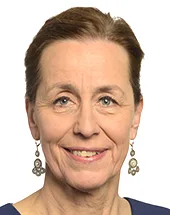

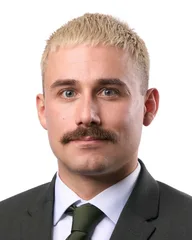
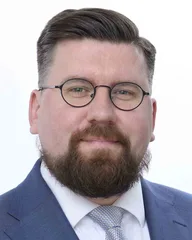
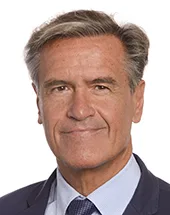
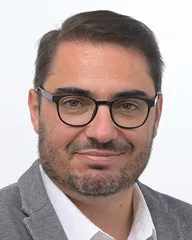
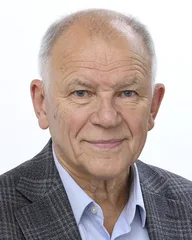
| Rank | Name | Country | Group | Speeches | |
|---|---|---|---|---|---|
| 1 |
|
Lukas Sieper | Germany DEU | Non-attached Members (NI) | 390 |
| 2 |
|
Juan Fernando López Aguilar | Spain ESP | Progressive Alliance of Socialists and Democrats (S&D) | 354 |
| 3 |
|
Sebastian Tynkkynen | Finland FIN | European Conservatives and Reformists (ECR) | 331 |
| 4 |
|
João Oliveira | Portugal PRT | The Left in the European Parliament (GUE/NGL) | 232 |
| 5 |
|
Vytenis Povilas Andriukaitis | Lithuania LTU | Progressive Alliance of Socialists and Democrats (S&D) | 227 |
All Contributions (93)
Deliberations of the Committee on Petitions in 2023 (A10-0063/2025 - Gheorghe Falcă) (vote)
Madam President, ladies and gentlemen, I would like to propose an oral amendment to the annual report on which we are currently voting. The amendment is added at the end of paragraph 35 and reads as follows: I'll read it in English. 'Urges, in that sense, the European Commission, in due respect of the spirit of the ECI – the European Citizens' Initiative procedure – to provide adequate, concrete and effective follow-up to ECIs related to fundamental rights of citizens, such as the one calling for a binding legal ban on conversion practices targeting LGBTIQ+ citizens in the EU and the ECI 'My voice, my choice'. Ladies and gentlemen, this amendment is necessary at a time when the rights of LGBT communities and women's rights are under threat all over Europe. Together with my group Renew Europe and with many of you, I hope, we are committed to defending these rights enshrined in the Charter of Fundamental Rights of the European Union and we will support LGBT communities at the Pride in Budapest on 28 June.
The Hungarian government's drift to Russia-style repression: legislative threats to freedom of expression and democratic participation (debate)
Mr President, Commissioner Michael McGrath – the Minister is absent – ladies and gentlemen, many of us have said so, and I repeat myself here: Hungary has been subject to Article 7 of the Treaty on European Union since 2018. Viktor Orban's government is not afraid of anything and continues to restrict the freedoms and rights of its fellow citizens. As several colleagues have pointed out, the fundamental values of the Union are under threat. Despite our many warnings, Commissioner, nothing is happening: Hungary still enjoys the right of veto and the right to vote in the Council. What are we waiting for to move forward on the implementation of Article 7 sanctions? What are we waiting for to finally suspend Hungary's right to vote? More than ever, Europe is at the forefront and faces threats from Russia and the United States. We cannot have a Member State close to Russia that endangers our defence and the European unity of our Union. I therefore call on the Council and the Commission to take courage and action.
A revamped long-term budget for the Union in a changing world (debate)
Mr President, dear Younous Omarjee, Commissioner, dear Piotr Serafin, ladies and gentlemen, tomorrow we will vote on the European Parliament's position for the next multiannual financial framework. We demand an ambitious European budget, Commissioner, for the future of our Union. Since the last mandate, the European Union has been in the spotlight with a role model. Following Russia's outbreak of the war in Ukraine and the sharp change in the position of the United States on the international stage, it is even more crucial that the European Union should live up to its responsibilities. All the actors we meet, companies, NGOs, farmers, universities, agencies, local actors, ask us for more resources. All the committee leaders, just now, have asked us for more budget. However, as regards own resources, ladies and gentlemen, we are stagnating. Where are the new own resources? How will we finance the next budget while honouring the debt of the Next Generation EU programme, without reducing existing programmes or imposing an additional burden on European citizens? We can see that own resources are crucial for our budget. I therefore reiterate, Commissioner, with insistence, our call, that of the Renew Group, that of Parliament, that we finally make concrete progress on this file. What is at stake is the future of Europe and its ability to meet the challenges it faces. We need to act now.
Recent legislative changes in Hungary and their impact on fundamental rights (debate)
Mr President, Minister, Commissioner McGrath, ladies and gentlemen, the Article 7 procedure with regard to Hungary was initiated in September 2018, seven years ago already. Since then, Viktor Orbán has consistently dismantled and deconstructed the rule of law in his country: lack of free media, lack of independence of the judiciary, a muzzled civil society. The latest landmark measure is the ban on the Pride march in Budapest. At a time when we need a strong and united Europe, Viktor Orbán is holding back any plans for an ambitious and diverse Europe, preferring instead to support Russia. Commissioner, it is your responsibility to ensure that Article 7 is applied effectively. We ask you to suspend Hungary's right to vote in the Council. This procedure is long overdue. Together with my group, Renew Europe, we will be alongside Hungarian citizens at the Pride march in Budapest on 28 June. I hope, ladies and gentlemen, that there will be many of you there.
100 days of the new Commission – Delivering on defence, competitiveness, simplification and migration as our priorities (topical debate)
Mr President – dear Younous Omarjee –, Madam Vice-President of the Commission – dear Mrs Virkkunen –, Mr Council representative, it is good that migration is one of the Commission’s priorities for the first 100 days. As we know, this is an important concern for our European citizens. It was in this context that the Commission presented the Return Directive yesterday. This was the missing part of the Pact on Migration and Asylum, which we adopted in spring 2024. It is again this pact, Madam Vice-President and Mr President, that I would like to talk about today, because the challenge is not so much to propose new texts as to implement concretely, in each Member State, what we have already voted for. This pact will enable the Commission and all Member States to swiftly establish a European migration policy with the same rules, characterised by coherence and solidarity, and more effective. That is why, beyond these first hundred days, I invite you to put all your energy, Madam Vice-President, to ensure the full implementation of the Pact – the deadline is next June – throughout Europe. It is by taking concrete action that we will effectively address the concerns of our citizens.
Presentation of the proposal on a new common approach on returns (debate)
Madam President, Commissioner Brunner, ladies and gentlemen, the return aspect was the only missing text in the Pact on Migration and Asylum. I therefore look forward to making progress on this subject in order to reach a common, harmonised solution at European level. However, this proposal poses problems on several points. As I understand your presentation, Commissioner, mutual recognition of returns would only be voluntary, not mandatory. It is a shame to deprive ourselves of a common tool, while Member States only complain about dissonant return decisions. On return hubs, what does it mean to send migrants back to an intermediate country with which they have no connection? How can we ensure that the fundamental rights of migrants outside Europe are properly respected? To improve returns, my group, Renew, is calling for agreements to be negotiated with countries of origin, sovereign countries, to take back their nationals. Commissioner, ladies and gentlemen, let us finally give the Pact on Migration and Asylum a chance. Let us ensure that it is properly implemented before seeking simplistic and populist solutions.
Cross-border recognition of civil status documents of same-sex couples and their children within the territory of the EU (debate)
Madam President, Commissioner Micallef, ladies and gentlemen, the rise of the far right in Europe is a growing threat to everyone, especially the LGBTI community. This is evidenced by the Meloni government's recent move to cancel registrations of the civil status records of children of same-sex couples. In Italy, more than 20,000 children raised by same-sex couples are threatened by the questioning of their legal parentage. Today, in the European Union, more than 2 million children could face a situation in which this link with their parents is not recognized. It is therefore urgent to act now, especially since, Commissioner, the solution has already been found, as you have pointed out. Two years ago, the European Commission proposed a regulation to harmonise this recognition and introduce a European certificate. This recognition would not only put an end to uncertainty, but it would also provide a real guarantee of rights protection and equality for families. So, ladies and gentlemen, what are we waiting for to implement it? Together with my group, Renew Europe, we uphold the European values of equality loud and clear. I therefore call on the Member States to take forward this proposal, which is essential for legal certainty for all, for equality and for the protection of children in the European Union. We owe this to all European children.
Major interpellations (debate)
Mr President, dear Roberts Zīle, Commissioner Magnus Brunner, we have had this debate many times and, despite logical, factual arguments and statistics showing that building walls at borders not only does not work, but that it is not in our European DNA either, here we are again. Contrary to what the extreme right likes to claim, it is not enough to build walls at our borders to solve the issue of illegal immigration. Of course we must protect our borders, organise ourselves to enforce them, as you have explained, Commissioner; we're working on it. But the best management of migration and the best protection of our borders also requires the application of this pact, which has not yet been implemented. Indeed, a major part of the implementation of the Pact is devoted to this border protection. This requires the creation of accelerated border procedures, rigorous screening, an asylum and migration database and additional budgetary means. The Pact also includes a cooperation component with third countries to prevent irregular departures, combat migrant smuggling, cooperate on readmission and promote legal pathways. It is these innovative measures that we must finance with the European budget. This budget must be used to bring people together. It must be put at the service of citizens and solidarity. The European budget, ladies and gentlemen, must build bridges, not walls.
Links between organised crime and smuggling of migrants in light of the recent UN reports (debate)
Madam President – dear Sophie Wilmès –, Commissioner – dear Magnus Brunner – ladies and gentlemen, according to Europol, a very large majority of migrants pay smugglers to reach Europe. Reports from the UN High Commissioner for Refugees show that these smuggling networks are often involved in other actions and criminal networks along migration routes, specifically between East Africa, West Africa and the African Mediterranean coasts. This is no surprise to us. These smugglers also abuse their position, and many migrants find themselves victims of physical abuse, sexual abuse and trafficking of all kinds. This is why the creation of safe and legal pathways must be a priority, together with the protection of our borders. I recall that one of the flagship measures of the New Pact on Migration and Asylum is precisely to better combat these smuggling networks, through better cooperation with third countries and countries of origin, but also through better cooperation of police and judicial services between Member States. We have tools, Commissioner, to fight these criminal networks. Let's implement them!
The Hungarian government’s illegal espionage of EU institutions and investigative bodies (debate)
Mr President, Commissioner – dear Piotr Serafin –, Minister, ladies and gentlemen, here we are again. After the use of Pegasus by Hungary, we pass a notch above. Since December, we have been facing new suspicions of espionage by Hungary. OLAF members were allegedly followed and wiretapped during an investigation into possible misappropriation of EU funds by Hungary. The information revealed is very worrying, and all the light must be shed on this case. Ladies and gentlemen, we cannot tolerate such actions on the part of a Member State vis-à-vis our institutions. Moreover, it was a State that held the Presidency of the Council of the European Union at the time of the revelations. This case demonstrates two things: on the one hand, the Hungarian government’s feverishness regarding its use of EU funds. Why, indeed – as my colleague from my group, Renew Europe, Raquel García Hermida-Van Der Walle, put it very well – monitor OLAF investigators when there is nothing to blame? On the other hand, Commissioner, it shows how necessary the mechanism of conditionality of European funds to respect for the rule of law is, how powerful this tool is. So let’s not hesitate to implement it anymore!
Need to enforce the Digital Services Act to protect democracy on social media platforms including against foreign interference and biased algorithms (debate)
Madam President, Commissioner, Minister, we are the day after the inauguration of Donald Trump, an inauguration which, as we know, poses a great danger to our democracies, to European citizens and to freedom of expression. Because it is precisely democracy and freedom of expression that we wanted to protect when we voted on the Digital Services Act (DSA). Contrary to what the leaders of the major platforms X and Meta argue, freedom of expression lies where all opinions can be expressed with respect for each other. Deregulation gives way to hate speech, child pornography, terrorist, misogynistic and racist content. Let us not be mistaken: Elon Musk and Mark Zuckerberg do not defend freedom of expression. They only want to convey their own ideology. No, Europe is not weak. Commissioner, we have the DSA to deal with these threats. Let us apply this regulation, Commissioner, with rigour and determination, to lead all platforms to respect our rules and, above all, to respect our values in order to protect our fellow citizens.
Preparation of the European Council of 19-20 December 2024 (debate)
Madam President, dear Sabine Verheyen, Commissioner - dear Maroš Šefčovič - ladies and gentlemen, in the letter that the President of the Commission, Ursula von der Leyen, sent to the Member States on Monday and in the Council's conclusions, I note a certain enthusiasm for innovative ideas to better manage migration, in particular its external dimension. By "innovators" I understand that it is envisaged to outsource European migration policy, in particular with return hubs or camps, as Italy was able to do in Albania. However, the Italian example, Commissioner, has only one merit: illustrate that migration outsourcing, promoted by the government of Giorgia Meloni, is a dead end at exorbitant cost. Yet, ladies and gentlemen, the innovative solution we have already built together: it is the New Pact on Migration and Asylum. A European, solidarity-based solution that respects reception rules, but also those of return, with a component on the control of irregular immigration and a new border procedure. Let us ensure its proper implementation before seeking simplistic and populist solutions.
Full accession of Bulgaria and Romania to the Schengen Area: the urgent need to lift controls at internal land borders (debate)
No text available
2025 budgetary procedure: Joint text (debate)
No text available
Managing migration in an effective and holistic way through fostering returns (debate)
Madam President, Commissioner, 'Migration is a European challenge requiring a European response'. These words are inscribed in the conclusions of the meeting of Heads of State on 17 October. This is our compass for effectively managing migration, which led to the adoption of a landmark agreement last spring: the European Pact on Asylum and Migration. The Pact offers new and powerful tools to combat irregular flows and to discourage the departure of non-asylum-seekers through the asylum border procedure, to speed up the examination of asylum applications and to swiftly protect those who are persecuted, but also to ensure, through the Pact and these tools, a fair sharing of responsibility and the necessary solidarity between Member States. This pact is a real revolution, ladies and gentlemen, and the priority is to ensure its proper implementation. I strongly oppose so-called innovative solutions for outsourcing return policy to third countries. hubs away from home. Of course, we need to work on a new directive on returns. However, such centres would be inefficient, cost taxpayers a fortune and make us vulnerable to blackmail from third countries, without addressing the delicate issue of obtaining laissez-passer. One after another, attempts by governments to create such systems turn out to be dead ends. One example is the abandonment of the UK’s agreement with Rwanda. Let us remain sovereign and masters of our immigration policy.
Order of business
Madam President, we know that the New Pact on Migration and Asylum and migration policy dominated the European Council at the end of last week. This is a matter of concern for our citizens. We are proud, all here in this House, to have adopted a pact, to have found a balance in dealing with the issue of illegal migration, while respecting our values. We also know, ladies and gentlemen, that it will take us another two years to implement it. We cannot therefore accept that a Member State uses a back door to circumvent what is provided for in the Pact and the precise rules that we have defined together. That is why we propose to rebound on the Greens' proposal and to add the "implementation of the Pact" dimension as a whole, i.e. with regard to its duties, the application of its rules, but also the guarantees of human rights and respect for fundamental rights that we have incorporated into it. It is in this spirit that we propose this amended debate.
2024 Annual Rule of law report (debate)
Mr President, dear Nicolae Ştefănuță, Madam Vice-President, dear Věra Jourová, in five years, the European Commission's annual Rule of Law Report has become a valuable tool in responding to the erosion of the fundamental principles on which our Union is based. Our group has long called for arming Europe against autocrats who dismantle the rights and freedoms of European citizens. Madam Vice-President, I would like to commend you and Commissioner Didier Reynders for putting together this annual report. This is a big step forward. This morning in plenary, Hungarian Prime Minister Viktor Orbán brushed aside all criticism. Yet the facts documented in this report are indisputable. The entire Hungarian judicial system is controlled by political power and corruption scandals are ubiquitous in the Orbán system. Together with my colleagues from the Renew Group, we want this report to be, tomorrow more than ever, at the centre of a strengthened system of conditionality, so that the disbursement of all European funds is subject to compliance with the fundamental rules and values of the European Union.
Strengthening the security of Europe’s external borders: need for a comprehensive approach and enhanced Frontex support (debate)
Mr President, dear Margaritis Schinas, the security of European citizens depends, among other things, on effective control and management of the European Union's external borders. This is an essential condition for the Schengen area of free movement. I agree with President Ursula von der Leyen and yours, Vice-President Margaritis Schinas: the Union is facing new challenges and multiple threats that call for a rethinking of our external border management strategy as Europeans. Together with my Renew Europe group, we support the strengthening of Frontex. We want to step up the presence of European border and coast guards on the ground, provided, however, that we thoroughly review the governance of this agency, so that it operates more effectively, while respecting fundamental rights. A positive shift is taking place with a new Managing Director. It is a demanding task to be pursued relentlessly. Secondly, it is our collective responsibility to provide the Agency with the financial and human resources it needs to carry out its border protection mission. With my group, I am resolutely committed to it.
The Hungarian “National Card” scheme and its consequences for Schengen and the area of freedom, security and justice (debate)
Madam President, Commissioner, Minister, on 5 July last, when Prime Minister Viktor Orban visited Moscow, he did not go on a so-called peace mission. He rolled out the red carpet to Putin and opened wide the doors of the European Union to an enemy country. This national card allows an unlimited number of Russian nationals to enter Hungary. This is in total contradiction, Minister, with the policy of the European Union since the beginning of Russia's war of aggression in Ukraine. Since 2022, we have frozen the facilitation of Russian visas, tightened visa conditions for Russian nationals and tightened border controls. This is not just a lonely decision by an isolated dictator. This is a major internal security issue for all European citizens. Your colleague, Commissioner Ylva Johansson, has carried out several actions since the summer to obtain clarifications and guarantees from the Hungarian government, without a credible response at this stage, however. I therefore call on the Commission and the Member States to consider the temporary suspension of Hungary's Schengen membership, as provided for in Article 29 of the Schengen Code. Let us act forcefully against this threat to our common security.
–Mrs President, Commissioner, dear Margaritis Schinas, dear Ylva Johansson, ladies and gentlemen, we are here. After eight years of hard work, we can act to address migration challenges. Today, we are faced with a difficult and crucial choice. Let's be realistic and honest. To reject the pact is to prevent any reform for the next ten years. Rejecting the pact means choosing a status quo that is unacceptable for states, for European citizens and, above all, for asylum seekers. That is why I call once again on all members of the centrist and pro-European parties to support this pact, and finally to act for immigration control and genuine European solidarity. Concretely, I would remind you briefly, thanks to the Pact, we are putting an end to situations of chaos at the EU’s borders and in our territories, such as in Calais, for example, in France. Thanks to the Pact, we will significantly reduce the presence of people in an irregular situation on European soil. Through the Pact, we will make our asylum procedures more efficient, harmonised and respectful of migrants. Colleagues, acting or preventing is our choice today. Together with my colleagues from the Renew Europe Group, we are determined to act and support this European Pact on Asylum and Migration without exception.
Mr President, Commissioner, dear Ylva Johansson, ladies and gentlemen, we are at a moment of truth. After three and a half years of complex and demanding work, and almost ten years after the Syrian refugee migration crisis, we are in front of a crucial vote to finally reform the European asylum and migration system. This pact is a coherent, complementary set of texts to finally respond, as Europeans, to the migration challenge. Together we defend four priority objectives. The first: strategic steering of European asylum policy between the 27 Member States, with a leading role for the Commission in coordination and monitoring. The second element is a new solidarity mechanism at European level to help Member States in the event of migratory pressure or crisis. Third axis: Establish better control of irregular immigration at the external borders of the European Union, through accelerated border procedures for applicants who are manifestly ineligible for asylum. Finally, to put in place more harmonised and effective asylum procedures within the European Union, accompanied by essential rights for minors, for families and for all asylum seekers. These different legislative instruments will allow the European Union to be better prepared to respond to the main challenges of immigration. This pact will not solve everything, but it is a step forward, a giant step towards real control and good human management of immigration in France, in Europe and on our continent. This is not the end of the road either. As my colleague Birgit Sippel has just pointed out, we will have to put all our energy into ensuring that the new rules are implemented and complied with in all EU countries. Together with my Renew Group, we will be following this implementation with extreme vigilance and, Commissioner, we are counting on the European Commission to fully play its role as guardian of the Treaties. We have already started working on measures, especially for families. Colleagues, we are faced with our responsibilities: vote against the pact, offer a victory to the European far right, which has done everything to counter the construction of solutions to migration challenges (in France, for example, it is the Rassemblement national which does not want a solution, which feeds on problems with cynicism); or else vote this pact in responsibility. Dear elected colleagues of the centrist and pro-European parties, I call on you to support this pact. Our citizens want action, not big speeches.
A single application procedure for a single permit for third-country nationals to reside and work in the territory of a Member State and on a common set of rights for third-country workers legally residing in a Member State (recast) (debate)
Madam President, Commissioner – dear Ylva Johansson – I welcome the revision of the Single Permit Directive. This is one of the building blocks for a European legal labour migration policy. This permit facilitates the recruitment within the European Union of the foreign workers our companies need. As we all know, there are labour shortages in some sectors that we need to fill. As a further step forward, it provides for minimum rules to ensure that foreign workers are treated in the same way in all Member States, in particular as regards working conditions, social protection or the recognition of professional qualifications. In particular, the Directive protects workers who are victims of abusive working conditions. After the European Pact on Migration and Asylum, ladies and gentlemen, I too am calling for a boost for a truly European legal labour migration policy. This is a priority, ladies and gentlemen, for the next term of office.
Major interpellations (debate)
Mr President, dear Reinhard Wieland, Commissioner, dear Didier Reynders, I am delighted, ladies and gentlemen, with this debate on immigration, which allows us to highlight Europe's results. As you recalled, Commissioner, after three and a half years of work, we reached a historic agreement on the Pact on Migration and Asylum together. This far-reaching reform will provide key tools for states to address the challenge of immigration in Europe, in line with our values. I would point out that this pact is based on three priority objectives. First, a new solidarity mechanism at European level to help Member States in the event of migratory pressure or crisis, in particular Italy. Second, better control of irregular immigration at the external borders through accelerated border procedures for applicants who are clearly not eligible for asylum. This will notably help countries of first entry, such as Italy. Finally, more harmonised and efficient asylum procedures, thanks to the tool of the Regulation. This will reduce processing times for asylum cases. I also welcome this debate, which makes it possible to put the points on the "i" and to denounce the great absence of these negotiations, the National Rally of Mrs Le Pen. Mr Bardella is still absent from this Chamber today. I do not know what he is doing with his illusory promises. At least it is clear: the far right, both in France and in Europe, is not looking for a solution to immigration. She lives cynically from these problems. Moreover, you did not hesitate to table amendments rejecting the proposal. That is all you have done. This is your only work in committee and plenary on Parliament’s mandate. In the April plenary, ladies and gentlemen, we will put this Pact on Migration and Asylum to the vote, and we will see clearly who is standing up for solutions and who is standing in the way.
Report on the Commission’s 2023 Rule of Law report (debate)
Mr President, dear Marc Angel, Commissioner, dear Didier Reynders, the rule of law, the heart of our democracy, is under attack from all sides. Freedom of expression, the independence of the judiciary, freedom of the media and respect for the rules are not achievements, ladies and gentlemen. They are prime targets for all enemies of freedom within the European Union, as especially for foreign powers. Commissioner, dear Didier Reynders, I want to welcome your decisive commitment to rearming Europe and protecting our fundamental values and rights. Since 2020, you have been publishing the European Commission's annual Rule of Law Report and Country-Specific Recommendations. It is a valuable tool for identifying loopholes and responding forcefully to the causes of the backsliding on the rule of law. Thanks to your action, to our determination also in the European Parliament, my Renew Group and the coalition of the Centre, European funds are now conditional on respect for the rule of law and European values. Thank you, Mr. Reynders. The protection of the rule of law is what makes us, ladies and gentlemen, deeply Europeans, leave nothing behind.
Multiannual financial framework for the years 2021 to 2027 - Establishing the Ukraine Facility - Establishing the Strategic Technologies for Europe Platform (‘STEP’) (joint debate - multiannual financial framework revision)
Mr President, dear Marc Angel, Secretary of State, dear Mathieu Michel, Commissioner, dear Johannes Hahn, ladies and gentlemen, I would like to start by welcoming this agreement. It allows us, together with the Ukraine Facility, to confirm our unwavering support for this people who have been engaged in the war for two years, for this people who are so courageous. However, other parts of this revision of the Multiannual Financial Framework are very disappointing. In particular, I deplore cuts to key programmes such as Horizon Europe and EU4Health. Yet the pandemic has shown us how vital the fields of research and health are. I am surprised, Mr Secretary of State, by the Council’s position, which exhausts the flexibility instruments to finance the interests of the recovery plan, even though that same Council had insisted so much during the negotiations on the annual budget for a flexible and responsive budget. Parliament has been calling for an ambitious revision of the Multiannual Financial Framework for several years to meet citizens' expectations. We are not there. The European budget must live up to the responsibilities entrusted to us.