

| Rank | Name | Country | Group | Speeches | |
|---|---|---|---|---|---|
| 1 |
|
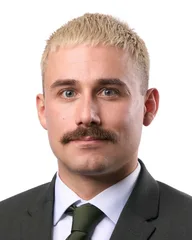
Lukas Sieper | Germany DEU | Non-attached Members (NI) | 390 |
| 2 |
|
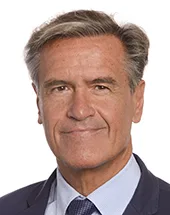
Juan Fernando López Aguilar | Spain ESP | Progressive Alliance of Socialists and Democrats (S&D) | 354 |
| 3 |
|
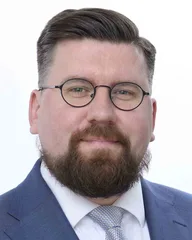
Sebastian Tynkkynen | Finland FIN | European Conservatives and Reformists (ECR) | 331 |
| 4 |
|
João Oliveira | Portugal PRT | The Left in the European Parliament (GUE/NGL) | 232 |
| 5 |
|
Vytenis Povilas Andriukaitis | Lithuania LTU | Progressive Alliance of Socialists and Democrats (S&D) | 227 |
All Contributions (79)
Macro-financial assistance to the Republic of Moldova (debate)
Mr President, Commissioner, I support the Republic of Moldova to benefit from this macro-financial assistance operation. Moldova, the most fragile neighbour of Ukraine, apart from the humanitarian emergency, is also noting a massive economic hit from the loss of its imports from Ukraine, a collapse in investor confidence and cross-border activity. This MFA operation would help Moldova to cover part of its external financial needs and contribute to reducing fiscal vulnerabilities. In these times of multiple crises, the European Union plays a key role in ensuring economic resilience within the EU as well. The European Commission should therefore refrain from subordinating financial stability to political interests. To this end, Hungary asked for immediate and effective access to EU funds allocated to it. Amid war and consequently growing economic insecurity, it would be of utmost importance for the Commission to act on a professional basis.
A statute for European cross-border associations and non-profit organisations (debate)
Mr. President, please. With the new EU NGO law, the left-wing majority in the European Parliament wants to take away the powers of the Member States and eliminate all meaningful control, control and even meaningful information for society over civil society organisations. With this federalist effort, they want to institutionalize the principle that it is forbidden to exercise any control over the non-profit sector, that NGOs are above the law. In our view, participatory democracy and constitutional order are about the transparency and familiarity of the operation of the participants of public life. Civil society organisations account for their finances and activities accordingly. Fidesz and the Hungarian government stand up for the Europe of nation states, for national sovereignty and for the defence of constitutional order. We do not give in to this leftist political pressure. No one can be above the law. My country is a state governed by the rule of law, and part of that is that everyone has to abide by the laws, even civil society organisations. We do not support this report.
New orientations for the EU’s humanitarian action (debate)
Mr. President, please. The European Union and its Member States together account for 36% of global humanitarian aid. This leadership should be maintained and made even more effective in the future so that aid can actually reach those in need. Humanitarian emergencies are linked to migration, as the increased frequency and intensity of climate-related disasters fuel conflicts and force an increasing number of people to leave their homes in the long term. However, the rapporteur rightly did not make the mistake of urging the creation of corridors for migrants. Thus, the report focuses on real problems and real needs. Our firm and consistent principle is that help should be taken where there is trouble. The results confirm this approach. Through our humanitarian support through the Hungary Helps programme, we have enabled half a million people to remain in their homeland or to return to their homes.
The impact of intimate partner violence and custody rights on women and children (debate)
Mr. President, please. Domestic violence is not a private matter. As a Christian, I consider it intolerable and condemn any form of domestic violence. The regulatory provisions on parental responsibility should be based on the best interests of the child, excluding the possibility of the child being the victim of any abuse within the family. However, this report is ideologically driven and violates national sovereignty. Once again, we are faced with a stealth enlargement of the powers of the EU institutions. Each Member State has the right to establish its own rules on the protection of victims of intimate partner violence. The Hungarian government stands by the victims of domestic violence. It has been continuously developing its prevention and victim support system for ten years. The Istanbul Convention is not a panacea, in many cases it sets weaker rules than the existing legal instruments in Hungary and the Member States.