
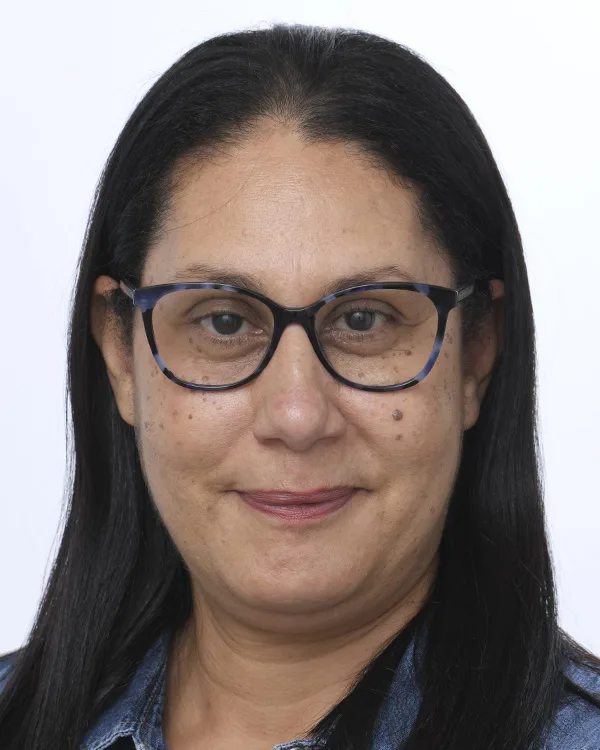

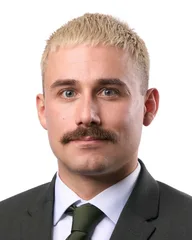
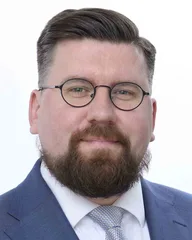
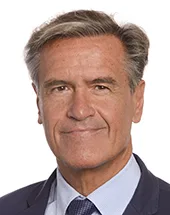
| Rank | Name | Country | Group | Speeches | |
|---|---|---|---|---|---|
| 1 |
|
Lukas Sieper | Germany DEU | Non-attached Members (NI) | 390 |
| 2 |
|
Juan Fernando López Aguilar | Spain ESP | Progressive Alliance of Socialists and Democrats (S&D) | 354 |
| 3 |
|
Sebastian Tynkkynen | Finland FIN | European Conservatives and Reformists (ECR) | 331 |
| 4 |
|
João Oliveira | Portugal PRT | The Left in the European Parliament (GUE/NGL) | 232 |
| 5 |
|
Vytenis Povilas Andriukaitis | Lithuania LTU | Progressive Alliance of Socialists and Democrats (S&D) | 227 |
All Contributions (20)
Industrial Emissions Directive - Industrial Emissions Portal - Deployment of alternative fuels infrastructure - Sustainable maritime fuels (FuelEU Maritime Initiative) - Energy efficiency (recast) (joint debate - Fit for 55 and Industrial Emissions)
With the planet breaking daily temperature records and the EU being the fastest warming region in the world, the implementation of the Green Deal is more vital than ever. That is why I urge my colleagues to overwhelmingly adopt the text on the deployment of alternative fuels, as it will make a key contribution to meeting our climate commitments. As we know, transport is responsible for about a quarter of Europe's CO2 emissions. However, we are lagging behind in terms of electrification of our road network, at a time when 2035 and the end of thermal engines are looming. This text is therefore just as important for our citizens, because it must convince them that crossing Europe by electric car will soon be as simple and practical as with a thermal car. Adopting this text means, finally, preserving the health of our citizens, particularly those living in port areas, where emissions from boats contaminate the air of entire cities. Power supply requirements for ships at berth will reduce the exposure of millions of Europeans to pollution and thus avoid many cancers.
Presentation of the European Affordable Housing Plan (continuation of debate)
No text available
Murder of Mehdi Kessaci - urgent need for ambitious European action against drug trafficking (debate)
Mr President, ladies and gentlemen. Mehdi was 20 years old; He dreamed of becoming a police officer: he was shot to silence his brother Amine, whose commitment to the ravages of drug trafficking is well known in France and Europe. On behalf of the Socialists and Democrats Group, I reiterate our support for his family, for those close to him, and the fight obliges us. In France, drug trafficking generates €5.5 billion per year, supports 200 000 people and feeds more than 1 million cocaine users. Since 2021, assassinations and attempted assassinations have increased by 33%. These are not abstract statistics: These are crushed lives, destroyed families. Criminal networks target our children. They promise them recognition, money and quick success. In reality they use them as – interchangeable – fuses, faceless soldiers doomed to prison or death. Where the rule of law is receding, drug trafficking imposes its law, its rules, its violence. These children we hear about by various facts could be ours. A bad encounter, a moment of fragility, and all life changes, and a whole family changes. Repression is necessary, but it cannot be the only answer. Prison has become a place of learning and structuring: We sometimes go back in criminal to get out criminal. That is why we need a real anti-drugs strategy – legible, coordinated, resourced, combining security, prevention, health, education and the fight against corruption –, an action plan that is sustainable and not reactionary, which sends a message of hope to our citizens by ensuring that they are protected. their European Union. "Restore peace and justice" is the meaning of the first name Mehdi, in Arabic. A resolution on drug trafficking will be adopted in this Chamber next January. We will have to wake up and awaken our consciences. We no longer have the right to look away. Let's live up to the trials and struggle of the Kessaci family!
Cohesion policy (joint debate)
Madam President, ladies and gentlemen, Mr Vice-President, our ecological transformation will be fair or it will fail, and the Just Transition Fund was, as you have heard, hard-fought in the previous legislature, to prevent carbon neutrality from being experienced as a punishment. This fund is vital to support workers, families and the most exposed territories. In my department of Bouches-du-Rhône, where the petrochemical industry is a pillar of the economy, decarbonizing is an imperative. But without support, it means job losses and social despair. Thanks to a strong contribution from the European Union, this change can become an opportunity, with funding for short-time work, retraining for vocational training and, above all, maintaining the right to live in dignity in one's region. However, this is not at all what the Commission is proposing when it simply removes the Just Transition Fund from the next budgetary framework 2028-2034. Instead, it prefers a clean transition, focused on large industrial projects at the expense of social and territorial needs. This is an unacceptable step backwards, as you have heard on all the benches of this Parliament. Our Parliament is also charting another course, a new fund, a directive on the just transition and the full involvement of the regions and the social partners. Our message is clear: without European solidarity, no just and sustainable transition on our continent.
Strengthening rural areas in the EU through cohesion policy (debate)
Madam President, ladies and gentlemen, Commissioner, 137 million Europeans live in rural areas. Much of our collective success in the green, digital and demographic transitions depends on these territories, which cover more than 80% of our continent. That is what the rapporteur - and I congratulate him - has brought us with this report, this vision on rural areas. Therefore, guaranteeing every European citizen the freedom to live and stay where they want becomes a strategic issue for the future of the Union. This right to stay where we want must now be translated into better access to health, education, transport, housing and a dignified life. Because where public services disappear, where socio-economic dropout takes root, the feeling of downgrading thrives and, with it, despair. That is why cohesion policy and its method, based on partnership with local authorities, must remain a strong pillar of the next European budgetary framework. This policy is our best ally in combating territorial inequalities and supporting rural innovation. To preserve everyone's right to stay where they want and live in dignity is to protect the unity of our Europe.
Supporting the EU’s most vulnerable regions against devastating effects of climate change, such as the recent cyclone hitting La Réunion (debate)
Mr President, Commissioner, climate change is hitting harder and harder. Reunion has just experienced this bitterly after the devastating passage of Cyclone Garance. Five dead, hundreds of victims, tens of thousands of households without electricity, drinking water supply affected, infrastructure devastated and agriculture brought to its knees. The island is disfigured, the population hard-pressed: This is why it is important for our Parliament to be able to express its full solidarity with the people of Réunion. Europe must be at the forefront of the distress caused by these repeated disasters. As in the case of Mayotte after Chido, the French State must request the mobilisation of the European Union Solidarity Fund to help Réunion rebuild. We also need to activate Restore measures to repair today, but most importantly to prepare for tomorrow: compensate agricultural losses and support sectors in their resumption of activity, rebuild better to further protect populations, and enable the island to accelerate its adaptation to the new climate realities. Beyond the immediate urgency, this disaster reminds us once again that it is imperative to put in place a more ambitious European policy for our outermost regions, which are on the front line in the face of climate change. We need to strengthen our preparedness, adaptation and reconstruction capacities by investing sustainably in resilient infrastructure, better warnings and more responsive support mechanisms. In the face of this tragedy, European solidarity must not be a wishful thinking, but a concrete response. To Reunionese we must not offer our only compassion, but the assurance that the EU will not let go of its outermost regions, starting with the island of Reunion.
The situation in Mayotte following the devastating cyclone Chido and the need for solidarity (debate)
Madam President, the news from Mayotte since Saturday is appalling. Local authorities announce that there could be thousands of victims and warn of the risk of epidemics and famine. Before the passage of Cyclone Chido, the Mahorais already lacked everything. The population is now in a situation of total deprivation. Many are without a roof, without electricity, without running water. Bottled water is rationed, food stocks will not last long, and the only hospital in the archipelago is severely damaged. Mayotte is, however, France, the 10th richest country in the world. What happened on Saturday was one more tragedy, one too many. But what happened before Sunday was a failure of French politics. France has done little or nothing to share its prosperity with the Mahorais. The indecency of the statements of the Minister of the Interior, who wants an immigration law before declaring Mayotte as a national cause and asking for help from Europe, is unbearable. The European Parliament has just voted for a mechanism called Restore to help Mayotte through this ordeal. To the grief, suffering and anguish of the Mahorais, let us not only offer our compassion, let us offer the promise that the European Union will not let them down.
The important role of cities and regions in the EU – for a green, social and prosperous local development (debate)
Mr President, Commissioner, the regions are now threatened with becoming the adjustment variables for the fiscal policies of France and Europe. Through them, however, concrete projects, essential for the ecological transition, transport or economic development come to life. And yet, in France as in Brussels, there is a great temptation to sacrifice these territories on the altar of austerity. From one government to another, Emmanuel Macron imposes every day on the regions to find new economies to fill a deficit inflated by tax gifts to the richest. In addition, the European Commission, under the leadership of Ursula von der Leyen, would prepare a reform that would centralise or recentralise funds and marginalise regions in their management. This reform is a threat to the future of Europe, as it removes the role of regions and cities in managing cohesion funds. It is the very essence of the European project that is being jeopardised. By linking the distribution of funds to the implementation of the economic reforms decided in Brussels, the Commission gives even more power to central governments at the expense of territories, victims of a double penalty. Behind these reforms are dark cuts, which would endanger essential projects. This reform project is a disguised coup de force. Centralising more and more while excluding local actors betrays the spirit of European integration and the principle of subsidiarity, weakens local democracy and devitalises our territories. Those who support this technocratic vision are only promoting outdated liberalisation, far and away from the concerns of our fellow citizens.
Ensuring sustainable, decent and affordable housing in Europe - encouraging investment, private property and public housing programmes (debate)
Mr President, Mr Vice-President, ladies and gentlemen, the housing crisis is a European phenomenon which calls for European responses. Almost everywhere in Europe, prices are skyrocketing: increase of 30% in ten years in France, more than 50% in Germany, more than 200% in Hungary. Unworthy housing is proliferating and the number of poorly housed or homeless Europeans is skyrocketing. This situation can no longer last. It endangers the very cohesion of our societies. When a market does not work, it must be regulated, and that is precisely what we expect from the new Commission. The exorbitant privileges enjoyed by private developers must be abolished, the touristization of the housing market combated and the privatization of social parks prohibited. Europe needs public management of housing, from construction to market rules. We have allowed speculators to act for too long. It is time for the public authorities to take back their hands firmly.
Calling on the Council to take all necessary steps to reach an agreement on the European cross-border mechanism file and open negotiations with Parliament (debate)
Madam President, ladies and gentlemen, after three years of deadlock in the Council, it is fortunate that we can finally count on a presidency that has clearly expressed its support for the outcome of this dossier. In the meantime, our Parliament has always taken the initiative to relaunch this text, because we are convinced that removing bureaucratic obstacles to cross-border cooperation will make life easier for some 150 million Europeans living in regions sharing a border. In 2024, it is not normal to find that access to public services, hospitals and universities is less good than in other regions. This is why to have such a mechanism is not only to prosper the spirit of cooperation instilled by Jacques Delors, but also to give ourselves the means to jointly improve the living conditions of tens of millions of citizens. Parliament is ready for this. Let's go!
Water scarcity and structural investments in access to water in the EU (debate)
Mr President, ladies and gentlemen, the Council and the Commission have just recalled that access to water is vital for life. However, the Mayotte archipelago, which is experiencing exceptional drought, has been facing severe water shortages for several months. Drink, wash, wash your laundry: everything is complicated when water is only available for 18 hours every three days. I would like to express my deepest sympathy for the people of Mahor, who are unfortunately all too often confronted with the culpable failings of the French State. Although the European Union, thanks to its structural funds, provides vital support to the poorest region in Europe, it cannot hide the cruel bankruptcy of the French authorities, which no longer envisage Mayotte except through a security prism and thus abandon access to the common goods of water and health. In response to the emergency, the Commission indicated that the balances of the Fund for European Aid to the Most Deprived could be mobilised to enable the free distribution of water in the department. Because every European citizen, wherever they are, should have access to drinking water, the Mahorais need above all a human and financial investment shock from the French state.
Cohesion dimension of EU state aid and de minimis rules (debate)
Madam President, Commissioner, despite the crises caused by the COVID-19 pandemic and the war in Ukraine, the spectre of recession seems to be moving away from the European economy. Yet, a recent survey tells us that nearly half of the most modest French people have been forced to suppress one meal a day. This is further evidence of the deleterious effects of inflation on our continent. Indeed, there is an urgent need to regain room for manoeuvre across the EU, particularly acutely in transition regions and those suffering from structural and permanent handicaps, such as the European overseas territories. Europe can and must address this by taking strong State aid measures, so as to give more latitude to reduce the gap that has widened between the most developed and urbanised regions and the least favoured territories. The measures envisaged by the Commission, such as the increase of the threshold de minimis or the deepening of the Temporary Crisis and Transition Framework, are welcome. However, they seem insufficient when it comes to effectively supporting employment and SMEs in less economically attractive territories, where deserts for basic public services, such as health or education, are multiplying. In order for these territories to be able to play their full part in creating a fully sovereign European green industry, the cursor needs to be pushed further. For example, when considering that a euro from the EU budget is subject to the same rules, whether it is managed directly by the Commission, by a Member State or by a regional authority. Moreover, it seems absurd to me that the Commission considers the regions to be large undertakings and therefore applies draconian rules. Indeed, why does the lifespan of the GBER not coincide with that of the Multiannual Financial Framework? These simple and common-sense measures would greatly facilitate the life of the managing authorities of the Structural Funds. Expectations are high. They are above all up to the challenges of just transition, which we have collectively decided to face. The Commission must hear this and act accordingly by providing for specific measures in favour of regions suffering serious and permanent disadvantages.
Implementation of the 2021-2027 cohesion policy (debate)
Madam President, Commissioner, I would first like to assure you of our full support for your recent announcement to adapt the cohesion rules to support the arrival of Ukrainian refugees. I think this is a moral imperative as well as an economic necessity. This debate comes at a key moment, when the resources mobilised, whether cohesion or recovery, have never been more important. There is also harmful competition between the recovery plans and the structural funds. This largely explains the delays in the current programming and ultimately poses existential risks to the future of cohesion policy. In addition to your proposals to extend by one year the 100% co-financing provided for by the CRII+ initiative and to redeploy the unused 2014-2020 funds, one of the ways, Commissioner, to remedy these delays should be to strengthen the involvement of local and regional authorities, both in steering recovery plans and in drawing up partnership agreements. As such, could you tell us more about the updated Code of Conduct on Partnerships that you would like to see?
Brexit Adjustment Reserve - Draft amending budget No 1/2021: Brexit Adjustment Reserve (debate)
Mr President, Commissioner, ladies and gentlemen, with this report, the Union will finally be able to support the territories, sectors of activity and our fellow citizens most exposed to the socio-economic consequences of Brexit. The very nature of this instrument should have united us from the outset. I note, however, that the road to fairness in the allocation of funds was fraught with pitfalls. Fortunately, the sense of responsibility of each and our negotiating team has paid off. We managed to exclude financial services from the support of the reserve while ensuring the involvement of local authorities and ensuring support for our fishermen. Like the Just Transition Fund for the territories most exposed to carbon neutrality, the Brexit Adjustment Reserve now gives us the opportunity to renew European solidarity with those that the UK’s departure from the EU has hit hardest.
Situation in Lebanon (debate)
Madam President, Mr High Representative, ladies and gentlemen, I was in Beirut last week and every day Lebanon collapses at the risk of disappearing. The situation in Lebanon is of extreme humanitarian, political and democratic urgency. Growing poverty, international threats and corruption have permanently weakened the country. The formation of a new government after long months of waiting must not abuse us, as illustrated by the sabotage manoeuvres of the investigation into the circumstances of the Beirut port explosion. If we want to respond to the desperation of the Lebanese, we must be extremely demanding, being hard on those same leaders and benevolent on the people. This must be achieved through individual sanctions on corrupt officials, the requirement for external oversight of future elections and the establishment of an independent international authority, which will ensure the proper use of aid granted to Lebanon. We will not let the Lebanese people down. This is what we owe to Lebanon and the European Union.