| Rank | Name | Country | Group | Speeches | |
|---|---|---|---|---|---|
| 1 |
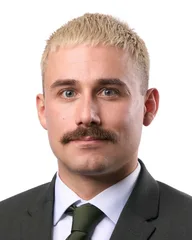
|
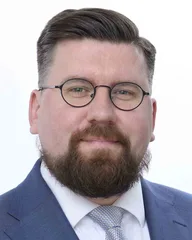
Lukas Sieper | Germany DEU | Non-attached Members (NI) | 390 |
| 2 |
|
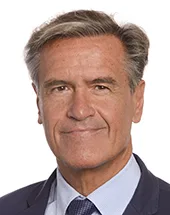
Juan Fernando López Aguilar | Spain ESP | Progressive Alliance of Socialists and Democrats (S&D) | 354 |
| 3 |
|
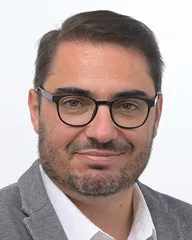
Sebastian Tynkkynen | Finland FIN | European Conservatives and Reformists (ECR) | 331 |
| 4 |
|
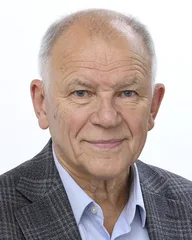
João Oliveira | Portugal PRT | The Left in the European Parliament (GUE/NGL) | 232 |
| 5 |
|
Vytenis Povilas Andriukaitis | Lithuania LTU | Progressive Alliance of Socialists and Democrats (S&D) | 227 |
All Contributions (195)
Prevention and treatment of obesity (debate)
Dear Chair, colleagues and colleagues. I agree with you that prevention is actually about practicing sports or a healthy lifestyle. However, when we talk about adolescents, we need to be aware that we are talking about a generation that is growing up in the digital age and we need to be aware that, unfortunately, 80% of adolescents in the European Union do not carry out physical activity for one hour a day. That is why I consider it a truly serious problem and the unavailability of equal opportunities for children to play sports. Therefore, prevention must also begin in the family, in kindergarten, in school and in the local community. Obesity is often also associated with mental health, self-esteem, stigma and quality of life. That is why our response must also be complete, without judgment, without simplification and without shifting blame exclusively to the individual. In Croatia, the country from which I come, the Action Plan for Prevention was adopted, and the Croatian Institute of Public Health through the program Living healthy and monitoring childhood obesity is already building the foundations for targeted preventive measures. However, in the end, if we want a serious health policy, then prevention and treatment of obesity must become an integral part of that policy, not a footnote.
Gender pay and pension gap in the EU: state of play, challenges and the way forward, and developing guidelines for the better evaluation and fairer remuneration of work in female-dominated sectors (debate)
Dear Chairman, colleague and colleague, yes, women read reports, women follow statistics, women in many countries are more educated than men and yes, women make up half of the world's population. It is true, there is no equal pay and it is true that we talk about it every year, well, on the eve of International Women's Day. However, it is true that we also need to work on women's financial independence, because I believe that it is an important precondition for their position in society and the family, and that equal pay actually reflects our democratic value. It is clear that inequality does not end with leaving the labour market, but, unfortunately, accompanies women in their third age. And here we have to talk about the causes and we have to solve them, of course, career interruptions due to care, health, family, lower representation of women in management positions. Real equality, both female and male, is measured not only by the average, but also by whether women have equal opportunities to thrive, equal economic security and a dignified pension.
Gender pay and pension gap in the EU: state of play, challenges and the way forward, and developing guidelines for the better evaluation and fairer remuneration of work in female-dominated sectors (debate)
No text available
Recommendation to the Council on EU priorities for the 70th session of the UN Commission on the Status of Women (debate)
No text available
Accession of Montenegro to the Convention of 2 July 2019 on the Recognition and Enforcement of Foreign Judgments in Civil or Commercial Matters - Accession of the Republic of Albania to the Convention of 2 July 2019 on the Recognition and Enforcement of Foreign Judgments in Civil or Commercial Matters (joint debate)
Dear Chairman, Honourable Commissioner, so few debates are so unison among political dissent and different clubs, as it seems this evening. This is actually a technical issue, but also with very concrete legal and political consequences, because if we ask why this is important, the Convention strengthens legal certainty, simplifies the recognition of court decisions and reduces costs for citizens and businesses in cross-border disputes. What is very important is predictability, and predictability itself cannot be without that mutual trust, investment or stable relationship. In the context of enlargement, these steps may not be spectacular, but they are also crucial when talking about enlargement, I certainly want to underline that we support, of course, the European path of these two countries. The European perspective of the Western Balkans is not built, of course, by declarations, but by concrete alignment with European and international legal standards. However, it is important to point out that a mere formal accession to international instruments is not sufficient. It must be a real mirror of changes in practice through consistent and sincere implementation of adopted acts. Of course, this integration is not measured by the number of conventions signed, but by how they are applied in the daily work of courts and institutions. At the same time, it is important to stress that the European Parliament must be involved in such procedures in a timely and formal manner, as we are on the same side here. You are not on the other side of the Parliament, but we would no longer want this disharmony or misunderstanding to become a debate in this House. This is not a procedural trifle, but an issue of institutional balance and democratic accountability that we all stand for. In conclusion, support for this process means support for legal certainty, regional stability and credibility of the European path of Albania and Montenegro.
International Day of Education, fighting inequalities in access to education (debate)
Madam President, dear Commissioner, dear loved, I will continue in Croatian. Dear Commissioner, it's not fair. The Honourable Chair, therefore, is not fair that children do not have equal access to education, and equal access continues to strongly shape the life chances of children and young people across Europe. Often, unfortunately, not through talents, but through the circumstances in which they grow up. Differences continue to occur at multiple levels: regional, territorial, between urban centres and rural or remote areas, where schools are often poorly equipped and students’ path to education is longer and more demanding. There are, of course, socio-economic differences among children from lower-income families, who have less access to additional teaching, digital tools and stable learning conditions, which, of course, affects their educational opportunities. Particular attention is required by the digital divide, it is true, we live in the digital age, but not all children, unfortunately, can follow it, which has become more visible in recent years. Differences in access to the internet, devices and digital skills deepen existing inequalities. We must also not ignore the obstacles faced by minorities and children from vulnerable communities. Education is still not equally available. Our response, I agree with you, must be common and decisive, we must have strategic investments. That is why we trust that the next financial perspective will not ignore this fact, that you will fight for enough funds and what you said in your speech, we must take care of who will teach our children. Because education is the foundation of Europe's future, and it is up to us to make it just for all. I'll just do a little digression: in Croatia, about two percent of young people between the ages of 18 and 24 are not included in education, while the EU average is about 10 percent. We have to show that we can change. This demonstrates the power of a public, accessible and inclusive education system. Formal education provides different opportunities for social inclusion and access to the labour market. We all have to work together on this.
Presentation of the action plan against cyberbullying (debate)
No text available
Online piracy of sports and other live events: urgent need to address unsolved issues (debate)
Dear Chairman, online piracy, a live event, above all sport, but let's not forget about music and cultural content, is becoming one of the unresolved challenges of the European digital and cultural space. Data shows that 12% of EU citizens already access illegal online sports broadcasts, and among young people aged between 15 and 24, this figure rises to 27%. This means, in fact, that one whole generation is accustomed to viewing content outside the law. Estimates show more than €1 billion of illegal revenue per year in the European Union, while sports leagues; broadcasters and the cultural sector loses the funds that finance the development of sport, content production and, of course, the creative industries. At the same time, piracy does not exist in a vacuum, it is also a consequence of the distorted market for sports media rights. When rights are fragmented, even prices are high, and key broadcasters connected sometimes with state actors outside the European Union, trust in the market is weakening and citizens are turning to illegal solutions, which is by no means good. Illegal sports transfers bring billions of euros a year to criminal networks and illegal betting. It's not a petty offense, it's organized crime. The percentages of illegal approaches pose an economic and legal challenge because piracy creates huge black money and, Commissioner, we have to do something.
Presentation of the Digital Networks Act (debate)
Dear Chair, colleague and colleague, digital networks are today as strategic as energy or defence. Of course, without a secure and resilient connectivity, there is no competitiveness, there is no modern industry and there is no real European sovereignty. This is an opportunity to kick-start investment in optics, 5G and 6G networks, and to accelerate infrastructure modernisation. However, DNA must answer one very specific question – information resilience in an age of connected mobility. That is why I thank and welcome that the proposal recognizes the issue that I initiated ten days ago, and which was supported by many colleagues, I thank them for this, in a letter to the President of the Commission and Vice-President Virkkunen in which I highlighted the importance of the position of radio in cars, which is now regulated by Article 112 of the Treaty on the Functioning of the European Union. Any automotive radio receiver installed in a new vehicle of category M, placed on the Union market for sale or hire, shall contain a receiver capable of receiving and reproducing at least the radio services provided by means of digital terrestrial radio broadcasting. Thanks for that, I think we almost made it. Today, cars are turning into computers on wheels, and with this proposal, we are closer to the goal of keeping the radio in them. This is not only a matter of culture and media pluralism, but also of public security. In crises, power outages or network failures, radio is often the last medium that remains available to citizens. I believe that this is also a European value that we must defend. That is why, while building Europe's digital sovereignty, DNA must at the same time protect the public interest, keep radio present and easily accessible in new vehicles. Thank you for supporting this.
Presentation of the Cybersecurity Act (debate)
No text available
European Democracy Shield – very large online platform algorithms, foreign interference and the spread of disinformation (debate)
No text available
30th anniversary of the signing of the Dayton-Paris Peace Agreement (debate)
No text available
EU position on the proposed plan and EU engagement towards a just and lasting peace for Ukraine (debate)
No text available
Protection of minors online (debate)
Thank you very much, but answer me, please, then to the question how do you mean to prevent what happens every second, say, on encrypted online platforms where at least two photos or videos of child sexual abuse are shared? One in seven children in elementary school arranged a face-to-face meeting with a person they met online. I'm sure the parents didn't say: ‘Yes, you can’. And finally, this year, Europol detected in 2000 a link to terrorist and violent extremist content targeting minors who are not accidental victims but intended targets. Then how would you handle it?
Communication on the Democracy Shield (debate)
Dear Chair, Honourable Commissioner, I believe that the European Democracy Shield must be much more than an administrative measure and that it must be a geopolitical response and a backstop for the European Union, so it is of utmost importance to see how the Centre for Democratic Resilience will function. Why? Because we live in a time when democracy is no longer attacked only by cannons or weapons, but by propaganda, false narratives, election manipulation, cyberattacks and economic blackmail. We've finally realized that we can't be naive anymore. Democracy Shield is the first comprehensive framework that protects us from external authoritarian regimes that seek to undermine our institutions and polarize our society. I agree, we need stronger media, transparency of political funding, but we need to protect cyber security, elections and defence against foreign influence. This means defending our way of life, and in the end I welcome your announcement of digital literacy in schools, that is, media literacy for informed citizens.
Combating violence against women and girls, including the exploitation of motherhood (debate)
Dear Chairwoman, colleagues, I will repeat, Croatia is among the few Member States that have already clearly defined rape as a non-consensual relationship in their criminal code and introduced criminal liability for digital violence and abuse of intimate content, thus becoming an example of good practice among EU countries. At the same time, the revised Anti-Trafficking Directive from last year extends protection to women who are exposed to forced pregnancy, surrogacy and the exploitation of motherhood. According to the 2024 analysis, there is sadly more and more so-called commercial surrogacy in third countries, exploiting poor women from Asia and Eastern Europe. Women from poor communities are recruited. However, giving birth to children for organ trafficking, sexual abuse, is the most horrific form of business that we must also talk about. This is not freedom of choice, it is a form of modern slavery. In 2022, we declared commercial surrogacy a form of exploitation of women that violates their rights and human dignity. We are now three years later. Have we taken a step forward or backwards?
Combating violence against women and girls, including the exploitation of motherhood (debate)
Dear Chair, I am glad that you mentioned cyberbullying and I agree with you and I hope that you will support the EPP Group initiative that we have been talking about for several years, which is the extension of the definition and that cyberbullying, in fact, becomes a criminal offence in all Member States of the European Union where it is not yet. As far as this Directive is concerned, I must say that my country, from which I come, Croatia, has already taken steps there and that sexual abuse, rape and others are already in the domain of crime. So, are you in favor of cyberbullying criminalization, as is EPP?
Audiovisual Media Services Directive obligations in the transatlantic dialogue (debate)
Dear President, colleague and colleague, when we talk about culture, we are not talking about trade. We talk about language, about the way we see the world, about who we are. And it is precisely our European identity in the digital space that is under threat. More than 65% of the video-on-demand market revenue in Europe is generated by three major non-European services, Netflix, Amazon Prime and Disney Plus. European content, although it accounts for about 30% of the catalogue's offer, is only 16% of the total time. In other words, more than 80% of the time European citizens spend watching content is spent on non-European programmes. The AVMSD is not a market barrier, but a tool for Europe to protect its voice, in Italy, in Germany, in Poland, in Croatia. Without it, European authors, directors and producers would be overwhelmed by the global content that dominates our screens. In this sense, the Directive does not erect walls, but opens doors. When the European Union asks 30% of content on platforms to be of European origin, it is not a bureaucratic quota, it is a defense of our culture. That is why I call on the Commission and the Member States to firmly and uniformly defend the obligations of this Directive in the Transatlantic Dialogue.
Polarisation and increased repression in Serbia, one year after the Novi Sad tragedy (debate)
It is clear that in Serbia we do not see a democratic, but a despotic narrative, a coquette as appropriate to the European Union, and on the other hand a very coquett to Russia and China. I would like to send a clear message to the citizens of Serbia: We do not change power here, we seek democratic change here and we ask that reforms be fulfilled for every country that wants to become a member of the European Union. Over the past year in Serbia, we have witnessed intimidation of protesters, arrest of journalists, pressure on civil society and attempts to portray any criticism as a threat to the state. This is not the way to Europe, it is the way back to fear and silence. The rule of law, freedom of expression and an independent judiciary are not traded goods. They are a prerequisite for membership. Serbia cannot simultaneously request the opening of chapters and close the mouth of its own citizens.
Criminal intimidation against investigative journalists in the EU: the attempted attack on Sigfrido Ranucci (debate)
Dear Chair, Honourable Commissioner, Colleagues, Sigfrido Ranucci is the target of an attempted attack precisely because he did his job: expose corruption, abuse of power and irregularities. His courage reminds us of the most important thing. Freedom of the press is not guaranteed when journalists can speak, but when they can do so without fear. We keep saying: there is no place to intimidate journalists in the European Union. However, according to the European Federation of Journalists, in the first six months of this year alone, there were 709 cases of violations of media freedom. These are not isolated incidents. It's a pattern that worries. The murder of Dafne Caruana Galizia in Malta, we talked about it earlier today, the assassination of Jan Kuciak in Slovakia and now the attempt to attack Sigfrid Ranucci are reminders that there is no democracy without free journalism. We will talk about that free so-called journalism in Serbia a little later today. That is why I welcome the European Commission's initiative for a European media freedom law, which for the first time clearly sets out that Member States must guarantee the independence of journalists, the protection of sources and the transparency of media ownership. Sigfrido Ranucci has survived, but what we have to ensure is that the next journalist doesn't have to be a hero to do his job.
Institutional consequences of the EU enlargement negotiations (debate)
The enlargement of the European Union is not only an administrative process or a set of technical chapters, it is a political act, an expression of our vision and our responsibility, but also of the responsibility of the Member States that would like to join the European Union. At a time when borders in Europe are being redrafted, when autocracies question its values, enlargement is the answer, not the risk, but it can only be a success if the Union remains credible and able to decide, while respecting the principle of equality. At the same time, we must preserve what makes Europe unique, the balance between big and small members, new and old members. Our message must be clear: enlargement yes, reforms yes, but a Europe of equal members must remain the heart of the Union. We need to be able to react quickly, that's right, but speed must not replace responsibility. There are mechanisms that allow progress without losing balance: passerelle clauses, structured cooperation and constructive restraint. No lifting of veto rights.
The decision to impose a fine on Google: defending press and media freedom in the EU (debate)
Dear Chairman, colleague and colleague, this penalty is not an end in itself, it is a tool to reopen the market, to give media and publishers fairer access to the market. Let's look at reality, actually. Small local portals, regional newspapers, radio stations, they live and depend on the fair part of the advertising market cake. When the platform favors its own AdX and does not allow other options, these small publishers are simply pushed out of the game. The resolution also sends a signal of the Union’s determination and unity to protect cultural autonomy. It's also a message to our partners across the Atlantic. Dialogue yes, but respecting European cultural particularities. This resolution is not directed against the United States, it is for Europe. It also reinforces the European Parliament's position that cultural policy is the exclusive competence of the Member States and the Union, not the subject of a trade agreement. This confirms the concept of a European cultural exception, which has been the backbone of the European Union’s cultural diplomacy for decades. In this way, we also try to balance relations with the American soft power policy, especially given the global influence of the US streaming Netflix, Disney, Amazon Prime, and we underline the need for Europe to develop its own soft power through the achievement of local production, language and cultural diversity. But punishment alone is not enough, it must be carried out in the fullest sense. Players, big or small, must follow the rules. If they violate – sanctions, if they do not correct – structural measures. We do not tolerate the concentration of power in the digital space.
World Mental Health Day - addressing the socio-economic factors (debate)
Mr President, I'd like to thank my dear colleague and say: don't worry, we love you, you're not alone. Dear Chair, colleagues, I will only remind you that this year's theme of World International Health Day is access to mental health services in disasters and emergencies and that at this moment one in five people in conflict-affected areas suffers from mental health problems. However, one in five adolescents between the ages of 15 and 19 also suffers from mental disorders. 97% of children use the internet every day for 8 hours and 40 minutes. One in six children has experienced cyberbullying. And, yes, I agree, we must take a step further, especially in protecting children. The EPP has been pushing for the criminalisation of cyberviolence for several years and I sincerely hope that all Members of this Parliament will support our initiative. Mental health is a silence we don't hear too often. So let's look, let's be open and honest and help, not just build roads, but build a healthier Europe.
Promoting EU digital rules: protecting European sovereignty (debate)
Colleague Bartulica, I hope you do not seriously think that there is no opportunity and chance for the rise of digital companies in Croatia. If you did not follow, yesterday the Golden Kunas were awarded, the highest recognitions, and that is exactly start-up companies operating in the digital space. They were great in their speeches and praised Croatia. And don't be worried. The Croatian government, and we, will not allow anyone to create our policies, and I know that well - as a former journalist, as a former member of the Croatian Parliament, as a former government spokeswoman and a spokeswoman of the Ministry of Culture. Do not impose false theses here on Croatia.
Common agricultural policy (joint debate)
Dear Chair, Commissioner, colleagues, I would say that food, together with energy and defence, is becoming part of the wider security mosaic of the European Union. So I'm not at all happy to relativize such an important topic, from sausages to hamburgers. I appeal first of all to the Commissioner, as many of my predecessors have said, to keep us in good financial terms when it comes to agricultural policy. It's good that we're going to have less bureaucracy, that's what we asked for five years ago, faster and more efficient crisis relief, stronger bargaining power for our farmers in the food supply chain. We also need faster aid payments, import controls, but we also need to talk about what's bothering our farmers, and that's increasingly labour shortages. I particularly welcome the fact that these amendments give strong support to small and medium-sized farms, and we must say that farmers today live in the reality of climate change and ask us for two things: certainty, legal and regulatory predictability. So let's give farmers what they asked us, our colleague and colleague, four years ago, to support and we must continue to work to improve them.