





| Rank | Name | Country | Group | Speeches | |
|---|---|---|---|---|---|
| 1 |
|
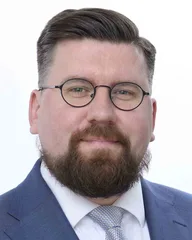
Lukas Sieper | Germany DEU | Non-attached Members (NI) | 390 |
| 2 |
|
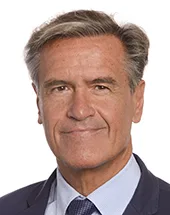
Juan Fernando López Aguilar | Spain ESP | Progressive Alliance of Socialists and Democrats (S&D) | 354 |
| 3 |
|
Sebastian Tynkkynen | Finland FIN | European Conservatives and Reformists (ECR) | 331 |
| 4 |
|
João Oliveira | Portugal PRT | The Left in the European Parliament (GUE/NGL) | 232 |
| 5 |
|
Vytenis Povilas Andriukaitis | Lithuania LTU | Progressive Alliance of Socialists and Democrats (S&D) | 227 |
All Contributions (105)
Revelations of Uber lobbying practices in the EU (debate)
Mr President, the Uber files confirmed what we already knew. Uber has been able to roll out its business model by operating illegally, dodging labour law and employing aggressive lobby tactics. It was the plan all along to squeeze drivers for Uber to become profitable. With this scandalous behaviour, Uber has become a market leader in the platform economy, and paved the way for other companies to follow in their exploitative footsteps. Working on the Platform Work Directive, I have been able to witness first—hand how Uber still manages to sway colleagues in this House. Please stop buying the myths that Uber is trying to sell you. Workers can have flexibility while being employed. People with difficulty finding work deserve a real job with rights and fair wages, rather than a gig—work app that follows their every step, including the music they listen to. And freelancers will still be able to find clients through platforms. They will actually enjoy more protection from subordination and intrusive algorithms. When voting on this file, I count on your support for the deal reached in the EMPL Committee on the Platform Work Directive. We give platform workers access to social protection, tackle bogus self—employment, and ensure fairness and transparency when using algorithms in a workplace. Breaking the rules is not innovation. This legislation will be a milestone for the future of work, and we cannot have Uber riding this future again.
Terrorist threats posed by far-right extremist networks defying the democratic constitutional order (debate)
Mr President, Commissioner, Capitol Hill, Brasília, the Reichsbürgers and Forum voor Democratie – a dangerous global far right is moving from their social media rabbit holes into the offline world, and they all promote the same harmful narratives based on disinformation, targeting women, targeting LGBTI people, targeting people of colour, and trying to overthrow democratic institutions. The spread of this sort of disinformation and extremism online is organised by far right groups, spread by Putin troll farms and then amplified by social media algorithms. In the current geopolitical context, the EU cannot afford to be naive. We need to unite against fascism, against Putin, and against tech capitalism that threatens our safe, online public debate. To defend our democracy, the role of social media in the spread of disinformation is key. That’s why I call upon the Commission to present strong rules on how platforms should handle disinformation, not just voluntary agreements, to make fact checks on content that goes viral on social media obligatory, and to ban polarising recommender algorithms.
Consumer protection in online video games: a European Single Market approach (debate)
Mr President, 20 years ago, gaming studios tried to develop a game that was as fun and challenging as possible, so you bought it. But now they are mainly trying to make a game as addictive as possible. Innovation does not always lead to improvement for consumers. We see this in the gaming industry. Because where in the past I could finally buy Rollercoaster Tycoon after long savings and then play it endlessly, now the game studios earn a lot of money by making a game as addictive as possible. And the game makers are also very good at it. At the moment, one in twenty boys in school has characteristics of a game addiction. That's not surprising, because these companies know exactly what psychological tricks they have to use to let you play for as long as possible and spend as much money as possible. That's how they came up with digital treasure chests that you can buy in the game without knowing what's in it. The content can sometimes be very valuable, or not. Because these give you the same feeling as gambling, people can waste a lot of money on this and they work addictively. Other tricks for more winnings are more likely to win if you pay or buy items in the game; pay in the game with another coin so that you actually have no idea how much money you spend; when you buy something you have to take out a subscription to which you are then attached; or secretly collect your data and then resell it. We have strict rules for addictive substances or services such as tobacco and gambling. But the gaming industry has been in full swing for years, while young people and children are such an important target group. This is no longer possible and that is why I am proud that the European Parliament is today pushing for new rules and stronger protection in online games. And an investigation into a European ban on lootboxes. As far as I'm concerned, this is just the beginning. Europe must also fight the addictive design of social media, and I will continue to fight for that. Young people should be able to be comfortable, safe and honest online without being manipulated, misled or addicted.
30th Anniversary of the Single Market (debate)
Mr President, dear colleagues, when looking at the past 30 years, we can all agree that the single market has been essential for European integration. Businesses and consumers have benefited and it has strengthened the EU’s position in the world. But please, let’s not only congratulate ourselves. It’s essential that we’re also self-critical on how the single market project has left many people behind, how it has been dominated too often by a neoliberal obsession of market liberalisation, competitiveness and efficiency. The original promise that the social dimension of the Union would grow together with the market has not been delivered on. Because what we’ve witnessed is the weakening of social protection and a race to the bottom on taxes. National welfare systems, public services and the quality of work are under pressure. And right now, the single market is not successful in avoiding companies profiting from the inflation crisis at the expense of our citizens. The share of labour and income has been declining and the share of capital increased. Wealth is unequally distributed across regions and between individuals. And currently two-thirds of all global wealth created since 2020 was captured by the richest 1%. When are we going to find the urgency to fix this? Thinking about the future, we have to stop pursuing the single market as a goal in itself, but rather see how we can use it and change it to help our citizens and to build a socially just Europe.
Tackle the cost of living crisis: increase pay, tax profits, stop speculation (topical debate)
Madam President, Commissioner, Minister, people in Europe are suffering. They’re sitting in ice-cold rooms, are unable to feed their families and are increasingly at risk of becoming homeless. If we want to be a Union that works for people, our response to the energy crisis has to go further than security of supply and the necessary reforms of the energy market. We need to take action for the people. And that’s why I call upon the European Commission to use its competence to urgently present a proposal for emergency legislation that bans energy disconnections for everyone in Europe this winter. But I also call upon you to ban home evictions this winter because our European goal to end homelessness by 2030 has never seemed further away. We need to take action to help people who can’t pay their rent, food or energy bills. We have to help them get through this winter. Please show that you are here for the people and not just for businesses.
Legal protection for rainbow families exercising free movement, in particular the Baby Sara case (debate)
Mr President, what we want as the LGBTI community is equality: to be treated as equals in our society and to be equal by law. Whilst this may be portrayed by some conservatives as the end of the world, for us these are lifesaving laws. Imagine your child needs a lifesaving operation, but you as a parent are not allowed to give consent for this operation, because you travelled to another country that doesn’t recognise your parenthood. Today, the LGBTI Intergroup had the honour to hear first—hand a horror story of two mothers who can’t make their baby girls meet their grandfathers because of discriminatory administrative hurdles. And the European Court of Justice has already ruled that Bulgarian authorities have to give baby Sara a birth certificate. But now, while she’s almost three, it still hasn’t happened. That’s why we urge the European Commission to take action. We need to make sure national authorities listen to these rulings of the European Court of Justice and get children out of this administrative limbo, but we also need to move fast on new legislation for the baby Saras of this world and all our rainbow families, because what we want is equality.
Mental health (debate)
Mr President, young LGBTIQ+ people are often struggling with their mental health. Numbers show that they are four times more likely to be bullied in schools and are five times more likely to commit suicide because they do not feel accepted and have to deal with hate speech and violence. What definitely doesn’t help is that we increasingly see hate and disinformation being spread about our community on social media. This hate is fuelled by far—right groups and amplified by social media algorithms. Worse, these lies about our community are then repeated in the political arena, also in this House, legitimising hate. Online violence leads to offline violence. We see that with the increase in bomb threats against gender clinics and with the devastating recent shooting outside a queer bar in Bratislava, where two people lost their lives. We have to do better for our LGBTIQ+ community. We need to do everything that we can to stop the amplification of hate and disinformation online by banning these polarising algorithms. But we also have to collectively stand up against this hate being legitimized offline, especially in the political arena. Let me be clear: if we tolerate hate against minorities, we tolerate the erosion of our values and our democracies, and we accept that young generations will grow up feeling unwanted and unloved. We have to do better.
International Day for the Eradication of Poverty (debate)
Madam President, colleagues, Commissioner, the projections show us that during the coming winter, people in this Union will die from hunger and cold, and more and more people will lose their home and fall into extreme poverty. Also, homelessness has life—threatening consequences. But, so far in this House, we have seen more support for companies struggling with the rising energy costs than support for citizens. And this abstract number of almost 100 people in the EU at risk of poverty in reality means freezing rooms, empty lunchboxes, and losing your home. That’s why I ask our European leaders, when discussing how to respond to the energy crisis, to look beyond mere numbers and to take action for people. Make sure we won’t lose sight of ending homelessness by 2030, and make sure no one will die from the cold this winter. Decide on a European moratorium on evictions and a moratorium on being cut off from energy.
The Dutch childcare benefit scandal, institutional racism and algorithms (debate)
Mr President, algorithms do exactly what they have to do, and that is dangerous. Imagine: a tax administration is tasked by the government to tackle fraud as hard as possible and this must be done as efficiently as possible by means of automation. According to the tax authorities, it is most efficient to address people with a low income or migrant background. On that basis, the service decides to build such an algorithm. And this algorithm does exactly what it needs to do. It finds so-called fraudsters, especially with a migrant background or low income. For example, the Dutch government destroyed the lives of 70 000 children and their parents. No one could explain to their parents what was going on or why certain decisions were made. Officials blindly followed the computers, because algorithms must be right. An important lesson from the surcharge scandal is that digitalisation without standards and rules can have life-destroying consequences. Fortunately, we see this in Europe. With the first AI law in the world, I want to make sure that a new supplement affair can never happen again, but then we have to dare to take action. As a negotiator for the AI Act, I am committed to strengthening human rights in the use of algorithms. We must prohibit the use of algorithms to classify people as criminals or fraudsters based on their personal data. We must ensure that systems do not discriminate. We need to introduce a human rights test, so that we have to look at how we use algorithms. People deserve transparency and the systems need to be designed in such a way that we can see what goes wrong. And people should never, ever again, stand empty-handed in front of a computer, with a strong right to explanation and mandatory human oversight. Let us learn from this terrible scandal and now intervene with ambitious rules.
Countering the anti-European and anti-Ukrainian propaganda of Putin’s European cronies (topical debate)
Mr President, anti-democratic parties are deliberately spreading disinformation online: in Ukraine to cause confusion and break morals, but also in the rest of Europe to divide our societies and erode democracies. Big tech's algorithms and revenue models go well on extreme content such as hate and disinformation. This is using pro-Russian forces against us. Last week, EU DisinfoLab unveiled a massive pro-Russian disinformation operation through bots and paid ads that earned Facebook more than a ton. So we are dragged further and further into a bubble of extremism, with danger to our security, and meanwhile big tech becomes smilingly rich. The solution is simple: We need to tackle big tech and get rid of personal, polarizing algorithms. But any decisive action to stop them goes too far for the European Commission and right-wing parties, and we can no longer stand by and watch this system facilitate Putin and the erosion of our democracy. It's time to intervene.
Radio Equipment Directive: common charger for electronic devices (debate)
Madam President, dear colleagues, Commissioner, finally, after more than 10 years of waiting for codes of conduct and goodwill of businesses, we are now setting a standard for a common charger in the EU. Today, finally, we are putting the interests of the environment and consumers above the interests of big tech companies through solid legislation. This achievement shows that we as the EU can set standards for a sustainable digital future. So why not make sure that the whole digital transition is sustainable from the start? To my colleagues here and to the Commission: we do not have another 10 years to wait for voluntary agreements until we realise that we need clear environmental standards for electronic devices or, for example, data centres. We are in a climate crisis. We need to steer the digital transition to truly twin the green transition and make sure it doesn’t harm people, but benefits them and the environment from the start.
European Centre for Disease Prevention and Control - Serious cross-border threats to health (debate)
Madam President, dear colleagues. I would like to comment in particular on procurement, which is within the IMCO remit. I welcome the provisions where our IMCO opinion was improved in a practical way. For example, the EU-exclusive procurement, meaning that countries would not be able to negotiate with different manufacturers in parallel. For this issue, a great compromise was found, which is that only after assessment it is decided if it is an EU-exclusive procurement. And this makes sense, since the EU exclusive procurement would be beneficial regarding counter-measures involving plenty of options on the market, for example with tests, but would not be beneficial for other measures where there might be a shortage, for example with vaccines. Looking at the final text, although we certainly did not get everything we wanted from the Greens EFA and IMCO side, I still welcome this regulation which will surely contribute to strengthening the Union's coordinated response to public health emergencies.
Mental health in the digital world of work (debate)
Mr President, dear rapporteur, dear Commissioner, imagine going to work at Zara. You enter the shop in the morning, pick up a tablet, put an earpiece in and, for hours on end, you are tracked and have an algorithm tell you exactly what you need to do. And if you don’t do it fast enough, because a customer asks you something, this might lead to not getting your contract renewed. It might sound futuristic, but this is already the reality for a growing group of workers. Bosses are treating them like robots and new technologies allow them to constantly surveil them and micro-manage people, under huge time pressure. But constant monitoring also happens to office workers and civil servants. With the help of software, your boss can know exactly how many emails you send, how many keystrokes you make per hour, and even where your gaze is fixed. In a world like this, workers can’t thrive. The stress of being surveyed and the loss of autonomy leads to lower wellbeing of workers and impacts their mental health. We urgently need rules for the entire labour market to ban surveillance and constant monitoring of workers and regulate algorithmic management for all. And I’m happy to report calls for this. I’m now looking at the Commission to take action and make our workplaces safer, healthier and happier again.
Digital Services Act - Digital Markets Act (debate)
Mr President, for twenty years we have allowed large tech companies to grow almost indefinitely under the guise of innovation. Now these companies are so powerful that they pose a threat to our society and our democracy. Google's and Facebook's algorithms show us what makes their shareholders the most profit. They know all about us and have found that presenting us with personalized hate and disinformation generates the most advertising revenue, as we stay longer on the platform, resulting in a divided society. Not only on the internet, but also in healthcare and education, these tech companies are gaining more and more influence thanks to their money and data power. You hardly get out of it to use WhatsApp or to send your child to a Google school. Your Fitbit data goes directly to Google. This has to stop. With the Digital Services Act and the Digital Markets Act, we are taking major steps towards a world that is not in the hands of big tech, but in the hands of citizens. We are finally getting a better grip on what is happening online and are taking steps to slow down the megalomaniac expansion of tech companies. As far as I'm concerned, this is just the beginning.
Global threats to abortion rights: the possible overturn of abortion rights in the US by the Supreme Court (debate)
– Thank you. Yes, I have a question for Mr Ruissen. We happen to come from the same region and a few years ago they saw the need to set up a foundling room. This is because there are so many people who are afraid to have an abortion, but ultimately cannot keep the child, for financial or other reasons. And I still wonder how you see the protection of a child after birth if that child actually has no possibilities in a society.
Global threats to abortion rights: the possible overturn of abortion rights in the US by the Supreme Court (debate)
Mr President, millions in the US are threatening to lose their right to abortion. And let's just say it again: A ban on abortion does not lead to fewer abortions, but only to more unsafe abortions. But what I notice is that I'm not even surprised anymore. Angry, angry, I am. But no longer surprised, because time and time again we see that the global ultraconservative agenda, funded by major lenders, wants to stop every step towards equality and reverse all progress that has been fought for. They advocate that women and anyone they think is different should be seen as inferior and should not have equal rights. But we won't let that happen. The harder they do their best, the louder we stand up for our rights. Starting with our sexual and reproductive rights, including abortion. Boss in his own belly. Don't let these historical words become history. Thank you.
The impact of the war against Ukraine on women (debate)
Madam President, dear Commissioner, we have all heard terrible reports in the past weeks about Russian troops using rape as a weapon of war against Ukrainian women who have stayed behind. And we’ve also heard heart—breaking stories about pregnant Ukrainians fleeing to Poland who are in need of an abortion there, but discover that they cannot get it because of the de facto abortion ban. Moreover, they are actually greeted with anti—abortion propaganda. This includes women who have been raped, but also people who have fled, and now they just cannot get access to a safe abortion. This is a horrible situation you don’t wish to anyone. We need to support Ukrainian refugees with basic sexual and reproductive health and services wherever they go. If this cannot be assured in one Member State, we need to make sure that they get this support in another country as soon as possible. These are things that can not wait, and I hope the Commission will inform us on how they plan to act as quickly as possible on this, and help these victims of war with dignity.
Artificial intelligence in a digital age (debate)
Madam President, today we as a Parliament send a strong signal. We need a legislative proposal to protect workers when AI is deployed at work. And it’s about time we had legislation to protect workers from becoming robots. For too long, when talking about AI and the future of work, we worried about humans going to be replaced by technology. But the reality is that technology hasn’t replaced people; it is used to push people to work at a machine-like pace. Employers are tracking employees’ every move – how many emails you send, how much time you spend at your keyboard, and even your emotions – to evaluate your performance. Amazon workers delivering packages have several tracking devices in their vans to not only track if they are reaching their targets, but also whether they look happy or tired while on the road. Zara shop assistants’ locations are continuously monitored and they are given automated orders in their earpieces and call centre workers are evaluated with emotion—recognition technologies based on how chirpy they sound while talking with customers. AI-driven surveillance at work is already a reality, and this endangers health and safety, mental health and fundamental rights. We must not treat AI like a magical tool for efficiency and productivity. Rather, we need clear rules to protect workers when there are issues at work. A new legislative proposal can help AI make our work easier and more pleasant, and this is what makes people productive at work. We need laws to empower workers and make sure technology is used to promote workers’ rights instead of allowing our bosses to continuously stalk, evaluate and exploit us. And this is why Parliament sends a strong signal with broad support. We need a legislative proposal to protect workers’ rights when AI is deployed at work.
Right to repair (debate)
Do you have to recharge your phone at lunchtime? Is there a crack in your screen, or can you no longer download apps because your device no longer allows updates after a few years? Buying a new phone is your only option. Phones are made in such a way that they are difficult to repair. If possible, buying a new one is often even cheaper than having it repaired. This is, of course, crazy for words. The production of telephones has a major impact on people and the environment. We are rushing to force people to keep buying new phones and create more electronic waste. We need to fix the craziness of our disposable society. What the Commission proposed last week is a step in the right direction. We are going to make sure that products are designed in such a way that they last a long time and are easy to repair. But the next step is a strong right to repair. Software aging of phones that are still doing just fine should simply be banned. Only then can we say that we are digitizing sustainably.
One youth, one Europe (topical debate)
Mr President, the last two years, schools were closed, social events cancelled, and many young people had to start their education or first jobs from their bedroom behind a screen. And that is why declaring 2022 the European Year of Youth can’t just be about using the marketing potential of young people to make the EU look good, it has to bring real improvements in their lives. And most of all, we need to give more security to young people, allowing them to build their lives. We need quality jobs for young people and to work together for an EU directive banning unpaid internships. We need to stop the rise in rents and house prices so that also young people can have an affordable place to live. And we need to ensure accessible mental health support for all young people. Let’s make the European year of Youth a year for change and not just an empty title.
Empowering European Youth: post-pandemic employment and social recovery (debate)
Mr President, Commissioner, Secretary of State, and dear youth of Europe, the COVID pandemic has impacted everyone, but the impact on the lives of young people cannot be underestimated. A big reduction in social contacts, not going out with friends and not enjoying school with your peers, crucial moments and connections that will shape your life, which were all stalled. And only time will tell how this impacts the future of this generation. But we all have the responsibility to limit the damage. And what young people might need the most right now is to feel that they are taken seriously. And we don’t show this by making them work for companies and organisations for free. And that is why this year has to be the year that we ban unpaid internships and traineeships in Europe. The era of working for experience has to be over. If you work, you get paid. And we can no longer tolerate young people and their skills being exploited. We can no longer tolerate that you can only do an internship if your parents have enough money to support you. And we can no longer ask from young people to wait a few more years to first get older and wiser until they are seen as a worthy part of the labour market. The COVID pandemic already demanded young people to wait with living their full lives for two years. The least we can do is to ensure young people can start their lives on the labour market without making debts. And I want you all to know that this is what we will fight for, a European ban on unpaid internships.
Digital Services Act (continuation of debate)
Mr President, the storming of the Capitol after the widespread misinformation about elections, a surge in radicalisation and extremism driven by conspiracies, and a stark rise in threats against journalists and politicians in the Netherlands – even at night at their homes: while we watch the disastrous effects of the spread of hate and misinformation online slowly unfold and seep into real life, we often hear that platforms need to take responsibility. But the internet shouldn’t be in the hands of a few companies that profit from the large spread of hate and disinformation. It’s up to us as politicians to take responsibility. And after 20 years without updates, we now have the chance to fundamentally change the rules on the internet. Let’s take back control from big tech and put it firmly back into the hands of the people. We need to break big tech’s power over our information before it erodes our democracy. But for some colleagues, it seems a step too far to make the necessary fundamental changes. Yes, as the text stands there will be good improvements for users, and I’m happy to see that our proposals have been taken on board for strong notice and action procedures and a ban on manipulating people’s choices online with dark patterns. But a few months ago, when Frances Haugen was here, every Group in this house tried to have the loudest voice on how we would rein in big tech, and look at where we are now. The deal that was struck in the Committee on the Internal Market and Consumer Protection (IMCO) was warmly welcomed by the big tech lobby, and there’s a strong call from them to not vote for any amendments. And to my colleagues in the PPE, S&D and Renew groups who want to hold on to this IMCO deal: profiting financially from the spread of hate and disinformation must stop. Three simple solutions can change this fundamentally and protect our democracy. First of all, turn polarising, personalised algorithms based on clicks and interaction off by default. Secondly, ban pervasive tracking for ads online to stop these manipulative business models. And if we as Europe are serious about taking on big tech, let’s look at the need for a European platform supervisor, because strong rules are nothing without enforcement. These are proposals you can vote on today, and I call on you all to do so, because our democracy is too important to leave in the hands of large tech companies.
Digital Markets Act (debate)
Madam President, Google Search and YouTube more or less decide which information reaches us. Google Maps and Waze on our Android phones follow exactly where we go. Our every heartbeat and step is monitored by Fitbit and we send our kids to Google schools where Google software can track and decide how we learn. And all this information goes to one and the same company. A small number of Big Tech companies are slowly entering every aspect of our lives and we are slowly becoming completely dependent on them for our digital infrastructure and even our public services. The problem is these companies make decisions in the interest of the profit for their shareholders, and this means we cannot rely on them to run our entire societies in the public interest. This is why I’m happy that Parliament calls for strong rules today. We need to scrutinise gatekeeper mergers and acquisitions in all markets, not only the digital ones, because tech companies simply don’t always stick to digital markets, and we need interoperability of messenger services, meaning you should be able to send a message from your Signal account to your friends’ WhatsApp. Today we will vote on scrutinising gatekeepers’ access to our personal details when they buy a new company. Taking our privacy into account here would both help break the ever-expanding market power of Big Tech and help protect users’ fundamental rights. This is not only about abuse of power and markets. This is about our free choice, our autonomy and how we want to design our future society.
Combating gender-based violence: cyberviolence (continuation of debate)
Madam President, gender—based violence is a systemic problem, deeply rooted in our society. But the online world has opened new doors for hate and violence to spread rapidly, amplified by platforms’ algorithms. And this has devastating effects. Young girls commit suicide after intimate photos have been shared, female politicians receive death threats after speaking out and women withdraw from our online public debate. Online hate is poisoning our society. It undermines our free debate and ultimately our democracies. And that’s why we need urgent action. Make all forms of gender—based violence illegal across Europe and prosecute perpetrators. And make sure victims don’t stand empty handed and have somewhere to go for support. The goal of gender—based cyberviolence is to silence us, but we will not be silenced. And to the online trolls who are afraid they won’t get away with publishing people’s home address and sending rape or death threats anymore, that’s kind of the whole point.
The International Day of Elimination of Violence Against Women and the State of play on the ratification of the Istanbul Convention (continuation of debate)
Mr President, every week, 50 women in Europe die from violence simply because they are women. Transgenders are beaten up in the street and killed. Women are drugged in the pub and then brutally raped. Young girls commit suicide for sharing intimate images with a boy, which he then throws online without permission. Mrs. Dalli, we're in a pandemic, and I'm not just talking about COVID. Every minute we don't take action, there's one too many. Two years ago, you announced that you would come forward with European legislation to criminalise and prevent this violence. Next month you would finally present it, but now it has been postponed again. We can't wait any longer. It is also high time for the EU to ratify the Istanbul Convention. Women across Europe are counting on you, and we expect action, not empty words!