




| Rank | Name | Country | Group | Speeches | |
|---|---|---|---|---|---|
| 1 |
|
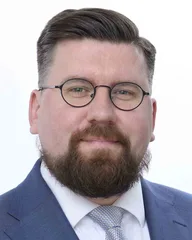
Lukas Sieper | Germany DE | Renew Europe (Renew) | 487 |
| 2 |
|
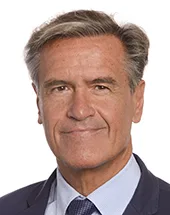
Juan Fernando López Aguilar | Spain ES | Progressive Alliance of Socialists and Democrats (S&D) | 454 |
| 3 |
|
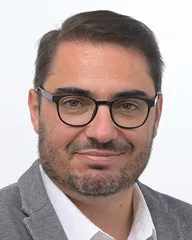
Sebastian Tynkkynen | Finland FI | European Conservatives and Reformists (ECR) | 451 |
| 4 |
|
João Oliveira | Portugal PT | The Left in the European Parliament (GUE/NGL) | 284 |
| 5 |
|
Vytenis Povilas Andriukaitis | Lithuania LT | Progressive Alliance of Socialists and Democrats (S&D) | 273 |
All Speeches (100)
Silent crisis: the mental health of Europe’s youth (debate)
Date:
12.02.2025 21:09
| Language: NL
Speeches
Mr President, Commissioner, depression, anxiety, stress, sleep problems, low self-esteem, loneliness, poorer emotion regulation, self-harm, suicidal thoughts, overstimulation, burnout, attention disorders, impulsivity, worse memory and even impact on the development of your eyes. If you, as a young person, have characteristics of a smartphone addiction or excessive screen use, these are the possible consequences. In the EU, this concerns one in four young people. By doing nothing, we are throwing more young people and children into a mental health crisis every day. More than a year ago, the European Parliament demanded rules against addictive design. But the Commission is apparently too busy with the possibility of deregulating the tech sector. It's totally absurd. The Commission is turning a blind eye to tech billionaires, and in the meantime – by doing nothing – is putting the health and safety of entire generations at risk. This is no longer possible. This year, the Commission will come up with rules against addictive design and ban the most harmful design features, such as endless scrolling and the automatic playback of movies.
Need to enforce the Digital Services Act to protect democracy on social media platforms including against foreign interference and biased algorithms (debate)
Date:
21.01.2025 10:21
| Language: EN
Speeches
Madam President, in this unstable world, we need a strong Europe. We need to stand on our own two feet and that is why, Commissioner Virkkunen, I ask you to be loud and clear on enforcing the DSA. Because types like Trump, Putin, Musk thrive if the EU is polarised, divided and therefore weakened. And we all carry their favourite weapon to influence us in our pockets and stare at it for hours a day. In Romania we had to redo elections after foreign interference via TikTok. Musk uses his own platform X to promote one of the most extreme parties of Europe, and Zuckerberg is actively promoting his platforms as a place for hate against queers and women. A true free internet is one where not a small bunch of tech oligarchs, but our democratic institutions – and therefore the people – make the rules. Commissioner. Make it happen. Stand up for democracy and enforce the DSA.
Misinformation and disinformation on social media platforms, such as TikTok, and related risks to the integrity of elections in Europe (debate)
Date:
17.12.2024 13:46
| Language: EN
Speeches
For the first time in Europe, in Romania, elections were annulled because of online foreign interference via TikTok. We need to wake up. Hyper-personalised recommender systems based on clicks and interaction are a threat to our democracy and national security. Whoever knows how to play them can manipulate the information people get to see online. Big fear mongering or extreme narratives – platforms will spread them to as many people as possible, because people will respond and that makes platforms the most profit. Then use bot networks to interact with your account, because with more clicks, the algorithms will spread your message like wildfire. Then pay influencers to spread your messages to new audiences without being transparent about it, and you can spread messages to an entire population. This is how pro-Russian forces and Georgescu manipulated an entire election via TikTok. The way Big Tech's recommender systems currently work is the perfect handshake between tech capitalism, populism and foreign actors, and the Commission needs to make the DSA election proof before the German elections in February. Enforcement after foreign interference has already happened is simply too late. The Commission needs to make crystal clear and binding that recommender systems based on clicks and interaction are a direct threat to our democracy, and we should stop using them in the EU.
Recent legislation targeting LGBTQI persons and the need for protecting the rule of law and a discrimination-free Union (debate)
Date:
27.11.2024 17:29
| Language: EN
Speeches
Madam President, dear Colleagues, I want to protect children. Unfortunately, we see a trend in Europe where politicians undermine the rule of law, take away basic human rights, and then use the LGBTQ+ community as a diversion tactic: they spread hate about us to disguise corruption, to hide their silencing of civil society or simply just hoping to win elections. But censoring knowledge on gender identity and sex characteristics – basic scientific facts – in and around schools does not protect kids: which intersex kid benefits from not learning that intersex people exist? Which kid is protected by depriving them of their basic right to health care, such as gender-affirming care, when they struggle with gender dysphoria? And how do we protect the mental health of kids who think there is something wrong with them without knowing that yes, queer couples exist? The best Europe for kids to grow up in is a Europe where, when you wonder why you feel that your assigned gender doesn't suit you, or when you doubt what is going on when you suddenly feel butterflies for your best friend, you have access to information and the ability to meet peers. It fosters an environment where parents don't have to be in lawsuits against their government to ensure they still have legal rights over their children. It is a Europe where all children can be themselves and feel loved.
Abuse of new technologies to manipulate and radicalise young people through hate speech and antidemocratic discourse (debate)
Date:
24.10.2024 11:03
| Language: NL
Speeches
Mr President, walk into an average school class and most boys have some content online. manfluencers They see it, and they are impressed by it. They also come tradwives More and more online, and of course they glorify a worldview in which women are subordinate to men. We also see that the acceptance of the LGBTI community has fallen drastically. Is this a coincidence or is it our own fault? The algorithms of social media serve up more and more extreme messages to people. Because at fuss is clicked the most often and the platforms earn the most money. And the anti-gender movement and other anti-democratic forces know how to play this exactly in such a way that people are led to extreme content in a personalized way. The tech billionaires are only getting richer. We now need to intervene firmly and concretely in the recommendation algorithms that are based on tracking, clicks and interaction. If we continue to allow big tech to pump hateful narratives around for profit, our public debate, our security and, ultimately, our democracy are at stake.
U-turn on EU bureaucracy: the need to axe unnecessary burdens and reporting to unleash competitiveness and innovation (topical debate)
Date:
23.10.2024 13:47
| Language: EN
Speeches
Mr President, colleagues, can the EU do with less bureaucracy? Absolutely, yes. Two examples: we could implement the 'once only' principle so that companies and others only have to report information once, and getting access to EU funds for small youth organisations or social economy actors should be made a lot easier. Slashing climate and nature laws, human rights obligations or data protection – I wouldn't think this is the recipe for competitiveness. Please stop playing the broken record of deregulation. Blindly getting rid of reporting obligations and last minute U-turns on implementation will only serve polluters, the cheaters and the multinationals to get a competitive edge over their competitors that wish to do business that is good for people and planet. I think if we go further down this path, we better start preparing the obituaries for the level playing field that we are trying to create here. What businesses need is predictability, clarity and clear guidance in the implementation of the rules. So we do need to step up efforts in supportive measures and guidelines and companies need to count on enforcement, so that everyone plays by the same rules.
Empowering the Single Market to deliver a sustainable future and prosperity for all EU citizens (debate)
Date:
21.10.2024 18:32
| Language: EN
Speeches
Madam President, dear Mr Letta, you stated in your report that further development of the single market can only be successful if it includes a genuine social dimension that ensures social justice and cohesion. I couldn't agree more. In the coming years, we will invest massively to make our industry greener and more competitive. And these public investments can't be blank cheques. They have to come with social conditionalities to ensure quality jobs, the right to training for workers and collective bargaining. These conditionalities need to be common across the EU to avoid shopping around. The revision of the public procurement rules that is being prepared also has to ensure that this lever of EUR 2 trillion, 14 % of our GDP, is used in a strategic way to achieve our social and environmental ambitions. Social and green criteria have to become mandatory rather than nice-to-haves. The single market and our economy are drastically being transformed, and we need to put the improvement of the daily lives of the people of Europe at the centre of this transformation. Only then can we say we've been successful.
Ensuring sustainable, decent and affordable housing in Europe - encouraging investment, private property and public housing programmes (debate)
Date:
09.10.2024 14:28
| Language: EN
Speeches
Mr President, in January 2021, as rapporteur of the European Parliament's report on access to decent and affordable housing, I called on the EU to address the housing crisis, to treat the right to housing as the human right that it is. And I'm happy to see that we have made some progress. We are now working towards ending homelessness, and we made sure cities can combat illegal rentals on Airbnb. But unfortunately, the housing crisis has only worsened since then. House prices and rents, as well as homelessness, just keep rising all over Europe. With a commissioner for housing and a European affordable action plan for housing in the works, we are finally treating the issue with the urgency it deserves – because homes are for people, not for profit. And let me be clear: the issue isn't just a lack of investment in housing. It is the wrong type of investment. EUR 40 billion were actually invested by institutional investors in Berlin in a decade and the result is that one of the most affordable cities became unaffordable. We must act as the EU to really kerb speculative investment. We need more social investment. The Commission's plans, which include boosting affordable housing, are promising, but we need to acknowledge that we need more public investment in social housing and that funding or loans from the European Investment Bank should not go to the institutional investors that are now driving the crisis. We must ensure that the investment contributes to long-term affordability through strict conditions. I look forward to future debates on housing, working with the Commission and colleagues to fulfil our promise of making housing the human right for all that it is.
The historic CJEU ruling on the Apple state aid case and its consequences (debate)
Date:
19.09.2024 11:30
| Language: EN
Speeches
Mr President, Commissioner, last week, the Court of Justice sent a clear message: Apple is not above the law. Apple has to pay the EUR 13 billion of taxes they owe, just like any other business. But somehow Apple still thinks they are more special than other companies. Their latest tantrum? They won't release their artificial intelligence in Europe because of the AI Act and other rules – rules written to protect European citizens' health and fundamental rights, and to ensure a level playing field with other businesses, rules other businesses can perfectly comply with. Their decision not to release Apple intelligence comes exactly when talks about the concrete AI obligations in the Code of Practice are starting. This is no coincidence, but a cheap lobby technique to ramp up pressure and weaken the rules for the biggest AI companies. Apple is not above the law. The truth is, people are not living guinea pigs. The AI we use has to be safe, and if your product cannot comply with basic safety rules, then we don't want it in the EU.
Global measures towards social media platforms - Strengthening the role of DSA and protecting democracy and freedom in the online sphere (debate)
Date:
17.09.2024 12:41
| Language: EN
Speeches
Mr President, dear Commissioner, big social media platforms have become our main space for public debates. And because we did nothing for a very long time, the algorithms of a few powerful, money-hungry corporations are now the referees of this debate. And their only goal is to keep us online as long as possible. But last year the DSA entered into force and we hoped we would see a big change: that content deemed too queer wouldn't be taken down without notice; that harmful disinformation wouldn't be spread all over the place and people would no longer be dragged into extreme content. But this is what makes these companies the most money, so we hardly see any change. We clearly need to strengthen the DSA, starting with the code of practice on disinformation. It needs to be more concrete and enforceable. And let's finally tackle the recommender systems that are based on clicks and interaction, because they suck people into swamps of radical content, disinformation and misogyny. Parliament has been clear: the next priority for the new Commission has to present new rules on addictive design. Let's do what we can to safeguard our children, our people, our societies and our democracies.
The anti-LGBTIQ bill passed by the Ghanaian parliament with implications for human rights, freedom of expression and democratic principles (debate)
Date:
24.04.2024 21:25
| Language: EN
Speeches
Mr President, dear colleagues, dear Commissioner, a year ago we adopted a resolution calling on universal decriminalisation of homosexuality and transgender people after the horrendous law in Uganda was adopted. We are standing here today because another horrible law was adopted, this time in Ghana. And we are seeing that the anti-gender movement, the movement that is against the democratic value of equality and against progress, has made violent marks in Ghana, where queer people are not only further deprived of being able to love who they love, from being who they are, but also from their liberty, from their access to healthcare, their access to housing, and from living their lives. We have to acknowledge that criminalisation started under colonial rule, and therefore we have a historic responsibility to speak up, to stand in solidarity with the community whose activism is ever-inspiring. And we have to call on President Nana Akufo-Addo to exercise his right of rejection on the basis of constitutionality. President: kill the bill. And Commissioner, thank you for coming, but I must admit I’m rather disappointed that the High Representative cancelled again on this topic. I know the world is a busy place, but this issue, these people, deserve to be a priority. So please convey this message to Mr Borrell: we need action from the Commission to protect our LGBTIQ family around the world. I count on you.
La Hulpe declaration on the future of social Europe (debate)
Date:
24.04.2024 18:40
| Language: EN
Speeches
Mr President, the EU’s top five billionaires have seen their wealth almost double since 2020, from EUR 244 billion to EUR 429 billion. Meanwhile, many struggled to afford housing or basic necessities in Europe. And we can’t accept this gap growing wider and wider between the have-too-much and the have-nots. But I’m very proud that strides towards a more social Europe were made in the past five years. Minimum wages are set to rise, the gender pay gap to narrow and exploitation of platform workers to cease. We adopted goals to end homelessness and decrease poverty. But the right has gone into their tunnel vision again, with a focus on deregulation and austerity measures. And the fiscal rules adopted this week threaten essential social investments such as childcare, health or public transport. We have to tackle the root causes of inequality by taxing the rich, pollution and over profits. Stop tax evasion. Go after the vulture funds that have taken over our housing, and make sure no public money is spent on companies that do not guarantee decent pay and working conditions. We are the wealthiest continent in the world! Let us make sure that everyone in Europe profits from that and not just the happy few.
Do you have to recharge your phone at lunchtime? Is there a crack in your screen or can you no longer download apps because your device no longer allows updates after a few years? Let's just buy a new phone. That's pretty much the only option Apple or Samsung are giving you right now. Phones and other products are made in such a way that they are difficult to repair and if possible, buying a new device is often even cheaper than having it repaired. That is, of course, too bizarre for words. That is why, as Greens, we have taken the lead to finally get the right to repair into the legislation. And with this directive, we are taking an important step towards repairing our disposable society. With this directive, repair becomes the standard. Multinationals such as Apple no longer determine the lifespan of our products, spare parts must be easily available and affordable, and handymen and independent repairers must also be able to do repairs. This saves resources, creates jobs and saves money. The Green Deal can certainly be a win-win situation.
Rising anti-LGBTIQ rhetoric and violence: recent attacks in Thessaloniki (debate)
Date:
13.03.2024 21:35
| Language: EN
Speeches
Mr President, I stand here today in solidarity with the victims of the attacks last Saturday. One of whom was attacked again only two days later. In solidarity with a community that has sadly seen a sharp rise in violence for over a decade. In solidarity with all victims of hate speech. Please know that you are seen, know that you are loved, know that you deserve to walk on the streets and be safe. And know that the horrible things that are said in this House and many other parliaments aren’t shared by a majority. We know that you deserve us to do better. And to those politicians that are so out of real ideas to make society actually better for people, that they decided to spread and incite hate, hoping that will win them elections, shame on you! If you incite hate in this arena, you are responsible for the actions inspired by those words and we will hold you accountable. Trans lives matter. Queer lives matter. You are beautiful and deserve nothing but praise and respect.
Mr President, colleagues, let’s first state what this is: this vote is a revolutionary step, and from left to right, we bridged our differences – and there were some – and we fought together an unprecedented lobby against rules. Today, the EU is taking the lead worldwide with binding rules for artificial intelligence, including for ChatGPT. And with clear rules on how to design and use AI, we’re putting people and society first, and I’m particularly proud that we already managed to learn from mistakes that were made with the use of AI before. We will make sure nobody’s ever classified as a criminal or fraudster purely based on a calculation again. We will make sure people always get an answer to questions they have about certain decisions made by governments, instead of facing a computer that says ‘no’ and leaving people empty-handed. We will make sure a human is always in the loop, so your human rights are protected and you’re not discriminated against. And I’m proud of the clear limits we put to unethical technologies, such as predictive policing, facial recognition in public space, and so-called sexuality recognition. I would have wanted to go even further, with stronger bans closing every loophole, binding environmental standards and mandatory testing for all large language models and image generators instead of only the largest ones. But my fight for this will continue. Let me use my last seconds to once again thank the amazing staff, also from the Commission and the Council, that stayed with us for 38 hours, which was ridiculous and it should not have been that long. But we did it. And thanks for your commitment to staying and keeping us sharp all night long.
Substantiation and communication of explicit environmental claims (Green Claims Directive) (debate)
Date:
11.03.2024 18:26
| Language: EN
Speeches
Mr President, plastic-free, no palm oil, free from recycled plastic, carbon neutral – walking around in a supermarket, you could easily think that most products are sustainable already. And that is why 61 % of consumers find it difficult to know which products are the best for the environment. And their intuition is correct, because 50 % of green claims are vague or misleading. Companies are abusing the willingness of consumers to make the right choice for the planet and are constantly lying to us. But – maybe this is a wakeup call for some – Amazon and Shell, they are not climate champions and this greenwashing needs to stop. Greenwashing is not only bad for the consumer, but also for those companies that are truly sustainable and that, in the end, is also bad for the planet. And for everyone who claims this is complicated for businesses, it is not. It’s very simple. Companies that want to make a green claim will need to prove, based on scientific evidence, that what they claim is true and have it verified by external experts. It’s a shame that political groups are trying to undermine this text, and even ones who use it to legalise greenwashing practices by scrapping the entire article on penalties and by allowing highly polluting industries to remain silent on their overall environmental impact. I call on everyone to support our consumers, support the green transition and vote against greenwashing tomorrow.
Madam President, we want to stand in firm solidarity with the victims of last weekend’s attacks, so we don’t accept the proposal.
Madam President, this past Saturday, two people were violently attacked in Thessaloniki by a mob of close to 200 people, including minors. Only because they were trans, they had to fear for their lives and flee into a restaurant where they then again were attacked. And from here I want to state our solidarity with the victims. And I wish this was just one attack, but unfortunately, this is a trend. In ILGA-Europe’s Annual Review, it was made clear that last year there was again a stark rise in hateful and polarising language against our community and, because of that, a rise in violent attacks. And I therefore want to make a request for a Commission statement with the title ‘Rising anti-LGBTIQ Rhetoric and Violence: Recent Attacks in Thessaloniki’. Without resolution. We request this debate for Wednesday before the debate on access to documents.
Data collection and sharing relating to short-term accommodation rental services (debate)
Date:
28.02.2024 20:45
| Language: EN
Speeches
Madam President, I think this debate has made very clear that there is very strong support for this regulation, and that the impact of the growth of short-term rentals is a concern shared by many colleagues here in the House. So let me take the opportunity of this debate to raise one point concerning market access requirements. Whilst market access requirements – and therefore the interpretation of the Services Directive as such – were not subjects of this regulation. Colegislators ensured that the possibility to establish authorisation schemes would not be undermined. The possibility to put in place an authorisation scheme for short-term rental activities was the subject of a landmark ruling of the European Court of Justice in the Cali Apartments case. The European Court ruled that authorisation schemes can be justified by an overriding reason relating to the public interest, consisting of combating the rental housing shortage, and are therefore in line with the Services Directive. So it’s been an unpleasant surprise to hear that the Commission has started questioning – through so-called pilot infringement proceedings – the validity of rules put in place by large cities to simply protect their citizens. This can undermine existing rules and, therefore, the usefulness of data sharing, and also have a chilling effect on other authorities that want to put in place such schemes. Several Member States have written to the Commission already with the request to stop these actions. Starting infringements has, coincidentally, also been the main demand of Airbnb when it came to this legislation. In the context of an escalating housing crisis, the Commission would simply be sending the wrong signal to local authorities that are simply trying to ensure their cities are liveable. So let me once again state: houses are for people, not for profit. That should also be the goal of the European Union and we should make sure that people can still afford to live in our Union.
Data collection and sharing relating to short-term accommodation rental services (debate)
Date:
28.02.2024 20:12
| Language: EN
Speeches
Madam President, Commissioner, dear colleagues, we all know the wonderful and well-crafted founding myth of Airbnb – the dream of having your own bed and breakfast, even if just an air mattress in your apartment. And, sure, short-term rentals created opportunities, be it for the development of tourism in areas that were previously unfindable in tourist guides or by providing hosting alternatives to travellers. But in the last decade, we have seen a massive growth of the short-term rentals phenomenon, and the occasional renting out of spare rooms has turned into a full-blown business model driven by investors. In Amsterdam, 78% of the 8 739 listings on Airbnb are entire homes or apartments. That means that almost 7 000 homes or apartments are rented out for tourism rather than for residents. Meanwhile, there are not enough teachers in Amsterdam because they simply can’t afford to live there anymore. This development is simply capitalism doing its job. Renting out to tourists is more profitable than long-term rentals. On average, a listing in Amsterdam can generate an income of EUR 22 000 per year so houses are rented out as a holiday place for profit rather than as a home to live in. Research convincingly shows that short-term rentals contribute to driving up housing prices and rents. They also put the liveability of neighbourhoods under pressure. There are, of course, noise disturbances, but locals also see convenience stores and other services for residents disappear. And when you live in a neighbourhood with many Airbnbs, this has a dramatic effect on the social cohesion in your area. So you think, okay, if the situation is that bad, why don’t cities do something about it? And that’s where this legislation comes into play. Many cities and regions are trying to tackle overtourism and have developed local rules on short-term rentals, often introducing a maximum number of nights and guests that accommodation can be rented for and an obligation to register or – in certain cities – to obtain authorisation for renting out a flat to tourists. And in some cases – where the situation is extremely pressing – we have zone bans that have been introduced. But you need one thing to make sure that you can enforce these rules and that’s data – data on which listings are rented out for how many nights and to how many guests. Cities have been requesting to receive this data from the platforms for years, but the short-term rental platforms have been unwilling to share data with cities and have started an endless series of court cases to try to get rid of rules. So cities have put in place special inspection teams that have reverted to online and offline detective work, and are spending up to EUR 2 million a year to get a grip on their housing stock. Again, this is a burden smaller authorities can’t carry. So with this regulation, we are making clear that Big Tech doesn’t make the rules. And we are obliging these platforms to share data with authorities on a regular basis. Short-term rental platforms have to share data on the number of nights and the number of guests in an accommodation that was rented out on a monthly basis to a national platform. If local authorities want access to the data, they have to put in place a registration procedure. The sharing of data will allow cities and other authorities to better enforce the existing rules – including through the removal of illegal listings – and will contribute to fighting the housing crisis by tackling speculation and safeguarding access to affordable housing. I want to thank all the shadow rapporteurs for their constructive approach that allowed us to bridge our political differences, resulting in unanimous support in the IMCO Committee for the trilogue outcome. I therefore count on strong support as well in the vote tomorrow. And I want to thank again the Commission because we called for getting this legislation into place. We also asked the cities who came to Europe many times to ask for help. And now, within a year, we have managed to get an agreement.
Need to overcome the Council deadlock on the platform workers directive (debate)
Date:
26.02.2024 19:35
| Language: EN
Speeches
Mr President, dear Commissioner, dear Minister, dear colleagues, we worked hard for more than two years on the Platform Work Directive. New rules that would give workers who drive us around, deliver our food or clean our homes through an app, access to basic rights, such as minimum wages, sick leave. And rules that would give workers insights in why they get a certain task or why they get paid a certain amount. And twice we managed to reach a deal with the Council presidency that does exactly this. But apparently, Macron and the German liberals find the profits of the big platforms more important than protecting precarious workers. They prefer to reward the aggressive lobby tactics on which big platforms such as Uber, Deliveroo and Bolt spent millions of euros. It’s a shame that we can’t find an agreement on a directive that would help some of the most precarious workers in Europe, a directive that could have set a precedent for the future of work and how we deal with algorithms instead of people as managers. I call on all Member States to stop blocking progress, to the liberals to stop choosing profits for big companies over people. Talking about a more social Europe doesn’t help anyone. Let’s take action.
Commemoration of the 70th anniversary of Abbé Pierre's appeal on addressing homelessness in the context of persisting poverty and social exclusion (debate)
Date:
07.02.2024 22:36
| Language: EN
Speeches
Mr President, in 1954, war-ridden France was experiencing a serious housing crisis. It was a freezing winter and thousands of people were sleeping on the streets. On 1 February, Abbé Pierre, outraged by the death of a homeless woman that still carried the eviction notice on her, launched a radio appeal for solidarity. Seventy years later, still, every night homeless people are dying in our cities. Every single night, 900 000 people sleep on the streets or in shelters. We could lose all hope and accept this as a fact of life. But it doesn’t have to be this way. We have the tools to halt growing rates of homelessness in the EU and even end homelessness for good. We see in Finland, with the Housing First approach, that this is possible. We need to move away from ‘managing’ homelessness and ‘charity only’ to solving it. This was also recognised by all Member States in the Lisbon Declaration that took on board the call of the European Parliament to work on ending homelessness by 2030. Several countries since then have adopted new strategies and work at the European level to better coordinate action, share knowledge and streamline funding has started. On Friday, I will represent the European Parliament at the ministerial meeting on homelessness hosted by the Belgian Presidency. This will be a key moment to ensure that the platform on combating homelessness is continued and strengthened in a new mandate, with a new work plan and a dedicated budget. The ministers gathering should agree to work on Council recommendations on homelessness to underpin the work of the platform and give guidance to the strategies of EU countries. Furthermore, we have to make sure that we continue combating the housing crisis, because solving homelessness can’t happen if people are continuing to become homeless. Also, knowing that the EU’s five richest billionaires increased their wealth since 2020 –from EUR 244 billion to EUR 429 billion, at a rate of EUR 5.7 million per hour – I think we simply cannot accept the most extreme form of poverty to continue to exist.
Implementation report on the EU LGBTIQ Equality Strategy 2020-2025 (debate)
Date:
07.02.2024 20:14
| Language: EN
Speeches
Madam President, in 2020, 23 years after the founding of our Parliament’s LGBTI intergroup, the European Commission published their very first LGBTIQ equality strategy. And it is truly a victory for our community to see this allyship from the Commission. And some very good first steps were taken. But I’m asking you now, please continue having our backs. Despite the growing backlash, despite the fact that my community is scapegoated for political gains and despite the increased hate against us, please continue to work with a new commissioner responsible for equality and a new strategy. Because we are still far away from a Europe where we are truly equal, where we are truly safe. We deserve to be treated equally. And for this we need the horizontal anti-discrimination directive to be unblocked. We want to be able to move throughout the Union without fear of losing our legal rights as partners or as parents. Our intersex siblings need to be protected with a ban on genital mutilation. Our trans siblings deserve to have a passport that reflects who they are without going through long and medicalised degrading processes. And we want a ban on the torturous practice of conversion therapy. In other words, we would like to have our basic human rights to be respected in the EU. So, I count on you to continue fighting together with us towards that.
The fight against hate speech and disinformation: responsibility of social platforms within the Digital Services Act (topical debate)
Date:
07.02.2024 14:20
| Language: EN
Speeches
– Mr President, how do big platforms make money? Well, they sell ads, or rather, they do everything they can to keep us all glued to our screens for as long as possible so that they can sell more ads and keep their shareholders and investors happy. They use multiple addictive design tools to do so, but their main money-maker is their hyper—personalised algorithm, based on clicks, interaction and tracking. You might ask why this algorithm is addictive. Well, it shows you content that agitates you, content that makes you feel emotional and angry. Every time you scroll down, you will see something that gives excitement to your brain. In short, big tech algorithms are designed to show you extreme content; middle—ground content where people have a middle—of—the—road opinion simply doesn’t do the trick. This is where big tech companies are shaking the hands of Putin’s disinformation tactics and far right campaigns. These algorithms are rapidly pushing people, and especially youngsters, into extreme content and far right or misogynist posts. We see a rise in hate, both online and offline, against activists, women, the queer community and journalists, and we see more and more distrust in democratic institutions. With the EU elections upcoming, the EU can no longer be naive. We urgently need action to protect our democracies. That’s why I call on you, Commissioner, to make sure these platforms turn off these polarising algorithms, either with an update to the code of conduct or with a crisis measure, because our democracy and these elections are too important to be based on what makes the most profit for big tech companies. We need to protect our democracy.
Mr President, dear Commissioner, dear colleagues, I heard that the European Commission has a fun idea to make sure that young voters vote in the European elections: we should make Taylor Swift tell them to vote. I love a bit of Taylor – absolutely – but here’s another idea for you, bear with me: maybe we could actually listen to young people for once? Because for more than ten years, young people have been asking us to end the exploitation of young people in internships and traineeships and we, the European Parliament, have stood by their side and repeatedly demanded legislation to ban unpaid internships. Then we had a European Year of Youth. We thought, ‘this is the moment’ – and nothing happened. But next month, the European Commission will finally present our plans for better internships. Better late than ever! So, Commissioner, if you want young people to have some faith in Europe, I would propose a ban on unpaid internships.