

| Rank | Name | Country | Group | Speeches | |
|---|---|---|---|---|---|
| 1 |
|
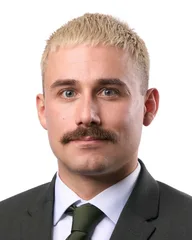
Lukas Sieper | Germany DEU | Non-attached Members (NI) | 390 |
| 2 |
|
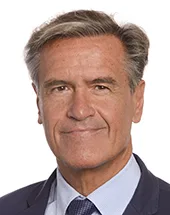
Juan Fernando López Aguilar | Spain ESP | Progressive Alliance of Socialists and Democrats (S&D) | 354 |
| 3 |
|
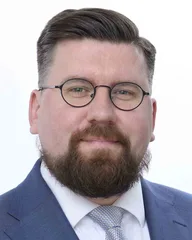
Sebastian Tynkkynen | Finland FIN | European Conservatives and Reformists (ECR) | 331 |
| 4 |
|
João Oliveira | Portugal PRT | The Left in the European Parliament (GUE/NGL) | 232 |
| 5 |
|
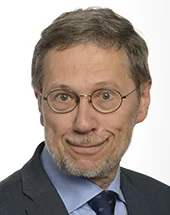
Vytenis Povilas Andriukaitis | Lithuania LTU | Progressive Alliance of Socialists and Democrats (S&D) | 227 |
All Contributions (114)
Prosecution of the opposition and the detention of trade union leaders in Belarus (debate)
Mr President, there are no brakes on the rise of totalitarianism. In the same way, the Lukashenka regime is targeting increasingly new groups of society that are at least somewhat independent of the dictatorship of power. This is not new: The crackdown on dissent in Belarus has been going on for decades, and after fraudulent elections in August 2020, the rampage reached even greater proportions. Restrictions have been imposed on all social movements and free media, and the detention of 18 trade union leaders on 19 April this year reminds us that the judiciary in Belarus is only an instrument of the regime. And those actions took place when Belarus was turned into a participant in the de facto aggression against Ukraine. Its current regime has provided both its territory, airspace and logistical support to the Russian army. In this way, the Belarusian authorities of today are definitively deprived of any possibility of dialogue with us, with the Western countries. And it is intensifying the repression of those who dare to criticise the inclusion of Belarus in the war in Ukraine. I agree that the International Labour Organisation should suspend Belarus' membership of this organisation altogether, because independent trade unions are no longer there. At the same time, the European Union institutions must increase their direct support to the Belarusian opposition, civil society, human rights defenders, independent media, academia and other independent organisations in Belarus and beyond.
Building of a wall on the Polish – Belarus border in the Białowieża primeval forest (debate)
Mr President, being consistent with ourselves, we sometimes forget what aggressive and uncontrollable force we have to defend ourselves against. When sending illegal migrants to the territories of the countries of the European Union, neither the Belarusian regime nor the Russian regime behind it thinks about the environment or the conservation of animal species. This may sound cynical, but they are thinking of eradicating people from entire nations, which is nothing more than genocide. Of course, even in the context of war, we must not forget the environment, but we must also not forget that illegal migration through Belarus is an instrument of hybrid warfare, and therefore, first and foremost, security is a priority, and we can, at most, consider additional funding possibilities in order to reduce the burden on those EU Member States that have a direct border with Belarus.
Amending Annexes IV and V to Regulation (EU) 2019/1021 on persistent organic pollutants (debate)
Persistent organic pollutants (POPs) due to exclusively adverse effects on the environment and human health must be regulated accordingly and assessed on an ongoing basis. Decisions should take into account that persistent organic pollutants not only do not decompose for a long time, but can also spread far from their source and cross borders. It is not without reason that the Stockholm Convention was adopted to protect human health and the environment. I believe that the proposal under consideration is appropriate for achieving the objectives of the Green Deal. Only recycling that ensures non-toxic material cycles should be encouraged. The inclusion of harmful and hazardous substances in recycling processes where the health hazards in question are returned for use and consumption shall not be justified. It is right to focus on making the limit values set compatible with scientific and technical progress. It is also worth exploring all possible ways to ensure the promotion of advanced technologies for sorting waste and removing toxic substances from waste, to build on science and to invest in it. By supporting this proposal, we will ensure better coherence between persistent organic pollutants and the objectives of the EU Green Deal.
Foreign interference in all democratic processes in the EU (debate)
Madam President. With Russia’s attack on Ukraine, we have a better understanding of the power and harm of disinformation campaigns than we have seen so far: the one that has already been done and continues to be done. And this report proposes concrete actions to prevent this. Firstly, the fight against disinformation must be properly regulated. Rules need to be laid down to ensure greater transparency in the advertising of political companies and to tighten up the regulation of party financing. I agree with the need for a coordinated European Union strategy against foreign interference. Stronger enforcement of the General Data Protection Regulation is needed. There is also a need for binding European rules to test online platforms by assessing them and reducing information manipulation. I am in favour of imposing an archiving obligation on platforms so that the target group of the advertisement and the payer can be identified. I would also stress that, in order to counterbalance the influence exerted through Russian-speaking channels, it is necessary to remove them more decisively from the European Union in the media space. Sputnik and Russia Today are good examples. The same is true of attempts by other foreign countries to manipulate discourse.
The proposed Council decision on provisional emergency measures for the external border with Belarus based on article 78(3) TFEU (continuation of debate)
Mr President, honourable Commissioner, honourable Minister, colleagues, the hybrid attack by the Belarusian regime is still ongoing. The new step taken by the Council and the Commission to simplify procedures for managing illegal migration, while fully respecting fundamental rights and international obligations, is therefore to be welcomed. The possible application of simplified and faster national procedures, including the deportation of persons whose applications for international protection have been rejected, will also ease the burden on Poland, Lithuania and Latvia. I say that other available means must also be used to combat the migration crisis caused by the Lukashenka regime: increased attention from European Union agencies, support from Frontex, the construction of a physical barrier to be financed, in my opinion, by the European Commission, the strengthening of sanctions. And all this should help to manage this and similar possible crises more effectively.
Preparation of the European Council meeting of 16-17 December 2021 - The EU's response to the global resurgence of Covid-19 and the new emerging Covid variants (debate)
Mr President, dear colleagues, while we welcome the closer cooperation between European countries in the field of health, we must state that the COVID-19 virus is still able to take the lead. Europe has been overwhelmed by the more aggressive Delta variant, and today we are already observing with concern the situation and the incoming data on the rapidly spreading Omicron variant. So we have to remain vigilant and continue on our path. I think it has been clear for a long time. It was clear that the virus would mutate, especially where vaccination rates were low. It is therefore necessary to accelerate the sharing of vaccines with third countries. We must not forget the constant and continuous surveillance of virus mutations, ensuring equal opportunities for all Member States. Secondly, there is a need to continue to focus on the solutions offered by science and technology. In this case, not only focus on vaccination processes and the renewal of vaccines against new variants of the virus (if necessary), but also on the search for new medicines, treatments and more effective diagnosis. Thirdly, we must continue to trust and empower the European institutions. After all, the information disseminated to the public must be accurate, targeted and balanced. It must encourage vaccination of those who have not done so and, if necessary, a third dose, and make rational decisions in the face of new variants of the virus. Have a good Christmas!
Situation at the Ukrainian border and in Russian-occupied territories of Ukraine (debate)
Mr President, ladies and gentlemen, Russia is increasingly escalating the situation: The military build-up at Ukraine’s borders is a direct provocation of a conventional war. After the annexation of Crimea, the escalation of separatism, and an already long-running war on the territory of a sovereign state, Russia has repeatedly mobilised massive forces on the border of northeast Ukraine. This is a vigilance test for both the EU and NATO. But not only. The prospect of EU and NATO membership must be described as a natural eventual process. Ukraine is not an object – it is an entity and has an elementary right to territorial integrity, democratic choice, as well as the right to gravitation towards the West. Russia is increasingly interfering in its internal affairs, engaging in blackmail, using elements of not only hybrid warfare, but also conventional warfare. And I'm not just thinking about today's Russian regime. The regimes are changing, and what will the Russian people think about it? I think it should be a historical shame for the Russian people to start a new war in Europe. And we must send a clear signal of deterrence to the current Russian authorities. I support the proposals to stop the import of oil and gas from Russia into the EU, the removal from the SWIFT payment system and the freezing of assets of oligarchs close to the authorities and their families, as well as the lifting of their visas, should Russia dare to take direct military action. I see only one possibility of de-escalation: concerted, concrete and rigorous action by the countries of the European Union and its Western partners.
Health technology assessment (debate)
Mr President, honourable Commissioner, colleagues, we are talking about a European Health Union, and the deployment of advanced health technologies is sporadic, even in the absence of stable funding. In the meantime, the COVID-19 challenges have demonstrated the importance of working together. The need for joint action by states has become evident in the discussions on the cancer strategy, the pharmaceutical strategy. I am delighted that this instrument has finally been agreed upon. This is a step forward in terms of increasing the convergence of health systems and possibly cutting red tape. This is a step towards more equitable access to advanced medical technologies for patients in any country. Countries with fewer resources would benefit from joint clinical trials and joint assessments. In the long run, the patient's chances will be equal. Innovative therapies, especially those focusing on hard-to-treat diseases, must be evaluated as quickly and transparently as possible. While regretting that the reports on joint clinical assessments will not be binding on the Member States, I believe that effective and smooth cooperation in assessing health technologies could contribute to improving the health of all European patients.
The EU's role in combating the COVID-19 pandemic: how to vaccinate the world (continuation of debate)
Mr President, honourable Commissioner, honourable colleagues, it is to be welcomed that, in the face of the Covid-19 pandemic, Europe has already shown unprecedented efforts to accelerate the development, approval and sharing of vaccines with other countries. But with the introduction of virus variants, the more aggressive Delta variant, there is a need for a booster dose. I agree with the views expressed on the full exploitation of the COVAX platform. This is the only way to achieve a high global vaccination rate. Sometimes we proudly mention how many millions of doses we have shared, and we forget that not millions, but maybe hundreds of millions, and sometimes billions, are needed. Therefore, in order to increase the availability of vaccines, especially in poor countries, there is a need to actively promote the lifting of export bans on vaccines, their raw materials and the necessary medical equipment. At the same time, in an effort to quickly vaccinate as many people as possible, it is important to focus not on the legal aspects of renouncing intellectual property rights, but on increasing real production capacity, finding new partnership methods and maintaining cooperation.
Coordination of Member States’ measures in light of increasing cases of COVID-19 in the EU (debate)
Mr President, honourable Commissioner, honourable colleagues, there are many correct words from this rostrum about the need to act in a focused way before the COVID-19 pandemic. Firstly, by basing decisions on science, and secondly, not only by acting at national level, but increasingly by delegating decisions to European institutions. But we have to react on an ad hoc basis. In order to prevent mutations in the virus and the spread of new variants, it was and is necessary to study mutations in the virus. Sequencing research was important for this, and countries have had and still have unequal opportunities. It was about expanding the role of the European Centre for Disease Control and Prevention. That centre should be concerned with modelling situations, unifying statistics, using modern technologies, including artificial intelligence. Finally, information on these mutations, the benefits of vaccination and its benefits must be disseminated in the public sphere in a convincing, science-based, clear and understandable form. It has to be noted that these challenges, when we are now facing the fifth wave of the spread of the virus, still remain for us.
The escalating humanitarian crisis on the EU-Belarusian border, in particular in Poland (debate)
Thank you, President. I believe that the construction of a physical barrier on the external border of the European Union is a very important aspect of this problem, and it is not so much a financial and not so much a legal issue, but actually a political one, and when, if not now, the European Union institutions must show unity in countering the hybrid attack by the Belarusian regime, in which deceived people are used as a weapon and in fact as victims. Funding the physical barrier in one way or another is already a fact, and Poland and Lithuania see no other way to counter a hybrid attack, thus defending the Schengen area and the entire European Union. This is not only a humanitarian problem, it is therefore a more general security problem. I am therefore also in favour of extending sanctions, and the physical barrier must be financed by the European Commission in conjunction with Frontex surveillance systems.
An EU strategy to reduce methane emissions (debate)
Dear Commissioner, dear colleagues. The damage caused by methane in the fight against climate change ranks second after carbon dioxide, and in some respects, as a tropospheric ozone maker, also in the context of health problems, it is even more harmful. However, methane can be an excellent example of turning a threat into an opportunity. Innovation and science make it possible not only to reduce methane emissions, but also to make efficient use of existing ones. For example, methane-powered tractors are no longer an unattainable future, and the use of methane is likely to expand. In my hands, a recent publication on the construction in Lithuania of a hybrid - probably the first in the world for professional use - biomethane and an electric tractor, and similar technologies are being developed by other manufacturers. I hope that technological solutions and support for them, a shift from bans to incentives and the circular economy will contribute to the overall reduction of methane emissions in sectors other than agriculture.
The Right to a Healthy Environment (debate)
Mr President, honourable Minister, honourable Commissioner. Everyone, without exception, deserves to live in a healthy environment. Earlier this month, a resolution adopted by the United Nations Human Rights Council recognised that the human right to a safe, clean, healthy and sustainable environment is important for the enjoyment of other human rights. This document was adopted in good time. Global experts point to a frighteningly wide range of problems. New infectious diseases are spreading and emerging, biodiversity and ecosystems are disappearing, climate change is occurring and water and air pollution are not decreasing. 90% of people in the world breathe polluted air. Bees and other pollinators are rapidly disappearing. Europe considers and must make these issues a priority. For us, the right to a healthy environment is not just a noble phrase. The European Green Deal, which came out at the end of 2019, and the initiatives that follow from it, must now be transformed into real legislation, such as the European Climate Law. This is the only way to ensure a secure future for future generations. Europe can, must and has already set itself politically and legally binding goals. I believe that science- and evidence-based joint solutions will contribute to achieving the right and high-quality state of the environment for the well-being of both humans and ecosystems.
European Centre for Disease Prevention and Control - Serious cross-border threats to health (continuation of debate)
Mr President, honourable Commissioner, colleagues, greater integration of health systems is very welcome. I support the extension of the functions of the European Centre for Disease Prevention and Control and its obligation to monitor how the spread of infectious diseases affects the situation of chronic diseases. Science-based results should not only be disseminated publicly to professionals, but also made available to citizens in accessible formats to increase public health literacy. The Centre's functions must be refocused in such a way as to allow the modelling of disease transmission situations, both within individual countries and across the European Union, in order to be able to predict transmission scenarios. There is no need for new pandemics, for which we are supposed to be better prepared. Let us summarize the management of COVID-19 here and now, and Hepatitis C, which I have talked about many times before. The unification of statistics in different countries, the use of modern technologies, including artificial intelligence, would ultimately reduce the administrative burden and save resources. On this path, we would save thousands of lives in Europe. Thank you.