
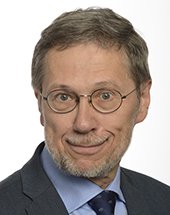






| Rank | Name | Country | Group | Speeches | |
|---|---|---|---|---|---|
| 1 |
|
Lukas Sieper | Germany DEU | Non-attached Members (NI) | 390 |
| 2 |
|
Juan Fernando López Aguilar | Spain ESP | Progressive Alliance of Socialists and Democrats (S&D) | 354 |
| 3 |
|
Sebastian Tynkkynen | Finland FIN | European Conservatives and Reformists (ECR) | 331 |
| 4 |
|
João Oliveira | Portugal PRT | The Left in the European Parliament (GUE/NGL) | 232 |
| 5 |
|
Vytenis Povilas Andriukaitis | Lithuania LTU | Progressive Alliance of Socialists and Democrats (S&D) | 227 |
All Contributions (114)
2023 and 2024 reports on Montenegro (debate)
Mr President, Commissioner, colleagues. Yes, Montenegro is making tangible progress on reforms of the European Union. And in the area of foreign policy, the country maintains a clear European direction, for example by providing unequivocal support to Ukraine during Russia’s war of aggression, including humanitarian and military assistance. On the other hand, the political system is fragmented, the independence of the judiciary is limited, the problem of corruption is unresolved. The Russian regime is systematically infiltrating domestic politics through real estate, which Russians have a lot to buy in Montenegro, through business or party financing. It is regrettable that high-ranking Montenegrin officials have emerged who, through their participation in the All-Serb Assembly in Belgrade, have questioned even the sovereign status of Montenegro itself. To have another European success story, we must increase technical assistance and funds for public institutions, including by preventing the penetration of Russian capital.
Choose Europe for Science (debate)
President, Commissioner, colleagues. The current US administration is preparing to cut funding from, for example, NASA's Centers for Disease Control and Prevention. As a scientist, I know how difficult bureaucratic blushing can be to shape health data registers, for example. Without the support of such data, this unique accumulated global value goes to nothing. The half-billion package proposed by the President of the Commission is therefore generally on time and in place. This must include researchers from different third countries, including for example Ukraine. It is true that seven-year ‘super-granting’ can create a risk of inequality between existing centres of excellence and those that are still emerging. However, the attitude towards young scientists is encouraging and support for them is not forgotten. I would add the need to include dual-use studies in the funding. Thank you.
Return of Ukrainian children forcibly transferred and deported by Russia
President, Commissioner, colleagues. In March 2023, the International Criminal Court issued an arrest warrant for Putin for war crimes of a special nature, the forced deportation of children from the Russian-occupied territories of Ukraine. But then the criminal traveled to different countries with impunity. His biographers counted ten such trips. Can we still send a reminder to the leaders of those states – and they will probably be taking part in a parade in Moscow the next morning – that they are some kind of accomplices to those crimes? At that time, the fate of the child victims remains unknown to the world. Their personalities are mutilated, their connection with Ukraine is deliberately erased, which is a systematic destruction of the identity of the nation with the characteristics of genocide. International organizations must tirelessly and case by case demand that Russia inform about the condition of the deported children and ensure their unconditional return.
The role of gas storage for securing gas supplies ahead of the winter season (debate)
President, Commissioner, colleagues. Yesterday, the European Commission published an important communication on a clear plan to end energy dependence on Russia altogether. Finally, there will be no new contracts, no shadow fleet. The role of gas storage is particularly relevant in this context. They ensure our energy security in winter, accounting for up to 30 percent of total gas demand during the cold season. The experience of the past year has clearly shown that the obligation to fill storage facilities by at least 90 percent by the first of November was critical in the fight against Russian energy pressures. However, the situation in gas markets remains fragile and global competition for liquefied gas purchases is increasing. The compass announced by the Commission confirms our ambition for energy independence and the provisions on gas storage will guarantee market stability and energy security throughout the Community.
2023 and 2024 reports on Kosovo (debate)
President, Commissioner, colleagues. Kosovo consistently follows the European course, consistently implements reforms, supports Ukraine and fully aligns its foreign policy with the European Union. The main threat to Kosovo’s democratic development is the Russian-coordinated propaganda channels operating through Serbia. The 20203 Banjska attack was followed by a large-scale disinformation campaign aimed at destabilising the region and halting Kosovo’s integration into the European Union. This is not just a Kosovo issue. This is a strategic attack on European values and security. Russia's interest in the Western Balkans has not disappeared. Therefore, we must not only support Kosovo's efforts to join the European Union, including NATO, but also strengthen resilience across the region, invest in the fight against disinformation, in cybersecurity, support independent media and reduce unfounded reproaches against Kosovo. Kosovo is a target for Russia in the region and we must support and encourage the courage of its people.
2023 and 2024 reports on Serbia (debate)
Thank you, Commissioner, colleagues. Stability in the Western Balkans is not possible while Belgrade is playing a double game. Russia intentionally spreads disinformation through Serbia in a wide area of the region, fuelling ethnic conflicts there. Belgrade’s refusal to align with EU sanctions against Russia is not neutrality but clear support for the aggressor. Open Russian propaganda through Rasha Today and Sputnik, growing pro-Russian narratives in state media show that Serbia is becoming the Kremlin’s tool for destabilising the entire region. The megalomaniac rhetoric of Serbia reappears. Such behaviour is incompatible with the European Union’s membership aspirations. I agree that the Commission must make it clear that Serbia is moving away from democracy and the rule of law. Commitment to European values must be genuine, not declaratory. It is time to end this pragmatic double-facedness.
Health care related tourism: protecting EU patients abroad (debate)
President, Commissioner, colleagues. Here are the closing remarks of the session. It seems that we have won the killing wars, liberated a million political prisoners, honored the rightful peoples, and the spa is already available. Well, in reality, everything is intertwined, as is the European Parliament's agenda. The war has not yet been won, but rather the Bohemian Triangle, for example. And there's the problem: data on a patient in another country are not necessarily available. Everyone deserves the same quality medical care as the locals. So when I get back from the hot springs to my family doctor, I can really upset him. He regulated my blood pressure for months, and I took too many warm baths and ruined everything in a week. One solution is probably to continue working towards a common European electronic health database.
Establishment of a European Day of the Righteous (debate)
President, Commissioner, colleagues. True humanity is in danger. This week we have already talked about the millions of political prisoners who, despite this danger, have loudly expressed their truth and are being imprisoned, tortured and killed for it. Today, those who act silently but also put themselves in mortal danger, saving others who are persecuted. They have that unnecessary instinct, which is to save another person who is dying. They often do so unthinkingly, simply as they need to, and often as they remain unfamiliar. Whether it is the rescue of the victims of the Holocaust, genocide, Bolshevism, totalitarian martyrs, the memory of the rescuers must be especially respected. Memory can unite. We're trying to do that.
Human rights and democracy in the world and the European Union’s policy on the matter – annual report 2024 (debate)
President, High Representative, colleagues. The Soviet political prisoner Petras Plumpa, an unbreakable optimist, said: Twelve years in prison? If only for a good reason! And good business then won, the Soviet Union broke up. We are now discussing the situation of the 21st century, and unfortunately it is stated that the situation is critical, the number of political prisoners reaches one million, including the catastrophic deterioration of human rights in Belarus, as a result of Russia's war in Ukraine, and in Russia itself. Dictatorships without ceremonies copy the law on foreign agents, we see a full spectrum of violations. The author of the report fully appreciated the problem, proposed systemic solutions, synergies, providing resources, which, we believe, will show what a united Europe can do.
Establishing the Reform and Growth Facility for the Republic of Moldova (debate)
Mr President, there will be existential elections in Moldova, DO OR DIE, according to Mahatma Gandhi. They must be conducted transparently, eliminating Russian influence. After all, Russia will again act according to the template of the successful Romanian presidential election. Maybe via TikTok or other platforms adapted to Moldova. Other forms of information manipulation must also be prevented. Secondly, I see an exceptional need to mobilise the pro-Western Moldovan diaspora. Thirdly, special attention must be paid to the Transnistrian region, which has fallen into an economic and energy pit. All this would be a reliable investment in the prosperity of the country. We must not only honour our commitment to admit Moldova to the European Union, but also give the prospect of economic convergence already now, through export facilitation and other appropriate measures.
Need for targeted support to EU regions bordering Russia, Belarus and Ukraine (debate)
In November, at the initiative of Lithuania, the ministers of the four countries conceptually described the losses and challenges faced by the countries bordering Russia and Belarus, and proposed solutions to those problems. After all, there are economic and financial losses, such as increased defence spending, which is an investment in the security of Europe as a whole, but which puts national economies under strain. These include higher inflation, worse growth forecasts than elsewhere in the EU, and lower long-term credit ratings. Instead of peaceful cross-border cooperation instruments, there was a need to ensure long-term border protection. It therefore seems logical and reasonable to me to provide for specific instruments, such as the allocation of additional cohesion funds, in order to mitigate all these negative factors.
Pre-enlargement reforms and policy reviews (debate)
President-in-Office, it is symbolic that when we celebrate the 20th anniversary of the great enlargement at the end of our mandate, we are discussing the issue of future enlargements. The 2004 wave of enlargement proved that the Community was able not only to successfully integrate the European countries, including Lithuania, that were progressing at the time, but also to maintain the functionality of the institutions. Twenty years is, however, long, and in the meantime the number of candidate countries and candidate statuses has increased significantly. The geopolitical situation in the region has also changed, and Russia's military aggression in Ukraine, unfortunately, only reminds of the delayed development steps. It's a shame: In Europe, we had to face a war to make the institutions of the European Union more determined about the European integration of Ukraine, Moldova, Georgia and the stranded Western Balkans. After all, the current message sent by the Commission about the European Union's readiness to carry out internal reforms sends a positive signal both to the current candidates and to the eventual and future ones.
Return of Romanian national treasure illegally appropriated by Russia (debate)
Madam President, Commissioner, colleagues, robbing cultural historical treasures is a very usual behaviour of Russia since Tsarist times. For instance, exhibits from Lithuanian museums were taken out to Russia in the middle of the 19th century and are still not returned. Important historical documents are robbed by Russia too and are secretly kept without possibility to even be acquainted with them. Exactly the same was done by Bolsheviks with Romanian national treasure, including almost 100 tonnes of gold. Totalitarian regimes in Russia change, but the will to return treasures to their owners does not appear. Now the same continues on the Ukrainian territories occupied by Russia. The task of the occupants is far from only getting financial value. They also seek to humiliate neighbouring countries and to break down their national identity. Russia refuses to follow corresponding UNESCO and other conventions. Anyway, at least one precedent is already created. There is the decision of the court of 2023 to return Scythian gold formerly exposed in Crimea – which is now occupied by Russia – back to Ukraine, and not Russia. Let us believe that justice can win.
Need to impose sanctions on the import of Russian and Belarusian food and agricultural products to the EU and to ensure stability of EU agricultural production (debate)
President, Commissioner, colleagues. While the Russian military is ruthlessly destroying Ukrainian agriculture, the European Union is allowing itself to import food products such as dairy products, fruit, vegetables, confectionery, flour, grain, feed from the same Russia for a total of EUR 2.2 billion in 2023. So the question is why are we trying to impose economic sanctions on Russia if, two years after the invasion began, we continue to find another way to finance the Kremlin’s war machine? How has it happened that we are only now starting a debate on the transit of these products to the European Union and are only now starting to plan for sanctions? After all, it should have long been obvious that the influx of cheap Russian grain is a problem that causes grain market prices to fluctuate in a way favourable to Russia, and that is precisely why our own farmers suffer. Of course, Ukrainian farmers suffer the most. Their agriculture is not only being destroyed, but they also have to fight allegations of unfair competition. However, by allowing Russia to use the European Union's infrastructure for grain transportation, we are actually allowing Russian grain to enter the single market in this way. For example, Lithuania itself proposes to ban national imports of Russian and Belarusian agricultural products and feedstuffs. However, it would be much more effective if there was a common agreement on sanctions at European Union level. It is time to stop funding the Kremlin.
EU/Chile Advanced Framework Agreement - EU/Chile Advanced Framework Agreement (Resolution) - Interim Agreement on Trade between the European Union and the Republic of Chile (joint debate - EU-Chile agreements)
President, Commissioner, colleagues. The renewed agreement reached with Chile is a positive message, a win-win project and an example to follow. 99.9% of goods exported by the European Union will not be subject to tariffs, which could increase exports to 4.5 billion euros. Chile is becoming a strategic partner for the European Union in a rapidly changing geopolitical landscape. Chile's abundant reserves of raw materials, such as lithium and copper, are particularly important for the development of European industry. As sustainability and technological progress are important to us, it is essential to secure access to these resources. It is to be welcomed that enterprises in the European Union and Chile will benefit from improved access to public procurement markets for goods, services and labour. We all know from the geography of the sun in the Atacama Desert and the winds in the Horn - only serious investments are needed to develop renewable energy. This is exactly what this agreement opens up. At the same time, the renewed agreement enables the European Union to play an active geopolitical role. The leaders of the authoritarian bloc – Russia and China – are seeking to expand their influence in Latin America. Thus, by strengthening our economic and diplomatic ties with Chile, we can counterbalance the risk of their influence and uphold our shared values of democracy, the rule of law and human rights.
Closer ties between the EU and Armenia and the need for a peace agreement between Azerbaijan and Armenia (debate)
President, Commissioner, colleagues. The decades-long confrontation between Azerbaijan and Armenia is a product of Russia’s directional mode. The Nagorno-Karabakh geopolitical bomb was programmed by Stalin. In 2022, we recognised Russia as an aggressor and a state promoting terrorism, and in the South Caucasus, by default, we attributed it the role of a purported peacemaker. And it was only after Azerbaijan took over Karabakh, the influx of refugees and the humanitarian crisis that we finally wake up. In order for Azerbaijan and Armenia to normalise relations, which are very fragile, the European Union must assume a much more active role of mediation, without leaving it under the influence of Russia or anyone else. The exchange of prisoners of war in December 2023 shows some changes in political will. Mediation, various support instruments for the countries of the region must increase the role of the European Union as a geopolitical player in the region.
Need to fight the increase of antisemitism and anti-Muslim hatred (debate)
President, Commissioner, colleagues. Today we are facing a painful reality: a new wave of antisemitism. Reports of hate-motivated incidents are a stunning reminder that history lessons have not been learned everywhere. The recent outbreak of violence in the Middle East has triggered a dangerous wave of anti-Semitic rhetoric and attacks in several Member States. Lithuania, like many European nations, has scars of the past: Once a vibrant and inseparable part of our society – the Lithuanian Jewish community – faced systemic violence during World War II, culminating in the Holocaust. The ghettos and massacres have remained in Europe's collective memory as a vivid reminder of the devastating consequences of uncontrolled hatred. Unfortunately, the rise of antisemitism is not only a historical relic, but also a reality in Europe today. Rhetoric is not enough. To combat antisemitism, we must use political and legal means to prosecute hate crimes, both online and offline. This means investing in educational programmes that promote tolerance and understanding, and promoting dialogue and cooperation between different groups of communities. We must send a message to future generations that we are united in condemning all forms of antisemitism, like any other form of hatred. We must reaffirm our commitment to the fundamental principles of tolerance, respect and equality on which the European Union was founded.
State of EU solar industry in light of unfair competition (debate)
President, Commissioner, colleagues. Solar energy is one of the critical levers to move away from fossil fuels in the fight against climate change. And the challenges of the European solar industry already today require urgent attention. Our industry is being attacked by imports from third countries entering the EU market at lower prices, fuelled by high subsidies. If China provides state support to its producers, it can hardly speak of fair competition. This is a threat to our renewable energy industry. In February 2023, we stressed in a European Parliament resolution the need to combat this unfair competition. Import restrictions do not seem to be a guaranteed solution, so immediate support for equipment manufacturers has to be considered. The industrial strategy of the European Union must specifically speed up and simplify financing through various channels for local producers, including private financing, state aid, European Union funds and the new European Sovereignty Fund, and these instruments must be leveraged to promote the purchase of local materials or components. China's influence is at the heart of today's problem, hampering Europe's ambition to become a fast-growing green energy market. What it means to give a monopoly to China in any separately taken area, we have already seen at the beginning of the pandemic. We no longer have the right to repeat those mistakes.
Role of preventive diplomacy in tackling frozen conflicts around the world – missed opportunity or change for the future? (debate)
President, Commissioner, colleagues. After the collapse of the Soviet Union, Russia became its legal successor, giving it a triple legacy: one of the largest military-industrial complexes in the world; veto power in the United Nations Security Council, role in the Organization for Security and Co-operation in Europe; well, and the right to simultaneously incite local conflicts, and to portray themselves as their mediator. We are discussing the pursuit of preventive diplomacy, and let us ask what we, the European Parliament in this term, have achieved so far? Only sincerely angry. The Karabakh conflict was programmed by Stalin, and UN observers entered the conflict area only after ethnic Armenians, who had lived there for centuries, were forced to flee it en masse in 2023. Who was the mediator? Russia: The territories of Transnistria, Abkhazia and South Ossetia are de facto manipulated by the Russians under our helpless watch. And when, if not during our term of office, were the areas of Donetsk, Luhansk, Zaporizhzhia and Kherson subjugated by military force, de facto annexed, and reinforced by pseudo-referenda? This has become a standard and very ‘resulting’ Russian behaviour, rejecting any diplomacy. It recognizes only strength, and we must strive to apply deterrence and prevention measures even before new conflicts begin and pay constant attention to the post-Soviet space.
Environmental consequences of the Russian aggression against Ukraine and the need for accountability (debate)
President, Commissioner, colleagues. Despite Russia's ongoing war of aggression, the democratic government of Ukraine is deliberately and sincerely preparing for negotiations on membership of the European Union, preparing to transpose European environmental law into national law. However, the environmental damage caused by Russia's war is increasing every day. At the very least, it is estimated at $60 billion. Mine fields, pollution from the destruction of energy infrastructure, the destruction of pesticide warehouses, the bombing of the Kakhovka hydroelectric power plant and irreversible damage to biodiversity, polluted air, water, soil, and the ever-increasing threat of nuclear power plant accidents. It is not possible to quickly cumulate only types of damage, but it will be necessary to find ways to remedy it. This is not an ‘accidental’ consequence of the war, but an intentional crime. Russia will be obliged to compensate for all the damage caused, and its actions, among other things, must be subject to the term ecocide.
Parliament’s call for the right to disconnect - three years on (debate)
President, Commissioner, colleagues. In the three years since the adoption of the European Parliament's resolution on the right to disconnect, the arguments that legislation on this issue is necessary have only intensified. The application of teleworking has expanded, it has become routine. In addition to the advantages that this brings, it is necessary to take into account the problems posed and to offer legal frameworks to address them. On the one hand, teleworking provides a great deal of flexibility for both employers and workers in the design and execution of tasks. On the other hand, employers' expectation that an employee will be available at any time is established, which often, and in some cases systematically, leads to violations of workers' rights, affects their personal lives and can have a negative impact on their health. Precisely recording working time is not easy, and it is also difficult to regulate legally. This would increase the bureaucratic burden. However, a clear line between private and working life must be drawn. I believe that setting limits to working time, while leaving some flexibility, ultimately has a positive impact on both employee well-being and work discipline and leads to a positive end result. In my opinion, therefore, the Commission should immediately initiate legislation laying down minimum obligations throughout the European Union with regard to teleworking and the right of workers to disconnect.
EU-Taiwan trade and investment relations (debate)
President, Commissioner, colleagues. In support of the removal of trade barriers between the EU and Taiwan and the promotion of investment, I would emphasise a number of arguments. First of all, the value: Taiwan is a democracy, especially one of the few in the region, which determines the geopolitical partnership between the European Union and Taiwan. In the face of Russia’s aggressive war against Ukraine, Taiwan is committed to supporting Ukraine and intends to coordinate sanctions against Russia. I also stress the ambition to develop cooperation for economic security by securing strategically important materials and technology chains. In the fight against economic coercion, Taiwan has already entered history. When Lithuania, which I represent, opened a Taiwanese representation, we were attacked by a country we call ‘One China’. Lithuania then stepped up its economic cooperation with Taiwan. And by adopting the regulation on protection against economic coercion, we have sent a credible deterrence signal to China and the rest of the world for the future. I am therefore in favour of concluding formal bilateral agreements on trade and investment, including on security, and of continuing to support Taiwan in seeking representation in multilateral international fora. And my colleague, Iuliu, thank you for a well-drafted resolution.
Effectiveness of the EU sanctions on Russia (debate)
President, Commissioner, colleagues. We discussed sanctions against Russia in the autumn of 2021, when it gathered its army of hundreds of thousands around Ukraine's borders and we were, oh, brave. If it engages in aggression, we will disconnect Russia from the SWIFT system. I myself, as it seemed to me, spoke quite gently, the braver ones saw Russia economically brought down, its financial system ruined, the crowds hungry in the streets and the collapse of the Kremlin regime. In the meantime, we have imposed sanctions packages, indeed bans on our own businesses. In reality, this did not prevent Russia from daily armaments, smashing peaceful Ukrainians, investing in Africa and much more. My constituents asked me how much more the single market would be open to Russian actors, or maybe that bolder scenario would work. When? Advise me. Thank you.
Uzbekistan (debate)
. – Thank you, President, Commissioner, colleagues. Today's geopolitical context makes it necessary to reflect on the choice of strategic partners. With Russia's escalation of its war of aggression, illegal war in Ukraine, the Central Asian region is gaining additional importance. Uzbekistan is a key country in the region seeking to diversify its economic and trade dependence on Russia. I therefore welcome the conclusion of the Enhanced Partnership and Cooperation Agreement and the granting of the GSP Plus. Positive actions by the Uzbek government can be noted, such as regional water diplomacy, the fight against illegal immigration, organised crime and terrorism. Europe can and does help Uzbekistan on the path of reform and provide technical assistance, including in the context of the green transition. At the same time, it must not be forgotten that corruption flourishes there, media freedom is restricted, political pluralism is lacking, and there are serious human rights violations. Of particular concern is the well-founded speculation that sanctions against Russia are not being circumvented through countries in the Central Asia region. As a precautionary measure, I support the report, stressing that the situation in Central Asia is changing and that the dynamics of development must be monitored with particular attention.
Situation in Nagorno-Karabakh after Azerbaijan’s attack and the continuing threats against Armenia (debate)
Dear President. The Nagorno-Karabakh problem is one of the so-called post-Soviet frozen conflicts. Similar to Abkhazia, South Ossetia, Transnistria, now Lugansk, Donetsk and others. Karabakh was not only a post-Soviet bomb of the delayed decay of the USSR, but also a geopolitical bomb programmed by Stalin long ago. When thousands of intimidated ethnic Armenians left their homes a few days ago, a UN mission finally entered after thirty years of simmering and bleeding conflict. I would argue that this is not even the limitation of the international order, but the complete non-existence of that order. After all, we silently and helplessly recognized the right of Russia to de facto manipulate that territory, to carry out aggression in Ukraine and to act as a peacemaker in the South Caucasus. Here is the result. We must, at least now, actively prevent a further deterioration of the situation.