
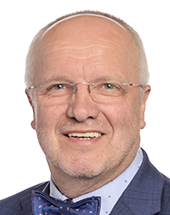


| Rank | Name | Country | Group | Speeches | |
|---|---|---|---|---|---|
| 1 |

|
Lukas Sieper | Germany DE | Renew Europe (Renew) | 494 |
| 2 |

|
Juan Fernando López Aguilar | Spain ES | Progressive Alliance of Socialists and Democrats (S&D) | 463 |
| 3 |

|
Sebastian Tynkkynen | Finland FI | European Conservatives and Reformists (ECR) | 460 |
| 4 |

|
João Oliveira | Portugal PT | The Left in the European Parliament (GUE/NGL) | 288 |
| 5 |

|
Vytenis Povilas Andriukaitis | Lithuania LT | Progressive Alliance of Socialists and Democrats (S&D) | 276 |
All Speeches (125)
Mr President, first of all, I would like to thank my colleague Isabella Santos for a really excellent report, as well as the shadow rapporteurs. I think the facts are very clear. Albania fulfils the requirements announced at the first meeting and has fulfilled them. The ball is on our side. We need to make sure that a decision that lasts too long does not cause disappointment. As a doctor, I can tell you that every action needs to be done on time. And that is the time to start accession negotiations with Albania. We see how our certain delay in the eastern flank allows one aggressor to start one after another hostilities. In this case, we certainly must not disappoint the Albanian people. We must not create a vacuum in the Western Balkans. That is why, as early as June, I believe that it is absolutely necessary to send a signal to the Council, a strong signal from the European Parliament, that negotiations should begin.
Mr President, we must not argue politically about a long history in which the destinies of nations are intertwined. We can be proud of her. And today we should talk about not leaving an unstable and divisive southern flank when we see Russian aggression in the east. We must invite the countries of the Western Balkans to the accession process. I believe that North Macedonia has made tremendous progress in its preparations as a candidate country. And it is important for us to open up the accession process, not so much for Macedonia as for our own security, stability and not leaving space for Russia's influence in the region. That is why I very much support my colleagues' proposals for this process to be opened in June this year for both North Macedonia and Albania.
EU Association Agreement with the Republic of Moldova (debate)
Date:
18.05.2022 16:06
| Language: EN
Speeches
Mr President, we can say that today we have the Republic of Moldova Day in the European Parliament. First, addressed by Moldova’s President, Ms Sandu, now, a debate on the EU Association Agreement with the Republic of Moldova: it is a sign that Moldova is very high on the Parliament agenda. First, I would like to thank Moldova for their efforts to help Ukrainian refugees. I call on the EU to continue its efforts to provide support to Moldova, so that Moldovans can continue to help their Ukrainian neighbours. The EU should step up its financial efforts to help stabilise the country’s economy in the face of a refugee crisis. The report also welcomes Moldova’s EU application. We support the country’s efforts to become a full member of the European family. Of course, there is still a big round of reforms facing Moldova, including justice reform and the approximation of its law with the European ones. But I believe that candidate status would galvanise reform efforts and would give a clear vision for its citizens. I would also call the country to boost its efforts to cut dependency on one big supplier from the east. Moldova has to increase its connectivity with the rest of Europe, to look for the new supply routes, and to put more attention on alternative energy resources. The report calls on the EU to make it easier for Moldova and its citizens to participate in some EU programmes, for example, such as DiscoverEU. I strongly believe that such a step will further boost pro—European sentiments in the country.
Mr President, Commissioner, dear colleagues, in our resolution today, we show solidarity with the Moldovan people, who are doing their utmost to help Ukrainian war refugees, and our solidarity with the refugees who had to leave Ukraine because of the Russian bombardment of their cities, towns and villages. I call on the EU to continue its efforts to provide support to Moldova, so that Moldovans can continue to help their Ukrainian neighbours. Because Moldova is one of the European countries hosting the biggest amount of refugees by population. The EU should step up its financial efforts to help save lives and the country’s economy in the face of the refugee crisis. It also should help with the experience such as you mentioned, Commissioner, provided by the Frontex agency. But we should also be ready, in case of further escalation of the situation in the region, to help Moldova with the military equipment. I strongly welcome Moldova’s European aspirations. I know that the accession process may be long and painful, but I hope and believe that in the not-so-distant future, the Republic of Moldova will be a full and equal member of our Union. Granting the country candidate status would be a strong political signal for all pro-European forces in the country. At least the halt on gas deliveries to Poland and Bulgaria shows gas is another weapon that Russia is using to project its influence. Therefore, I call again on Moldova to accelerate its efforts to reduce its dependence on one energy supplier, encourage the country to diversify its energy sources and increase internal connection with the European Energy Network, as well as to accelerate its development of renewable energy. And we, as the European Union, have to help Moldova in this process.
EU strategy to promote education for children in the world (short presentation)
Date:
02.05.2022 21:07
| Language: LT
Speeches
Mr President, first of all, I want to thank the rapporteur, David Lega, for a really well-drafted report, and I join those thoughts that education is very important and that the pandemic has had a significant impact on education. Regardless of distance learning, contact teaching, going to school, in fact, provides completely different opportunities for children. For the first time, the pandemic seems to have shown that we did not protect children or, I would say, did not sufficiently protect children, but we did protect against them in order not to infect adults. It seems to me that we need to draw very serious conclusions and perhaps our special committee will also be able to contribute to making the lessons learned from this problem available to the public, taking into account the consequences of COVID-19. I am also very keen to draw attention to learning opportunities for Ukrainian children, both now in Ukraine and for refugee children. I believe that our Commission, the Member States, must redouble their contribution so that these children have access to education.
Mr President, Commissioner, this report is well balanced and can contribute to safer and healthier food production in the European Union and beyond. Farmers in my country, Lithuania, are ready to develop organic farming by including more young farmers in this activity. However, as you, honourable Commissioner, are well aware, farmers from different European countries are starting this work from different positions. Farmers in Lithuania and other Baltic countries receive different direct payments for the same work, although all conditions for farming are the same as in the whole European Union. I therefore appeal once again to you, Commissioner, to do your utmost to ensure that direct payments are the same for all. Then we can hope that the ambitious goals of organic farming will also be met.
Question Time with the Vice-President of the Commission/High Representative of the Union for Foreign Affairs and Security Policy - Security and the EU's strategic compass
Date:
05.04.2022 17:59
| Language: LT
Speeches
You have said a lot and a lot about the need to have our capabilities. But I would like to clarify the next part, which is marked by military mobility in the strategy document. The issue of funds has already been raised several times. When we approved the budget. We felt that there was too little money for military mobility. And the second thing is whether you envisage now to encourage and accelerate the implementation of military mobility measures in accordance with the strategy document. Because the direction of military mobility is known, visible. We have been facilitated by Mr Putin with his invasion of Ukraine. And another thing,do you see an opportunity, somehow, to co-operate funds for military mobility, for example, with the works of international transport corridors.
Macro-financial assistance to the Republic of Moldova (debate)
Date:
23.03.2022 22:28
| Language: EN
Speeches
Mr President, I welcome the quick adoption of macrofinancial assistance to the Republic of Moldova. It’s a strong sign of European solidarity. However, as you said Commissioner, this package was proposed even before the Russian war against Ukraine. Therefore, the need for help is now higher and greater than it was before. Europe has to rise up to the challenge, because Moldova is fighting on two fronts at least. The first front is energy. This fight started when Russia drastically increased its energy price in an attempt to punish Moldova for its pro-European choice. The second front is refugees. Moldova has received the biggest per capita flow of Ukrainian war refugees. Commissioner, the EU and its partners have to help Moldova to deal with this crisis. I strongly believe that this crisis will only make Moldova stronger and will prove that the pro-European choice is the right choice for the country.
A systematic EU approach to chronic kidney disease (debate)
Date:
10.03.2022 15:26
| Language: LT
Speeches
Dear President, Commissioner, dear colleagues. In the last couple of years, health protection has become an active debate within the European Union. The Grand Plan against Cancer or the unified response to the COVID-19 pandemic not only helped to ensure better health protection for Union citizens, but also showed that health in the European Union needs to be regulated in a common way. Chronic kidney disease, which affects around 100 million people in Europe, is predicted to become the fifth most common cause of death in 2040. The fact that the disease often begins in asymptomatic form, is diagnosed only in advanced stages, poses serious challenges to treatment, and many lives, unfortunately, are lost. Early diagnosis must therefore be guaranteed throughout the European Union. Especially in at-risk groups, people with severe illnesses such as diabetes, hypertension, cardiovascular disease, cancer, or those who are overweight. We must focus on two areas. First, many secondary diseases are susceptible to social influence: Depression or anxiety, often caused by economic deprivation, inequality or difficult living conditions, and now by war, especially for the most deprived, often leads to stress, which causes some of the diseases of the at-risk group. Secondly, we must ensure that early diagnosis and technological innovation are equally available in all countries of the European Union. This requires common European regulation and a strengthened European Health Union, which includes not only pandemic preparedness, but also regulation of day-to-day health problems.
General Union Environment Action Programme to 2030 (debate)
Date:
09.03.2022 18:18
| Language: LT
Speeches
Mr President, Commissioner. This Environment Action Programme is an important tool for monitoring the Green Deal, for co-decision and for planning climate action. At a time when Europe’s mosquito, Ukraine, is being shelled and bombed, when Putin’s tanks are stealing our continent’s most fertile fields, it is vital to secure food supplies. Environmental objectives must not jeopardise food security and the continuity of rural economic viability. We must emphasise the progress of European agriculture in protecting the environment, the value that our farmers have already created. The social dimension of the transition to a more sustainable economy is particularly important. We need to ensure that small and medium-sized farms and young farmers have access to new technologies and knowledge that make farming greener. We must prioritise the well-being of all citizens, the alignment of farmers' progress with social progress and the protection of the planet's resources for future generations.
The deterioration of the situation of refugees as a consequence of the Russian aggression against Ukraine (debate)
Date:
08.03.2022 17:06
| Language: EN
Speeches
Mr President, today Europe is experiencing the worst refugee crisis it has seen since the Second World War. The atrocities committed by Russian and Belarusian soldiers are already widely documented. Murdered fleeing civilians in vehicles, women levelled by soldiers in front of their children and refugees deliberately shot in the legs. In the light of the blanket violation by Russia of the previous promise to provide safe passage to the civilian population from Mariupol, and having reports from the International Red Cross that Russian troops deliberately mined possible humanitarian corridors, Europe could and should do more on the sanctions list, including the banning of any import of gas or oil from Russia. EU countries, in collaboration with the United Nations, should step up their efforts to establish safe humanitarian evacuation corridors for the civilian population. Lastly, all European countries should show solidarity and share the burden in helping Ukrainian refugees. We should ensure that everybody fleeing this war receives decent living conditions, necessary medical care and possibilities of employment, and that their kids are able to continue their education in the host countries. Slava Ukraini!
EU-Russia relations, European security and Russia’s military threat against Ukraine (debate)
Date:
16.02.2022 11:15
| Language: EN
Speeches
Madam President, once again we’re discussing a crisis in the centre of Europe created by Russia, and trying our best to avoid any unnecessary confrontation. Once again, we see a flow of European and world leaders to meet the biggest European bully, and we are clapping our hands with relief if he decides to move echelons of his soldiers a few hundred kilometres from the Ukrainian borders. Of course, we should use all our diplomatic means to achieve the peaceful ending of the current crisis. I believe we can achieve this only by being united in our response. We should push even more for a common approach to any security crisis. For this reason, we have to ask governments of our Member States to dedicate adequate attention and financial resources to the defence sector. We also have to free ourselves from big dependency on one big supplier in any areas of our life, including energy. For that reason, I welcome the efforts of EU diversification of energy supply. As the European security system cannot be decided in the corridors of Kremlin, the same way the path of Ukraine cannot be decided in the Kremlin either. Ukraine’s future should depend on the choice of its people. But the EU has the right and the moral obligation to stress again that Ukraine has a place in the European family, and Europe will help Ukraine in these difficult times by all possible means – financially, with expertise and with defence and military equipment.
Implementation of the common foreign and security policy – annual report 2021 - Implementation of the common security and defence policy – annual report 2021 (debate)
Date:
15.02.2022 18:11
| Language: EN
Speeches
Madam President, as we see from the current international situation, discussion on common foreign and security, and security and defence policy is very timely. I would like to ask everybody why Europe, being one of the biggest economic powers, is constantly underperforming in these areas, while in another areas, like international trade, we have a completely different picture. In my view, because for far too long here Europe has not been capable of really speaking in a unified voice. If we are serious about strategic autonomy or, as you said, strategic responsibility in foreign and defence policy, we should dedicate adequate resources, and make the decision—making process must faster, without any possibility of it being held hostage by some smaller national interest. But strategic autonomy also won’t be possible if you continue to depend in some areas on single supply, as it is in the energy sector now. Only by increasing energy diversification can we achieve a real independent foreign policy.
Protection of animals during transport - Protection of animals during transport (Recommendation) (debate)
Date:
20.01.2022 12:32
| Language: LT
Speeches
Mr President, honourable Commissioner, honourable colleagues. After one and a half years of work, we present a committee document that must improve animal welfare during transport. Animal welfare is an important priority for us. Animals are conscious beings that need to be protected from unnecessary suffering. Farmers, animal breeders and breeders agree. This also leads to better incomes for farmers themselves. I agree with this report in terms of clear division of competences, European standards, information systems, attention to new research. We need to make use of new technologies to facilitate the monitoring of animals during transport and to improve the veterinary service's access to observations. However, in order to reconcile and guarantee animal rights and to reconcile the interests of farmers, we cannot simply stop transport to third countries. The export of genetic material cannot meet all the needs of the genetic diversity development and breeding programme. Breeders in the European Union have also developed varieties that have a lower impact on the environment, which requires the dissemination of such genetics in the fight against climate change. We need to ensure that animals are transported in accordance with European Union standards, to use trade policy to ensure better conditions in third countries. However, it would be unfair and unfair to penalise farmers in the European Union simply by prohibiting such transport. This would reduce their competitiveness and their ability to develop their business. Our solutions presented in this document are weighed, balanced, in line with animal welfare, environmental, food and social perspectives. The current proposals significantly improve animal welfare during transport and, at the same time, are acceptable to farmers, so thanking the rapporteurs, Mr Daniel Buda and Mr Isabel Carvalhais, I invite you to support this report.
Mr President, first of all, I would like to express my condolences to the relatives of the victims. I would like to join many of you in condemning the recent events in Kazakhstan. The initially peaceful demonstrations, with legitimate economic and political demands, were hijacked by criminal elements, and then the military responded with excessive and sometimes non—discriminatory use of force. I would call on the Kazakh authorities to respect the rights of the citizens, including the right of peaceful demonstration. I also call on the authorities to conduct a transparent inquiry on the cause of the incidents and to prosecute those who are responsible for violence and for the excessive use of force. In order for the investigation to be as transparent as possible, it is important for this investigation to include representatives of international organisations and NGOs. I believe that our European partners also could take the initiative and send a fact—finding mission to the country.
Situation at the Ukrainian border and in Russian-occupied territories of Ukraine (debate)
Date:
14.12.2021 17:13
| Language: EN
Speeches
Madam President, it seems that history tends to repeat itself. Unfortunately, the current situation on the border with Ukraine for me looks very similar to the situation on the borders with Georgia in 2007, when Europe tried to appease Russia’s regime. Let us not fool ourselves. It did not happen then, and it will not happen now. A glass bullet will never stop his actions just because everyone around him is acting nicely. Well, unfortunately, a bully stops misbehaving only if he has the appropriate response. Yes, the EU and our transatlantic partners have to declare that the first thing we want is a real de-escalation of the situation. But we also have to make clear that the EU will swiftly act against any violation to the sovereignty of the borders of Ukraine and this reaction will include, but not necessarily be limited to, the usual financial and economic response.
The 30th anniversary of the dissolution of the Soviet Union and its importance for the future of Russia and Europe (debate)
Date:
13.12.2021 17:18
| Language: LT
Speeches
Mr President, honourable Commissioner, honourable colleagues, 30 years ago the Soviet Union counted its last days. Eventually, an empire that had kept the world in fear for so many decades collapsed, liberating many nations from their oppression. It was indeed an epochal event that allowed Europe to be united, not under fear and oppression, but under the flag of freedom and democracy. It would be difficult to single out one reason why this system collapsed at that time, but one thing is clear that the Soviet regime, which for many years terrorized primarily its own people, was one of the reasons why it was overthrown by the same people. I could remind you that my country, Lithuania, was one of the first countries to contribute to the collapse of this giant, and we were the first to declare our independence in March 1990. However, the contribution of other nations, especially the Russian nation, is also extremely important. Without their support and understanding, the road to independence would have cost many more victims. Hundreds of thousands of Russians took to the streets of Moscow during the August 1991 coup to defend their freedoms. And while the current regime is once again trying to claim that the collapse of the Soviet Union was a big mistake, I think that the collapse of the Soviet empire has shown that repression and oppression can only temporarily suppress people's desire for freedom. I believe that this is also a sign of hope for the next generations of Russia, who are now faced with a regime that is equally dangerous, determined to survive the wars and oppression of its people. Dear colleagues, we must show a strong determination to support the democratic determination of the Russian people to realise their democratic rights. Our common goal is a safe and democratic European space from the Pyrenees to the Ural Mountains. We can only do this by joining forces and, above all, here in the European Parliament.
International ports’ congestions and increased transport costs affecting the EU (debate)
Date:
25.11.2021 15:36
| Language: EN
Speeches
Mr President, the COVID—19 pandemic drastically changed our daily routine. As work from home became a new normal and people could not spend their incomes on travel and services, a big part of their freed cash went to buy overseas goods. This brought an unprecedented challenge to the global supply chain. An increased demand for goods, together with the recovered economy, highlighted many bottlenecks in the global supply chain and increased shipping costs. The UN Conference on Trade and Development report, published on 18 November, stresses that small open economies would suffer disproportionate consumer price increases because of their high trade charges. According to this report, in my country, Lithuania, prices there will rise by 3.9% and in Estonia by 3.7%. The impact will be even greater in the Small Island Developing States, which could see import prices increase by 24% and consumer prices by 7.5%. The question is what the EU and the Member States can do to reverse this worrying trend? The additional resources brought to ease port congestion have given the first positive results. We no longer hear news about container ships waiting for weeks to unload their cargo. Modernising the quality of port infrastructure and improving shipping connectivity would also help to ease shipping congestion. But, in the long run, this crisis shows that the EU should do more to shorten the supply chain. This is true for different economic areas, such as agriculture, pharmacy and manufacturing. We should encourage bringing the production capacity back to Europe and, in this way, help to shield our industries and consumers from future shipment, and market, volatilities.
Human rights violations by private military and security companies, particularly the Wagner Group
Date:
25.11.2021 11:09
| Language: EN
Speeches
Madam President, private military and security companies are not a new phenomenon, but in recent years their activities reached new heights. They function on the brink and in the shadow of international law. They become a useful tool for their totalitarian regimes and the rulers of illiberal democracies to project their powers and influence by hiding their direct involvement. We should not be naive: calling on Russia to stop activities of the Wagner Group will not give any results. Operations of this group are planned and controlled from the highest rank of the Kremlin corridors. Wagner Group involvement is well documented in many recent armed conflicts. The EU could, and should, do two things. First, sanction business related to the private military groups that are reported to commit human rights atrocities; freeze their bank accounts; and, if necessary, prosecute them in accordance with international law. Second, emphasise to all possible local beneficiaries that using such military is not compatible if a country seeks further cooperation and investment from the European Union. The approaching EU-Africa Summit will be a good place to address this issue.
Common agricultural policy - support for strategic plans to be drawn up by Member States and financed by the EAGF and by the EAFRD - Common agricultural policy: financing, management and monitoring - Common agricultural policy – amendment of the CMO and other regulations (debate)
Date:
23.11.2021 11:31
| Language: LT
Speeches
Mr President, Commissioner, dear colleagues, farmers in the European Union have waited three years for a decision on the reform of the common agricultural policy. We will now finally vote on the compromise that was born out of a long and difficult debate. The agreement on agriculture, as has been said many times here, is not perfect. I can only regret that European farmers will continue to receive different remuneration for the same work (Lithuania, the Baltic States), and the commitments made by the European Union to equalise direct payments to farmers in the new countries and end long-standing discrimination will not be met. Commissioner, I recall that you personally have a public commitment to act more actively to equalise direct payments to all farmers in the European Union. And we have to do it together: making the countryside an attractive place for young farmers to set up, develop small medium-sized businesses and farm across the European Union. However, despite the existing shortcomings, the final agreement also contains very positive aspects: inclusion of social conditionality, stronger support for small medium-sized farms, young farmers, echo schemes, digitalisation, innovation. I therefore call on everyone to vote in favour of this project and, finally, to give our farmers clarity and to allow them to plan their future and all European citizens to consume more healthy, fresh food produced by European farmers.
Mr President, honourable Commissioner, honourable colleagues, the Pharmaceutical Strategy for Europe is an extremely important document with the potential to help millions of European citizens. Years of European experience have shown that it is only by acting together that we can overcome the challenges. We still face problems where access to health services, therapies, treatments, technologies and care varies dramatically across European countries. The lives that are saved in some countries are, unfortunately, often lost in others. For this reason, the pharmaceutical strategy must focus in particular on the conditions of availability and of ensuring a high European standard. The COVID-19 pandemic has shown that European joint procurement in the field of health has been particularly important. They have helped ensure that European citizens have equal access to newly invented COVID-19 vaccines in all European countries. We need to continue this positive practice. European joint procurement of medical equipment, devices and medicines can help ensure that every European citizen has access to affordable and equal assistance. We must pay special attention to orphan drugs for rare diseases, which are often sold at extremely high prices. Joint procurement at European level would help to ensure that citizens with rare diseases have access to health services and medicines. The Pharmaceutical Strategy for Europe is an important step towards a strong European health, which must ensure not only better cross-border health protection, but also a European high level of health protection in the Member States, from everyday health problems to complex rare diseases, not forgetting also citizens suffering from cancer and cardiovascular diseases.
The escalating humanitarian crisis on the EU-Belarusian border, in particular in Poland (debate)
Date:
10.11.2021 17:55
| Language: LT
Speeches
Mr President, honourable High Representative, you have very correctly defined the situation at the borders of the European Union at Lithuania and Poland in Belarus. The Belarusian dictator, who has put his people in prison, has taken people from weaker countries to attack the borders of the European Union. The situation is truly dualistic, we have an attack on the borders of the European Union and we have a humanitarian crisis with those people who are being used for that attack. That is why we need to act in two directions. High Representative, I think you are right. We have to talk to the countries of origin, we have to stop transportation to Belarus by those people's airlines, some of which belong to the countries of the European Union and cross the airspace of the European Union. We also need to impose sanctions on the Belarusian regime, including financial sanctions, and disconnection from... We must also provide humanitarian aid to those people who suffer from this transport and from its use to attack the European Union.
Madam President, in the ever—more digital world, cyberspace is a new frontier that has to be regulated, secured and protected. A robust cyber defence is paramount for the security of the EU and its Member States. This was rightly addressed by President von der Leyen in her State of the Union speech, where she acknowledged the need for the European cyber defence policy. The interconnected world provides new opportunities for us, but also gives new challenges. It is very important to establish better information-sharing among the EU Member States and better cooperation with like—minded international partners in order to reduce fragmentation and duplication. The ongoing permanent structured cooperation project (PESCO) is a good example of how the EU Member States can operate in the cyber defence field. Cyber defence shall be one of the main priorities in the European defence industrial development programme and for the European Defence Fund. In the cyber defence field, know-how is the most important tool. Therefore we should invest more in cyber defence training for EU military and civilian personnel. We should also extend such training programmes to our partners in the Western Balkans and the Eastern Neighbourhood countries. I would also like to welcome the setting-up of the EU Cyber Diplomacy Toolbox that will provide the EU with the tools to address the new cybersecurity challenges. It is crucial to step up our ability of attribution; only with the speedy detection, identification and attribution of all cyber threats can we make sure that all originators of cyberattacks will be prosecuted in a timely manner.
The situation in Belarus after one year of protests and their violent repression (continuation of debate)
Date:
05.10.2021 13:09
| Language: LT
Speeches
Mr President, Commissioner, dear colleagues, more than a year after the fraudulent presidential elections in Belarus, we see that the current regime, backed by Putin, is not shy of any measures to stay in power. He uses psychological and physical violence against his citizens. Hybrid attacks have been launched against Lithuania, Latvia, Poland and the European Union. It is very important for the European Union to show solidarity and to support by all means both the ordinary people of Belarus and the Member States of the European Union targeted by hybrid attacks. The instrumentalisation of illegal migration must not become a weapon for dictators at the borders of the EU. It is essential that the European Union, when updating its refugee policy, provides leverage to prevent migrants from being used as a political tool. The new EU sanctions package should strengthen the sanctions and significantly extend to companies, politicians, economic actors and their relatives linked to the Lukashenka regime. Their assets in the EU must be frozen and they themselves banned from entering the European Union.
EU contribution to transforming global food systems to achieve the Sustainable Development Goals (debate)
Date:
15.09.2021 21:41
| Language: LT
Speeches
Mr President, honourable Commissioner, dear colleagues, unfortunately, it seems that we will not achieve our goal of eradicating world hunger by 2030. Together we face the challenge of climate change. Natural disasters and expanding deserts pose a major threat to food systems. We must fight climate change, but we cannot do so only by reducing food production and increasing prices. Making meat unaffordable for many people will not solve the problems of climate or, a fortiori, hunger. I believe that we should pay more attention to food systems based on local products and short supply chains. They provide us with the nutrients our body needs most, avoid emissions from long delivery routes, and help solve food waste. Finally, we must ensure that farmers who grow the food they need receive a fair remuneration. We need to mobilise political will and deliver on the commitments made by the European Union, equalise direct payments to farmers in the new countries and end longstanding discrimination.