

| Rank | Name | Country | Group | Speeches | |
|---|---|---|---|---|---|
| 1 |
|
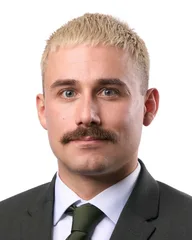
Lukas Sieper | Germany DEU | Non-attached Members (NI) | 390 |
| 2 |
|
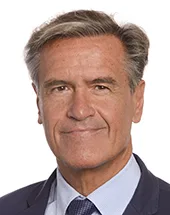
Juan Fernando López Aguilar | Spain ESP | Progressive Alliance of Socialists and Democrats (S&D) | 354 |
| 3 |
|
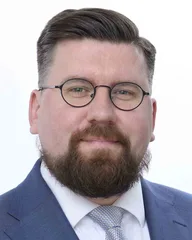
Sebastian Tynkkynen | Finland FIN | European Conservatives and Reformists (ECR) | 331 |
| 4 |
|
João Oliveira | Portugal PRT | The Left in the European Parliament (GUE/NGL) | 232 |
| 5 |
|
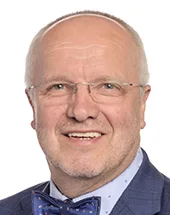
Vytenis Povilas Andriukaitis | Lithuania LTU | Progressive Alliance of Socialists and Democrats (S&D) | 227 |
All Contributions (125)
Attempts to reintroduce a foreign agent law in Georgia and its restrictions on civil society (debate)
Mr President, Commissioner, I fully support your position. We have met many times in this House. And not only here, with Georgian representatives, we have been communicating with the Georgian people in Georgia itself, and we have always heard them want to be part of Europe. Granting candidate status to Georgia was an example of how the government is trying to follow that path. But today we hear about the proposal to adopt a law on Russian agents, which is completely contrary to our values. Therefore, the current majority cannot in any way be allowed to stop the Georgian people from wanting to be members of our family. We need to support the Cartels so that they can join our European family. And we have to impose sanctions on those who from the second car seat try to drive the current majority. Mr Ivanashvili must indeed be subject to European Union sanctions.
The use of Russian frozen assets to support Ukraine’s victory and reconstruction (debate)
Honourable High Representative, we welcome your efforts to help Ukraine. You mentioned that we welcome the support decision of the United States House of Representatives, but let us admit that it is late. We welcome the use of revenues from frozen Russian assets, but they are too small. You yourself mentioned that Putin will not stop at Ukraine, and the only effective way to stop him is by confiscating and using frozen assets. And the use not only for the reconstruction of Ukraine, but now for the detention of Russian aggression and the withdrawal of the aggressor from Ukraine. Only then will we be able to rebuild Ukraine once the Russian aggressor has been expelled from Ukrainian territory. So let's make that decision now, because every day costs property, costs money and costs people's lives. Glory to Ukraine!
Union code relating to medicinal products for human use - Union procedures for the authorisation and supervision of medicinal products for human use and rules governing the European Medicines Agency (joint debate - Pharmaceutical package)
President, Commissioner, honourable colleagues. Healthy Europeans are indeed our goal, but the Covid has shown that we cannot achieve the desired results in each country alone, so the European Health Union would be the best instrument. And this package is one step towards ensuring that our European citizens can be supplied with fairly effective and affordable medicines anywhere in Europe. In fact, our goal is to reduce unnecessary use of antibiotics, reduce resistance to antibiotics, some microorganisms, but to provide access to affordable and effective drugs. This requires strengthening the European pharmaceutical industry, investing in new innovative technologies and creating fairer, simpler procedures for access to medicines, especially for rare diseases and cancers. We can also use the joint procurement of medicines for this purpose.
Promised revision of the EU animal welfare legislation and the animal welfare-related European citizens’ initiatives (debate)
President, honourable Commissioner, dear colleagues. Animal welfare is a compulsory aspect of agriculture that we must ensure when we live and manage our economic activities in accordance with European values. Farmers understand this too. The vast majority of them seek to provide the best possible conditions for their animals, both in terms of value, avoiding unnecessary stress, and in terms of economic incentives. Animals kept in good conditions produce better quality milk, wool, fur and meat. However, we must admit that farmers protesting on our streets with tractors have reproaches that we do not listen enough to them. That new bans, restrictions and restrictions descend from Brussels and Strasbourg to farms. Therefore, by imposing new requirements on our farmers, stricter, costly standards, we must find funds for their implementation, incentives, and better conditions. We need to ensure sufficient support and financial support to drive change.
Need to impose sanctions on the import of Russian and Belarusian food and agricultural products to the EU and to ensure stability of EU agricultural production (debate)
President, Commissioner, dear colleagues. With Russia's unprovoked and unjustified war of aggression in Ukraine more than two years ago, we are determined to do our utmost to help the attacked country. The war has a huge impact on food and agricultural trade. While the lands of Ukraine, Europe, are being stolen by enemy tanks and bombs, Russia is destroying and stealing Ukrainian grain and hypocritically unilaterally withdrawing from the Black Sea Agreement, preventing Ukraine from exporting it to third countries. We have imposed sanctions on Russia, but we have not yet touched agricultural and food products. As a result, during the ten months of this year, EU countries imported €2.2 billion worth of food products from Russia. These products were deposited in warehouses in Poland, the Baltics and other countries, distorting the market and the money paid for them added to dictator Putin’s pocket and allowed him to continue killing the Ukrainian people. We cannot continue to gently support the Russian economy and military industry of the Ukrainian aggressor and allow Russian products to distort our farmers' market. We need to ban the import of Russian products as soon as possible.
Question Time with Commissioners - Preparedness of EU governments to combat foreign interference, including from Russia
Mr President, honourable Commissioner. Europe has done a lot to prevent Russian interference in European elections and in political life. But for the third year now, Russia's new wave of aggression in Ukraine shows that it is seizing opportunities in Europe. I want to touch on one issue that has not been debated very loudly here. These include continued trade and investment, as well as European investment in Russia. They allow Russia to generate income, they allow some people to earn money here in Europe, and they allow them to finance or influence their positions. We can see that the various companies that have a legal relationship with Russia now, they clearly look more favorably on the situation in Russia. So do you not think that this legal trade and investment in Russia should be further prevented or demanded to pay war taxes for the fact that they trade with the aggressor?
Strengthening European Defence in a volatile geopolitical landscape - Implementation of the common foreign and security policy – annual report 2023 - Implementation of the common security and defence policy – annual report 2023 (joint debate - European security and defence)
Dear President, dear colleagues. Congratulations to Sweden on joining NATO. I would also like to respond to the right and left who spoke of peace. Peace can be instantaneous, but there is only one condition: The aggressor Putin must withdraw his troops from Ukraine. And as long as that is not the case, we need to defend ourselves, we need to support Ukraine with the weapons we need and with the weapons we need. We need to do this in solidarity, because we have allocated seven hundred billion euros to fight the covid and, unfortunately, only 50 billion euros to support Ukraine. We need to strengthen the European defence industry, but that is also not enough. We need to strengthen the borders of the European Union that border on Putin's aggression. We don't need fencing against immigrants, but we need defensive barriers. And this requires European Union funds so that the aggressor Putin does not want to check our borders.
Driving licences (debate)
Mr President, honourable Commissioner. I agree with many colleagues who have spoken here that our aim is to improve road safety, with a particular focus on training and training young drivers who start driving. But I also want to reassure those who are hesitant about medical examinations. As a doctor and as a representative from a country where medical examinations are already mandatory, I can say that this is a double benefit. One is that we can help drivers avoid their health problems because they have additional checks, and there will certainly be no overloading of medical doctors if they look at drivers once, even if they have no complaints. And, secondly, a driver who will check his health, especially older ones, eyesight and other things, will certainly help to drive better on the roads and be safer. I also very much welcome the introduction of a digital driving licence throughout the European Union.
Tackling the inflation in food prices and its social consequences and root causes (debate)
President, honourable Commissioner. You have noticed with great precision that food inflation has hit the countries of the Eastern and Central European blocs the most, where food prices make up a large part of the income basket. You've also noticed that there's actually a difference between what the consumer gets, how much he pays, and what the farmer gets. I would like to point out that the Commission still owes eastern European farmers the promise of equalising direct payments, external convergence, which has not yet been achieved. You mentioned a reduction in value added tax. Could you provide specific figures and recommendations so that in those countries where the value added tax on food products is high, it can be reduced? We therefore demand that the Commission propose a common European Union response, a concrete action plan. Please also forward this to Commissioner Wojciechowski.
New wave of mass arrests in Belarus of opposition activists and their family members
President, Commissioner, honourable colleagues. On January 23, the Lukashenka regime again demonstrated its complete disregard for human rights and international norms. The Belarusian security forces targeted the families of political prisoners. Among the detainees, the majority of women are wives and mothers. This is an attempt to further intimidate the public ahead of the parliamentary and municipal elections, which are held on 25 February and more specifically are being played. It is therefore necessary for the European Union to further strengthen sanctions against Belarus for human rights violations. Every representative of the regime must feel that every violation of humanity will return to him as a boomerang in the form of new sanctions and restrictions. The European Union must also step up its assistance to Belarusian civil society, and a special fund must be set up for the rehabilitation and assistance of political prisoners and members of their families. Come to Belarus!
Empowering farmers and rural communities - a dialogue towards sustainable and fairly rewarded EU agriculture (debate)
President, honourable Vice-President of the Commission, representatives of the Council. I am delighted that you have heard the demands of farmers when they came with tractors, and you are starting a strategic dialogue. But I want to say what is the value of your words, what is the value of your obligations if the given obligations are not fulfilled? I would remind you that when Lithuania joined the European Union in 2004, it was said that external convergence, direct payments will be equalized within ten years. Twenty years have passed and there is no external convergence. Therefore, I would like to invite everyone to note that if we want to talk to farmers and deliver on our promises, we must deliver on the promises we have already made. That is why I am addressing my colleagues from the European People's Party, the Group of the Greens and, in particular, the Vice-President of the Commission and the Council. We have to fulfil the commitments given to farmers in Lithuania and the Baltic States and then solve the problems that arise today.
Plants obtained by certain new genomic techniques and their food and feed (debate)
President, dear colleagues, Commissioner. Let's look outside the room: We are witnessing widespread protests from farmers across Europe. Tractors block roads and cities because European farmers, our citizens still suffering from the energy crisis and inflation, fear for the future of their farms. If we want to quell their fears and dissatisfaction with Europe to some extent, we need to show that not only constraints but also opportunities come from Brussels. As a member of the AGRI Committee, I am committed to helping our farmers achieve the objectives of the Green Deal, the Farm to Fork and the Biodiversity Strategy in a sustainable way. We need to ensure that bees and other pollinators are protected from harmful pesticides and chemicals, so that there is enough land left for biodiversity and ecosystem improvement, so that the food our citizens consume is safe. At the same time, we need to ensure the sustainable functioning of the food chain, strengthen Europe’s food security and sovereignty, and enable farmers, including small, medium and young farmers, to keep their farms economically viable. Precision breeding technologies are one of the new tools that farmers are in great need of. They remove radiation materials from the breeding process and are a faster and more accurate method for breeding new breeds. The European Food Safety Authority found that the new technologies do not pose specific risks and that there are even fewer inaccurate mutations. Nearly 40 Nobel laureates and 1,000 scientists have signed an open letter encouraging them to open their doors to the use of new technologies. European scientists and farmers must have access to these safe and necessary technologies without any restrictions, without excessive restrictions. I therefore ask you to support this document.
The need for unwavering EU support for Ukraine, after two years of Russia’s war of aggression against Ukraine (debate)
Mr President, dear colleagues. Indeed, we are grateful to the Ukrainians for defending our values and the future of our children against the Russian aggression. It was a shame that we were unable to agree on support for Ukraine for almost two months. Today we have a decision to provide €50 billion in aid. Everyone knows that it's small. Colleagues have said that we are still not using those 300 billion euros of frozen Russian assets. Our sanctions are not working effectively enough, but we still have the shameful, almost legal trade of around €200 billion with Russia. Some Ukrainian and Lithuanian experts are suggesting that the Commission impose a war tax on this trade, which would raise almost 10 billion euros in aid for Ukraine. I invite the Commission and the Council to consider this.
Keeping commitments and delivering military assistance to Ukraine (debate)
Mr President, dear colleagues. Dual feelings include listening to these debates. Firstly, it seems to me that we need to understand that Ukrainians are not defending their freedom, but defending our freedom. The aggressor, who occupied part of Georgia, part of Moldova, part of Ukraine, will not stop if allowed. Secondly, colleagues have already mentioned how unevenly member countries are supporting Ukraine with weapons. Agree, honourable Commission, honourable Council, can we really not reach an agreement within two years? We promise and do very little of what is needed today. Not a month, not a year, but now we need people to die and Ukraine to be protected and the European Union to be protected. Try to do what you should do.
Ensuring proper functioning of EU-Ukraine Solidarity Lanes (debate)
. – President, Commissioner, dear colleagues. Since mid-2022, the European Union-European Solidarity Lanes have helped Ukrainian goods reach the global market and equip Ukraine with the essential means needed for the people of the country and the fight against Russia’s aggression. Unfortunately, this system has been disrupted since November. Almost full blockade of the Ukrainian border by Polish carriers, disruptions at Slovak border crossing points prevent the necessary goods from reaching the Ukrainian people fighting. Perishable goods expire. Thousands of Ukrainian carriers and volunteers are waiting in kilometric queues for weeks without comfort. Blocking the border for a country struggling with Russian aggression is a blow below the bar. I call on the European Commission and the Council to urgently assess the situation and propose effective solutions. The blockade of the Ukrainian border is the most beneficial for the Russian regime. I hope that the new Polish authorities, together with the Commission, the Council, will be able to successfully solve this problem as soon as possible. Slava Ukraini!
The unknown status of Mikalai Statkevich and the recent attacks on Belarusian politicians’ and activists’ family members
. – President, Commissioner, dear colleagues. Unknown from the places of imprisonment of political prisoners can not continue. We must increase the pressure on the Belarusian regime to release all political prisoners. We must insist that detention conditions for all detainees are in line with international and national laws, which clearly emphasise that detainees have the right to contact with their lawyers and family members. It is completely unacceptable that we have no news from Mykolas Statkevičius for more than three hundred days, and in a similar situation there are tens or hundreds more political prisoners. For serious human rights violations, the European Union needs to adopt a new sanctions package dedicated to the Lukashenka regime that includes all those who commit these crimes. I also invite you to consider the possibility of setting up a special International Fund for the Support of Political Prisoners to assist political prisoners and their family members who have been released from Belarusian prisons.
Revised pollinators initiative - a new deal for pollinators (debate)
Mr President, honourable Commissioner. Dear colleagues, I grow bees myself, just like my father, grandfather and great-grandfather. Now my children and grandchildren help me to turn honey, so I fully understand the invaluable importance of pollinators for the environment, agriculture, even the family-cultural connection. In Lithuania, bees have always been especially respected and loved. Our most sacred bonds of friendship are strengthened by the sharing of bees. Wild pollinators and bees must be protected and must not be allowed to die meaninglessly as a result of miscommunication between beekeepers and farmers. We need to protect them from new diseases and parasites, but we also need to pay attention to the situation of farmers who feed us and ensure the vitality of the countryside. By limiting the use of tools such as pesticides and herbicides, we must provide them with equally effective tools. The latest genomic technologies, such as gene editing, can offer many opportunities, allowing you to grow plants that are more resistant to diseases, environmental conditions, climate change and pests. This leads to a more resilient and sustainable agri-food system, contributing to the Green Deal. We need to ensure that scientific and technological innovation reaches farmers and is accessible and affordable for them. In this way, through rational farming and the introduction of science, we will have both a healthy environment, healthy pollinators, and healthy food.
The lack of legislative follow-up by the Commission to the PEGA resolution (debate)
Mr President, Commissioner. Perhaps we all understand that special services must have the tools to prevent the activities of hostile countries. However, these instruments cannot be used against the citizens of their country to persecute political opponents, journalists, and for this reason the European Parliament calls on the Commissioner, you and the Commission to adopt legislation that can ensure that our journalists, political actors can express their views in their country and that they have the right to the private inviolability of internal life, and that these serious, good instruments, which are directed against hostile forces, are not used to persecute political opponents and journalists in their country. That is why the ball is on your side, Commissioner, and we in the European Parliament are waiting for the Commission's proposals.
Sustainable use of plant protection products (debate)
President-in-Office, dear colleagues, honourable Commissioner, I agree with the need to protect biodiversity and to halt climate change. But when it comes to pesticide restrictions, we need to remember that they do not just spray fields. Since the introduction of pesticides, the production of basic cereals has more than tripled. I also agree that we need to limit pesticides, but we need to give farmers the opportunity to protect their crops by other means. First of all, any requirements to reduce the use of pesticides must be fair. Colleagues have already mentioned, in particular, that their use varies greatly between European countries. This must be taken into account and not penalised by farmers who already use ten times less pesticides. For example, in my country, Lithuania, new genomic technologies, such as gene editing, could provide more opportunities and allow the cultivation of plants that are more resistant to diseases, environmental conditions, the effects of climate change and pests and can grow with lower agricultural costs. At the same time, we will protect nature's diversity, pollinator bees and have healthy food.
EU enlargement policy 2023 (debate)
Dear Commissioner, dear colleagues. First of all, I thank the Commission for its comprehensive and geopolitical assessment. I want to congratulate the people of Ukraine and Moldova on the positive assessment of the Commission and the proposal to the Council of the European Union to formally open accession negotiations. This is a historic step, the significance of which will be best seen in a few years' time. This is an important assessment of Ukraine's and Moldova's efforts to continue the reforms initiated, even as the bloody Russian aggression continues. I also congratulate the people of Bosnia and Herzegovina and Georgia. I know that this path of reform is not easy. My country Lithuania experienced this transformation after liberating itself from the occupation of the Soviet Union. At that time, Lithuania also had to implement legal, economic and state administration reforms, fight corruption and organised crime. I believe that the Ukrainian and Moldovan people will not lack such motivation for reform, and in a few years' time we will see these countries as full members of the European Union, but for this we must also carry out internal reforms of the European Union.
Generational renewal in the EU farms of the future (debate)
Mr President, Commissioner, dear colleagues, first of all I thank my colleague for this excellent report. European agriculture is retiring. One third of our farmers are over 65 years old. If we want to preserve a vibrant village, ensure European food security, climate and environmental protection and a successful transition to the Green Deal, we need to ensure generational renewal in agriculture. Young people are proactive and open. That is why we need to give young farmers access, accessibility and efficiency to the latest scientific developments and technologies. Young farmers still face difficulties in accessing land and credits. We need to allow them to farm peacefully. Young people are sensitive to inequality and it is difficult for us in Lithuania to convince young people to take up agricultural activity, knowing that they will receive much lower payments than their Western European peers. I appeal once again to you, Commissioner, to resolve this problem, which is the problem of direct payments.
New European innovation agenda (debate)
Mr President, honourable Commissioner. Indeed, innovation is the way to strengthen the competitiveness of the European Union. You have presented here the European Innovation Agenda, and possibly its funding, beautifully, but in next year's budget we see a decrease in funding for innovation. We also feel that European Union funding does not meet today's innovation needs compared to Asian countries or the United States. Reducing regional disparities is another key element in achieving innovation. You mentioned that indeed the Horizon programme and other [programmes] could help those of our innovation hubs that are located in the regions. I would therefore call for this direction to be strengthened, so that scientists from different countries can be more involved in joint projects and they are not so fragmented. We need more synergies and attracting scientists from the region.
Mental health at work (debate)
Mr President, honourable Commissioner, colleagues. In the workplace, a person spends most of his active time. Unfortunately, the psychological atmosphere at work is not always favorable. Astigmatism, mobbing, harassment, burnout often lead to a deterioration in mental health or even suicide, especially among older or young workers. The situation was mentioned here among the farmers, but also among the doctors who provide us all with health care. Preventive measures at the workplace, adaptation of the working environment and the right to disconnect are therefore very important. Dear Commissioner, I would encourage stronger leadership so that the 21st-century workplace has a significantly better mental health environment throughout the European Union, not in individual Member States. To ensure that a healthy or mentally disabled worker feels safe in the workplace and, if necessary, receives a consultation or free treatment. The European Parliament has expressed its position. We look forward to the Commission.
General budget of the European Union for the financial year 2024 - all sections (debate)
– Dear President, Commissioner, representatives of the Council, dear colleagues. Farmers in the European Union are going through a particularly difficult period, which presents many new challenges. Russia’s war of aggression against Ukraine, the energy crisis, rising interest rates and rising production costs make it difficult for farmers, especially small and young farmers, to provide us with healthy, high-quality food. I am therefore pleased to see in the resolution calls for increased funding for young and new farmers. Ensuring generational renewal in the countryside must be a high priority for all of us. It is also important to increase funding for school schemes, to give children access to healthy and nutritious food. Unfortunately, one problem that we highlighted in the AGRI Committee has not been reflected in the resolution, namely that differences in direct payments still have a significant impact on farmers’ ability to withstand inflationary pressures and ensure food security. Already in 2004, farmers in Eastern Europe were promised payments that were up to the European Union average. It is time to deliver on this promise.
Taking stock of Moldova's path to the EU (debate)
Dear Commissioner, dear colleagues. Today's European Parliament resolution rightly assesses Moldova's progress on reforms and demonstrates its strong commitment to joining the European Community. I welcome the choice of the Moldovan people and the mandate given to the pro-European Moldovan government to carry out the necessary reforms. I know that the path of reform is neither easy nor fast, especially when a country hosts one of Ukraine's largest war refugees in terms of its population. We have to help Moldova financially and protect it from Putin's intent. I have no doubt that, in a few weeks' time, the European Commission will take a positive view of the progress made by Moldova and the Council will take a positive decision in December on the opening of accession negotiations with the European Union. Moldova is Europe.