
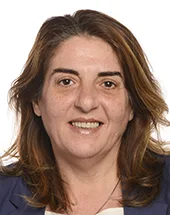

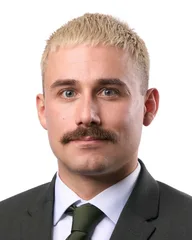
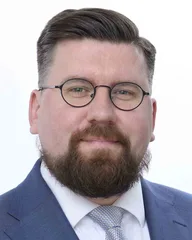
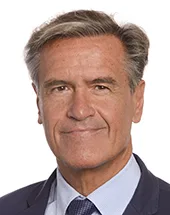
| Rank | Name | Country | Group | Speeches | |
|---|---|---|---|---|---|
| 1 |
|
Lukas Sieper | Germany DEU | Non-attached Members (NI) | 390 |
| 2 |
|
Juan Fernando López Aguilar | Spain ESP | Progressive Alliance of Socialists and Democrats (S&D) | 354 |
| 3 |
|
Sebastian Tynkkynen | Finland FIN | European Conservatives and Reformists (ECR) | 331 |
| 4 |
|
João Oliveira | Portugal PRT | The Left in the European Parliament (GUE/NGL) | 232 |
| 5 |
|
Vytenis Povilas Andriukaitis | Lithuania LTU | Progressive Alliance of Socialists and Democrats (S&D) | 227 |
All Contributions (3)
Working conditions of teachers in the EU (debate)
(IT) Mr President, ladies and gentlemen, Commissioner, with regard to the issues raised by my colleague Montserrat, I would like to know the intentions of the European Commission in order to achieve the European Education Area in practice by 2025, including by protecting more effectively the right to mobility of the teaching profession achieved in the various Member States. A possibility provided for in Directive 35/2005, but in fact discriminated against in many countries, such as – I am sorry to point out once again – Italy. The right to mobility is severely restricted by the recent Law 74 of 2023, which concerns the award of fixed-term contracts for teachers with a foreign qualification. What is at stake is the total absence of homogeneous EU systems for recognising teaching experience in all European countries. I ask whether it is not appropriate to adopt, also for the teaching profession, the system of automatic recognition provided for in Articles 10 and 21 of Directive 36, currently provided only for certain professions. The ambitions of the European Union are to be welcomed, but let us begin by guaranteeing freedom of movement and establishment for workers. In Italy, 20 000 teachers are discriminated against. Concepts such as "equivalence" and "equivalence of titles" are virtually unknown in my beloved Italy.
Question Time with Commissioners – EU-China trade relations
Mr Vice-President, during the last State of the European Union address, President Ursula von der Leyen informed us of an investigation into Chinese electric cars. Ladies and gentlemen, the truth is that we should make decisions about how much China systematically does to our detriment, or rather to the detriment of our entrepreneurs. Do we know or do we not know that there is State aid that Chinese entrepreneurs receive and that is aimed at exporting at absolutely uncompetitive prices? It is in answering this question that the European Union must make a difference. I would like to focus on Article 5 of Regulation (EU) 2016/1036. According to this article, if an entrepreneur wanted to initiate an anti-dumping investigation, it would have to account for 25 % of the total production of the product by the European industry. A percentage too high, almost impossible to reach for small and medium-sized enterprises. I understand that 25% is a number weighted with the World Trade Organization, but this number excludes the most exposed groups: small and medium-sized enterprises. The question is this: Is it possible to consider new anti-dumping instruments specific to small and medium-sized enterprises or to consider a revision of Article 5?
Use of the Pegasus Software by EU Member States against individuals including MEPs and the violation of fundamental rights (topical debate)
Mr President, ladies and gentlemen, today technology allows us to do wonderful things. The development of artificial intelligence then led humanity to unprecedented discoveries. Sharing is now a key concept of any real or virtual experience. Unfortunately, sometimes, technology allows you to share in silence by collecting information. Pegasus is an Israeli-born algorithm capable of collecting information from MPs, journalists or citizens from any internet-connected device. Many computer scientists have called Pegasus a "jewel of computer science" with unprecedented discretionary autonomy. Photos, emails, everything on the phone are targets that Pegasus uses for social, military and political purposes. Pegasus, like any other more advanced spyware, is a serious threat to the rule of law. As my Spanish colleagues have pointed out, when a government is threatened in its constitutional integrity, this government has the right to defend itself against these threats. Spying is what we were taught not to do in school, but knowing before a potential threat is the best survival strategy possible. Pegasus could become the vile deformation of a technology useful to a few and that lives thanks to our daily life. An excess that, I must say, has whetted, albeit in a different way, "social" world realities. Someone has also spoken in this House. The work of the PEGA Committee will be very complicated. On the table are the freedoms of 500 million Europeans, their governments and the challenges of the future between search algorithms and artificial ultra-intelligences. However, the time has come to ask essential questions: How much is our freedom worth?