


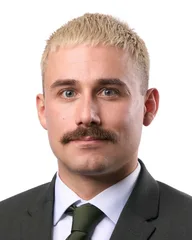
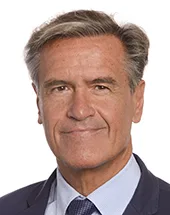

| Rank | Name | Country | Group | Speeches | |
|---|---|---|---|---|---|
| 1 |
|
Lukas Sieper | Germany DEU | Non-attached Members (NI) | 390 |
| 2 |
|
Juan Fernando López Aguilar | Spain ESP | Progressive Alliance of Socialists and Democrats (S&D) | 354 |
| 3 |
|
Sebastian Tynkkynen | Finland FIN | European Conservatives and Reformists (ECR) | 331 |
| 4 |
|
João Oliveira | Portugal PRT | The Left in the European Parliament (GUE/NGL) | 232 |
| 5 |
|
Vytenis Povilas Andriukaitis | Lithuania LTU | Progressive Alliance of Socialists and Democrats (S&D) | 227 |
All Contributions (77)
Iran: one year after the murder of Jina Mahsa Amini (debate)
Mr President, High Representative, colleagues, this week marks one year since the brave Mahsa Amini was shamefully beaten to death by the Islamic Morality Police in Tehran. We honour Amini, her relatives and friends today and we honour the brave Iranian people because they stood up against their oppressors. In this same week, we also express our continuous disapproval of the Iranian regime, not just for still further suppressing and oppressing the Iranian people or irresponsibly developing weapons of mass destruction, but also because of kidnapping European citizens to put political pressure on us here in Europe. This is unacceptable hostage diplomacy and the European answer for 513 days has been civilised silent diplomacy. Dear High Representative, there is a point in time where silent diplomacy is neither effective nor acceptable. That time is now. Three obvious suggestions. One: as long as Europeans in Iran can be taken hostage without any reason, we must not allow Europeans to travel to Iran. Two: expel Iranian ambassadors from Europe as long as our citizens do not return home safely. Three: finally put the IRGC on the EU terror list but complement that with another obvious course of action, sanctioning the men of Beit-e Rahbari, the Office of the Supreme Leader. They issue human rights violations on a daily basis. This week is to commemorate and to honour those in search of freedom and a better future. This is definitely not a week to stay silent.
European Chips Act (debate)
Madam President, dear Commissioner, before I came to this Parliament, by profession I investigated Chinese hackers and the Chinese appetite to steal from our European semi-conductor industry was just appalling. It amounted to nothing less than pure theft of our industrial earning power and competitiveness. But with today’s vote on the European Chips Act, we contribute to reverse this trend. After today, Europe is again taking control of its earning power and its digital future. But already today, foundries, factories, researchers and innovation are coming back to Europe as we speak. Nearly EUR 100 billion of investments in 68 projects across Europe are already in the pipeline today. At the courtesy of this Parliament, the Chips Act also stands the geopolitical test of our time, more cooperation with our like-minded partners, stronger protection of intellectual property and European scrutiny on exports, too, and investments in China. With this blueprint for industrial policy, Europe reasserts its status as an industrial powerhouse. The best is therefore not just behind us, it is yet to come.
Investigation of the use of Pegasus and equivalent surveillance spyware - Investigation of the use of Pegasus and equivalent surveillance spyware (draft recommendation) (debate)
Mr President, dear Commissioner, it makes perfect sense that some EU Member States use commercial spyware to fulfil legitimate law enforcement requirements. That’s not the problem. The real problem, of course, is, like the rapporteur said, that some EU Member States use this spyware to discredit the democratic opposition and kill democracy in Europe. Poland, Hungary, Greece – shame on them. And I have a triple call to action to the Commission. First, since it is often the Israeli Government signing export licences for the spyware used to kill democracy in Europe, the EU should exert significant pressure on Jerusalem to halt such exports. Secondly, together with our American friends, the EU should put forward primary and secondary sanctions to entities who sell to the rule of law violators. Put these companies out of business. And, last but not least, let me remind the Commissioner that it was the brilliant Canadian NGO Citizens Lab who disclosed the Pegasus spyware scandal here in Europe in the first place. Where, dear Commissioner, is the European equivalent to investigate such technical operations? My amendment to the European budget has already created a budget line to create such an institution. It’s now up to you to follow up and make it happen.
Foreign interference in all democratic processes in the European Union, including disinformation - Election integrity and resilience build-up towards European elections 2024 (debate)
Madam President, Commissioner, colleagues, in the same week that this House rings the alarm bells on malign foreign interference, disinformation, growing hatred and the declining trust in our democracies, often enabled by social media, in that same week, the CEO of Twitter decides to abandon the EU’s code of practice directed to counter disinformation and malign interference. And earlier, the CEO of Twitter had already fired the majority of his staff dealing with such problems. Mr Elon Musk seems to think that he’s in the American Wild West. Well he’s not. He’s operating in Europe, too, and there’s a new sheriff in town here in Europe. From this August onwards, the Digital Services Act enables the European Commission to fine up to 6% of the yearly revenue of Twitter. Dear Commissioner, I urge you to set an example and show how Europe deals with companies undermining our democracy, undermining our security. Because the report we vote on today shows how Russia, how China, how they vehemently continue to do so if we don’t regulate or act.
Establishing the Act in support of ammunition production (debate)
Mr President, dear Commissioner, concrete and credible plans for producing 1 million shells for Ukraine within 12 months is just spot on and much appreciated. And I would like to thank the competent commitment of this Commission and especially Commissioner Breton, but also Commissioner Borrell in particular, dedicated to the faith of defence in Europe. But with 5 000 shells, dear Commissioner, fired per day, Ukraine still needs 1.8 million shells instead of 1 million, or maybe triple that, since the numbers are separate of what NATO countries themselves already ordered extra. So I must convey my concern that this initiative might not be enough. Secondly, dear Commissioner, artillery is very, very important – but so are more interceptors for dedicated integrated air defence systems or MANPADS, or more multiple launch rocket system munitions, or more anti-tank missiles, more production lines for tanks or infantry fighting vehicles and combat support, et cetera, et cetera. Outperforming the Russian war economy is probably the best way to peace. In other words, this new munition act is a great breakthrough and a great complement for the European Union if we pull this off. But hopefully only the mere beginning and not the final solution in helping Ukraine win this war.
Transparency and targeting of political advertising (debate)
Madam President, dear Commissioner, colleagues, many voters in modern democracies base their choice on who to cast their vote for on what they read online on social media. I can hardly think of a bigger threat to our democracies than this because if Twitter, for example, is that town square Mr Musk is talking about, then should it be allowed for just one or two political parties to give speeches on that town square and not for others? Should it be allowed for just one or two political parties on the town square to paste posters? Hell no! Yet this is exactly what is happening online when social media algorithms draw voters into that rabbit hole and isolate them from pluralistic offerings of political views. On that town square, it may also never ever be allowed for authoritarian states such as Russia or China to finance, and therefore dictate, which political advertisements the people in that town of Mr Musk would get to see. The legislation we have before us today fills me with pride because it is tackling exactly such problems for the entire EU. We take matters into our own hands and we keep our democracy safe. My thanks to the rapporteur, Mr Gozi.
The Global Gateway Initiative (debate)
Mr President, as much as anyone might criticise the EU’s Global Gateway, the strategy and the concept are just brilliant. I mean, sustainable, trusted connections that bring free trade prosperity to all, and delivering all of that to the benefit of the EU’s geopolitical goals. Well done! Sure, there has been heavy, heavy criticism from the European Court of Auditors, which has to be taken extremely seriously, and Parliament will continue to do so and scrutinise the plans from the Commission. But all of that, all of the criticism, all of the cynicism, also today, will immediately dissolve, Commissioner, when the EU delivers, when the EU will become world champion in execution. It’s not about more strategy, it’s not about new wine in new wine skins. It’s about execution. Execution is the strategy. Show procreative power, show executive power and deliver projects, and show us in practice how rare earth materials strategy is hand—in—hand executed with the Development Goals.
EU response to the protests and executions in Iran (debate)
Madam President, dear Commissioner, the Iranian Revolutionary Guard Corps (IRGC) has conducted many illegal hostages and killings, of course, in Iran, but increasingly on European soil. Members of the IRGC nonetheless send their children to study here in Europe. Social media platforms in Europe are being flooded with outrageous IRGC propaganda. And the IRGC holds financial assets here across this continent. And this will luckily all end soon. This House wants the IRGC to be labelled a terrorist organisation. This House will vote to impose costs on the IRGC and by doing so we demonstrate our support to the brave Iranian people. But let this also be a signal to so many Chinese companies like Huawei, on the brink of helping Iran develop an even more brutal surveillance state, to even further suppress the Iranian people, and to Russia, buying IRGC drones, selling them Su-35 fighter jets – this cannot be without consequences. The dangerous ideology of the IRGC has no place here in Europe, and ‘Zan, Zendegi, Azadi’ starts with putting and listing the IRGC as a terrorist organisation.
Defending democracy from foreign interference (debate)
Mr President, whatever significant progress we make as humanity, our human nature will not change. So for those who say the problem with foreign interference is the poor, bad, moral or ethical judgment of some individuals, I advise them to re—read the Book of Genesis. It was mankind eating the apple, and mankind will continue to be tempted. The real problem is, of course, that a permissive security environment exists in Brussels and in Strasbourg, where our adversaries operate in the heart of our democracy in order to interfere with it. Until recently, we had a China friendship group with a secretary—general from China who acted, paid by this House, and was authorised to work here. Similar groups exist for Qatar and other states. Russian interns walked the floors of this House. We still allow MEPs to travel to third countries, irrespective of who pays the bills. Our IT systems are vulnerable for espionage, and therefore external pressure on Members. Our security organisation is under—equipped, Commissioner, and hardly staffed to the level we need. Yes, justice must have its way with individuals and corrupt individuals must be punished, but this House urgently needs to create a non—permissive counter intelligence environment so that our adversaries don’t even dare to interfere with us.
EU-China relations (debate)
Madam President, dear Commissioner, High Representative, some see intellectual property theft on an almost industrial scale as the second-oldest profession in the world. What’s new? Instead of the slow drainage of our economic competitiveness, some see unfair competition with state subsidies, non-reciprocal market access just as mere trade issues, technical, instead of a frontal attack on our prosperity. And some see Chinese disinformation or support for dictators worldwide or its relationship with Russia, its military build-up as merely an expression of the new multipolar world, ‘get used to it’, instead of an attack on the liberal world order. Well, the EU, we respond to such threats with numerous pieces of legislation, critical entities, cybersecurity, foreign direct investment and what have you. But we do so with a country-agnostic, a country-neutral approach. But, in practice, this significantly hampers the effectiveness of these measures. Country-specific problems need country-specific legislation. We might believe we live in peace with the world, but China dictates itself that is in conflict with us. So act accordingly and let’s legislate accordingly.
Resilience of critical entities (debate)
President, dear Commissioner, yet another piece of well-crafted, much needed and warmly welcomed legislation protecting Europe’s critical infrastructure is key in making Europe safe and prosperous. Thank you, dear rapporteur. It’s just like the NIS 2, like you mentioned, dear Commissioner, and the foreign direct investment screening, the Democracy Action Plan, but also the Economic Coercion Instrument. But what do these files have in common? Against whom are we protecting ourselves? Let’s be clear: the reality is we are protecting ourselves against a small number of three countries who have something in common, namely an offensive intellectual property theft programme directed against us. The second thing is they want to thwart the liberal world order. And thirdly, last but not least, they are willing and able to do so in our own backyard, here, extraterritorially. That’s the problem. It’s Russia, Iran and China; let’s name these three. We might believe we live in peace with the world, but yet they declared a conflict against us. And yet we formulate generic responses. But, dear Commissioner, country-specific problems require country-specific legislation against these three nations. That’s what we’d like to see in future.
A high common level of cybersecurity across the Union (debate)
Madam President, dear Commissioner, my commitment in the first term to buy drinks for all shadow rapporteurs and the excellent staff has been reinforced by this debate. So you owe me one! I have two comments to make for the Green Party and especially the Pirate Party. They fear that the free and open internet is at stake. Well, let me just mention two things here. First, on my personal – my personal – journey to regulate root—level DNS servers, my personal journey was to get that out of scope, and we’ve managed: no regulation, no government controls of the root—level DNS. So be happy with that. The second thing is that the internet will be free, but if hackers hire anonymous infrastructure, then we want to know with what bitcoin address did you do it, what session cookie was placed, what IP address was used, what domain was used. We want to know those technical terms so we can track you and defend ourselves. The only thing I’d like to mention again to them is that it’s not just public information: it’s only there for legitimate access—seekers, and it means that cybersecurity experts and law enforcement get this information, but also journalists, and journalists are important. Why? This democratises the debate. Journalists can verify cyberattacks, verify what has happened. And democratising the debate on cybersecurity is one of the goals that we have also here in this Parliament. Last but not least, this is the best legislation we’ve yet seen in this continent. We go from a passive stance to an active stance. We’re shaping our digital environment in our atmosphere and therefore our digital future. I will leave you with one thought, which is food for thought. With the attack on Colonial Pipeline in the US, the malware, the malicious software, would not have gone live if the computers would have had Russian language settings or Russian time settings. Just remember that this is not just a technical problem, this is also a geopolitical problem, a problem for diplomacy, a problem for counter—intelligence. So the NIS is a good step forward. We’re not there yet. Russia will not stop with this legislation. We need to do more. That’s why I encourage the Commission with the new plans they came with today, we will work on it together. Thank you, and let’s vote.
A high common level of cybersecurity across the Union (debate)
Mr President, dear Commissioner, dear colleagues, it is with pride I stand before you here today in Brussels, the result of two years, almost two years, of fierce debates, hundreds of consultations with so many stakeholders from around the world. It resulted in the best cybersecurity legislation this continent has yet seen. And today, we are not just voting on that legislation that significantly enhances Europe’s cybersecurity – it makes it a safer place to work, do business and live. We are also introducing a new mindset in Europe, a new phase in our common European digital future. From pioneering to professionalisation, from cybersecurity as a niche subject to making it Chefsache – a good German word. The CEOs matter, and that goes for Commissioners and also for ministers. And most important, from reactive information-sharing after an incident, which is still important, to proactive prevention and actively stopping new accidents from occurring. Europe has suffered enormous costs of being attacked on an almost industrial scale, yet still we invest 41% less than our American businesses and the sharing of information in the cybersecurity community from which I stem, has been hampered. This legislation is reversing that. But meanwhile, because of the encouragement of the Kremlin, Russian hackers, criminal ransomware groups are trying to weaken economic wellbeing and economic structures. With the support of Beijing, many dozens of hacker groups try to steal our intellectual property and trade secrets to weaken our economies and strengthen theirs. Many of this is not directly seen with the eye or is in the media that often. It often happens that companies do not wish to go public, but it happens every day and that’s why we ask critical infrastructure to invest. That’s why we make a sound legal basis for information-sharing between governments, businesses, experts and countries outside the EU. And for those who think this is expensive, remember that the American credit rating agency Moody’s recently valued the NIS2 and said it’s credit-positive for doing business in Europe. Although this is the best cybersecurity legislation this continent has yet seen, let us not congratulate ourselves too much. Here’s what still needs to be done. First, if ransomware is an instrument of, let’s say, foreign policy of the Kremlin, then technical controls like this legislation will not stop Russia. We have to indict the hackers, track them, make sure when they travel, they get incarcerated behind bars. We need diplomatic and counterintelligence offensives as well. Secondly, yes, the NIS2 asks, demands that Member States put forward an active defence cyber posture. It means that, in practice, cybersecurity centres will have to cooperate with internet service providers to block malicious domains when people accidentally click on it, because it does happen. Thirdly, supply chain security. Yes, within the NIS2 there is a good possibility for reviewing risky software and hardware vendors. But we need new legislation to protect us. When countries with an offensive intellectual property theft programme directed against us and their companies enter our markets, we need legislation. Fourth, our sub-sea infrastructure. The NIS2 marks optic fibre cables below sea as vital infrastructure, but the plans to protect it are hardly sufficient yet. In the Defence and Subcommittee and Industry Committee, we will put forward new plans to do just that. Last but not least, colleagues, let me also take this opportunity to say that the last European cybersecurity vendor – endpoint security antivirus – that we have is European, and let’s keep it that way, Commissioner. I would like to thank all the shadow rapporteurs present here for their constructive political work on this file. The staff – I will buy you a drink afterwards! But let me just mention the most important people that have to be mentioned today in this plenary room: the cybersecurity community to whom this work is dedicated. I came to Brussels to make cybersecurity legislation, to create a safe place to work and to do business. That safer place is mainly the result of the hard work of those many cybersecurity professionals out there. And to all you computer nerds out there: we hear, we see you, we are keeping you enabled to do your business. You keep us safe, we see you and we support you. Now, let’s vote today on this important legislation and thanks for the good cooperation, everyone.
EU response to the increasing crack-down on protests in Iran (debate)
Mr President, dear Commissioner, dear colleagues, I’m a Member of the European Parliament coming from The Hague, the Netherlands. The Hague welcomes many people from around the world. But unlike any other city in the world, it actively welcomes war criminals by keeping them incarcerated behind bars. And I can tell you, there’s plenty of room in The Hague, I can assure you. In my experience, their countries extradite their war criminals to The Hague when they want to come clean with the past, when they envisage a new, brighter future. The Iranian people are currently in a similar process, imagining a brighter future for their country. So the importance of today’s debate here is not just about supporting the brave Iranian people, standing up to repression, to torture, and to the lack of freedom. It’s that, but it’s also about helping them imagine that bright future. Europe can do and should do exactly that by putting out new sanctions – sanctions to human rights offenders, to the IRGC – but also by actively hampering Iranian cyber operations. Let’s also make a plan for that, for new sanctions on dual—use goods. Let’s help the people in Iran by making the people in The Hague excited, by welcoming their new citizens behind bars.
Question Time (Commission) - Protecting critical infrastructure in the EU against attacks and countering hybrid attacks
Thank you, Commissioner, for that answer. I believe I agree with you, but it’s much, much more than the NIS2 and the Critical Entities Directive. It’s about placing sensors in our sea; it’s about connecting civilian coastguard capabilities with military attribution capabilities; it’s also about PESCO projects, for example. To make our submarines work for this task. It’s not there yet. And I’d really like to see industry data for any cable cut that we have in Europe, to be reported, that you have oversight, insight and then do something. It’s much more than we had, and I’d really like for the Commission to do more than the proposal of NIS2 and the Critical Entities Directive.
Question Time (Commission) - Protecting critical infrastructure in the EU against attacks and countering hybrid attacks
Thank you, Commissioner. It was almost three years ago that Russia disconnected itself twice from the internet with success – because it didn’t hurt their economy, it didn’t hurt their society. At the same time, they invested about 3 billion in a new submarine, the Belgorod, which is for deep seawater investigation. It’s not to win a Nobel Prize, I can guarantee. The GUGI institute was also erected and was invested in significantly. Despite the several calls from Parliament to do something about protecting our infrastructure below sea, nothing happened, so what we did, Commissioner, is ask for an academic study. The universities of Copenhagen and Oslo created a good study, with dozens of recommendations on what to do about protecting our subsea infrastructure. I was wondering whether President von der Leyen has read this great study because what I heard from her was not half of what is needed. I would suggest that we work together on this and reach out to the Commission and make a plan for this to even better protect our infrastructure. But the real question, dear Commissioner, is this: the favourite weapon of President Putin will be gas and it will be alternative gas paths and our LNG terminals are being recognised and reconnaissanced by cyber actors from Russia at this point in time. I would really like an effort from the European Commission to protect our LNG structures in Netherlands, in Germany and in Spain as well.
Countering the anti-European and anti-Ukrainian propaganda of Putin’s European cronies (topical debate)
Mr President, dear Commissioner, dear Ministers, President Putin is not just slowly militarily losing on the battlefield in Europe, he’s also losing the information war against the EU. The EU has put forward, to his disadvantage, the Digital Services Act, the Code of Practice, dozens of initiatives on media literacy, on free journalism, and we’re even tackling the political party financing, which is a huge problem, as we’ve just seen on the far right and far left side of this House. Mouthpieces of Beijing and Moscow speak freely here. But I’m glad that the reasonable part of this House has put forward the initiatives to tackle just that. We shouldn’t underestimate, however, how Russian disinformation and propaganda is playing out in the rest of the world. Out there, populous countries in the global South – in Asia, Africa, Latin America – are slowly gaining sympathy for a tyrant murdering, raping, stealing. Troll farms are enabling that thinking. Russia – and others like China – are aiming at two thirds of the world’s population, and so should the EU, by countering those efforts. The next phase of our joint and evolving effort against disinformation, dear colleagues, should be exactly that: countering disinformation, extending our efforts to the rest of the world in the global South.
Russia’s escalation of its war of aggression against Ukraine (debate)
Mr President, dear Commissioner, dear Minister, dear colleagues, for the past ten years, Russia has invested significantly in its capability for deep—sea water research, or the sabotage capability, as we know it. For the past three years, Russia deliberately disconnected itself from the internet twice without severe consequences for its own economy or society. In the end of this year, internet cables were cut in Norway, Svalbard, where EU Galileo ground stations are present. All this time, this House asked for action, swift action. Last week, two, not three, four times Nord Stream 1 and Nord Stream 2 were sabotaged. This morning only, President von der Leyen announced a new plan to protect our critical infrastructure below sea. She announced satellite surveillance, stress tests and more cooperation. Well, dear colleagues, that’s not even close to what is needed. This House has the ideas what is needed, we will put them forward in the next couple of months and we hope to cooperate with you, dear Commissioner. Boost the Maritime Safety Agency in Lisbon that connects European coast guards, navies. Make it into a new paramilitary venue. Place sensors in our water, use industry data. Create PESCO projects to technically update our submarines for this task. And last but not least, attribute – make sure that every incident is reported, investigated towards the culprit together with NATO and neighbouring countries. Thank you, Slava Ukraini!
Foreign interference in all democratic processes in the EU (debate)
Mr President, some people would rather see ransomware as a mere technical or criminal problem instead of the Russian state deliberately enabling criminals to weaken Europe. Some would see former Prime Minister Gerhard Schröder working for Gazprom as a private matter, rather than a broader problem, with many top politicians working for authoritarian regimes, which is called ‘elite capture’. Some see Russian troll farms as an old phenomenon, merely finding its way into the digital age, instead of clear attempts to sow distrust, weaken and divide Europe on an unprecedented scale. Some see intellectual property theft and espionage by China as the second oldest profession in the world — what’s new? — instead of the slow drainage of our economic competitiveness. And some see payments from authoritarian states to political parties as a mere financial transaction, instead of direct foreign interference in our political processes. Now, too often, too often we have looked the other way from incidents, while in fact they are part of a collective, orchestrated, broad way of foreign interference in our democratic processes. Today, Parliament is not just voting on stopping turning a blind eye to these phenomenon. We are also calling for many ways to counter these orchestrated attempts to undermine Europe. Our freedom and democracies are at stake, like both Commissioners have told, so we need a structural and orchestrated response by the Council, the Commission, but also this Parliament. What started as a temporary commission is now going to be a structural European effort. This is the reason why I got into politics. This is the reason why I’m here in Strasbourg, and Brussels, and I’m very glad that this is merely the beginning of a structural, core orchestrated European response to counter such threats.
Implementation of the common foreign and security policy – annual report 2021 - Implementation of the common security and defence policy – annual report 2021 (debate)
Madam President, China’s gratitude to Russia’s military manoeuvres against Ukraine must be endless. Xi Jinping knows that if Putin wins on Ukraine, China can finally march on to Taiwan. And Putin, he’s endlessly grateful for all the support he gets from Beijing. China does not criticise, as they both have a common rival: the West – the EU, NATO and its allies. What we see here is nothing less than a battle between autocracy versus democracy. Ukraine is about who’s in charge of the world’s order. So there’s little doubt what the West, NATO, the EU and our allies around the world must do. We need to rethink our security posture fast. Now, today in Strasbourg, we vote on two important reports, which give appreciation of this new geopolitical reality. First, by strengthening our most powerful weapon, which is a common united position on the world stage. And secondly, by building a European pillar in NATO. The gratitude of our citizens and future generations will be endless if executed well.
Digital Services Act (continuation of debate)
Mr President, in five years from now, 90% of our online content will be partially or entirely manipulated, according to academic research. Now that fact should alarm us lawmakers. Deepfakes, for example. Deepfakes may often be funny or creative expressions and could even enrich our online environment, but deepfakes may also gravely impact our security. What if President Putin, for example, decides to fabricate deepfakes to legitimise a ground war in Ukraine? Real accidents could happen. Now, the European Commission currently believes the best way of solving this problem is in the Artificial Intelligence Act, where it asks the producers of a deepfake to label it themselves. Well, ask President Putin to do that. Fortunately, my amendment to make online platforms legally responsible for both the detection and labelling of deepfakes made it into the draft report of the Digital Services Act, on which we will vote tomorrow. Now I urge you, rapporteur, dear colleagues, but especially the 27 EU Member States, to support this new provision on deepfakes, to withstand the lobby of social media platforms and to legislate deepfakes before accidents happen.
Situation at the Ukrainian border and in Russian-occupied territories of Ukraine (debate)
Madam President, whether the aggression in Ukraine remains below the threshold of military violence is all up to Vladimir Putin and his cronies. But if he decides to use military force, I say he has to know the cost will be sky-high. Now, the added value of our European Union is that we are extremely well positioned to communicate credibly such sky-high costs, also up front and as a deterrent, and I therefore call for the setting up of a ready-to-impose interdisciplinary set of countermeasures, economic sanctions, use agricultural certificates, but also migration visa. Show Russia’s elite what freezing assets would actually mean, blocking access to the European market, financial banking limitations, energy and trade instruments and so forth. Si vis pacem, para bellum. He wants peace, prepare for battle, and for the European Union in this moment means prepare to impose maximal costs in order to deter any stupid move towards new military escalation by Russia.
State of the Energy Union (debate)
Mr President, in the cold month of December, we are expecting two heated decisions from the Commission. Firstly, on nuclear. Now here I am not just asking the Commission to take good notice of the rapidly-increasing political support for nuclear energy throughout Europe, I am also asking them to respect science, as reflected in the recent JRC report. Nuclear needs to be added to the taxonomy, both current and future generation reactors. Now secondly, this Parliament adopted a very ambitious hydrogen strategy on ramping up the hydrogen market here in Europe. But apparently, the sympathetic additionality requirement is actually hampering the large-scale production of green hydrogen. Matching the timing of electrolysis and additional renewable energy coming into operation is, in practice, a major hurdle for investors. The Commission should bring forward, I believe, rules that enable, instead of frustrating, green investment, and I am counting on the Commissioner to present two warmly-welcomed proposals for delegated acts in the cold month of December.
State of EU cyber defence capabilities (debate)
Madam President, some seven years ago all NATO members convened in Wales, and they agreed to spend 2% of their budgets, of GDP, on defence – and rightly so because we did not address the threats at that time, and we still do not. But now, seven years later, new threats have been added to the game: cyber—sabotage, intellectual property theft, disinformation, election interference, economic coercion and so forth. My question seven years later is, therefore, are we spending enough to counter these new threats that we face today? Does the West need to convene again, just like we did seven years ago in Wales, to counter the threats of our time? I believe we need to do so, and because the EU is often better positioned than NATO to counter such new threats, it is the EU which should diplomatically step up and take the lead to formulate a new spending norm to complement NATO and address the threats of our time and beyond.
The Pegasus spyware scandal (debate)
Madam President, whenever there are clear rule of law violations in Europe, we will solve them ourselves, and we are already in the process of doing so. But what Europe cannot use at such a moment is foreign firms and foreign governments de facto enabling the crackdown and breakdown of democracy in Europe. That is exactly what the Israeli Government de facto did by authorising the sale of Pegasus malware to the Government of Viktor Orbán. It enabled Orbán to spy on, and attempt to further degrade, the democratic opposition in Hungary. The Israeli Pegasus sale to Hungary, therefore, is in a way a clear matter of unwanted foreign influence and foreign interference. I now ask my Israeli friends, as a true friend of Israel, to stop contributing to this. Stop exporting Pegasus to European nations with a clear rule-of-law problem. Help the EU to strengthen democracy, not to degrade it. And, dear Commissioner, may I kindly ask you to communicate this message clearly to the Government in Tel Aviv?