

| Rank | Name | Country | Group | Speeches | |
|---|---|---|---|---|---|
| 1 |
|
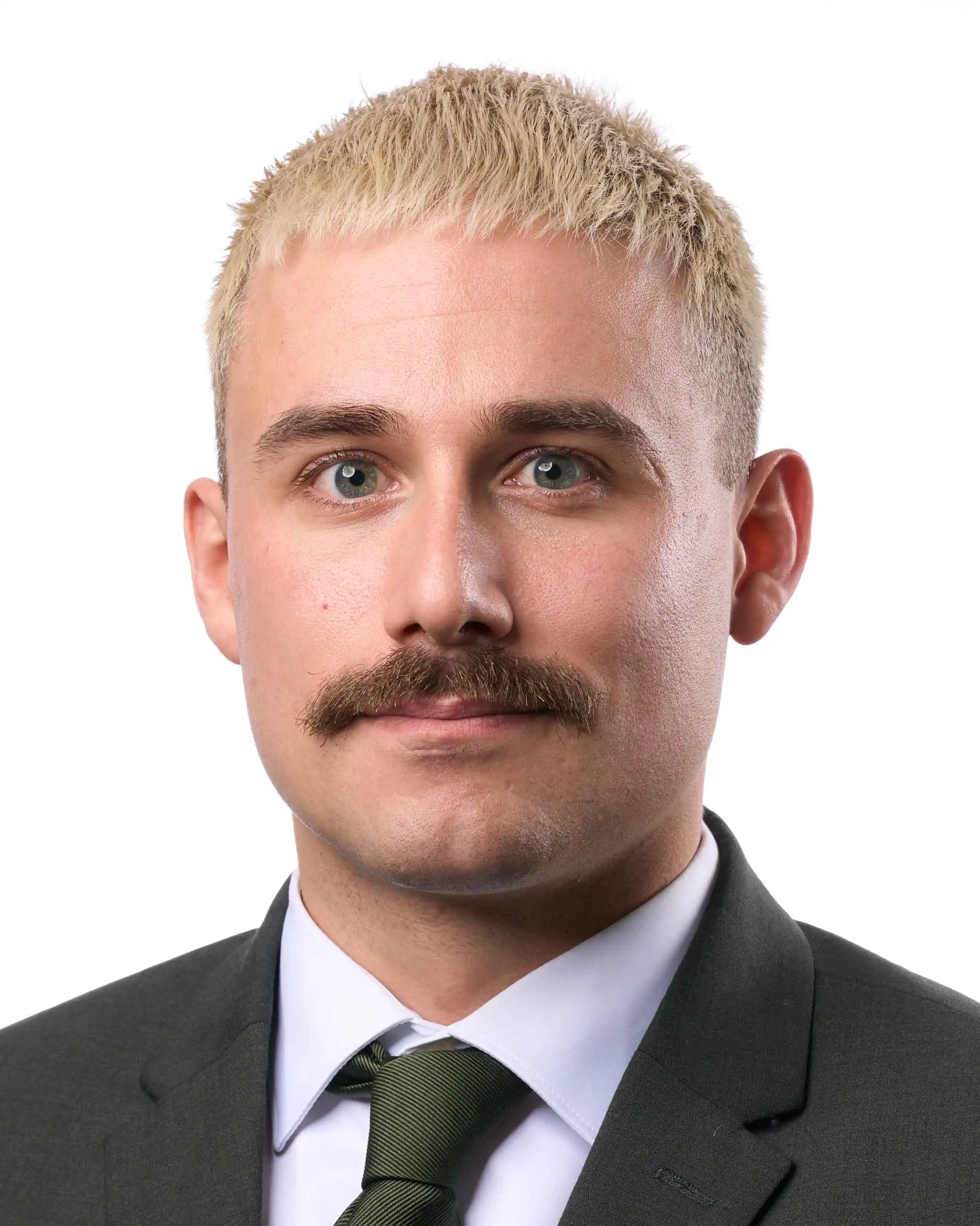
Lukas Sieper | Germany DE | Renew Europe (Renew) | 487 |
| 2 |
|
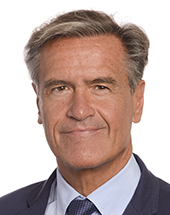
Juan Fernando López Aguilar | Spain ES | Progressive Alliance of Socialists and Democrats (S&D) | 454 |
| 3 |
|
Sebastian Tynkkynen | Finland FI | European Conservatives and Reformists (ECR) | 451 |
| 4 |
|
João Oliveira | Portugal PT | The Left in the European Parliament (GUE/NGL) | 284 |
| 5 |
|
Vytenis Povilas Andriukaitis | Lithuania LT | Progressive Alliance of Socialists and Democrats (S&D) | 273 |
All Speeches (137)
Mr President, we are here today to discuss the European Year of Youth, but 2022 will also be the year of important decisions, as we expect to reach crucial conclusions on the future of Europe. Making 2022 the European Year of Youth and completing the Conference on the Future of Europe cannot be a coincidence. As a young politician and President of the Youth of the European People’s Party, it is a privilege to live in a Union that leads the fight against climate change and shapes an economy not for today, but for future generations. A key cause of younger generations. The environmental and digital transitions are shifting the way our society works, but we cannot deny that we are still trying to recover from a crisis that is not yet over. In fact, we don’t know when it will be over. Yet, every uncertainty can be a tremendous possibility. Every adversity must be a new opportunity. The implementation of Next Generation EU needs to be a tool at the service of young Europeans, providing educational training, ensuring economic growth and delivering well-paid and quality jobs. Young Europeans want a Europe where each generation lives better than the generation before. We – politicians – must take this as a central rule and place the hopes and fears of next generations at the heart of what we do.
Mr President, ladies and gentlemen, we often have a tendency to downplay what we have already achieved, the goals we are achieving. But without, for a moment, reducing ambition for the future, it seems to me of great importance that we know how to evaluate the path we have already taken. As co-author of this Parliament's resolution for the COP, I feel a particular responsibility not only for the establishment of the objectives that we took to Glasgow, but also for their fulfilment, and I do not think it is inappropriate to remind all the Groups here, but also the representatives of the Commission and the Council, who, having still much to do, are also the economic bloc that has already done more and that has worked more for climate neutrality. The fact that our goals are ambitious should not cloud us in relation to the effort and success achieved. We have led Glasgow to seven major goals: the ambition to increase the nationally determined targets to get closer to the 1.5 degree Celsius increase; mobilising resources for adaptation; the agreement on the global carbon market; fossil fuel subsidies; the methane agreement; the halt to deforestation; including all sectors in the decarbonisation effort in national targets, including aviation and maritime transport. Of these seven objectives, in six we have achieved important, I would even say very important, advances, and only the last one has not, at least partially, been achieved. Nothing would be so serious or so treacherous as to find that they were nothing but empty words. This is the time, the time to move from words to deeds, the time to implement the agreements signed, the time to ensure that we do our part.
Global Tax Agreements to be endorsed at the G20 Summit in Rome, 30th/31st of October (continuation of debate)
Date:
20.10.2021 19:15
| Language: PT
Speeches
Mr President, the fight against tax evasion and the use of tax havens is on the agenda and it is a good thing. The agreement that the OECD is preparing to conclude at the Rome summit is a strong political signal and the European Union must be a protagonist, but the political protagonism required must be matched by legislative commitment. If day zero is to celebrate the agreement, day one has to be to work and give effect to what will be agreed. And here, once again, we need the commitment of the States. If fiscal sovereignty is unavoidable, cooperation is inevitable. Profit shifting and aggressive tax planning severely damage the national budgets of countries where many large companies operate. The two pillars of the agreement want to ensure that profits are taxed where they are generated and that there is a minimum tax rate of 15%. These are structural changes that will require ambition, realism and competence, especially in European capitals. The biggest obstacles are sometimes in the details and the changes we want must protect, above all, the rights of our taxpayers, the competitiveness of our businesses and the integrity of our internal market. In order to live up to the ambition that has been announced, we must go beyond statements. It's time to move on to action.
Mr President, money laundering is a particularly serious and complex crime. Not fighting it is not only attacking concrete operations, but it is cutting off the financial flow that fuels terrorism, organised crime and human, drug or arms trafficking networks. The European ambition here is not only justified by the need to recover 1% of the lost European GDP. It is motivated above all by the urgency to stop crimes that violate our values, our fundamental values. The Commission's proposals go in the right direction, but we need to go further, and for that we need the commitment of national governments. We are discussing a reform when the current rules are not properly transposed or applied, as has happened in Portugal. A new regulation is a step forward if it strengthens financial market obligations, without harming the competitiveness of companies. A revision of the directive is welcome if the States comply with it, and a new anti-money laundering authority is a step forward if it actually improves communication between the competent authorities in the States. Fighting the crime of money laundering requires ambition and realism from all of us. This is not just a matter of law, it is an imperative of the rule of law.
UN Climate Change Conference in Glasgow, the UK (COP26) (debate)
Date:
20.10.2021 11:42
| Language: PT
Speeches
Mr President, ladies and gentlemen, no one, absolutely no one, no other economic power has done as much as we have in the fight against climate change. And you have to say it and repeat it without fear: We are the global leaders in setting goals, but also in translating those goals into concrete changes to legislation. The next decade will be, with the legislative initiatives taking place in this Parliament, the decade of the shift towards a new paradigm of sustainability. Europeans, and new generations in particular, no longer tolerate the continued mistreatment of the planet and its biodiversity. But for this reason too, we must be able to represent them properly in their demands. It is no longer enough for us to do our work well and have a society that develops sustainably. We must also put pressure on other countries, and particularly those that pollute the most, to do so, to reduce their emissions quickly. We therefore need strong and effective leadership, leadership that has the courage to say that it is we, Europe, who lead, but also that requires others to do their part, that has the courage to say that we do our part and others do not, and that, for example, China continues to invest massively in new coal-fired power plants, damaging the work and effort done by others. But also that society and environmental organizations have the courage to say so and also to direct their action to other regions of the globe where little or very little is done. For our part, here in the European Parliament, we are going, I believe, with a solid, comprehensive and ambitious position for Glasgow. I want, and I hope, the Commission and the Council to pursue similar ambitions on key issues such as nationally determined targets and the mobilisation of funding not only for climate change mitigation but also for climate change adaptation. How, moreover, can we build a better world if we do not take care of the house that is all?
Madam President, the Banking Union in 2020 faced an unprecedented crisis, but proved stronger and more resilient than a decade ago. The supervisory and resolution pillars were prepared to ensure the financial stability of the banking sector. And that was essential for us to face the crisis with greater confidence. Unfortunately, there is a third pillar that remains incomplete: the European Deposit Insurance Scheme. If there is one thing we have learned from this crisis, it is that interdependence and solidarity are not just words to adorn speeches. Dragging this process leaves depositors more or less protected depending on the country in which they have their income and savings, and therefore is not justifiable. And if we talk about solidarity, we also have to talk about credit moratoria. This was important to protect citizens in the face of an unexpected crisis. Now, in some Member States, the level of claims they check is significant. In my country, for example, the value of moratoria exceeds EUR 36 billion. And while it is true that the priority is the protection of households and businesses, it is no less true that we have to look at the scale of non-performing loans, which remain structurally high in many countries. 2020 was a crisis year in which the Banking Union proved resilient. Hopefully, in a year's time, we will mark the advances that have been delayed for a long time. And we'll be here to defend them.
Reforming the EU policy on harmful tax practices (including the reform of the Code of Conduct Group) (debate)
Date:
06.10.2021 16:57
| Language: PT
Speeches
Mr President, today, when we discuss revelations about aggressive or harmful tax practices, we come to the inevitable conclusion that something has gone wrong. And if it's important to look back and make that assessment, it's even more essential to look forward and realize what we can do differently. The European Union is today a single market integrated into a globalised and increasingly digitalised economy. The borders that the internal market wants to break down have long been missing in the digital market. Opportunities for businesses must mean more growth, more jobs and more investment. And taxation must be an instrument at the service of these objectives. It cannot be a patchwork of holes for tax evasion and money laundering. Just as competition must be fair and fair, so must taxes be adequate and transparent. We must use the instruments that we have competently and effectively. The Code of Conduct needs to be better implemented and the blacklist of tax havens needs to have concrete consequences on the jurisdictions it identifies. It is up to each Member State to define its taxes, who pays them and how much it pays. The European Union must ensure that cooperation has tangible results in the lives of citizens and businesses. Outside, let's speak with one voice. Inside, let's be loyal to each other. With more commitment from the Member States and more leadership from the Union, I am sure we will be able to move forward. It's time to take the first step.
Pandora Papers: implications on the efforts to combat money laundering, tax evasion and avoidance (debate)
Date:
06.10.2021 15:13
| Language: PT
Speeches
Madam President, these are not the first revelations about the use of tax havens for illegal or criminal purposes. And while it is true that not all revelations amount to crimes, it is equally true that there may be evidence of tax evasion and money laundering. This suspicion is sufficient to justify more ambitious and demanding measures. But unfortunately in the past it was not enough! Here, we have to answer three questions. First, what's failing? International negotiations in the G20 and OECD have been going on for too long. In the European Union we do not use the means we have to their full extent, and in each of our states (and in mine this is blatant), governments look the other way. They lack not only ambition, but also commitment to the implementation of European legislation. Second, what do we have to do? Achieve an international agreement on corporate taxation in the era of globalisation and digitalisation. Transform the European Union Code of Conduct and the Black List of Tax havens into more effective mechanisms. Where is the credibility of the list when it ignores jurisdictions like the Seychelles, which came off the list two days after the scandal Pandora Papers Have it blown up? Finally, commit countries to tax transparency rules and exchange of information that facilitate the fight against tax fraud and evasion. Third, when and how to do it? This is the time to decide. Today we are debating in the European Parliament and our positions are clear, but it is the Member States that have the power to decide. We have no time to waste and the first step is to sit governments at the same table. Ladies and gentlemen, the choice before us is clear, and it is between the courage to be more ambitious or to bury your head in the sand of some tax haven. We here do not want to wait for the next scandal. We want governments to follow us to avoid it.
Implementation of EU requirements for exchange of tax information (debate)
Date:
15.09.2021 15:12
| Language: PT
Speeches
Madam President, Commissioner, ladies and gentlemen, taxes are one of the pillars of national sovereignty. We must not question this principle of fiscal sovereignty, just as we must not turn a blind eye to the challenges of a globalised economy and an internal market as integrated as ours. Administrative cooperation in tax matters is essential for the effort to combat tax fraud, tax evasion and money laundering. The exchange of information between Member States is a fundamental instrument for the Union to be an area of fair taxation, where everyone pays what he or she owes and only what he or she owes. This exchange of information needs to be strengthened in the progressive increase of information, but above all in its quality. What we have found with this report is that all the Member States, all of them, are failing in this work and that is the main warning that we must leave behind. We need to exchange more information and better information, but first we need to be competent to comply with what the law already dictates. Let it be clear: we do not want this reinforcement of the exchange of information to be just an administrative issue, it cannot be indifferent to European citizens. With more and better information we want to reduce red tape, save on administrative burdens and free resources for tax authorities to better fulfil their mission, always with the utmost respect for taxpayers' rights, from data protection to privacy. More information means more responsibility, better information must mean best practice and enhanced cooperation must mean results. This is what this Parliament must do and what European citizens deserve.
Review of the macroeconomic legislative framework (debate)
Date:
07.07.2021 21:47
| Language: PT
Speeches
Madam President, Europe is on the right track. Today's economic forecasts are encouraging, but the reality is still very different from country to country. While some Member States grow above 7%, others, such as Portugal, fall short of the European average. National governments must do their part. We do not need propaganda about bazucas, European money, but concrete initiatives to improve public investment, boost private investment and create more jobs. The general escape clause of the Stability and Growth Pact is an important flexibility mechanism. We have another year and a half to make the most of these conditions. But we must not stop here, we must seize this opportunity to reform economic governance. First, the public debt. We need a mechanism that is based on the control of public expenditure with attention to the concrete reality of each country. The vaccine for the debt virus is a responsible fiscal policy, with smart spending and below growth levels. Secondly, the budget deficit. We need clear and transparent criteria for controlling deficits. Assessing only numbers and percentages is worth little, captivations and extraordinary measures, for example, guarantee lower numbers, but do not mean a structural reduction. Thirdly, fiscal policy. Taxation is a Member State competence, but fraud and tax evasion or money laundering are borderless phenomena. We need more cooperation and coordination to improve our tax systems and free Europeans from tax burdens that threaten the competitiveness of our economies. Ladies and gentlemen, we didn't have much time to respond to the health emergency, but we did. We don't have much time to relaunch our economies, but let's do it.
General Union Environment Action Programme to 2030 (debate)
Date:
07.07.2021 18:24
| Language: PT
Speeches
Mr President, ladies and gentlemen, there are no achievements without a good strategy and a good implementation. Both are crucial to achieving the goals. The European Green Deal strategy, or the Green Deal, is a very good and very comprehensive strategy, but it needs equally good operationalisation and implementation tools if we are to achieve our objectives. One of these instruments is what we discussed here today: the General Union Environment Action Programme to 2030. The goals are ambitious but achievable. Contrary to what extremists such as reactionary denialists or environmental terrorists want, the Program makes it possible to reconcile growth with respect for the environment, working to decouple economic growth from the use of resources and introducing the concept of the economy of sustainable well-being. It will also be a tool for biodiversity protection, zero pollution ambition and, of course, climate neutrality. It will also provide the climate environmental data on the overall efforts of the European Union needed to assess the progress made and allow policymakers and all Europeans to know whether the Union and its Member States are on track to achieve the promised results. A good idea is of no use if it is poorly implemented in practice. This programme has the great importance of being the concrete translation of our environmental and climate ambitions.
Madam President, ladies and gentlemen, moments of difficulty, or unexpected shock, in a pandemic are also often moments of learning. With these difficult times and with the virus we all learn. Scientists have learned, health professionals have learned, and we politicians have learned. In all sectors there has certainly been a learning of great importance. Although the pandemic is not over yet, we need to adjust our procedures, our activities and our organisations, based on learning what we did not know before and know today. We have learned that the Union must be more effective in managing supply chains and stocks of medicines and medical devices. We have learned that we need a better defined legal framework to manage the response to such scenarios. We have learned that we need greater Union preparedness in the event of a public health emergency. We have learned that we need to improve information management. Data collection and management appears to be central to the response to a pandemic. A stronger European Medicines Agency will help in this preparation, helping to prevent shortages of medicines and critical medical devices, and will allow us to be faster in approving but also in developing medicines. Only then will we be preparing Europe for future threats.