
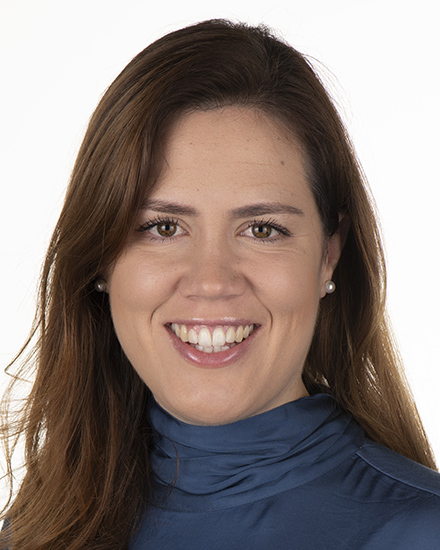






| Rank | Name | Country | Group | Speeches | |
|---|---|---|---|---|---|
| 1 |
|
Lukas Sieper | Germany DEU | Non-attached Members (NI) | 390 |
| 2 |
|
Juan Fernando López Aguilar | Spain ESP | Progressive Alliance of Socialists and Democrats (S&D) | 354 |
| 3 |
|
Sebastian Tynkkynen | Finland FIN | European Conservatives and Reformists (ECR) | 331 |
| 4 |
|
João Oliveira | Portugal PRT | The Left in the European Parliament (GUE/NGL) | 232 |
| 5 |
|
Vytenis Povilas Andriukaitis | Lithuania LTU | Progressive Alliance of Socialists and Democrats (S&D) | 227 |
All Contributions (139)
The Autumn 2024 Economic Forecast: a gradual rebound in an adverse environment (debate)
No text available
The outcome of the G20 Leaders' Summit (debate)
Colleagues, in 2024 there are 733 million malnourished people in the world. In 2024, there are 2 billion people in the world without access to safe drinking water. In 2024, 3.5 billion people worldwide do not have access to basic sanitation. The future is our common cause. The conclusions of the G20 meeting and this weekend's agreement at COP29 clearly show that the daily news about the end of multilateralism has been grossly exaggerated. The priority of sustainable development, the much-needed energy transition and climate action are also evidence that, even in difficult geopolitical circumstances, the collective effort of nations with the future of the planet echoes the concerns of world leaders. The creation of the Global Alliance against Hunger and Poverty, a Task Force For the Global Climate Change Mobilisation they prove that we have to reconcile environmental protection and the fight against poverty. These initiatives are an example of the ability of nations to unite around common causes. And the future is our common cause. It is up to us, as political leaders, to do much more than make decisions. We have to promote dialogue, trust and listen to science, listen to communities, listen to people, engage people. As political leaders, we have a responsibility to ensure that no one is left behind. As political leaders, we must work together to solve people's problems. Together, with cooperation and ambition, we can turn aspirations into reality and ensure that we do not fail future generations. Because the future is our common cause.
Fight against money laundering and terrorist financing: listing Russia as a high-risk third country in the EU (debate)
Mr President, Russia and its people are not to be confused with Putin and his regime. We stand in solidarity with the Russian people, who are subject to a dictatorship, but we must be uncompromising with the regime that is surviving at the expense of war, violence and corruption. It is to combat this corruption, which feeds the Kremlin oligarchy, that we cannot compromise on combating money laundering and the financing of terrorism. International organizations are failing in this fight. Europe cannot follow this bad example. Russia must be blacklisted, not only because it is technically admissible, but above all because it is politically demanding. The 1000 days of the illegal, unjustified and illegitimate invasion of Ukraine is not only a date, it is also a warning. Europe will be up to the task. Long live freedom!
UN Climate Change Conference 2024 in Baku, Azerbaijan (COP29) (debate)
Madam President, ladies and gentlemen, we face challenges and uncertainties that test our determination and courage, but it is precisely at these moments that our responsibility becomes an invaluable privilege. Deciding the present and future of millions of Europeans is an honour that should inspire us to act with conviction and hope. Faced with the discouragement that many Europeans feel, and even when we ourselves feel discouraged, we must remember that we have in our hands the opportunity to make a difference. We can choose to act instead of lamenting, decide instead of complaining and care instead of blaming. This is the time to show that we are able to turn challenges into opportunities. Our responsibility requires a firm commitment to negotiation, dialogue and the defence of our ideals. But above all, it demands that we reaffirm Europe as the best place in the world to live in peace, freedom, democracy, justice, health and harmony with nature. We must renew our commitment to Europeans, trusting in our abilities and values. We are ready to establish alliances and partnerships, but always based on our will and never on the anguish of need. The world is changing rapidly and it is time for Europe to move from the immaturity of adolescence to the responsibility of adulthood. The affirmation of Europe is an urgent need. If the world becomes less multilateral, Europe must be more united, more capable, more ambitious. The challenges we face require strong and determined leaders, leaders who do, who deliver. Time is our greatest and most real adversary. As the Portuguese Nobel laureate José Saramago said: Don't be in a hurry, but don't waste time. Let us not be in a hurry to decide without respecting democracy, let us not be in a hurry to give up consensus, let us not be in a hurry not to listen to people. But let's not waste time either. Let us not waste time on moving forward, let us not waste time on defending Europe, let us not waste time on saving the planet, let us not waste time on politics, but on politics. Fundamentally, let us not waste time waiting for the world to adjust to our imagination. We must look at reality and shape it according to European values. In recent months, this spirit has been present in the construction of this resolution. We started from 623 amendments negotiated until we reached 58 compromises. This resolution is a testament to our collective commitment to tackling climate challenges and I would like to highlight some key points of this resolution. It recognises the European Union's leadership in global climate finance, calls for more contributions from major emerging economies, highlights the role of the European Union and calls on emerging economies, such as China, to step up climate action, including on financial commitments. Europe cannot afford the climate transition alone. It relies on the European Union’s climate diplomacy to create fair conditions for European industry. It is possible to decarbonize to grow. It focuses on implementing the 2030 package in a simple, cost-effective way, with decarbonisation commitments for the coming decades. It prioritizes clean technologies and low-carbon energies. It recognises the efforts of agriculture, highlighting farmers as partners. Underlines the importance of water management, both because of the scarcity and floods that affect Europeans so much. It supports the phasing out of fossil fuels and subsidies and highlights the need to expand carbon pricing mechanisms to achieve the goals of the Paris Agreement. Finally, he recalls the need for a just transition that protects the economy, agriculture and the rights of indigenous peoples. Colleagues, this resolution reminds us of the urgency of saving the planet, of taking care of our common home, for ourselves and for the next generations. We need to be more mobilized than ever to keep global warming below one and a half degrees. Next week, together with my colleagues, I will have the honour of representing the European Parliament at COP29. Beyond the noise, we set out together, with determination and hope, to continue building a better future for all on a sustainable planet.
The devastating floods in Spain, the urgent need to support the victims, to improve preparedness and to fight the climate crisis (debate)
Madam President, allow me to say a few words in Spanish. I would like to express my condolences to all those who lost family and friends in this tragedy. What happened in the Valencian Community, in Spain, on our continent, in our Europe, proves the seriousness of the climate crisis we are facing, but it also reinforces the importance of strong leaders, capable of responding to moments of crisis like this. We have all seen news of means of relief ready to travel, but with no order to act. Sánchez, faced with the suffering and revolt of the population, chose to hide. Ladies and gentlemen, a leader who is not capable of dealing with the pain and revolt of the population does not live up to the responsibilities entrusted to him. But we in the European Union also need to strengthen the support mechanisms to deal with events like this. We must be aware that only with more action, more coordination and multilateralism and dialogue will we be able to respond better to tragedies such as the one in Valencia.
Abuse of new technologies to manipulate and radicalise young people through hate speech and antidemocratic discourse (debate)
Madam President, hate speech online It may be virtual, but the consequences are very real. Studies show that in countries such as Portugal, one in ten young people is a victim of this type of violence – a vicious circle that perpetuates itself, with victims becoming aggressors, and which affects generations. While offenses are virtual, they do have an impact on real lives; and the story of Nicole Fox, Coco, is a stark example, as the EPP has shown in a recent campaign. However, men and women suffer differently from this phenomenon. In Portugal, a Telegram group where 70,000 participants, people, debauch the intimacy of women and, in some cases, family members. This case deserves our condemnation and consternation. Whether the participation, presence or very existence of this group deserves our repudiation. This is an example of a case, and let me use the word, of a disgusting and unacceptable case, the answer to which can only be one: means for investigation and heavy hand on feathers. But this fight cannot turn into digital censorship. We cannot even fall into the temptation of privatising responsibility for managing digital public discourse, by holding only digital platforms accountable. That would be private censorship. We need more judicial empowerment, more collaboration with digital platforms, more awareness among users – especially younger ones – of the use and risks of social media. The black hole of the digital world is growing. Respect between men and women underpins coexistence, concord and harmony in society, and this, yes, must be real.
U-turn on EU bureaucracy: the need to axe unnecessary burdens and reporting to unleash competitiveness and innovation (topical debate)
Mr President, I propose that we imagine the life of someone who innovates and wants to launch, for example, a startup in Europe. The first step: the introduction, between bureaucracies and administrative procedures, of the first levies and taxes; Our entrepreneur resists. The second step: investment. With a highly fragmented capital market, there is little or no access to venture capital. Banks remain, often risk-averse, because they too have to fulfil thousands of requirements for each investment. And our entrepreneur goes into debt and still resists. Step 3: implementation. A day to day, which should be focused on the idea of business and growth, is passed to report to the various services of the State; and our entrepreneur is discouraged, but resists. Finally, it has the first results. With them, more reports to the public administration, more fees, more taxes. Here, it is normal for our entrepreneur to start looking for alternatives. The persistence of our companies is remarkable and we must respond with simplification, modernisation and streamlining. We cannot pass 13 000 European laws, while the United States makes 3 500. We cannot reward merit with bureaucracy. We cannot look at the results as a window of opportunity for more taxes. Less and better legislation, fewer administrative obligations – but efficient, transparent and agile –, more simplification. These are the commitments we have to make to our entrepreneurs - I will finish now, Mr President - if we do not want to see them start from a Europe that must also persist.
Empowering the Single Market to deliver a sustainable future and prosperity for all EU citizens (debate)
Madam President, I am sorry I did not understand. There wasn't really a question. It was yet another declaration of interests, which, unfortunately, the honourable Member did not have the opportunity to put into practice.
Empowering the Single Market to deliver a sustainable future and prosperity for all EU citizens (debate)
Madam President, the European Union's participation in the global economy is falling. Asian economies are outpacing them at breakneck speed, as confirmed by the Letta report and the Draghi report. The living conditions of Europeans are deteriorating. GDP per capita in the United States has grown twice as much as in Europe since the creation of the Single Market in 1993. Therefore, we cannot continue to lag behind. And what is most shocking is our production of essential goods, including in areas such as health, which has fallen from 53% to less than 25% in just over two decades. We are dependent on others when we have never needed so much to ensure our strategic autonomy. Enrico Letta said it just now, but unfortunately we continue to see more than EUR 300 billion of Europeans' savings diverted outside Europe. It is tragic, because we are financing the economy of others, rather than strengthening our own. We want to have a more competitive market, so we need a complete banking union. We want to protect our citizens' savings and relaunch innovation, we need a capital market union. And above all, we really need to reform the European single market by adding the free movement of knowledge to it, because only with research and innovation will we be able to have more globally competitive companies. I think we have enough reports. We really need decisions, and it's time to make them.
The rise of religious intolerance in Europe (debate)
Madam President, hatred, intolerance and fanaticism must not take place in the European Union. Madrid, Copenhagen, Paris, Nice, Brussels: Only five cities have witnessed the horror of terrorism in the past two decades. They have been victims of those who claim to defend a faith and a cause – in fact, victims of those who insult that faith and use that cause to justify death, destruction and violence. They don't move in favor of anything. They are moving against precisely what Europe stands for: freedom, equality and hope. Here in Europe, we must combat any form of hate speech based on religious confessions, both on and off social media. It is essential to protect all citizens, regardless of their faith, from harassment or violence on the streets. We must ensure that places of worship, whether synagogues, mosques or churches, remain spaces of peace, tolerance and mutual respect. And that is the reason why the youth of the European People's Party has been denouncing the persecution of Christians in Nigeria and raised awareness about the rising of antisemitism in the world. That is why, in this Parliament, we do not shy away. We do not hesitate in denouncing what is happening with the Uyghurs in China. And that is why we condemn the hideous attack of Hamas one year ago with the same conviction that we call on a ceasefire that saves innocent lives in the region. Madam President, politicians, families, schools and organisations: Each of us has to do our part. Hatred and intolerance are not eliminated by decree; it is an existential plan – that yes – a fight worth fighting.
Taxing the super-rich to end poverty and reduce inequalities: EU support to the G20 Presidency’s proposal (topical debate)
Mr President, ladies and gentlemen, the slogan 'Tax the rich', or the super-rich, or whatever that is, hides one thing: an ideological agenda against private enterprise, business, entrepreneurs and profit. An agenda that has led to the highest tax burdens ever in some Member States, such as Portugal, with maximum taxes and minimum public services. Why? Because with record taxes, we have record immigration and record investment flight. To those who take advantage and instrumentalize this political debate, which polarizes and divides societies, I leave a challenge. We are at the beginning of a new mandate. Will we finally have the opportunity to reform the VAT of the digital age? Are we going to fight the misuse of shell companies? Are we going to improve the rules against tax evasion? There are at least 1 trillion euros lost to tax fraud and evasion. Instead of chasing down the rich, why don't you help us fight the criminals? No one here denies that eradicating poverty is a key challenge for the European Union. We all agree, but poverty is fought with job creation, better wages, investment and wealth generation. Equality is achieved through sustainable growth, intergenerational justice and public policies that protect our social market economy. But tax justice is also about freeing people, families and businesses from excessive tax burdens so they can save or invest in their futures.
The extreme wildfires in Southern Europe, in particular Portugal and Greece and the need for further EU climate action on adaptation and mitigation (debate)
Since Mr Oliveira almost made me the protagonist of his speech, I would like you to say in this House where the European Union has failed in climate action. We passed the European Climate Law at the peak of the pandemic, made a set of proposals, worked on packages such as Fit for 55, to have a European continent ready to be climate neutral in emissions by 2050. I would like you to say, in this House, to the people listening to us, why the European Union has failed so much, when just now it brought to this debate the need for us to strengthen the integration of firefighting resources. So I'd like you to say, In terms of climate policies, where has the European Union failed?
The extreme wildfires in Southern Europe, in particular Portugal and Greece and the need for further EU climate action on adaptation and mitigation (debate)
Madam President, it is now, ladies and gentlemen: The time to repair the roof is when the sun shines. It is now that we have to work so that we never have to mourn victims again. And here it is important to know two things. The first is whether the Commission and the Council - which I regret is not present in this debate - really want to cut EUR 155 million in the proposed budget for the European Civil Protection Mechanism, leaving people and their livelihoods even more unprotected. Two, is whether or not they will comply with our proposal, approved here in this House, to move forward with a joint firefighting fleet. We must guarantee the economic conditions of those who live in these territories and help the victims of the fires, as Portugal is doing, by supporting, for the first time, the replacement of agricultural equipment that has been destroyed by the flames. The view brought to us by the radical left that the forest is more protected without human presence, without economic activity and abandonment is negligent, wrong and promotes the forest fires and tragedies we have seen. Enough of the debates; it has to be done. People are tired of waiting, they are tired of waiting for answers and it is up to us politicians to do what the citizens want. It's now.
The devastating floods in Central and Eastern Europe, the loss of lives and the EU’s preparedness to act on such disasters exacerbated by climate change (debate)
Mr President, ladies and gentlemen, I am here with you in plenary, but my thoughts are in Portugal. In the country where I live, the fires, aggravated by the intense drought, killed seven people, injured dozens and destroyed lives and property. I therefore want to leave a word here in this Parliament to the victims and to all those who see their lives affected. I would also like to say a word of deep gratitude and gratitude to the Portuguese firefighters, to our peacekeepers, as we call them in Portugal. I am not going to tell you that Europe must solve these fires. Rather, I come to remind you of a common Europe, built on conquests and difficulties. A Europe that has sought to respond with one voice to pandemics, the war at our doorstep or climate change. We all know that climate change has multiplied the frequency and severity of tragedies such as floods or forest fires. And we all know that we all, all of us, suffer more and more from these calamities. So we can, we must prepare together to respond to them, because a joint response will be more effective, because it will be stronger, and it will be more efficient, because it will be shared. It is for all the victims of these tragedies, present and future, that I cannot remain silent here about the proposal to cut the budget of the European Civil Protection Mechanism in 2025. How is it possible, I ask, for anyone to face a cut of EUR 155 million in the European Civil Protection Mechanism, when every year we see the reality worsening? Irresponsibility is paid for with losses, not only of property, but also of human lives.
State of the Energy union (debate)
Mr President, ladies and gentlemen, we understand today, better than ever, the cost of not having an energy union, the cost of not having energy autonomy. The war in Ukraine and soaring energy prices are a heavy cost for households and businesses, but also a wake-up call to be quicker to adopt renewables. We have a lot to do to relaunch a competitive economy and Europe. Even today, in this House, we heard Mr Draghi refer to his report on competitiveness. We need to invest in technologies where we are leaders, such as wind energy, invest in grids and infrastructure, in particular energy storage, reindustrialise Europe based on energy from renewable sources and ensure a level playing field for our businesses. I have been hearing about competitiveness in this Parliament for five years and we have heard it again today. But we will not be competitive without abundant, clean and cheap energy for our companies, for our industries, without infrastructure, without autonomy, without this Energy Union. So we need smart public policies that accelerate private investment, rather than locking it into a tangle of bureaucracy, licenses, paperwork and bureaucratic procedures. We need a sense of urgency in implementation.
Announcement by the President – Election of the European Ombudsman
Madam President, ladies and gentlemen, in the West of our continent, we have Portugal on fire, and in Eastern and Central Europe, floods. There are many victims and there are many events happening at this moment in our collective history. It is in this sense that I take the opportunity to launch a joint reflection on the importance of continuing to share and strengthen integration mechanisms and, in the specific case, civil protection. I did not want to let this opportunity pass without giving a word to all the victims and, in particular, to the firefighters who, with the courage and bravery that we know them, are now on the front line to help those who need it most. Finally, I call on us once again to continue on the path of strengthening the European Civil Protection Mechanism, which has saved so many lives and which, in the image and likeness of what we experienced during the Covid-19 pandemic, can continue to respond to these emergencies.
Statement by the candidate for President of the Commission (debate)
Madam President, ladies and gentlemen, good governance is the best antidote to extremism. It's good not to forget the last five years. Five years of difficulties, five years marked by the virus, by fear, by the difficulties caused by the increase in the cost of living of Europeans, by war. But with dialogue, commitment and hard work, we are overcoming these challenges. We have cooperated, as never before, in the area of health. We have supported each other in rebuilding our economies. We are taking an increasingly joint path in defence and, in the Commission, the face of this good governance is that of Ursula von der Leyen. Governance which is concerned with addressing the real problems of Europeans' lives, the problems of the cost of living, essential goods, transport, food, the very important right to housing, democracy, security and defence. This is the governance we need, this is the governance that Ursula von der Leyen has put in place, always with the coherence to stand by her word, choosing moderation, always negotiating, but never giving up her principles and convictions. We have a responsibility to continue with an ambitious reform agenda that will help solve the problems we face. Because, back to the beginning, the best antidote to extremism is good governance. So let us continue, here in Parliament and in the Commission, to make good governance our brand and legacy for future generations.
Statements by the President
Madam President, I would also like to thank our Vice-President for his words. April 25, 1974 opened the door to freedom and democracy. Fifty years ago, we Portuguese were more than ourselves. At the helm of our own destiny, we chose to live free and equal and that day inspired others, for Europe, to fight for freedom. Today we celebrate more than a revolution. We evoke the values that identify us as a people, we honor the Constitution that April brought us and, without hesitation, we raise our voices in defense of freedom. This is our commitment, our commitment to freedom. The one that a generation has achieved with the courage of the men and women of 74, the one that our generation stands for, in the name of the future. It is this freedom that we have gained together that has brought us to Europe. There is no European Portugal without the 25th of April, just as there is no complete Europe without a free, whole and committed Portugal to European integration. Long live Portugal free! Long live a democratic Europe! Long live the 25th of April!
The sixth Anti-Money Laundering Directive - Anti-Money Laundering Regulation - Establishing the Authority for Anti-Money Laundering and Countering the Financing of Terrorism (joint debate - Anti-money laundering)
Mr President, money laundering is a crime that hides other crimes and among these is the financing of terrorism. In a Europe that we want to be fairer and more secure, we cannot give up a millimeter in the fight against corruption. This week we celebrate democracy. As we recall the 25th of April 1974, we remember that democracy is not a given, but an achievement that is achieved every day with concrete decisions. That is why it is so important to defend transparency, whether from politicians or from football clubs. Whoever has the power to decide has the duty to be accountable. Where millions circulate, there must be prevention and scrutiny. Thus, we defend the democracy that Portugal inaugurated on April 25, 1974. No shouting, no scandal, no dialogue, no work.
The attack on climate and nature: far right and conservative attempts to destroy the Green Deal and prevent investment in our future (topical debate)
Mr President, ladies and gentlemen, the far left is now in the 25th hour of its term of office trying to correct its mistakes. On the one hand, look for the old amalgam technique: To pretend that all those who do not follow its dictates are the same, retrograde humans who seek to deplete natural resources and destroy the environment. The old technique, confusing intentions with results and emotions with solutions. Groups that call themselves ‘green’, but were the group with the most votes against the European Green Deal legislative acts. No, no, no. Not here. They won't pass. Their supposedly good intentions, of the radical left, do not bring results. Here, we are well aware of what needs to be done to halt climate change and conserve the environment, biodiversity and the entire planet. Therefore, we do not accept propaganda, a campaign made up of propaganda and emotions that does not translate into motions. We need to focus on innovation, clean technologies, the circular economy, renewable energy. We need political leaders who know what is fundamental and do not get lost in political skirmishes. We need the radical left in this plenary to approve the Net-Zero Industry Act. This is a bet on the creation of quality jobs and growth, a bet on the competitiveness of European net-zero industry so that we do not lose our entire industry to other countries, such as China. We need the Left, contrary to what it did in this mandate when it voted against the European Climate Law, to be able to distinguish hope and solutions from ideological utopias and mere proclamations. Here, we are clear - I will finish now, Mr President - we are in favour of the climate, we are in favour of the planet, we are in favour of people and we are in favour of economic growth. We are for the future.
Regaining our competitive edge - a prosperous EU in a fragmented global economy (topical debate)
Mr President, what is Europe's main competitive advantage? It is the internal market. The answer is obvious, but the policies must be consistent. We will only be competitive if our market is fully integrated. We will not have an integrated market as long as we invest only 2.2% of GDP in research and development and as long as countries like Portugal invest half of Belgium or Sweden in relation to GDP. We will not have an integrated market as long as European countries, such as Portugal, remain in the lowest places of the tax competitiveness index and we will not have an integrated market until we bet on the Capital Markets Union and, by the way, on financial literacy for all citizens. Increasing our competitiveness is a mission for everyone, the Union, the State and businesses. I trust European companies, let's do our part now.
European Central Bank – annual report 2023 (debate)
Mr President, President Lagarde, 2023 was a year of fighting inflation, which, as we know, particularly affects lower-income families. We are now seeing the results of monetary policy and a decline in inflation which, we all hope, can continue and stabilise at the 2% target over the medium term. Good news that is still not enough. Households continue to face major difficulties in meeting their claims, especially in housing loans, and expect clear signs of relief from this pressure on their budgets. At the same time, citizens continue to see policymakers dragging a decision on the European deposit insurance scheme almost a decade after the proposal. What people expect from us, from politicians, are answers, they are decisions. These are the answers we are asking the European Central Bank for, but they must also be given by this Parliament and by the national governments.
Quality traineeships in the EU (debate)
Mr President, four out of five young people in the European Union have taken a traineeship to enter the labour market. In addition, in Portugal, companies hire more than half of the trainees they host. These data demonstrate the importance of traineeships for the start of young people's working lives. But it is possible to do better, much better. As we know, many traineeships are limited to administrative or low-level tasks, experiences that do not contribute to the professional development of our young people. We need to ensure that clear traineeship rules are properly recorded. We need traineeships to have clear learning objectives. We need young people to have access to transparent information on pay. But more needs to be done for youth employment as a whole. Recent Eurostat data indicate that Portugal ranks second among the European Union countries with the highest youth unemployment. And, worse, many young employees with very low wages who do not allow them to pay the rent of a house to live and, as a result, one in three young Portuguese sees only one way out: emigration. Young Europeans are generally frustrated about their living conditions and governments are not responding to them. It is time for national and European political leaders to provide answers to young people and put their concerns at the heart of political action. The June 9 elections are an opportunity to move from words to deeds.
EU2040 climate target (debate)
Mr President, Europe is ahead of any other power in the fight for climate change. We have done more than any other, but this result is mainly due to people, Europeans, our companies, because emission reductions are not made by decree. And now we are being asked to make an additional effort: The overwhelming majority of the 90% reduction effort will be made by 2040. But the effort to safeguard the planet cannot be made by Europe alone. And even if we can assess the feasibility of this goal, we need a Europe that demands more from the rest of the world, demands more from the United States, demands more from India, demands more from China. We have to be all or all of our efforts are going to be null or useless. So yes, we're going to keep the ambition high, but we're going to demand more from our other counterparts, because we're not going to solve the problem alone. And meanwhile, here in Europe, we need to invest more in carbon capture and removal. We need to invest more in our industrial competitiveness, clean technologies and fair trade and competition.
Instant payments in euro (debate)
Madam President, there are, in fact, few European laws that have as much impact on our lives as those that regulate payments. Almost every day we buy a product or hire a service. And of course, we pay. That is why we need payments in Europe to be safe, easy and fast. In fact, we really need them to be instantaneous. This Regulation therefore goes in the right direction: ensure that our payments, our transfers, are instantaneous. And in the era of digitization it no longer makes sense to wait days for a transfer. Demand this speed from the market, while opening up space for financial technology companies, many of them start-ups, it means more than supporting competition. It is to encourage technological innovation and therefore the competitiveness of our economy. And we will continue this work with the payment package even before the end of this parliamentary term. I am frankly tired of seeing national governments ignoring these reforms while justifying their failures with the European Union. You don't pay farmers because Europe won't let you. Police officers or teachers are not increased because of an interpretation of European budgetary rules. Airports and railways are not decided because European funds are lacking. The excuse is, he can't take it anymore. Europe discusses, decides and does. And this report really is proof of that. We will go further and governments would be welcome to follow this work as well.