
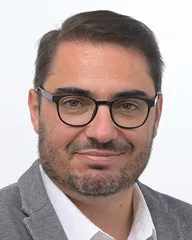
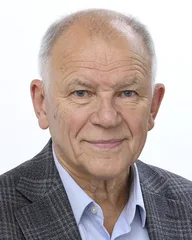
| Rank | Name | Country | Group | Speeches | |
|---|---|---|---|---|---|
| 1 |
|
Lukas Sieper | Germany DEU | Non-attached Members (NI) | 390 |
| 2 |
|
Juan Fernando López Aguilar | Spain ESP | Progressive Alliance of Socialists and Democrats (S&D) | 354 |
| 3 |
|
Sebastian Tynkkynen | Finland FIN | European Conservatives and Reformists (ECR) | 331 |
| 4 |
|
João Oliveira | Portugal PRT | The Left in the European Parliament (GUE/NGL) | 232 |
| 5 |
|
Vytenis Povilas Andriukaitis | Lithuania LTU | Progressive Alliance of Socialists and Democrats (S&D) | 227 |
All Contributions (100)
Commission Work Programme 2026 (debate)
An important part of the European Commission's 2026 work programme bears the Social Democratic seal. Thanks to the momentum of our Group, the Union now has a European affordable housing plan. For Spanish socialists, housing is not just another market good, as liberal and conservative forces believe. Access to affordable and decent housing is an internationally recognised right, enshrined in Article 47 of the Spanish Constitution and in the Charter of Fundamental Rights of the European Union. It's not just about finding a solution to the problem of tourist flats. We Socialists propose a European plan against speculation, a plan involving local administrations, with public investment and a new regulation on aid to groups with fewer resources, especially young people. There is no dignity without jobs and without rights. That is why we have achieved an EU anti-poverty strategy, including the reinforced child guarantee. Socialists believe in a Europe that protects and progresses, that unites generations and territories, that does not shrink from the future, but conquers it.
Extreme weather events in particular in Portugal, southern Italy, Malta and Greece: European response in strengthening readiness, preparedness and solidarity mechanisms (debate)
No text available
Amending Regulations on agricultural products as regards market rules and sectoral support measures in the wine sector and for aromatised wine products (debate)
No text available
Preparations for the EU-India summit (debate)
Madam President, Mrs Kallas, why is there such a rush to close this summit with India when there are no wickers for a trade agreement that is balanced? Haven't we had enough with the photo of Scotland between Trump and Ursula von der Leyen? Why force an agreement at any price? We're not signing a blank check with India. We freely defend trade agreements, we defend multilateralism; But we defend them based on goodwill and reciprocity. At the moment, this has nothing of reciprocity, nor of equilibrium, nor of even approaching a proportional system of equivalences. Of course, there is no evidence to suggest an approach to meeting our standards in human rights, in the Paris Agreement or in equality between men and women. Are you in a position to tell us that the Indian Government has committed itself to making some effort? The answer is no, so why force clearly what is opposed to a will to exchange goods and services, but quite the opposite? India is not mature, Mrs. Kallas, in no case is it mature. Then why force it? The Commission knows this, it knows that it is very forced. We cannot let ourselves be twisted by India or anyone else. It's all right now. The European Union must be courageous and exercise soft power, truly exercise it, and export our values. Do not retract them when someone imposes on us a way of understanding the world that is light years away from our way of seeing it. Therefore, courage and forcefulness: Yes, trade agreements, but not unbalanced.
Breeders' protests following a lumpy-skin-disease outbreak in France: implications of the EU approach on sanitary and on animal health (debate)
Madam President, animal diseases have become one of the biggest challenges for European livestock farming. Nodular dermatosis, but also African swine fever or avian influenza are having a huge health, economic and social impact on our rural territories. The European Union has responded in accordance with its legislation: early detection, movement restrictions, vaccination where appropriate and, in many cases, mandatory slaughter to contain the spread. This response has been key to protecting animal health and the internal market, and it must be recognised. We need to know, Commissioner, how you intend to speed up the purchase of emergency vaccines in order to provide the Member States with the necessary tools to be able to stop the expansion. Having said that, we must also listen to the sector. Today we find situations in which about twenty infected animals lead to the slaughter of entire farms, as has happened in outbreaks of lumpy skin disease in cattle or in outbreaks of swine fever, even in farms with high health standards. The impact on the farmer is devastating and, in the case of native breeds or extensive systems, the result or situation is irreversible. That is why, without questioning the European framework or, of course, the scientific basis, I think it is the best time to open a reflection on greater regulatory flexibility that allows for more proportionate responses, better risk segmentation and greater protection of livestock assets. Protecting health is essential. You have to make decisions based on science. And we must protect those who support European livestock farming, who also need our support. That is why the balance has to be revised, Commissioner. We support the livestock sector, which is increasingly suffering from the impact of animal diseases, which is also linked to the enormous structural difficulties they have in livestock farming. That is why I take the opportunity to ask for more funds to compensate for these losses and to strengthen the budget to deal with this type of crisis.
Amending certain CAP Regulations as regards the conditionality system, types of intervention in the form of direct payment, types of intervention in certain sectors and rural development and annual performance reports, data and interoperability governance, suspensions of payments annual performance clearance and controls and penalties (debate)
Madam President, this reform stems from farmers’ protests in May 2024. The message then was clear: less bureaucracy, more flexibility and rules adapted to the reality of the countryside. And today we give you an answer, so congratulations, André Rodrigues, and congratulations, Mr Hansen. The CAP simplification package strengthens support for small farmers by raising payments to EUR 3 000, increases investment support to EUR 75 000 and rejects new crises being addressed at the expense of direct payments. In addition, it improves conditions for permanent grassland, crop rotation, reduces administrative burden and recognises organic farms for GAECs. It is not a perfect reform, as has already been said, but it is a useful reform that corrects rigidities and restores some confidence to the sector. But, Mr Hansen, how long will industry confidence last? I fear that the Commission has again damaged that confidence: This Thursday farmers are demonstrating again. And what good will a more flexible CAP do us if, in return, there can be a more diminished CAP? Simplifying cannot be the prelude to emptying it. That is why, Mr Hansen, once again, I take this opportunity to ask you to withdraw the cuts and to withdraw the national network from the CAP.
First anniversary of the DANA floods in Spain: improving EU preparedness (debate)
Madam President, a year after the damage, some continue to deny the obvious: climate change is not a threat. I think so, which is a reality: municipalities that carry water ahead, lives taken away. And if we join fanaticism and denialism - we have already seen and heard it here in this plenary even. And if we unite it with incompetence and shamelessness, we have as a result a phantom government that roams the castle with its sheet and its chain. And most importantly, that the deceased citizens and their families do not deserve what is happening in Valencia. What lessons should we learn about the effects of climate change? One, that prevention cannot be just an option, but the first pillar of climate and territorial action. Two, that prevention and response involve will and money: political will to change the trend by changing the model and that means money to make it possible. And three, that sometimes disasters cannot be avoided, but the magnitude of their impact and also the way to address the response can be avoided. In Spain, on 29 October 2024 there was a disaster in two parts of Spain, but the response during and after were totally different. Citizens will have to judge.
New Strategic EU-India Agenda (debate)
Mr President, ladies and gentlemen, at this time, when the geopolitical scenario is agitated and when some prefer to break bridges rather than weave ties, it is logical to seek a free trade agreement with India, one of the European Union's biggest strategic partners. Yes, we need reliable and stable partners, we need to diversify our supply chains, but we also need to forge ties grounded not only in the economic interest, but also in the values of freedom, democracy and sustainability. But this agreement – if it comes out – must incorporate a commitment to human rights, respect for the rule of law and environmental protection. And look, I think reaching a free trade agreement by the end of the year is absolutely science fiction. On such important issues as very sensitive sectors, such as the vehicle or agriculture, in which India has an exacerbated protectionism, it will be very complicated. And then, effectively, Russia is the elephant in the room. I believe, Commissioner, that we must seek an agreement - yes, try, yes - but not by taking Europe into the framework of others, but by defending our values and looking to our strategic sectors. So I think we have to be very clear on the red lines. I hope that the European Commission will have it.
Common agricultural policy (joint debate)
Mr President, Commissioner, welcome back. We are facing an express reform of the Single CMO Regulation which should undoubtedly serve to strengthen the position of farmers in the value chain - it is very easy to say, but I believe that it must also be demonstrated with the proposals and also with the sense of the vote. The question I would therefore like to ask is whether all the members of the European People's Party are in the same position, because I find it very strange, moreover incomprehensible, that at this stage in the film, and allow me to express myself, there are still Members who are against the formalisation of written contracts, something which, dear Commissioner, seems to me to be essential. Our rapporteur, Céline Imart, also said this very well in her speech, talking about how widespread is the fact that we all acquire contractual relations. Last week I rented a vehicle and had six or seven contract pages, and that was just one day. What will become of the whole harvest and the work and effort of so many farmers who have to put their harvest orally, without any guarantee, into the hands of third parties? Therefore, this is essential for us. Look, in my country we have since 2013 the formulation of written contracts. Naturally, it has been accepted by farmers and, in addition, they use it normally. It is not the panacea, but it is a clear advance to be able to strengthen them. Commissioner, union is strength - of course we have to be united - and the union of producers in cooperatives, producer organisations and their associations is the most effective way to achieve an economic return right within the chain. We reject any attempt to dilute their strength of concentration in the offer and we will reflect this with our votes. This is a report that, in general, has achieved a good balance and, therefore, I congratulate the rapporteur, Céline Imart, to whom I ask for a final effort along the lines of what I have said before: get majority support from their peers in written agreements. And finally, I also wanted to highlight everything that has to do with origin labelling, something that you, Commissioner, have postponed in the reform of the CMO for two years and that could be effective if we already approve it here. Finally, Mr President, I end by thanking the rapporteurs and also congratulating my colleague André Rodrigues for his excellent work on the simplification package, which is very important and with which, together with the reform of the CMO, we send a clear message to farmers: We listen and respond.
China’s unjustified decision to impose duties on imports of pork products from the EU and the need to support European farmers and workers (debate)
Mr President, someone should look at the fact that it is the countryside that always pays the bill for other people's conflicts. Now, the boomerang the dispute of electric cars reaches the pig sector. The European pig sector does not compete with dumping, but offers quality products, with traceability and transparency. It is a sector that has managed to gain the trust of Chinese consumers, not only with its fresh and processed meats, but also with the offal and by-products, highly appreciated in medicine, biotechnology or animal feed. In 2023, pork exports to China exceeded €2.5 billion, generating tens of thousands of jobs in rural areas. This strength is not born of unfair practices, but of the effort in competitiveness and innovation of our producers and their workers. It is essential to explain to the Chinese authorities that we play fair, and we do so with transparency. That is why, Commissioner, we are committed to dialogue and negotiation. We want food to remain bridges of trust and prosperity, not bargaining chips in trade disputes that have nothing to do with it.
Post-2027 Common Agricultural Policy (debate)
Madam President, Commissioner, I know you do what you can, but the President's plans are different: cuts and single fund. If things don't change, Ursula von der Leyen will go down in history as the president who cut the common agricultural policy and made farmers pay the NextGenerationEU debt. This is an injustice, because it was the countryside that fed Europe when we were locked up by COVID-19, because the common agricultural policy emerged to stop the famines of the post-war period and because we do not understand what that comes from giving up being the largest agri-food power in the world. A 15% or 20% cut would put thousands of small farmers out of play; It would also leave many rural areas without investments, without opportunities and without a future. The proposal for a single framework, in addition to diluting the common agricultural policy, breaks the single market: This is a tremendous economic, territorial and political mistake. To top it off, they intend to present this reform without waiting for Parliament's vision, i.e. with their backs to the European citizens. The engines of the tractors are starting to sound again out there, Commissioner, and this time they will no longer trust your word. Please get that idea out of your head.
EU-US trade negotiations (debate)
Mr President, the European Commission is negotiating in good faith and in the interests of Europe. We greatly appreciate the immense work that Commissioner Šefčovič is doing, but we already know how Trump spends it: We must not give in to their blackmail or to the politics of fait accomplis. Tariffs are an unjustified attack on the multilateral order and a flagrant violation of WTO rules. And the most lacerating thing is that, while Trump lashes out at our European industry, our agriculture and our sovereignty, here are groups on the far right that applaud and back his threats of disproportionate tariffs. Europe does not deserve such unfair representatives. We stand for dialogue and negotiation, but if Trump insists on skipping rules-based trade relations, he won't shake our pulse to defend our industries. We have a range of retaliatory tools, among others, the anti-coercive instrument. If dialogue and diplomacy are not worth Trump, the same is worth retaliatory measures and that he himself responds to his citizens and their companies. A lot of strength, Commissioner, you have our support. Negotiation and negotiation to the end and, if not, intelligence and firmness.
EU-US trade negotiations (debate)
Mr President, the European Commission is negotiating in good faith and in the interests of Europe. We greatly appreciate the immense work that Commissioner Šefčovič is doing, but we already know how Trump spends it: We must not give in to their blackmail or to the politics of fait accomplis. Tariffs are an unjustified attack on the multilateral order and a flagrant violation of WTO rules. And the most lacerating thing is that, while Trump lashes out at our European industry, our agriculture and our sovereignty, here are groups on the far right that applaud and back his threats of disproportionate tariffs. Europe does not deserve such unfair representatives. We stand for dialogue and negotiation, but if Trump insists on skipping rules-based trade relations, he won't shake our pulse to defend our industries. We have a range of retaliatory tools, among others, the anti-coercive instrument. If dialogue and diplomacy are not worth Trump, the same is worth retaliatory measures and that he himself responds to his citizens and their companies. A lot of strength, Commissioner, you have our support. Negotiation and negotiation to the end and, if not, intelligence and firmness.
High levels of retail food prices and their consequences for European consumers (debate)
Mr President, pointing out the agri-food sector in the rise in the cost of living is deeply unfair, because we are not talking about the cost of energy, housing, fuel and others. The farmer does not set the price of gas, the cost of transport, or the interest rate. It produces under pressure, with increasing costs and minimal margins. Inflation has come from many fronts: energy costs, high interest rates and uncertainty. None of these factors are in the hands of the field. That is why we are working in this House on the reform of the Unfair Commercial Practices Directive and on the reform of the CMO to ensure fair prices for farmers, but also for the other sectors of the chain, which cannot be demonised either. Or do those who transport food not have to bear the cost of energy? Doesn't the packager have to pass the cost on to the product? Doesn't the one who places the product in the supermarket have to collect a salary? We don't need easy culprits. Nor can we blame the Green Deal. We need fair solutions and talk about the true origin of inflation.
A Vision for Agriculture and Food (debate)
Mr President, Commissioner, the vision you present here is good: collects the feeling of the field, its needs and its demands. Could we subscribe to it? Yes, of course. We can subscribe to it. But it lacks the most important. He lacks the how and he lacks the how much. We're all saying it here this morning. Therefore, the question is: Are we going to have a CAP with enough funds to do this or are there going to be cuts as the European Commission already intuits? With cuts in the CAP this would be a wish and I cannot. And if you tell me that the Member States contribute more, in this case we would be talking about a my treat, your bill: I invite but you pay. And it also has to make it clear to us whether they are serious about going to the one-size-fits-all envelope model for each Member State. Look, Commissioner, leaving the use of CAP funds to individual countries is a bombshell in the watershed of agricultural policy and the single market. Please get that out of Mrs. von der Leyen's head because you've done a good job and run the risk of getting wet paper. Let this not be a chimera.
EU-Mercosur Trade Agreement (debate)
Mr President, the questions we have to ask ourselves are: Do we want to be a strong power or isolate ourselves in a competitive world? Do we want to strengthen our industry – which invests more than €340 billion – or give the market away to China, India or the US? Do we want our farmers to continue to pay fees of 28%, 35%, or even more, or open up a tariff-free market? The far right is in a labyrinth harmful to the European Union: supports Trump's tariffs, but at the same time does not want to support open trade with Latin America. I believe that this is a goodbye and they will have to explain it also to the productive fabric. Having said that, of course we have to be demanding and guaranteeing with the most sensitive sectors, of course we do. That is why I call on the European Commission to provide certainty and also transparency for the sake of our farmers. Safeguard measures for sensitive sectors need to be strengthened. We call for more border controls, so that the quotas established are met, to protect the partial release of those sensitive products, of course, and, of course, to tell us where that compensation fund is going to come from and if it is going to be strong enough, in case it should be used.
Commission Work Programme 2025 (debate)
Madam President, Commissioner, 2025 will be the year in which the new CAP begins to be prepared, while the future long-term budget of the European Union will be prepared. More and more information suggests that there will be a foreseeable cut in the common agricultural policy. Are you in a position to deny this and affirm that the European Commission has among its priorities to strengthen the CAP in order to in turn strengthen the agricultural and livestock sector? I think it is very important and more than reasonable, not only because just a year ago the historic protests in the countryside, but also because in this Commission programme it barely refers to the future presentation of the agriculture strategy, and yet it ignores something as important as the proposals or promises that the European Commission had made about generational renewal, the plan of reciprocity measures promised in the campaign or the livestock strategy, so important, without forgetting the policy of crisis management of agriculture. Absolutely nothing has been said about this in the Commission's programme of work. I would like you to clarify this, especially the budget for the common agricultural policy.
Preparedness for a new trade era: multilateral cooperation or tariffs (debate)
Mr Buxadé, you really like everything Trump does, because you are also on the side of those who want to break coexistence and the world order. And the greatest gesture of patriotism – you who attribute this characteristic so much to yourself – is giving it by clapping your ears at this trade war that will harm European industry and also Spanish industry; will prevent our industrialists, Europeans and Spaniards from competing on the international market. And you clap your ears. Can you tell me what you are going to explain to the steel industry, to the aluminium industry, to the farmers if the tariffs are also applied...
Challenges facing EU farmers and agricultural workers: improving working conditions, including their mental well-being (debate)
Mr President, Commissioner, agriculture is one of the most dangerous jobs in Europe. I am not saying that, says the European project SafeHabitus, which also says that the death rate in this sector is 233% higher than in other sectors and accidents at work are 18% more frequent. In addition, many deaths and injuries are not reported or investigated, making it difficult to learn from these cases and prevent them. Farmworkers face unique risks, such as heavy machinery, toxic products, extreme temperatures and constant economic precariousness. To this is added the isolation and the permanent feeling of uncertainty, generating stress and anxiety. And the European Union must act. Not all answers have to come from the competence of agriculture, Commissioner. You can lead them and incorporate them into the strategic report you are preparing for the future of agriculture, because without health there is no future. I suggest introducing measures for the prevention, training and modernisation of equipment through different European funds, calling for strict implementation of the OSH Directive to ensure homogeneous implementation by Member States, and a European Agricultural Sector Observatory can also be set up to monitor and adapt labour policies.
Topical debate (Rule 169) - Budapest Declaration on the New European Competitiveness Deal - A future for the farming and manufacturing sectors in the EU (topical debate)
Mr President, ladies and gentlemen, the Budapest Declaration on the New Pact for European Competitiveness incorporates the agri-food sector, and I like that. The Draghi report ignored this and, today, the President of the Commission did not mention the agricultural sector among the priorities in the competitiveness chapter. Is the European Commission giving up on Europe remaining the pantry of the world? We cannot hand over food sovereignty to our competitors: That is why we must strengthen the agricultural sector. It is essential that the European Union provides a stable regulatory framework. We need to reduce the excessive rigidity, the excessive bureaucracy - which, by the way, hampers the competitiveness of the agricultural sector - and stop the unfair competition that our farmers suffer and that is not solved with the Unfair Commercial Practices Directive as long as the sale at a loss sneaks through our borders. And we need an adequate budget that ensures the boost to innovation and digitalisation to make agriculture stronger and more resilient to climate change.
The devastating floods in Spain, the urgent need to support the victims, to improve preparedness and to fight the climate crisis (debate)
Madam President, Mr González Pons, I am ashamed. I am Castilian-La Mancha, Valencian and Spanish and I have felt embarrassed listening here to you, to Mrs Montserrat, to Mr Buxadé and to all those who have always scrambled my guts when they use the tragedies of others to make a political cut. Yeah, to get a political cut. Today the message of the European Parliament must be clear: We are with the victims, we are with all those affected people who have lost everything. Europe, Mr González Pons, must today send a clear message of support for the victims and not of confrontation. We have to rise to the occasion. This is what he asks of us in Spain: that we put our shoulders together, that we act like the countless volunteers who have been putting their shoulders together, like the state security forces and bodies, working, effectively, like public services, working. And here we are, Mr. de Se Acabó La Fiesta, to work for the interests of the citizens of Spain who are losing everything and who want answers. And Europe's answer is: yes, we support the reconstruction of Spain; Yes, we support the economic reconstruction of all those companies that are going to close because they have lost everything, of all those families that have lost their homes, and we mourn all those people who have lost their lives. Today, and tomorrow, we will support the reform of regulations in order to be able to allocate surplus money from Europe to support that reconstruction; But we're gonna need more. Let's talk about how, from Europe, we can help our people and not throw ourselves away. Down with the rubbish and political rubbish that you bring to this Parliament!
Droughts and extreme weather events as a threat to local communities and EU agriculture in times of climate change (debate)
Mr President, drought is no longer a cyclical phenomenon, it is a chronic phenomenon with serious human and economic consequences: Without water, there is no food; Without water, there is no life. That is why climate change mitigation measures are urgently needed and we also need to achieve efficient water management, modernise the irrigation system with the use of smart techniques, and that costs money, Commissioner: opting for precision agriculture that guarantees crops and efficient use costs money; implementing water recycling and reuse measures, since in Europe barely 2.4% of water is recycled and that is why the Regulation on minimum requirements for water reuse must be applied, it also costs money ... And the use of desalination plants and other resources and infrastructure must also be encouraged. All this requires the financing and financial support of the European Union and, of course, also the granting of direct aids and direct payments to those affected farmers, and also one very important thing: explore, courageously, without demagogy and with a lot of science, the advancement of new genomic techniques that guarantee sustainable crops adapted to water scarcity. Not to do so is to fall behind in a trend in which the rest of the world already takes a big advantage from us, something we cannot afford. Perhaps Mr Draghi should have incorporated this book example in his report on the future of European competitiveness.