
| Rank | Name | Country | Group | Speeches | |
|---|---|---|---|---|---|
| 1 |

|
Lukas Sieper | Germany DEU | Non-attached Members (NI) | 390 |
| 2 |

|
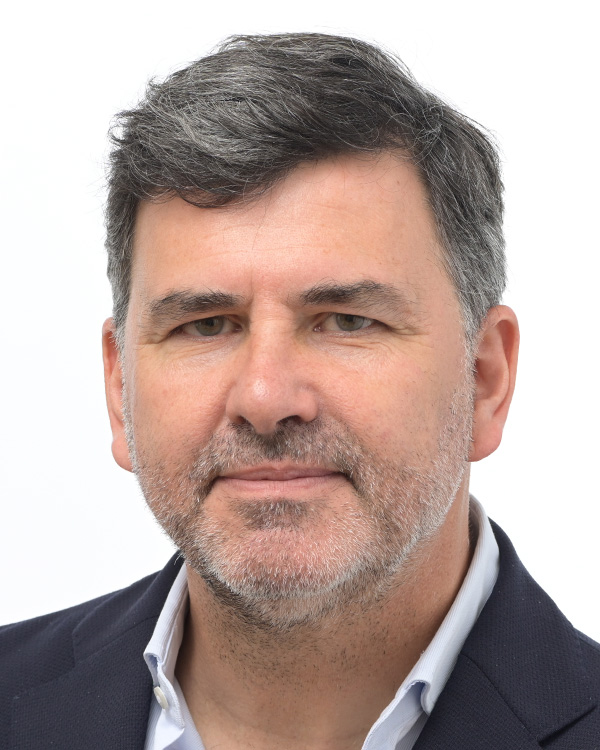
Juan Fernando López Aguilar | Spain ESP | Progressive Alliance of Socialists and Democrats (S&D) | 354 |
| 3 |

|
Sebastian Tynkkynen | Finland FIN | European Conservatives and Reformists (ECR) | 331 |
| 4 |

|
João Oliveira | Portugal PRT | The Left in the European Parliament (GUE/NGL) | 232 |
| 5 |

|
Vytenis Povilas Andriukaitis | Lithuania LTU | Progressive Alliance of Socialists and Democrats (S&D) | 227 |
All Contributions (134)
Outcome of the COP26 in Glasgow (debate)
Mr President, dear Vice-President, the work of European leadership in Glasgow must be acknowledged. The commitments made have been an important leap forward in bringing us closer to the Paris Agreement, but they are still not enough if they do not always mean action. Expert meanings have said it: If this Summit had been twenty years ago, we would be talking about a success. The review of national contributions next year is perhaps the last chance to align with 1.5°C. Until 2021 we have waited to celebrate the first mention of coal reduction and fossil fuel subsidies. At last we have the rule book and progress has been made on Article 6. We need global carbon markets for ambition and to balance the playing field. Doubling climate finance, commitments to reverse deforestation or the methane emissions deal have been a moderately positive balance. Although I must acknowledge that some Member States have skirmishes, more concerned with their internal issues than with the fight against climate change. We are still far from addressing the climate emergency. We're going to be pioneers in decarbonization and that's going to make us make mistakes. Let us all learn from everyone and seek to engage citizens in the face of a challenge that affects us without exception. With ambition, yes, and social justice, because it is a social and equity problem that is behind climate change.
One-minute speeches on matters of political importance
Madam President, Mariña de Lugo, from the north of Galicia, my region, is suffering serious industrial problems, sometimes due to the abandonment of the regional government's own policies and, at other times, due to the neglect and the use of resources and the workforce made by some companies of the people of that area of Galicia. I come here and I want to claim that, from the European Union and from the European Commission, we are more vigilant in the aid given to certain companies to launch initiatives that are then abandoned despite having received European funds. I think that is intolerable, because it is playing with the life and work expectations of hundreds of women and men in that region of Galicia. I also ask that we be serious during this industrial green transition and demand that European industries also obtain their raw materials here in Europe. But, above all, let us be strict with the aid given to companies in this area of Galicia.
An EU strategy to reduce methane emissions (debate)
Madam President, Commissioner, the truth is that reducing methane emissions is a fast and efficient way of combating climate change. The European Union is the main importer of gas and oil. Between 75 % and 90 % of methane emissions are associated with fossil fuels imported and emitted outside the Union. Therefore, we must work for this to be provided for by a legal framework, so that our imports are free of methane. For that we need to create that robust regulatory framework. And that's what we've worked on in this Strategy. The Commission's expected next regulatory proposal in the energy sector is an opportunity to implement mandatory leak detection and repair measures, as well as rules to ban venting and burning beyond safety situations with binding targets. Let me also say that neither livestock nor the rural world is to blame for methane emissions. We can work with them. We can take advantage of the opportunities that this presents for the rural world in the field of the circular economy and the use of biogas and methane.
European solutions to the rise of energy prices for businesses and consumers: the role of energy efficiency and renewable energy and the need to tackle energy poverty (debate)
Madam President, I am glad that we have this debate here; It was very necessary and my group has not hesitated to bring it because it is of maximum interest to the citizens. We are facing a price crisis for fossil-based energy. The price of natural gas has skyrocketed far beyond the foreseeable. We are slow in our commitment to decarbonization and we are paying for it. But we have a problem here and now and politics must work to fix it. Rising gas prices have broken the market. We find two price levels – fossil and non-fossil – that are completely distant. The former are skyrocketing and the latter are affordable and stable, and that is causing benefits that are not justifiable. The situation is exceptional and we must look flexibly at the proposals of the Member States and wait for those of the Commission. One of these proposals is a strategic platform for the purchase of gas, pointed out by my country and which was picked up yesterday by the President of the Commission. There is therefore an urgent need for a coordinated European response in the short and medium term, because we expect this increase to continue until spring. What if it doesn't? What if some fossils don't return to the previous level? The first answer is clear: continue betting on renewable sources, which also give us strategic autonomy. But you also have to adjust the rules. Yesterday ACER mentioned that years of price volatility are coming; we must therefore review the rules for the functioning of energy markets. We are no longer just talking about ensuring that the humblest people can heat the house or cope with the electricity bill. We are talking about preventing an overall impact on our economies that puts the economic recovery and energy transition at risk.
EU Health Emergency Preparedness and Response Authority: ensuring a coordinated EU approach for future health crises and the role of the European Parliament in this (debate)
Madam President, we all agreed to create an entity to deal with health emergencies, a response to cross-border threats or to advance new treatments when what has already happened to us happens again. What we learned during the pandemic, with vaccines, has been very good for us and it is good to take that example, but we see that practically in this case Parliament is avoided, ignored, we are wanted practically only by looking and I do not know what it is intended. That is not the role of Parliament. Parliament’s role is also to monitor and participate actively and regularly. It seems that we want to avoid the control of transparency that we did during the process of buying vaccines. Commissioner, we've been quick to work together. Parliament has taken very quick decisions during this pandemic. Time cannot be an excuse. I hope that you will reconsider this proposal because I believe that this is not a good way forward. We need to work together to improve the European response to health threats.
Presentation of the Fit for 55 package after the publication of the IPCC report (debate)
Mr. President, every new IPCC report is resounding: climate change is alarming. Following the Climate Law, we have an ambitious legislative package on the way to 2030. Thank you to the Commission and Vice-President Timmermans for presenting it. But let's focus on the fundamentals: 75% of emissions relate to the energy sector, which is largely fossil and imported. We need to move forward on renewables in a sustainable way and with respectful deployment, and be efficient. The best spent energy is the one we don't consume. But let us not forget that there will be costs and that this effort must be transformed into a cleaner and more autonomous economy. What we cannot allow is for these costs to widen the inequality gap. The alarming evolution of wholesale prices is a reminder that calls us to concentrate efforts to engage citizens, accompany them so as not to open the way to populism and decarbonize our economy. Now, those of us here have to legislate. I call on us to focus on the people and health of the planet. It's a big challenge.
European Centre for Disease Prevention and Control - Serious cross-border threats to health (continuation of debate)
Mr President, the two regulations we are debating today - the ECDC and cross-border threats - join the EMA Regulation, of which I am the rapporteur, in shaping this first development of the European Health Union, a genuine European health policy. We have seen how at the beginning of the pandemic we demanded data, information, etc. from the ECDC and it was not able to give them because there was no true European coordination and it did not have sufficient resources or robustness. It was lacking, among other things, personnel. We must staff it, and this regulation is moving in that direction. There is also room for European health policies in cross-border threats. This was said by the rapporteur, Véronique Trillet-Lenoir, and Sara Cerdas: there is a need for progress in European health policies. There is room for this without assuming competences of the Member States. We need to make progress in creating these state health plans, coordinating them and, why not, moving towards joint positions to address pandemics and include non-communicable diseases. "More Europe" means being better prepared for health. That's the way. Let's keep moving out there.
First voting session
Mr President, pursuant to Rule 59(4) of the Rules of Procedure, I request that the report be referred back to the committee responsible in order to start the process of interinstitutional negotiations.
European Medicines Agency (debate)
Madam President, allow me to address my first words to the European Medicines Agency and the Commission, to Mrs Kyriakides, for their cooperation, and, of course, to the shadow rapporteurs, to whom I would like to express my sincere thanks for the work done, for the always constructive tone and for the willingness to agree. We have not reached unanimity, but little has been lacking. Our obligation to citizens after what we experienced in this pandemic is to reach broad agreements to move towards a true European health policy, reinforcing fundamental structures such as the European Medicines Agency. Although today we celebrate the success of the vaccination campaign, we must not forget the improvisation, uncoordination and bewilderment experienced at the beginning of the pandemic. If there is one thing we cannot repeat again, it is border closures, bans on the export of medicines and medical supplies or deaf ears to the call for help. I think we have corrected it with the important and subsequent reaction, but it should not be forgotten, because it goes against the foundations of the European project and against the most basic principles of health crisis management, which usually go beyond borders. After years of so-called austerity, Europe entered this crisis weakened by budget and personnel cuts in its health systems, and without the humility to admit that what was happening on the other side of the world would end up hitting it with all its virulence. The truth is that we did not have a recognisable European health policy and we have seen how necessary it is to understand ourselves in the face of challenges of this caliber. The three Health Union Regulations are a clear purpose of amendment. A common and coordinated health crisis management system and strengthened mandates for both the ECDC and the European Medicines Agency. Because we need more Europe in health too. What does this reinforcement mean for the European Medicines Agency? An institutional framework defined by the Medicines Steering Group, the Medical Devices Steering Group and the Emergency Task Force, defining who does what at all times. A framework for monitoring and controlling the supply chain of medicines. Provide scientific advice on drugs that may have the potential to treat, prevent or diagnose the diseases that cause these crises and define lists of critical drugs. Coordinate studies on the follow-up, efficacy and safety of vaccines. Coordinate clinical trials. And, for the first time, a common definition of medicine shortages, so necessary and so demanded by this Parliament. I have supported the Commission's proposal and with the other shadow rapporteurs we have focused on reinforcing some aspects not adequately addressed in it, the result of which is the agreement we are going to vote on. An agreement whose main principles are to strengthen the preventive nature of this Regulation, stipulating that both the steering groups and the working group meet not only when there is an emergency but also in the preparation of possible emergencies; strengthening synergy between the steering groups and the working group; introduce the approach One Health, ‘One Health’, when facing future challenges; greater transparency with the publication of agendas, minutes, internal operating rules and recommendations of these groups; an important strengthened role for healthcare professionals and patients – the consultation of decisions; a system of penalties for marketing authorisation holders and manufacturers of medical devices who do not comply with the obligations laid down in this Regulation; public information on clinical trials and marketing authorisation decisions; and a crucial element – in my view – that we have introduced, which is the creation of the European medicines supply database. If we are to deal with emergencies such as the one we are facing, we need reliable, harmonised, consistent and timely information. The fact that the Agency receives the information it needs to process data in Excel sheets cannot happen again. This is not acceptable. We need tools of this century, not repositories of the past. We need an interoperable and digital database at Union level, but also based on data communicated through national electronic platforms, capable of monitoring the supply chain and determining the current volume, as well as the actual level of demand, and providing data capable of detecting, predicting and preventing shortages of medicines. A database as it is already working in some countries with European funding such as Cismed. I think it has also been funded by Horizon Europe. Similar systems are already in place. We can and must implement such a system to address the problem of shortages. May this Parliament not have to call again and again for solutions to this problem. The European Health Union is not about who has health competences or taking them away from anyone. It will strengthen Europe's health response, because, we know, we have seen it: Public health has a definite influence on the health of the economy, of our society as well. Let us not let the relief of a light at the end of the tunnel, of a possible exit from this pandemic make us forget the lessons learned.