
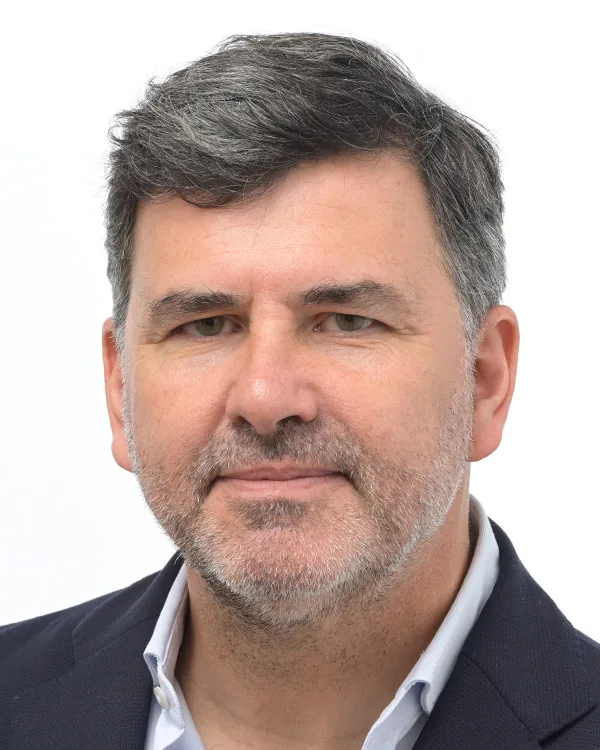
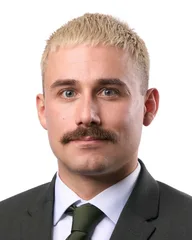
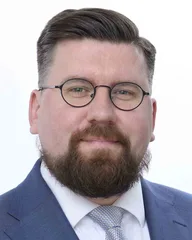
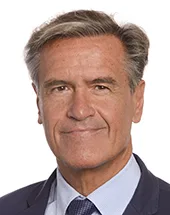
| Rank | Name | Country | Group | Speeches | |
|---|---|---|---|---|---|
| 1 |
|
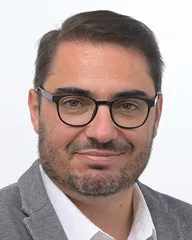
Lukas Sieper | Germany DEU | Non-attached Members (NI) | 390 |
| 2 |
|
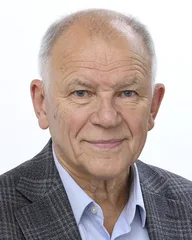
Juan Fernando López Aguilar | Spain ESP | Progressive Alliance of Socialists and Democrats (S&D) | 354 |
| 3 |
|
Sebastian Tynkkynen | Finland FIN | European Conservatives and Reformists (ECR) | 331 |
| 4 |
|
João Oliveira | Portugal PRT | The Left in the European Parliament (GUE/NGL) | 232 |
| 5 |
|
Vytenis Povilas Andriukaitis | Lithuania LTU | Progressive Alliance of Socialists and Democrats (S&D) | 227 |
All Contributions (134)
The devastating floods in Spain, the urgent need to support the victims, to improve preparedness and to fight the climate crisis (debate)
Madam President, first of all, I would like to express my condolences to the victims, those affected and those who are still having a hard time at the moment and who can have a hard time, even today, in Malaga, where there are serious floods at the moment. I remind everyone here of one thing: today in Malaga people are not in the streets; Today in Malaga there is no school. Do you know why? Because there was a weather alert issued by the State Meteorological Agency and the regional government made the decision to keep people in their homes. A regional government like that of the Popular Party in Valencia. Therefore, it is very clear whose competence it is to give the alerts: of regional governments in Spain. That is why we have an autonomous state and all Spaniards know this. The responsibility lies with regional governments when issuing alerts. Of course, for that, there must be regional governments with competent presidents, who are not eating in the reserve of a luxurious restaurant while people are at risk. And that is what has happened in Valencia and is recognized by the Popular Party itself, saying that its own president must be removed from the management of the crisis. That is what the Popular Party has asked for also in Spain. Recognize that your president was a real... I meant an insult, but I'm not gonna say it. He was a person known for his incompetence.
Consequences of the devastating forest fires in the Amazon and the importance of the Amazon for climate change (debate)
Madam President, fifty thousand outbreaks of fires this year in the Amazon, fifty thousand. This is the record for the last fourteen years. These fires are mainly caused by the uncontrolled expansion of human activities, by humans, by people who burn the most important forest on earth for their own benefit and do not care about the consequences that this has for the planet. This, in addition, does nothing but worsen and worsen the cycle in which we are involved in rising temperatures. The Amazon protects not only those who live in that part of the planet, but it protects all of us. 31.5 million tonnes of CO have been emitted2 into the atmosphere, more than all of Norway in a year. And, in addition, the damage is expected to last two or four more years because those carbon reservoirs will stop absorbing tons and tons in the coming times. Therefore, it is time to collaborate, to cooperate with those indigenous communities that are displaced by the loss of biodiversity, which somehow turns against us in the form of diseases or in the form of biological threats. We have exceeded six of the nine planetary limits and we are in a situation of practically no return in some of them, specifically also in what has to do with biodiversity. Therefore, it is time to act, and acting also means collaborating and cooperating within the scope of the Paris Agreement, of course, in order to address that horizon of not overcoming the 1.5 degrees of temperature rise. But this will not be possible as long as the Amazon burns, as long as we burn those forests and as long as we trade in an unfair and inadequate way with the raw materials, product of an expansive livestock and product of an expansive agriculture that deforests those forests. I therefore recommend to the Commission not to cast doubt on the agreements we have on deforestation or on the deforestation legislation we agreed on in the last legislature. I believe that it is time to move forward together in the fight against climate change, cooperating in this case with countries such as Brazil, with friendly States such as Brazil, with a sensitive government that exists in Brazil and that knows that we can negotiate, but that we have a common objective and that is to avoid deforestation of one of the main parts of the lung of this planet. And we can do it hand in hand. We must do so with respect, but knowing that the fundamental objective is the fight against climate change.
World Mental Health Day - need for a comprehensive EU strategy on mental health (debate)
Mr President, 150 million Europeans live with mental health problems. The most serious expression is suicide. In Europe, 47 000 people die every year and it is the leading cause of death among young people. A real drama. It needs to be addressed. We need to talk about this. Mental health must be addressed in all its dimensions, without stigma and without prejudice. Caring is the fundamental, the primordial. We also know that inequality is the main risk factor: precarious jobs, the possibility of access to housing or to support a family or the difficulty of access to health care. There are agonizing spirals from which it is very difficult to escape. That is why I believe that the time has come to speak openly about the need to develop a European mental health strategy, taking fundamental care of the most vulnerable groups, young people, the elderly, the LGBTI community, migrants, those who are most at risk of suffering it and who also need the support of the European institutions.
The extreme wildfires in Southern Europe, in particular Portugal and Greece and the need for further EU climate action on adaptation and mitigation (debate)
Madam President, I deeply regret the misfortunes that have occurred in Portugal and Greece. In Galicia we have followed with great concern what was happening to our Portuguese neighbours, because we are facing similar conditions. It has bet dangerously for a forest monoculture. Demographic abandonment and rural abandonment are also determining factors. I have seen and see disappearing biodiverse forests, farmlands and even wetlands in Galicia. We have gone from 220,000 hectares of eucalyptus to 450,000 in less than 20 years. Climate change has also accentuated this crisis: brings droughts and high temperatures. And that massive monoculture is no longer safe in some areas. Our adaptation to the climate crisis is incompatible with these activities. Therefore, the European Union must bet on the Nature Restoration Law to recover our biodiverse and primeval forests. In addition, it must prevent some regional governments – such as my own – from failing to comply with the Habitats Directive. It is a commitment to the fight against climate change, but also to a safer environment.
EU response to the Mpox outbreak and the need for continuous action (debate)
Mr President, just over a year ago, the alert declared in 2022 for the mpox virus ceased, but the situation has never ceased to be worrying in Africa. Although we stopped watching the news, the crisis continued in the Democratic Republic of Congo and, on August 14, the WHO declared a new emergency outbreak with 14 affected countries, 37,500 infections and 1,500 deaths. And there is a new subtype that worries. The African CDC estimates they need 10 million vaccines. Do you know how much the European Union has donated? 250,000 vaccines. We have learned nothing from the previous health crisis. Some Member States, such as Spain, have been supportive and have donated 500 000 vaccines. Others are neither expected nor expected, they show insolidarity. And what's going on? whereas there are millions of vaccines piled up in Europe while thousands of people are in need in Congo; That is, vaccines piled up while in Africa they don't have to save their people. I repeat: We haven't learned anything about how health threats are, how these global threats are going to be in the future. We want them to stop at the borders and we also don't want them to have vaccines. And, okay, we have to act in solidarity and mobilize those vaccines. It's not all they need: They also need infrastructure, cold chains, so that these vaccines reach those who really need them. But let's learn, let's continue working on a pandemic treaty, we need to put in place what is established in the European global strategy, in the Global Gateway, to provide those African countries not only with solidarity when they need it, but also with structures, infrastructures, collaboration with the African CDC. Therefore, I am sorry, Commissioner, the policy we are pursuing in Europe is not good policy at the moment, in the face of this crisis. We do not learn and we will stumble again on bigger stones that make us fall.
State of the Energy union (debate)
Mr President, Commissioner, very good five years, very intense, of course. This report serves to confirm once again that there is a gap between the objectives and the trajectory. In addition, we see that there are sectors – such as transport or heating and cooling – very lagging behind, so we are waiting for the long-awaited plan to decarbonise them. It is also noted that energy prices remain high, also in the electricity sector despite the increase in renewables. And it is clear, in the Draghi report just discussed, that there are fundamental problems and a good part of the recipes for solving the problems that the Draghi report shows us is in the implementation of the reforms that we have already carried out, such as the reform of the electricity market or the revision of the Renewable Energy Directive. So, we have to electrify, we have to move forward on renewables. And let me say it very clearly: Less fossil gas means more strategic autonomy for Europe. Less fossils, more autonomy. More renewables also means more competitiveness for our industries. So, let's not forget these five years: If we want a competitive Europe, let us decarbonise. Less CO2 It is also a solution for Europe.
Withdrawal of the Union from the Energy Charter Treaty (debate)
Mr President, at last, after years of negotiations, we see the exit from the Energy Charter Treaty tunnel. Europe is in an energy transition and that requires us to say no to fossil fuels. If we are facing this transition we want to leave the Energy Charter Treaty because they are contrary climate policies. This Treaty is contrary to the climate struggle that we are championing in the European Union. In addition, the exit by the European Union has a scientific basis. The climate panel itself has said it: will favour and favour fossil fuels. In addition, it poses a threat to our sovereignty and a threat to the clean technologies we must develop. I therefore call on the House as a whole to say no to the Energy Charter Treaty, to embrace new treaties: for a European renewable card, for a European green card. This is about our future: Either we decarbonize or we decarbonize. So let's move forward with our green ambition.
Preventing plastic pellet losses to reduce microplastic pollution (debate)
Madam President, in my country, in Galicia, a few months ago we suffered a harmful spill of pellets. People had to pick it up while the regional government abandoned it in the face of this pollution, which we later learned was not only harmful to ecosystems, but could also be harmful to human health. We therefore welcome this ambitious new regulation, which is a commitment that the polluter pays. Because it was very cheap to contaminate with these pellets. I congratulate my colleague João Alburquerque on the report on this proposal for a regulation. Let us hope that the trilogues will be so ambitious from the Council, because the big polluters of pellets - the big ships, the big transporters - must not get this pollution cheap. They must pay for the damage in the costs, but – above all – they must prevent. Therefore, welcome are these Regulations, and do not cause these damages again. Remember that sometimes we use plastics and microplastics for five minutes, but they can last five hundred years. On this International Mother Earth Day I think it is necessary to remember it.
Internal markets for renewable gas, natural gas and hydrogen (recast) - Common rules for the internal markets for renewable gas, natural gas and hydrogen (recast) - Union’s electricity market design: Regulation - Union’s electricity market design: Directive (joint debate – Reform of the energy and electricity markets)
Madam President, the truth is that we are going to approve it. It's going to be a success. And I would tell the Commission and the Council not to abuse Article 122 again, because this Parliament can work properly and even faster than they can. In line with what was heard: emergency situations require emergency measures. Some called the Iberian solution "timo ibérico", which was able to protect citizens and reduce prices. What frivolity! What irresponsibility! It was achieved by the governments of Pedro Sánchez and António Costa. And I tell you one thing: someone lied here and did not read Article 66a. Such interventions would be possible again in a crisis situation. It is true that the Commission has work to do with this reform. It is not a point of arrival; It's a starting point. Consumer prices were well above energy costs, but we see these days that the opposite can happen, that prices are very low, and both situations should be avoided. On the one hand, because of the problems of price and competitiveness and, on the other, because we need incentives to continue investing in renewable energy and electrification. We want affordable and stable prices, and this is a goal of this reform. Electricity cannot be a luxury or be free. We are seeing it these days with prices at zero euros or negative in some Member States. Precisely for this reason, this reform asks us to bet on accelerating the passage and go quickly for contracts for difference and bilateral agreements, the PPAs, as a formula to give predictability and security to investors. Consequently, this reform requires the Commission to present in two years an analysis on the functioning of the short-term markets, the review and its possible failures in the marginalist market in a context in which we are moving towards a decentralized system and with a greater presence of renewable energies. And finally, I don't want to get out of here without thanking my team and the teams that made it possible. Also to my coordinator, Jens Geier, Rebeca, Pablo, Anton, Tania, all the people who have participated, to the president of my group, Iratxe García, who has also worked for it, to the Spanish Presidency of the Council and to the European Commission, who have made possible a reform that nobody at the beginning believed in and that has been a success, and will be a success for Europeans in the coming years.
Internal markets for renewable gas, natural gas and hydrogen (recast) - Common rules for the internal markets for renewable gas, natural gas and hydrogen (recast) - Union’s electricity market design: Regulation - Union’s electricity market design: Directive (joint debate – Reform of the energy and electricity markets)
Mr President, first of all, I thank the shadow rapporteurs with whom I have worked, Petersen, Bloss, Krasnodębski and Mesure, and also Maria da Graça Carvalho, who is now Portugal's energy minister and is not here. In summer 2021, with electricity prices picking up, some from the S&D Group denounced the flaws in the design of the electricity market. Putin was already beginning his blackmail by playing with the gas handle, but few wanted to see it. I remember Teresa Ribera raising her voice and proposing pioneering measures that later proved to be effective. At that moment the Commission did not see it coming. Afterwards, Russia's savage invasion of Ukraine and exorbitant gas prices led to a brutal rise in prices, which also triggered an inflationary crisis. While the citizens emptied their pockets, others filled them at full speed and that made us react. Therefore, being here today is an achievement of this Parliament and, in particular, of the S& Group. It is because many did not believe that Parliament could act so quickly. And we've done it. We have done so even faster than the Council. We have managed to remain united and negotiate quickly a reform that has already paid off in the short term, but whose benefits will be better seen in the medium and long term. More protection for consumers, new rights and prices for citizens and businesses. Let's face it, the context of accelerated energy transition like the one we live in, in which we must not only respond to the climate emergency, but also to the use of energy as a weapon of war, makes us think that this reform was urgent. In a volatile geopolitical situation, we can no longer be naïve. With this reform we promote the decoupling of consumers from the short-term and gas price, allowing citizens and businesses to benefit from affordable and predictable prices, and fostering forward markets. We promote the flexibility of the system with clear measures and objectives to promote storage, integrate renewable energy and promote a more active role of demand. We strengthen investments in networks and enshrine new rights, such as the right to share energy. energy sharing, which will allow greater democratisation and decentralisation of renewable energy at citizen level. And, in addition, we order the Commission to carry out by June 2026 an in-depth assessment of the short-term markets, of the possible dysfunctions of the marginalist system and, if necessary, a reform of that market. And, of course, we provide the market with a predictable framework to act in new crisis situations. As a socialist, I have to mention that we protected against the injustices and inequalities that were occurring by prohibiting unilateral changes to contracts or disconnections in cases of vulnerable consumers. Disconnections to vulnerable consumers are prohibited. This is therefore a social reform. If the market is overwhelmed, the sensitive, the human and the solidarity is to act in that market. The social, moreover, coincides with what is climate-just. It is time for the electrification of energy demand. Less fossil fuels and more renewables that are affordable. Consumers need stability to persevere in electrification, with more stable prices, more electric cars and less CO2 emissions. It is therefore a present and future reform and a reform that would not have been possible without the full negotiating team of the European Parliament. I also thank the Council which, under the Spanish Presidency, has managed to reach this agreement. I also congratulate Commissioner Kadri Simson, who is not with us today, for the great role she has played. Thank you all very much. We are on the right track towards a reform that is already giving its benefits to citizens across Europe.
Union code relating to medicinal products for human use - Union procedures for the authorisation and supervision of medicinal products for human use and rules governing the European Medicines Agency (joint debate - Pharmaceutical package)
Madam President, Commissioner, today we are voting on the reform of the pharmaceutical policy of the European Union with deep socialist marks. It has only guided me, it has guided the general interest: improve the problems we have in Europe of accessibility to innovative or industrial drugs. The final text encourages innovation and access, encourages investment in the treatment of diseases such as rare diseases and the development of new antimicrobials, and, of course, leads to improving and protecting the clinical research that our doctors and researchers do in hospitals, thanks, for example, to the hospital exemption in advanced therapies, so unique in my country. And it demands transparency, also regarding the public funds that pharmaceutical companies receive. In a debate marked by strong external pressure, I want to reflect. An incorrect message has been repeated: there is no need to choose between improving pharmaceutical innovation in Europe or making medicines more accessible and affordable. This dichotomy does not exist if we apply the right policies. The health budget is limited. That is why we are strongly opposed to our patients' money funding innovation outside Europe. We socialists will continue to put solutions in place to support cutting-edge pharmaceutical research and innovation in Europe and, at the same time, we will continue to fight against unacceptable inequalities. The ZIP code should not determine which drugs or treatments people receive, or even those they don't. I think that this agreement, what we are going to vote on today, is a good beginning, but let us be clear that this is not the end. We must remain ambitious. We have to protect the general interest of health over and above the interest of economic operators. Let it be clear that this will continue to be the objective of the S&D Group in this debate.
Allegations of corruption and misuse of EU funds in Spain during the pandemic (topical debate)
Mr President, the question is whether when seven hundred people died a day you can hire your brother and receive 286,000 euros. What sounds to them was said by Pablo Casado before his head was cut off for denouncing the president of the Community of Madrid. And what happened? That he was right. And just yesterday, in the environment of Mrs Díaz Ayuso, a new fraud of hundreds of thousands of euros was re-emerging in the middle of the pandemic. Yes, while in Madrid thousands of elderly people with COVID-19 were prevented from being sent to hospitals, and died in residences, everyone in their environment was covered with the pandemic. I don't know if the fruit, but he likes pasta. He likes pasta a lot. Everyone's, with greed. And while Mr. Feijóo protects Mrs. Díaz Ayuso, he feels the edge that executed Mr. Casado. We demand the resignation of Mrs. Diaz Ayuso. Yes, his resignation. And Mr. Feijóo, for credibility, should demand it the same. Look, the pandemic was terrible. Thousands of people lost their lives. And as a medic, I know the value of a mask those days. How they took care of themselves! There were few. That's why we feel disgust, real disgust. And we repudiate those who took advantage of the pain. In Greece, in the Netherlands, in Germany in Mr Weber's escaped party, there are now similar cases of heartless people selling medical equipment for gold or committing real scams. That's why we want it investigated. In the face of corruption, socialists make decisive decisions and execute political responsibilities and in the PP, what do they do? They cut off the head of those who denounce corruption. That's the big difference. If you want credibility and bring these debates here, gentlemen of the PP, demand the resignation of Mrs. Díaz Ayuso.
Energy performance of buildings (recast) (debate)
Mr President, congratulations to Parliament's rapporteurs, the Commission and the Spanish Presidency for reaching an agreement on time. Much of the barriers we have in Europe to implement energy efficiency measures in buildings are not economic, but due to lack of information and correct financing instruments. And that's the first barrier to overcome. And this directive is one of the pillars of the Green Deal because of the weight of the buildings sector in energy consumption and emissions: almost 40%. But there are also major investments that are not accessible to everyone. Investing in improving the energy conditions of housing is climate justice and also social justice. With efficiency and with self-consumption in buildings, and supported by the new right to share energy – consolidated in the reform of the electricity market design – we can also support greater energy democratisation of consumers in Europe. A building with the worst performance can consume eight to fifteen times more energy than a zero-emission building. The Directive can therefore be an important element against energy poverty. Let us do everything possible to ensure that these possibilities, to which this directive brings us, reach all citizens.
Recent ecological catastrophe involving plastic pellet losses and its impact on micro plastic pollution in the maritime and coastal habitats (debate)
Mr President, Commissioner, Galicia is facing a double tide today: a plastic tide and a tide of incompetence, concealment and lies on the part of the autonomous government of the PP, whose disastrous management has left municipalities and citizens to their fate in the cleaning tasks. The Xunta has spent weeks denying the importance of pollution, that caused by microplastics, which is a key priority for the Commission and also for the Socialist Group, which leads this initiative in the House. Pellets are not pellets, as the Community Government says. They are a risk to the environment and a potential risk to health that must be combated, as the Commission and the Spanish Government do. Plastic pollution must be faced, and this problem that is now seen in Galicia needs reinforced European legislation, not concealment and lies as the Popular Party does. By the way, gentlemen of the PP, make it clear: A few days they side with the pollutants, denying that this exists, saying that we do not need more ambition in European legislation, and now it seems that the tide brings them to us and they come to their senses, recognizing the serious mistake they have made in Galicia. We Galicians are going to solve this by voting, in my case, for "The Best", for Besteiro, but you have made a very bad management. Don't laugh, Mrs. Montserrat. They have made a very bad management from the Xunta de Galicia.
Geothermal energy (debate)
Madam President, I would like to thank the rapporteurs for their report. The consensus they have had is proof of good policy. Geothermal energy has a vast potential, which has not yet been fully exploited. This report highlights this issue. However, we need to move forward in this climate emergency so that these systems have more support, more strength, and more research to get all the performance out of it. In addition, through the Green Deal we have taken some steps, including the new Renewables Directive and the Energy Efficiency Directive, where binding targets are set for the first time. In renewables, heating and cooling can facilitate, support and support the deployment of geothermal energy. But to do so, we need an appropriate framework that provides clarity and clearly maps geothermal resources, simplifies and accelerates administrative permits, as in the Renewables Directive, and helps to provide financial security for these projects. I therefore join this report's request to the Commission that we need a geothermal strategy in the European Union.
Small modular reactors (debate)
Madam President, I would like to thank the rapporteur. It is clear that we need climate action at the same time in many parts, and the technology of small nuclear reactors may be one that provides us with decarbonized energy. Even so, developing these small reactors will not eliminate one of their problems, which is waste. But, of course, it is necessary to investigate and it is convenient to advance in innovation for the fight against climate change, for simplification, for design, for standardization and probably for reduction of costs. But let's not lose perspective. The resources are finite, and the IPCC has made it very clear: renewables – harnessing wind and sun, mature systems and fully reliable energy systems – are the most efficient way to reduce emissions and gain extensively from clean and additional energy. These days, at the Conference of the Parties, the commitment is clear: doubling energy efficiency and tripling renewable energy by 2030. I conclude, therefore: research, yes; development, too. But let's not use this from small nuclear reactors to drain resources that should be dedicated to renewables and advance our 2050 climate neutrality goal.
State of the Energy Union (debate)
Mr President, Commissioner, this edition is the first to assess the impact of the energy crisis, and I see that the report is optimistic about how the Union has dealt with the price crisis, but I think it forgets to assess how energy prices have moved to the public in the form of inflation in commodities as basic as food and how some of the measures implemented in certain countries have been more effective for inflationary control. For example, in my country, Spain, they allowed the price of electricity to fall, according to Eurostat, by 42% last year. It is true, Commissioner, that work has been well done, but emergency measures and regulations had to be taken. Very complex and very complicated situations have been saved. Even so, we must not be complacent, as the Commission's own report acknowledges, since there is still volatility in the market and we are about to approve an extension of measures that have been used in an emergency and in a geopolitically complicated scenario. I believe that our fossil dependence continues to pose a serious climate problem and also an economic burden. We have a new Renewable Energy Directive. We must be ambitious and ensure that it is implemented in every corner of the European Union. Finally, we have the reform of the design of the electricity market. We look forward to approving it this year: We have the Commission and we believe that it has to be a reality in this legislature.
Fisheries control (debate)
Madam President, the European fisheries sector is the most regulated in the world, both in terms of ecological sustainability and in terms of quality standards, which are the highest. The commitment of the sector is what is behind the recovery of the stocks, especially in the Atlantic. Pragmatic solutions to very complex problems have been found in this Control Regulation. For example, in the fishing logbook, with important exceptions for the small-scale fleet, tolerance margins or for shellfishing on foot, a fundamental activity for my land, Galicia, where the fishing sector represents a very important part of GDP. And this is a shared effort that must be valued for the levels of sustainability achieved and for not introducing excessive bureaucratic burden. I finish with a final thank you to my colleague Clara Aguilera. Clara, five years you have worked hard to achieve an excellent result. A crucial reform with pragmatic solutions for the sector and that will mark... (The Chair took the floor from the speaker).
Medicine shortages and strategic healthcare autonomy in the EU (debate)
Mr President, Commissioner, thank you for responding to our request for a debate and for coming to Parliament today. The truth is that medicines are lacking in the European Union. Shortages are reported in all Member States and the situation has increased in recent years: there has been a worsening even since 2022. We are highly dependent on external countries, such as China or India, which produce up to 80% of the active substances and 40% of the medicines we consume in Europe. And let us not forget the critical situation during the pandemic. On the other hand, in the European Union we are also losing the initiative in research and innovation and we are lagging behind the United States and China. We lack essential medicines and that translates into thousands and thousands of patients who cannot access their medicines, in children who cannot receive exactly the medicines and paediatric formulas they need, in problems for patients with rare diseases, or in antibiotics that are not exactly those prescribed by the doctor and that can increase resistance to antimicrobials. The Commission has already pointed out in its 2021 Industrial Strategy that active pharmaceutical ingredients were one of the six key elements in terms of EU dependencies. And while we have proposed legislation or support measures, for example in relation to semiconductors or batteries, we have not done so in the pharmaceutical field. We need an investment effort in this field and strategies dedicated to increasing our production and reducing our pharmaceutical dependence on other countries. Shortages are reported and the new pharmaceutical legislation provides for follow-up. That's great: We already defended it during the reform of the European Medicines Agency, in which I was rapporteur. But we need something else, and that is why, Commissioner, we have asked you this joint question between several groups: What are the Commission's initiatives in this field? How are we really going to solve, through our industrial production, the problems of shortages? How are we going to increase transparency? How have we seen these days that this element that is the Health Emergency Preparedness and Response Authority - which we cannot control from this Parliament - is renegotiating on its own and favoring that there is only one vaccine solution for the coming years in what has to do with COVID-19? We want answers, Commissioner.
Amendment of Regulations (EU) 2019/943 and (EU) 2019/942 as well as Directives (EU) 2018/2001 and (EU) 2019/944 to improve the Union’s electricity market design (A9-0255/2023 - Nicolás González Casares) (vote)
Mr President, ladies and gentlemen, I would ask you to vote in favour of this mandate. Thanks to the good cooperation of the rapporteurs, we have managed to establish a balanced position with broad support from the four main groups in this House in the face of a complex and far-reaching reform. This proposal responds to citizens' demand expressed during the crisis. It will make it possible to reduce the volatility of electricity prices and, therefore, bills. Strongly extends the protection of consumers, especially the most vulnerable, with the new ban on disconnection. Who can be against that? It strengthens new rights, such as the right to share energy. It increases transparency and control over the functioning of markets. Respect the mix energy of each country, without exceptions. We are committed to a common effort for cleaner and more produced energy in Europe – clean megawatts produced in Europe – which makes us more autonomous. It is an agreement for a European electricity market, not partial proposals that only respond to national interests. Ladies and gentlemen, we have the opportunity to give a strong message to the Council and the Commission: We in Parliament know how to work and agree quickly. To vote yes is to say "never again" to leave Parliament aside with emergency regulations. Engaging in trilogues is a fully democratic decision. And delaying this mandate would mean greater volatility and greater instability if we do not finish it in this legislature. Colleagues, vote yes! Vote in favour for more protection to European citizens. Vote in favour for cleaner electricity produced in Europe. Vote in favour to support the role of this Parliament. Vote ‘yes’, ‘plus’, ‘ja’, ‘da’! Push the green button for Europe, please.
Sustainable aviation fuels (ReFuelEU Aviation Initiative) (debate)
Madam President, thank you to the rapporteur and to all the negotiating team who have made this agreement possible and a reality. The truth is that aviation is a sector that lags behind in decarbonization. He hasn't made any efforts. And it was time to put in place legislation that would force the sector to advance technologically on that path of reducing emissions. And I think we've made it. We are taking a step forward towards the sustainability of aviation. And, thanks to Parliament – I want to make it explicit here – this regulation will not only enter into force, but will do so with greater ambition, with higher sustainable fuel targets, with more airports covered and with more airlines subject to the obligation to use sustainable fuels, preferably synthetic fuels, as we move on the decarbonisation trajectory. In addition, we will improve the environmental information of the flights to know exactly the carbon load of each of them and avoid the greenwashing. In short, we take steps in this response to the climate emergency we are experiencing. And aviation, which was an important sector, has to be determined and ambitious when it comes to tackling its decarbonisation.
Renewable Energy Directive (debate)
Mr President, Commissioner, at last, after two years of many shocks, the Renewable Energy Directive is going to be a reality. And it is that the climate crisis is already here and, if there is a tool that works for us to decarbonize, to emit less CO2, it is renewables. That is why I am also asking some groups flirting with climate denialism to bear in mind that, in that way, we are also losing the renewable advancement that Europe needs. I think this is a good, ambitious directive. But a legislative text alone does not convince. More needs to be done. We all need to come together to meet that challenge of increasing the renewables we produce and consume in Europe. This is a good directive, in addition, because it not only increases ambition, but also improves spatial planning, seeks public acceptance of projects to make the development of renewables compatible with the territories where they are based. In addition, this directive seeks climate justice, which is also social justice, because let us not forget that renewable energy is also affordable for citizens. It is now up to the Member States to adopt, develop and transpose it. But let us not forget that this is also a job and leadership opportunity for Europe. Let's keep this in mind because international competition is very strong and this leadership will depend on us.
Industrial Emissions Directive - Industrial Emissions Portal - Deployment of alternative fuels infrastructure - Sustainable maritime fuels (FuelEU Maritime Initiative) - Energy efficiency (recast) (joint debate - Fit for 55 and Industrial Emissions)
Madam President, we are completing the dossiers of the Fit for 55 package. Positions will be adopted and agreements crucial for the decarbonised future of the Union will be ratified. Go ahead. I would like to highlight the important step taken by the European Union with the rectification of this Energy Efficiency Directive. More energy efficiency also combats energy poverty. In this regard, I would like to stress that, for the first time, there will be a definition of European energy poverty, as well as measures aimed at alleviating and empowering consumers. We are also doing this in the agreement we made last week, recently, in the debate on the European electricity market: protect the most vulnerable and prevent them from disconnecting. We need to move forward in the fight against climate change, all together, for decarbonisation, for genuinely having a consensus against the fight against climate change - here in this Parliament - and not breaking consensus, as some groups are doing. Not climate denialism. Yes, to move forward. Go ahead on that. In addition, we believe that it is imperative that the energy transition is fair. We need an ambitious and binding target like the one proposed by this directive, for the first time, at European level. I would also like to congratulate my colleague Niels Fuglsang and all the rapporteurs for their great work. Go ahead with efficiency!
Energy storage (debate)
Mr President, thank you, Commissioner, for appearing here today to discuss such an important matter as storage. I want to acknowledge that very important things have been done during this energy crisis, such as in terms of gas storage, which has helped us to overcome, even with some pain, the crisis we have experienced. The truth is that for the Green Deal to be a reality, an important part of energy demand, especially electricity, has to move towards renewables. In 2030, the EU expects them to reach 69% of the electricity supply. Renewables installation figures are promising, but we can do more, we need to go faster; these figures have to be accompanied by flexibility in both storage and active demand management. For example, in countries like mine, located in the Iberian Peninsula, this week, at a confluence of excellent sun and wind resources, the fall in electricity prices has been considerable, but this resource is variable and sometimes we can not take advantage of all the renewables we have. That is why it is necessary to have storage. We have surpluses of clean electrons that are being wasted and we can't ignore it any longer. We need to invest and improve on storage. This will help to better manage electricity price spikes and allow consumers to better manage their energy needs as well. However, we must not leave everything to the Member States; We must make European efforts. We have the potential to increase the flexibility that is constituting, as it progresses, the energy transition, including through the electrification of demand. Examples are batteries. Better electrification in transport will also lead to better management of flexibility by consumers themselves. We also have to invest in water storage, but this also means improving the management of a resource that belongs to everyone, which is not only used to produce electricity. Water is a common good that serves much more than producing energy. Therefore, we now have the opportunity, with the regulation and reform of the electricity market, to take another step on this path that we have begun. Improving energy storage requires Member States to commit, through their National Energy and Climate Plans, to achieving sufficient targets to improve this flexibility management. I think it is time to move towards objectives in this regard. As rapporteur for the reform of the EU electricity market, we will work and propose measures to try to boost demand and storage flexibility. All this with the aim of bringing this reform to an end before the end of this legislature. Storage is crucial to moving towards a decarbonised system.
Question Time (Commission) - How to ensure energy security in the EU in 2023
Mr President, Commissioner, if we want more security, what is clear is that we need more renewable energy and less fossils. We finally have a reform of the electricity market in the European Union; Welcome back. Thank you for this reform, which we have long asked for and is itself good news; I think it is somehow on track, but it is not ambitious enough, especially with regard to emergency measures. We believe that these measures that you are proposing would not solve the past price crisis. Do you think this past price crisis would be resolved? I want you to answer this question. Secondly, welcome is that new right to be able to share energy that citizens now have. But let's not forget that gas in Europe is paid seven times more expensive than in the United States. Therefore, we cannot be conformists. We are losing competitiveness. We have to get this reform of the electricity market to give a real signal that renewables are the cheapest energy. I do not think we will succeed if we are not more ambitious in this reform.