
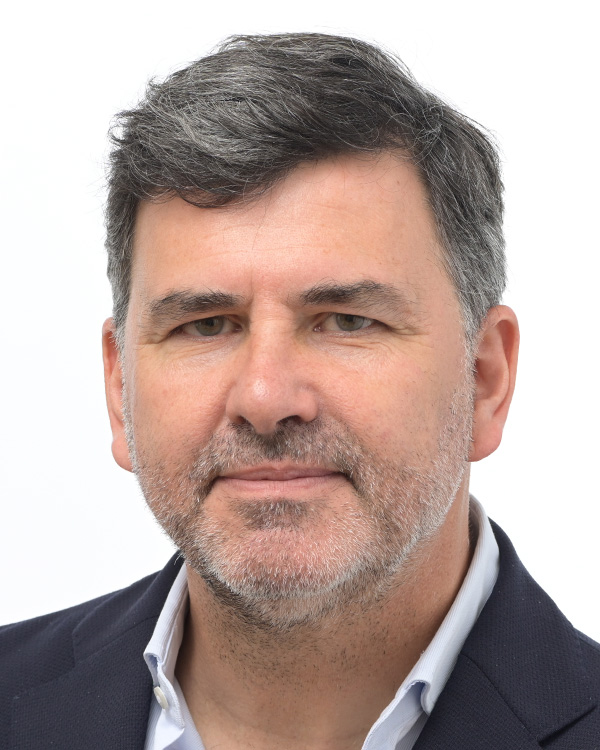

| Rank | Name | Country | Group | Speeches | |
|---|---|---|---|---|---|
| 1 |

|
Lukas Sieper | Germany DEU | Non-attached Members (NI) | 390 |
| 2 |
|
Juan Fernando López Aguilar | Spain ESP | Progressive Alliance of Socialists and Democrats (S&D) | 354 |
| 3 |
|
Sebastian Tynkkynen | Finland FIN | European Conservatives and Reformists (ECR) | 331 |
| 4 |
|
João Oliveira | Portugal PRT | The Left in the European Parliament (GUE/NGL) | 232 |
| 5 |
|
Vytenis Povilas Andriukaitis | Lithuania LTU | Progressive Alliance of Socialists and Democrats (S&D) | 227 |
All Contributions (134)
Surge of respiratory infections and the shortage of medication in Europe (debate)
Mr President, Commissioner, once again in Europe we are in the position of not being able to offer patients the medicines they need. Missing painkillers, antibiotics... It is true that the situation in China and the need for this country to use more medicines in the serious COVID-19 crisis that it is suffering cause a disruption at European level. We are able to better monitor this shortage situation than before the pandemic, thanks also to the reform we have made of the European Medicines Agency, which gives us more tools, despite the intentions of the Commission and the Council to limit the scope of that reform and provide us with even more monitoring systems. But we know that they fail and we know that they fail because there is also a European market that is not working properly. We need to review once and for all the pharmaceutical legislation so that we can design a profound restructuring of that market. We're out of medicine. It's a chronic problem that repeats itself, and we're still waiting for solutions. This Parliament has already made no less than two resolutions. We therefore need to move forward, Commissioner. We cannot wait any longer, because we also generate greater resistance to antibiotics when they are lacking.
Renewable Energy, Energy Performance of Buildings and Energy Efficiency Directives: amendments (REPowerEU) (debate)
. – Madam President, Mr President, if the climate emergency requires renewable energy to mitigate the effects of climate change, the energy crisis requires renewables to contain citizens’ bills and make us independent of Russian fuels. Accelerating administrative permits is therefore vital; Without accelerating them, climate goals are an empty promise. This report contains tools to address this problem. Firstly, spatial planning and the identification of areas with low environmental impact – not all of the territory is valid in this regard. Secondly, the shortening of deadlines and also self-consumption or repowering. And finally, take into account all the parties involved in the implantation areas. But I repeat again that the acceleration of permits must go hand in hand with social participation. These facilities should generate benefits for local communities and should take into account pre-existing activities as well as local labour and industrial potential. We must also be scrupulous about environmental assessment. We must not confuse acceleration with eliminating the protection of territories. That would make a dent in the citizen's conscience; This is a real risk if we do not take into account some of the amendments tabled. This report contains very important improvements for renewable acceleration and citizen engagement. But we can and must go further. I humbly ask you to support our amendment number six, which improves citizen participation. In addition, we must maintain a citizen's dialogue in this House, not break agreements, as one of the rapporteurs has done, who has dynamite an agreement that we had in place. In short, more renewables means less Russian gas, less fossils, more climate commitment, lower prices for citizens. In short, we all win if we draw up a good directive.
Revision of the Medical Devices Regulation – how to ensure the availability of medical devices (debate)
Mr. President, a clinician, with a ventilator that gives 12 ventilations per minute and a breathing volume of 0.7, what he wants is that in one minute he reaches 8.4 liters. This means that it is accurate. And that is what the Medical Devices Regulation that entered into force in 2017 intended, that is, that medical devices should not fail. None. And we know that there were cases where that was the case, as the Commissioner mentioned. There were, for example, breast implants that were failed, hip prostheses... That happened. Therefore, this Regulation has been a good regulatory framework to improve the reliability of medical devices. We believe that it is also more transparent and fair. In addition, health and medical professionals have also recognized this. Because all we want is reliability. During the pandemic we also worked on the Regulation to strengthen the European Medicines Agency, in which we also put elements that favor the availability of health devices, especially in crisis situations. But we must also consider that we have several legislative tools. Of course, we must assess whether, following the entry into force of this Regulation, there are some cases of medical devices for which there is a risk of shortage, especially in rare diseases or in paediatric diseases (in paediatric treatments). And certain derogations may need to be made, as they have been done previously. It will have to be studied on a case-by-case basis. But I don't think we should make this legislation softer and have less confidence in what we use to measure or treat patients, to measure their physical variables and the treatments we apply. Peter Liese mentioned it earlier: may be other factors (the supply chain has been interrupted, part of the production was not based in Europe...). Maybe we have to act on those factors, locate them, solve them and act on that. Not so much about the legislation. It therefore seems good to me that the Commissioner has, among other things, proposed to study with the Member States what is happening. But I believe that we must flee from claims such as that this regulation is making patients in the European Union receive worse health care. I do not believe that this regulation is the cause. Adjustments will have to be made, improvement procedures will have to be put in place and solutions will have to be sought. But what we need, above all, is great reliability and reliability in sanitary devices.
A truly interconnected Energy Single Market to keep bills down and companies competitive (topical debate)
Madam President, Commissioner, it seems that the single energy market is a building under construction in which laying every brick costs a barbarity. The lack of interconnections is the best example and we are far behind the objectives set. And that makes it difficult to share the benefits that renewables can produce in terms of price and decarbonization. In this crisis, for example, Spain and Portugal have been protected by the Iberian exception. But we would certainly prefer to be interconnected rather than remain an energy island. We want to help. For example, the agreement on the BarMar, that gas pipeline that aims to transport green hydrogen from the Iberian Peninsula to the rest of Europe, seems to us a step forward. But let us not forget the citizens, who are suffering from the high prices of bills. I think the Commission's proposal is going to be inapplicable. It does not have the slightest ambition, that cap on the price of gas is not realistic, it is not real, and it will not serve absolutely nothing. Therefore, for this trip we did not need these saddlebags, as we say in Spain. We are waiting for this proposal to improve, but we must not continue down this path.
Commission implementing Regulation (EU) 2022/1614 of 15 September 2022 determining the existing deep-sea fishing areas and establishing a list of areas where vulnerable marine ecosystems are known to occur or are likely to occur (debate)
I share what you say about the protection of the seas and that it is necessary to protect our seas, but my question is: You defend an implementing act, what evidence do you have that fishing for hake longlines affects the seabed in this way? What evidence do you have to say this? Does this affect the implementing act? I mean, I see a terrible incongruity in what you just said.
Commission implementing Regulation (EU) 2022/1614 of 15 September 2022 determining the existing deep-sea fishing areas and establishing a list of areas where vulnerable marine ecosystems are known to occur or are likely to occur (debate)
Madam President, Commissioner, my country, Galicia, has the most powerful fisheries sector in the European Union. Coastal communities live from the sea, from fishing, and, therefore, we also demand respect here: respect for fisheries, respect for seafarers who are being harmed by the European Commission's decisions on the bottom fishing regulation. We see that even anti-Europeanism is being created with these decisions, which hurts me because everyone there believes in Europe. And it is due to the excessive zeal in the application of this Regulation, to an application of the Regulation without proper evaluation, without knowing the damage it causes, the socio-economic damage that we begin to see in those coastal communities of Galicia, because everything is put in the same bag and there is no socio-economic evaluation. They are making decisions without real scientific weight and what we demand, really and once and for all, is a reassessment, in addition to the suspension of the implementing act. Resources are being prepared to kill this act and I ask the Commissioner, who is not here today, to really re-evaluate this at once, since this situation is untenable for the fishing people, and, in addition, to be compensated. They do not want subsidies or compensation, what they want is to go fishing, but what can not be said is that the Member States then pay the damage caused by the European Commission. We are also opening the door to less sustainable fish products, less sustainable imports. Is this the objective of the Common Fisheries Policy? What we want, in the European Green Deal, is sustainability, strategic autonomy, not external dependence; healthy, healthy products and fish in Europe's sustainable seas. If not, it will happen as the Galician poet Manuel Antonio said: "followers ficando sós / o sea o boat e máis nós". We don't want that to happen to our fishermen, to our seafarers.
One-minute speeches on matters of political importance
Madam President, while many fishing areas are closed in the Atlantic Ocean without any scientific evidence, and without socio-economic impact studies, we see that countries that were traditionally self-sufficient in fish consumption have to import it, which is also contrary to the Green Deal. While we restrict European fishing, which is the most sustainable, which brings food with a low carbon footprint to the homes of Europeans, we are increasingly importing fish from third countries, which we do not control, and which in many cases do not fish in the same way as we do, on the basis of sustainability. We therefore call on the European Commission to be genuinely sensitive, which it is not having, to the people who fish in our seas. It is time to stop this imbalance between environmental sustainability and the economic and social sustainability that our seafarers are suffering.
EU response to the increase in energy prices in Europe (debate)
Madam President, Commissioner, I think you know what I am going to say. I have to say 'I told you so', because a year ago we had this debate here, we asked to decouple gas prices from electricity and take emergency measures and reform the electricity market. A year ago. But now we are in a very complicated scenario. We have also made a lot of progress in recent times. For example, decisions have been taken such as the Iberian exception, which has allowed my country to save consumers a lot of money on energy. And I think it can be a good inspiration, as it is being in other energy matters. I therefore recognise that the Commission is taking steps in the right direction: Tackle inframarginal technologies, such as renewables or nuclear, or talk about the extraordinary benefits that companies are getting with these high prices. Let us also not forget that other measures can be taken with regard to gas prices. We are seeing how the TTF market is being polluted and giving price signals that are not real. From the day the Commission announced these measures and with 80% of reserves, already for the winter, we see the market fall by 35%, 40%. I think we need to take action on this, in case there is speculation. In any case, they have our full support for the measures you are taking.
Renewable Energy Directive (debate)
Mr. President, I hope you will give me that minute left by Your Honor Ehler. The truth is that, when we started this discussion of renewables, no different things had happened in Europe: There was no invasion of Ukraine, there was no price crisis that we have now, and that makes us need to push for more renewables, and that was one of the reasons, too, why it was decided that ambition had to be increased. Renewable energy is a fundamental part of the solution to price escalation, and we also know that it makes us more affordable energy. We have agreed that this directive will promote renewable energy, only renewable energy, not other fuels, and that target of at least 45% I think is the right one right now. We hope that the Council will take note. We are really in a first step of the directive, of the revision; does not end here: We are now engaged in these negotiations to speed up administrative permits and social acceptance, because it is imperative that this green and energy transition be comprehensive. I also believe that we must make a final effort to strengthen the heating and cooling sector; We are talking about half of the Union's energy consumption. We also address bioenergy with measures to make it more sustainable, also helping in the prevention of forest fires; As we are seeing, an increasingly virulent plague that affects more because of climate change. This report does not forget the need to train new specialists to make way for this transition, which also needs new jobs and which must create new habits. It will also be a wake-up call for innovative technologies, such as green hydrogen. We need a stable, predictable framework; and that it has additionality, but clear criteria and a clear legislative framework for the coming years, to make it a real driver of that energy transition. Beyond unproductive dialectics, which seek only to perpetuate a fossil economy, we must alert a collective mobilization so that European society is truly involved in this energy transition. The energy transition through... (the Chair took the floor from the speaker).
Conservation and enforcement measures applicable in the Regulatory Area of the Northwest Atlantic Fisheries Organisation (NAFO) - Western and Central Pacific Fisheries Convention Area: conservation and management measures (debate)
Mr President, Commissioner, I would like to begin by thanking my colleague Isabel Carvalhais for her excellent work. In these reports we are faced with the adaptation to the EU regulatory framework of standards agreed in regional fisheries organisations, standards that advance the conservation of vital fisheries resources so that citizens have access to quality food with a minimum carbon footprint. The adoption of these standards once again demonstrates that the European fleet is governed by the highest global standards of control and quality. Therefore, further improvement is needed to achieve maximum sustainable yield across all European basins, yes, but we must recognise the effort and commitment of our fleet. Mortality ratios have fallen below one and biomass has increased by 35-50% over the past 20 years. The EU fleet is a victim of climate change and an ally to address it; fisheries policy must therefore deepen dialogue with the sector, without any a priori or unilateralism, in order to ensure the conservation of fish stocks and the future of the sector.
Developing an EU Cycling Strategy (debate)
Mr President, Commissioner, the truth is that the bicycle is sustainable, it gives you freedom, it is beautiful, it is healthy... Well, it's healthy as long as it's safe. A few days ago in Spain they hit the world champion, Alejandro Valverde, in a serious accident. Therefore, the bicycle is healthy when it is safe and, for it to be, we need good infrastructure. When we talk about mobility we always have to think about multimodality and the opportunity it offers us to make our cities cleaner to carry a bicycle. That is what we demand, that there be safe infrastructure and that, within that cycling strategy that we demand, European standards be established for the safety of bicycles in our cities. Now, to buy a bicycle, we have to wait a year or two, when the big market for bicycles is European, so we also demand that they be manufactured here. We must encourage that manufacturing, not bring them from outside, because we have the market here. We have to help that industry and prioritise that industry, because not only do we have the market, but the greatest mobility by bicycle occurs in Europe. The greatest opportunity is given in cities like this one in Strasbourg or in many of the cities in the Netherlands or Denmark, which can serve as an example and which we all have to welcome as good elements for the sustainability of our lives. The bicycle is life, it is health and it protects our heart, the heart of all Europe.
Sustainable aviation fuels (ReFuelEU Aviation Initiative) (debate)
Mr President, rapporteur, if there is one thing we all agree on, it is that transport is one of the least successful sectors in reducing emissions. And, within transport, aviation can also be pointed out as one of the sectors that has less fulfilled, evidently because of its technological problems. It is a very difficult sector to decarbonize. Therefore, this proposal is very necessary for aviation to advance on that path of reducing its emissions. We have to bet on it. And we have to bet that, in addition, the sustainable fuels that we use in aviation are consistent and consistent with the climate ambitions that we have in this Parliament and that we have in the Fit for 55 package. To that extent, I believe that we should bet in the future on sustainable fuel oils and, above all, synthetic fuel oils, fuel oils of non-biological origin. We must gradually close the way and the way to those who are not sustainable. That is our task and I hope that Parliament's proposal will somewhat improve the Commission's good proposal, that we will be more ambitious and that we will be able to say in the future that we have contributed to making aviation also on the path of decarbonisation and in the fight against climate change.
Taxing windfall profits of energy companies (debate)
Mr President, it seems that some are calling for energy taxes to be lowered, but they are already almost zero in almost all countries and the International Energy Agency has said that there are 200 billion profits falling from the sky for energy companies. There is a very clear market failure: If there are benefits fallen from the sky, the rules are wrong. If we can't change the rules now, at least we have to tax those profits fallen from the sky. Because what is not decent is that, with this inflation, the money of the citizens, of millions of humble citizens, accumulates in very few hands. That's not decent and we have to correct it. It cannot be that war is suffered by the most humble, by the price of energy because of that inflation, and that those who have the most have even more. I therefore believe that the measures have to be drastic in this direction. Right now we have just learned that France has just completely nationalized its main energy company. Perhaps it is not the best example, because it was already in a large part of the State, but what is clear is that we have to tax those profits fallen from the sky and, later, when this crisis passes, change and reform the rules of the energy market. That is also very clear.
Gas storage (debate)
Mr President, Poland, Bulgaria, Finland, the Netherlands and Denmark; now Italy and France. We are facing a very serious situation and we are already aware that Putin is using gas as a weapon of war. The Director of the International Energy Agency said: The closer we get to winter, the more we understand Russia's intentions. The need to ensure a minimum level of storage is crucial. The stockholding obligation amends a market failure and public intervention is necessary to ensure security of supply. The agreement has also required an exercise in accommodating the specificities of the Member States, as not all are based on the same circumstances, including those with a good liquefied gas infrastructure. I would also like to send a message to certain political groups. What we have agreed here must be defended in the Member States, just as we defend sanctions and we must be aware of the consequences of the war. But we also have to make further progress on the reforms, because the lack of gas also affects the electricity market and the price rules, which we will have to reform. Finally, Russia can no longer be a reliable supplier to the Union. In addition to becoming independent from Russia and fossil fuels, we need to continue deepening the energy transition towards renewable energy that will allow us greater independence. This is our challenge and we must continue to work on it.
The REPowerEU Plan: European solidarity and energy security in face of Russia's invasion of Ukraine, including the recent cuts of gas supply to Poland and Bulgaria (debate)
Mr President, Commissioner Simson, thank you for the efforts you are making in the energy situation and for the package presented: This is about solidarity, and we must show solidarity, for example with Bulgaria and Poland, and I believe that we must move forward there. Our energy dependence is being used as a weapon of war, and Russia cannot again be a reliable supplier to the European Union. The energy transition needs to be accelerated, and REPowerEU is a solution for this: promoting decarbonised energy, increasing renewables, increasing energy efficiency ... And, in addition, they have listened to the Member States, seeing how there are several proposals, such as the use of unforeseen benefits, gas joint purchasing mechanisms, hydrogen proposals or the agreement this very morning to increase gas reserves for next winter. Therefore, REPowerEU is going in the right direction, it is a boost, but these measures, let us remember, must not increase emissions, they must be compatible with the European Green Deal, and we will also be vigilant in these aspects. Our goal is climate neutrality and reducing emissions: climate change is there and today there is a heat wave across southern Europe, and we must be aware of that.
Question Time (Commission) Europe’s Energy Autonomy: The strategic importance of renewables and energy interconnections and efficiency
Madam President, I wanted to say that Commissioner Simson has not been very specific about gas interconnections. I understand that assessments have to be made, but with regard to electrical interconnections, which are at less than 3% when they should already be at almost 15%, the Iberian peninsula is not being met. So what are they going to do with the electrical interconnections? Because we're cut in gas and electricity. Therefore, in some way we will have to solve this if we really want to integrate the market. Because if we want everyone to play by the same rules, we must all have the same conditions.
Question Time (Commission) Europe’s Energy Autonomy: The strategic importance of renewables and energy interconnections and efficiency
Madam President, Commissioner, thank you for submitting to this exercise, which is the first time we have done so and I know it is a challenge. And also thank you for the measures you are taking. We will not have energy autonomy in Europe without reducing fossil fuels, without increasing renewable energies, without interconnections, and we will not be able to start increasing that strategic autonomy if we do not think about the problems we have with prices, right now, in the electricity market. The recent ACER report has just made it clear to us that this market was not designed for emergency situations and we are facing an emergency situation. Therefore, my specific question is whether they plan to address electricity market reforms in what has to do with these emergency situations, because I think it is important. And finally, in relation to interconnections, I will be more specific than Mrs Maria da Graça Carvalho. I am going to ask you clearly if you intend to finance connections compatible with gas or green hydrogen in the Iberian Peninsula.
Trans-European energy infrastructure (debate)
Mr President, there will be no true single European energy market without interconnections. We will not take advantage of renewables if we do not interconnect and integrate electricity grids. We are now living through the mistakes of the past. We bet on fossils, which are being a weapon of war, and that increases our energy dependence and, incidentally, the prices that consumers pay. The IPCC report was clear yesterday: more renewables, less fossils. Funds are limited and we need to focus our investments on elements compatible with climate neutrality. Let's focus on the best of this legislation: the deployment and integration of renewable technologies with the new provisions for offshore energy, the more inclusive governance process, the application of the energy efficiency principle and the promotion of hydrogen-only infrastructure when transporting gas. To achieve a true energy union, we must focus on solving the bottlenecks we have, as in the Iberian Peninsula with the islands. We can't go on like this. That is not a true European energy market.
The Power of the EU – Joint European Action for more affordable, secure and sustainable energy (debate)
Madam President, if the pandemic has taught us anything, it is that joint actions lead us to mutually beneficial joint solutions. And we have been saying for some time that energy prices are a problem. Putin has played too long with gas prices and now we must not allow it. We already have that, once and for all, to touch the price that they can offer to the mix gas plants and decoupling the price of gas from that of electricity, but, at the same time, taking measures to contain the price that consumers pay for fossil fuels. Because this problem, which we have already expressed more times here, is going to be reproduced throughout Europe. There are people taking to the streets already in some countries. Let us think of the citizens, let us think that the whole crisis that we are going to experience because of this war reaches them less in our pockets. We can do it together. Now is the time. If not, we will keep these eternal debates here on the same situation and with the same problem, but increasingly sharpened. I think it is our responsibility to come down to see what is happening in the citizenry and take measures in accordance with the current situation, about which we must also do pedagogy. We are in a situation of war and we have to be courageous and firm in decisions.
A systematic EU approach to chronic kidney disease (debate)
Mr President, Commissioner, first, I would like to thank you for having the opportunity to debate in the European Parliament about a disease, chronic kidney disease, which affects between 75 and 100 million European citizens, which has a high degree of underdiagnosis because we do not put the right means in place and which, in some cases, can be preventable. And the Commissioner said that Europe's Beating Cancer Plan also intervenes, with recommendations in public health, in the field of prevention. But, well, we have already seen that it has not been ambitious enough; I believe that also by being ambitious in this prevention we will be able to reduce chronic kidney disease. Chronic kidney patients also suffer, suffer a lot during their illness. The treatments are, in addition to expensive, hard, sometimes require displacements and, in addition, many times you live under the anxiety of a transplant. But, despite all that, everyone wants and everyone needs the possibility of receiving treatment. And there are many inequalities in Europe in accessing these treatments. We therefore ask the Commission for an action and investment plan. We know that in Horizon Europe it is doing so, but, in addition, it must take good account of some initiatives that exist in the different European countries. I come from a country, Spain, where we are proud: our National Transplant Organization, which sets records at European and world level. That is a model that can be followed in Europe to seek equality. But let's not get out of the spotlight. We need new treatments and that these patients have new treatment opportunities, that they do not stop investigating and that the causes of the disease are also investigated, because sometimes it helps the treatment. I want to remember those patients I once treated or who went on dialysis and had to travel miles and miles, or who were on a waiting list for a transplant, like my friend Fermín de O Corpiño, who finally got it and has improved his quality of life. That is what I hope for all Europeans. Let's get down to business.
Rising energy prices and market manipulation on the gas market (debate)
Mr President, Commissioner, ladies and gentlemen, believe me that it is difficult to go up here to talk about energy prices while attacking Ukraine, but our stability and our unity also depend on social peace and this, on energy prices. Today we welcome some of the measures - we have called for them, I have called for them on this stand and my country has called for them - because they are positive measures to address energy prices and our dependence on Russian gas. Extraordinary profits were supposed to amount to around EUR 220 billion this year, and were not meant to be entirely directed at renewables; it is therefore good to reduce them and use them to lower citizens' receipts. But there is still work to be done: We still have to fully decouple electricity prices from gas prices, and we will see, and we will see, Commissioner, how that measure will come here in the coming weeks, because the need is going to make it possible, but, anyway, I want to tell you that thank you, that we are going in the right direction and that the joint purchase of gas and all the measures to depend less on Russian gas and advance in the promotion of renewable energy are the measures that Europe needs.
Strengthening Europe in the fight against cancer(debate)
Madam President, Commissioner, Madam rapporteur, if there is one disease that has touched us all at some point, it is cancer. That is why we cannot look the other way, because if we do nothing we run the risk of increasing new cases by up to 21%. This commission has spent months delving into the study of cancer and there are two fundamental principles: commitment to equality and commitment to science. As far as equality is concerned, as a socialist rapporteur, I am proud that at the heart of this report is social justice as the inspiring prince of the fight against cancer, knowing that there are up to 25% of inequalities across Europe in terms of access to fair cancer treatments. Because when cancer comes through the door of a family it cannot be unequal for those who have less. We need to strengthen social justice and this is what this report calls for. We have spent a year listening to experts talk about prevention, early detection, research, how to improve the fight against cancer. And the best cancer is the one that you do not have and for that we have also worked on prevention. I mean, on the prevention of lifestyles, for example, on tobacco and alcohol, we can change parts of the report. But what is never changed is science. And when this report is over and when we finish this resolution, if someone changes the science, science will keep knocking again, because we are working on something very important that is the fight against cancer. We have to bring hope to many families fighting this disease today, to healthcare professionals in need of reinforcement after the pandemic, because we also know that there are many patients who have not been diagnosed. Up to 100 million tests have been stopped during these months. We have to reinforce this fight against cancer and, as I say, give hope to families, those like Javier, the son of some friends of mine, who is fighting leukemia right now. For them it is this hope, for them it is this struggle, let's do it together.
A European strategy for offshore renewable energy (debate)
Madam President, Commissioner, rapporteur, this report makes very important requests and guidelines for an orderly acceleration of the deployment of offshore renewable energy. It is an excellent document to achieve the targets of the Fit for 55 package and specifically the Renewable Energy Directive that we are reviewing. The new marine facilities can also serve to improve the interconnections of territories that are electrical islands, such as the Iberian Peninsula. To make this strategy win-win, we need to take into account the different specificities of the Member States and strengthen collaboration. The North Sea is not the same as the South Atlantic Ocean, so we must make a disruptive leap to be leaders in technologies such as floating platform technology. We have technical knowledge and it will be a great opportunity for our naval industry, such as that of my country, Galicia. The seas and oceans offer great energy resources, but the sea is not empty. Renewable development must respect the Paris Agreement: It must not compromise the development of food as well, we must make it compatible with fishing. Marine renewable energy must also spatially respect those who live by the sea.
Health technology assessment (debate)
Madam President, Mr Wölken, congratulations to all the rapporteurs on this long-standing work. It has taken years to bring to fruition something that my colleague Soledad Cabezón had already begun: bringing health technology assessment closer together – and making it more transparent – at a time when it is much more necessary. With all the disruptions and advances that we are experiencing derived from the pandemic, we know that we will invest more in health technologies. We need not only to evaluate them correctly and know that they work, but also to share and coordinate those efforts across the European Union, and also to do so transparently for all. We are on the way from personalized medicine, from new drugs adapted, almost individualized, to patients who need them; new data sources; artificial intelligence. We need to be aware that, by sharing all and making decisions more binding, we will move towards better health, more equal for all, Europeans and Europeans, so I also congratulate the Commission on this step.
State of the Energy Union (debate)
Mr President, Commissioner, atypical year, atypical report. We are talking about the year of the great confinement with emissions reductions of up to 10% in 2020... It is no longer the current reality. Renewable sources are positioning themselves as the main source of electricity generation: Let's support them, even though some say they are not important because at night the sun does not rise. However, external energy dependence is 61% – the highest in 30 years – and we are suffering record prices from the escalating price of fossil gas. We are at a very difficult time for many citizens, SMEs and industries that can be left behind. I think they are underestimating the price crisis and the impact that prolonging it for months would have. We must accelerate renewables: There's no other way out. But let us send the right signals for decarbonisation and for no further investment in increasing our fossil dependence. It is time to move forward decarbonizing and engaging, at the same time, citizens in the face of the great changes that await us. Without social support there will be no solution to the climate emergency.



