
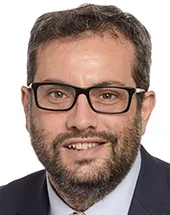

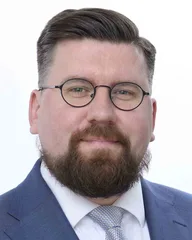
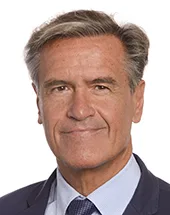
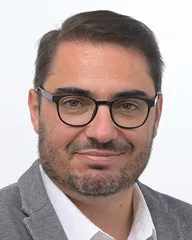

| Rank | Name | Country | Group | Speeches | |
|---|---|---|---|---|---|
| 1 |
|
Lukas Sieper | Germany DEU | Non-attached Members (NI) | 390 |
| 2 |
|
Juan Fernando López Aguilar | Spain ESP | Progressive Alliance of Socialists and Democrats (S&D) | 354 |
| 3 |
|
Sebastian Tynkkynen | Finland FIN | European Conservatives and Reformists (ECR) | 331 |
| 4 |
|
João Oliveira | Portugal PRT | The Left in the European Parliament (GUE/NGL) | 232 |
| 5 |
|
Vytenis Povilas Andriukaitis | Lithuania LTU | Progressive Alliance of Socialists and Democrats (S&D) | 227 |
All Contributions (53)
Breaches of EU law and of the rights of LGBTIQ citizens in Hungary as a result of the adopted legal changes in the Hungarian Parliament - The outcome of 22 June hearings under Article 7(1) of the TEU regarding Poland and Hungary (continuation of debate)
Article 7 TEU aims to ensure that all EU countries respect the common values of the Union, as enshrined in Article 2 TEU, including the rule of law. The European Parliament has always been very active in addressing the challenges related to the rule of law in the EU, in particular by adopting resolutions that initiated the above-mentioned Article 7(1) TEU procedure for both countries. Since then, and in particular following the deterioration of the situation as regards respect for fundamental rights and the rule of law in both countries, Parliament has continued to call on the Council to act under the above-mentioned Article 7(1) TEU procedure; it is a crucial issue to ensure respect for the values of the European Union and, above all, respect for the rule of law.
State of play of the corporate sustainability due diligence directive (debate)
Madam President, since 9 February, despite the provisional agreement existing at interinstitutional level, the adoption of the proposal for the Corporate Sustainability Due Diligence Directive has been repeatedly postponed in the Council. It has been some very specific countries that have prevented a definitive agreement. From Parliament and from my group, the Socialists and Democrats, we launched this initiative three years ago to protect the dignity of the most vulnerable and ensure the protection of the environment. But I also have to say that to protect the dignity of our companies. And I say more: this is being delayed by some countries in the Council, but who exactly do they represent? Because many of the companies have said they want this standard. Many of the companies have said that they have long respected issues such as not having child labor or not degrading the environment: companies that have a sufficient, basic ethical evolution, that broadly comply with the last of the Belgian Presidency’s downward proposals. I would like to say to the honourable Members of the Council and to some of the Member States, please stop embarrassing us.
Artificial Intelligence Act (debate)
Mr President, the Artificial Intelligence Act means the triumph of European democracy in a process that is complex, that has lasted many years, that has to summon many ideological wills and positions. In the end we got it and we got it by being the first in the world. And we get to have a rule that means a lot of good things: to begin with, which means security for citizens, which gives citizens confidence that their rights, their fundamental values, are protected by the rule. At the same time, it is a norm that is kind to innovation, which also creates spaces that encourage innovation. And we also created the largest area of legal certainty in the world: Any operator in the world will know exactly what the rules are and what consequences each of their behaviors will have in a space of more than twenty-seven sovereign countries. And now we have to face the future with debates, for example, about labour market reform, about how we are going to compete in the world as Europeans, not as 27 countries with 27 strategies. There are debates and challenges ahead, but today is a day to congratulate us.
Report on the Commission’s 2023 Rule of Law report (debate)
Mr President, the rule of law report is, in a way, a diagnosis of how our democracies are doing in terms of the state of health of what is at the core, namely the health of the rule of law. There are elements of this report that are of concern and others that are more positive, such as that there has been follow-up on two thirds of the weaknesses identified in the previous report or that anti-corruption measures have been put on the table. Unfortunately, this report has been used, or has been used, also as a short-step tool, as a tool for partisan political combat at the national level. Today we had another example of this. Again, comrades or colleagues in this Parliament, Spaniards from the right-wing parties have used this debate and try to use this report to transform it into an element of opposition against the Government of Spain. It is striking the relief of someone denouncing the corruption that sat in a Council of Ministers whose Minister of Interior is denounced for creating a political police to persecute political adversaries, nothing less. I tell you, ladies and gentlemen of the People's Party, that if you want to help, and help us to help, our country together, let us work together to end the blockade of the General Council of the Judiciary. By the way, Commissioner Reynders is here, he can give a good account.
Geographical Indications for wine, spirit drinks and agricultural products (debate)
Mr President, the system of protected geographical indications is itself valued at EUR 80 billion today and still has potential room to evolve, to be able to bring even greater added value to our producers and so that there can be an evolution. In that sense, we must value, once again, the value of intellectual property and the importance it has in our market, in our ability to grow and in sustaining our productivity for the future. Hence, as this report points out, it is so important that geographical protection is not only strengthened, but also extended to online operations, and that this is done through geo-blocking in accordance with the Digital Services Act. I would like to congratulate the rapporteurs, as well as the Swedish and Spanish Presidencies, both involved, on this new report, on this new proposal. And I would also like to congratulate the European Intellectual Property Office on its participation, which I believe has enough know-how to be able to provide added value as well. In that sense, I think it is a good rule, which has many elements of balance and positive and, therefore, I ask for the vote in favour for tomorrow.
Unitary supplementary protection certificate for plant protection products - Unitary supplementary certificate for medicinal products - Supplementary protection certificate for plant protection products (recast) - Supplementary protection certificate for medicinal products (recast) - Standard essential patents (joint debate - Patents)
Mr President, this is a package that is absolutely necessary. It is one of the cornerstones to boost innovation in Europe, to establish fairer conditions and to have a more open market as well. I would first of all like to thank the rapporteurs for their willingness and work, several rapporteurs who have been looking for a much-needed balance point in a rule like this which, in the end, touches on such essential issues. I would like to continue with some very brief reflections on the standard essential patent dossier. To begin with, it is a proposal that clarifies the scope to avoid fragmentation of regulatory rules; access to justice is ensured; a more effective fair, reasonable and non-discriminatory mechanism is proposed to determine licensing fees without relying on legal procedures; licensing fees are encouraged to be predictable and also fair; it facilitates and strengthens access to essential technologies that should enable our companies to compete globally on an equal footing and also creates protection against excessive licensing fees; innovation is encouraged and the green transition in Europe is supported. All of them are very positive elements. We are trying to support innovation in Europe and that means ensuring fair conditions and licences in a transparent and competitive environment for all companies and that is the proposal we will vote on tomorrow. So, from my group, I ask for the vote in favour of this proposal.
The fight against hate speech and disinformation: responsibility of social platforms within the Digital Services Act (topical debate)
Mr President, freedom of expression does not protect the deliberate practice of disinformation. It does not protect the profusion of harmful poisonous contents for vulnerable people and for minors. It does not protect the use of any space for the whipping up of hatred against minorities and against people who are also in situations of vulnerability. After years of lack of control in the social media environment, democracies today have some diseases that come from those times. We are now reacting with rules such as the Digital Services Act, but also with rules such as the Media Freedom Act, which really protects what is protected by editorial responsibility, which is real journalism, as well as with the Artificial Intelligence Act, against content created with artificial intelligence and deliberately used to misinform. Democracies have to defend themselves. And democracies defend themselves with laws that are equally applicable to all and also applicable by the courts, ultimately, which are a democratic public control. I highly recommend taking a look at the last commission in the United States of the big platforms, in which they deny their responsibility. But they do, and we have to make them assume it.
Policy implications of the development of virtual worlds – civil, company, commercial and intellectual property law issues (A9-0442/2023 - Axel Voss, Ibán García Del Blanco) (vote)
– In view of the rapid technological progress we are experiencing, it seems as if everything contained in science fiction books becomes a reality overnight. With Web 4.0, with virtual worlds, exactly the same thing happens. It seems that we are facing a novel by Philip K. Dick, but, in practice, we are facing a reality that is already true. It is true that it is still very focused on the world of video games, but, according to all the studies, - in the last of the Commission there is talk of an exponential growth of 20 or 30% per year in the business model related to virtual worlds - this is a reality that law cannot turn its back on. In that regard, we are trying to anticipate many of the debates that my colleague has just advanced in his speech. I believe that, in that sense, the European Parliament and the European institutions are also pioneers in the world in terms of positioning ourselves in the face of the challenges that it entails and, above all, we have a great impact - and I believe that it is the main part - on the need for massive training and massive investment so as not to lose our way as European citizens in the global competition.
Cultural diversity and the conditions for authors in the European music streaming market (A9-0388/2023 - Ibán García Del Blanco) (vote)
– Mr President, music is a fundamental pillar of our cultural heritage, an expression of our diversity, including linguistic diversity. And, somehow, it is also the repository of a great cultural heritage that is gradually being incorporated also into the musical pieces, which today are the most modern pieces. It is also a sector that has been digitized in an accelerated way, probably the most digitized in the cultural world. And, through that digitalization, today music is consumed in various ways. Music is also produced with innovations every day and, in addition, more and more music is heard. Never had so many pieces been heard and never had so many pieces been available. It is estimated that up to 100,000 new pieces of music are added to the global market each year. In the same way, it is estimated that the economic value of music is also immense. There is talk of a global market of between EUR 25 and 45 billion – or USD – per year. But it is also a sector in which huge imbalances have occurred. To begin with, because, although, as I say, the value of music is increasing, what reaches the authors, what reaches the musicians and artists, is decreasing; In addition to serving as a vehicle for cultural diversity, it is true that a tendency towards uniformity is, in some ways, also creating many inequalities and imbalances. And, in that sense, this report, which is also widely supported by the Committee on Culture, tries to point out some of these difficulties and propose measures that can solve them. Firstly, on the part of the market itself and, secondly, with some regulation that may be necessary to guarantee that cultural diversity and also to ensure that the distribution of benefits is fairer. So I would like to thank all the rapporteurs and all the shadow rapporteurs who have worked on this report. I think we are going to carry out a piece that is very important for the future and the sustainability of the music sector itself.
Non-objection mechanisms in international conventions to which the European Union is a party (debate)
Mr President, in accordance with Article 218 of the Treaty on the Functioning of the European Union, for the accession of a third State to a convention, in the field of so-called non-objection mechanisms, the European Commission must submit to the Council a proposal for a decision, which, in turn, it will adopt with Parliament's consent. As a member of the Committee on Legal Affairs, I believe that Parliament's prerogatives would be better protected if the Commission were to launch a compulsory procedure for Parliament's consent with each accession of a third State, thus giving rise to an express non-objection. However, the Commission considers that it is not necessary for Parliament to express such express consent. Parliament is competent to approve decisions on the accession of third countries to international conventions to which the EU is a party. That is why our approach is not a matter of whim, but of democratic scrutiny and guarantees of inter-institutional balance. And, consequently, I would ask: What measures does the Council intend to take to fully implement the procedure laid down in Article 218 of the Treaty on the Functioning of the European Union?
EU-China relations (debate)
Mr President, the ability to analyse reality monochromatically or bichromatically, something that, unfortunately, is slipping into politics in general, politics in all our countries, also here in the European Union, resists understanding the analysis of relations between the European Union and China, precisely because China is big enough to play the same game we play, sometimes with a morality that moves according to interests. And in that sense I believe that we must, of course, be realistic at the same time that we must, of course, also defend our own interests in the world. And to be realistic in the sense that, indeed, it is an ally or more than an ally, it is an economic cooperator that we cannot do without, with which we have to establish relations on an equal footing, on a footing of respect, but, at the same time, of course, we have to defend the values that, in principle, we represent in the world, but bearing in mind that we cannot impose them on them or we can impose them, of course, on China. And, in that sense, I advocate that - in the same sense that this report goes - we defend, as I say, a mature relationship with China, because, in addition, it is not only that it will be good for the European Union, but I believe that producing an individual European Union action, autonomous in the world, will also be good for the rest of the countries, fleeing, in some way, from a second Cold War in which we could establish ourselves as invisible allies. And in this... (the Chair took the floor from the speaker).
Situation in Venezuela (debate)
Mr President, it is no coincidence that, when there are possible movements in a regime that has been entrenched and bunkerized for so long, there is a part of that regime, a part of that nucleus that governs a country, that resists those changes. It is true that Barbados has been a beacon of hope. It is true that it has not ended, or at least does not continue in the way that we would have liked, but it is also true that the pressures that are occurring internally within the regime by the most immobile sector are effectively producing that situation. I would say that, obviously and effectively, what the European Union has to do is advocate and press to the best of our ability to demand compliance with some of those conventions and the most obvious issues that had to do with dialogue, which are, in fact, those relating to the convening of free elections in good conditions, and, of course, to the paralysis of the persecution of political adversaries. In this context, the emergence of this issue of the Essequibo is also no coincidence and also has to do with the form, with the formula, which is normally also used by the hardest, most bunkerized sections, of being able to divert attention and generate other conflicts that hinder the main thing, which is to recover the democratic path in Venezuela. And, in that sense, the European Union must also be absolutely vocal and unequivocal in condemning any kind of unilateral, let alone armed, action. Perhaps we should remind him how other undemocratic or undemocratic regimes ended up in Latin America throughout history, which also made unilateral decisions in that regard, seeking them as a flight forward. But, at the same time, the European Union must continue to be demanding and willing in terms of forcing dialogue, acting as a positive force and not giving a single excuse to the hardest part of the Maduro regime so that no further progress is made, so that the possibility that there is indeed a way out, a way out, a solution is not continued. The only possible solution to the situation in Venezuela is the democratic solution.
Commission Work Programme 2024 (debate)
Mr President, Commissioner, in Europe, as is also evident from the development of our latest pieces of legislation and our latest strategies, we have no oil, we have no rare materials, we have no silicon. What we have fundamentally is creativity and we also have intellectual property and it cannot be understood how in a strategic work plan for 2024 there is not a single reference to intellectual property. Most companies in Europe are small and medium-sized enterprises. Most of them are those that employ the majority of workers and, however, most do not use any type of intellectual property patent tool, being this a great empowerer, because it raises wages and raises productivity. We need a specific strategy for small and medium-sized enterprises. At the same time we need to protect her. More than 15% of owners reported some form of infringement on their intellectual property in the past few years. And, in addition, we have to face the challenges that suit generative systems of artificial intelligence and the massive use of protected data for the training of these models. For all that we need an answer, to compensate also the holders of those rights.
Decent Housing for All (topical debate)
Madam President, housing is a basic necessity, as is eating every day or being dressed, but it not only has that significance from the point of view of human need, but also as regards the development of personality and the need to have an autonomous space in which to develop and in which to mature as a person. This is how it is reflected in the Universal Declaration of Human Rights or in the Fundamental Charter of Rights of the European Union: as a fundamental right, a basic right. That is why it is not understood that there is no European strategy to also support those entities or institutions that have effective powers in their management. The housing market is perfectly compatible with the activity of public authorities to ensure certain levels of equity, as it is in other areas of fundamental rights and personal rights. Nor do I want to forget those who are even more vulnerable. Many people are having problems in Europe – in my country, mainly – to have a home autonomously and not to have to share a flat or return to their parents’ house, but we also have to think about those people who live recurrently on the street and for whom there would be a practical solution, as many institutions have shown: not only in Finland, which is always set as an example, but also in some local authorities or in regional governments, such as the Government of Asturias. The "Housing First" strategy works and is at our disposal. We can do it.
The future of the European book sector (debate)
Mr President, books are synecdoques of Europe or, at least, of the Europe we want to be, of the Europe we want to build. Through culture we form communities, we form shared collective spaces that transcend in some way our own individuality, we dream of projects of greater transcendence through communities, through spaces greater than those that are in front of our noses or our tribe. They are, therefore, the book and the culture as important as the heritage that we defend and protect, as important as the cathedrals. And in that sense, as Orlando Figes said very well in that wonderful book that is called Europeans, through copyright and through cheap publishing, a proto-identity of what is now Europe and of which we are now tributaries was formed in the 19th century. Therefore, any effort to defend the book is also a defense of Europe. And in that sense I want to congratulate my colleague Tomasz Frankowski, because he has done a great job and because, in addition, all those recommendations - eliminating VAT for books, defending bookstores as a basic unit of cultural space and also of freedom - all these measures are necessary and all are few for what the space and the book sector deserve.
Geographical indication protection for craft and industrial products (debate)
Mr President, first of all, I would like to thank Mrs Walsmann for all her work - I would also like to thank her for the tangerines from the breaks - because it has not been an especially easy job on some extremes from a technical or political point of view. But I think the document we have today is very satisfactory. The protection of geographical indications for craft and industrial products was an issue that had been pending for years; a priority for my political group. Our interest lies in the fact that it is a matter of protecting collective rights that perform public functions. They are decisive for the economic dynamism of our regions, they promote the preservation and promotion of jobs, as well as the quality of the know-how of local artisans and producers. They are a support tool against counterfeiting and, why not?, they help to fix and attract population and thus reverse the trend towards depopulation of some regions of the European Union, such as my own region, León. That is why endorsing this agreement in tomorrow's vote is crucial for many self-employed workers, micro, small and medium-sized enterprises, especially those in the rural geography of the European Union.
Recommendations of the Commission on public country by country reporting transposition (debate)
Mr. President, I will first make a brief historical replenishment of where we came from. About two years ago – just under two years ago – this Parliament finally, by its own insistence and by the good work of the current Portuguese Presidency, had the ability to unblock a report that stemmed from the public scandal that was generated by the Panama Papers and by the finding that financial engineering mechanisms, tax avoidance, were being used by many multinationals working within the European Union. Moreover, there were even tables of tax dumping between countries of the European Union itself and, above all, all this framed in an absolute element of lack of transparency, of obscurity, around what was happening, how these companies were operating and, above all, without any information for the citizens themselves. Like I said, we managed to unlock it. We are getting a text that is already sufficiently moderate, sufficiently responsible, the result of the general will of this Parliament as well, of some of the people who are speaking here today, in a sense contrary to what I am going to say or what the progressive groups are saying, in this debate. That is to say, the rule is already sufficiently contained and unambitious, I would say - much less ambitious than we would have liked at the time - so as not to comply with it at least in its spirit. We have recently seen a matter of extraordinary gravity, Commissioner, at least from our perspective, which is that you are not only pushing for the transposition of this directive - because there are still 17 countries, and you have already met the deadline, which you have not yet transposed - but, by virtue of a mandate that we do not know where it comes from, you are asking them to even breach the very spirit of the rule itself, reducing the effects, reducing effectiveness and reducing transparency and, therefore, citizens' rights. The question is: Where does your mandate come from? If, when we are talking about this, the democratic mandate, the exercise of sovereignty, belongs to this Parliament. And it is this Parliament that has raised the spirit of the rule and how that rule is to be applied. I therefore tell you, Commissioner, to stop doing things behind the backs of the citizens, behind the backs of this Parliament, and to comply with the sovereign mandate of the one who has that sovereignty, which is the European Parliament, which is the representatives of the citizens. If you do anything, let it be to implement this agreement and, above all, to increase the rights of citizens, never to reduce the effectiveness of it.
Global Convergence on Generative AI (debate)
Mr President, generative artificial intelligence is a great opportunity: It has a great capacity to promote human creativity, to create new content, but above all from the sense of complementarity, not to replace human creativity, but to promote it. In that sense, it also entails challenges such as, for example, how we work with content that can be misleading. And in that sense also, the Artificial Intelligence Law that this Parliament has approved and that is now going to negotiate with the Council already raises some important solutions from the point of view, for example, of transparency and of the contents that have been used in the training of algorithms or from the point of view also of transparency obligations to know if we are interacting with artificial intelligence or not. In this regard, it is important for the Commission to look at these parameters, at these standards, which are proposed by the European Parliament in order to extend them internationally. It is important that there are minimum laws. But there are some challenges that it has to address already, such as updating some sectoral laws. From the point of view, for example, of intellectual property, some have become obsolete and artists, creators whose content has been used to train these models, need to be guaranteed compensation, because we cannot afford to run out of artists and creators if they are replaced by machines.
Protection of journalists and human rights defenders from manifestly unfounded or abusive court proceedings (debate)
Mr President, the existence of a healthy democracy has as its presupposition the existence, in turn, of a strong critical opinion, of a healthy, free critical opinion. And, for that, it is essential that the public authorities, that the institutions put means to balance the game against those who exercise abusive positions of power, who have enough economic or political means to be able to abusively exercise those same means to, in some way, blind public opinion. And, in that sense, this anti-abuse legislation prevents abusive use by these powerful of lawsuits, of procedures that establish financial burdens, insurmountable economic burdens for people as activists, as journalists, as human rights defenders, for those people who are somehow the voice of our conscience, the conscience of democracies. And in that regard I would like to thank the people who have worked on this dossier and, above all, my colleague Tiemo Wölken, because I believe that from today we have a healthier democracy in the European Union. Not only is this rule sufficient; There will be many more, we will have to put on the table many more. But of course from today we have a more just democracy.
Artificial Intelligence Act (debate)
Mr President, indeed, we are facing a historic day, but a historical day that does not arise from chance, but from work matured over many years. I recall the text that was adopted here on ethics in artificial intelligence in 2020, of which I was rapporteur, the work of the Special Committee on Artificial Intelligence and the great work of the rapporteurs on this same law. Of course, we also need to thank all the technical staff, the shadow rapporteurs and the Commission for their work over all these years to get to this point. It is also time to send a message of trust and tranquility to the citizens. The European Union has done its homework, has done its job: it has complied with technically sound legislation that addresses all the problems that can be generated in the use of artificial intelligence, but, at the same time, it is optimistic from a humanistic point of view, which puts the human being at the centre, and which also tries to ensure that there is an equitable distribution of the benefits that artificial intelligence can generate and that it will safely generate. The European Union also takes its own path, becomes autonomous and mature, and also paves the way for the rest of the world. We try to be a compass in which the rest of the countries can look at themselves. This is the best Europe and it is also the Europe that we want to show to the outside world: Europe that protects rights and at the same time also takes care of investment, research and the technological leap forward.
Corporate Sustainability Due Diligence (debate)
Mr President, ladies and gentlemen, read the directive. Small and medium-sized enterprises are expressly excluded from their operation. Then, those who have that concern, let them take it away; They can touch and vote on this rule with complete peace of mind. Companies with more than 250 employees are those that are covered by it, not the minor ones. But I wanted to tell you fundamentally about a person I met this very morning: Second, he is an Afro-Ecuadorian descendant who has been working in the cow sector in a multinational company since the age of 9, which after 49 years continues to live overcrowded, with lots of people, without running water, without health insurance, without the right to retirement. Are we really willing, ladies and gentlemen, to continue to endorse this type of practice on the part of our companies? Also child labour: Aren't Europeans really better than all that? Because I do consider myself better than all that and I think that the majority, the overwhelming majority of European citizens are better than all that. So there are times, ladies and gentlemen, dear companions, there are times when you have to listen to the conscience. So tomorrow, really, please, this time listen to your conscience before you vote.
2022 Rule of Law Report - The rule of law situation in the European Union - Rule of law in Greece - Rule of law in Spain - Rule of law in Malta (debate)
Mr President, I was going to make a general reflection on the rule of law in Europe, but I found it and I find it impossible to avoid this coincidence that has occurred on the lectern between the Catalan independence movement and the European People's Party, in this case the Spanish People's Party. They make a very similar analysis of the rule of law in Spain. They have a very similar, very similar vision. I think that would mean enough not to have to abound much more in what is the responsibility of the Spanish People's Party with respect to the international prestige of our country. All in all, what is clear is that liberal democracy is facing many challenges also in Europe that have to do with the social transformations that are taking place, with the technological transformation and the digitalization of our societies. And it is important – a characteristic of liberal democracies – that we do self-criticism, that we try to improve. That is why it is important that we make this reflection and that we adopt this document on the situation of the rule of law in Europe. All in all, what does not fit here or should not fit are small-scale tactical debates, which are also a constant, mimetic repetition of debates that we have held here. I am not going to dwell, therefore, on some arguments that I have already used about it... (the Chair took the floor from the speaker).
Data Act (debate)
Madam President, the digitalisation of our economies and societies poses many challenges for Europe. The first is, of course, to have a population that is aware of what this change means, that also has its rights protected. And also, of course, that we are able to be at the level that we need to be truly competitive on an international scale. In addition, finally and to summarize these challenges, that we are also capable of some way of equitably distributing the benefits of that digitalization, that leap in productivity, so that the benefits are not only for a few, but for many. In the Committee on Legal Affairs we have tried to help, within the framework of the Data Act, a that great objective of creating a single market for data, while at the same time creating sufficient confidence in data protection for such a transfer between the public and private sectors to actually exist, and creating added value within the Union. We have introduced the figure of the data coordinator to try to give coherence to the whole Law and also support users and SMEs. And, in any case, we have also tried to introduce questions related to data illustration, with digital illustration, which seem to us of extreme need so that society is able to understand the change that is taking place and also the value of its own data. Finally, I would like to thank all the shadow rapporteurs in the Committee on Legal Affairs and, of course, I would like to thank them for the good negotiation and dialogue we have had with the lead rapporteur.
Protecting the Rule of Law against impunity in Spain (topical debate)
Madam President, Spain, as has been said here, does not have a problem with its rule of law. Spain has a problem mainly with the opposition and the type of opposition that is taking place, mainly because there is a party that is the Popular Party, which was one of the pillars of the system – it was a systemic party in the constitutional architecture –, which is behaving like a party that goes madly behind the extreme right, among other things because it does not know how to compete, because it does not know how to counter a far right that is a relatively recent phenomenon in Spain. It is striking that you bring a debate on these conditions to the European Parliament, seeing what you have done with the renewal of the General Council for the Judiciary. I would like you to take note of what the Commission has said: the priority problem is the renewal of the General Council of the Judiciary – the body that operates and directs the Judiciary in Spain – which does not mean that judges are not independent and do not function. The Judiciary is independent in Spain, but it is true that a serious breakdown in the functioning of the system is created with the non-renewal of the General Council of the Judiciary, which has been blocked for more than 1 500 days, 1 506 days exactly today. And, by the way, I encourage people and I encourage their own colleagues who have intervened here to review the newspaper library. But if it is not difficult to find out how many excuses the Popular Party has made not to renew it in these last 1,500 days: Since he did not want to negotiate with one of the government partners until there was an amendment to the Criminal Code, until a certain political measure was wanted. It's all been excuses. The last one: whereas they want to change a law that you created, which you passed in 2013 – passed by the government with an absolute majority of Mr Rajoy in 2013 –; a law they have to comply with and the Commission has told them: They have to renew the General Council of the Judiciary, because it is absolutely a priority in Spain. Patriotism is not wearing flags on the wrist, patriotism is fundamentally law-abiding. And, by the way, also patriotism is to speak well of your country abroad. I do not see another People's Party from a large country in the European Union bringing these kinds of debates constantly to the European Parliament, such as the shameful behaviour of the Chair of the Committee on Petitions constantly, using the European institutions to speak ill of her country. Really, gentlemen of the Popular Party, Spanish democracy needs you. I sincerely believe you need them. So, please, come down from the mountain.
Better regulation: joining forces to make better laws (debate)
Mr President, first of all, I would like to congratulate my colleague Tiemo Wölken on having been as thorough as ever in producing this report. We, the European Parliament, want to improve the entire cycle of European policy development in an open, transparent process that stands the test of time, makes it possible to make informed decisions and is supported by society. We seek to strengthen effectiveness, transparency and accountability so that our institutions are more reliable and efficient and thereby gain strength, on the one hand, and the trust of citizens, on the other. All this in a framework of dual digital and green transformation, post-COVID recovery and conflict at the EU’s eastern border. I want to dwell on the issue of communication and interaction with stakeholders and the general public, the first and last objective of the proposal. In our ambition to improve everything with the vision of the one who has the training, tools, support and time to fill out questionnaires, we must not lose sight of our fabric of small and medium-sized enterprises, the self-employed, micro-enterprises, the self-employed. They must also be able to make use of an easily accessible space and participate in an economically affordable process that allows them to swiftly and effectively transmit their demands. That is also why it is so important that the strength of this industrial fabric that moves Europe and all its citizens are digitally illustrated.