





| Rank | Name | Country | Group | Speeches | |
|---|---|---|---|---|---|
| 1 |
|
Lukas Sieper | Germany DEU | Non-attached Members (NI) | 390 |
| 2 |
|
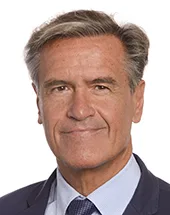
Juan Fernando López Aguilar | Spain ESP | Progressive Alliance of Socialists and Democrats (S&D) | 354 |
| 3 |
|
Sebastian Tynkkynen | Finland FIN | European Conservatives and Reformists (ECR) | 331 |
| 4 |
|
João Oliveira | Portugal PRT | The Left in the European Parliament (GUE/NGL) | 232 |
| 5 |
|
Vytenis Povilas Andriukaitis | Lithuania LTU | Progressive Alliance of Socialists and Democrats (S&D) | 227 |
All Contributions (55)
Presentation of the programme of activities of the French Presidency (continuation of debate)
Madam President, ladies and gentlemen, Mr President, at European level, when we can impose nuclear power, we can impose everything afterwards. So the question now is what France really wants, precisely, concretely, and I insist on these terms, because at European level, France makes magnificent speeches, beautiful lyrical flights that we all buy, but when we push the door of negotiations, it is a little bit more complicated. It plays small arms, when it does not help reduce the ambition of certain treaties or directives – I am thinking in particular of the agreement on taxation or banking regulation, or, of course, taxonomy. So the question is simple: Will France defend with the same fervor as it defended its nuclear power an ambitious reform of the Stability and Growth Pact? And if so, which one? Are we going to exclude green investments? Will the salaries of civil servants also be excluded from the calculation of debts and deficits? Because health, social, research, education is investment. Or are we finally going to have a little France? Thank you very much, and remember President Sassoli, Simone Veil and our right to abortion!
Global Tax Agreements to be endorsed at the G20 Summit in Rome, 30th/31st of October (continuation of debate)
Mr President, Commissioner, I am part of a generation that grew up in the 1980s, in the midst of a neoliberal counter-revolution. A generation that was explained that the state could not do everything, that it had to adapt to triumphant globalisation, to be a winner, a generation that, whenever it proposed something, was retorted: yes, we would like to, but unfortunately that is not possible. A generation that has grown up with the instrumentalisation of pseudo-economic laws aimed at discrediting any legitimate demand from citizens. States portrayed their inability to defend the public interest. The economy was their weapon and their language. So, yes, this global tax agreement is not perfect. Pillar 1: gas plant; 15%, the rate is not high enough. But if it is not 15% today, it is zero. Today, the states decide together to get the money where it is. And, more importantly, we stop staging the powerlessness of the public authorities, a breach is finally open. Let's take advantage of it.
Reforming the EU policy on harmful tax practices (including the reform of the Code of Conduct Group) (debate)
Mr President, Commissioner, ladies and gentlemen, first of all I would like to thank my fellow rapporteurs for the extremely constructive work and excellent working atmosphere during the preparation of this report. This text has indeed been supported by almost all political groups, which clearly shows the willingness of the European Parliament to speak with a strong and united voice in order to put an end to harmful tax policies, and which clearly shows our ability to work together on this subject, as this debate has just shown, despite our political differences. The concern of the European institutions with regard to aggressive tax competition is not new, although it is somewhat dated, since it began at the end of the 1990s, when the EU set itself the objective of combating harmful tax practices and adopted in 1997 a code of conduct in the field of business taxation, accompanied by a group responsible for assessing its content. This code of conduct has flaws; We'll come back to that. Today, the scandal of Pandora Papers reminds us of the urgency for Member States to cooperate with each other in order to increase transparency, and thus to put an end to these harmful tax practices. He also reminded us of the urgent need to update this code of conduct, which the Commissioner had mentioned, in order to equip it with the necessary tools to tackle harmful tax practices, which were becoming more sophisticated every day, thanks in particular to the transformation of preferential regimes into aggressive general regimes. Let us not forget, for example, that governments lose more than EUR 1 trillion in tax revenues each year as a result of corporate and individual tax evasion and avoidance practices. However, we must realize that every euro exempted from taxation is so much money that will not benefit the general interest, our democracies, so much money that we sorely need for the functioning of our schools, hospitals, public services and to invest in the ecological and social transition. There's a certain urgency, then. Let us also not forget that these harmful tax practices have had the effect of discriminating against small and medium-sized enterprises that do not have the means to take advantage of loopholes in national tax systems, unlike multinationals, which are perfectly able to use this competitive approach to our tax systems. The scandal of Pandora Papers, following the numerous tax scandals we have experienced in recent years, reminds us of the importance of implementing common and ambitious rules at European level, in order to put an end to the dumping tax havens between Member States, while fighting tax havens all over the world. This is where the damage is. Not only are almost none of the States incriminated in the Pandora Papers was not part of the blacklist of tax havens drawn up by the European Union, but worse, in the midst of the scandal, the Council decided to remove from that list three notorious tax havens in total opacity. This demonstrates the urgency of strengthening the criteria for listing tax havens and, more broadly, equipping the European Union with the necessary tools to deal with tax abuses by both businesses and individuals. Thus, in this report, the European Parliament acknowledges the obsolete nature of the criteria and tools contained in the Code of Conduct. That is why Parliament is calling for the implementation of a reform of the Code of Conduct, in order to go beyond its current scope, focusing on preferential tax regimes, for which it has also achieved a number of results to include general regimes, and for which we are calling for its scope to be broadened to include preferential regimes on the income of natural persons, which attract wealthy and highly mobile people, as the revelations of the Pandora Papers. This report also proposes to rely on criteria of economic substance, in order to verify the real activity of companies and thus avoid that they resemble mere shell companies or letterbox companies. We also call for the instruments and tools contained in the Code of Conduct to be legally binding, so that they can be used effectively in the fight against harmful tax practices and aggressive tax competition. Finally, the European Parliament calls for the work of the Code Group to be made more democratic and transparent, through the publication of documents and work related to the Code of Conduct Group and the regular hearing of its Chair. The Code of Conduct has been successful. It may have been useful in the past, but it now needs to adapt to the evolution of harmful tax practices. That is why this report is, in my view, essential and I call on this Chamber to vote on it as widely as possible. We have all, I believe, just said how shocked we are by the scandal of Pandora Papers, that this is not the first scandal, that these things come back every time, again and again. We have been hit, shocked, we want to get out of a certain powerlessness. We therefore call on the Council to take a number of actions. We also regret that we do not have more weight and power in these decisions. I believe that now is the time to show this, after all of them have shown a discourse of responsibility.
Pandora Papers: implications on the efforts to combat money laundering, tax evasion and avoidance (debate)
Madam President, Commissioner, Council representative, ladies and gentlemen, EUR 11 300 billion is a number, but it is above all a lot of messages. The first is that there is money, contrary to what citizens are told about public debt and deficits; It's just hidden. The second is that some of the wealthiest of us have seceded, refuse to consent to taxation and prefer the dirty money company – because that is the money of tax havens, that is the money of pedo-criminality and trafficking of all kinds – rather than the citizens’ money company. The third message is that elected officials, the very people who are supposed to protect us from these fraudulent practices, are also caught in the bag. And what is the icing on the cake? Yesterday, on an already very weak list of tax havens, the Council took away a tax haven rather than completing the list, namely Seychelles, which is at the heart of the tax haven scandal. Pandora Papers, in all opacity. In my country, it will be seen as the fault of Europe, while it is not the fault of Europe, it is the fault of the Member States. And all this will feed populism, then we will be amazed, we will even be moved and we will wonder how we arrive in our wise continent, the continent of the Enlightenment, at such high rates of extreme right and populism. We know the technical answers. We know that we need a credible list of tax havens, changing the criteria and processes... We could talk about it for hours; But the question is the political will of the Member States and the acceptance by the richest to share prosperity. Because certainly, sorry for them, democracy has a cost. But you know what? The other systems have much higher and much more serious costs.
Implementation of EU requirements for exchange of tax information (debate)
Madam President, ladies and gentlemen, Commissioner, Sven Giegold, congratulations on your report, congratulations to the rapporteur and on all the work that has been done on information exchange and transparency. But, my God, the road is long and fraught with pitfalls! Last July, we saw in the press a consortium of journalists talking about a scandal, the LuxLetters, and showing us how a country – not necessarily to point the finger at it, because mine is not always exemplary either – was blithely circumventing certain European regulations. This is intolerable. This is intolerable first and foremost for citizens, for Europeans. This is intolerable in a context of social, health and democratic crisis, because our continent is not doing very well from this point of view. It is also intolerable for all the work we can do in Parliament – and I talked about Sven, but I could talk about Paul Tang, I could talk about Evelyn Regner and many others. This is intolerable vis-à-vis the Commission. On 15 July, we sent you, Commissioner – and I know you are open to this – a letter asking you to shed all the light on this matter; We look forward to your response. We know the Progressive and Moving Commission, but it is important for us. This is important for citizens and just for something stupid: Let the rule be the same for everyone.