
| Rank | Name | Country | Group | Speeches | |
|---|---|---|---|---|---|
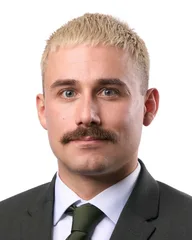
| 1 |
|
Lukas Sieper | Germany DEU | Non-attached Members (NI) | 390 |
| 2 |
|
Juan Fernando López Aguilar | Spain ESP | Progressive Alliance of Socialists and Democrats (S&D) | 354 |
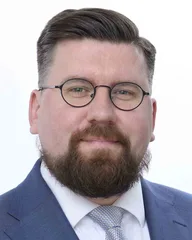
| 3 |
|
Sebastian Tynkkynen | Finland FIN | European Conservatives and Reformists (ECR) | 331 |
| 4 |
|
João Oliveira | Portugal PRT | The Left in the European Parliament (GUE/NGL) | 232 |
| 5 |
|
Vytenis Povilas Andriukaitis | Lithuania LTU | Progressive Alliance of Socialists and Democrats (S&D) | 227 |
All Contributions (55)
Impact of the interest rate increase decided by the ECB on households and workers (debate)
Madam President, Commissioner, Minister, sometimes you cannot fight inflation with an interest rate, and you have to accept it. The rise in the interest rate today must be questioned for at least three reasons. First, because we do not fight with an interest rate against imported inflation and energy inflation. Second, because today inflation is driven by superprofits, greed, greed: it is the inflation of sellers, the ‘cupideflation’ described perfectly by Isabella Weber, and moreover the European Central Bank agrees with this observation, so it would have to be consistent. Finally, because this increase has implications for banking and financial stability. While it is obvious that the collapsed banks had internal management problems – this is not going to be denied – it is also obvious that from the moment you raise interest rates, mechanically, you degrade bank balance sheets because you have unrealised bond losses. The last thing we need is a banking and financial crisis. So stop on interest rates. And sometimes, in order to have price stability, you have to go through something called price control.
Revision of the Stability and Growth Pact (debate)
Mr President, Mr Vice-President, Minister, I believe that we are all welcoming the easing of fiscal rules. This is indeed welcome. This is a first step in the right direction. Now it is up to us to improve it. The blind spot of this reform, and indeed of the debate we are having today, is the issue of revenue. Finally, we are still talking about the question of expenditure, the question of rules. If we take the issue of public finances seriously, we also look at revenue, especially if we need public investment, which will be the case. Two proposals. A proposal of course, which we talked about yesterday, which is to have a fiscal capacity at European level, but also to have, why not, a fiscal rule, that is to say to the countries: "You have the opportunity to spend more, but in this case, finance." And finance, what does it go through, when you are a state? Simply put, it comes down to taxation. This would also allow us to restore some order to the tax system that has been destroyed by 40 years of globalisation. And then another point: Avoiding spending also means not saving banks and therefore regulating banks well.
Impact on the 2024 EU budget of increasing European Union Recovery Instrument borrowing costs - Own resources: a new start for EU finances, a new start for Europe (debate)
Mr President, Commissioner, ladies and gentlemen, I wondered what yet another rational argument I could use to justify the need for a budget at European level. Would I quote again from the Financial Times, the IMF, or say that we should help the European Central Bank? And in this week so special for Europe, I confess that I thought of my resistant, communist, pro-European grandfather who, if he were still of this world, would tell me: So where are you, my dear, with the construction of Europe? That's it, do you have money to be able to make Europe? And I would say: You know, Papy, it's complicated. And he'd retort to me from smack to smack: You know what was complicated, sweetheart? It was about fighting Nazism. And he would have been perfectly right. The budget is an eminently political issue. It is a matter of political will. And even if I welcome the progress made in this report, I am still disappointed because it is not with a tax on cryptos, a tax on plastics or an FTT blocked in the Council that we are going to finance European defence, the green transition, the industry that we desperately need today. We need a sustainable plan, we need concrete answers from the European Commission on this point. We need tax justice, capital taxation and a levy for the single market, because if we love Europe, we finance it.
Digital euro (debate)
Mr President, Commissioner, I am still interested in the answer to the question I asked you in the previous debate about Mrs Lagarde and Mr Panetta. On the digital euro, I think the question we need to ask ourselves is: Why do we do it? For what purpose? And I think that’s a little bit of a problem, in fact, because, of course, we’re talking about sovereignty, but I think we wanted to take the digital turn a little bit quickly because it was fashionable and we’re now trying to fill this project a little bit in forceps. If we take it seriously, this project is truly dizzying, because money is trust and violence, to use the title of Michel Aglietta’s book. It is an eminently political subject, and we cannot do anything about it, not least because it can call into question the functioning of our banking system. I’m not saying it’s good, I’m not saying it’s bad, I’m saying it’s thinking, it’s getting ready and you have something very valuable in your hands, which is a political institution called currency. In the current context of political tensions and the rise of populists, I think that we must be very, very careful about how this debate, which is not technical, which is eminently political, is going to take place and that, as a matter of urgency, we must always take our time.
Markets in Crypto-assets (MiCa) - Information accompanying transfers of funds and certain crypto-assets (recast) (debate)
Madam President, Commissioner, ladies and gentlemen, thanks to MiCA and TFR, crypto players will be able to start applying basic rules of traditional finance, crazy tricks such as asking for identities, having insurance, not resorting to market manipulation or insider trading. That’s good. It is better than nothing. Is that enough? No, no. The European Central Bank, through the voices of Christine Lagarde, Fabio Panetta and Elizabeth McCaul, believes that MiCA is not enough to properly regulate cryptocurrencies, and they are right, among other things, on issues of thresholds and deadlines for application. Thus, the largest platform in the world, Binance, which is registered in the French cryptonation, will be able to comply with MiCA in only eighteen months. Eighteen months during which savers will therefore have no protection. When I discussed this topic in ECON, the European Commission replied: “Ah bah that’s how it is!” Sorry, but that’s not an answer. One of two things: either there is no problem, and we do not even legislate, or there is a problem, and in that case we have to act. So, Commissioner, I have questions for you. Do you think Ms. Lagarde, Mr. Panetta and Ms. McCaul are wrong about their judgment on MiCA? If so, why? If not, what do you plan to do? It was you who decided to have a specific approach to cryptocurrencies, whereas it would be better to follow a simple logic, which says: "Same service, same risks, same regulation". Therefore, you are asked to act quickly. I also draw the attention of my colleagues to the fact that ESMA has the possibility to ban financial products when they are dangerous. I will end by praising the actions of the Americans, and in particular of a man, Gary Gensler, who chose to protect American savers. I think we should be inspired by what the United States is doing.
European Central Bank - annual report 2022 (debate)
Madam President, Commissioner, Madam President Lagarde, dear rapporteur, congratulations on the work you have done! Ms Schnabel of the Executive Board of the ECB said in January 2023: "We need a better understanding of how climate change will affect the financial sector, and vice versa; for this, the development of high-quality data will be key". My question is simple: Really? Do we have time to wait? To begin with, will we be able to have good quality data on events that we are not able to imagine today? And do we have to wait to act? As Keynes said, "In the long run, we will all be dead." Won't we all be dead when we have the right data to act? Why not act immediately, especially on prudential? It is known that some banks are extremely exposed to fossil risk, a fossil risk that can lead to systemic risk, a systemic risk that can be avoided by increasing capital requirements. That is my question, Madam President Lagarde. That said, I believe that we can still be proud in Europe of having a central bank, the fastest-growing central bank in the environmental field. Some countries, notably the United States, do not have this chance.
Rules to prevent the misuse of shell entities for tax purposes (debate)
Mr President, Commissioner, ladies and gentlemen, tax avoidance is an industry. His homeland is tax havens. His people are the plutocrats, the oligarchs, those who already have everything, probably too much, even, but who always want more, or rather who do not want to share and who do not feel indebted to anything. Its weapon is the shell companies, these fictitious companies that make it possible to hide the transactions – that is their DNA and their only purpose – companies that have allowed quite aberrant things, such as the fact that an Anglo-Norman island has become the largest producer of bananas in the world, or that Mauritius has become the largest investor in India. Fake companies are known to be used to protect criminals and enable tax evasion. What must be remembered is that they serve above all to ensure that part of the elites secede discreetly, with the democratic consequences that we know. This directive is extremely welcome, for democratic reasons, not just economic ones. We were told that this was impossible – because, of course, every time there is money at stake, it is always impossible – we did it. Now, the next step is to actually bury shell companies and, above all, regulate their intermediaries. We are counting on the European Commission, on Parliament, and also on the Council, so that it does not block.
Defending the European Union against the abuse of national vetoes (debate)
Mr President, ladies and gentlemen, I do not know whether you are familiar with this film with Bill Murray, which often passes through this Christmas period and is called An Endless Day or Marmot Day, where a character lives and lives on the same day, over and over again. I have to admit that when we have a debate on the veto and unanimity, that is a bit what I feel. I have the impression that we are going to relive about the same debate, with about the same conclusions and about the same demands. I even wonder sometimes what I will try to say again, because I try to say new things from time to time, and I think: “But what can I say again?” Unfortunately, I must admit that today there is a lot to be said, because Parliament had expressly asked you, dear Council and Commission, not to compromise on the question of the rule of law and not to give in to the blackmail of the Hungarian government on the question of the taxation of multinationals. Now, what do we see? A package of measures and above all a Faustian pact. I wonder how we are going to get away with it, because this time it is not blackmailing a tax directive, it is much more serious, it is aid to Ukraine. That is one more precedent. In fact, this time, I think you've heard enough of us. We need to hear from you, because you are accountable to us.
Tackle the cost of living crisis: increase pay, tax profits, stop speculation (topical debate)
Madam President, Commissioner, 2.4%: According to the International Labour Organisation, real wages in Europe fell in the first half of 2022. Behind this figure, there are lives, thousands of families, and obviously it is the poorest and most precarious who, from a social and environmental point of view, are the most affected. That is the reality. In all logic, we should recommend raising wages, but this time without counting on a theoretical fear, which is called the ‘price-wage loop’, and which would lead to a runaway inflation. Yet even the International Monetary Fund tells us that such a loop does not exist. It even tells us that it never existed in such a context. We must therefore now recommend raising wages, but also, as Paul Tang perfectly said, finding money to better ensure support, with generous fiscal policies. I know that the European Commission, and you in particular, Mr Gentiloni, are very open about this. We can perhaps leave aside the FTT if it does not work and move to a tax on financial products, and tax especially wealth and the richest. Why not do the same as the Americans, by taxing share buybacks?
EU response to the US Inflation Reduction Act (debate)
Madam President, Executive Vice-President, it took only three glasses to shake Europe: IRA [Inflation Reduction Act]. Three letters so that our continent loses its bearings; three letters for the European Green Deal Continent, as a first step, to condemn the ambitious green transition plan of one of the most polluting economies in the world; three letters for Europe to panic, panic and whine, even asking the US to change its plan. I'm sorry, but let's respect each other a little. Already, instead of whining, let us rejoice that the US wants to reduce its greenhouse gas emissions by 50% by 2030. In fact, we are panicking because, in the end, we realise that the European Union has relied on pseudo-economic software that is dying its fine death, and that, of course, we must have a defence policy vis-à-vis competition, but that, in order to make industrial policy and the green transition, we need subsidies, we need planning, we need strong public authorities and sometimes we need to protect these industries. So, of course, Europe has to grieve, but it must do so quickly, because industrial policy and the green transition are not waiting.
System of own resources of the European Union (debate)
Mr President, Commissioner, ladies and gentlemen, in recent years we have seen a number of taboo words re-emerge in the political and industrial debate: gas exit, welfare state, taxation. And I would like to rehabilitate, once and for all together, another word, that of fiscal policy and that of policy mix. In economics, we do not have fifteen possible policies, we have two: monetary and fiscal policy. And we have been creative enough at European level to do something that does not exist anywhere else and especially not in economics: Make a currency without a budget. This does not work from a macroeconomic point of view, nor does it work from a solidarity point of view. The question before us today is whether or not we are going to decide one day to get out of this economic obscurantism, whether or not we are going to decide to go beyond national selfishness to have a budget, a real one, own resources, real ones, with taxation – whatever: Pillar I, single market reviewYou can think of a lot of things. It is not even a matter of left-right divide, it is a matter of common sense. As the International Monetary Fund, this great left-wing bureau, would say, the challenge for Europe today, I quote, is to ‘implement a Europe that is properly equipped from a budgetary point of view’.
Commission proposal for measures under the Rule of Law Conditionality Regulation in the case of Hungary (debate)
Madam President, on 8 October 2021, a landmark global agreement was signed on the minimum taxation of multinationals by more than 130 countries, including the Polish and Hungarian governments. It would bring in more than €50 billion a year, which we would need right now. The Commission is now proposing a directive. There are negotiations, some countries – Malta, Ireland – are blocking, we are lifting the blockages, we are negotiating in a rational way. Only one country is an exception: Poland. Poland, which does not vote for tax reasons, but because it is in a row with the European Commission for reasons related to the rule of law. And there, the European Commission makes a mistake: She gives in to this blackmail. Poland is, of course, lifting its blockage on this directive. On the other hand, this gives other ideas. This gives ideas to a government, the Hungarian government, which is now blocking this agreement, which it has signed at global level. This is what happens when you fail and when you weaken the rule of law. We don't save time: We create myriad problems. Parliament passed a resolution this summer expressly calling on the European Commission not to give in to this blackmail, which, it should be remembered, is possible because of unanimity. Recall that the best guarantee for our democracy and for upholding the rule of law is qualified majority voting.
Impact of new technologies on taxation: crypto and blockchain (debate)
Madam President, Commissioner, ladies and gentlemen, I believe that we cannot pretend that nothing has happened this summer either. So we're gonna refresh our memory together. Three Arrow Capital, a fund specialising in crypto-assets, a $650 million bankruptcy, debts of $3.5 billion. The Platform Celsius, which promised returns of up to 18% without any guarantee of users’ deposits, which they claimed were plucked out of their blocked accounts. The creator of the Terra, the famous Stable Coin, which was the pride of the crypto ecosystem, as it is called, which is also sought today by the police, its Stable Coin self-destructed in just 24 hours. I could also tell you about scams of all kinds, where creators of certain financial products leave with the cash register, phone harassment to get small people to buy products they know nothing about, the fall of bitcoin or the abysmal loss of valuation of the crypto market as a whole. This is today the world of cryptos, a market that has sold like that of the small against the big, the weak against the powerful, David against Goliath, anti-banks, anti-public institutions, anti-system, and that has made some people lose absolutely everything. So, as it stands, when you hear some of the sector – I say some and I apologize to honest actors because there are some, but they should also be heard a little more – the crypto world is to the economic alternative what Trump and Bolsonaro are to the political alternative: a world of alternative truth that claims to defend the weakest when in reality it manipulates them to defend private interests, that of the most powerful and the strongest. And besides, when little people get plucked, they're laughed at. This is truly mind-blowing courage. So yes, we must regulate them. Yes, we must tax them, of course, but above all to bring them into the rule of law, quite simply into democracy. And I'm not even going to talk about the substance, I just want to talk about the form. I would like to thank my colleague Lydia Pereira, because we do not share the same view on cryptos at all, and we have worked in a spirit of responsibility, respect and compromise. And we came up with a report that we don't have to blush about.
EU response to the increase in energy prices in Europe (debate)
Madam President, Commissioner, Minister, winter is going to be long, winter is going to be hard. Europeans may have to choose between food and heating. Protections will probably be stopped. We are facing a real social bomb and a real bomb, in fine, democratic. To help Europeans in this crisis, we will have to find money. There is, as we know, money. It is unevenly distributed, as we also know. There is, on this continent and elsewhere, a real problem of tax consent among the richest of us. We will have to face it. Face it first by amending our tax rules, get out of unanimity and go beyond Article 122, although we welcome this use. Tackling it by proposing a sustainable framework on the taxation of superprofits and not limiting it solely to energy issues. Tackling it by financing Europe, as proposed by the Social Democrats and also by the International Monetary Fund. Finally, confront it by proposing an exceptional solidarity tax on wealth, as proposed by the Financial Times today, and social democrats have always been. For, as the pope would say, and I will not quote it every day, taxes must be set according to the ability of each one to contribute. The answer to this crisis must also be fiscal, because there is no sovereignty, no independence without taxation.
Taxing windfall profits of energy companies (debate)
Mr President, good morning to all of you. More than 100%: The profits of energy companies explode to nausea. If things were otherwise going well or if these profits were the result of revolutionary innovations, we would be delighted. But it is the result, not of a market economy, as Markus Ferber has just said, but of an annuity. These profits are now being made on the backs of ecology, citizens struggling to make ends meet, the breath of scarcity and war. These are not exceptional profits, they are abnormal, disturbing, unacceptable profits. We know how to tax them, we have already taxed them during the First and Second World Wars. That is why we call at European level to tax them. Some countries are already doing so, others are late, starting with my country, France. To these countries, we say that winter will be tough in terms of energy, with economic, social and political consequences that can easily be imagined. These energy companies owe society money. They owe money to the citizens who feed these profits. Not taxing them would be a moral mistake and an injustice that we risk biting our fingers at. So let us tax them, instead of letting them choke with their own gluttony.
National vetoes to undermine the global tax deal (debate)
Mr President, let us summarize the situation. The reality of the situation is that the Hungarian government and the Polish government refuse to put in place at European level an agreement that they have accepted at international level and that would save us from losing EUR 50-60 billion a year. Why? Because of unanimity. But why, especially? because we are weak. Because we accept their game. Because we know very well that the problem is not the question of taxation. The problem is elsewhere, they attack us on our values, they test us on our values and there is a very clear will to humiliate us. The question before us, therefore, is: when will we accept to be strong? It starts with point 1, enhanced cooperation. They don't want this deal, they don't want $50 to $60 billion? All right, all right. We want them. So when is enhanced cooperation put in place? Point 2: When, in general, will the European Commission trigger Article 116? And finally, the question of qualified majority voting. I understand that it is complicated, as we all know, to change the treaties, to come out of unanimity, etc. It is complicated, but it is not infeasible and today we are in a world where we can no longer afford to be weak. So we are waiting for you, the Council and the Commission, here now, firmly.
The call for a Convention for the revision of the Treaties (debate)
Mr President, Minister, I am delighted that you are here. We have heard your little sting against my colleague Manon Aubry, and I do not think that NUPES, even if it is obsessing your government at the moment, is responsible for train delays either. You are not accused of being late; Do not blame my colleague Manon Aubry for waiting an hour and being forced to leave. I will now begin my speech. Sixty billion is what we should be getting today, right now, right now, but one country is holding us back, one government is holding us back: it is the Polish government. It prevents us from doing so because of unanimity, and because of this it is at the heart of all our attention, through a kind of blackmail – basically: I'm blocking everything if you don't give me my money. And this situation of unanimity does not only pose problems from a tax point of view: it prevents us from moving forward on the fundamental issue of the rule of law. Also, I say it with a certain force and a certain gravity: all the enemies of the qualified majority today are playing into the hands of certain states, which are currently in a total drift. The best guarantee today to protect democracy is qualified majority voting.
Minimum level of taxation for multinational groups (debate)
Madam President, Commissioner, ladies and gentlemen, I think a state’s ears have been particularly hissing this evening. To sum up: Europe is often blamed for being slow, doing nothing in the tax field and not doing much in the social field. But here we have a European Commission that has reacted extremely quickly - there is something to be proud of - and has done something strong in the field of taxation. It is a historic agreement, it must be emphasised, which, in the end, will inevitably have an effect in the social field. I would point out, however, that on this continent, multinationals are actually taxed at 9%, whereas SMEs are taxed at more than 20%. But our efforts are blocked. By what are they blocked? By a government. Then one could say that this government has not ratified the OECD Agreement and therefore necessarily opposes the Directive. No, no. It could also be said that the proposal made by the European Commission is so different that, in the end, this government opposes it. No more. It could be said that there are technical difficulties. However, the negotiators were able to find solutions to all technical problems, be they Estonia, Malta, Cyprus or Ireland. It could also be said that this is because the agreement will not bring in any money. No pot, again, the agreement will bring a lot of money to the Polish government. In fact, if the negotiators do not find a solution, it is because the government in question does not want a solution, because the problem is elsewhere, because it is known that it is blackmailing the European Commission on issues that are completely unrelated to the issue of taxation. This government wants to block, it can block, so it blocks. That would jeopardise this agreement for us Europeans. That could cause problems for our American partner. That is why I hope that tomorrow we will vote very clearly in favour of this agreement. And that is also why, in my opinion, it will be necessary to reflect, as you are well aware, on the question of unanimity. Because it is no longer possible to work under these conditions. It is really a bonus to the ability to permanently harm. This behaviour is also particularly insidious in the sense that, for example, we have the Stability and Growth Pact, we have agreements on which we do not necessarily agree, but they are clear. That's it, we can oppose it. Agree or disagree. But they're clear. This is insidious, it is insidious because it prevents us from moving forward, it prevents us from moving forward. And Europeans are not necessarily aware of this type of blockage. So here we are, we are calling on the Commission and we will put pressure on it – I think it is a pressure that it will accept – to get out of this unanimity that is doing us so much harm.
Minimum level of taxation for multinational groups (debate)
Madam President, Commission representative, ladies and gentlemen, first of all I would like to thank my co-rapporteurs, Luděk Niedermayer for the EPP, Gilles Boyer for Renew, Claude Gruffat for the Greens and José Gusmão for The Left, but also Eugen Jurzyca for the ECR. I do not thank the ID Group, because it was not present during the negotiations, as too often. I would like to thank you for these very frank and direct discussions that we had. I think we agreed that we did not quite agree, but that we had a mutual understanding of our disagreements. In my report, I always wanted to walk on two legs. The first was to give a strong voice to the European Parliament – because we are not the European Commission, we are not the Council – and to propose more flexibility to this agreement through the question of the rate, the threshold and the exemptions. The other leg was to treat this agreement seriously and responsibly, because it was a historic agreement that we had in our hands, a historic agreement that required extremely fine negotiations, working time and we should not do anything, to put it very clearly. However, during the negotiations, two visions were opposed, two visions, my faith, quite legitimate. On the one hand, there was a desire to have more flexibility on the issue of the threshold, on the issue of the rate and on the issue of exemptions, but also on the consequences for developing countries of this agreement, which was rather the line defended by the Greens and Social Democrats and The Left. On the other hand, two political groups told us very clearly that, for them, this agreement was fragile – that it was already going a long way for them – that this agreement was fragile and that the urgency was to consolidate it, a request that is also perfectly legitimate, especially since we are in a context that is that of Ecofin, at a time when a country in particular is blocking the agreement, which can jeopardise it and which can also have consequences on our partners, and on our American partner in particular. In view of this context, it was decided not to touch on the most important markers of this agreement, i.e. the issue of the rate, threshold and exemptions, but, on the other hand, to add safeguards on the issue of abuse – to avoid certain types of abuse and circumvention of the agreement, to reduce the duration of certain exemptions, to also propose a review clause, to assess the impact on developing countries and to propose delegated acts when there would be a change, an evolution of this agreement. But – there is a ‘but’ – in return, we asked to put the agreement in place immediately, i.e. to stick to the timetable initially proposed by the European Commission, and not to postpone the agreement, as proposed by the Council, because we have made efforts. The idea here is to speak with one voice, in a responsible way, to show that we in the European Parliament are taking responsibility. We know how to compromise between right and left when it comes to making a historic compromise, even if we have differences. This agreement, necessarily, it does not please everyone: At the same time, we are satisfied and necessarily frustrated, because we would have wanted, for example, to have a much higher rate or this kind of thing. But, on the other hand, he is not being held hostage by some governments, for example, which have accounts to settle that have absolutely nothing to do with tax matters. That is why I hope that tomorrow we will vote with one voice to call for this agreement to be put in place as soon as possible, which, let us remember, is historic and which we have been waiting for so many years. We would then be the first continent to implement it. We often complain about the slow pace of the European Union and it has been very fast. It is up to us to show responsibility by supporting this approach.
Urgent need to adopt the minimum tax directive (debate)
Madam President, Commissioner, ladies and gentlemen, there is no doubt that taxation was probably the biggest failure in European integration. And to make matters worse, this failure took place in a global context of at least so-called fiscal race. We finally decided to whistle the end of recess. This started, as has been said, with the OECD agreement on minimum taxation of multinationals, signed by more than 130 countries, to which the Commission responded very quickly with a directive. We are working on this directive right now at the level of the European Parliament, but as usual, there is a blockage on tax issues, on the part of two states in particular, namely Estonia and Poland. So dear Estonian and Polish governments, of course, you have your reasons for not loving this agreement. We also have our own! On the side of the socio-democrats, we would have liked a higher rate. Markus Ferber might also have liked another deal, but that deal is the result of a historic compromise. So why refuse us at European level what you have agreed to sign at global level? And above all, why now, in this particular context where we must show responsibility and solidarity?
Update from the Commission and Council on the state of play of the Energy Charter Treaty modernisation exercise (debate)
Mr President, Commissioner, Minister, ladies and gentlemen, I must tell you that for people like me who have been calling for an end to fossil fuels and our dependence on gas for years, the debate we have had since this morning should make me happy, and I will not lie to you, there is a certain bitterness in me, because it took a war for us to realize the geopolitical and environmental damage of our dependence. It is very sad. Could we, for once, anticipate today by moving out of the Energy Charter – I think the message is quite clear? Why? Because we simply will not continue to compensate investors who have been sending us right into the wall for years and who, in addition, are making money on climate change. The issue of modernization, in my view and in our view, will take much longer than expected, as we have known from the beginning. So please, this time, listen to us: Let us anticipate and prepare for this orderly exit.
European Withholding Tax framewor (debate)
Mr President, Commissioner, ladies and gentlemen, when we hear about a report on withholding tax, it may seem at first sight anecdotal, a bit technical, at least not political, especially when we look at the scale of what needs to be done in the area of tax havens. And then we listen to Pedro Marques, we read his report, we realize and we understand. He reminds us on this occasion – and we remember on this occasion – of a robbery of EUR 140 billion, according to the latest estimates, the largest European robbery. Victims: States, we, the citizens; those involved: lawyers, banks; the name of the assembly: Dividend arbitrations. First type of scheme: CumCum. It is simple: To escape dividend tax, foreign owners of publicly traded securities get rid of their securities at the right time. Just when they have to pay the tax, some banks collect them for a commission and then give them back. Second type of fraud: CumEx. This is the jackpot, since not only do the owners of securities not pay tax, but they are also refunded imaginary taxes that they have never paid. Without whistleblowers, without a consortium of journalists, we would not have been aware of this whole situation. And it is precisely in order to combat this type of fraud – and many others that we probably do not know – that withholding tax takes on its full meaning, its usefulness is understood and its political dimension is also understood. Thanks to Pedro Marques for his consistency on this subject. Thank you for these eminently political proposals. We now expect the Commission to take this up and follow the recommendations of this report, including on the exchange of information and on the issue of minimum effective taxation for dividends.
Fair and simple taxation supporting the recovery strategy (continuation of debate)
Mr President, Commissioner, ladies and gentlemen, this report is based on a relentless observation: the tax impact, I quote, has shifted from wealth to income, from capital to labour income and consumption, from multinational enterprises to SMEs, from the financial sector to the real economy, with the tax burden shifting from the most mobile to the least mobile taxpayers. He lists proposals to reverse this situation and I would like to congratulate the rapporteur for this, as well as for the working atmosphere, which seems to have been very good and very constructive during the various negotiations. VAT, BEFIT, reflection on the issue of SMEs... This is all going in the right direction, but I think today the context has changed. Europe has changed in less than a week. We are now talking about a Europe of defence, the need for an urgent exit from fossil fuels, inflation, economic crisis, social crises. I believe that if we want to be able to help the economy without burdening the debt issue, we will have to break a number of taboos once again, including the tax taboo we are debating here. Have a serious, robust list of tax havens, perhaps have new forms of solidarity taxes. And then break a final taboo, which prevents us from moving forward from a tax point of view: the question of unanimity.
European Semester for economic policy coordination: annual sustainable growth survey 2022 – European Semester for economic policy coordination: employment and social aspects in the annual sustainable growth strategy survey 2022 (debate)
Madam President, ladies and gentlemen, first of all, congratulations to the rapporteur, Ms Irene Tinagli, for unblocking this file, because we are going to need coordination of economic and budgetary policies more than ever. But not just any of them. The pandemic has painfully reminded us that, more than reducing debt and public deficits, it is important to have a pharmaceutical and textile industry, to have a welfare state. The war in Ukraine is a shameful reminder that it is more important than reducing debt and public deficits. There is energy independence, investment in sobriety, renewables, not trading with anyone, anyhow, or financing a defence. In the face of these tragic events, in the face of climate change and the likely failure of the Russian state, it would be good to stop rediscovering warm water at each crisis and to equip ourselves, to anticipate, as the rapporteur has said, with a change in the rules, with a massive plan to invest in sobriety and renewables, with more social justice too, which means more tax justice. Let Europe continue to move forward in unity and with strength, as it has done in recent days.
European Central Bank – annual report 2021 (continuation of debate)
Madam President, Madam President, Commissioner, there is what the Central Bank can do, what it cannot do and what it must do. It cannot – I think we all agree – combat short-term inflation linked to energy prices, or deflation for that matter, with an interest rate. Instead, it has to manage spreads, spreads, given that we do not have debt pooling, and that is, in fact, its real mandate today. On the other hand, it can do a lot in the field of ecological transition. I think we are all delighted to see the future greening of the European Central Bank’s monetary policy, but we are also waiting for you in another area, that of supervision. Since the Paris Agreement, the world’s 60 largest banks have provided almost €4 trillion in funding for fossil fuels. Among them are major European banks, which come under the supervision of the European Central Bank. These investments are risky: they are risky for our lives; they are risky for financial stability. The Basel Committee has always said that the more risky an investment is, the more it must be made on own funds and mobilize banks' own funds. We therefore expect strong proposals in this area. Since we already have an ecological crisis to deal with, it would be a shame to also have a financial crisis to deal with.