
| Rank | Name | Country | Group | Speeches | |
|---|---|---|---|---|---|
| 1 |
|
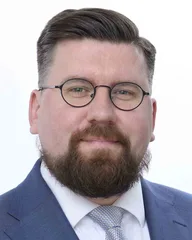
Lukas Sieper | Germany DEU | Non-attached Members (NI) | 390 |
| 2 |
|
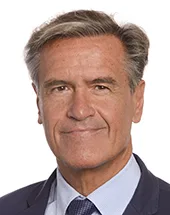
Juan Fernando López Aguilar | Spain ESP | Progressive Alliance of Socialists and Democrats (S&D) | 354 |
| 3 |
|
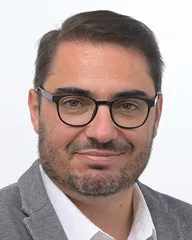
Sebastian Tynkkynen | Finland FIN | European Conservatives and Reformists (ECR) | 331 |
| 4 |
|
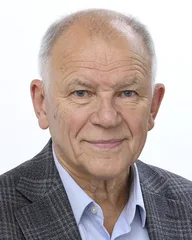
João Oliveira | Portugal PRT | The Left in the European Parliament (GUE/NGL) | 232 |
| 5 |
|
Vytenis Povilas Andriukaitis | Lithuania LTU | Progressive Alliance of Socialists and Democrats (S&D) | 227 |
All Contributions (122)
The arbitrary detention of President Mohamed Bazoum by the junta in Niger
No text available
Situation of the rule of law in Greece, following the Court decision on Predator spyware (debate)
No text available
Child sexual abuse online: protect children, not perpetrators (topical debate)
No text available
Post-election situation in Uganda and threats against opposition leader Bobi Wine
Mr President, dear Commissioner, ahead of the elections, Bobi Wine was cheered by tens of thousands of Ugandan voters wherever he appeared in the country. Now, after the elections, he is under siege, and tens of thousands of citizens took to the streets – this time in protest. The post-election situation in Uganda shows a systematic assault on fundamental rights. President Museveni's seventh term followed elections that failed to meet democratic standards, preceded and followed by mass arrests, violence, attacks on journalists, the shutdown of civil society, an internet blackout, and killings of unarmed civilians. The harassment of Bobi Wine, his family and members of the National Unity Platform is unacceptable. The European Union must act consistently to end immediately all violence, threats and the arbitrary detention of opposition politicians and their supporters. We must review our cooperation with Uganda and firmly support civil society, journalists, human rights and LGBTIQ+ defenders, as well as the democratic opposition.
International Day of Education, fighting inequalities in access to education (debate)
Madam President, Madam Vice-President! Education is a fundamental human right and a cornerstone of the 2030 Agenda for Sustainable Development. However, this right remains unattainable for millions of children and young people worldwide. In Europe, social background and educational success still go hand in hand far too often. Growing up in a family environment with a weak educational background, low financial means or a migrant background makes it much harder in the education system. A European Education Area must therefore ensure equal access to education and lifelong learning for all, regardless of social and economic conditions, place of residence, age or gender. Investing in education means investing in a sustainable future. The European Union must, in its own interest, strengthen the funding of educational programmes such as Erasmus+. According to UNESCO, 250 million children and young people worldwide do not attend school. Wars, terror, natural disasters and poverty are destroying education systems, displacing teachers, students and exacerbating existing inequalities, especially for young people. Education creates prospects everywhere so that young people can stay in their homeland. It is the basis for better living conditions, economic stability and democratic development.
Presentation of the action plan against cyberbullying (debate)
Mr President, Madam Executive Vice-President of the Commission! Lying, cheating, stealing and bullying all take place online. Therefore, protective measures and clear rules are necessary and must never be called into question by reference to freedom of expression. Anyone and everyone can become a target. Especially affected are young people with disabilities, young people who are attacked because of their sexual orientation, members of minorities. Open anti-Semitism is also increasingly ubiquitous on the Internet. One in six young people has been the victim of cyberbullying. Hatred, exclusion and targeted humiliation take place without barriers – anonymous, permanent and in a dimension that was unthinkable in the analogue age. The consequences are fear, social withdrawal, severe trauma and, in the worst case, suicide. I therefore expressly welcome the Commission's action plan against cyberbullying. He makes it clear that online violence cannot be viewed in isolation, but is associated with violence in analogue everyday life. Digital use starts early and is constantly changing. Precisely for this reason, prevention must be based on the respective developmental phases of children. We also need to support the parents. Education plays a key role. The Action Plan is an important step and mandate for Member States to implement protection and prevention measures in the curricula. Cyberbullying is violence – let's protect our children and young people now!
Urgent need to address the humanitarian catastrophe in Sudan and to achieve a sustainable peace (debate)
No text available
Case of Joseph Figueira Martin in the Central African Republic
Madam President, Madam Executive Vice-President of the Commission! Joseph Figueira Martin must be released immediately and unconditionally. His case is a human tragedy. I am still moved by the descriptions of his relatives. A humanitarian researcher is kidnapped, tortured, detained without medical care and sentenced to ten years of forced labour by mercenaries from the Wagner Group, on the basis of unsubstantiated allegations. Such events call into question development cooperation in the country. The EU Commission and the Member States, together with Belgium and Portugal, have to use all diplomatic means to achieve his release. The EU must work critically with the authorities of the Central African Republic to protect humanitarian workers and enforce international humanitarian law. Attacks on aid organisations must be condemned in the strongest possible terms. A European protection mechanism for humanitarian workers worldwide and targeted sanctions against all those responsible for human rights violations in the Central African Republic are urgently needed.
Online piracy of sports and other live events: urgent need to address unsolved issues (debate)
Mr President, esteemed Commissioner! When it comes to piracy, some may think of the Pirates of the Caribbean and Johnny Depp as Jack Sparrow. Online piracy is all about entertainment, about being able to stream offers supposedly cheaply, but this adventure is usually over quickly. 40% of users of illegal streaming platforms are victims of credit card fraud, identity theft or malware. Online piracy of sports and live events causes immense damage and is not a cavalier offense, but systematic theft. Organised cross-border criminal business makers make tax-free money from illegal streams, at the expense of sport, culture and user safety. Around €30 billion is lost to the sports sector worldwide every year. Money that flows into dark channels and associations for infrastructure and especially for children and youth work are missing. This is a problem that the European Parliament has been drawing attention to for a long time. Already in 2021, an initiative of the CULT Committee called on the Commission to act. Recommendations to Member States followed in 2023. The current assessment by the European Commission makes it clear: While the recommendations have triggered individual improvements, the overall impact has remained limited. While some Member States have put in place effective measures, others have remained idle. Existing rules do not apply to live broadcasts: If an illegal stream is not removed until the football match has been whistled or the addition of a concert is over, the damage is no longer to be compensated. I would like to thank Commissioner Micallef for his resolute approach to the problem. Clear and uniform European rules are necessary so that illegal live streams can be stopped immediately. It is about a lot of money, but above all about safety for consumers.
Attempted takeover of Lithuania’s public broadcaster and the threat to democracy in Lithuania (debate)
No text available
Post-election killings and the deteriorating human rights situation in Tanzania, including the case of imprisoned opposition leader Tundu Lissu
No text available
Implementation of the EU-UK Trade and Cooperation Agreement (debate)
No text available
Protection of minors online (debate)
Madam President, Commissioner! When we discuss the protection of minors online, we are talking about the future of our children, about young people who are curious, open, but also vulnerable, move naturally in a digital world that brings opportunities, but also dangers. Regulations can set limits, but never replace what children need on their way: orientation, support and above all education. Education is key if we really want to protect young people. We need schools that teach digital skills and critical thinking, and teachers who are trained and supported to do so. Especially when it comes to cyberbullying, we must not look the other way. Bullying destroys self-confidence, isolates and, in the worst case, can become life-threatening. Exclusion, psychological pressure – this leaves traces, sometimes lifelong. That's why we need more prevention, more school psychologists and a safe environment for young people. Yes, we need age verification and a clear responsibility of the platforms. But the strongest protection is a young person who knows how to defend himself, who finds support and is not left alone.
Escalation of the war and the humanitarian catastrophe in Sudan (continuation of debate)
Madam President, Commissioner! More than 10 million people are displaced in Sudan. Twenty-five million, two-thirds of the population, need humanitarian aid. And since the capture of al-Faschir, thousands of people have been murdered and over 100,000 displaced. This is one of the worst humanitarian disasters of our time. And the violence does not stop: ethnically motivated massacres, systematic rape, torture, hunger as a weapon of war. The RSF bears responsibility, but the Sudanese army also seriously violates international humanitarian law. Both sides must immediately end attacks on civilians. We call for an immediate ceasefire, protected humanitarian corridors and independent investigations that hold all those responsible accountable. The EU must assess whether the RSF meets the criteria of a terrorist organisation and, where appropriate, add it to the list. Europe must not ignore external interference. How far are the UAE involved in networks supplying weapons, money or logistics to the RSF? Are sanctions and a suspension of trade talks necessary? Europe cannot and should not remain silent.
Audiovisual Media Services Directive obligations in the transatlantic dialogue (debate)
Madam President, Commissioner! The European film does not belong on Trump's negotiating table. The US president threatens to impose a 100 percent tariff on European film productions. The view that the European regulations are protectionist is probably intended to distract from the fact that it is exactly the opposite, because already in 1918 the US legislation provided for a regulation to increase the global reach of the film industry. American productions dominate cinema and television in Europe, while major US corporations dominate the European cinema market by 70 percent. It is precisely for this reason that the Audiovisual Media Services Directive is a legitimate instrument for strengthening our domestic cultural and creative sector, which is of economic importance. It is definitely not a trade barrier. Their actions are of the highest public interest. 30 percent quotas for European content, investment obligations and the promotion of independent productions guarantee creativity, cultural diversity and media pluralism in Europe, preserve and promote our sovereignty and diversity. The Directive also creates fair conditions between broadcasters, streaming services and video platforms, while protecting underage consumers and freedom of expression. To exclude audio-visual services from the negotiations so far was correct and is also in the interest of the USA. In any case, this cultural exception must be taken into account in commercial contracts. The Commission must therefore defend this directive resolutely.
Allegations of espionage by the Hungarian government within the EU institutions (debate)
Madam President, Commissioner! Spying, monitoring, eavesdropping, hacking: The Orbán system does not get out of the headlines. Illegal surveillance with espionage software, hacking laptops, tapping phones, targeting investigators from the European Anti-Fraud Office – increasingly brazen, increasingly unabashed, it seems. Hungarian intelligence services are said to have tried to recruit EU officials in Brussels as informants. Those responsible do not dispute this at all. It's unbelievable! Anyone who targets national secret services on their own European institutions, systematically bows to the law, opposes the European Community and violates the principle of loyalty enshrined in the EU Treaty – thus a prime example of a breach of contract. An independent investigation by the Commission is therefore only a first necessary step. And it's not the EU that restricts freedom, and it's not the EU that builds a surveillance state. It's your friends in the Hungarian government in your Budapest bubble.
The decision to impose a fine on Google: defending press and media freedom in the EU (debate)
Mr President, Madam Vice-President! The appreciable fine against Google is a signal to the entire digital market. It's not just about a billion-dollar fine for a company, but about the basic message: Competition rules must be observed. And if Google exploits its dominant position in the field of online advertising technology, favours its own services and thus prevents fair competition, this is a clear violation of European competition law. The Commission has decided to tackle any abuse by digital companies that affects businesses, publishers, journalists, advertisers and ultimately citizens. When advertising revenue is systematically redirected to a global player, small and local media in particular lose economic foundations. This is why Vice-President Ribera's decision should be explicitly supported, because it is in line with the objectives of the European Media Freedom Act protects the independence of our media, defends diversity and transparency, and creates fair rules in the Digital Single Market. The Commission has acted correctly, and this is only the beginning. We need permanent rules to prevent individual corporations from controlling public communications. This is not an intervention in the market, it is a defence of democracy and the rule of law. Media freedom is not a business model, it is the cornerstone of our democracy.
Arbitrary detention of EU citizens Javier Marañón Montero and David Rodríguez Ballesta in Equatorial Guinea
Madam President, We call on the authorities of Equatorial Guinea to take immediate and unconditional action to end the inhumane detention conditions of Javier Marañón Montero and David Rodríguez Ballesta. The two EU citizens have been in the notorious Black-beachprison incarcerated. They do not have sufficient medical care, limited access to lawyers, isolated detention and little contact with their families. Javier Marañón Montero is in critical health following a hunger strike. We therefore demand full respect for their rights: fair trial, medical care, legal assistance, consular protection and family support. Their detention conditions violate human rights, damage the international reputation of Equatorial Guinea and hamper cooperation with the EU based on the rule of law and respect for human rights. I call on the European External Action Service and the Member States to use all diplomatic means to stand up for prisoners, prevent such cases and strengthen the protection of EU citizens worldwide.
Rising antisemitism in Europe (debate)
Mr President, Commissioner! Today, October 7, we commemorate the 1200 murdered and 250 deportees of Hamas' terrorist attack. On Nova music festival 370 young people who wanted to celebrate and experience freedom were brutally murdered. I also remember those scenes from surveillance cameras when a father of a family is murdered in front of his two sons, at the age of my son. A terrorist then drinks from a bottle in front of the injured children from their refrigerator. And people are still in the hands of these terrorists. And it is not tolerable if, as a result, the extent of the Holocaust is relativized, denied on Internet platforms, and access denied to Jewish guests in local areas. Education has to be part of every strategy in the fight against anti-Semitism. For example, every European student should be able to visit a Holocaust memorial site where they can see the dimension of these crimes against humanity. Jewish life and cultural heritage are part of my Austrian and European identity. Every Jew in Europe must feel safe and secure. This is our mission.
Intergenerational fairness in Europe on the occasion of the International Day of Older Persons (debate)
No text available
Role of EU policies in shaping the European Sport Model (debate)
No text available
A new vision for the European Universities alliances (debate)
Mr President, Commissioner! Europe invests in education and research and thus in strengthening our liberal democracy. European university alliances are more than networks, they are engines of innovation, mobility and academic freedom. And what started in 2019 as a new initiative under Erasmus+ is now a European success story with 65 alliances and over 570 participating universities – an outstanding example of how Erasmus+ is making a difference with comparatively little money and how the European Union is particularly visible to young citizens. In order to continue writing the success story, the university alliances must remain under the umbrella of Erasmus+ even after 2028. And because the proposed increase in the Erasmus+ budget alone will not be enough to reach more young people and our ambitious targets, the Commission has to present a comprehensive investment strategy. If Member States also commit to contribute from national budgets, they contribute to success. In any case, at a time of global challenges, the university alliances and Erasmus+ are sending a clear and committed signal.
Case of Abdoul Aziz Goma, arbitrarily detained in Togo
Mr President, Commissioner! We demand the immediate and unconditional release of Abdoul Aziz Goma, an Irish-Togolese citizen. His case shows with all brutality how human rights and the rule of law are trampled underfoot in Togo. He has been in inhumane detention for more than six years, has been tortured, isolated and sentenced in an unfair trial. Torture and political persecution must never be tolerated. All political prisoners must be released immediately. For such cases to be ruled out once and for all, the justice system in Togo needs to be reformed. And the European Union has a clear stance to take. We stand by the side of civil society, we stand by the side of human rights. Freedom of expression and assembly must be guaranteed, the rule of law and democratic principles must be respected.
European Citizens' Initiative 'Cohesion policy for the equality of the regions and sustainability of the regional cultures' (debate)
Madam President, Commissioner! United in diversity is the foundation of the European Union. Just as cohesion, i.e. cohesion, is and must remain the heart of European policy. It must not be based solely on economic indicators, must reach all citizens and must therefore also address linguistic, cultural and historical peculiarities. This citizens' initiative focuses on regions with historically developed cultural, linguistic or religious identities with little or no sufficient political representation or administrative competence. The citizens' initiative rightly advocates access to EU funding. The current Eurobarometer impressively confirms this claim: 79% of citizens who know EU-funded projects see them as positive for their region, and almost two-thirds call for EU investment to flow to all regions. This is a clear mission. Cohesion policy must promote cultural diversity in a fair, targeted and sensitive manner and protect regional specificities.
Democratic Republic of the Congo-Rwanda peace deal agreement (debate)
Mr President, Commissioner! There is nothing that our world needs more than peace in one of the greatest hotspots of crisis and war of our time. We in the European Parliament have regularly addressed the intolerable situation for people, violence and abuse in eastern Congo. The agreement between Rwanda and the Democratic Republic of Congo can be a first important step towards peace and stability. What matters, however, is how the agreement is actually implemented, whether it can counteract the causes of the conflict. Rwanda's support for the M23 rebels must end. Their exclusion from the agreement is a failure. Trade in raw materials must no longer fuel corruption and conflict. It's true, there's a piece of Congo cobalt inside each of our cell phones. While the US administration primarily pursues economic interests, humanitarian needs must be at the forefront. Long-term stability only arises where prospects grow. In the end, this also protects Europe's security and credibility.