

| Rank | Name | Country | Group | Speeches | |
|---|---|---|---|---|---|
| 1 |
|
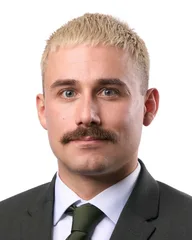
Lukas Sieper | Germany DEU | Non-attached Members (NI) | 390 |
| 2 |
|
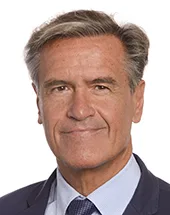
Juan Fernando López Aguilar | Spain ESP | Progressive Alliance of Socialists and Democrats (S&D) | 354 |
| 3 |
|
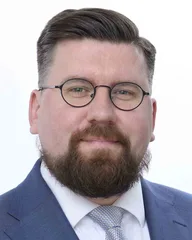
Sebastian Tynkkynen | Finland FIN | European Conservatives and Reformists (ECR) | 331 |
| 4 |
|
João Oliveira | Portugal PRT | The Left in the European Parliament (GUE/NGL) | 232 |
| 5 |
|
Vytenis Povilas Andriukaitis | Lithuania LTU | Progressive Alliance of Socialists and Democrats (S&D) | 227 |
All Contributions (102)
New developments in allegations of corruption and foreign interference, including those related to Morocco, and the need to increase transparency, integrity and accountability in the European institutions (debate)
Madam President, Commissioner, ladies and gentlemen, We have already noted in the report in the Special Committee on Foreign Interference in all Democratic Processes in the European Union, including Disinformation (INGE 1), that there is “a serious lack of legally binding rules and enforcement regarding the EU lobby register” and that the EU “lacks the necessary tools to address the capture of elites”. These are just two quotes from our committee's final report, and we have not yet implemented much of it. The updated transparency rules do not yet exist, and the current events have shown a fortiori how urgent and necessary they are. However, it is also necessary in view of the events around Qatar, but also around Morocco and perhaps also around other states, that we now not only quickly enforce more transparency here, but also clearly distinguish ourselves from those states that try to buy influence over European decisions and European politics through individual parliamentarians. It is therefore important that representatives of Qatar no longer have access to this House, that all political decisions affecting Qatar are suspended. The same is true of Morocco, ladies and gentlemen, and therefore I do not understand why representatives from the Moroccan Parliament are here in the House even today. Haven't we learned anything from the current events? We must finally get a clean table here, ladies and gentlemen! This applies not only to Qatar, but also to Morocco.
Defending democracy from foreign interference (debate)
Mr President, Commissioner, ladies and gentlemen! The events of the last days, the last weekend leave us all stunned. Even though I have been active in legislative bodies at various levels for 25 years, I have never experienced anything like this. But it also makes it so impressive and sadly clear that we urgently need one. Institutions are under attack, from within and from without. I only recall the hacker attack following the Russia resolution of last week's plenary session. The corruption scandal, the Russian attacks and others all follow a clear and unequivocal goal, namely the destabilisation of Europe, the attack on a free, open and vibrant democracy. The Commission's proposed regulations on political advertising alone, on party financing, on the extension of electoral rights are good. But we need to reflect once again on the current occasion, whether we go far enough or whether we don't need even more, namely a better understanding of the effects of so-called covert financing, i.e. covert financing, and its impact on political activities and on how authoritarian states try to shop here in Europe. As already mentioned, the INGE Committee has examined the transactions and has already stated several times in the report: It must be illegal to engage in covert activities funded by foreign actors and aimed at influencing the process of European and national policies. To do this, we need to close the loopholes in our regulatory framework again right now, review them and make them democratically and attack-proof. Therefore, now is the time to recognize the current events as a liberation blow and as an opportunity to make our democracy and our rules clean, transparent and resilient.
Turkish airstrikes on northern Syria and the Kurdistan Region of Iraq (debate)
Mr President, Commissioner! About a month and a half ago, I was with some colleagues from the European Parliament exactly in this region where the Turkish bombs are falling today. And what we experienced there was a region where a minimum of stability, a minimum of civilization, a minimum of just and free life was made possible – namely in Rojava, in north-eastern Syria, in the autonomous region as well as in the Kurdistan Autonomous Region in Iraq. What we are witnessing today are brutal attacks by Turkey on this region, on this freedom of the people there, sometimes with chemical weapons on the civilian population and with the great danger that the IS fighters who are being held there will be released – up to 12,000 IS fighters. Therefore, rapid action is now needed – namely a halt to the attacks by Turkey, a no-fly zone and also that Rojava's representatives are allowed to sit at the table on an equal footing at all future conferences on Syria. Full solidarity with the Kurdish people in this hard struggle.
New EU strategy for enlargement (debate)
Madam President, Commissioner, ladies and gentlemen. I would like to congratulate Mr Picula on this text, because it is urgently needed and a very important and good text. We need to become more flexible, we need to become more transparent and, above all, we need to: We need to speed up the enlargement process of the European Union – and probably also more rigorously in terms of upholding our values, implementing reforms and guiding European foreign policy in principle. The Balkans need a clear signal from the European Union. The citizens of the Balkans have long been expecting a very clear signal from the European Union. I have said this many times here, and we have discussed it many times here in the European Parliament. But recent events, including geopolitical events, show once again: It is high time – high time for a dynamic and strong enlargement process.
EU-Western Balkans relations in light of the new enlargement package (debate)
Madam President, Commissioner, ladies and gentlemen. For many of us, it would probably not have taken the global crisis and the war in Ukraine to come to terms with how important the Western Balkans are for Europe and how European and how much the Western Balkans are part of Europe. But nevertheless, one must underline once again: We must also not forget the countries of the Western Balkans in the waiting room of the European Union. On the contrary: We need to get them in very quickly. We must also support the reforms that are being made time and again in North Macedonia, for example. We must also support Albania with its reforms and enable them to quickly become part of the European Community. We need visa liberalisation for the citizens of Kosovo, just as we must not leave the people of Bosnia and Herzegovina alone right now, where they have shown in the elections that they are in favour of reforms and have also voted out and voted out of the old elites. Last but not least, the rule of law situation in Serbia must not leave us cold. Here, Europe must stand up much stronger and more efficiently and strongly for European values also vis-à-vis Serbia and Serbian President Vučić.
Whitewashing of the anti-European extreme right in the EU (topical debate)
Mr President, ladies and gentlemen, The Swiss playwright Max Frisch has written a famous drama, namely Biedermann and the arsonists. The point is that the citizen Biedermann lets two arsonists into his house and believes that by beautifying them, he could prevent them from setting the house on fire. And how does the play end? The house is on fire, and Mr. Biedermann is risking his life. And exactly the same thing is happening now with the common House of Europe: It is also set on fire and in flames. As in Sweden, where the moderates can only be supported by the Sweden Democrats because of the preservation of power or because of the greed for power. Or as soon as in Spain, where the People's Party is getting closer and closer to the VOX. Or as in Italy, where Berlusconi and others have long since moved to the far-right camp. Or, as it happened in Austria under Black-Blue and Sebastian Kurz. And at the end, at the end of all these things, on the one hand, stands the judge, who then has to condemn many of these politicians. But in the end, our democracy and the common European project also suffer.
State of the Union (debate)
Madam President, Madam President of the Commission! I believe that much of what you said today can be supported, must be supported. But most importantly, we must not underestimate the social consequences of this crisis. Citizens can no longer afford their lives. They groan under inflation, under rising food prices and, of course, under exploding energy prices. That is why it is important to absorb excess profits, it is important and good to redistribute to those households that can no longer afford their lives. But it also needs a radical intervention in the energy markets. Just as these energy markets are designed and organized, they no longer work. Energy market liberalisation has failed because it cannot ensure supply or reasonable prices at the end of the day. We must therefore be careful not to liberalise excessively in other areas, as the Commission sometimes proposes, for example in the rail sector. That is why, ladies and gentlemen, I believe it is necessary to keep a very close eye on the social question right now, so that our society does not drift further apart.
2021 Report on Kosovo (debate)
Madam President, I can simply continue where my colleague Lukas Mandl also stopped. In a summary, Kosovo is moving forward, is making progress. It’s more stable than it was before politically. And also it undertook a lot of reforms, but much more have to come also. And I think there are two important things. The one is the Belgrade-Pristina dialogue, which has to be strengthened and emphasised, and the other one is the visa liberalisation. Every precondition is fulfilled, but still what we are missing is the green light for visa liberalisation. And this blocking is stealing the young generation of Kosovo its future chances and therefore it’s unacceptable. And also, we discussed this issue with the background of a European Council, which was concerning the Western Balkans European perspective, slightly saying disappointing. It was a Council which did not give the answers which the Western Balkans citizens expect from the European Union and what they deserve from the European Union. There was no answer, only disappointment. And I would say even today, looking at the Commission – not to you Commissioner Lenarčič – but the absent Commissioner for Enlargement is of high symbolic value that the European Union is missing a Western Balkan politics. And honestly, it is unacceptable that the Enlargement Commissioner is not here and it is symbolic of how we do also our politics. Not enough.
2021 Report on Bosnia and Herzegovina (debate)
Mr President, Commissioner, ladies and gentlemen, dear colleagues, the last good year of Bosnia-Herzegovina’s path towards the European Union, on its European path, was 2016, when Bosnia submitted its candidacy application for the membership in the European Union; six years ago. And the current political situation in Bosnia-Herzegovina is also the best indicator that progress cannot be found without consensus. Bosnia must use the new circumstances, which are those of the Ukraine crisis and the candidate status for Ukraine and Moldova. But it’s up to the Commission to submit also its evaluation as soon as possible, and it’s on the other side up to Bosnia-Herzegovina to finally fulfil the main part of this obligation. But in order to succeed in doing so, it takes also a significant change in the behaviour of the political leaders in Bosnia-Herzegovina, especially of the leaders of the specific entities, to overcome divisions and to work towards a European future. This is what is necessary, and what is about Bosnia.
2021 Report on Albania (debate)
Mr President, thank you Commissioner to be with us for this debate and also for your words and for the content. Sometimes I think maybe we need also you to take over this issue to move quicker forward. But anyway, I want to thank also the rapporteur, Isabel Santos, for this report and everybody who also contributed to this, because I think it’s an excellent report which outlined what was done, which is tremendous, and also what needs to be done further. I think it is important in the outline to say also Albania undertook a very important reform and also deserves that we start with the negotiation now. When we say we wanted negotiations to start, it’s not for the Albanian political establishment, it’s not for Edi Rama that we need to start – it is for the Albanian people. It is for the Albanian young generation, which also want to see their future in the European Union. They want to see us also to start for them and to open the door to come to this European future. There is a long path, but we have to start to go it.
2021 Report on North Macedonia (debate)
Mr President, North Macedonia has undertook huge, very huge reforms. And North Macedonia, to say precisely, the people of North Macedonia deserve that we start with the EU negotiations. The Bulgarian veto does not solve any of the existing problems and none of the issues which were raised today. The veto affects not only North Macedonia negatively, it also affects the European Union negatively, and most negatively affected is Sofia and Bulgaria itself. So I don’t know why we are not taking up the chances which are lying on the table for North Macedonia, for Bulgaria and the whole European Union. So therefore, dear colleagues, it’s not any time to waste on huge discussions. It is time to start the negotiations, where you can put every issue you want on the table – that is the best: a ‘green light’ for the negotiations, for North Macedonia.
The case of Osman Kavala in Turkey
Mr President, Commissioner, ladies and gentlemen. It's 1 637 days. Osman Kavala has been imprisoned in Turkey since 2017. He is 64 years old, entrepreneur, patron, cultural activist, human rights activist and critic of the government and politics of Erdoğan. He was accused of leading protests at the Gezi in 2013. There was no evidence of this, but a court ruling on life imprisonment did. Is he the only one? Unfortunately, no. Thousands sit in Erdoğan’s prisons for advocating freedom, human rights or just ordinary political law as MPs or mayors – 4,000 of the HDP party alone. In 2021 alone, 46 people died in Turkish prisons because they were tortured or sick. This is all shown by Turkey. And Mr Erdoğan is increasingly moving away from European standards. That's what we have to do.
EU preparedness against cyber-attacks following Russia invasion on Ukraine (debate)
Mr President, Commissioner, ladies and gentlemen, Sufficiently heard here: Russia's cyberattacks, and Europe is not sufficiently prepared. But I would like to ask another, additional question, namely: As a European democracy, as a free world, are we able to communicate the truth to the Russian civilian population? We know the information war, the war and attack on democracy, on Ukraine in Europe, but also on freedom of the press in Russia, which has become the first victim of Putin's dictatorship. We know the thousands of demonstrators who demonstrated against the war in Russia and were imprisoned for it by Putin's police. And what we also need are channels, digital and information channels that bring the unadulterated situation – the truth, if you will – into the Russians’ living rooms. Because this is also necessary for the civilian population in Russia to wake up.
The follow up of the Conference on the Future of Europe (debate)
Madam President, ladies and gentlemen, ladies and gentlemen, ladies and gentlemen, I think that this Conference on the Future of Europe has delivered really good results, beyond expectations, more than we could really have expected, and also the discussion with citizens. The hundreds of proposals that are now on the table show one thing: People and citizens expect Europe to provide solutions to the problems of the times. And you can't just wipe it away and allow a working group to meet again where the results are sent out. Instead, it is now a matter of taking these results – this momentum – with us, in order to make Europe also capable of acting and to enable what citizens expect from Europe: Away with the blockers, towards majority decisions, away from this unanimity principle, which in reality only strengthens the anti-Europeans within the European Union, a strengthening of the European Parliament as a greater strength of democracy with the right of initiative and all this. And it is somehow a pity and also significant that it was not possible to create a joint final report of this conference. But it is good that the European Parliament decides on a final report, a resolution, not as the end point of the Conference on the Future of Europe, but as the starting point for a genuine reform of the European Union, which will ultimately come to the ground with modern treaties.
Cooperation and similarities between the Putin regime and extreme right and separatist movements in Europe (topical debate)
Madam President, Madam Vice-President, ladies and gentlemen! The topic today is too serious to simply change cheap political change here, because it is a serious problem, as it looks about our democracy. Putin fears nothing more than democracy, democracy in Russia, democracy in Ukraine. And he is also fighting democracy in Europe, in the European Union. And what we notice is: It has allies, here, in the national parliaments, in the Member States, but also here in the European Parliament. People who go to Moscow and take selfies there at Red Square. A foreign minister of the Austrian FPÖ – a former foreign minister fortunately – who knelt down in front of Vladimir Putin and then, incidentally, received earrings worth €50,000 from him, which she put in finely clean. But also the other parties, AfD, Le Pen and as they are all called, Lega Nord: They go to Moscow, they take money, they take loans, they take know-how, they take tips. And they do all this because they are also destroying democracy from within Europe through their actions. There are even some who have signed a friendship agreement, such as the FPÖ in Austria. And then they forgot to cancel the friendship contract, even though they claimed it. And it will continue for a few more years. This is the reality of some parties here in the House and in the European parliaments, which speak of cleanliness and national pride and are in fact just boot-lickers of Vladimir Putin.
The situation in Bosnia Herzegovina (continuation of debate)
Mr President, Commissioner, ladies and gentlemen! The situation in the Western Balkans is more than precarious. It is dangerous and explosive, especially in Bosnia and Herzegovina. And the Russian aggression that we have been discussing all week can easily and quickly spread to the Balkans. And one who is to blame is Milorad Dodik, who is exactly in the Republika Srpska They are doing everything they can to destroy the unity of Bosnia and Herzegovina in a gradual, rudimentary manner. And so it is high time for the European Union to stand up much more sharply, much more radically for the unity of Bosnia and Herzegovina and to not only threaten people like Milorad Dodik with sanctions, but also impose them if necessary. And besides that, we also need to be clear: The European Union needs to become much more unified. Hungary and Croatia also need to get involved. And we, as the European Union, must finally implement for all countries the promise we have made to the Western Balkans to also give a prospect and opportunity for accession when it comes to reforms!
Foreign interference in all democratic processes in the EU (debate)
Mr President, Madam Vice-President, Mr Vice-President and High Representative! Let me begin by thanking our rapporteur, the shadow rapporteurs and also the members of the committee, but also Chairman Raphaël Glucksmann, who has worked intensively with us every two years. When the Committee was set up, it was clear to all of us: Disinformation is a problem. But as the committee's work has begun, with each hour of work we have come to know more about how big the problem is and that in reality it is much, much bigger and more serious than we have ever dared to believe. And the timing of today's discussion and reporting shows once again how extremely important this question is and how urgent it is. The Russia-Ukraine conflict – or Russia’s invasion of Ukraine – is only the endpoint of Russia’s months-long information war against Ukraine. And we have also seen in the last weeks and months before the invasion how much the disinformation attacks on the Internet have increased massively. Therefore, we must not take disinformation and the disinformation attacks on our democracy lightly. These attacks go hand in hand with the brutal restrictions on media freedom, for example in Russia. The laws passed last week show that. But the committee, which has been working intensively for two years, has also shown: There are attacks from abroad. It's not just about Russia. Other actors are also active here: China, Turkey and other countries are also participating in this information war. There is support from within, from within the European Union. Especially the far-right parties, politicians are strongly involved here with statements, but often also with the financing of their political campaigns by foreign forces. We have also been very critical of the role of social media platforms, because the fight against disinformation must not be left to the social media platforms themselves. Anyone who believes that self-regulation eliminates the problem is mistaken. The algorithms in combination with opposing influence through disinformation and the inclusion of the negative effects on society as well as the fact that this also creates the added value, i.e. the profit of the social media platforms, already show how serious the problem is. And here we must continue to focus more on regulation and strict measures. But we must also close the loopholes that, for example, in the financing of political parties, allow parties in Europe to be financed from abroad, which then also carry foreign disinformation attacks and interests into the European Union. And we must also make our infrastructure more capable in this challenge. Vice President Borrell has already announced many measures. We need to be aware in all institutions of how serious the problem is. I therefore welcome the fact that the work of this committee will continue in the near future. We are not at the end of this report. The report makes a lot of things clear, and very, very clear: the involvement of European far-right parties, the involvement of individual European former politicians, the solvency in our party financing as well as the social media platforms. But what all this is really about is this: We must protect our democracy, our life model of an open society, our system of freedom of expression – protect against disinformation.
EU-Russia relations, European security and Russia’s military threat against Ukraine (debate)
Madam President, Mr Vice-President, ladies and gentlemen, As has often been said: The situation is serious. The danger of war in Europe, in Eastern Europe, is as real and topical as it has been for a long time. And a lot has already been said about the background and the connections. Yes, Russia is responsible for this escalation, and therefore our European determined appeal must also apply to Russia to withdraw the troops from the borders. Our main objective as Europeans – and this must be clearly stated and underlined here – is to prevent war. Dialogue and de-escalation is our most important goal. We want peace across Europe. The people of Ukraine deserve to live in peace. But the people of Russia also want a life in democracy and do not want this military threat as it now prevails. All actors must get out of this escalation of violence. However, as much as we focus on dialogue and diplomacy, we must also prepare to focus on sanctions if the situation becomes even more serious.
Cooperation on the fight against organised crime in the Western Balkans (debate)
Mr President, ladies and gentlemen, ladies and gentlemen, ladies and gentlemen, First of all, my best regards to Lukas Mandl, who is certainly also looking at the debate. And congratulations on this report, in which the European Parliament has succeeded in presenting a unified position on the issue of the fight against organised crime in the Balkans, which actually extends far beyond the borders of the political groups. The people of the Balkans have also earned a positive future perspective. Organised crime is not only a threat to the state, but also to society and the everyday life of the people of the Balkans. But crime is also the result of social conditions, of a weak central state, of non-functioning structures. Therefore, supporting precisely these reforms to create future prospects for the people of the Balkans is extremely important. Effective and decisive action against organised crime is an important step on the way to the EU, but also vice versa. The accession process itself is the necessary support for the reforms that also lead to the fight against crime in the Balkans. Therefore, there must be no further pretexts for delaying the prospect of accession for individual countries, such as North Macedonia and Albania. Honestly, this is also the responsibility of the heads of government to give the green light at the upcoming summit. It is no longer possible for these two countries to stand in Europe's waiting room for decades, even though they implement one reform step at a time in a very good, clean and courageous manner. It must finally be rewarded. It is therefore high time that the blockade policy of individual Member States is ended and future prospects for the people of the Balkans are created here.
The outcome of the Western Balkans summit (continuation of debate)
Mr President, ladies and gentlemen, I think the best thing about the Western Balkans summit was that it took place. But I must honestly say: The results of the Western Balkans Summit are disappointing, not very much how generally the Western Balkans policy of the European Union and especially the European Commission has been really disappointing in recent years. And I want to say: We as the EU – and the European Commission as well – must be much, much more present in this region. If we go through the countries one by one: Serbia and Montenegro, where there is great concern that recent developments, especially in media freedom and civil rights issues, are not moving in the right direction. North Macedonia and Albania – two countries that have undertaken major reforms but are still not getting the promised response from the accession negotiations, simply because a Member State is blocking this issue for domestic reasons. Kosovo, visa liberalisation, but also, for example, the double crisis in Bosnia, which we are experiencing, and in particular the recent steps taken by Dodik, which may lead to the country facing tears – I do not understand the silence and inactivity of the Commission and Commissioner Várhelyi on this issue at all. We must finally get in the aisles here and prevent this nationalism, which is incited there, from again causing a wildfire in the Balkans. You can't look away, you finally have to act!
Preparation of the European Council meeting of 21-22 October 2021 (debate)
Madam President, ladies and gentlemen, Energy prices are rising across Europe, and the coming winter will be the test of whether we succeed in ensuring that the response to climate change is also a socially just answer, whether we succeed in coping with climate change in a socially just way. We need to prevent energy poverty. No one should be allowed to freeze in Europe, not even in the coming winter. In other words, we need a package of measures: Temporary reductions in taxes on energy, the improvement of stockpiles, the independence of imports from abroad, the expansion of renewable energy – and that rapidly with pipelines – and also energy saving and energy efficiency must be high on the agenda. This is where we can deal with the essentials. If we want to combat energy poverty and rising energy prices, we must now also invest in a massive expansion of renewable energy. Also in line with the motto that energy saving – i.e. less consumption – must be at the forefront according to the motto: The best power plant is the one that doesn't even have to be built because we act efficiently. From this point of view, the discussion in the European Council will also show whether the European Heads of Government are willing to deal with precisely these issues in a socially just manner. Just closing your eyes will not be enough.
Disinformation and the role of social platforms (debate)
Madam President, ladies and gentlemen, Yesterday was a special day in the world of online and apps. However, the failure of Facebook, Instagram and WhatsApp should be Mark Zuckerberg's least problem. It would be much more important not to mislead the public as it has been done so far. These days there is also a hearing in the US Parliament, and Frances Haugen, the whistleblower, says how much profits are made with fake news, with hateful content. She says there: “Damns children and harms democracy.” She is right – unfortunately she is right. It's not just an example, Facebook. Google and others are among them. These developments are dangerous for our democracy, and young people are particularly at risk, and studies show that young women and girls in particular are also at risk. What we see very, very clearly is: The path of voluntary self-control does not work. He failed. He's not the way to go. What we need now is a system that breaks exactly this logic, namely that algorithms are designed in such a way that with hate content More attention and therefore more profit is generated. We must break this logic, and we do not have to expect Mr Zuckerberg to do so, because Mr Zuckerberg simply wants to maximise profit. Therefore, we need to put an end to all these mechanisms. We must therefore also see that not only is it regulated, and trust that self-regulation and advisory councils will regulate this issue, but we must create regulations to put an end to it. We must also discuss whether these monopolies that have arisen here must also be dismantled. For a separation of all this power, of economic power and of information power, is necessary because it is harmful and unhealthy for our democracy. And we can't let that happen. We need to fight this as soon as possible.
The Arctic: opportunities, concerns and security challenges (debate)
Madam President, Commissioner, ladies and gentlemen! The Arctic is our northern neighbour, our northern neighbour – a huge sea of ice, but also a habitat. And yes, the change of recent years, especially climate change, the thawing of the North Passage for shipping traffic, is also increasingly placing this region at the center of world politics: Russia's military build-up, China's investment in ports along the northern route. However, critical earth resources in the region and on the island will also be relevant for the green transition in the EU. Climate change may also have an impact on the balance of power, but – and this is the very, very important point – the Arctic should and must remain the zone of low tensions as it is now. We must not export or import other conflicts into the Arctic. It is a successful model of stability and engagement between the EU or EU countries, Iceland, Norway and Russia. And one of the few forums in which the EU also talks with Russia is the Arctic Council, which works well and which we must also keep open as a platform for dialogue and solutions. But the Arctic is also a region where climate change is hit three times as hard as the global average. The retreat of ice, the impact on biodiversity and the impact on the habitat of four million people living in the Arctic are important here. For all these questions, it is urgent that the European Union also develops an Arctic strategy that gives exactly the answers to these questions. I am glad that we have succeeded in presenting a balanced report with all the parties involved, which presents exactly the position of Parliament, but also exactly the position in which the European Union is to go in Arctic policy. I agree with the previous speakers: We need more European Union in the Arctic and more Arctic in the European debate.
The Pegasus spyware scandal (debate)
Madam President, Commissioner, ladies and gentlemen, The Pegasus affair is a new negative low on all these issues of surveillance and espionage. Pegasus is a dangerous tool used to spy on unwelcome journalists, NGOs and civil society, human rights activists and critical politicians, in the hands of authoritarian regimes, state leaders and even private companies. And that raises many, many questions. How can such technology be effectively banned in the future? What measures, what better rules, what know-how do we need in the European Union to protect our freedom? We must resolutely defend ourselves against such practices! We must protect our democracy from all forms of cyberattacks, disinformation and espionage!
Conclusions of the European Council meeting of 24-25 June 2021 (debate)
Madam President, Mr President, Mr Vice-President! We got mail from Budapest. After the discussion in the European Council, Mr Orbán wrote us a letter in which he wrote about the gross anti-democratic political attacks against Hungary. That is, frankly, completely insane. The opposite is the truth! The truth is: Hungary is attacking fundamental human rights – of homosexuals, of journalists, of artists. All these people have no more chances in Hungary, are oppressed and are treated badly. It's not against Hungary either. It is against this Hungarian government, which restricts human rights there. And what we also have to say very clearly is: Those who circumcise human rights in one country circumcise them throughout Europe. That is why this outcry must also come from all over Europe: We don't accept that! I expect every European government to cry out against these grievances in Hungary and to make one thing clear: that this right-wing populism is always accompanied by corruption, and we must also fight against this corruption.