

| Rank | Name | Country | Group | Speeches | |
|---|---|---|---|---|---|
| 1 |
|
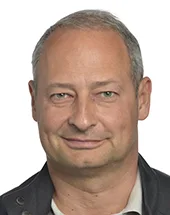
Lukas Sieper | Germany DEU | Non-attached Members (NI) | 390 |
| 2 |
|
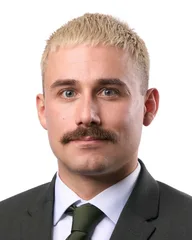
Juan Fernando López Aguilar | Spain ESP | Progressive Alliance of Socialists and Democrats (S&D) | 354 |
| 3 |
|
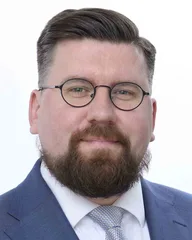
Sebastian Tynkkynen | Finland FIN | European Conservatives and Reformists (ECR) | 331 |
| 4 |
|
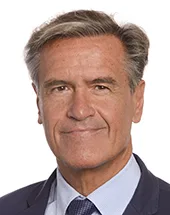
João Oliveira | Portugal PRT | The Left in the European Parliament (GUE/NGL) | 232 |
| 5 |
|
Vytenis Povilas Andriukaitis | Lithuania LTU | Progressive Alliance of Socialists and Democrats (S&D) | 227 |
All Contributions (102)
The crisis facing the EU’s automotive industry, potential plant closures and the need to enhance competitiveness and maintain jobs in Europe (debate)
Mr President, ladies and gentlemen! This neglected location policy of the last few years now falls on our heads. It is not only the current crises, but it has long been the case that states such as China or the United States of America are passing by Europe because they are investing more, because they are also investing more public money in their business location. If we do not soon see that something is turned back, we lose value creation, and this also affects our jobs in the end and endangers our welfare state model. We need investments in future technologies, in infrastructure, where we have done too little for years. If we think only of the lack of electric charging stations, we have a large investment gap at European level. We need a pact for growth, innovation and jobs. That is, an Europe-firstStrategy needs to be anchored so that European companies also have a preference when it comes to public tenders. We need more money for the business location, we need more investment in European infrastructure, much, much more. That's what we have to fight for.
The devastating floods in Central and Eastern Europe, the loss of lives and the EU’s preparedness to act on such disasters exacerbated by climate change (debate)
Madam President, ladies and gentlemen, ladies and gentlemen, ladies and gentlemen! In the face of these devastating images, which have been seen not only in individual Member States but in central Europe as a whole, we have seen how we are also united in this crisis, in this disaster as a European Union, as citizens. At the beginning of a speech on this subject, it is necessary to say thank you; Thank you to all the helpers of the fire brigades, the military, the volunteers, but also, for example, the mountain rescue, which meanwhile had to free people from avalanches due to the snow masses, and, and, and, and, also, the civilian population, which has done great things here. The second thing that needs to be said is: We need to prepare more for these disasters, and we must finally recognise – all of us here in the House, including on the outside right – that denying climate change makes no sense, but that it is important to prepare for the consequences of climate change and, if possible, to combat its effects. This is urgently needed. As we have also seen, renaturated rivers can absorb more water. That is why we must follow the path of Green Deals Also very special and go on together.
Deepening EU integration in view of future enlargement (debate)
Madam President, ladies and gentlemen, Enlargement policy is one of our strongest instruments, especially in this unstable global situation. But only if we are serious about them. That is, each country according to its progress, according to the necessary reforms that will be taken. But this also means that we must prevent ourselves from becoming unreliable and then, for example, the enlargement from bilateral processes of individual Member States may be blocked. And at the same time we must also say: If countries step back, then there must also be the possibility of stopping or stepping back, if necessary, in the enlargement process. But - and this is, I believe, also a very important point - the enlargement process will only be successful if we also prepare for an enlarged Union within the European Union and set up decision-making in Europe in such a way that it is also possible with 30 or more Members – that is, with a strong Parliament and with majority decisions and fewer decisions in the Council.
The fight against hate speech and disinformation: responsibility of social platforms within the Digital Services Act (topical debate)
Madam President, ladies and gentlemen, The Digital Services Act and the Digital Markets Act are milestones, global milestones in the fight against hate speech and disinformation. The European Union is leading the way here, creating the first global set of rules to finally hold online platforms accountable. With these regulations, this legal-free space, this Wild West in the digital sector, is finally ended, according to the principle: What is illegal offline in real life must also be illegal in the digital space. Platforms are required to fight and erase illegal content, hate speech, disinformation and fake news. But now, with this law, we must also get the platforms not to ignore this law, but also to act, that they also apply the regulations strictly, and if not, our courts also condemn these platforms and force them to act in accordance with the law. The reality shows: Fake news is increasing. Artificial intelligence has one more thing on it, and we have to see that legality and law finally prevail here again.
Situation in Serbia following elections (debate)
Madam President, ladies and gentlemen, It has been exactly one month since the elections were held in Serbia. And as my previous speaker and the Commissioner have already said, there is a list of irregularities that have occurred in these Serbian elections: Phantom voters, vote-buying, one-sided media coverage and, and, and is, the list of accusations, which in my opinion must be fully clarified. Transparency is needed here. And for transparency, the government must take care of it. But Prime Minister Brnabić and President Vučić do the opposite. Instead of providing transparency, they criticize international election observers, as well as myself, in the strongest possible terms. This is not only to be rejected, but it shows quite clearly that the criticism that has been expressed is completely blacked out in the reports. However, we cannot accept such an approach as the European Union. We must ensure that the rule of law and all transparent processes are respected, including in Serbia.
Order of business
Madam President, dear colleagues, as you all know, on 17 December there have been another early elections in Serbia, in national and also in the capital of Belgrade, and other municipalities. This also we know: we are plagued by irregularities, like phantom voters, like pressure on voters, as well as decisive involvement of the President and the ruling party’s systemic advantage, and which undermined the electoral process. When international election observers, like from the European Parliament and like myself, also raised this issue, the Government of Serbia and the President himself attacked these international observers. So, therefore, I am happy that a majority of the groups and of this House has the plan now and agreed to have a debate during this plenary. I’m also looking forward that we will have a resolution which we also support as the S&D Group.
One year after Morocco and QatarGate – stocktaking of measures to strengthen transparency and accountability in the European institutions (debate)
Mr President, Commissioner! One year after Qatar and, above all, Morocco Gate, one must say: Firstly, the European Parliament has reacted. There was the Special Committee of Inquiry, which also dealt with proposals to revise the Rules of Procedure. Important measures, including anti-corruption measures, have been presented and some of them have been implemented. All dates of MEPs must be made public, assets must be made public, conflicts of interest must be disclosed. These are long-standing demands that have finally been implemented. But is that enough? No, it's far from over. All transparency alone will not solve the problem sustainably. We need clear and strict rules to make the Moroccan and Qatari gates impossible in the future. For example, it must no longer be possible and be tolerated that some MEPs here in the House are both a mandater and a lobbyist at the same time. A reform of the Rules of Procedure is needed. The one we made was a first step, but we have to move on, and for that we also need majorities in the house. Very often – I have the impression – the majorities for strong reforms, for more transparency, are prevented precisely by those who often denounce many things. It can't go on like this!
EU strategy to assist young people facing the housing and cost of living crisis (topical debate)
Mr President, ladies and gentlemen, Commissioner! More and more young people can not afford their own apartment, whether for purchase or rent. The COVID crisis, precarious employment, poor pay have once again neatly exacerbated the problem that existed before. And while people cannot afford the rent, the loan rates for their real estate loan can not afford, on the other hand, the real estate corporations and the banks are still getting richer and richer. And that is why the question is currently being asked across Europe: What can we do? And that means: Housing is a fundamental right, and politics must finally act. This means: Rent brakes against the extremely high rent increases that are currently taking place, more resources from national governments, better access to EU funds for housing, strong, secure tenancy and social housing, social, quality and affordable social housing. And I would also like to use the example of Vienna at this point and congratulate you on the fact that Vienna has now again been chosen as a livable city, namely because it is socially fair and because it offers good housing opportunities with a high proportion of social housing for the people in this city.
Implementation of the EU-UK Trade and Cooperation Agreement (A9-0331/2023 - Seán Kelly, Andreas Schieder) (vote)
Madam President, ladies and gentlemen, There has finally been a calm return to the Brexit issue and, after that, there has also been rapprochement between the European Union and the United Kingdom. However, it is also important that we continue to see that environmental standards, social standards, labour rights and competitive advantages continue to be treated and deserve our attention. And in the face of global crises, it is also necessary that we pour this good cooperation that exists into an institutional framework agreement. I ask you to agree with this report.
This is Europe - Debate with the Prime Minister of Bulgaria, Nikolay Denkov (debate)
Madam President, Prime Minister, I am a convinced European Social Democrat and from Austria, and I have to say I think European solutions and cooperation is better than veto. So therefore I have to say clearly I do not understand the Austrian veto against the Schengen membership of Bulgaria and Romania. I think it is a big mistake European-wise, but also Austrian-wise. Secondly, Prime Minister, being a European I have also to say I work very much on the enlargement and I am very much involved in the Western Balkans and therefore I think also that North Macedonia needs the support of Bulgaria in order to enter the European Union. They have made huge reforms and they would be your best friend. So please also help North Macedonia to be quite soon a member of the European Union.
Strengthening the right to participate: legitimacy and resilience of electoral processes in illiberal political systems and authoritarian regimes (debate)
Madam President, ladies and gentlemen, I think it is a very, very important report and I would like to thank the rapporteur very much for this work. Because we observe more and more often how foreign influence is in elections, but also unfortunately how in authoritarian countries more and more election falsifications, influences take place in a negative way. Disinformation, fake news, intimidation and discrimination make what we mean by fair, free and secret elections increasingly impossible. Very often we also see geopolitical interference from some powers – be it Russia, be it Turkey, be it others – which are particularly trying to exert influence through the dynamics of social media platforms. And therefore, not only media freedom, transparent information, education are essential, but also election observation missions and global cooperation to bring about positive change. The inclusion of free elections in our relations and development aid relations with individual countries is particularly important here. But it is precisely the election observation missions carried out by the European Union and the European Parliament that are crucial here. Because they are not frivolous tasks, they are very detailed work. And they are not only important for the quality of elections and democracy, they are very often also an important signal for local people when they are waiting at polling stations that they also see international European election observers – this is also a quality feature for many people.
EU enlargement policy 2023 (debate)
Madam President, ladies and gentlemen, Today's decisions are truly far-reaching and very good. In the Western Balkans in particular, it is high time that Albania and North Macedonia were able to negotiate accession more seriously – they had to wait far too many years. I also welcome progress in Bosnia and Herzegovina. And as far as Ukraine, Georgia and Moldova are concerned, it is a very, very important sign, including a global one. But, we also have to say: There is no shortcut on the way to the European Union. Criteria must be met, and tough reforms must be carried out against corruption, oligarchic rule and, and, and. Generally a long, difficult road. And in my opinion, one must also address the difficulties at the beginning, so that the euphoria does not end in a great disappointment at the end, but at the beginning address the problems in order to solve them. This is what is important in the enlargement process.
Preparation of the European Council meeting of 26-27 October 2023 (debate)
Mr President, Mr Vice-President, ladies and gentlemen! The more difficult the times, the more important is internal unity. But since yesterday there has also been a picture around the world, namely the one that shows Hungarian Prime Minister Viktor Orbán in Beijing shaking hands with Russian President Putin in a tête-à-tête. And it is probably more than a photo – it is a clear, negative signal to Europe. Orbán despises our democracy, despises our open and liberal society. The war and destruction with which Putin has been covering the Ukrainian population for a year and a half, the human suffering and the many victims – they do not care about Orbán. And when the heads of state and government meet for the summit on 26 October, it has been clear since yesterday at the latest: As long as Orbán sits at the table, Putin – the butcher of Butsha – also sits in the room of the European summit. That's why we have to make two derivatives. First of all: There must be a procedure to suspend the Hungarian Presidency of the Council, as well as the consistent continuation of the rule of law procedure against Hungary. And secondly: We need to move away from unanimity in foreign policy. We must no longer be dependent on Orbán's blackmail attempts.
Commission Work Programme 2024 (debate)
Mr President, Mr Vice-President of the Commission! Finally, perhaps a few important issues in the areas of neighbourhood, enlargement and foreign policy, because I expect that our active leadership, which we as the European Union are playing in promoting and preparing for the accession of candidate countries and which is particularly important for enlargement policy, will continue to gain momentum, even if the Commission period is now drawing to a close. Indeed, the summit of recent days has shown how central this issue is and how central it is for Europe that European values – both in terms of the rule of law and the fight against corruption, but also for the pre-accession of this entire region, such as the Western Balkans, to the European Union – are very, very important. The second point, which is always lacking – and I would like to see this concluded in the context of this unspeakable Russian war – is that frozen Russian possessions should finally be used to finance the reconstruction of the consequences of the war in Ukraine. As a final point, everything in power will also be done to conclude negotiations on due diligence and the prohibition of forced labour worldwide as soon as possible.
Decent Housing for All (topical debate)
Madam President, ladies and gentlemen, Housing, a roof over your head is a fundamental right, and therefore it is one of the central and most important policy challenges we currently have, namely to ensure that affordable housing exists. However, many countries, cities and municipalities are struggling with the lack of affordable housing. Rents are rising dramatically, and especially in times of high inflation, many people, many families no longer know how to pay their rent and housing costs. Homelessness is rising, poverty is rising and therefore there is a great need for urgent action. We need public investment in social housing - especially in social and subsidised housing. My hometown of Vienna, which is also often cited as a good example today – and the mayor of Vienna, a good friend of mine, will also be pleased that the achievements of the Viennese city are also seen so positively here – my hometown of Vienna, called ‘red Vienna’, has a pioneering role here: The subsidised housing sector accounts for 45% of the Viennese housing market. 60% of Viennese live in subsidised, social housing. Every fourth Viennese woman and every fourth Viennese woman lives in one of the 1,800 apartments that belong to the city itself. Therefore, it needs exactly that: Investments in residential construction, investments in refurbishment, in thermal refurbishment of dwellings and a ban on vacancy, especially that vacancy used for speculation, generally a ban on speculation in real estate and so much-needed housing.
EU-Switzerland relations (debate)
Mr President, ladies and gentlemen, ladies and gentlemen, ladies and gentlemen, I would also like to thank the rapporteur and my colleague from Austria, Lukas Mandl, and also Vice-President Maroš Šefčovič, who is always very supportive, also factually, very intensively and openly working with the European Parliament. Dear colleagues, Switzerland is in the middle of Europe and it is not only the love of the mountains, skiing or chocolate that unites us, but it is also one and a half million EU citizens who live and work in Switzerland. I am therefore also pleased that there is a renewed climate between Switzerland and the European Union, where we have returned to the negotiating table for the renewal of treaties. Personally, two points are particularly important to me. One is: This agreement on the free movement of persons, with all its obligations, must be implemented by Switzerland without exception. On the other hand: The so-called flanking measures must also ensure the protection of high social standards, as well as the efficient and non-discriminatory protection of workers’ rights, and the principle of ‘equal pay for equal work in the same place’ for mobile and local workers, which is so important to us in Europe, must be applied and implemented. On the other hand, it is also important to put the fight against wage and social dumping at the top of the priority list and to ensure better and closer cooperation in the fight against tax fraud, money laundering and tax evasion. Let's take advantage of the momentum and negotiate a balanced and comprehensive agreement with Switzerland.
Recent developments in the Serbia-Kosovo dialogue, including the situation in the northern municipalities in Kosovo (debate)
Mr President, ladies and gentlemen, ladies and gentlemen, ladies and gentlemen, The situation in the border area between Serbia and Kosovo is more than flammable. Yes, everyone is right to say that the representatives on both sides must contribute to de-escalation – of course. It is also the damn duty of every local politician to finally ensure stability and a European perspective for his own people. But what we are currently experiencing is that Vučić is pouring more and more oil into the fire. That is why the European Union must finally abandon this naivety, and strong EU responses are needed, otherwise we are threatened with a wildfire all over the Balkans. It must end with nationalism, with an anti-democratic and anti-European course, which is currently being lived by the government in Serbia. Not only in Serbia, but also there. Those who do not understand this must also expect consequences, namely consequences are the freezing of EU funding and ultimately also the consequence, if one does not return to a European understanding of human rights, an anti-nationalist course, the end and termination of the EU accession negotiations for a Serbia under Vučić.
Recommendations for reform of the European Parliament’s rules on transparency, integrity, accountability and anti-corruption (debate)
Madam President, Commissioner! Qatargate and Moroccogate have shown that the European Parliament is not immune to foreign interference. They have also shown that against MPs who may want to be corrupted or have been corrupted, one thing helps, namely more and stricter transparency. From the outset, we as Social Democrats here in the House have been pushing for ambitious reforms to stop future corruption. And now, half a year later, there is also an ambitious package of measures, a catalogue of measures, which we as a committee can also present here. However, there is also a need for more strict ethics rules and, if necessary, sanctions for such an ethics body in the European Parliament, but also in the Commission and the Council. We must not forget that all European institutions must work together here. And the so-called package to defend democracy is also overdue, and we hope that it will come as soon as possible. It would be very, very urgent. But what is now in this catalogue of measures, which we are also presenting here today and will decide tomorrow? the publication of all meetings, a legislative footprint, registration in the Transparency Register, new requirements for MEPs, such as asset disclosure before and after the start and end of the mandate, details of part-time jobs, including what should be done by whom, when and in what time; and Cooling-off-regulations. But I can also say: As Social Democrats, we want a little more. We want more. In other words, we find a Cooling-off-A period of six months is too short, it should last up to 24 months, so that we can continue to prevent corruption in the future. Just as we find: A ban on secondary employment for those companies listed in the Transparency Register is urgently needed. You can't be a member of parliament or a member of parliament and a lobbyist or a lobbyist at the same time. You have to decide which side you are on. And I also ask myself which of the Members here has the time to take up other lobbying activities in addition to serious parliamentary activity at all. That's what I want to say. At the end of this work, however, I would also like to thank the chairman Raphaël Glucksmann and the rapporteurs Loiseau. and Bilčík, but also stress once again how urgent it is for our democracy, for a strong European Parliament, to continue to deal with these issues, which the INGE Committee has dealt with, in one form or another, institutionally in the European Parliament in the future.
Conclusions of the European Council meeting of 29-30 June 2023, in particular the recent developments in the war against Ukraine and in Russia (debate)
Mr President, Mr Vice-President! With the Russian war of aggression against Ukraine, countless war crimes are also on the sad agenda: attacking civilians with firearms, explosive weapons and missiles, for example in Kramatorsk – indiscriminately and disproportionately; In April 2022, the massacre of Butsha: 419 bodies of people shot, mutilated and beaten to death were found; the siege of Mariupol with targeted bombings, for example of hospitals; rape and gang rape, including as a belligerent measure to intimidate the population; civilian shields, where children are also taken as civilian shields; or the use of prohibited weapons, cluster munitions, phosphorus bombs, booby traps, anti-personnel mines, targeted destruction of civilian infrastructure, looting, forced recruitment in the so-called People's Republics and 16,000 abducted children. All this must remind us.
2022 Report on Albania (debate)
Madam President, Albania is better off than it was a few years ago. And you don't have to compare the Albania of today with the Albania I found when I was there for the first time in the 90s. Over the last decade, an insane number of reforms have happened, been implemented and initiated in the country – the form of bureaucracy, the rule of law reform, the reform of the judiciary, the fight against corruption, but also on a small scale, such as in the city of Tirana, which is simply an urban development city that has also gained a lot in quality of life through very concrete measures. If you say so, then of course the question arises: Is everything good? No. There are many more reforms to be made in Albania. The ecological question, the climate question, the sustainability question are also major issues, as are labour law and trade unions. But one thing must be said: It is clear that cooperation with Albania, especially in the context of enlargement, is advancing important reforms there professionally and well.
2022 Report on Bosnia and Herzegovina (debate)
Madam President, Commissioner! Today, on July 11, we commemorate Srebrenica, the victims, the families. And we also commemorate the biggest war crime on European soil since the end of World War II. Where is Bosnia and Herzegovina today? There are positive signals, such as the recent elections, where the citizens of Bosnia and Herzegovina have also rejected nationalists and nationalist policies with their vote. There is candidate status for accession to the European Union. But on the other hand, there is the crisis, which is also getting deeper and deeper, and one of them is to blame, namely Milorad Dodik and his hate-seeking rhetoric and politics. I often wonder: How does the European Commission react to this? I am very dissatisfied, because she is very often silent. But we need a strong European Commission, a Commissioner who goes there and says: We need a Bosnia where we support democracy, where we demand sanctions for Dodik and fight with all our strength for the future of this country. I am missing this from the Commission so far, I am sorry, Commissioner.
Greening transport package (debate)
Madam President, Commissioner, ladies and gentlemen! There are many good points in this package, but also some criticisms. One is: Once again, the Commission plans to allow giant trucks, so-called gigaliners. According to the proposals we have heard today, monster trucks will now also roll across Europe's roads. To be honest, I think this is a mistake in terms of transport policy. Why? Because it is a modal shift in the wrong direction, namely from the rail back to the road. And we don't want that. In addition, there are huge costs for retrofitting, e.g. infrastructure. All this money that needs to be invested would probably be better invested in the development of rail and rail and the transition from road to rail. Because then we will achieve the climate targets better, implement the Green Deal better, bring more safety to our roads and also more fair working conditions for truck drivers. Therefore, a very clear no to the Gigaliners, a no to giant trucks on our roads.
Establishment of the EU Ethics Body (debate)
Madam President, ladies and gentlemen, ladies and gentlemen, We have been waiting a long time for the proposal of this ethics body. Now he's here - and we're disappointed. After all, we would have hoped that much more would come, that it would not fall short of the promises made, that the competences as well as the staffing of this ethics body would do what we so urgently need - not only here in the European Parliament, but in all European institutions. We need an ethics body that can also investigate, that also has sanction rights, that can see the files, that can also see the writings, that can start investigations on its own initiative and can see the relevant documents and can also make suggestions on how to sanction this. Not only with Qatargate alone, but also with the incidents in the Commission, it is clear: We need stricter and more effective rules here. Yes, we also have to do our homework in the European Parliament, and the proposals will also be presented by the INGE Special Committee at the next plenary session here in July. We need asset disclosure - both by MEPs and senior officials and Commissioners, a cooling-off period – a real cooling-off period longer than what has been proposed so far – as well as clear rules and transparency, including restrictions on incidental income. Commissioner, I hope that this ethics body is not only a pious wish, but can also be endowed with additional competences.
Foreign interference in all democratic processes in the European Union, including disinformation - Election integrity and resilience build-up towards European elections 2024 (debate)
Madam President, Madam Vice-President, ladies and gentlemen! Our democracy is vulnerable. And the European open society model is under threat – hostile foreign interference, disinformation campaigns, hybrid threats, cyberattacks and, and. These threats are on the rise and will become much, much stronger until the European elections in June 2024. And we have to protect ourselves against that. On the one hand, this report wants to shake up – finally make it clear: We have to do something here! – but also strengthen the resilience of our open, vibrant democracy with a wealth of measures. The report contains a long list of diverse approaches: the ban on foreign party donations, the common European rules for political campaigns, election campaigns and party financing that we so urgently need, Elite capturing through state-affiliated companies from third countries such as Russia, China, the Arab region, more transparency and responsibility but also from internet platforms – more arguments, less Fake news Here is the basic principle. But we also need to strengthen our capacities here in the European Parliament and swiftly work on the Defence of Democracy package. start with the European Commission and implement it very, very quickly. Ladies and gentlemen, the age of naivety is over. And that also means drawing the right conclusions in the European Parliament from Qatar and Morocco gates and allowing more transparency, stricter rules and less lobbying in the partial shade, in secret here in the house. Finally, I would also like to thank the rapporteur Sandra Kalniete, the shadow rapporteurs from the various political groups and also the chairman Raphaël Glucksmann for the good cooperation in the service of our open, vibrant democracy.
2022 Report on Kosovo (debate)
Madam President, Commissioner, ladies and gentlemen! Finally, a little further is being done with regard to Kosovo in terms of integration and pre-accession to the European Union. Nothing has gone on for far too long. Visa liberalisation is finally coming – a great success. The first steps towards inclusion in the Council of Europe have finally been taken, which is also very, very urgently needed. The Kurti government, which represents the longest period of political stability in Kosovo, has begun many reforms and implemented many reforms. What is still missing is that there is more going on in the dialogue between Belgrade and Pristina and that what goes on is finally signed and represented by both sides. It is still the case that sand is thrown into the gearbox again and again. Just think of the call for Vučić's election boycott in the local elections in northern Kosovo. But nevertheless, we must continue to work on it. The European Union must also do more in this context and bring more together. Because we need a stable Balkans, and Kosovo in Europe is one of them.