
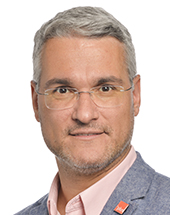


| Rank | Name | Country | Group | Speeches | |
|---|---|---|---|---|---|
| 1 |

|
Lukas Sieper | Germany DE | Renew Europe (Renew) | 487 |
| 2 |

|
Juan Fernando López Aguilar | Spain ES | Progressive Alliance of Socialists and Democrats (S&D) | 454 |
| 3 |

|
Sebastian Tynkkynen | Finland FI | European Conservatives and Reformists (ECR) | 451 |
| 4 |

|
João Oliveira | Portugal PT | The Left in the European Parliament (GUE/NGL) | 284 |
| 5 |

|
Vytenis Povilas Andriukaitis | Lithuania LT | Progressive Alliance of Socialists and Democrats (S&D) | 273 |
All Speeches (67)
La Hulpe declaration on the future of social Europe (debate)
Date:
24.04.2024 18:17
| Language: RO
Speeches
Mr President, Commissioner Nicolas Schmit, the Belgian Presidency, dear colleagues, dear citizens, the European Union is working in your interest, in the interest of protecting your rights, working conditions, in the interest of children, young people, all those who are in a situation of vulnerability, and for five years we have been working on this here in the European Parliament. We are working to improve living conditions, especially in these difficult times when we have crisis after crisis. At La Hulpe we also managed to prepare a strategy for the future, after working throughout our mandate on better minimum wages, working on gender protection and balance, on pay transparency, on workers' rights on digital platforms, on all these achievements that pushed this project of the European Pillar of Social Rights into reality. However, this is not mentioned at Member State level. In Romania, the Government does not discuss the protection of social rights, the vision for the future. People do not yet understand what we are working on at European level. What you need to know is that we represented the European Parliament as Chair of the Labour Committee in La Hulpe, so that all decision-makers together can design a better future, have children who are protected, have young people who have opportunities, have people with disabilities whose rights are respected. That's what the European Union has established, and that's what you don't know, because governments don't tell you these things, because a population without expectations is a population on which politicians can build their absolute, extremist and non-transparent politics. Yes, we may live in an advanced, safe European country, we are already in the European family, we just need to know about it and get informed. And yes, the vote on 9 June on this is, on a social Europe, a Europe that is at the same time competitive and that respects the social rights of citizens.
The sixth Anti-Money Laundering Directive - Anti-Money Laundering Regulation - Establishing the Authority for Anti-Money Laundering and Countering the Financing of Terrorism (joint debate - Anti-money laundering)
Date:
24.04.2024 16:11
| Language: RO
Speeches
Mr President, Commissioner McGuinness, dear colleagues, did you know that every month every Romanian citizen, every citizen of the European Union loses at least EUR 150 because of money laundering? The amount may seem small for those who have high incomes, but for those who are in vulnerability it is an enormous amount. What would it be like to channel this money into healthcare, education and infrastructure investments? Money laundering is not just a crime, it is a skillful, sophisticated and dangerous threat, increasingly evident to the fundamental principles of the European Union: transparency, justice and individual freedom. Our economy has been affected by money from illegal activities, making it difficult for governments to obtain the funds that could have been used for reforms and investments, instead of financing harmful activities. I am honoured to have been able to be rapporteur on behalf of Renew and the team that created this package. The Anti-Money Laundering Regulation is the first to promote unified and consolidated practices to counter illegal activity in the sector. We must work together to defend our funds and values and build a safer and more prosperous future for the European Union.
European Semester for economic policy coordination 2024 – European Semester for economic policy coordination: employment and social priorities for 2024 (joint debate – European Semester)
Date:
13.03.2024 14:52
| Language: RO
Speeches
Mr President, the European Semester is the legacy of the lessons learned after the 2008 economic crisis, when the Union understood that better coordination at European level of the economic and social policies of the Member States is needed if we really want all countries to be ready to overcome the imminent dangers. We are discussing together economically and socially, not separately, this is very important. Since then we have faced a pandemic, we have had war, we have war at the borders, we have had complicated winters with high energy prices, and the shopping cart of citizens is becoming more and more expensive. We managed to overcome them, a sign that the European Semester was useful, but with great consequences, which are felt all over Europe. It is therefore clear that the European Semester needs to be improved. The European Parliament has realised through this report, on behalf of the Committee on Employment and Social Affairs, and on behalf of the Committee on Economic and Monetary Affairs, that the European Semester can be adapted to current realities, but these will have no effect unless we change the way we analyse them and take them into account. That is why I come back and insist that we need a more structured involvement of Parliament in the European Semester process and a recurrent dialogue. We therefore propose that a special working group be set up within Parliament to discuss with representatives of the Member States, local authorities and, in particular, civil society and the social partners, the key players that make the European Semester move from paper to practice. Such a role of Parliament as a legitimate institution, democratically representing citizens, is vital. Thus, we will demonstrate that the dialogue and consultations with citizens that we had in the debate on the future of Europe and we will continue to have, I hope, are not just an exercise that we ticked off, but a process with quality standards that all European and national institutions should follow. This is the future and I believe in the European Semester and the role of Parliament.
European Semester for economic policy coordination 2024 – European Semester for economic policy coordination: employment and social priorities for 2024 (joint debate – European Semester)
Date:
13.03.2024 13:38
| Language: EN
Speeches
Mr President, dear Executive Vice-President Dombrovskis, dear Valdis, dear Commissioner Schmit, dear Nicolas, dear Minister, as we move towards a renewed Parliament and Commission, we must think about the legacy that we leave to our colleagues. The European Semester is a cornerstone of what the European Union does good for citizens. It monitors the progress of the Member States and issues recommendations in order to achieve economic and social convergence, territorial and social cohesion, and, in general, a better life for our youth and children, for our citizens across Europe. This year in particular, the report on the European Semester was written in the context of the review of the EU economic governance mechanism, and we tackled many challenges in this mandate and we made innovative steps in terms of European financial instruments. Therefore it was only a question of time before adapting the economic governance to the new realities. The same has to happen with the European Semester. The report that I am presenting I am presenting on behalf of the Committee on Employment and Social Affairs, and I want to thank very much my colleagues. We really acted as a team this mandate. We delivered for our citizens, and together with the Commission and the Council, we set important steps in order to implement the European Pillar of Social Rights. We are not there yet. A lot of many things to do, but let us go first on how to understand the current challenges in the context of the Semester. First, how the uncertain economic outlook influences the cost of living, how the ongoing geopolitical conflicts are exacerbating poverty and social exclusion, how the green and digital transition can have a significant impact on the environment, economy and the people. How demographic trends such as ageing and brain-drain magnify disparities and contribute to skills and labour shortages. So this is the context that we are talking about. Second, the Semester can help through concrete and specific recommendations, and it is clear that we need the modernisation of several aspects of the labour market, as we have right now skill mismatches, labour market shortages, as well as great potentials and risks of the twin transition. Therefore the European Semester should look more specifically at innovation, in up-to-date monitoring, the data of the labour market and supply and demand for skills, creation of good quality jobs and implementation of retention strategies – as these are the best way to attract a skilled workforce, improving access to quality employment in society – especially for those groups at high risk of poverty and social exclusion, and further EU action to protect workers and ensure a decent level of income and the need for technical support – in particular for SMEs and start-ups – for training and recruitment of new skilled and qualified employees in line with national policies and capacities. Third, the Semester needs and we are talking about adapted financial instruments, and how can we ensure that all these recommendations can be put into practice if we don’t have the increased funding that we have been advocating for, dedicated to social objectives and promotion of future-oriented investments. It is necessary that all financial instruments at all levels must become less fragmented in their management, less bureaucratic and more blended and bundled. It is time to think about the introduction of social conditionality in the allocation rules of EU funds, as part of the Financial Regulation covering the EU general budget, and also the possibility to design more flexible individual adjustment paths for Member States, allowing them the fiscal space to undertake social investments and reforms needed for socially fair, green and digital transition. And last but not least, we need a democratic, a more democratic, accountable, transparent European Semester. We welcome the social convergence framework, an early warning system used for the first time in the 2024 multilateral surveillance procedure. And this can encourage the correction of risk related to social convergence. We need to fully integrate the framework into the Semester process from 2025. I will conclude with a final call for the future: we need a bigger role for the European Parliament in the European Semester. We launched the possibility to create a special working group in the European Parliament that should ensure dialogue with representatives of Member States, regional and local authorities, as well as stakeholders who should be also essential actors in the European process.
Mr President, Commissioner Schmit, dear colleagues, today we are discussing a topic that affects the future of millions of young people in the European Union: Quality internships, decently paid. In the European Union, for 3.7 million young people, internship is the first step in their careers. Four out of five young people have experienced an internship, but things are not so rosy. Young people often face precarious working conditions, lack of learning context, are not paid or do not have access to social or health insurance. In 16 of the 27 Member States, there is not even a clear definition of an ‘internship’. Moreover, national legislation is not always aligned with minimum recommendations at EU level. Another aspect is the financial situation. Every third trainee shall not receive any financial compensation. For many disadvantaged young people, internships, while generating results for employers, continue to be paid for by young people. They have to cover their accommodation, meals or other basic needs. Many disadvantaged young people cannot afford the luxury of doing an internship. Those who need a chance the most don't have the money to work for free. The European Union gives member countries access to programmes that can be funded by the European Social Fund (ESF), the Recovery and Resilience Facility (RRF), Erasmus+, but that is not enough. Last June, the European Parliament made a strong call in the Employment Committee for the adoption of a directive. Commissioner Schmit, we look forward to the European Commission's proposals. It is time to show that in the institutions of the European Union we really care about the future of young people.
Addressing urgent skills shortages and finding the right talents to boost job creation (European Year of Skills) (debate)
Date:
17.01.2024 21:46
| Language: RO
Speeches
Madam President, whether or not you have talent or skills, the crisis tastes the same. What crisis? The job crisis. How many of you, who are watching these debates, have left the country or want to go to another country because you can no longer afford a daily basket from the supermarket? This is what is happening in Romania. Almost 50,000 Romanians left Romania for good in 2022 to work in another European Union country - the highest number in the last thirty years, the population of entire cities such as Hunedoara, Barlad or Deva. But think about what it would mean for these cities to disappear altogether. If I told you that the European Union has the solution, it has the money to be able to invest and train talent, professional training. We need to see that the European Year of Skills works, in practice, that people in rural and disadvantaged areas are starting to have job opportunities, that a reason to develop, to be helped to learn. A helping hand for the future, this must be the European Year of Skills, not just a title, but a solid foundation for the economy.
The role of social award criteria in public procurement in strengthening social rights, good working conditions and inclusive labour markets (debate)
Date:
15.01.2024 20:39
| Language: EN
Speeches
Madam President, dear Commissioner Nicolas Schmit, the Public Procurement Directive has the potential to promote fair competition and inclusive labour markets, and it should do that. It could also be an essential instrument for increasing collective bargaining coverage in accordance with the Minimum Wage Directive. However, evidence shows that public authorities face legal challenges and uncertainty when trying to apply mandatory social award criteria and sustainable award criteria. The European Parliament Committee of Employment and Social Affairs has analysed rigorously this matter. In 2023, the Employment and Social Affairs Committee commissioned a study – DG IPOL has delivered the study – with the key findings of where we are. What is the status quo? On 25 October last year, we held a public hearing on the social impact of public procurement. Both activities pointed out the same issue: legal challenges and uncertainty. If we are to look at the dimension of public procurement in Europe, the source of wealth, the source that we can actually put together there for improving our markets is enormous – we are talking more than EUR 500 billion. Experts, representatives of local municipal authorities and of the social partners, stressed, in the hearing that we had, that the role of public procurement should be key in strengthening collective bargaining and social progress in the EU, and they pointed out the legal uncertainties of the current EU legislative framework on public procurement. Solutions that have been discussed in the Employment and Social Affairs Committee with our colleagues involved, first of all, revising the Public Procurement Directive so that there is an explicit push by public authorities to have no public contract without a collective agreement, clarifying that the promotion of collective bargaining with binding labour clauses does not violate EU law – and we had a big debate on that – revising the Public Procurement Directive to include mandatory social criteria, such as collective agreements, among others. It is therefore clear that the potential of socially responsible public procurement remains largely unexploited, and that the current voluntary approach is not sufficient, and that further work at EU level is necessary. Therefore, dear Commissioner Schmit, the questions to start this debate are the following. First of all, will the Commission consider revising the Directive to ensure legal certainty; in particular, to ensure that collective agreements and social criteria are not considered a discriminatory measure in public contracts? Second, will the Commission consider revising the Annex 10 of the Public Procurement Directive in order to update the ILO Conventions listed, especially with regard to ILO Convention 94? Furthermore, will the Commission take the necessary measure to ensure that the non-respect for fundamental ILO Conventions 98 and 87 become an exclusion criteria in the context of public procurement? The fourth question is: will the Commission promote joint and several liability in subcontracting chains? Fifth, will the Commission ensure social conditionalities in Union funding related to public procurement? This is very important. We should start negotiating the next multiannual financial framework soon, and we need to look at that. Six, will the Commission ensure that the public procurement plays a role in promoting upskilling and reskilling of workers, especially in the view of the new technologies arising from the green and digital transition? Seven, last but not least, will the Commission strengthen data collection on the volume and the value of socially responsible public procurement, as well as the exchange of knowledge and best practices in the EU? Together with my colleagues in the Employment and Social Affairs Committee, and based both on the research that we’ve done, and the hearing that we had with experts and representatives of local authorities and stakeholders, social partners, we believe that tapping on this important resource, on public procurement and providing social work criteria, is just the right step towards a social Europe, towards the model that we would like to build together. For that we need, again, the cooperation of all the institutions. The Parliament has initiated right now the process of this particular debate, and we are waiting and looking forward for how to push forward for this to happen.
Revision of the European Labour Authority mandate (debate)
Date:
15.01.2024 20:13
| Language: RO
Speeches
Madam President, Commissioner Nicolas Schmit, dear colleagues, the question is how to ensure that labour mobility within the European Union is effective, while guaranteeing respect for workers' rights and a healthy competitive environment. The European Labour Authority (ELA) was set up for this very purpose. In an extremely short time, with excellent management, it became functional, taking over its duties. However, it is clear that it has not yet reached its full potential. The question is why? The voluntary nature of cooperation between Member States, limited competences and a rigid legal framework hampered it. ELA should have the power to initiate and conduct investigations on its own, especially when national authorities do nothing or even end up politically protecting governments. ELA is the authority we have to appeal to when the employer does not comply with its contractual rules and we find ourselves with unpaid salaries, and the state institutions do nothing to help. ELA is the authority we use when we are the victim of workplace abuse and we are not being served justice. This is what European citizens expect: is waiting to see how the rules at European level are being met. We need to recognise the impact that ELA can have and provide it with the necessary resources and access, provide a space for collaboration so that ELA can vigilantly follow the cases brought to its attention and act where necessary. A Europe where citizens can enjoy the right to mobility in the labour market.
EU strategy to assist young people facing the housing and cost of living crisis (topical debate)
Date:
13.12.2023 13:45
| Language: RO
Speeches
Madam President, money from my mother or father – it is up to them that 76% of students in Romania can live in the city where they study. 76% of students in Romania will pay their rent with money from their parents. Only 32% can pay their costs from their own salaries and 8% from scholarships. I can't help but wonder: If a young man is from a village in Romania with a low income level, who wants to study in college and build a better future, what chances does he have in education if his parents can not pay his rent? There is a category of young people throughout Europe that I would call invisible young people. There are young people who do not have a chance and for whom the postal code dictates their destiny. If you were born in big cities, you have a good future. If you were born in rural areas, chances of failure are high. If you were born with a disability or if you were born into a Roma family, the chances of being able to progress in today's society, find a home and really be able to access education and programs through which you can find a good job are very low. Invisible children and young people are actually the ones we are discussing today, and I am glad that there are young people who are attending this debate to know that we are working for this in the European Parliament. Young people need access and opportunity, and in the European Parliament we have worked for this through the Child Guarantee, the Youth Guarantee. The solutions are there. Use the European money! Consult young people for housing programs! It's simpler than we think. We just need to act on it.
Parliament’s call for the right to disconnect - three years on (debate)
Date:
12.12.2023 14:15
| Language: RO
Speeches
Mr President, Commissioner, we are discussing the right to disconnect from working life, and I am proud to be part of this legislature alongside my colleagues, such as Agius Saliba, and we have been able to put something on the table, which is very important. If we think about how many hours we spend with our loved ones, how many hours Romanians or European citizens generally spend with their families, we find that this time is narrowing. In 2021, Parliament called on the European Commission to prepare this directive to uphold the right of employees to disconnect from work in their free time. Why is this right vital? During the pandemic, we saw how digital tools allowed the continuation of work, of courses. These things were essential to overcome the crisis, but at the same time the clear boundaries between work and personal time were questioned. With teleworking becoming the norm, we must focus on finding a work-life balance, which the European Parliament has been calling for for years. The right to disconnect is not only about separating working time from rest. It is about establishing healthy and ethical behavior in the workplace, extremely useful, especially for future generations entering and preparing to enter the labor market. In the light of these realities, we must recognise that working life should not in any way compromise personal life. Let us ensure, give due importance to a balanced life and make the right to disconnect a reality for all. This is what European citizens expect from us, and we need to work together with the Commission and the Council to achieve this.
Reducing regulatory burden to unleash entrepreneurship and competitiveness (topical debate)
Date:
22.11.2023 15:50
| Language: RO
Speeches
Madam President, Vice-President Šefčovič, how much does bureaucracy cost us? At European level, each administrative procedure requires a large company to take out of its pocket 1 euro per employee, an average company 4 euro per employee and a small company 10 euro per employee. It is therefore no wonder that administrative burden is the main problem of more than half of SMEs at European level. Bureaucracy costs time, money, human resources, innovation potential, maintaining competitiveness. In addition to what the European Commission is proposing - and it is a very good initiative to return to a clearer way of reducing administrative costs - part of the administrative burden comes at national level. There are Member States that are not yet digitalising processes and creating the necessary reforms. In 2016, in Romania there was the Paper Cutting Commission that did exactly this: remove unnecessary regulations, reduce fees and the number of forms. In the meantime, even this initiative has been covered in paperwork. We also need deregulation and digitalisation at national level.
Children first - strengthening the Child Guarantee, two years on from its adoption - Reducing inequalities and promoting social inclusion in times of crisis for children and their families (joint debate – International Day of the Rights of the Child)
Date:
20.11.2023 17:41
| Language: EN
Speeches
Madam President, dear Vice-President Šuica, dear colleagues, a child living in poverty is a catastrophe – clearly for their family, but also for society at large. Today, we are talking about how the EU is taking care of our children. Are we taking care of our children well in Europe, respecting their rights and providing access and opportunities? The answer is ‘no’. Today’s debate is not a theoretical exercise about the world’s problems. We have 5 million children in poverty in the EU today. Today we are debating a resolution prepared by the Employment and Social Affairs Committee of this Parliament, led by Renew Europe, but supported by all political groups and developed in a full consultation in transparency with the stakeholders. And indeed it’s a resolution to try to redress this unacceptable situation. The European Child Guarantee is the wild card to get millions of children out of poverty, and we need that because this can be a game changer. Ambition and proper implementation through the national action plans. We need to set crazy, ambitious actions by constantly being more coordinating, better governance, having a European authority for children, having the additional budget that we need of 20 billion and plus, having meaningful implementation and synergy among authorities. Children and inequality, poverty, social exclusion: these are words that should never say to each other. We should do everything in our power to provide the children a best future, a better future to learn and become amazing human beings that they are destined to be, away from poverty, social exclusion and inequality.
Madam President, dear Commissioner Thierry Breton, Secretary of State Navarro Ríos, the world of work is rapidly changing as a result of technological progress and digital transition. The development of artificial intelligence and of different forms of work have many benefits, but we have to treat them carefully, because they come up with other challenges for the future. We have seen that we already have profound implications for occupational safety and health, including for mental health at work. Our workers who suffer from mental health problems at work is growing. EU-OSHA reports that 45% of employed persons are exposed to risk factors that can adversely affect mental well-being. This means that almost half of our working people are facing difficulties. Of course, this has been exacerbated by the COVID pandemic. This discussion is extending to broader implications of work-related stress and psychological risk. These consequences can result in adverse factors, such as diminished job satisfaction, increased conflicts, decreased productivity, burnout, absenteeism and high turnover rates. The labour market as a whole is affected, and we are right now in a situation where we need a functional labour market. We have an important shortage in terms of skills, an important mismatch. We need to address accordingly the needs of the labour market. Parliament’s recent research shows significant cross-country disparities in the exposure of workers to psychosocial risk factors, and in the ways Member States are addressing these issues. It is clear that we have unequal legal protection for workers and access to preventive care of good quality across the EU. So the question is: what can we do to address these challenges? On 7 June, the Commission presented a communication on a comprehensive approach to mental health that recognises the impact of work environments on workers’ health. The initiative is a long-awaited starting point to address mental health. However, we have to be more ambitious. Given all the above, the Employment and Social Affairs Committee and the European Parliament as such are inquiring, first, which legislative actions will the Commission undertake to reduce harmful psychosocial risk factors at work? Second, if the social partners do not find an agreement, will the Commission commit with the legislation to establish minimum requirements for teleworking and ensure the right to disconnect for workers? This is a Parliament initiative. This is very important for us and for the European citizens, and we need to be sure that there will be a follow-up from the Commission on that. Third, will the Commission consider the following legislative actions or initiatives? For example, a legislative framework specifically aimed at preventing and addressing psychosocial risks to safeguard mental health in the workplace for all workers across the EU. As well, a very important legislative initiative may be on AI in the workplace to ensure appropriate protection of workers rights and well-being. Certainly we should actually have a debate about the revision of the Framework Directive that dates from 1989, to take into account the new developments of the labour market, characterised by increased psychosocial risk, fragmented workplaces and work organisation changes. There are also non-legislative actions and very important actions that the Commission may do, and the Parliament is therefore asking what are such initiatives? First, to promote a collective approach that includes the social partners and robust collective bargaining agreements to prevent mental disorders at work, and to update the 2003 recommendation on the European schedule of occupational diseases to include mental-health issues such as depression, burnout, anxiety, and stress. We need this recommendation; we need to transform it maybe into a directive that specifies a basic list of occupational diseases and sets out minimum requirements for their recognition and compensation criteria. We are right now at the end of this legislature. We still have a couple of months. What is important for Parliament is to leave a legacy and have this important input for the future work programme of the Commission. Therefore, this is why we have this oral question that we would like to address on this very important issue of mental health at work. I would like to conclude by calling for more ambition to keep our workers’ mental health safe and ensure digital and technological progress that is mostly bringing benefits to the EU.
General budget of the European Union for the financial year 2024 - all sections (debate)
Date:
17.10.2023 13:21
| Language: EN
Speeches
Mr President, dear Commissioner, dear colleagues, we are currently living in a context of multiple crises, which has exacerbated the cost of living for millions of Europeans, and it’s pushing the most vulnerable into poverty. What is deeply concerning is that in light of this dire situation, the Council appears to disregard the urgent calls for revising the Multiannual Financial Framework and, in fact, proposing budget cuts for 2024. In my capacity as the chair of the Employment and Social Affairs Committee, together with my colleagues, I would like to relay our committee’s call for a strong budgetary response, to contribute to developing resilient social systems, to reduce poverty, and to increasing upward social convergence across the Union so that no one is left behind. And I especially want to do that today, when it’s the International Day for Eradicating Poverty. We are fully aware of the budgetary constraints, especially this year. But let’s not forget that behind the figures we are dealing with people. In our committee, one of the pressing priorities is to combat child poverty, and for that, we would like to have an increased allocation for the future.
International Day for the Eradication of Poverty (debate)
Date:
17.10.2023 10:59
| Language: RO
Speeches
Madam President, Commissioner Nicolas Schmit, dear colleagues, today is the International Day for the Eradication of Poverty and yes, today we must reiterate our commitment to make this situation change, to stop leaving people in poverty. Poverty feeds extremism. We all know that. It is not by chance that today we have a wave of this extremist current in Europe. This comes because of the polarization of our society, because the world is left to starve. Extremism feeds on fear, on powerlessness, on suffering. Poverty leaves people suffering, poverty compromises ambitions to perform. Poverty stigmatizes, poverty condemns future generations to a life sometimes worse than that of our parents who caught up in wars, fascism and communism. The European Union is currently facing an unacceptable level of poverty among children, young people and the elderly. One in four children in the European Union live at risk of poverty and social exclusion, with 20 million children. In Romania, the country with the highest level of poverty in the European Union, almost half of children have limited access to education, medical services, poor nutrition. No less than a million children go to bed hungry, do their homework by candlelight, have nothing to wear, get dressed, go to school, have no running water or heat. These children become young people who remain abandoned by society, with mental health problems, isolated. In Romania, one in four young women are NEETs. They are not in employment, education or training. Eradicating poverty is not a political struggle, it is a moral duty, it is about respecting human rights, respecting the European Pillar of Social Rights. It is a responsibility that the Renew Group has taken on and we have made considerable efforts to support social investment in housing, education, public services, health and the labour market.
Madam President, dear Commissioner, dear colleagues, today’s discussions have highlighted the fact that the agreement reached represents a significant step forward in achieving upward social convergence. I am confident that this achievement will be supported by a broad majority of this House. This will be a victory of the Employment and Social Affairs Committee. This will be a victory of the European Parliament of the Union for its citizens. The next steps will be in the hands of Member States to bring tangible change on the ground. I am sure that all parties involved will work hard for the speedy implementation of all the provisions of this directive. Mr Commissioner, dear Nicolas, we count on you, as usual, for the commitment of the Commission to deliver the guidelines that were announced. Those guidelines are important to make sure that the legislation is fully understood and fulfilled on the ground. It will have to provide sector-specific recommendations, in particular for categories that we have addressed here in the Parliament, like firefighters. We, here in the European Parliament, will continue to honour the memory of Véronique and push for better protection against asbestos. This is the reason why we are all looking forward to seeing the next text on the screen. Thank you very much and it’s a big success for team Europe.
Mr President, Commissioner Nicolas Schmit, dear colleagues, today I present the work of our rapporteur, Véronique Trillet-Lenoir, who sadly passed away while working tirelessly to make the revision of the Asbestos at Work Directive a major step towards the achievement of Europe’s Beating Cancer Plan and to ensure that the Green Deal would not be done at the expense of workers’ health. What a champion. What a protector of Europe and of its citizens. Asbestos is not a problem of the past. It continues to be the leading cause of occupational cancer today. It is still present in many buildings and infrastructure constructed before the Union’s ban in 2005. It is about time to take action to protect the workers who are carrying out the renovation wave. The compromise we reached entails a significant reduction in the maximum exposure. As a first step, workers will benefit from a protection 10 times higher than the current situation. And we managed to go further with the so-called dual approach. With this approach, modern microscopes become the standard and the protection will again be strengthened through the detection of the very carcinogenic thin fibres or through a further decrease of the limit value. Parliament indeed would have preferred a shorter time frame than the six-year implementation of this dual approach. But it is important to emphasise that this longer transition is only a maximum. Member States are not precluded to taking swifter action and they have every reason to do so to enhance the protection swiftly and to maximise the returns on investment. Parliament was resolute in emphasising that when dealing with such a substance like asbestos, which has no safe threshold, focusing solely on a limit value is insufficient. Therefore, I am really pleased to announce the other significant request that has been incorporated into the comprehensive package that we are about to vote on. Let me first highlight three main aspects. First, the high-quality training and certification of asbestos removal companies. Even with the most stringent legislation in place, without a highly skilled workforce and competent companies, our efforts would be in vain. The quality standards included in the directive are essential for the safe removal of asbestos from the numerous buildings that require renovation to meet our climate goals. Second, a clear emphasis on the safe removal of asbestos rather than techniques retaining asbestos in place. The provision is fundamental to achieving an asbestos-free future and preventing future generations from bearing the burden of asbestos removal. Third, the requirement to conduct an examination by a qualified operator before the work begins. This is a critical step in assessing risk. Otherwise, if the presence of asbestos is not known, the necessary measures will not be put in place. This broader legislation was announced more than a year ago. Mr Commissioner, we would really like to thank you for the initiative and to urge you to present the legislation for the further screening of buildings that we await. In conclusion, this outcome is the result of the dedication of our rapporteur, Véronique Trillet‑Lenoir. On this file, just like during her whole career, she was guided by a single objective: the promotion of public health. Her outstanding work and commitment will always be remembered. I would also like to extend my thanks to all the shadow rapporteurs and their dedicated teams as well to our secretariat. Your tireless efforts have played an integral role in shaping this success. Additionally, I would like to express all my appreciation to the Council and the Commission for their constructive engagement throughout the negotiation process. We can all be proud of the outcome. Let us remain steadfast in the pursuit of a safer, healthier future for our citizens.
Madam President, colleagues, the increasingly frequent and larger fires and natural disasters, the landslides and floods show us that in the very close future, our planet is either drowning or boiling. And this summer, our planet has experienced its hottest three-month period on record. At the beginning of June, on the other side of the ocean, in Canada, an area 12 times greater than the average of previous years had been lost. From July on, the most dramatic news came from Greece. Due to high temperatures and strong gusts of wind, almost 30 000 people were forced to evacuate from their homes on the island of Rhodes. It was the largest fire ever registered in Europe. Sadly, many other European countries followed Greece between July and August. And last year we had similar events happening all over Europe. Firefighters play an indispensable role in protecting lives, the environment and the infrastructure in the EU. They operate under extremely difficult working conditions and are exposed daily to highly carcinogenic, combustible and chemical substances and intensely stressful situations. Firefighters have up to 300% higher chance of getting cancer than the general population. On 22 March, the Committee on Employment and Social Affairs organised a hearing where we had the opportunity to meet firefighters and their representatives for various EU countries and hear their testimonials. I can tell you that their stories are emotional, showing how difficult their situation is and how many challenges they face in the fight with extreme fires and urgent situations in order to protect us all. Our current legislation, European and national health and safety legislation, is not suitable to protect workers facing ad hoc high levels of exposure, as well as to ensure proper working conditions for them. It is clear that we need further actions at EU level. Dear Commissioner Ferreira, the questions to start this debate are the following: will the Commission put forward an EU proposal on minimum standards for firefighters’ gear and personal protective equipment? Will the Commission take further action following the World Health Organisation’s (WHO) recognition of firefighting as carcinogenic occupation? Will the Commission consider the establishment of a European register to collect disaggregated data on occupational diseases developed by the sector? In the view of the need to increase firefighter numbers in the future, how does the Commission intend to safeguard this voluntary commitment in Europe without putting Directive 2003/88/EC on working time into question? How will the Commission, jointly with the Member States and social partners, ensure the protection of firefighters and their working conditions, including compensation for overtime? And last but certainly not least, is the Commission considering more investment in new research and technology in the sector? I will switch to Romanian right now. Nu aș putea încheia această dezbatere despre protecția pompierilor la nivel european fără să aduc în discuție noile dovezi cu privire la riscurile enorme și condițiile de muncă deficitare cu care se confruntă acești oameni. În România, în 26 august, la Crevedia, două explozii enorme au produs în jur de 58 de victime, dintre care peste 40 sunt pompieri. Au fost cinci decese. Pompierii și-au pierdut viața, iar restul au fost spitalizați cu arsuri grave. România a activat Mecanismul european de protecție civilă pentru transferul victimelor în spitalele din statele membre ale Uniunii Europene. Asta, în timp ce pe planul național de resetare și reziliență, unde avem bani europeni, România tocmai a decis să taie investiții importante pentru sectorul sanitar, pentru sănătate, între care cea mai mare de 740 de milioane de euro pentru construcția de spitale. Nu i-am fi putut salva dacă nu ar fi fost mecanismul Uniunii Europene de consolidare a cooperării dintre țări. Uniunea Europeană este importantă pentru a asigura condițiile bune de muncă și pentru o protecție a pompierilor. Mulțumesc și așteptăm această dezbatere și răspunsurile Comisiei Europene. Vreau să mulțumesc foarte mult colegilor mei, coordonatorilor din Comisia de muncă și afaceri sociale pentru alinierea completă pentru protecția pompierilor pe tot teritoriul Uniunii Europene.
Mr President, Commissioner, small businesses, small entrepreneurs are the engine of the European economy. Today, the European Union decides to meet the expectations of over 24 million European small and medium-sized enterprises to encourage economic development. The European Commission is proposing tax and administrative simplification for SMEs, cutting red tape, access to finance for investment and skills training, and a regulation to combat late payments. The same expectations are met by the more than 500,000 SMEs that bring half of their income from taxes and social contributions into Romania’s budget. Unfortunately for them, the Romanian Government acts in a completely contrary way to the European Commission and, instead of solving their problems, brings them even more. In Romania, the more profitable and performing a company will be, the more it will be considered a milking cow for the PSD-PNL coalition. The better an entrepreneur you are, the more you are considered a good enemy to penalize. In Romania, instead of offering SMEs a predictable tax system, the Government amends the Fiscal Code overnight and steals from entrepreneurs to cover their own incompetence in managing public money. In Romania, instead of reforming the administration, reducing spending, digitizing the tax system, combating undeclared work, entrepreneurs who create value are hit. This is the harsh reality that the PSD-PNL coalition hides from Brussels, but which the European Commission has the duty to stop. Entrepreneurs deserve better and are a benchmark for Romania's development. Stop the overcharging! Don't charge to steal!
Mr President, indeed it is late in the evening. We don’t have, unfortunately, someone from the Council side for a topic that is indeed a question for oral answer to the Council and the Commission. Indeed, it is late in the evening and that was the schedule. But the topic that we are discussing right now is a crucial topic. Social dialogue is a fundamental part of the European social model. It is not necessarily fit to discuss it at the end of an agenda with a room that is not necessarily full of colleagues. And that’s actually the problem, that despite the fact that the social driver is a key driver for economic and social resilience, competitiveness, fairness, sustainable growth – crucial for finding balanced responses to new and existing needs and challenges related to the labour market and working conditions – despite all that, we still have issues in implementing those values and social dialogue at EU level. Moreover, there is a worrisome trend because over the past 30 years, the share of workers covered by collective agreements has declined, with the estimated EU average falling from about 66% in 2000 to about 56% in 2018, with the Covid situation being very worrisome as well. And indeed, we are witnessing right now a new ambition at EU level to increase and strengthen social dialogue. And apart from the benefits of social dialogue and workers involvement in the working conditions of EU citizens, another benefit of social dialogue is that countries with robust frameworks of social dialogue and a high coverage of collective bargaining have more competitive and resilient economies. So social dialogue works. We have this ambition to strengthen social dialogue. And at the same time, we often minimise the importance of this particular topic. Given this, the Employment Committee – indeed, I am not necessarily the author here, but I am representing my colleagues, and I would like to congratulate all the champions in the EMPL committee, in the Employment and Social Affairs Committee, for pursuing this particular topic in the agenda – and I in my role as the Chair of the Employment and Social Affairs Committee, would like to formalise this particular debate by asking officially the Council and the Commission a couple of questions. So first, I would like to address the Council with an empty seat, unfortunately, and maybe they can actually see it online and answer in writing. The first question would be how the Council encourage Member States to ensure an enabling environment for bipartite and tripartite social dialogue and due respect for the social partners’ autonomy. How is the council going to ensure that the proposed recommendation complements Article 4 of the Directive (EU) 2022/2041 on minimum wages in particular in terms of measures to increase national collective bargaining coverage? How will the Council ensure that Member States remove institutional or even legal barriers to social dialogue and strengthen the organisational capacity of the social partners, including through the allocation of adequate resources? A very important topic. How will the Council and the Commission support Member States in addressing anti-trade union practices, lack of representation, the more fragmented workforce and the increase in non-standard forms of work that may lead to precariousness? How will the Council ensure that Member States promote timely access to information for social partners and timely consultation with them, so that they can be meaningfully involved in designing and implementing employment and social policies or even wider programmes like the RRF? How will the Council encourage Member States to ratify and implement all ILO Core Conventions, in particular the recently designated Core Conventions 155 and 187 and Convention 190? And to the Commission, how will the Commission, jointly with the Member States and the social partners, monitor the effective implementation of the proposed recommendation? And what concrete indicators and data will be used to measure progress towards greater collective bargaining coverage? How will the Commission support Member States in promoting the inclusion of more sectors in social dialogue, ensure the allocation of – again – adequate resources, particularly to the European Social Fund Plus? How will the Commission ensure that the assigned Social Dialogue coordinators will be involved in all employment related aspects of EU policy-making across all policy areas – so no silo policy? How will the Commission guarantee financing for European Sectoral Dialogue in the long term? And last but certainly not least, what steps will the Commission take to promote the role of social dialogue in addressing climate and digitalisation issues in the workplace and achieving a just transition? Thank you very much.
Roadmap on a Social Europe: two years after Porto (debate)
Date:
10.05.2023 17:29
| Language: EN
Speeches
Mr President, Commissioner, Minister, dear colleagues, the recent years and the multiple crises that we went through have taught us important lessons. COVID has forced us to explore opportunities in difficult times. And we’ve learned that investing in the resilience of our health and social protection systems means, in practice, investing in people, especially in the most vulnerable ones. The renewal of our social systems has to be made with a cross-sectoral and intersectional approach. We need to get out of silos and connect our policies. Social Europe is not just about one particular committee: it’s about all of us acting together, regardless of the committees and the names of those committees. A social Europe is a Europe where we have social investments, in which the main resource of a strong economy is recognised to be people – having access to opportunities, to a better life, to skills, to competitiveness. A Europe that protects its children and creates opportunities for young people. The European Pillar of Social Rights and its action plan, together with the targets that are guiding lights in our long-term structural transitions of the labour market and welfare systems. To develop new concrete solutions, we need to have social investment at the forefront of our action, especially right now that we have the context of the revision of the economic and very important social governance. We need to put in place a mix of policies and measures that would ensure that the social Europe is not a political debate. It’s not an ideological task. It’s a highly competitive Europe that takes care of all people, and it is a Europe where we need to do that together.
Madam President, Commissioner, Swedish Presidency, I think that when we talk about the European Year of Skills, we need to talk about the professionalisation of the workforce, about harnessing talent, about local education ecosystems, about helping young people find a job, about digital skills and how we have retraining programmes, including among the elderly, about adaptation. This is the future of the economy. It is useless to talk about creating jobs, if we are not talking about people adapted and prepared for these jobs. The discussion about the quantity of jobs and not their quality is long over. Today, the discussion is about how we create better paid jobs. The present and the future force us to invest in people. The European Union is now a key global player shaping the future of the workforce. And today, not coincidentally, on 9 May, Europe Day, I want to bring to your attention the importance of this European Year of Skills that begins today. A strong economy, a competitive economy, will not exist if we do not invest in people, in their skills. Governments need to invest in education, skills strategies at regional and local level, in close contact with universities and the entrepreneurial sector. We need concrete European Union funding opportunities to support local authorities to have these skills development initiatives throughout 2023 and beyond. That's why we are here today, dear friends. We are here to talk about the European Year of Skills. I am speaking to you as Chair of the Committee on Employment and Social Affairs of the European Parliament, but also from the heart at the same time. I urge you all to think about the future of Europe today, on its birthday, and not to forget that people are the future of Europe.
Guidelines for the 2024 budget - Section III (debate)
Date:
18.04.2023 18:30
| Language: RO
Speeches
Mr President, Commissioner Hahn, ladies and gentlemen, the 2024 budget must build a stable Europe in which we respond to people's concerns, aggravated by inflation and the fear of war on our border. The discussion of solutions cannot take place without further investment in two strategic directions. Firstly, we are in the European Year of Skills: improving employment opportunities. We don't just need to create jobs, it's essential that they are well paid. We are looking at upskilling and reskilling human capital and quality jobs for young people. And all this must take into account the specific needs of the most vulnerable among us. Second, reducing poverty, especially among children. It is urgent to ensure that every child in Europe has free and real access to the most basic set of rights: health care, early care, education, healthy nutrition and adequate housing. We must aim to increase the financing of the Child Guarantee by at least EUR 20 billion by 2027. The 2024 budget must first and foremost take care of people, especially our children and young people.
Question Time (Commission) - Legacy of the European Year of Youth
Date:
18.04.2023 16:49
| Language: RO
Speeches
Mr President, Commissioner Mariya Gabriel, thank you very much for your presence and your answers. The European Year of Youth was highly anticipated by all young people on this continent and it was an initiative through which we wanted to listen to the voice of young people and involve them in European decisions. We must ask ourselves if we have lived up to their expectations. Looking at many Member States, we see that efforts have largely come from civil society, youth organisations, youth workers. They practically filled the map at European level with events, activities, discussions. The European Year of Youth is their achievement and their efforts should be appreciated, but when it came to negotiating the Recovery and Resilience Facility and I was rapporteur on this file with other colleagues, I had a pillar dedicated to the new generation. Unfortunately, very few governments have used those resources for partnerships with civil society. What can we do? What commitment can you make to make these partnerships stronger, stronger and truly build together with young people in the future?
Revision of the EU Emissions Trading System - Monitoring, reporting and verification of greenhouse gas emissions from maritime transport - Carbon border adjustment mechanism - Social Climate Fund - Revision of the EU Emissions Trading System for aviation (debate)
Date:
17.04.2023 20:38
| Language: RO
Speeches
Mr President, Commissioner, some of the European citizens, including my fellow citizens in Romania, are worried about the reforms needed to fight climate change, and we must understand these fears and make it clear to them that they will not be abandoned in this process that is so important for our health, so that we can let our children, future generations, enjoy nature and all its benefits. By 2026, REPowerEU will help households and small entrepreneurs reduce their energy bills with €20 billion. Immediately after that, from 2027, we will have 86.7 billion euros in fund in just climate transition and especially for those who would hardly afford to renovate their home or change their car. These things will help Romania not to lag behind in the rapid changes we are making, in leaving a clean and healthy planet for the next generations and Europe to remain first in the fight against climate change at global level.