
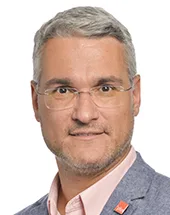






| Rank | Name | Country | Group | Speeches | |
|---|---|---|---|---|---|
| 1 |
|
Lukas Sieper | Germany DEU | Non-attached Members (NI) | 390 |
| 2 |
|
Juan Fernando López Aguilar | Spain ESP | Progressive Alliance of Socialists and Democrats (S&D) | 354 |
| 3 |
|
Sebastian Tynkkynen | Finland FIN | European Conservatives and Reformists (ECR) | 331 |
| 4 |
|
João Oliveira | Portugal PRT | The Left in the European Parliament (GUE/NGL) | 232 |
| 5 |
|
Vytenis Povilas Andriukaitis | Lithuania LTU | Progressive Alliance of Socialists and Democrats (S&D) | 227 |
All Contributions (67)
Mental Health (debate)
Mr President, it is a little bit sad that we discuss at this late time in the plenary session about such an important topic. Mental health was already a critical issue in the European Union after the COVID-19 pandemic. But right now, with the aggression and the crisis that is caused by Russia, with the energy prices going up, we might have second pandemics. The pandemics of depression and anxiety caused by uncertainty, by hardship, by lack of hope. And we need to give back hope to the European citizens. We appreciate the efforts done in the field of occupational health and safety related to the agenda of the Swedish Presidency and all the efforts. We appreciate also the strategy on care. But as the Chair of the Employment and Social Affairs Committees, as a Renew Europe Member, I am coming today with the proposal towards you. Our citizens need a European strategy for mental health, for prevention, treatment and monitoring mental problems. Thank you so much. And we are looking forward to seeing that initiative.
The situation of marginalised Roma communities in the EU (debate)
This is a sad moment to see a colleague of the Employment and Social Affairs Committee suggesting basically that, because of the Roma people, the access to electricity, water or housing is destroyed. The suggestion that Roma are thieves or the fact that they are considered to be different types of human – not ordinary people, we have heard that before. That’s exactly the reason that we are talking about discrimination. So the question is: can you deny that these communities have been without access to education and to proper support?
The situation of marginalised Roma communities in the EU (debate)
Mr President, Commissioner, dear colleagues, I wonder how many of us here in the European Parliament have visited some marginalised Roma community. Perhaps there would have been many more of us here if we had actually seen what reality looks like on the ground. Perhaps so many would understand better that you cannot discuss, as was discussed in the pandemic, good hygiene for health in communities where you do not have running water and electricity. Perhaps otherwise they would treat Roma education in communities - here, the European Commission and, in general, the European community - where schools do not want to receive Roma children or where it is almost impossible to transport children to school. We have many examples of integrated projects in the European Union, but we also have many abandonment stories: in Pirita - in Romania, in the communities in Slovakia, visited by the Labour Commission. The feeling is that this Roma minority is forgotten. I would thus like to hear from the Commission in what concrete way, what legislative mechanisms will it be able to launch to bring about real change? What concrete plans does the Commission have to change the future of communities affected by discrimination, unemployment and poverty, as, frankly, most of you here probably find it difficult to imagine.
EU Protection of children and young people fleeing the war against Ukraine (debate)
Mr President, I say to dear Vice-President Šuica, Commissioner Johansson and my honourable colleagues: this weekend we all saw the atrocities committed by Vladimir Putin’s armies against civilians in Bucha. These crimes are yet another reminder of Russia’s willingness to attack innocent people and act against international law. And it is our duty to step up our actions to help Ukraine and its civilians seeking security within our Union. Our duty is only increased by the fact that the majority of Ukrainian refugees entering Europe are vulnerable children and young people. I’ve seen them with my own eyes at the border of between Romania and Ukraine. I’ve seen them together with Commissioner Nicolas Schmit when visiting a transit facility in Ploieşti: women and children with their eyes in tears. As we welcome the first necessary tools introduced by the introduced by the Commission: the Temporary Protection Directives and the CARE and CARE+ packages, we should use the resilience of our social security systems to receive these children in the best conditions. Protecting children fleeing from war is a right we must fulfil in their best interests, away from any discrimination. We must protect them from the other dangers present on the way to Europe: violence, exploitation, abuse, trafficking and abduction, dangers we will not want our children to encounter. And this is not only about the refugees, the children coming from Ukraine, it’s also about protecting vulnerable people in general. This is about the social resilience of the European Union. This is about the Child Guarantee, about the European Pillar of Social Rights, about not leaving people behind. This is the reality that we need to be there for vulnerable people, generally speaking. And together with the Member States, civil societies and volunteers, we should not give up on Ukraine. Let’s continue working together towards a safer Europe where innocent, disadvantaged children and citizens are protected. Where the images seen this weekend should not be seen again.
Fair and simple taxation supporting the recovery strategy (continuation of debate)
Mr President, the European economy has suffered for two years from the impact of the COVID-19 crisis, and now it will need to further adjust to strategic choices made to protect our citizens and our values against autocrats that violate peaceful order and international law. Against all these challenges, we need a strong fiscal policy response that can encompass the strengths and overcome the weaknesses of all 27 national tax systems. This can be achieved through better digitalisation of national public administration in order to reduce the VAT gap and to improve tax collection and information sharing across the Union. Stronger support for our SMEs; it is unthinkable right now for them to face the extra tax burden and the unnecessary red tape when they represent 99 % of businesses in the Union and create two out of three private sector jobs. Better use of the Fiscalis programme, which offers EUR 269 million to national tax authorities to cooperate better to combat tax fraud, tax evasion and aggressive tax planning. Strengthen the EU’s network of anti-fraud experts, Eurofisc, and empower them with sufficient resources to effectively carry out risk analysis and coordinate investigations on VAT fraud. This is how the Renew Europe Group envisages the action plan on fair and simple taxation supporting the EU recovery, well reflected in the Parliament position, for which I would like to thank our rapporteur, Luděk Niedermayer, and all the other shadow rapporteurs. But no action plan is possible if fiscal policies are a mere reflection of our political beliefs. They should be a portrait of our current reality, and the truth is that today we need to better protect the Union’s financial interests. This requires flexibility and effectiveness. Therefore, Renew Europe believes that the Conference on the Future of Europe should represent a good opportunity for us to explore, with our citizens, the decision-making process used for taxation policies.
European Semester for economic policy coordination: annual sustainable growth survey 2022 – European Semester for economic policy coordination: employment and social aspects in the annual sustainable growth strategy survey 2022 (debate)
Madam President, the moment to reflect on the EU governance framework has come and it is now more important than ever. We have been through a pandemic which presented a challenge but also an opportunity to relaunch our economies and society, while accelerating the dual transition to green and digital in a more sustainable, resilient and inclusive manner. We have been very ambitious and successful in creating the Recovery and Resilience Facility, and we have important lessons to learn from this. Already, after the RRF experience of setting it up, we have lessons that we can use for revamping the Semester. Now, an irresponsible act of aggression of an independent country is creating a humanitarian crisis, an energy crisis and most certainly will reflect in economic and social consequences dire for the European Union. The new economic governance framework needs to reflect all these lessons and be adapted to the new reality. So this is yet another argument to rethink the way the Semester works. So what do we need to do is expand the basis of the Semester to cover the new topics that we are talking about. We are talking right now, more and more, about social resilience, especially of our health and social protection systems, opportunities for the next generations, while looking at strategic autonomy, security, defence and economic well—being. It is time for a common response with solidarity and proper ambition – the EU style. So I’m looking forward to that.
The deterioration of the situation of refugees as a consequence of the Russian aggression against Ukraine (debate)
Mr President, Commissioner Johansson, Minister, happy 8 March to all women, but especially to those who are now fleeing Russian bombs and bullets with small children by the hand, or remain and fight for their country, Ukraine. Dear colleagues, soon we have two million refugees in Europe. The response of Romania, Poland, Slovakia, Hungary, European citizens is a living proof of the European solidarity to which I bow. But there is a long-lasting crisis ahead, and we urgently need coordination at European level, resources and adequate protection for those affected. We have called on the European Commission to create a single European portal accessible to refugees from Ukraine. We have called for the civil society and local authorities that are on the front line now to be urgently supported by adequate funding and resources. Commissioner, the Commission and the Member States must ensure the temporary protection activated at European Union level. Refugees must have immediate access to counselling, education, health, housing, social services and jobs. It is up to all of us to show that in these dark times humanity will prevail. Glory to Ukraine!
One youth, one Europe (topical debate)
Mr President, I have a question for you, for the distinguished Commissioner, for the Presidency and for all of you who are listening in the room. Do you remember the feeling that you experienced the most when you were 18 years old? It’s a good question, right? Some may say it’s a question about a feeling of joy, or curiosity or wonder: in our romantic depiction of our younger times we were convinced that we were at the top of our world. But I remember, at the same time when I was 18, that it was about some degree of insecurity related to my looks, about girls – and why not music and sports? Very interesting. But do you remember – all of you remember that? But how many of you are remembering the anxiety of that age? How many of you remember the doubts about what follows after your studies? The questions, the uncertainty. Do you remember how, in some of the most vulnerable years of your life, you had the toughest decisions ahead of you: to work and study hard, to compete without pause, to get where you are now? And for any young person, in any period, anxiety, doubts and questions will be constant companions at their start of life. And that’s probably one of the most critical parts of the life in order to fulfil the personality. And the European Year of Youth that we are celebrating in 2022 is indeed, for the majority of young Europeans, not necessarily a moment of celebration – on the contrary, it is a moment of agonising contemplation of vanishing possibilities. And that’s really serious. This is why Renew Europe has decided to make this topic of youth the main proposal for this plenary, for this particular session. This is why we have just voted – and thank you very much for the resolution empowering European youth. And that’s very important, because young people are on the fault line between the digital / green revolutions. They are subject directly to technological change, to social vulnerability, to worrying demographic evolutions, and also to education systems that have not changed for decades. And also because our youth has lost two precious years to COVID, so we think that they deserve more. This is why Renew Europe has adopted today a pledge for all young Europeans, and this is why we will launch the ‘One Youth, One Europe’ call for action, requesting concrete actions that will have a real impact, besides all the plans we have put in the resolution that will be voted on today. In the resolution, we call for a common European legislation for internships that you are very well aware of, ensuring that they are paid and that no young person in Europe is exploited any more in fake traineeships or internships. We call as well, in our call for action, for the reinforcement or refurbishment or reimagining of the European Youth one-stop Portal, providing quick and easy access for all EU level-solutions, funding and opportunities at one click away. We call for the creation of a single European mental health hotline and a European mental health support network. This is one of the critical issues that you will find in any discussions that you have with young people today. This would be providing free online resources and mental health consultations to any youth in need at European level through coordination. We call for the creation of a real European civic service in order to simplify and diversify the opportunities for civic engagement. We call for a European culture pass that can give free access to young people; a European Youth Mobility Card to host both facilities of the Interrail pass and the free public transportation in EU capitals; a European study loan for equal opportunities; and a European Youth Office for Coordination. This is what I hope to hear in today’s debate: opportunities, access to solutions, certainty and understanding. This is not business as usual, dear colleagues, this is our opportunity to leave a legacy of access and opportunities for one youth, for one Europe.
Empowering European Youth: post-pandemic employment and social recovery (debate)
– Mr President, Commissioner Jourová, Secretary of State Beaune, distinguished colleagues, I would like to thank you first for all of you that have chosen to stay in Strasbourg on this late Thursday afternoon to debate something that is an all truth a critical topic of the agenda of this plenary week: youth. It is an honour for me to be able to represent here today the voices of the many young people that I’ve met, talked to and above all listened to. In the past two years in negotiations for the Recovery and Resilience Facility, during the EYE Summit here in Strasbourg, within the Conference on the Future of Europe, and many more other moments, having 2022 designated as the European Year for Youth feels for me, for them, as a rightful culmination of a long road. But it should be just the beginning. I consider this opportunity to ask the question to you, to the Commission and to the Council, their opportunity, and I can assure you, Commissioner, President, that they are going to be listening very carefully to the answers that you will give. This is because young Europeans are active and vibrant, and no matter what many may fear, they still have hope. They don’t need handouts and they are not helpless. Young Europeans only need the access and the opportunity to take the chances that they deserve, and all that access must be created now and those opportunities facilitated in the present in order to strengthen and deliver our common European dream and not to fall prey to the destructive, radical and nationalistic agenda. However, there are serious grave concerns about the future we dream of. COVID and the pandemic, but not only, have made those opportunities fewer than ever before, and those windows for access narrower than ever. Young people are twice as likely to be unemployed than other age groups and therefore more likely to be vulnerable to poverty. We ask young people to be brave, to endure, to study better, to study harder without human contact and remotely, to work hard and so often without pay or horribly underpaid. To push through all their fears, all their burnouts, their risk, the deprivation, telling them stories, how in our times everything was harder and they need to buck up. We clearly failed as a society to recognise just how hard it is right now for young people in Europe. We push them over the edge and ask experience that they cannot get, and then we wonder why they are depressed. We discriminate based on age, gender and an array of other issues, and we often place in front of our youth more barriers than hopes, more asks than tells. And then we are shocked that the second cause of death for a young European was, in 2021, suicide. And still, we do not treat mental health seriously enough at EU Member State level, and the risk that we face is not that of a lockdown generation, but that of a lost generation indeed. This is why myself, together with my colleagues from the Committee on Employment and Social Affairs in the European Parliament, have prepared these key questions for you, but also drafted the resolution outlining the ways that we think should be the priority policies and topics for youth affairs in 2022 and beyond. And we believe Europe can provide the right solution to empower its youth to have a better future, provided that all of us are working together cohesively, putting money and actions, you know, behind our words for this objective. We need to do, you know, everything from the start together with our young people. So how will you ensure that they are involved permanently and consistently in all decision-making moments and critical points in the policy design, monitoring, evaluation and impact assessment concerning them and not only? We have the young generation, next generation investment pillar in the RRF and in the national recovery plans right now and many other tools, InvestEU, ESF+, but the question is how we will coordinate them all from a youth policy perspective, avoiding silo policies and ensuring coherence? A one-stop shop, one place where these opportunities can be found and coordinated, you know, and also the substantial usage of the funds for the young European. More on that. How will we ensure, how will you ensure, that the promise for what is called right now the reinforced youth guarantee will now be finally kept? And all Member States have committed to it. So what are we going to do to deliver concrete results? At the same time, the Union must now together and also at the level of Member States tackle decisively the issue of mental health, admit we have a problem and as any suffering person does, seek help and try to get better. How you will create these opportunities for the prevention, treatment and the recovery of mental health issues for young people? So many of them generated by social ills. And I can go on and have questions about green and digital jobs, job market support, education, traineeships, microcredits and micro-credentials, mobility and so on. And our employment committee believes that all these things are not solely a public sector responsibility, and we must have permanent partners in the NGOs and the private sector for that. Lastly, I would like to pledge that we are not simply here to ask things and have a debate. Our young people ask for solutions, and we have put forward such a solution. This House is united and committed to support our youth in concrete ways at EU level.
State of play of the RRF (Recovery and Resilience Facility) (debate)
Madam President, the Recovery and Resilience Facility was created by the European Union for its citizens. That is why national recovery and residency plans are not those of a government, they are those of citizens. They are needed to remedy and modernise our health systems, to support entrepreneurs, to redress social inequities, to innovate industry and create jobs, to provide access and opportunity for children and young people, access to education. 22 Member States have approved plans. I would like to say to the Member States that, with the plans, you have taken on a responsibility towards your citizens to implement these plans in a transparent, fair and democratic manner. The plan is not a paper that can be modified, it is not a menu from which we just choose what we like, and the targets and milestones are not a simple table. Dear governors, do not politicize this much-needed roadmap, do not waste a historic chance for your citizens! You have the opportunity to show maturity and not to populistly spend resources belonging to citizens. As co-rapporteur of the European Parliament on this mechanism and its implementation, I will monitor how you do your duty to citizens and make sure that any slippage from the interest of European citizens will be heard and sanctioned. I conclude by congratulating the European Commission on the launch of the monitoring tool Scoreboard. Here is another provision of the regulation fulfilled! I am convinced, Mr Vice-President, Commissioner, that we will have an excellent partner in the European Commission to ensure successful implementation. Merry Christmas and happy birthday!
European Year of Youth 2022 (debate)
Mr President, I would like to start by congratulating Sabine Verheyen and all my colleagues for reaching a good agreement on 2022 as the European Year of Youth. This being said, we often hear that the youth are Europe’s future. A shiny, albeit increasingly vague, future. This idea is simple and easy to love, as the future sounds like someone else’s problem – not ours, now in the present. But whereas Europe’s youth may embody it’s near and distant future, they are present right here and right now, and their situation is full of challenges that they’re facing each and every day, especially in the context of the pandemic. So this is why we are right now standing at a crossroads. We can either leave youth to fend for themselves, and they will do well, or we can invest in the enormous human capital they represent and help us now and here to improve Europe and our Union. We can do that together with our youth.
Introduction of a European social security pass for improving the digital enforcement of social security rights and fair mobility (debate)
Mr President, mobility is at the heart of the European Union and it is one of its key values. The debate today is not just on a pass of some sort. It’s about helping us envision how we can help more than 10 million citizens – mobile workers, especially cross-border, frontier and seasonal ones – from all corners of Europe, of all ages.They are the ones that suffered, and still suffer, the most from the COVID-19 pandemic and the restrictions thereby. For Europe it was clear even before COVID-19 that the current lack of accurate support and information for, and from, mobile workers in Europe is a major liability for everyone – the workers themselves, employers, and the Member States – and the pandemic has made everything worse. Today, we are adding an integrated piece to the social security part of the discussion: the European social security pass, a piece that will benefit these workers, improve labour mobility and provide all stakeholders, including businesses, SMEs and employers, with clear information predictability, simplify administrative procedures and time efficiency. Imagine having a QR code that will provide the information on your social security rights. Imagine having a digital tool that allows real-time verification of identity, place of work, place of employment and employment relationship, as well as social security benefits. The European social security pass should be that digital solution, in full compliance with data protection rules, which will take us one step closer to social security coordination.
The outcome of the EU-US Trade and Technology Council (TTC) (debate)
Madam President, the TTC is a great achievement and EU—US relations are critical for the common future of both the US and the EU at global level. Last week I was in Washington with the mission from the Committee on Industry, Research and Energy and there was openness and a warm welcome on the part of our American counterparts. But I also felt a certain level of uncertainty or non—clarity relating to the immediate objectives in several of the ten Working Groups that have been set up. For instance, in Working Group 3 on Secure Supply Chains we are right now at the phase that we are doing mapping and the exchange of information. We are talking about the US and the EU Chips Act, but it’s more like mirroring things rather than having an integrated approach. So what I am kindly asking you is, how do you perceive the kind of cooperation that we had, for instance with Pfizer—BioNTech, when the subsidies played together? Is that the future that we can see in terms of objectives?
The state of play on the submitted RRF recovery plans awaiting approval (debate)
Madam President, the most important strength of Europe is not the millions of euros in its budgets. It’s the millions of people defining every moment of its past, present and future. It’s about the values that we are sharing. The Recovery and Resilience Facility reflects the strengths of Europe. It was envisaged by the European Parliament as the most important tool the European Union has to offer in order to show that our citizens, their recovery, their wellbeing represent a priority for us. Our citizens never must be left in fear or deprivation, otherwise their insecurity and uncertain future will be exploited by politicians who threaten our democratic values by populist and harmful messages, from extreme left to the extreme right. By people who are irresponsibly playing with the future of citizens, who have all the right to see their health, educational and public administration systems becoming more resilient, to benefit from green transport and digital infrastructure, from training and skills to the labour market. This is what the RRF money has been conceived for. This is actually conceived in a particular article. As a co—rapporteur, I remember that vividly in Article 19(c) (j), where the Commission assessment is clear, whether the arrangements proposed by the Member State concerned are expected to prevent, detect and correct corruption, fraud and conflict of interest. They are not the resources in the RRF at the government’s discretion for use for personal interest, and they will not enter into party leaders’ pockets for propaganda purposes. Hungarian and Polish citizens need the Recovery and Resilience Facility, and their governments must respect the principle of transparency, of tackling corruption and fraud, because these principles are at the core of the RRF, and they are non-negotiable for the European Parliament.
Reversing the negative social consequences of the COVID-19 pandemic (debate)
Mr President, the most important strength of Europe is not the millions of Europe in its budget; it’s the millions of people, defining every moment of its past, present and future. As President Ursula von der Leyen rightfully said today, in this same room, they are our spirit and our soul. But there is one part of our soul that needs to be taken care of – caressed, supported and encouraged, especially after the pandemic. It’s our next generation, our children and youth. Strategic investment in children and youth should become a new norm. This is why Renew promoted in the Recovery and Resilience Facility a pillar dedicated to that. Member States did not really rise to our expectations on the matter, and the Commission knows that, and we hope that the Commission will still keep the bar high in the implementation phase. It is essential to secure cohesive societies, labour stability and economic prosperity in the future, but care also needs to define all citizens concerned in these uncertain times. In this sense, we need to listen to our entrepreneurs, to our workers, to our self—employed, to vulnerable people across Europe looking for jobs to exit poverty. Many people feel increasingly threatened by the current crisis, which is fuelling inequalities, poverty, indebtedness and unemployment. Populist and extremist politicians tap such fears irresponsibly in a world of fake news and lies. The question is, Commissioner, how will the Commission ensure that these endeavours related to the European Pillar of Social Rights and the Social Agenda will be implemented?
Fair working conditions, rights and social protection for platform workers - New forms of employment linked to digital development (debate)
Mr President, Commissioner Nicolas Schmit, dear colleagues, I would like to begin by congratulating our Renew Europe colleague, Sylvie Brunet, on the excellent work she has done on this initiative report. It has managed to strike an excellent balance between two sides of a thorny debate, and I firmly believe that this text should serve as an example for the future. It certainly has to serve the European Commission for the legislative proposal it is working on. The key word here is balance. Balance between strong social rights, for which Europeans have fought for decades, and the spirit of innovation and technology entrepreneurship, for which I hope we will not have to fight for decades to preserve and develop it. The truth for platforms is that the vague legislative space has started to become increasingly problematic. Some general principles that provide protection on both sides of the work or collaboration relationship are vital to avoid errors, abuses, but also attacks against digital platforms. The balance must also be maintained between the types of platforms and the requirements for companies must be adapted to their size. Of course, it is good to have general principles of protection and representation for the workers who collaborate with them, but also space for subsidiarity for the Member States. Certainly, the key elements are transparency and access to operating decisions, to the framework in which collaboration with digital platforms is offered and managed by them. With a clear purpose, and this we must say very clearly and clearly, to protect workers and their rights. But legal predictability for entrepreneurs and investors and the space of freedom for innovation are equally important. The flexibility of platforms is what makes them attractive for workers, but also for users, and they must not be artificially restricted or because of fear. Let us not forget that digital platforms were vital during the pandemic. They have kept tens of thousands of European restaurants, service providers, jobs and incomes alive, and their flexibility has been the key factor in the resilience of the industry. We therefore expect the Commission to come up with a proposal that pays attention to these components and that will be designed for the future and for citizens, and not motivated by fears of the past. Congratulations to Silvia Brunet.
Old continent growing older - possibilities and challenges related to ageing policy post 2020 (debate)
Madam President, Commissioner Dalli, despite the current challenges, we have a unique chance to change our perspective on ageing, as I supported with Renew Europe in this report. Measures for active ageing must enable community-based activities, a flexible working environment for older employees, intergenerational exchanges and actions to maintain health. All this boosts the silver economy, which will create a huge market at the intersection of demand caused by demographic change and supply based on the technological revolution. There is enormous potential to support the care industry, i.e. health and therapy services for chronic conditions offered especially to the ageing vulnerable population. For Romania, we are talking about an enormous economic potential that could place the country as one of the leaders in this field. I support the creation of a national network at European standards for geriatric healthcare, social research and gerontology, geriatric and palliative care and coupling with health and spa tourism. The contribution of Romanian medical and healthcare professionals is already a recognized foundation at European level on which we can build thoroughly.