
| Rank | Name | Country | Group | Speeches | |
|---|---|---|---|---|---|
| 1 |
|
Lukas Sieper | Germany DEU | Non-attached Members (NI) | 390 |
| 2 |
|
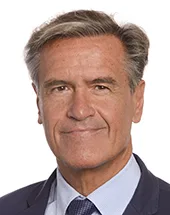
Juan Fernando López Aguilar | Spain ESP | Progressive Alliance of Socialists and Democrats (S&D) | 354 |
| 3 |
|
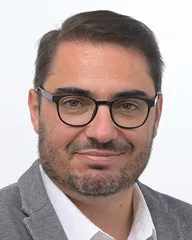
Sebastian Tynkkynen | Finland FIN | European Conservatives and Reformists (ECR) | 331 |
| 4 |
|
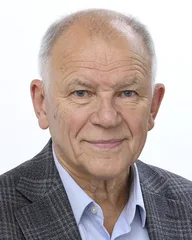
João Oliveira | Portugal PRT | The Left in the European Parliament (GUE/NGL) | 232 |
| 5 |
|
Vytenis Povilas Andriukaitis | Lithuania LTU | Progressive Alliance of Socialists and Democrats (S&D) | 227 |
All Contributions (196)
One-minute speeches on matters of political importance
Mr President, 40 years ago, on 8 May 1985, speaking in this plenary in Strasbourg, President Ronald Reagan reminded Europe and the United States that their partnership was not built merely on treaties or convenience, but on shared Judeo-Christian values, a common culture and history, and a deep commitment to life, liberty, prosperity and the pursuit of happiness. Those words remain profoundly relevant today. The relationship between the United States and the European Union is not only strategic, it is moral. It is rooted in shared beliefs that make the governments accountable to their people and place the dignity and freedom of the individual at the centre of public life. When the US and Europe work together, our economies flourish, our societies grow more secure and freedom prevails. In times of uncertainty, the wisest response is to learn not only from mistakes but from successes as well. NATO and the Strategic Partnership, the Transatlantic Partnership are proven successes that need renewing today. I therefore call on the European and American leaders to rediscover the words spoken by President Reagan in this plenary forty years ago.
European Democracy Shield – very large online platform algorithms, foreign interference and the spread of disinformation (debate)
Mr President, dear colleagues, there are only two ways of approaching truth. First, through revelation from top down. This requires faith and belongs to religion. Second, through reason from the bottom up. This requires doubt, debate and confrontation of ideas. This is the task of science and the very foundation of a pluralistic democratic society. In the 17th century, Descartes expressed this shift with cogito ergo sum. By placing doubt and individual reason at the centre of knowledge, he laid the philosophical foundations of modern Western democracy: open debate, free inquiry and access to information. Today, we hear repeated claims that online debates and elections are threatened by controversial speeches on large platform, claims that are currently used to justify tighter control under the Digital Services Act. This is an undemocratic and profoundly un‑European approach. Democracy is not endangered by too much debate, but by censorship. The European Commission must not become an inquisition policing thoughts. Its role is to keep the EU an area of freedom, not to decide what citizens are allowed to think, hear or say. Merry Christmas.
European Citizens’ Initiative ‘My voice, my choice: for safe and accessible abortion’ (B10-0557/2025, B10-0558/2025)
Madam President, I voted against the European citizens' initiative 'My voice, my choice: for safe and accessible abortion' because it pushes to define abortion as a fundamental human right, an approach that raises profound legal, moral and human rights concerns. Induced abortion is a deliberate action to end the life of an unborn human being. That unborn child is a human person whose fundamental right to life is protected by existing international human rights instruments. The Western legal system has long recognised the right to life as a foundation upon which all the other rights depend. Without life, no other rights can exist. To declare abortion a fundamental right means, in effect, to claim that the right to take the life of an unborn child supersedes the child's right to life. Such a legal redefinition does not strengthen the protection of women or humankind. Once such a premise is accepted, the life of no human being can be considered fully safe or guaranteed. Women need meaningful support, solidarity and protection. The European Union should uphold the protection of life and ...
Military mobility (A10-0242/2025 - Petras Auštrevičius, Roberts Zīle)
Madam President, I voted for the report on military mobility, because the security of the European Union can no longer be treated as a theoretical exercise, but as a real political responsibility manifested through concrete actions. In a context marked by Russia’s aggression against its neighbours and instability at the EU’s borders, the ability to swiftly deploy military forces and equipment on European soil is essential, both for deterring any attack and for effective defence. The report calls for the removal of bureaucratic barriers that slow down our response and concrete investments in infrastructure. dual-use. With the amendments tabled, we have shown why the EU must also invest in infrastructure in Romania, in order to facilitate military mobility. Developing a genuine the Schengen Military it is not a slogan, but a strategic necessity for Europe to be able to act quickly and credibly to deter any possible military aggression. At the same time, the report strengthens cooperation with NATO and reaffirms the role of the EU as a security actor. My vote for this report is a clear political message: EU countries must be united, determined and able to defend their citizens, territory and borders, without ambiguity or delay.
The deepening democratic crisis in Georgia (debate)
Mr President, colleagues, the European Union must stop treating partnering countries, including Georgia, as instruments of political convenience or as arenas for exporting internal EU policy disputes. Every pioneering country deserves respect and good faith engagement, aimed at resolving challenges – not disengagement when the government does not comply with the absurd EU policies. Georgia was the first country attacked by Russia in the 21st century and still has parts of its territory illegally occupied by Russia to this day. At the NATO summit in Bucharest in 2008, Georgia clearly expressed its ambition to join the alliance, yet key NATO and EU Member States blocked that path. Despite this, Georgia has continued to engage constructively with the European Union. This year, though, in 2025, it accepted the EU Human Rights Dialogue in good faith, only to see it abruptly and unjustifiably postponed by the EU. Abandoning Georgia now would be unjust, strategically shortsighted and a moral failure for the European Union. Dear Commissioner, if you really care about the Georgian people, start a dialogue with Georgia now.
Incentivising defence-related investments in the EU budget to implement the ReArm Europe Plan (A10-0172/2025 - Rihards Kols)
No text available
EU position on the proposed plan and EU engagement towards a just and lasting peace for Ukraine (RC-B10-0545/2025)
Madam President, dear colleagues, in Ukraine there is not only a conflict between an aggressor and an aggressor country, but also a confrontation between the current world order, built after the Second World War, based on the UN Charter, and the imposition of a new world order desired by Russia and other authoritarian regimes, an order based on spheres of influence and disregard for the sovereignty of states. According to the UN Charter, the borders of a state cannot be altered by military force. Ukraine therefore defends its sovereignty, independence and territorial integrity, as recognised and should be guaranteed by international law. Russia, however, contests this order, citing neo-imperial claims, similar to those once used by Hitler and others who devastated the European continent. A so-called peace traded for Ukrainian territories would dangerously undermine the current world order and set the precedent for future conflicts that will devastate the world. I voted in favour of the resolution in support of Ukraine, not only because I was a consort on the part of the conservative group, but also because Ukraine must be supported, both for its just cause and to protect the current international order, which has guaranteed peace and stability for decades.
Protecting EU consumers against the practices of certain e-commerce platforms: the case of child-like sex dolls, weapons and other illegal products and material (B10-0496/2025, B10-0500/2025, B10-0504/2025, B10-0507/2025)
No text available
Protection of minors online (A10-0213/2025 - Christel Schaldemose)
No text available
The situation of Christian communities and religious minorities in Nigeria and the Middle East, and Europe’s responsibility to protect them and guarantee freedom of conscience (topical debate)
No text available
EU position on the proposed plan and EU engagement towards a just and lasting peace for Ukraine (debate)
Madam President, dear colleagues, in 2008, when a few Western countries blocked the clear path to NATO membership for Ukraine and Georgia, the Russian leadership interpreted it as weakness – and weakness always invites aggression. Only months later, Russia invaded Georgia, demonstrating that the Kremlin was fully prepared to wage war in the 21st century to subjugate European free and sovereign nations. The world's weak response opened the door for further escalation. In 2014, Russia struck again, annexing Crimea and invading eastern Ukraine. The full-scale Russian invasion of Ukraine launched in 2022 is the direct consequence of years of appeasement in which the West ignored Moscow's repeated aggressions and convinced itself that rewarding aggression or doing business with the aggressor somehow would keep the peace. It did the opposite. Supporting Ukraine, defending sovereignty, independence and territorial integrity is not charity; it's an investment in Europe's security and lasting peace on our continent.
Gender Equality Strategy 2025 (A10-0210/2025 - Marko Vešligaj)
Madam President, I voted against the Report on the Gender Equality Strategy 2025, because it not only does not defend Europe's women, girls and mothers, but it creates the framework for various perverted and sexually obsessed people to exercise their obsessions unhindered. Instead of focusing on the protection, safety and defense of women, which is a biological, physiological and genetic reality different from a man, this ratio puts a man who claims to be a woman on an equal footing with a woman who is born a woman, undermining both nature and the progress made over the past hundred years in defending women's rights. Moreover, this report classifies abortion as a fundamental human right, which sabotages the very fundamental right to life, without which other fundamental rights do not exist. It also calls for the feminist agenda to become part of the EU's foreign policy. If the EU has gone mad, it does not mean that the rest of the world has to accept that a man who claims to be a woman is a woman. Gender equality must ensure that every woman in Europe can live in safety, dignity and respect in a society that values identity and the right to be protected and supported.
Framework for achieving climate neutrality (A10-0223/2025 - Ondřej Knotek)
Madam President, I voted against the report on the framework for achieving climate neutrality, because the current Green Deal pushed the European Union in a dangerous direction, with a proven devastating effect on the economy and prosperity of European citizens. Instead of strengthening the economy, these allegedly green policies have destroyed, made European industry uncompetitive, increased energy prices and costs for citizens, and weakened Europe's cohesion at a time when economic and industrial development is vital. A binding target of reducing carbon emissions by 90% by 2024 sounds good in the ears of some for whom ideology beats reason, but in reality it is a brutal brake on the development of the economy and the prosperity of the population. Since the European Commission pushed this Green Deal, energy, fuel and transport prices have exploded, with the bill being paid by European citizens and companies. Because of these aberrant measures, European goods and services are becoming less competitive on the global market and Europeans are becoming poorer. The European Commission must get back on its feet, urgently withdraw all these aberrant proposals and draw up a realistic plan to support the economy.
One-minute speeches on matters of political importance
Mr President, the Black Sea region is a strategic crossroads linking Europe, the Middle East and Asia and therefore plays a fundamental role in our security, interconnectivity, competitiveness and prosperity. From the EU side, the biggest gateway to this region is Romania, which through the middle corridor offers vital access to the South Caucasus, Central Asia and beyond, and vice-versa. Its ports on the Black Sea, especially Constanța, together with the Danube River, Europe's main inland waterway, make Romania a multi-modal transport hub connecting air, maritime, river, rail and land routes. The Danube strengthens the EU's direct link from Western and Central Europe to the Black Sea, providing an efficient and sustainable trade route inside Europe. A vital role in this middle corridor is also played by our non-EU strategic partners, mainly Georgia, Azerbaijan and Türkiye. Their active engagement is essential for ensuring secure transport routes and deeper cooperation across this region. I call, therefore, on the European Commission to allocate funds to strengthen rail, roads, port, river and digital infrastructure along these essential routes, so that the EU can enhance its competitiveness, diversify its supply chain and foster stability and prosperity across the Black Sea region.
Deliberations of the Committee on Petitions in 2024 (debate)
Mr President, ladies and gentlemen, the Committee on Petitions of the European Parliament is the place where the policies of the European position can be changed or promoted on the basis of the voice of a single European. Over time, this committee has given voice to the desperate cries of Europeans in the face of abuse, and their voice has been heard. The Committee on Petitions has given voice to Romanians and Bulgarians who have condemned the discrimination and abuses to which the two countries have been subjected by blocking their accession to the Schengen area for more than 10 years. Starting from petition 0004/2023, tabled by Răzvan Eugen Nicolescu, a resolution was reached in plenary and on 1 January 2025, Romania and Bulgaria fully entered Schengen. Starting from petition 1168/2023, submitted by Mihai Igna on behalf of the NGO ‘Together we bring well-being’, a European Parliament committee spoke for the first time about the return of Romania’s treasure, illegally held by Russia since 1916. The Committee on Petitions has played a historical and moral role in protecting cultural heritage and supporting the legitimate claims of Member States affected by looting. I congratulate the staff and colleagues of the Committee on Petitions on their professionalism and recommend that Europeans confidently petition this committee.
United response to recent Russian violations of the EU Member States’ airspace and critical infrastructure (debate)
Madam President, dear colleagues, Russia's incursions into EU and NATO airspace over Romania, Poland, Estonia and other countries are not accidents or navigational errors. They are deliberate provocations designed to test our response time, radar coverage and political will. Each airspace violation is reconnaissance. Moscow studies our coordination and readiness without crossing a formal threshold of war. These calculated violations are part of a broader psychological and hybrid warfare campaign aimed at intimidating and shifting public opinion, as well as normalising aggression. Scrambling jets and issuing diplomatic protests or condemnations are necessary EU and NATO responses, but they are not sufficient. From a military standpoint, true deterrence demands visible readiness, joint patrols, and immediate and firm consequences for repeat violations. Any hesitation is perceived in Moscow not as an act of goodwill, but of weakness. And weakness always invites more aggression. I call, therefore, that, in the event of a future EU and NATO airspace violation, after an initial warning, the object be shot down.
One-minute speeches on matters of political importance
No text available
Implementation and streamlining of EU internal market rules to strengthen the single market (A10-0151/2025 - Anna-Maja Henriksson)
Mr President, ladies and gentlemen, I voted in favour of the report on simplifying the rules of the EU's internal market, considering it as a necessary step to reduce the burden of excessive regulation that negatively affects the European economy and the competitiveness of the single market. Since last term, conservatives have warned that over-regulation harms the economy. We were accused of opposing progress. Now, however, almost every session includes de-bureaucratization measures, a sign that I was right. Unfortunately, the damage to the EU economy has already been done. It is useless to abolish internal border controls for free movement if the EU builds economic walls caused by burdening itself with harmful regulations that make European products uncompetitive, while non-EU goods take advantage of easy access to the European market. To unleash the huge potential of the Single Market, Europe must let go of the illusions promoted by the extreme left, such as the Green Deal, and adopt pragmatic policies that bring prosperity to citizens by boosting economic competitiveness. The Green Agenda in its current form means unnecessary and economically harmful taxes. An example is the carbon tax, the elimination of which is required.
Strengthening Moldova’s resilience against Russian hybrid threats and malign interference (RC-B10-0355/2025)
Mr President, dear colleagues, today we mark a truly remarkable historical moment. For the first time in history, the European Parliament officially recognizes the Orthodox Metropolitanate of Bessarabia, under the jurisdiction of the Romanian Patriarchate, as a victim of Soviet oppression. After the Soviet annexation of Bessarabia in 1940, the Metropolitanate of Bessarabia was abolished by the Soviet authorities on the grounds that it posed a threat to Soviet ideological and political control over Bessarabia. The oppression of the Metropolitanate of Bessarabia, which ranged from the persecution of Orthodox priests to the confiscation of the properties of the Metropolitanate, lasted throughout the Soviet occupation. However, the persecution continued after the independence of the Republic of Moldova, the Metropolitanate of Bessarabia being recognized only in 2002, following a decision of the European Court of Human Rights. The gratitude through this resolution on the Republic of Moldova of the Metropolitanate of Bessarabia as a victim of Soviet oppression is not only a symbolic gesture, but an act of justice that restores the dignity and memory of a community that has endured abuses not fully recognized until now. I would like to express my deep gratitude to the colleagues who supported this amendment, who understood the importance of recognizing the Metropolitanate of Bessarabia as a victim of Soviet oppression.
Carbon Border Adjustment Mechanism: simplification and strengthening (A10-0085/2025 - Antonio Decaro)
Mr President, ladies and gentlemen, I voted in favour of the report on simplifying the carbon border adjustment mechanism, not because I support aberrations. Green Deal against which I have consistently voted, but because this report is now trying to correct many errors in this pact, about the harmfulness of which I, too, have drawn attention since 2020, let it be clear. The decarbonisation agenda, even more so that it is said to be ambitious, continues to pose an imminent threat to the well-being of Europeans, to the European internal market as a whole and to the competitiveness of European products on the global market. With this report, the majority has now realized, a little late what is right, that the climate agenda that until yesterday they supported hits directly in the European Union's industry, impoverishes the population and complicates strategic relations with trading partners. The damage has already been done, however, because the aberrant and costly green transition has been brutally imposed from top to bottom in all economic and social fields. At present, attempts are being made to correct these mistakes by slow and complicated bureaucratic means. The solution must be quick and straightforward. This abomination must be stopped once and for all by returning to normality and rejecting absurd green ambitions, so that the population is no longer impoverished and Europe does not irreversibly lose its commercial power.
Strengthening Moldova’s resilience against Russian hybrid threats and malign interference (debate)
Mr President, dear colleagues, the Republic of Moldova deserves to be in the EU not as a favor, but because it has already demonstrated by deeds that it is a worthy partner and ready for this mutually beneficial partnership with the rest of the EU countries. First of all, the population of the Republic of Moldova has demonstrated that it wants European integration out of conviction. Secondly, the Republic of Moldova has already taken important steps towards democratic formation and the rule of law. Thirdly, it has opened up its economy and built strong bridges with European partners. The story of Moldova is also the story of the countries of Eastern Europe that freed themselves from the yoke of communist tyranny, which, after overcoming their own challenges, sooner or later entered the EU. It is important not to leave the Republic of Moldova behind, especially in these troubled times. The hesitation and unwillingness of Western countries to accept Ukraine and Georgia into NATO at the 2008 Bucharest Summit gave courage to imperialist Russia to annex territories from Georgia in 2008 and from Ukraine in 2014 and 2022. It is important to learn from the lessons of history. That is why I ask you to quickly welcome Moldova into the EU. He proved it was worth it.
Motion of censure on the Commission (B10-0319/2025)
Mr President, I signed and voted in favour of the motion to dismiss Ursula von der Leyen, because she too, like any public official, must be held accountable for her actions contrary to the public interest during the COVID pandemic. She argued in the pandemic, as President of the European Commission, that medical products labelled as vaccines would have been, I quote, ‘safe and effective’, which is not true. In terms of effectiveness, we all saw that they did not stop the reinfection and transmission of the virus, people injected with these medical products reinfecting and transmitting the virus. Moreover, Pfizer has admitted in this House that they have not even tested whether their product stops transmission of the virus. Regarding the safety of these medical products, tens of thousands of Europeans died spontaneously shortly after the injection, as EMA statistics show. Many other people have complications and health problems after they have injected themselves, a fact acknowledged by more and more studies. Contracts for the procurement of these alleged vaccines contain clauses that are not yet public, so vaccine sufferers do not know who to hold accountable. For these abuses, Ursula von der Leyen must be held accountable.
Lessons from Budapest Pride: the urgent need for an EU wide anti-discrimination law and defending fundamental rights against right-wing attacks (topical debate)
Madam President, dear colleagues, humanity is composed of just two existential beings: men and women. That's it. There's nothing else and nothing in between. This is not a matter of political compromise, but of biological and genetical fact. Politicians can debate many things, but no political compromise can change human nature. A man who wears a dress or lipstick is still a man, not a woman, no matter how he feels or presents. Such behaviour does not reflect womanhood, but often perversion. Decades after that, human bones will still reveal if that person was a male or a female, regardless of how they might have identified or presented themselves. The greatest threat to women's rights today is the acceptance that there is no difference between men and women. Therefore, men who pretend to be women are legally acknowledged as women. This erases women's rights under the pretext of tolerance. I call my colleagues from the left side – actually 'the wrong side' on this issue – not to undermine women's rights, but to protect them. Being a woman is not a matter of feeling but a distinct human reality, different than a man, with dignity and rights worth defending.
Situation in the Middle East (debate)
Madam President, an old Arab proverb says: listen more than you speak, for the ears are closer to the brain than the mouth. This wisdom is essential as we confront the complex realities of the Middle East today. We need to hear the United Arab Emirates, a persistent supporter of humanitarian aid in Gaza, a prosperous economy and an inspiration of tolerance in the region. We must acknowledge Israel's right to self‑defence and its legitimate security concerns in a region full of threats. We cannot ignore the grave danger that we all face when Iran openly pursues nuclear weapons with the explicit goal of wiping Israel off the map. We must stand with Middle Eastern Christian communities, many of whom face existential threats of genocide or cultural cleansing by extremists. And we must not forget the everyday Palestinians, people who seek to live in peace, not under the rule of a terrorist organisation like Hamas. The Abraham Accords offered a concrete roadmap towards peace through truth and cooperation. Now, it's time for the EU to listen with the intent, to act with courage and to be part of a path through peace, through prosperity for all in the Middle East.
One-minute speeches on matters of political importance
Madam President, Romania is today threatened by the European Commission with drastic cuts to vital European funds on the grounds of an excessive budget deficit. This excessive deficit, however, is no surprise. It has accumulated in good years, as Romanian governments after 2022 have been tacitly supported by the European Commission. In the 2024-2025 election years, the Commission chose to remain silent as an accomplice to the irresponsible economic policies of Romanian governments based on massive expenditure increases and unsustainable loans. Now, after the elections, however, under the conditions imposed by the European Commission, European citizens face harsh threats, brutal austerity, wage cuts, massive layoffs and tax increases, measures that will stifle the economy and directly hit citizens and businesses. I call on the European Commission to support a European policy that promotes tax cuts in Romania, deregulation and responsible management of public money.