
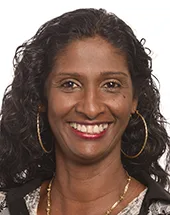

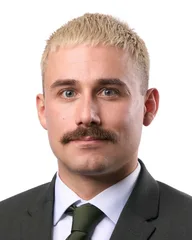
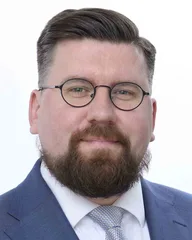
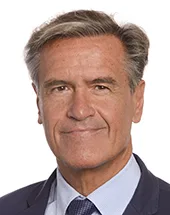
| Rank | Name | Country | Group | Speeches | |
|---|---|---|---|---|---|
| 1 |
|
Lukas Sieper | Germany DEU | Non-attached Members (NI) | 390 |
| 2 |
|
Juan Fernando López Aguilar | Spain ESP | Progressive Alliance of Socialists and Democrats (S&D) | 354 |
| 3 |
|
Sebastian Tynkkynen | Finland FIN | European Conservatives and Reformists (ECR) | 331 |
| 4 |
|
João Oliveira | Portugal PRT | The Left in the European Parliament (GUE/NGL) | 232 |
| 5 |
|
Vytenis Povilas Andriukaitis | Lithuania LTU | Progressive Alliance of Socialists and Democrats (S&D) | 227 |
All Contributions (32)
Production and marketing of plant reproductive material - Production and marketing of forest reproductive material (joint debate - Plant and forest reproductive material)
Mr President, Commissioner, ladies and gentlemen, I welcome the desire to unify European rules on the production and marketing of seeds, cuttings, trees, etc. I also support the stated desire to enable users to access a wide variety of reproductive material adapted to current uses and future climatic conditions. Unfortunately, you confuse unification of regulations with product standardization. Reproductive material is, like any living organism, adapted to an environment or environment. At home, in the overseas territories, in Guadeloupe – I am Guadeloupean – they are even more specific and play a specific role in conserving biodiversity. As we know, we have 80% of the overseas wealth in the five French overseas departments. So when you allow standardised catalogues to be rolled out across Europe, a few multinational seed companies rub their hands, but not small structures and users. It is therefore essential to leave additional room for manoeuvre to the Member States, so that they can ensure the dissemination of material which does not fall within the standards. The usefulness of these materials for farmers and biodiversity is no longer to be demonstrated and I am in favour of a certain degree of freedom in their choice. Thank you and I am counting on you.
Situation in Haiti (debate)
Madam President, Mr High Representative, Mr President, ladies and gentlemen, what has happened since our last debate on Haiti? Murders increased by 50% in the first quarter, according to the UN. The more we talk about Haiti, the more the armed gangs sow terror and death there. The Haitian government has fallen, which goes in the direction of appeasement. The Transitional Council has timidly begun its work to chart a political solution to the crisis, but its legitimacy is weak. There is not even a woman among its full members. Today's emergency is humanitarian: More than 1.6 million Haitians are facing acute humanitarian insecurity. It is in their favour that the European Union must act. I would like to welcome the one-off airlift set up by the Commission. It’s not much, but it’s good. On the other hand, I call for the establishment of a permanent air bridge with sustainable logistics. If we want to make Europe a geopolitical power, we must be able to put in place this style of grand operation. Our humanitarian diplomacy must be able to think in the medium and long term. We need to replace the response to the emergency with a long-term support approach. I hope that Haiti will serve as a laboratory for this new ambition of the European Union. I'm counting on you.
EU climate risk assessment, taking urgent action to improve security and resilience in Europe (debate)
Mr President, ladies and gentlemen, Commissioner, in assessing and responding to the natural risks we face, I draw your attention to the situation in the French overseas departments. In both the West Indies and the Indian Ocean, we face major threats: tropical cyclones, volcanic eruptions, marine submersions, tsunamis, but also landslides or retreat of the coastline... These dangers are misunderstood from continental Europe. In such small, fragile and isolated territories, these risks are existential because their consequences are multiplied. When we experience a natural hazard, our adaptability is very low. We can hardly count on external help. We have to deal with underfunded human and material resources. That is why our overseas territories must be given special attention and very careful preparation. If risks remain natural, their prediction must be integrated into European policies. The specific risks of the ultramarine world need to be better identified and taken into account. I call for a risk prevention policy that is specific to the overseas countries and not for a tropical variation of standard European policies. I am counting on you, Madam President, ladies and gentlemen.
The current situation in the Eastern Democratic Republic of Congo (debate)
Commissioner, Madam President, ladies and gentlemen, the eastern part of the Democratic Republic of Congo has been at war continuously since 1998: from 1998 to 2003 against state powers and since 2004 against armed groups acting as intermediaries (proxies). The record of these 25 years of conflict is terrible: 10-12 million dead, 7 million displaced, but no media coverage, let alone moral outrage from the international community. Nobody cares! The world is looking elsewhere. The Democratic Republic of the Congo is abandoned to its fate. Yet we know who the aggressor is. It is Rwanda that actively supports or even encourages armed groups. We also know why. It is a question of appropriating Congo’s mineral wealth, which is then marketed and found in our electronic devices, such as mobile phones. Ladies and gentlemen, since each other’s responsibilities are well established, why do we not act? Why have we not been acting on Rwanda since 2014 as we have done on Russia? Why do we not at least adopt a package of sanctions against those responsible for this war? Our cowardice must stop. Thank you and I am counting on you, Commissioner, Madam President and ladies and gentlemen.
Geographical Indications for wine, spirit drinks and agricultural products (debate)
Mr President, Commissioner, ladies and gentlemen, the more than 2 000 products covered by quality schemes sanctioned by a PDO or a PGI are the cornerstone of our agricultural system, the driving force behind the European agricultural exception. This goes far beyond mere intellectual property in which narrow legalism wants to lock them up. This is our carnal identity, but also the financial attractiveness of our agriculture, since a labeled product sells on average between 1.5 and 3 times the price of a non-labeled product. This fragile model is systematically threatened in the context of free trade agreements, as our external partners want to make our vision of things look like covert protectionist measures. When it comes to wines and spirits, including PGI rums from French departments that are the best in the world, the sector is more strategic. Wines represent 50% of the total sales value of all PGIs and spirits represent 15%. The proposal for a regulation that you are proposing is a new step in protecting our quality systems. I will, of course, vote for it, Commissioner, but I would like to see that same commitment to the PGIs again in the negotiation of free trade agreements, which is unfortunately not always the case.
Unitary supplementary protection certificate for plant protection products - Unitary supplementary certificate for medicinal products - Supplementary protection certificate for plant protection products (recast) - Supplementary protection certificate for medicinal products (recast) - Standard essential patents (joint debate - Patents)
Mr President, Commissioner, this new legislative package on essential patents is all the more important given that the technology sector is essential for the growth of the European economy, and legal certainty is paramount. I will not return to the controversy regarding the doubts related to EUIPO’s inexperience in patent management, I am just saying that the European Parliament should be involved in the follow-up of the Office’s work. On the substance, I can only welcome the Commission’s legislative work on intellectual property. There is a clear desire to create a clear and harmonised legal framework that protects both the economic interests of innovative companies and international standards. On the other hand, I hope that the Commission will also be active in enforcing intellectual property related to European patents by third countries. The European-led effort to strengthen intellectual property, which will also benefit non-European economic operators, should not be accompanied by any guarantee of reciprocity. As is often the case with Europe, the problem is not our ability to create the norm, but our ability to ensure that it is not circumvented or turned against our interests. Of course, tomorrow I will vote in favour of this text.
Empowering farmers and rural communities - a dialogue towards sustainable and fairly rewarded EU agriculture (debate)
Mr President, Commissioner, ladies and gentlemen, the agricultural crisis today is serious, yes. What we are going through has some of its origin here in the European institutions. It is the vision of agriculture promoted, in particular, by the Commission that is now angering our fellow French and overseas farmers. In the past, the European institutions have accompanied deindustrialisation, because industry was polluting and expensive. We only had to produce elsewhere, so there would be no more pollution at home and we would save money. You are doing it again with agriculture. The Commission’s objective is to: less production and less agriculture. In the name of less production for you, all you have to do is import what we no longer produce. Are free trade agreements made for that? Really? Commissioner, pull yourself together and cut off the bleeding. Say that agriculture is a great asset for Europe and that its negative externalities are not worth throwing the baby away with the bathwater. Stop this decreasing and anti-farmer policy: This is what we are asking you to do. Respect the work of farmers because they feed us.
Situation in Haiti on the eve of the deployment of the United Nations Multinational Security Support Mission (debate)
Mr President, ladies and gentlemen, Commissioner, not far from Guadeloupe – and therefore from the European Union – Haiti is our sister island. As a Guadeloupean, I believe that the historical, cultural and interpersonal ties we have forged with the European territories of the Caribbean give us obligations. Gang violence, which is often the armed arm of economic and political powers, further aggravates the extreme poverty of this population. Haiti is adrift. The 12 million Haitians are in great distress today. This is a subject that concerns and alarms us. The UN has decided to act through a multinational security force as a regional power in the Caribbean. I believe that the European Union must support it financially. It must support States that, like France, intend to act for the primary security of freedoms. At the same time, Europe’s humanitarian effort in Haiti needs to be scaled up. The €20 million in aid granted in 2022 and 2023 is insufficient. For me, we need to act beyond the mere framework of the agreements between the European Union and the African, Caribbean and Pacific States, with an ad hoc programme that perpetuates this emergency aid. Ladies and gentlemen, Commissioner, Mr President, we must act quickly and strongly to guarantee dignity and the right to development for Haitians.
EU Action Plan: protecting and restoring marine ecosystems for sustainable and resilient fisheries (debate)
Mr President, ladies and gentlemen, it is little to say that the action plan proposed by the Commission suffers from immense weaknesses, it is the pitfall when a problem is approached from a single angle. The oceans, it is necessary both to protect them and to allow their reasoned exploitation. These two objectives can be achieved together. To do this, let us rely on fishermen, great, responsible people who passionately pursue the most dangerous profession in the world. We must not consider them as a problem, but involve them in all decisions and value their good practices to lead them to increasingly reasonable behaviors. The rapporteur notes with malice that the aim of the action plans must not be to replace European fisheries with imports. That’s nicely said. This would be tantamount to substituting practices that can be improved with ‘anything’. Sometimes the best is the enemy of the good. In the interests of our fishing in Europe and overseas, the Commission must now return to a new action plan that is more reasonable, less dogmatic and more compatible with the imperatives of food safety and respect for European and overseas fishermen.
Geothermal energy (debate)
Madam President, ladies and gentlemen, in many of the overseas territories we have volcanoes, we have recognised geothermal potential. Yet we continue to produce most of our electricity by burning fossil fuels. It's aberrant. The development of surface geothermal energy would be very simple in our territories. Deep geothermal energy would also be a possibility. But more than a promise, abundant geothermal energy must quickly become a reality. Because it has the great advantage of being a national energy source that does not require the import of technologies from Asia. In addition, it ensures a stable, safe, continuous, clean and inexhaustible local energy supply. It's gold under our feet. The European Union must become more involved on this issue in our overseas territories. We expect the Commission to present an ambitious development plan as soon as possible. There's an emergency. My compatriots in the French overseas departments expect a lot from Europe on this issue. I'm counting on you.
Outcome of the UN Climate Change Conference 2023 in Dubai, United Arab Emirates (COP28) (debate)
Mr President, Commissioner, ladies and gentlemen, the COP 28 which is coming to an end resembles the previous ones: an inter-self of NGOs, lobbyists and state actors who will hurry to forget their non-binding commitments. The goal of keeping global warming at 1.5 degrees seems out of reach: This is impossible because the world consumes more fossil fuels every year. This race seems crazy, it will not be slowed down either by the emerging countries, who want their consumer society, or by the industrialized countries, whose famous transition will require even more metals and energy. Equally appalling, it is now the door open to pseudo-technological solutions; The Folamour doctors of globalized capitalism will be able to make their life-size experiments and swallow the passage. Their philosophy does not change, it remains that of the always more. Colleagues, in the face of this hopeless observation, we have a great chance, it is to have a course. The pitfall for us would be twofold: on the one hand, to say that everything is ruined and that we will enjoy it to the end; on the other, to panic, to set ourselves unrealistic goals, incompatible with our economic interests. The reality is that our citizens want to make efforts for the environment, but without their standard of living being too affected. It is up to us to hold this balance together.
Framework for ensuring a secure and sustainable supply of critical raw materials (debate)
Mr President, Commissioner, ladies and gentlemen, I would like to tell you that the proposal for a regulation you are submitting is better than the text adopted in September 2023. Some of the extremely binding targets of the previous version have been revised downwards, which is a good thing, as there is no point in adopting inapplicable rules. Ensuring the security of our supplies of strategic materials is precisely what citizens expect from the European Union. This is what I call "the good Europe", the one that seeks to find solutions for our industries of the future, the one that serves major projects of collective interest. In the context of the increasingly fierce global competition we are experiencing, we must not be ashamed to act in accordance with our interests. Without ideology, we must now assume the responsibility of clearly supporting our extractive mining sector on the continent as well as in the overseas territories, with, for example, nickel from New Caledonia. We all know that the transition will require phenomenal amounts of metals. I prefer them to be European and, failing that, to be respectful of our environmental and social standards.
EU/New Zealand Free Trade Agreement (debate)
Madam President, Commissioner, ladies and gentlemen, the question we must ask ourselves is this: Do we really need to import tens of thousands of tonnes of apples, kiwis, onions, wine, lamb meat, butter, milk powder, fish into Europe? What are the winnings? Is it reasonable to remove all these quotas on certain goods that Europe produces in abundance? Is it ecologically reasonable to further increase global trade flows with greenhouse gases and miscellaneous pollution generated by 40 days at sea? Is it permissible to return molecules banned in the EU, such as atrazine? The Prime Minister of New Zealand explained that the agreement has huge benefits. But for whom? For globalised agribusiness, certainly, for the high standards we want to set, it is less safe. But for farmers, there is none. With this agreement, the real aim of which is to consolidate the Union in the South Pacific, our agriculture is a mere bargaining chip today. Colleagues, this agreement reflects a pastist conception of trade agreements without taking into account the real challenges of the moment. It should not be ratified as it stands.
Water scarcity and structural investments in access to water in the EU (debate)
Mr President, Commissioner, the water crisis is reaching its peak in our five French overseas departments. In Martinique and, above all, Guadeloupe – I, Guadeloupéenne, I tell you – it has been estimated for years that more than a quarter of the population does not have access to drinking water. This is not acceptable. It's 2023. In Mayotte, it is even worse, as there is no water at all. In this Chamber, I have the impression that few people are worried about this serious problem, Commissioner. However, I would remind you that we are talking about European territories, which must benefit from European solidarity like any other region in the EU. We are now paying the price of decades of underinvestment in the water infrastructure of the French ORs. Cohesion funds have not changed this situation; they were only a sprinkler. That is why I call for the establishment of a real overall plan led by the Commission, in Martinique, Guadeloupe and Mayotte, because it concerns human health and the livability of these areas. Renovating sewerage and distribution infrastructure, creating new treatment plants, putting an end to pierced, asbestos-treated and patched pipes, it must... (The President withdrew the floor to the speaker)
Fisheries control (debate)
Madam President, Commissioner, ladies and gentlemen, the new rules aimed at harmonising fisheries control have the merit of clarifying a system which, by its very disparate nature, does not make it possible to act correctly in favour of the protection of the fisheries resource. However, this new regulation will penalise the most artisanal fisheries, such as those located in the outermost regions, and in particular in the French overseas territories. It must be understood that we are essentially talking about tiny fleets grouped together in committees of artisanal fishermen who have the greatest difficulty in establishing data. Hoping that they will comply with cumbersome administrative obligations is like accusing this traditional fishery of destroying the resource. For me, that makes no sense, Commissioner. The monitoring methodology put in place by the relevant Commission in continental Europe is not adapted to local realities. Once again, the specificities of the French overseas departments must be taken into account and derogations granted as soon as possible. I am counting on you, Commissioner, Madam President, ladies and gentlemen.
The proposed extension of glyphosate in the EU (debate)
Mr President, ladies and gentlemen, the Commission is choosing science and common sense in the matter of glyphosate. This courage deserves to be praised. Of course, no one says that glyphosate is a miracle product. In an ideal world, it would probably be banned for the reasons already explained, as we know. But today we have no alternative. In any case, nothing to maintain our agricultural productivity and profitability, the only guarantor of Europe's food autonomy in large monocultures in metropolitan France and overseas. Many farmers recognize that they don't know how to do without glyphosate. To ban for today is to run to disaster. And let's not forget that some of the agricultural goods we continue to import will have been exposed to glyphosate anyway. In the new 10-year period ahead, research is needed to find alternatives that are acceptable to both the general public and farmers. Commissioner, this is a huge challenge that we will all have to face. We too, ladies and gentlemen.
New Agenda for Latin America and the Caribbean in the aftermath of the EU-CELAC Summit (debate)
Mr President, ladies and gentlemen, since the summit between the European Union and CELAC in July revolved around the Mercosur agreement, I will focus on this topic. Europe is right to stand firm on environmental standards, but let us draw all the consequences. Let us not neglect this French report, which estimates that the deadweight effect will accelerate deforestation by 5 to 25% in the Amazon. We cannot endorse that. The French agricultural unions have warned of the risk of unfair competition, with a marked dissymmetry, in particular of the veterinary means of production. As a Caribbean farmer, I hear the producers and growers of sugar cane at home in the West Indies, who are also sounding the alarm when the sector is in great difficulty. With this Mercosur agreement, we are starting a process that we do not know where it will take us. I think we first need to measure the cumulative impacts, sector by sector, before we go further in the negotiations. The Mercosur Agreement is frozen – well, it remains so. I ask you, Mr President, ladies and gentlemen, to really think about it, because it is important for us, for me as a farmer and part of the Caribbean country, as a Frenchwoman.
The water crisis in Europe (debate)
Madam President, Commissioner, the situation you described a few moments ago, that of a Europe without drinking water for its inhabitants, for its agriculture and for its biodiversity, we have known for years in the French overseas departments, for example Guadeloupe. In our overseas departments, it is very common to open a tap and not have water coming out of it, because the pipes are defective and the networks are defective. Entire sections of the population had to learn to live without running water. However, our overseas departments are European territories, Commissioner. When France is condemned, as it was a few days ago, by a UN committee because it does not respect the right to water and sanitation of the inhabitants of the overseas departments, particularly at my home in Guadeloupe, Commissioner, the whole of Europe is condemned. If the European Union fails to guarantee certain fundamental rights of its citizens, then it misses its essential mission today. Commissioner, you have understood the meaning of this plea today, but promise us a true European water policy for the long term. Do not forget our French overseas territories, which are now suffering from a human health problem.
Ensuring food security and the long-term resilience of EU agriculture (debate)
Madam President, Madam Rapporteur, Commissioner, for the past four years, real life and the real world have returned to this Chamber. After rediscovering our vulnerability to global value chains and the true value of energy, in 2023, we discover that agriculture is not just a technocratic variable of the common market to regulate, but is political and geostrategic – a condition for any desire for European autonomy and power. I welcome, Madam Rapporteur, this cross-cutting resolution, which analyses well the challenges that farmers, including my fellow farmers in the five overseas departments, face directly. You have the courage to criticize certain policies put in place here. The ambition of the AGRI Committee is to rebalance policies that, in the name of the environment, result in technical deadlocks and speeches that denigrate farmers; I welcome this approach. I say it: Let's trust farmers, let's stop wanting to rule their business. Let us stop making the CAP an instrument for the functionalisation of farmers and use it to free up energy: This is what our best farmers need.
The role of farmers as enablers of the green transition and a resilient agricultural sector (continuation of debate)
Mr President, Commissioner, yes, farmers have a role to play in the green transition as facilitators of this green transition, it is true, but it is not their primary role. Their primary role is to produce: produce agricultural goods to feed us, produce to provide a decent income for them and their families. When I hear here some words which are intended to be environmentalist but which are mostly anti-farmers, I have the impression that farmers are bad people whose only concern is to pollute the land and waterways with fertilisers and pesticides. In our texts, we read that farmers are the problem, that they refuse to understand the global challenges. The current approach here is still punitive. Farmers must be trained through regulations and directives, but never worry about their difficult living conditions, suicides, low incomes, premature deaths. This contemptuous approach underpinning most of our texts is unbearable today. Farmers have their part to play in the green transition, but they are not asked, in the name of this transition, to cut yields, i.e. their incomes, or to accept increased labour hardship. As a farmer myself, I say that we want to take our share of the overall burden, but not more than our share.
Availability of fertilisers in the EU (debate)
Mr President, Commissioner, ladies and gentlemen, the text before us is a good one. I will approve it later, at the time of the votes. We know in what context, painful for our farmers, it will be adopted. Fertilizer prices, and more generally agricultural inputs, have skyrocketed in the past two years, sometimes four or fivefold. The reason why prices have been falling in recent months is that demand is falling, which makes sense. Farmers can no longer keep up, their cash runs out, margins are so low that many work at a loss. Without fertilisers, no modern agriculture. In the French overseas territories, most farms are family-run, small and barely mechanised. The situation is made dramatic by the obligation to import products, often from far away, for the benefit of a necessarily small number of operators. As a result, prices are even higher than on the continent, while agriculture is structurally more fragile. This creates a real risk for food security in these territories, which justifies the special attention that the Commission will have to pay to our outermost regions. Fertilizer prices had started to explode long before the war in Ukraine. It is not a cyclical problem – I say it – that will be solved if the weapons are silent. It is a structural problem, too weak a European production capacity, which makes us dependent on third countries, sometimes unfriendly. The solution can only be the creation of new productive capacities: This is what is at stake in the coming years. Commissioner, Mr President, the Commission's communication is a first step. Now, we will need strong acts, otherwise the current situation will become no longer a temporary anomaly, but a temporary one. (The President withdrew the floor to the speaker)
Small-scale fisheries situation in the EU and future perspectives (debate)
Madam President, rapporteur, ladies and gentlemen, as an ultramarine, I am particularly sensitive to the problem of small-scale, artisanal, traditional and sustainable fishing, as practised in the five overseas departments. I would therefore like to thank the rapporteur for her very useful report. I would like to make a reminder: on 21 April 2017, the European Parliament adopted an own-initiative report calling on the Commission to put in place measures for the renewal of the traditional fishing fleet in the ORs. On 28 February 2022, the Commission finally authorised France to set up a State aid scheme to finance this renewal. In this five-year period, Martinique has grown from 1,100 to 450 traditional fishermen. This downward curve is confirmed in the other overseas departments. The truth is that our traditional fishery, celebrated for its virtues on the fishery resource or its limited environmental impact, is dying out. Of course, the non-renewal of the fleet is not the only one to call into question: the harshness of the profession and its low attractiveness, the lack of training and the ageing of fishermen, the weakness of self-financing and access to credit, illegal fishing, the pollution of coastal waters with chlordecone, the sargassum that destroy the engines in my home in the West Indies and the poor organisation of the sector in certain territories also contribute to the disappearance of this activity. This is important for me to say today. I would also like to point to another problem, which is fundamental. The same European policies are applied in the ORs as elsewhere, particularly with regard to overfishing, whereas in traditional fisheries, everyone knows that there are none. So to conclude, two minutes, five seconds, I want to say that given its weight in local economies and in eating habits, traditional fishing in the overseas territories must be given special attention, Madam rapporteur, this is important for me. It should be considered for what it is: a structuring activity in these territories. So, let's help our ultramarine fishermen, let's allow them to live with dignity and their profession. (The President withdrew the floor from the speaker)
Implementation of the New European Agenda for Culture and the EU Strategy for International Cultural Relations (debate)
Mr President, Madam Rapporteur, ladies and gentlemen, Commissioner, the European cultural agenda based on the promotion of diversity and inclusiveness is a claimed means of educating the European masses, as it is not a means of Europeanising certain populations inhabiting our continent. On the diversity side, I note that Netflix has an impact infinitely greater than anything the Commission can produce, even if it means integrating an inclusive porridge. At least with GAFAM, it is aesthetic. The rapporteur is careful to clarify that she does not adhere to the theory of the war of cultures. Yet we are there. It is indeed a cultural war that is being waged by the Commission and its awake friends against the peoples of Europe, in order to impose on them a certain vision of the world. The real goal is not to celebrate European cultural genius, but to make Europe the best pupil of globalised culture and the ideology it promotes. Far from valuing our cultural exception, the agenda lowers us to the sponge of the culture of others, as illustrated by the explanatory memorandum, which cites George Floyd and the reassessment of cultural and power relations between North and South. The Commission’s cultural vision underlying the European cultural agenda is as hollow and verbose as a Disney series. I am Guadeloupean, Caribbean, ultramarine and rooted in a Caribbean culture, but also a European that claims its multiple and cultural legacies and defends its specificities, I do not share your vision.
Sustainable maritime fuels (FuelEU Maritime Initiative) - Deployment of alternative fuels infrastructure (debate)
Mr President, ladies and gentlemen, these amendments to the regulation aimed at introducing renewable and alternative fuels into maritime transport are very important for our outermost regions, since they are only connected to the continent and to each other by sea or air. Anything that affects the price of sea freight is therefore viewed with concern in the five French overseas departments. These new rules, despite specific adjustments to the outermost regions, will inevitably drive up transport prices. The proposal refers to €90 billion in additional costs to be absorbed. In these territories where purchasing power and the local economy depend in part on the cost of freight, you will understand that we will need financial compensation if we do not want to deepen the impoverishment of populations and ultramarine companies. Carbon neutrality, yes, but only if it is coupled with purchasing power neutrality. That said, Commissioner, we are looking forward to a wave of investment in port facilities, particularly to electrify them. But I would remind you that it is thanks in particular to the French overseas territories that the European Union has ports in the Caribbean, the Indian Ocean and the Pacific, which are all advanced bases for our market power and for the decarbonised design of the transport we often carry. We do little or nothing about it. These ports have run out and are far from the regional hubs that some could become if they were helped. Ladies and gentlemen, thanks to green investments, tomorrow we will have the opportunity to invest in our overseas territories, in their port facilities and in their green transition. Let’s do it really massively, let’s help the outermost regions to develop and Europe will do better.
The urgent need for an EU strategy on fertilisers to ensure food security in Europe (debate)
Mr President, Commissioner, ladies and gentlemen, the soaring price of fertilisers shows us how vulnerable we are. The European Union thought it was mastering globalisation? She believed that the huge global system would irretrievably bring peace and prosperity? The dream is over! The interdependence you celebrated is above all ‘intervulnerability’. The return to reality is painful: production costs and the energy crisis keep the price of fertilisers at a very high level. This translates into soaring food prices that push millions of Europeans into precariousness and even poverty. As a Guadeloupean from an outermost region, which is already disadvantaged, I can testify to this more than anyone else today. As for our manufacturers and farmers, they are distraught, exhausted by so many uncertainties. Everyone tells us: How have we been able to become so dependent on international markets and certain third countries? How could the EU let this happen? The solution, we know it: it means recreating production capacities here in Europe – a fact we had already made during the health crisis – it means stopping promoting total freedom of markets without regard for the places of production, it means limiting the excesses of globalisation, returning to a local and rooted vision, reindustrialising our continent in strategic sectors and regaining control over our destiny. This is a vital necessity, and it is what my compatriots in the five overseas departments expect from the European institutions.