
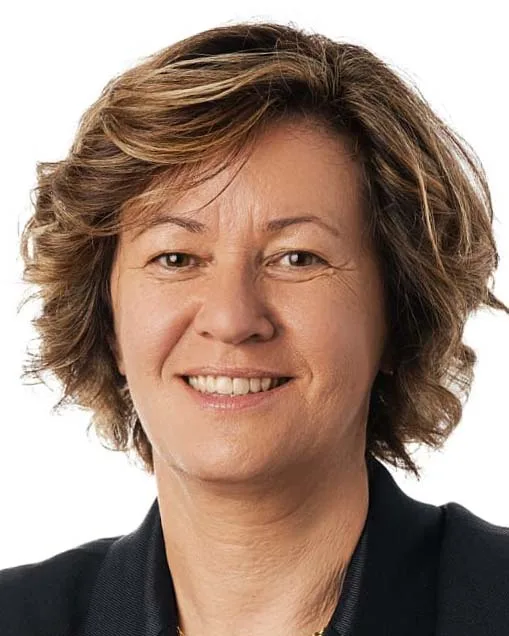

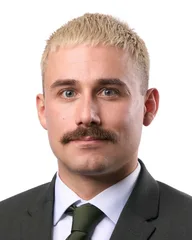
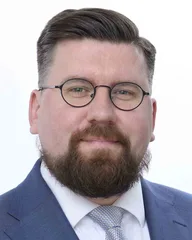
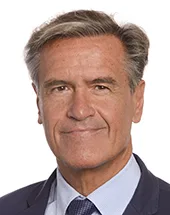
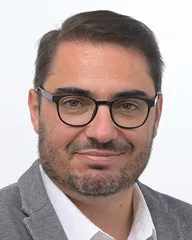
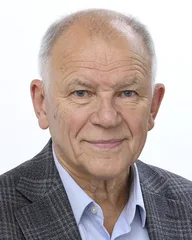
| Rank | Name | Country | Group | Speeches | |
|---|---|---|---|---|---|
| 1 |
|
Lukas Sieper | Germany DEU | Non-attached Members (NI) | 390 |
| 2 |
|
Juan Fernando López Aguilar | Spain ESP | Progressive Alliance of Socialists and Democrats (S&D) | 354 |
| 3 |
|
Sebastian Tynkkynen | Finland FIN | European Conservatives and Reformists (ECR) | 331 |
| 4 |
|
João Oliveira | Portugal PRT | The Left in the European Parliament (GUE/NGL) | 232 |
| 5 |
|
Vytenis Povilas Andriukaitis | Lithuania LTU | Progressive Alliance of Socialists and Democrats (S&D) | 227 |
All Contributions (27)
European Disability Card and European Parking Card for persons with disabilities - European Disability Card and European Parking Card for persons with disabilities for third country nationals legally residing in a Member State (joint debate - Disability cards)
Mr President, ladies and gentlemen, Commissioner, I must first make a note before saying that we agree with this package that we have helped to create. She said: The Commission remains committed to people with disabilities and I understand that. However, perhaps you do not know, and this was said during a Committee on Labour and Social Affairs, that the Commission has not answered the Court of Auditors' questions on how many disabled employees it has incardinated and hired. And this is something that must be absolutely repaired because the body or institution that decides what the guidelines are must be an example, as is the European Parliament. I would therefore like to thank the rapporteurs for their work and welcome the proposal for a directive establishing the European Disability Card and the European Parking Card for persons with disabilities, because the Italian Government wanted and supported this measure. Among our proposals, which are now included in the text of the directive, are the free card, the fight against counterfeiting and the development of a QR Code and other digital tools. I had the honor of bringing to these premises, not just in these but in those of Brussels, a person who is facing a terrible disease, ALS, his name is Stephanie Zilli Bellisario. It was received by President Roberta Metsola and she used the strength of her misfortune, of her illness, to ask this Parliament to also deal with the causes of disability and therefore to also deal with ALS.
Council decision inviting Member States to ratify the Violence and Harassment Convention, 2019 (No. 190) of the International Labour Organization (debate)
Mr President, Commissioner, ladies and gentlemen, the Convention on Violence and Harassment is the first international instrument to establish minimum standards for dealing with harassment and violence at work, indicating to States what action should be taken to prevent and combat it, thus achieving the objective of zero tolerance in every workplace. It should be stressed that this convention addresses a concrete and recognized problem, which goes far beyond gender ideologies and ideologisms that are not always good for the cause, so much so that many European states have not yet ratified it. Let's stay on focus: one in five people continue to experience violence and harassment at work during their working lives, and it is therefore necessary to adopt an approach that focuses on the effectiveness and effectiveness of protection, including in terms of prevention. I founded an anti-mobbing centre in the province of Udine in 2009, I was the first Italian MEP to take the course to prevent harassment at work promoted by the European Parliament and, alongside the League that voted in favour of the ratification of Italy in 2021, we will continue to pay the utmost attention to the problem.
Major interpellations (debate)
Mr President, Commissioner, ladies and gentlemen, how many years have we been talking about the ongoing migration crisis in the European Union? I'll answer you right away: too many. Not much has been done from Brussels to stem the phenomenon, often leaving the Member States alone. Dear Commissioner, giving money does not mean solving problems. The instruments must be put upstream. Frontex reported that 2023 was the year with the highest levels of irregular immigration since 2016 and, according to data from the Ministry of the Interior, 157,000 migrants landed on Italian shores last year. Save the Children It is estimated that more than 28,000 migrants have died or been missing in the Mediterranean since 2014. Fewer departures means fewer deaths at sea: We have to stop the departures! Let us also not forget, indeed do not forget, the migratory route of the Western Balkans, which strongly affects the region from which I come, Friuli Venezia Giulia. In this case, Italy is not a country of first entry by land: Yet immigration crosses countries such as Croatia and Slovenia without stopping. The Italian people do not turn their backs on anyone but the reception must be dignified and for those who really have the right. We can't welcome everyone! As Lega-Salvini premier, we have always said to help these populations at home, also to avoid that unfortunate people end up becoming workers for the underworld or, even worse, victims themselves or perpetrators of crimes against defenseless citizens. We voted by a large majority in recent days for the agreement reached on the PRIMA partnership for the participation of the European Union in research and innovation in the Mediterranean area. This initiative represents a concrete way to try to stop migration flows and create benefits and innovative solutions in the countries of departure of migrants. But it is still insufficient. We cannot think of continuing to address the migration phenomenon with an emergency approach that is completely inadequate. The Italian Government is committed to seeking a balanced solution at European level and the Pact on Migration and Asylum, dear Commissioner, is only a first step. The reform of the Dublin Regulation cannot be satisfactory if the Member States of first arrival continue to bear most of the burden. Appropriate structures must be built for the verification of refugee status in the countries of departure or in countries willing to do so, as the Italian government did well in the agreement with Albania. He did it because you didn't do anything. It is also necessary to proceed to complete the work on the Return Directive and strengthen cooperation with the States of departure and transit of migrants... (The President took the floor from the speaker)
Geographical Indications for wine, spirit drinks and agricultural products (debate)
Mr President, Commissioner, ladies and gentlemen, we are finally definitively approving the regulation on the revision of geographical indications, which is one of the few notable results of this legislature, not least because it is the result of genuine work of sharing, as it should always be. However, we had to correct the basic text because the Commission did not have well-structured rules for a sector worth EUR 90 billion. The Commission wanted to turn geographical indications into trademarks and with its incomprehensible policies it wanted to break down the provisions on wine. Thanks to the amendments of the Lega-Salvini Premier, in the future there will be no more cases like the "Prosek". I would remind the Commissioner, who has not yet spoken on this point, that procrastination does not solve the problem. But perhaps in this case it is now better to wait for the regulation to be published. Luckily we thought about filling in some silences within the text. But in the future? Unfortunately, farmers, I would say at last, are noticing what has happened over the past five years, and yesterday too they returned to the streets to protest against this Commission. Now the Commission is taking hasty action in favour of farmers, trying to make up for the mistakes of the past: It's too late! It's never, maybe too late, but in this case it's too late. There is a need to change course and only we of the League, always opposed to "eco-follies", are and will be on the side of the farmers.
Plants obtained by certain new genomic techniques and their food and feed (debate)
Madam President, ladies and gentlemen, Commissioner, after twenty years, a Nobel Prize in Chemistry has finally come to this plenary in a proposal for a regulation on new genomic techniques. I remind everyone that we in the League asked from the beginning for a change of pace and to distinguish between GMOs and NGTs. Europe has finally woken up and for once decided not to follow the green follies of the Greens of the left, who mystify the facts. Today we have seen the difference and the step backwards that President von der Leyen had to make. This is good news for the whole world of agriculture, which has been waiting for a result for decades. The only certainty that still does not emerge from the text concerns non-patentability. On this we want to make sure that the plants will be accessible to everyone, or our farmers will have to go back under these buildings to change the rules that the League requires right away. Finally, I want to thank, briefly, the University of Udine for the great results obtained in these decades, precursor of this research, also heard within the European Commission and reliable scientific basis.
Children first - strengthening the Child Guarantee, two years on from its adoption - Reducing inequalities and promoting social inclusion in times of crisis for children and their families (joint debate – International Day of the Rights of the Child)
Madam President, Commissioners, ladies and gentlemen, two years after the creation of the Child Guarantee, this resolution of the Committee on Employment and Social Affairs draws up an initial assessment of this programme, already suggesting amendments and corrections. In particular, it underlines the importance of having streamlined procedures, greater control and transparency in the use of funds. But if this can be understandable in the start-up phase, there are aspects that convince us a little less as a group. First, the call for urgently increasing funding for the European Child Guarantee, with a dedicated budget of €20 billion for the period '21-27. Before talking about this increase, the League proposes to have an impact assessment, to understand well where and how it works and how many are the states where irregularities occur and which ones. There is also the proposal to establish a European Child Authority to monitor the Guarantee and to foster cooperation between the Commission and the Member States. On the request of another European authority we can only express our opposition: Rather than creating yet another community superstructure, we seek and dedicate these resources directly to children and the Child Guarantee. Rather, we have management and control set up within existing structures. One last consideration: the Child Guarantee is now a reality in almost all the Member States of the European Union, because, let me say at last, the national plans have been approved, but they must now be put into practice.
European protein strategy (debate)
Madam President, Commissioner, ladies and gentlemen, as Lega-Salvini Premier, we have been saying for years that Europe must increase its food sovereignty, increase domestic production and reduce dependence on third-country suppliers. But, as Lega, we also say no to lab-grown meat financed with REACT-EU funds by the Commission. We must facilitate the work of our farmers, instead of harassing them with extreme policies that hinder their work and production. And we also say no to the inclusion of insects as a nutrient model. We must value our Mediterranean diet, which is envied by the whole world. A completely different complementary approach to those green ideological policies supported and voted for by the left in this mandate is needed. Europe must decide which side it stands on: breeders and farmers or laboratories and insects?
Protection of workers from asbestos (debate)
Mr President, ladies and gentlemen, Commissioner, 88 000 deaths a year in Europe due to asbestos and the wave of renewal could make the situation worse. That is why we are convinced that we need to protect workers even more and have made an active contribution to the drafting of a shared text. I too would like to remind you here of the rapporteur, Véronique Trillet-Lenoir, who left us prematurely in August, and to dedicate this work, in addition to her, to all the victims of asbestos exposure. The region I come from, Friuli Venezia Giulia, unfortunately records a long list of people taken from their families. The proposal to revise this directive is an important milestone in improving the conditions of workers and in the fight against occupational cancers, which are in the European Union the leading cause of work-related deaths and which are mainly caused by exposure to carcinogenic substances such as asbestos, colleagues said, of course. As shadow rapporteur, I would like to point out that there has also been substantial convergence in our political contribution. In particular, I would like to mention a few principles. Clearly the protection of workers from exposure to asbestos is the priority, both for the European Parliament and for the League for Salvini Premier and the Identity and Democracy group. We all strongly want the rate of illness and the number of victims of occupational cancers to fall. Second thing: Brave goals, yes, with transition and support, this time sustainable. It is expected that the occupational exposure limit will be lowered for the first time without a transition period and then that the methodology will be changed on a voluntary basis so that, after a transition period of six years, there will be great results. But what matters most to us is the support for the transmission of information on specific EU funds for small and medium-sized enterprises... (The President took the floor from the speaker)
Improving firefighters’ working conditions (debate)
Madam President, Commissioner, I would like to point out, as Mrs Zambelli did, that the debate on improving the working conditions of firefighters is also an initiative following our motion for a resolution tabled on 22 March, after the hearing. This is a source of great satisfaction for us. We all share the fact that the fire service profession is at high risk of disease due to exposure to harmful substances. American studies find that firefighters are 300% more likely to get cancer. But here it has not yet been said that they have an average life expectancy of twenty years lower and we in Europe have no studies that can deny or certify this situation. Recently Eurostat certified that there were almost 360 000 professional firefighters in the Union in 2022, but also noted that there are different degrees of reliability of the data provided within the Member States and this is a clear signal that action is needed. Eurostat also analyses the average age of these workers: a continuous reduction of the operating units is planned, with the concrete risk of not being able to guarantee in the future safe and effective interventions for them on the territory. In addition to the 360 000 professionals, 3 200 000 volunteers also work. The responsibility to act to protect firefighters is therefore greater. At the moment, Commissioner, your answer is disappointing to me. I would like more effort and, as you have heard, also colleagues; the questions contained in the oral question aim to obtain a commitment from the European Commission for the future health interventions of 3 500 000 firefighters and their families, also because all of them will be even more exposed due to the measures also imposed by the Green Deal.
Reviewing the protection status of wolves and other large carnivores in the EU (topical debate)
Mr President, Commissioner, ladies and gentlemen, I have heard that you have mentioned the quantification of the damage caused by large carnivores and I appreciate that. But how can we quantify the value of the life of a dead boy attacked by a bear in Italy? Or the 25 we just heard about from Romania? How can we soothe the pain of these families who are facing such absurd grief? The presence of wolves and large carnivores in Italy continues to grow, generating continuous attacks on farmed animals and sometimes, unfortunately, even on humans. Now in some areas, especially in northern Italy, including Friuli Venezia Giulia, Trentino-Alto Adige, Veneto and Emilia Romagna, there is overpopulation of these species. The Identity and Democracy Group has filed a resolution with two demands: the reduction of the protection status of the wolf, with the downgrading from strictly protected fauna species to protected species because, thanks to repopulation policies, the wolf is no longer an endangered species. Second thing: a more active involvement of regional actors, given that our regions, especially those managed by the Premier Salvini League, have shown great capacity to administer the problem through the policies carried out to safeguard farmers. Let them intervene. Here we also call for policies to be implemented at European level to contain large carnivores, including greater movements in areas without the presence of humans. Let's be concrete, let's give answers: There are grievances, as well as damages, for which we must respond and which we must face.
Geographical Indications for wine, spirit drinks and agricultural products (debate)
Madam President, ladies and gentlemen, I welcome the shadow rapporteur, Mr De Castro, the Commissioner and my colleagues in this dossier. As shadow rapporteur and on behalf of the Lega-Salvini Premier, I stress that we are voting in favour, as we have already done in committee, of this proposal for revision because it is fundamental for the sector, which is fundamental for Italy, which also holds the largest number of agri-food products recognised by the Union. The cases of Prosecco and balsamic vinegar will no longer have to be repeated. Commissioner, I no longer want to hear from some people working in DG AGRI that you cannot confuse these wines because one is drunk with food and the other is drunk with dessert. That is why we have included two amendments to defend our geographical indications. As League we will fight on all European tables. Since you then mentioned the role of the EUIPO, you should remember that the vote was unanimous, which is also a clear message to you and to the Commission in general. Our group will maintain a firm position on the role of the EUIPO, wanting to limit the transfer of proxies from DG AGRI. We do not want competence to be transformed, let us say, and as we are politically sensitive on this issue, we will continue to fight for the most important provisions of the wine sector to remain within the CAP in order to allow for more streamlined revisions and to have more protection.
The role of farmers as enablers of the green transition and a resilient agricultural sector (continuation of debate)
Mr President, Commissioner, ladies and gentlemen, first of all I wanted to say that, listening to today's speeches, it seems to me that the majority is creaking, they are no longer all that convinced of this Green Deal. Starting from Italy, I want to remind you that my country has already implemented many of the policies required by the Green Deal and with the largest area dedicated to organic farming, 17%. Recently, however, rising prices and supply chain disruptions have put the agricultural sector in general in difficulty, but it has proved to be very tough and still resists. On the other hand, it is called primary sector, I always say it, because it makes us live and survive everything. Have you ever put yourself in the shoes of a farmer? Have you ever had a dialogue with those who dedicate their lives to working in the fields every day? Yes, this was also the story of my family, and this is what he would tell you, if listened to: I do not want a Europe that imposes such a fast green transition on me. The earth is my home and I already do everything to safeguard it, I live there. I, the farmer, must have time to implement your policies to adapt them to my land and my life. I, a farmer, am tired of being harassed by incoherent and arbitrary demands that hinder my work, instead of facilitating it. I, a farmer, convey the knowledge of my grandparents to the new generations and technology, while you in Brussels produce every day rules and impositions that go against my survival. I, a farmer, am astonished to see European policies that threaten my specialties and promote synthetic meat, crickets and grasshoppers, which have little to do with the green transition, with my experience and especially with your long life. Dear colleagues, this is how our farmers see us, indeed they see you. The objectives linked to the green transition must be reconciled with the possibilities of our farmers. Current policies will favour imports from third countries, where there is no reciprocity and product controls are less stringent than those imposed on our farmers.
Availability of fertilisers in the EU (debate)
Mr President, ladies and gentlemen, Commissioner, we welcome this oral question because it raises important questions that we, as Lega-Salvini Premier of the ID Group, have been trying to bring to light for months. The war between Russia and Ukraine has exacerbated the problem of European dependence on fertilizers from a small number of suppliers. Before the war, Russia accounted for 16% of the world's exports of fertilisers and today, in our opinion, there are many actions to be taken. In the short term, it is essential to implement policies to support European fertiliser producers, including through State aid and financing instruments provided for in the CAP Strategic Plans and even, as we have requested, the use of the reserve fund for agricultural crises, often intended for non-agricultural purposes, as happened in 2020, Commissioner. In the long term, a strategic vision must be adopted by implementing accompanying measures, such as support for the recycling of nutrients from waste streams and increased production of green ammonia. If we want to help the sector, we must also simplify the bureaucratic procedures aimed at obtaining the aid that creates so many delays and so many economic and environmental losses. There is no more time for delays. Farmers and consumers deserve swift and targeted responses and actions to address this crisis that has unintentionally impacted their work and our food security. We expect the Commission to deal with the real problems of agriculture. On the other hand, it is and is called the primary sector.
Revision of the European Works Councils Directive (debate)
Mr President, Commissioner, ladies and gentlemen, first of all I would like to thank Mr Radtke for the work he has done so far on this report, which is about recommendations to the Commission concerning the revision of the directive on European Works Councils. Several years have passed since the publication of the directive and we have thus had the opportunity to test and verify that the establishment of European Works Councils has struggled to achieve its main purpose, namely the creation of a transnational industrial relations system, which can act as a counterbalance to the widespread processes of globalisation. The aim was to encourage social dialogue and the anticipation of changes in international societies. As was the case in 2009, the legal framework for the establishment of European Works Councils needs to be adapted to changes in the legislative, economic and social context. An update of the directive therefore seems to us also right and sensible, because European works councils can and above all must be a useful tool, especially in cases of relocation or restructuring that impact thousands of workers and, in some cases, the local economic and productive fabric itself. However, as we have always pointed out during these months of parliamentary work, some legally controversial parts have remained in the text. Indeed, as is often the case in this Parliament, some proposals go far beyond the Union's competences in the field of employment and social rights. In particular, on two points, we would like some clarification, if possible also from the Commissioner. There is a request for a preliminary injunction before the national courts to suspend the decision of the management and then the provision to go into detail on the amount of penalties to be imposed in the event of failure to consult the European Works Councils. These are two clear examples of the encroachment of national competences. So what is the Commission's view of the fall? Beyond these unconvincing aspects, the current problems of European Works Councils are set to grow in the coming years and we should therefore try to intervene. We will always be committed to giving more impetus and we would also like to be able to vote in favour of this report, if only the critical steps we have highlighted were resolved.
A long-term vision for the EU's rural areas (debate)
–Mrs President, Commissioner, ladies and gentlemen, I would like to thank the rapporteur, Mrs Carvalhais, and all my fellow Members for the compromises they have reached, despite the fact that our proposals have not been included. Rural areas certainly represent a great opportunity, both for our young people, who want to rediscover the value of the land, and for those who have to invent or reinvent themselves, a new life, and consequently a new job, because of the events that have invested us in recent years. The search for jobs and the opportunity to create an economic substratum in the neighbouring areas of our countries must be at the top of the political agenda. Rural areas in the European Union are home to around 30% of the population, yet they cover around 80% of the total area of the European Union. Given the size in terms of area, they must be valued and policies must be implemented that attract people, guaranteeing them the same services and the same opportunities as urban areas that are currently, from a professional point of view, more attractive. For this reason, we must also focus on innovation and research to make these areas more welcoming, also with the precious help of universities and local authorities that most of all have the pulse of real life in these areas. As Lega and as an ID group we support all the efforts made to defend the Italian and European rural regions, but we must ensure that these populations, and especially our farmers, are also protected from new pitfalls, such as large carnivores for example. Anyone who wants to set up a business must have guaranteed the right to safeguard it. That is why we believe that we need to take a stronger stance, as large carnivores have an impact on the profitability of agriculture, particularly in extensively managed agricultural land, and we believe that it is necessary to ensure a balanced coexistence between humans and these predators in rural areas. Overall, we believe that the text is fairly balanced, but we would have liked to have achieved more, you have not listened to us. You were wrong and not only on this occasion.
Establishing the Digital Decade Policy Programme 2030 (debate)
Madam President, Commissioner, Mr Dlabajová, ladies and gentlemen, first of all I would like to thank my colleague Dlabajová for her fruitful cooperation and for having also accepted our contributions. This decision sets out concrete digital targets that the European Union intends to achieve by the end of the decade, as has been said, and we have felt that this is going in the right direction. However, we have included and highlighted the problem of reskilling because it is necessary to find the funding to digitize people over 50 who are not familiar with these new tools and who have to update themselves to face the new needs. These generations possess extensive know-how, richness of information and content and can support with experience the new levers, who will have the digital IT skills. The intergenerational meeting must be inclusive in order for everyone to benefit and also to achieve the goal of having the 20 million specialists employed in the field of information and communication technologies. Thus, the European Union must make use of all programmes, especially research, such as for example creating a stronger link with the EIT and the KIC Digital. Well the attention paid to small and medium-sized enterprises, we must devote all our attention to them to prevent our economic and social fabric from deteriorating. Our companies must be supported in the transition process with targeted courses and funding, and this must be addressed in European policy. Then we liked that the Commission will develop together with the Member States trajectories at European level for each of the European Union's digital targets and, in turn, the Member States will have to commit to developing national trajectories and strategic roadmaps to achieve these goals, which must be clear and sustainable. In addition, the concept of multi-country projects will facilitate investments in areas such as high-performance computing, common data infrastructures and services, blockchain, high-tech partnership for digital skills and secure quantum infrastructures, as well as the network of cybersecurity centres, digital public administration, testing facilities and digital innovation clusters. Many Italian companies and industries are interested in these infrastructure projects and we hope that our favorable vote will serve as a propeller for the achievement of the objectives set.
Adequate minimum wages in the European Union (debate)
Mr President, Commissioner Schmit, ladies and gentlemen, the proposal for a directive on adequate minimum wages is an important milestone for improving working conditions and combating in-work poverty, and the League will support it. Firstly, because it does not impose a statutory minimum wage on all Member States; secondly, it does not oblige Member States with a collective bargaining system that already meets the criteria set by the Directive itself, such as Italy. Furthermore, we are sure that it will encourage relations between economic operators, trade unions or the social partners in general for collective bargaining and the elimination of pirate contracts. dumping salary. Finally, it will be able to contribute to the introduction in the Member States, where a statutory minimum wage is already in place, of objective criteria that allow for higher pay and act as a deterrent to relocations, which leave jobs and economic and social debris on the ground.
Mental health in the digital world of work (debate)
Mr President, Commissioner, ladies and gentlemen, I would like to thank the rapporteur, Maria Walsh, for her draft report and also her office for their work together. As the report argues, the time has come to seriously address the issue of the political recognition of the crisis linked to the mental health of the citizens of the Member States of the European Union and to consider what action can be taken at European and Member State level. Ignoring the call for action, we will put at risk above all the new generations, who represent the workers of the future and the future society. The pandemic has had a decidedly dramatic impact on the lives of millions of citizens, exacerbating the effects of mental health, resulting in worsening rates of stress, anxiety and depression. The text addresses issues such as the right to disconnect, teleworking and automation, with sufficient emphasis on national competence in this area, i.e. clarifying the parties, as well as the need for appropriate mental health education and awareness-raising initiatives, employer training and also better research and data collection at European level. Although not all the passages are written as we would have liked, the rapporteur has shown her willingness to listen, we thank her for this and for showing that common sense has no political colour.
Revision of the EU Emissions Trading System - Social Climate Fund - Carbon border adjustment mechanism - Revision of the EU Emissions Trading System for aviation - Notification under the Carbon Offsetting and Reduction Scheme for International Aviation (CORSIA) (joint debate – Fit for 55 (part 1))
Mr President, ladies and gentlemen, Commissioner, speaking of CBAM, as Lega per Salvini Premier we appreciate the noble attempt to counteract the risk of carbon leakage in third countries. However, the mechanism, as it is proposed today, will expose producers to very high economic and financial risks that will put Europe in a position to become the taillight of global competition. We are afraid that, more than decarbonization, industrial desertification is desired here. We are asking for more time and we are asking the Commissioner because the Commission started from other dates, and we are taking note of that. Italy, and in particular Friuli Venezia Giulia, the region from which I come, could be very penalized by this mechanism. I heard my Hungarian colleague, there are so many problems like ours. The European economic fabric is also made up of small and medium-sized enterprises which alone could not cope with this rapid transition. Let's slow down, let's slow down.
Data Governance Act (debate)
Madam President, Commissioner, rapporteur, ladies and gentlemen, on 10 December 2021, a political agreement was reached on the , of which I was shadow rapporteur. The data economy is estimated at about 900 billion euros over the next five years, this at least we read, and it also concerns the effectiveness of scientific research and this is very important. The COVID-19 pandemic has accelerated the use of digital and, with it, also the production of data that can be considered a mine of information that must not be wasted, but must also be protected and used in noble forms. Today, much data remains unused for fear that it will be unlawfully exchanged; For a long time there has been a need to create secure national and European structures, where companies and citizens can confer and store data, making some of them available in a reworked form under certain and secure conditions. This agreement encourages wider use and re-use of data held by public sector bodies. This must be achieved using secure processing environments and anonymization techniques, such as differential privacy and synthetic data creation. We are aware of the importance of the future European digital sovereignty, in the context of the balance of global competition and, as Lega, we will monitor the effectiveness of these rules so that citizens' privacy rights are guaranteed, but also the protection of industrial and business secrets. In addition, data altruism must be encouraged: Those who want wider access to data and in particular for scientific research - Commissioner, I am thinking of endometriosis - may find that this mechanism facilitates them. Those operating on a non-profit basis for general interest purposes could become a recognised organisation for data altruism. During the trilogues and during the discussion of the package, as a group we focused on some critical issues that this instrument presented. We proposed a correction of the text with amendments for the inclusion of small and medium-sized enterprises, which represent the European and Italian economic, social and cultural substratum; and a particular focus on agriculture which, as we may have also understood in the last period after the invasion of Ukraine, is of particular importance.
Common agricultural policy - support for strategic plans to be drawn up by Member States and financed by the EAGF and by the EAFRD - Common agricultural policy: financing, management and monitoring - Common agricultural policy – amendment of the CMO and other regulations (debate)
Mr President, ladies and gentlemen, Commissioner, today the agricultural world will have the new CAP, because we are sure that it will be so, and we are pleased that the negotiations have come to an end, in order to be able to give oxygen to our farmers who, after doctors and nurses, I want to remind you, were at the forefront during the pandemic, providing sustenance for Europe. The Commissioner will remember how many times, in connection with this, we have mentioned it and pointed it out. However, it is regrettable that these same farmers will have to suffer a particularly heavy financial cut for my country, for Italy, with a loss of 15% compared to the previous programming period. Green policies have led the negotiations, forgetting and often denigrating some sectors already in economic adversity, such as meat, through the authorization of the use of plant or synthetic preparations. Moreover, it is regrettable to see that dealcolate wines will be counted among the wine products, a further blunder that Europe wants to make to Italy, already under attack for the Prosecco case. We as the League want a Europe that defends our names, our products and our farmers, and we will make you aware, in every situation, place and file, of our priority. Then we will make our active contribution, Commissioner, to every file, responsibly but knowing that we are talking about our territories and our products and talking to our people.
Introduction of a European social security pass for improving the digital enforcement of social security rights and fair mobility (debate)
Mr President, ladies and gentlemen, Commissioner Schmit, the creation of a European social security pass, taking as a reference the pilot project of the Italian Social Security Institute, could prove to be an effective tool for making social security rights more visible and accessible digitally, in order to identify and record cases of social dumping, undeclared work or similar operations. Dear Commissioner, the texts of the oral question and the resolution have been softened and refocused within the right competences and perspectives, also with our contribution. However, the aspects on which we are still skeptical or lukewarm are: the request to legislate a priori and make this instrument mandatory in all Member States, without waiting for the results of impact assessments; the attempt to link the European pass to the Labour Charter, effectively extending the scope from social security coordination to full-fledged labour law, while exchange information should only cover identity, workplace and the various forms of work; benefits related to social security. We will see in the future, on the basis of the position that the Commission will take, on what aspects we can focus our observations and our contribution.
An EU strategy to reduce methane emissions (debate)
Madam President, Commissioner, ladies and gentlemen, the strategy is certainly of considerable importance, but it presents a number of problems which we are obliged to examine and on which no guarantees or certainties come from the dossier. In fact, we still see some threats to our small businesses. As the ID Group, and we in the League in particular, have proposed gradual and progressive emission reductions, because a sudden cut would harm our small and medium-sized enterprises in the first place and we cannot authorise or at least endorse it. We all know that the European Union contributes only 5% of total methane emissions and that emissions released outside the European Union to produce and supply fossil gas in the European Union are 3-8 times the amount of emissions from within the Union. Although the objective of reducing emissions is therefore acceptable, the resulting problem is not only European. We are pleased to know that other countries are aligning themselves, but we ask that we verify the intertwining of responsibilities in the global world, which, however, is not addressed in the request.
European solutions to the rise of energy prices for businesses and consumers: the role of energy efficiency and renewable energy and the need to tackle energy poverty (debate)
Madam President, ladies and gentlemen, Commissioner, the scenario that we will have to face in the coming years is a difficult one, especially for European families. Over the period 2020-2021, the price of oil soared by 200%, while gas increased by 30% only in the second quarter of 2021. In Italy, the increase in gas energy would have indirect effects on retail price lists and lead to an increase in expenditure of 768 euros per year per family, of which 140 only for food. In addition, fuel refuelling costs are expected to rise by more than €320 per year. The final bill for families is already frighteningly high and is estimated at 1,300 euros per household, an average salary only for increases. Last July, the European Commission presented the climate package. Fit for 55 The objective of which is to achieve the carbon neutrality by 2050, but where further price increases linked to carbon dioxide emission permits are not taken into account. These are the devastating effects of your policies green radicals, who as a group we ask to be reviewed, or to pay for your arbitrary choices will be the families. We call for a review of the trajectory, Commissioner, to protect citizens and families from the schizophrenia of a market in transition chaos.
The role of development policy in the response to biodiversity loss in developing countries, in the context of the achievement of the 2030 Agenda (debate)
(IT) Mr President, ladies and gentlemen, the resolution sets out momentous themes and objectives, on which specific impact assessments are indispensable for the impact of this initiative on the lives of citizens and future global generations. It is true that the loss of biodiversity could cause irreparable damage from the social and economic environmental point of view. In fact, around 75% of plant genetic diversity has been lost, while 75% of the world's food is generated by only twelve plants, posing a risk to global food security. We wonder if we should speed up the process of approving the new breeding techniques, to make other species more resilient and help maintain biodiversity. According to the most recent research, these objectives are not conflicting or conflicting. The Joint Research Center studied the impact of the specific objectives of the European Biodiversity Strategy and highlighted that the food needs of EU citizens would become more dependent on imports from third countries, leading to increased emissions and loss of biodiversity, all to satisfy European diets. We therefore ask that, together with this document, an impact assessment be included, in order to weigh up the demands that we also make on other countries.