
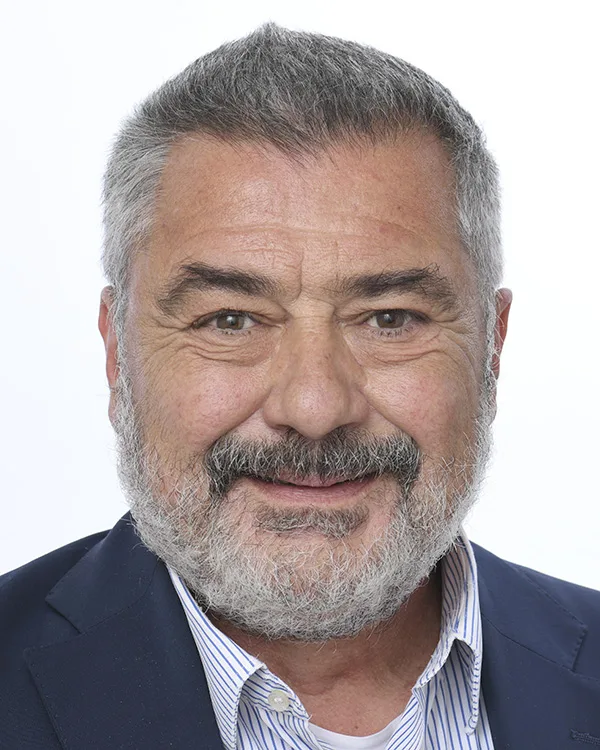

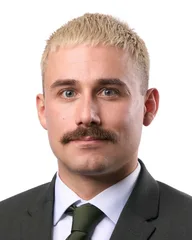
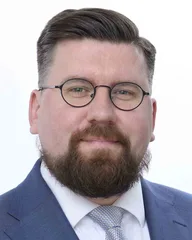
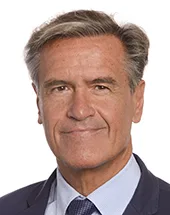
| Rank | Name | Country | Group | Speeches | |
|---|---|---|---|---|---|
| 1 |
|
Lukas Sieper | Germany DEU | Non-attached Members (NI) | 390 |
| 2 |
|
Juan Fernando López Aguilar | Spain ESP | Progressive Alliance of Socialists and Democrats (S&D) | 354 |
| 3 |
|
Sebastian Tynkkynen | Finland FIN | European Conservatives and Reformists (ECR) | 331 |
| 4 |
|
João Oliveira | Portugal PRT | The Left in the European Parliament (GUE/NGL) | 232 |
| 5 |
|
Vytenis Povilas Andriukaitis | Lithuania LTU | Progressive Alliance of Socialists and Democrats (S&D) | 227 |
All Contributions (20)
World Cancer Day (debate)
Madam President, last legislature, I was blessed with being part of BECA – so the cancer strategy, the European cancer strategy – and I studied a lot and I learnt a lot. There are a lot of things we can do to obtain results, and when I say we, I mean the European Parliament and the European institutions. There are some very technical ones: for example, do something about radon, the radioactive natural gas that increases lung cancer by 50 %, and this concerns Italy, the Czech Republic, Finland and other Member States; or overcome the bureaucracy that stops the creation of the European database for rare diseases and paediatric cancer. But, the most important instrument, which will give us results in the fastest time, is to increase cancer screening all across Europe. If you look at a map of Europe, there are some regions in which, for some types of cancers, only 5 % of the people at risk are screened, and the death result is ten times higher than the region where they screen 90 %. So, let's all work together – it doesn't matter what nationality, what political party, whatever – to increase the screening of the most important cancers in Europe to 90 %. We can save hundreds of thousands of lives – even millions of lives – by 2035.
Recommendation on smoke- and aerosol-free environments (debate)
Mr President, ladies and gentlemen, point one: As Becker's shadow rapporteur, there are two key concepts: Risk reduction and scientific support. So, if we want to ban all these things here, however, they must give me scientific support because otherwise it does not exist. Let us remember very well that banning some of these behaviours - and let us remember that man is still linked to caffeine and alcohol, to nicotine, to all these things here - does not work. So we have to go back to risk reduction again. And equating alternatives to traditional smoking with traditional smoking is not good, because there has been a big scientific study of the substances that come out of combustion, which are carcinogenic, which are not in the other methods. So, guys, let's think about it, because it's important to take home even one life: But it is risk reduction.
The crisis facing the EU’s automotive industry, potential plant closures and the need to enhance competitiveness and maintain jobs in Europe (debate)
Mr President, ladies and gentlemen, my colleagues have already said practically everything on the subject. But I wanted to remind everyone that this is just a little piece, a piece of the mosaic, because there are many other things in the Green Deal. Let's start immediately from what is the European electricity distribution system, which is already as fruity as it is now, and we will add a billion broken micro producers and we will add a couple of billion users. Who pays for the new electricity distribution system? Then, petrol stations: EUR 100 000 for station remediation. Who pays for the remediation of gas stations? And third: 100% renewable. We can go electric in transportation, but if we use coal-fired power plants to produce electricity, are we really idiots? So, is Europe ready to put on the table everything it needs to put 100 or even 200 nuclear power plants in the next five years? And who pays?
The devastating floods in Central and Eastern Europe, the loss of lives and the EU’s preparedness to act on such disasters exacerbated by climate change (debate)
Madam President, ladies and gentlemen, first of all, my closeness and condolences to the family of firefighter Ciccorelli, who died heroically trying to save lives in Foggia, of all places, so we are really close to his family. Then, I have to admit – and here I am not talking from a political point of view, but with my green and environmental friends – that a very important climate change is actually taking place and we will have more and more of these climatic phenomena of unprecedented violence, so we have to equip ourselves. On this – and again, I am not speaking from a political point of view, but I am speaking from the point of view of nationalities – I have noticed that in the Italian system there are a whole series of bureaucratic obstacles. I must say that our Minister Raffaele Fitto, now appointed Vice-President of the Commission, has worked wonders to simplify the bureaucratic part, but there are still steps to be taken. Because, in my opinion, a fundamental issue is to take European funds home and apply them immediately, because we will have more and more problems with these exceptional climate events. One last thing: since I spoke well of my green and environmentalist friends before, now I will give a "badilata", in the sense that in many Italian regions there is an opposition of environmentalists to, for example, dredging rivers, securing and raising the banks and doing a whole series of very important works to protect the population.
Plants obtained by certain new genomic techniques and their food and feed (debate)
Mr President, ladies and gentlemen, tomorrow is an important day for European agriculture and an important step towards sustainable agriculture. I know that there are many opponents of precision production methods in the European Parliament and that they are deliberately confused with GMOs. But GMOs are fundamentally different from new genomic techniques, also because, guys, there were already GMOs in Europe and we don't know. They are more efficient, more precise methods and are crucial for improving drought tolerances. They are less susceptible to mold and other parasites and can make better use of nutrients. This is crucial in a climate where we have more droughts, more problems and a big push towards reducing pesticides and pesticides. So, from this point of view, we must go in this direction, because farmers will be pushed towards better production and, above all, a better yield of our territories. Therefore, I invite you all to vote in favour of the NGTs.
Situation of prisoners in Hungarian jails, including the case of Ilaria Salis (debate)
Madam President, ladies and gentlemen, I would like to say, first of all, that this debate on Ilaria Salis should not even have taken place. We think that this is an instrumental request of the left, whose real purpose is not a humanitarian concern for the prisoner, but an opportunity to attack Hungary and Italy in an atmosphere of electoral campaign, as demonstrated by the attacks by the President of the Democratic Party Elly Schlein against Giorgia Meloni. I remember that Tajani and Giorgia Meloni spoke with Orbán to resolve the situation and the negotiations are ongoing. We do not know whether Salis is really responsible or not for the facts of which she is accused, but what we are sure of is that for Ilaria Salis, and in general for all the compatriots who are detained abroad, the Italian government is taking all the necessary steps, political and diplomatic, so that all of them are guaranteed treatment respectful of the dignity of the human being, as well as a fair and rapid trial. Let us remember that there are thousands of detainees in European countries who are not their country. It is therefore not for Parliament to decide whether a person is guilty or not, but the European Parliament must, of course, ensure that the standards of humanity in European prisons – in Hungary as in Belgium, as in the Netherlands, as in France – are respected and that these prisoners are accorded dignified treatment and a fair trial. This applies both to Ilaria Salis and to any other detainee, especially if awaiting trial.
Packaging and packaging waste (debate)
Madam President, ladies and gentlemen, then the ECR Group obviously agrees with the objective of reducing the amount of material used and, above all, from my point of view, of reducing the volume going to landfills and incinerators. This is important for the whole of Europe, both for the environment but also from an economic point of view. On this regulation, as we discussed in the ENVI Committee, there are three points that I do not particularly like: The first is a regulation and not a directive, so it leaves no room for nations to decide whether they want to follow one path or another. And here I refer of course – but you all know – to the fact that Italy and Belgium are strong on recycling and separate collection, other countries are strong on incinerators and so on. In addition, impact assessments have been carried out but in my opinion they are a bit scarce, in the sense that they have not looked well at the social part, nor the economic part and, in some cases, not even the environmental part. So I think it's important to do it again. The minimum recycled content - and this is something I say to the very powerful Commissioner - is a problem because there are already estimates that there will be a 120-180% increase in the cost of recycled material in Europe, according to various estimates by the European Commission. Financial Times and others. To conclude, the problem here is that, between the cost increases on transport - and today we voted on the issue of CO2 emissions from heavy-duty vehicles - and the increase in costs related to the packaging, we are downloading to the European user and the European citizen a 10% increase in supermarkets. So, in my opinion, we have really gone mad, because the European citizen does not understand this.
Strengthening the CO2 emission performance targets for new heavy-duty vehicles (debate)
Mr President, we are all in agreement with our good friend Bas Eickhout – but he's not listening – regarding the need to reduce CO2 emissions on the heavy vehicles. But our approach is a pragmatic one, meaning that before we have very ambitious goals and then we do not reach them, we prefer to have very pragmatic goals that we make sure that all the Member States will reach. There are three points in which the ECR Group will be fighting on. Number one is the carbon correction factor, which we think is necessary to handle the wide variety of heavy vehicles. Number two is the urban buses. We ran a study in Italy and in most of the largest cities, we reach the goal that is proposed in the text, but most of the smaller cities will not make it because of a whole bunch of different problems, especially on the recharging stations and so on. And last, neutral fuels. We know Germany – and we hear Peter Liese – they are very strong on synthetic fuels. Italy is very strong on biomasses. We do believe that we need to accept all the different type of less impacting fuels.
Urban wastewater treatment (debate)
Mr President, ladies and gentlemen, thank you to Mr Nils Torvalds, who is a great rapporteur on these matters. Most importantly, I was impressed by his personal experience of cancer. I, as shadow rapporteur of the BECA special committee, am convinced that air and water quality in Europe is key to reducing the number of cancer cases, so I am really on your side. From this point of view, there are two issues on water treatment. One is a physical problem, and I'm talking about Italy, I'm talking about my lake, Lake Como, where there is no physical space to do the quaternary treatment, and this is a problem that we will have to manage. The other problem that I see, always from a technical point of view, is the fact that we do not yet have the technologies to effectively manage the treatment of microplastics, nanoplastics and PFAS. So, from this point of view, I see a whole series of problems, but I am sure that Europe will be able to bring home the results, perhaps even giving good funds to those who want to do this initiative. The last thing is theextended producer responsibility, This is problematic because you have to understand from a legal point of view how you can make a pharmaceutical company pay for a person to throw the antibiotic in the toilet. So, even on this we should clarify the rules for a moment.
Classification, labelling and packaging of substances and mixtures (debate)
Mr President, ladies and gentlemen, we all agree on the need to revise the CLP regulation, but there are a few points, and I turn to the Commissioner. One: Obligation to put all warning in the language of the country of destination. Why, instead of providing for Commission delegated acts to use the QR code, do we not do so immediately in the regulation using the QR code, so that we can pass all the information in all the languages we want, of any density and volume? Then, there is a problem with compound substances, in the sense that in some cases there are no scientific methods of determining the danger to human health. Finally, the big characters. The big characters: beautiful, so they are more readable, but let us remember that they go contrary to the law on packagingWhy go to the font size 10 to font size 12 means 20 % more use of paper and plastic, contrary to the Directive on packaging. Therefore, those who wrote some of these rules have never worked one day in the factory and have never spoken to end users, who, by the way, I doubt will read all these warning.
Reviewing the protection status of wolves and other large carnivores in the EU (topical debate)
Madam President, ladies and gentlemen, let us declassify the wolf. There are tens of thousands of attacks every year, not only on sheep, donkeys, goats and cows, but also on pets and dogs. By the way, Italy is particular, because if my dog bites a person it is suppressed by the authorities but if I shoot a wolf attacking a child I risk up to four years in prison because it is criminal. The aid to breeders, the reimbursements, the fences and the guard dogs are there but they are not enough and, above all, they denote a crazy ignorance, because the concept of bringing the animals to the high mountains is for semi-wild breeding so, if I have to close them, I keep them in a shed in the plains and I do not care, because it costs me less, with very great damage from the point of view of fire risk and hydrogeological risk. I was recently in Valtellina an hour after a predation by wolves and there were four sheep, three goats and a donkey who were dying in front of my eyes because the wolves had eaten their entrails and were eating them slowly, so I had to intervene - I still have the eyes of these animals here in my mind - and I killed them, I helped the shepherd to kill them because in any case they would die among the most atrocious torments. Animalists want to defend wolves at all costs: Maybe from their comfortable living room in the center of Milan, with the cat, they have this idea that you have to eliminate the man and defend the wolves. But the recipe is not that: So, if I have to choose between the sheep and the wolf, I choose the sheep! I'm with the sheep.
Nature restoration (debate)
Mr President, ladies and gentlemen, the Nature Restoration Regulation has been rejected in three committees, AGRI, PECH and ENVI, we should ask ourselves why. The file provides for a constraint on new areas outside the Natura 2000 network – come to Italy to see what happens in Natura 2000 areas, abandoned because any kind of human activity is prohibited, they have become centres for drug dealing and prostitution. Then there is a clear violation of the principle of private property, so subsidiarity and proportionality are thrown into the toilet. Finally, a topic dear to Commissioner Sinkevičius: 25 000 kilometres of free-flowing rivers. How do we deal with the production of renewable energy and therefore hydropower? This is a clear contrast to the Commission's action. We will therefore vote for the rejection of the proposal, precisely because we are in favour of the environment but not at the expense of agricultural production; we are in favour of nature but not at the expense of the production of renewables; We are in favour of restoring nature, but we will not be complicit in erasing the rights of European citizens. Finally, a personal comment: If I had done the environmental impact studies that the Commission did on social, economic and environmental issues in high school, they would have rejected me. So perhaps the Commission should go to school and do these studies again.
Energy performance of buildings (recast) (debate)
Madam President, Commissioner, ladies and gentlemen, Italy has given 110% tax cover to make the energy leap and in two years they have made fewer than 500 000 apartments. Now they are asking to make 9 million apartments in Italy in ten years. It will not happen, also because one of the things that happened is that the cost of insulated material and scaffolding has risen by 150% or 200%. And then, a much more serious argument for the Commission: Radon, which is a radioactive natural gas that comes out of the ground and is found in Italy, the Czech Republic, Finland and Spain. Insulating buildings means enclosing radon even more efficiently inside buildings, which means an increase in lung cancer cases for the population living in those buildings. So I ask the Commission to consider radon as a very important thing and to prepare a whole range of activities for measurement and remedial action.
CO2 emission standards for cars and vans (debate)
Madam President, Vice—President Timmermans, as an entrepreneur, I really do believe that we should have left it to the market, to companies, to decide what was the best technological solution to solve the problem. We are all in favour of reducing emissions, of course, but we, as the ECR Group, have some problems. Number one: the workplace, how many jobs can be cancelled by this? What is Europe doing to do something about these workers? Number two: even more important, the dependence on foreign countries, and specifically China, regarding microchips, lithium, cobalt and so on. If we talk about environmental issues – and again I go back to the measurement on the tailpipe – I’ve seen mining operations in Africa and in a lot of countries and I can assure you that the impact on the environment is horrible. So we need to look at that. Now I welcome the input by Commissioner Breton on an impact assessment in 2026, and we are looking at that. I also would like to say to the Vice—President that I hope this is not going to be imposed also on heavy vehicles and agricultural vehicles because that’s a different problem. I conclude again by saying why not give bonuses to scrap all the Euro 0, Euro 1, Euro 2, Euro 3 and Euro 4 vehicles so that we can reduce the output by 40%?
Protection of livestock farming and large carnivores in Europe (debate)
Mr President, Commissioner, ladies and gentlemen, I have just returned from a series of visits to the Alps following hundreds of reports of predation by large carnivores of sheep, goats, donkeys and cows, as you know, but lately also of companion dogs, in the vicinity of human settlements. I have observed gruesome episodes, the worst of which on a predation of sheep, about ten, some of which were killed by wolves with their consolidated technique of rendering the animal incapable and eating it alive starting from the stomach. I still have in my head the eyes of these poor animals amid suffering and terror, how they died and how long it took them. So I ask the Commission, but also the national delegations, of which you are the de facto representatives, who will be present at the meeting of the Bern Convention next week in Strasbourg, to support the request of the Swiss government to declassify the wolf from highly protected to only protected, so as to give a more effective management tool in tune with regional needs, a request supported by scientific data that classifies the wolf no longer as critically endangered but vulnerable or of lesser concern depending on the region. To this day, if I have to choose between the wolf and the sheep, I am with the sheep.
Key objectives for the CITES CoP19 meeting in Panama (debate)
Madam President, I have a very practical question for the Commission, and regarding this topic, I will present a separate vote on a paragraph 39, which bans the import of a hunting trophy. As a person that has worked a lot in Africa for many years, I know the situation very well, and I work on the side of people defending biodiversity. But, for example, in Namibia, trophy hunting, which is legal trophy hunting, is almost 5% of the gross national product and is very important from a biodiversity protection and an economic point of view, because all the meat goes to tribes, part of the money goes to the tribes for schooling, in exchange of not poaching. Because we have to remember that a lot of animal killings in Africa are done by the tribes to protect their agricultural land, for reason, because they need food, also for money. And so this system works; brings a positive economic effect, brings protection of biodiversity. So I would like to believe this is possible. And by the way, I’m in contact with the ambassadors of Namibia, South Africa, Botswana and Mozambique, and I would like to bring them here to explain exactly the numbers in their respective countries.
Binding annual greenhouse gas emission reductions by Member States (Effort Sharing Regulation) - Land use, land use change and forestry (LULUCF) - CO2 emission standards for cars and vans (joint debate – Fit for 55 (part 2))
Mr President, ladies and gentlemen, tomorrow we will be voting on very important things for the future of Europe. I can only comment on a few issues that I have dealt with personally. The Social Fund is a wonderful idea but not enough. As far as emissions from cars and vans are concerned, there are problems, because we are all in favour of the environment and reducing emissions, but we must also consider the technological, industrial and economic issue and, above all, jobs. I have tabled two specific amendments on this subject. One concerns the issue of mass balance. You will ask why. Because, in my opinion, with the Commission's approach to the question of mass balance there will be a very significant increase in the costs of vans, which will impact on the economy of companies. The other amendment is on the derogation for small producers. Everyone has accused me of being the usual Italian who defends Ferrari, of course, but I want to remind you, first, that Ferrari has developed the energy recovery system that they are now using many hybrid cars and, second, that it is spending a lot of money, among other things 500 million euros by the Italian government, for the creation of light batteries. solid state fuel cell, which is a sine qua non condition for having electric planes. So from this point of view we do something for the environment, but let's be pragmatic.
The need for an ambitious EU Strategy for sustainable textiles (debate)
Madam President, I fully agree with the position of the Commissioner. There are unluckily two major problems regarding the textile sector. They are very technical. Number one is the colouring of the textile, which is on one side strongly regulated by the Workers’ Safety Regulation, the Environmental Emissions Regulation and so on, but on the other side is still a problem. We need funds and we need research centres so that we can change 2 000 years of history. The other problem is the release of micro- and nanoplastics. And for this, we do not have a technical solution to filter and take out this nanoplastic from the water that goes into the sea and then gets eaten by the fish and then we eat them. Now, of course, I would like to see on these funds to find a solution about this. Reduction of artificial textiles is a solution but it is not the only solution. I would like to see a full economic, social and technical assessment of a more stringent regulation on the textile sector, because otherwise we are going to kill a very important economic thing. On the positive side, we do have all the social media platforms that are trading in used clothing which are reducing the number of clothes going to the landfills. Last but not least, I really do not understand the politically correct approach in opposition to natural fibres and to natural material like leather and fur. They are natural, they last longer than the artificial stuff, they do not contain microplastic. So are we defending the environment or the animals?
Strengthening Europe in the fight against cancer(debate)
Madam President, this is a great and powerful document, I believe, and I’m proud to be part of it. I’m already using it, even if it’s not finalised, to put pressure on the Italian regional authorities to increase the screening programme and to increase the funding on new screening and therapeutic techniques. Also, we already started locally, based on these programmes, to increase the quality of life of cancer patients through ERAS (enhanced recovery after surgery), which takes into account the entire system before and after the hospital stay. On the other side, I’m not happy with some decisions regarding prevention. I presented some amendments to correct this. First of all, the increase in taxation and limitation for alcohol and cigarettes has always been a counter—productive approach, potentially causing illegal and criminal activity but also really bad behaviour, especially in the poor sector of the population. Second, I am a strong believer that there is a difference between moderate and excessive alcohol consumption. This was a big discussion, but we all know that the Mediterranean diet has shown an increase in lifespan through the general population. Third, I strongly believe that alternatives to traditional smoke is an important tool to reduce smoking in Europe. It’s never been shown a positive outcome in reducing bad habits through taxation, as we have seen, and through banning marketing, as we have seen for cigarettes. To conclude, the report, again, is a very powerful tool, and we should all use it in a very aggressive and powerful way for the good of all European citizens.