

| Rank | Name | Country | Group | Speeches | |
|---|---|---|---|---|---|
| 1 |
|
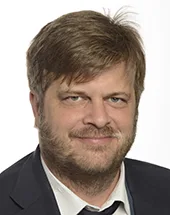
Lukas Sieper | Germany DEU | Non-attached Members (NI) | 390 |
| 2 |
|
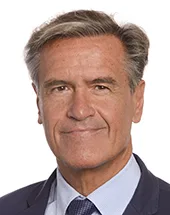
Juan Fernando López Aguilar | Spain ESP | Progressive Alliance of Socialists and Democrats (S&D) | 354 |
| 3 |
|
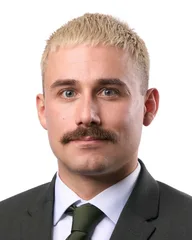
Sebastian Tynkkynen | Finland FIN | European Conservatives and Reformists (ECR) | 331 |
| 4 |
|
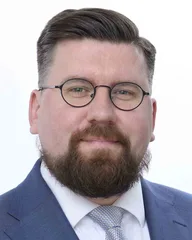
João Oliveira | Portugal PRT | The Left in the European Parliament (GUE/NGL) | 232 |
| 5 |
|
Vytenis Povilas Andriukaitis | Lithuania LTU | Progressive Alliance of Socialists and Democrats (S&D) | 227 |
All Contributions (31)
Corporate Sustainability Reporting Directive (debate)
Madam President, ladies and gentlemen, the new directive on corporate reporting and sustainability is certainly an important step forward to improve the level of transparency on the behaviour of companies and also a lever to guide and improve their commitment. This is indispensable for the achievement of the objectives we have set ourselves, for countering the effects of the climate crisis, for respect for human rights, life, dignity, community, the rule of law, good governance practices. Transparency can only be the first step towards a new way of doing business, towards socially and environmentally responsible behaviors, behaviors that cannot be entrusted only to the goodwill of some enlightened experiences, which obviously already exist and whose value must be emphasized, but which must respond to precise, uniform rules, rules valid for all. We are facing a project, therefore very ambitious, which refers to an idea of globalization that is more sustainable, more humane and more just and is a great opportunity that we cannot waste.
Whitewashing of the anti-European extreme right in the EU (topical debate)
Mr President, ladies and gentlemen, referring to the Resistance and Nazi-Fascism, David Sassoli said: "Europe has found the strength to unite to become the place of peace and solidarity among peoples" and even today this is the strength of Europe. There are therefore chills thinking that it is precisely in Italy - and I say this as an Italian - that important institutional figures such as Ignazio Benito La Russa or Lorenzo Fontana take on roles, terrifying on the ground of ties with Putin, values and principles concerning civil and human rights. In the face of this, we certainly cannot resign ourselves. We must resist, as so many colleagues have said, and this certainly means not being accomplices, dear friends of the PPE, but also asking ourselves why a certain right that often just wants to blow up Europe, leftovers. I believe that part of the answers lies in the fact that there is a social anger ridden by nationalism, which also arises from the errors that these institutions of ours have made at the level of economic and social policy, errors to be corrected with determination and courage. A fairer Europe will rightly defend itself much better.
FRONTEX's responsibility for fundamental rights violations at EU's external borders in light of the OLAF report (debate)
Mr President, ladies and gentlemen, Frontex is an absolutely negative and bankrupt page, it is even a very bad example of public money management, but, even before that, it is a tool of blatant violation of European values. In fact, there is only shame in the face of the systematic repressive action put in place by an agency that should help to manage migratory phenomena well and that instead has become a laboratory of institutionalized discrimination, as can also be seen from the revelations on the OLAF report concerning also the declassification aimed at hiding cases of obvious violation of human rights. I am sorry to see that the European Commission is on the whole issue of migration policies, certainly not only on Frontex, which is very awkward and contradictory. The Pact on Migration and Asylum is in fact a resounding negative example and everything must be changed, putting the management of migration flows, revision of the rules, anti-discrimination actions, cooperation between states, European integration and inclusion policies at the centre. In this framework we need the opposite of what Frontex was. In fact, we need an agency that helps and supports rescue actions at sea and on land, crossing borders, serene management of migratory flows. If we look at today's reality, the examples before which we can no longer afford to turn the other way hypocritically are many, from what is happening in the Mediterranean, with the scandal of Libyan camps, to what is happening in the Balkans or, just to give another example, between Belarus and Poland.
International Day for the Eradication of Poverty (debate)
Madam President, ladies and gentlemen, today is the International Day against Poverty and we certainly cannot say that Europe is getting there with all its credentials. There are more than a hundred million poor Europeans. This figure, aggravated by the pandemic and the energy crisis, says a lot about the need for a breakthrough. We have recently made extraordinary strides, for example on the minimum wage, but is this a breakthrough or is it an exception that confirms the rule? I confess that I have not yet understood it well. We need immediate measures against expensive energy, much bolder policies for the right to housing, uniform policies to make the guaranteed minimum income compulsory and stable, and a major European plan to support homeless people, who are often not even guaranteed access to the health system, and of course the right to training and study, so that the right to access to work is safeguarded without discrimination. In other words, the fight against poverty is a political fact and not a favor to be done to someone.
Countering the anti-European and anti-Ukrainian propaganda of Putin’s European cronies (topical debate)
Mr President, ladies and gentlemen, Putin's war is not only fought on the ground. In fact, there is also a war waged on the ground of communication and propaganda, which evidently passes through massive disinformation and feeds on more or less obvious political complicity, complicity that we must have the courage to point out and unmask. Last week, Meta announced that it had discovered and blocked a network of 1,600 accounts feeding fake news through 60 sites, a copy of some of the most prestigious Western newspapers. Arguably the largest and most complex network connected to Russia ever identified since the start of the invasion of Ukraine. This is unfortunately only a fragment of what is actually in the field today. This Parliament has long been aware of the many attempts by foreign powers to interfere and destabilise our democracy. Our Special Committee on Foreign Interference in the Democratic Processes of the Union has made the problem clear and, in its report of 9 March, called for strong actions and instruments to be put in place, in particular on the transparency and control of funds from abroad, on the role of more or less hidden lobbies, on the use of platforms as a privileged vehicle for disinformation and interference. It was particularly significant that in this House, President von der Leyen, in her last State of the Union address, stressed all this, stressed the importance of the actions that can be taken on the threats and dangers we live in. An important element of political awareness which, however, must now be followed by clear, clear measures, because there is really no more time to lose on the ground of the fight against interference. To combat the war on disinformation, we obviously do not have to put in place a Ministry of Truth or hope to suppress dissent, which is part of the normal democratic dialectic – thank goodness we are not like the others – but we need tools that guarantee free, independent and professional information, which is an essential element for our democracy. We must also tell ourselves that those who know must speak and that the lists emerged from US sources of those European politicians who took Russian money or fed a complicity made of exchanges and favors with Putin's entourage are made public. I also quote - as Mr Séjourné has already done - the incredible phrases of Berlusconi, the Salvini case, the cases of the most radical right in France and Germany. All things with respect to which truths and clear answers are needed.
The death of Mahsa Amini and the repression of women's rights protesters in Iran (debate)
Mr President, ladies and gentlemen, we stand by the women in Iran who are fighting every day in the name of freedom and dignity. Their struggle is also ours. The ruthless repression carried out in recent weeks hits first and foremost them, the women. It affects girls, it affects those who claim the right to decide for themselves, as indeed in recent years had often affected personalities from the world of culture, free voices, citizens not aligned with the authoritarian voice of the regime. These days we are witnessing violent persecution, harassment, torture, imprisonment, in an unprecedented repression that after the killing of Mahsa Amini has produced dozens and dozens of victims. A climate of terror to which our institutions must respond by tightening diplomatic relations and exerting maximum pressure without being intimidated. The girls and boys of Iran, in the streets of their country and around the world, are repeating three words that I also want to repeat here: Woman, life, freedom.
Situation of Roma people living in settlements in the EU (debate)
Madam President, ladies and gentlemen, there are thousands of people living in Roma and Sinti settlements in Europe in dignified conditions. Women, men, boys and children who often live in insecure housing, without drinking water, electricity, sanitation. People placed on the margins of quality educational paths, which would be the main opportunity for emancipation, and excluded from employment opportunities capable of restoring due dignity. All this leads to an absence of effective access to health care, with a dramatic infant mortality rate. A condition, that is, of explicit social exclusion, marginalization and extreme poverty that we must define for what it is: This is absolutely unacceptable and incompatible with the values of the European Union. And we must counter all this not with policies of ghettoization, discrimination and segregation, but with different interventions that help the promotion of the person, redemption, full social inclusion. Europe therefore needs much clearer policies to combat poverty and social exclusion, again. If we do not intervene quickly, however, in contexts like these, forms of chronicization in poverty will certainly grow and also forms of illegality that we must not ignore and that present themselves as a terrible adversary with respect to the goal of full social inclusion.
The Post-Cotonou Agreement (debate)
Mr President, ladies and gentlemen, many times this Parliament has reiterated the need to consider relations with the African continent as strategic, relations in respect of which a change of course is also needed, moving from development aid to a real partnership, unrelated to any form of neo-colonial exploitation. The new partnership agreement signed with the Organisation of African, Caribbean and Pacific States puts trade and political relations with 79 countries in a renewed framework, strengthening important elements such as the fight against inequalities, respect for human rights, greater involvement of parliaments and civil society. An advanced agreement, which for more than a year has been hostage to an ignoble rearguard battle by the Hungarian government, annoyed by the prediction of illegal migration channels, an absolutely instrumental argument. Once again a blackmail based on the obsession with migration, on fears, on an idea of a closed Europe, of a fortress Europe, an unacceptable blackmail and to be sent back to the sender, in particular in the context of the health and food crisis.
The relations of the Russian government and diplomatic network with parties of extremist, populist, anti-European and certain other European political parties in the context of the war (debate)
Madam President, ladies and gentlemen, only five days had passed since Vladimir Putin's invasion of Ukraine, five days, and Matteo Salvini was already at the Russian embassy in Rome discussing with Ambassador Sergey Razov his possible trip to Moscow. Travel, however, as stated by the same embassy, paid by the Russians to allow circumvention of sanctions. Matteo Salvini then tried to build a channel of dialogue with the regime of Vladimir Putin, unaware of the Italian government led by Mario Draghi. This is what emerged a few weeks ago and follows the events still to be clarified, even in court, which saw, a few years ago, the League and other political parties, in the case of the League through Mr. Savoini, repeatedly maintain relations with Vladimir Putin's entourage. Talking about it here and denouncing the gravity of all this is important because these are very clear episodes of interference, interference in our democracies. In fact, just in the weeks of the aggression against Ukraine, Russia is building a channel of communication, a parallel diplomacy, which infiltrates our institutions through the stupid and serious complicity of sectors of the right. A work of infiltration that, let us make it clear, does not serve in the least to build the peace that many desire and invoke, and that instead consolidates a murky relationship between some sectors of our politics and authoritarian regimes. The European Union must condemn all this and Parliament must do so, because interference, interference and disinformation are enemies of democracy and no one can afford ambiguity on these grounds. Clear action is needed, for example on money flows into politics, as we repeat from the Special Committee on Foreign Interference. Much attention is needed to articulate those among us who, through lobbying operations, cultivate opaque interests, interests that have nothing to do with the indispensable value of dialogue between peoples, but that instead help dictators.
EU preparedness against cyber-attacks following Russia invasion on Ukraine (debate)
Mr President, ladies and gentlemen, Putin's terrifying war carries with it a load of violence and death that comes before our eyes every day. However, we are facing – and it is good to be fully aware of it – a multidimensional war that is also played out on less visible fields, thus also taking the form of a cyber, hybrid, cyber war. In this area, we have actually been witnessing foreign attempts to influence the democratic processes of the European Union for several years. And we need to open our eyes more. A huge investment is needed to rapidly increase strategic skills and competences in this field, with a particular focus on critical infrastructure. This must be an integral part of a common security and defence project and a counter-offensive - as Mr Schieder rightly said - concerning active support for free voices in Russia. We must also support on this ground those who oppose Putin's terrifying war in Russia.
The situation of marginalised Roma communities in the EU (debate)
Mr President, ladies and gentlemen, the situation of the Roma community is very complex and so far we have not been able to escape from a substantially discriminatory vision, from a push towards their marginalisation. This is how ghettos are born, which are the opposite of what we need. Marginalisation processes should neither be favoured nor supported: Instead, choices must be made in the name of the fight against discrimination, of intransigence on the culture of legality. Let's start with children and young people, I say. From their academic success passes the great change we need. It is a complex issue, let us compare ourselves, let us compare ourselves with the Commission on how to make the measures that are put in place more effective. One thing for the members of the League, though. Don't tell us about the effects of the war: You were Putin's friends and no one here takes lessons from you about the consequences of the war!
Cooperation and similarities between the Putin regime and extreme right and separatist movements in Europe (topical debate)
Madam President, ladies and gentlemen, I have in mind at this moment two politicians from my country, Italy. The first is Matteo Salvini, who for years explains that Putin is an extraordinary reference: He flaunts T-shirts with his face, participates in secret meetings with his entourage in the shadows and makes dark pacts. The second is David Sassoli, who, declared by Putin an unwelcome guest in Russia, claims his consistency and quotes Tolstoy's words: There is no greatness where there is no truth. Here today, even more than yesterday, this difference makes it clear that in recent years we have not all been the same. As we wrote in the first report of our special committee on interference and disinformation, as Mr Glucksmann pointed out, the most radical and sovereign right in Italy, France, Germany and Austria was the vehicle for Putin's project. Faced with this, in these weeks in which the war against the Ukrainian people brings destruction and pain, we demand from Salvini, from Le Pen, that you say "about Putin and with Putin we have everything wrong". We demand that you break every link and allow us to understand more the ambiguous attempt, also fueled by hypotheses of money flows, of which you have been an instrument. Here too passes the European competence we need, the European unity we need. Putin's war is bringing death and destruction, and Putin is a dangerous executioner who strikes innocents and represses internal dissent: All things with respect to which there must and must be clear behaviors. Our democratic values are at stake and Europe is at stake.
Foreign interference in all democratic processes in the EU (debate)
Mr President, ladies and gentlemen, our democracy is a unique and precious asset, which we must never take for granted and which we must always commit ourselves to defend. A year and a half ago this Parliament, deciding to set up a special committee to analyse and counter all external attempts to influence and influence our democratic processes, demonstrated, precisely for this reason, great wisdom and foresight. In fact, there have been many, too many, in recent years attempts to interfere by foreign actors, state and non-state, who had, whose basic objective is to weaken the European project and the values on which it is based and to do so using different means, from more or less direct forms of financing to parties considered friends up to disinformation campaigns or even cyberattacks. Important and disturbing elements have emerged in our work on the strategies for attacking our democracy, especially from Putin's Russia, and on the flaws in our rules on political funding. We have indicated the accomplices of the interference; In our report, we clearly indicate that there have been continuous attempts to infiltrate our democracy, moving from close and ambiguous relations between those directly linked to Putin and the sovereign right in Europe. I am thinking of the FPÖ in Austria, the Rassemblement National in France, the Lega, the one that refers to Salvini, in Italy. It was evident that these interferences also passed through the proliferation of hate messages that had migrants, women and the LGBT community as their main target. In this context, the empowerment of social platforms and their efforts to counter organised disinformation campaigns are still insufficient; Support, digital media literacy and free information are needed as strong responses to make people more aware and to safeguard democratic principles. From here today, we reiterate: We need an organic response from the European Union in defence of its democracy. It is precisely the tragic current situation that we are experiencing, the drama of Putin's mad war against the Ukrainian people in the heart of Europe, that makes the work of this committee dramatically topical and marks the urgency of powerful, choral, permanent responses against unscrupulous actors, who, of course, in the world - unfortunately not limited to Russia alone - are acting. It's a job that doesn't stop there: The European Parliament, the home of European citizens, must be a strong and reliable garrison for our democracy. We need transparency in the origins and management of party funding, actions to defend electoral moments, directly responsible social platforms. Europe must take this principle out of its own hands: Democracy must be safeguarded from any interference.
The death penalty in Iran
Madam President, ladies and gentlemen, under no circumstances and nowhere in the world can the death penalty ever be considered a form of justice! That is why the abolition of the death penalty worldwide must remain one of the main objectives of European human rights policy, and this must always apply. Iran remains one of the places with the highest executions, with a penal code prescribing the death penalty for several crimes, including non-violent ones. At least 250 people, perhaps even more, were executed in 2021, including many women and children. At the beginning of 2022, dozens of people have already been executed. These are dramatic figures. The European Parliament must therefore, without any ambiguity, come up with a very harsh condemnation. Iran must immediately suspend all executions and impose a moratorium on the death penalty. We also have a duty not to forget to stand by those who, in Iran, fight against the death penalty and are often prosecuted and imprisoned. From the European Parliament must come a signal of total closeness to those sectors of civil society, to those free voices that oppose a barbarism that will never see us in any way capable of underestimating its dramatic effects.
Human rights and democracy in the world – annual report 2021 (continuation of debate)
Mr President, ladies and gentlemen, the overall picture of respect for human rights is alarming. We are facing a backsliding on the rights of women, children and the LGBT community, an increase in human trafficking, cases of forced labour and arbitrary detention, and the restriction of the rights of full democratic participation. The European Union must make its voice heard even more and be much more coherent. Consistency would oblige us, for example, to make a change in our migration policies, considering the conditions in which thousands of people live on Europe's doorstep unacceptable. Let us think about what is happening in Libya, in Bosnia or in the culpable complicity of our institutions between Poland and Belarus. Consistency would also oblige us not to shake the bloody hand of Al-Sisi, when he comes in the coming days for the European Union-African Union summit, a figure to whom we should remind precisely the enormous responsibilities regarding human rights violations.
EU-Africa relations (debate)
Madam President, ladies and gentlemen, a new model of relations with the African continent is strategic and indispensable. We must move from the logic of development aid to a true partnership based on strategic cooperation. This means guaranteeing the African continent conditions of sustainable development, protection for natural resources and populations, guarantees for human rights, advances on social rights. All conditions on which the delay is dramatic, because too many have looked at the great African continent as a place to be plundered or conditioned exclusively by the fear of migratory flows. The pandemic, with which we are still forced to reckon, should have taught us to look at the global dimension of the problems, yet what we do precisely to increase vaccinations in Africa is still dramatically insufficient. Patent suspension, technology sharing and an additional solidarity fund to COVAX are now absolutely necessary, urgent and consistent measures.
Continuous crackdown on civil society and human rights defenders in Russia: the case of human rights organisation Memorial
Madam President, ladies and gentlemen, we have said this many times in this House and I think it is right to say it again: Vladimir Putin's biggest problem is the strength that a free, informed, active civil society can have. Its real enemy is democracy, in all its forms and expressions, inside or outside Russia's borders. Now among Putin's goals is added the International Memorial Society, not only a symbolic organization for Russian civil society, but also a fundamental concrete reference in the fight for human rights and in the active defense of human rights. Memorial's demands for dissolution are evidently insane and dictated by the need to silence a free and uncomfortable voice. The Foreign Agents Act itself, which Memorial is accused of violating, is an attack on freedom of association, expression and participation. And today here we reiterate that we stand alongside Memorial and all free and democratic Russian civil society. They deserve our solidarity, our support, because only thanks to a free civil society can a different perspective be opened up. And, in conclusion, from here let me say once again that not everyone can talk about the failures caused by Putin in the same way. Among us, in this House, there are also his friends, those who have played with Putin over the years precisely to attack our common home. I don't think we should forget that.
New orientations for the EU’s humanitarian action (debate)
Mr President, ladies and gentlemen, conflicts, environmental disasters, food insecurity and climate change are just some of the causes that today lead to at least 238 million people in the world in need of humanitarian assistance. 238 million. The European Union is the world's largest donor, but our action can and must be improved to be even more effective, as Mr Neuser rightly said. We need less fragmented aid, a coordination mechanism and a solid budget, and we need to look at the most vulnerable groups, starting with women and children, because we cannot afford to leave anyone behind. Even more so today, with the pandemic underway. As the European Union, we have an even greater, first and foremost moral, duty: helping developing countries to provide an adequate health response, both by working on the root causes of poverty and inequality, but also through more concrete and massive immediate support for adequate supplies of vaccines. The international community, on all these points, I believe does not have a clear conscience.
The European Education Area: a shared holistic approach (debate)
Mr President, ladies and gentlemen, we are well aware that there will be no recovery without a real commitment to education and training. Today, more than ever, we need a European education area and an approach to education that is holistic, inclusive, integrated, that puts students and the most vulnerable at the centre, that guarantees equal opportunities for all in accessing the labour market. Concrete measures are needed, such as the automatic recognition of qualifications, periods of study abroad or volunteering, the development of European micro-credentials allowing the recognition of vocational training, as well as the recognition of the skills of third-country nationals – an important issue – to facilitate their access to education and employment. All this must move from an unprecedented financial commitment by the Member States, to which we call for a large part of the recovery and resilience plan and public expenditure to be earmarked for education, because this is the real investment that looks to the future.
Disinformation and the role of social platforms (debate)
Madam President, ladies and gentlemen, attempts at foreign interference in our democratic processes take many forms and use many tools. Social platforms are tools that have become fundamental for the circulation of information and communications. But it is also where disinformation and hate speech find fertile ground, strong weapons used unscrupulously by those who want to attack the Union and our democratic values. Today these spaces of obvious and enormous public utility are in fact privately owned and as such respond to perfectly legitimate commercial strategies, but often conflicting with the general public interest. We are faced with business models that often favor, albeit indirectly, the proliferation of fake news and with these extreme messages that convey fear and hatred. The result is an information environment that tends to chaos, where real news risks losing credibility. In this context, it is not enough to appeal to the goodwill and self-regulatory mechanisms of platforms, but precise, binding measures are needed. The European Commission has presented a new code of conduct on disinformation that contains guidelines that we consider positive, very ambitious for the platforms that we hope will see the light of day, but there is also the question of how we can go beyond voluntarism. With its proposals on Digital Service ActParliament will be calling for significant progress, which I think should be supported by the Commission and the governments. Effective legislation is needed, but it needs to be embedded in a broad strategic approach, including broad media literacy pathways and genuine support for free and independent journalism.
Implementation report on the EU Trust Funds and the Facility for Refugees in Turkey (continuation of debate)
Madam President, ladies and gentlemen, with this report, Parliament expresses its assessment of the experience of the trust funds and the Facility for Refugees in Turkey. It must do so by clearly indicating the need to turn the page on what has been achieved so far. Although these instruments have supported positive experiences, which must be continued, we have seen a substantial shift of resources from development policies towards the objective of reducing migration flows. The absence of genuine European solidarity, a reception policy and even a sense of responsibility on the part of the Union and its Member States has led to explicit externalisation in border management. It seems like an inescapable destiny. Several actions of the Trust Fund for Africa have been earmarked for this purpose, often in conjunction with glaring cases of human rights violations. The shame of the detention camps in Libya weighs on all of us, on our consciences, and it is unacceptable that through these instruments the so-called "Libyan coastguard" is financed in various ways. We call for independent monitoring of these projects, of the effective respect for human rights and this also with regard to Turkey. Parliament – it should be remembered – has been left out of the decision-making process and has not been able to exercise full and genuine democratic control over these funds, which has led to the systematic violation of human rights.
The situation in Belarus after one year of protests and their violent repression (debate)
Mr President, ladies and gentlemen, for more than a year now we have been witnessing a dramatic deterioration in the human rights situation in Belarus. About 700 are now political prisoners, among them the main opponents and free voices of the country. On the other hand, almost 5 000 criminal proceedings have been opened against those citizens who peacefully demonstrated against the falsified outcome of the elections and for their fundamental freedoms. Faced with this unacceptable repression, the Union has not been watching, it has also put in place just sanctions. We must show firmness, continue, not back down from the necessary protection of human rights. The humanitarian situation on the border between Belarus and Poland is also extremely worrying, and it is also true that Belarus is making instrumental use of migrants. Here is Europe – it is good to reiterate this very clearly – in no way can it abandon those fleeing such dramatic situations.
The case of human rights defender Ahmed Mansoor in UAE
Madam President, ladies and gentlemen, Ahmed Mansoor is a free voice, who has always denounced human rights violations in the United Arab Emirates, and for his sacrosanct right to freedom of thought is serving a 10-year sentence, detained in unworthy conditions. Today we strongly call for its immediate release, as well as that of all human rights defenders, activists, political dissidents, imprisoned only for exercising fundamental rights. Today, the persecution of human rights defenders in the Emirates is systematic. The repression of freedom of association and freedom of expression has been intensified; Human rights defenders are victims of enforced disappearances, arbitrary and prolonged detentions, torture and unfair trials. The UAE also makes extensive use of illegal means of surveillance and interception of dissidents, both at home and abroad, and it is a disgrace that EU states allow the export of cyber-surveillance technologies to countries that have this consideration of human rights and fundamental rights. Here too, we must turn the page and ensure that the Union's actions are consistent.
Reversing the negative social consequences of the COVID-19 pandemic (debate)
Mr President, Commissioner, ladies and gentlemen, in 2020 the average income from work in the European Union fell by 7% compared to 2019 and it is clear from the first estimates that poverty increases. We are seeing growing inequalities within our societies. In this context, accelerated by the pandemic, restarting with finally adequate tools is indispensable. We often talk about a turning point and this is the time to implement it, the time for a social Europe to be achieved through strong, integrated measures that are fair, equitable and built on the principles of the European Social Pillar, the principles often referred to by Commissioner Schmit. Combating poverty and marginalisation, supporting employment, in particular for women and young people, including by promoting SURE even more, the issue of the minimum wage, skills development, housing policies for all, ensuring access to social and health services. This must be the heart of our project, a project incompatible with austerity policies.
EU contribution to transforming global food systems to achieve the Sustainable Development Goals (debate)
Mr President, Commissioner, ladies and gentlemen, the food issue is absolutely central to the achievement of all the Sustainable Development Goals. The way we produce, distribute and consume food inevitably determines what the world of tomorrow will be, its environmental and social sustainability. This is why it is dramatic to see - as Patrizia Toia said before - that the path to a healthier, more sustainable and fairer global food system is now in a resounding lag and that the objectives of eliminating hunger by 2030 are very far away, in a context in which COVID has evidently accentuated fragility and inequalities. There is also – it should be remembered – a strong connection between human rights, land and sustainable food systems, with people living on the land and trying to defend it from the wild exploitation of resources at its core. I believe that the Union must stand with them as clearly as possible, including by putting in place concrete instruments to defend their rights and their ability to live in dignity.