



| Rank | Name | Country | Group | Speeches | |
|---|---|---|---|---|---|
| 1 |
|
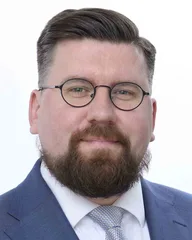
Lukas Sieper | Germany DEU | Non-attached Members (NI) | 390 |
| 2 |
|
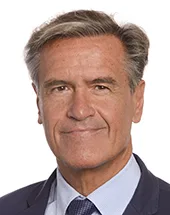
Juan Fernando López Aguilar | Spain ESP | Progressive Alliance of Socialists and Democrats (S&D) | 354 |
| 3 |
|
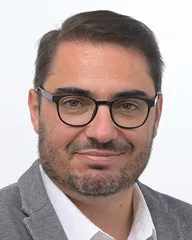
Sebastian Tynkkynen | Finland FIN | European Conservatives and Reformists (ECR) | 331 |
| 4 |
|
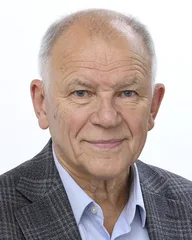
João Oliveira | Portugal PRT | The Left in the European Parliament (GUE/NGL) | 232 |
| 5 |
|
Vytenis Povilas Andriukaitis | Lithuania LTU | Progressive Alliance of Socialists and Democrats (S&D) | 227 |
All Contributions (32)
Housing crisis in the European Union with the aim of proposing solutions for decent, sustainable and affordable housing (debate)
The report reflects, of course, the majority of the consensus of the committee and of the different ideas. We are in a democracy. We have a dialogue. It reflects most of the work that we have done, in the sense that it contains many things that at the very beginning of the committee were not even on the table. Leila, you know that. The fact that now we have a report that addresses the issue of public housing, social housing and homelessness also encourages the Commission to take action on speculation to understand more where we couldn't get enough information. Intervention on the short-term rentals – of course, we cannot legislate now, but we have a commitment on the side of the European Commission to do so where one year ago, everybody told us that this would never have been possible. So I think, yes, we made a major step ahead.
Housing crisis in the European Union with the aim of proposing solutions for decent, sustainable and affordable housing (debate)
Madam President, today is a very important day. It marks the recognition of the housing problem as a major priority of this Union. It's been the result of long work based on four points. First, what we've done trying to mobilise as many financial resources as possible for Member States and local authorities from the mid-term review of cohesion funds to dedicated financing for housing provided by the European Investment Bank to support also public investments and private investments towards affordable housing. Second, it has made available best practices – successful models of social and affordable housing that can be scaled up across Europe. Third, where it has the competence to intervene directly, such as in the case of short-term rentals, the Commission will step up with legislative proposals. Fourth, in areas where direct intervention is not possible because the competence lies at national level, like taxation, we have worked to guide and encourage government action. This is the point: we need also national governments to do their part. Some of them are doing that; others seems to take too much time and to commit too little resources. To those countries, we say, 'Wake up!'
Presentation of the European Affordable Housing Plan (debate)
Madam President, sorry for my low voice but this doesn't take away my enthusiasm for what's been done today. Housing affordability has become one of the most urgent challenges facing Europe today. For millions of citizens, access to affordable housing is no longer a marginal issue because it directly affects their lives, the opportunities they can access, and also their trust in our ability to deliver solutions. That's why today it is so important – and I'm really happy to see that, finally, housing is at the core of the Commission's work, as we've been asking for many, many years. So the plan presented today actually really goes in the right direction, but not just for construction. It's a very complex, comprehensive plan because it goes to the root of the problem, which is a complex one. So it includes support for public investment – of course, also support for private investments to crowd them in towards a social good – a reform of the services of general interest framework to allow for better and more state aid, a strong focus on sustainability, a legislative response on short‑term rentals and, for the first time, a serious approach to address speculation. That's what we need – a response to really provide solutions for our citizens.
Increasing the efficiency of the EU guarantee under the InvestEU Regulation and simplifying reporting requirements (debate)
Madam President, Executive Vice‑President and colleagues, I think that this debate showed us how important, how essential InvestEU is, and above all, how important it is for Europe to equip itself with a real investment strategy. The interventions highlighted very clearly the importance of investing in sustainable infrastructure, research, innovation, digitalisation, SMEs, social investments and skills. These are not just priorities mentioned in passing. These are precisely the four windows that are in InvestEU. So, this confirms that there is a strong and shared understanding across the institutions about the role that these instruments must play in Europe's long‑term development. I would like to underline one element that is often mentioned too little: additionality. InvestEU exists to make possible what the market alone cannot deliver to crowd in private investments, to reduce risk and to support projects that would not materialise without a European guarantee. This is the foundational feature of the programme and it must remain at the core of its identity. This, colleagues, is the legacy that we are leaving for the next multiannual financial framework; a legacy that calls for continuity, but also ambition, acting across all the four windows, recognising their different nature and purpose, and ensuring that each of them is matched with the right financial architecture and the right mix of instruments. The next MFF must not only preserve InvestEU, it must place investment policy at the heart of Europe's economic strategy. Only in this way can we ensure that Europe remains competitive, resilient and socially cohesive in the decades ahead.
Increasing the efficiency of the EU guarantee under the InvestEU Regulation and simplifying reporting requirements (debate)
Mr President, Executive‑Vice President, dear colleagues, today, Europe faces a decisive challenge. We need to boost productivity, to support innovation, to complete the twin green and digital transition, and at the same time, ensure greater social cohesion. All of this requires a clear strategy to invest more and to invest better because without investment there is no growth, no competitiveness, and no economic or social security. Over the past years, InvestEU has been one of the pillars of Europe's investment capacity. The results speak for themselves: EUR 15.8 billion allocated to digitalisation, EUR 95.6 billion to support the industrial transition towards climate neutrality and technological leadership, and over 32 gigawatts of new renewable energy capacity installed. On the social front, the programme has contributed to the construction or renovation of 8 500 units of affordable social housing – one of the most urgent needs in our cities today. More broadly, it has supported the wider economic fabric with nearly 60 000 microfinance beneficiaries and over 53 000 SMEs – interventions that were essential for development, for employment, and for accompanying the transformations of the European productive system. Finally, on the strategic front, the programme has mobilised EUR 11.5 billion in critical sectors, critical infrastructure, cybersecurity, space and defence. This is why it was essential to strengthen InvestEU through this latest revision. I can say with pride that after the trilogues, the outcome is very positive for the Parliament, which strongly sought to consolidate the programme's budgetary dimension. We successfully achieved a 20 % increase in the budget compared to the initial proposal, ensuring continuity over the next two years before the new Union programmes come into force. We also preserved the right balance between resources allocated to investment and those dedicated to the advisory hub. My co‑rapporteur Salla already mentioned that, but this is really a crucial point. I want to to explain it because many actors, associations, local authorities, social enterprises and innovative SMEs often face complex procedures, and without adequate technical support, they would be excluded from the programme. So, this is an important thing that we did in this revision. Colleagues, what we have done with InvestEU is not merely to defend a programme. It is to reaffirm a deliberate economic policy choice. Europe can no longer rely solely on market forces or fragmented national budgets to secure its competitiveness, energy transition, innovation or social security. European investments are among the most effective instruments to tackle the structural causes of our delays: stagnating productivity, lack of scale in strategic sectors, slow adoption of new technologies, territorial and social divides that hold us back. Investing today means enabling Europe to regain productive capacity, achieving technological leadership and providing citizens with fair opportunities. This is the deeper purpose of InvestEU; to build European growth that is sustainable, inclusive and globally competitive. So, I really want to thank my co‑rapporteur and the negotiating team for this achievement.
Conclusions of the European Council meeting of 23 October 2025 (debate)
Madam President, the meeting of 23 October was the first time that the issue of housing was brought into the European Council, and I really want to thank President Costa for having brought this issue at the core of the debate. It's essential that heads of state and government recognise the house emergency that is spreading across Europe, and for sure the conclusions are a first step. But let's be honest: this is far too little compared to the scale and the depth of the crisis that millions of European citizens are facing. It's obvious that not all the governments are ready to tackle this challenge at the scale that is needed, and to acknowledge the constructive role that the European Union can and should play in addressing it. So I do hope that the European Commission will keep its ambition high in the plan that is going to be revealed in December – the plan on affordable housing – and I hope that the Commission will also help us in pushing the Council, together with President Costa, and all the governments that are still reluctant to do more for their citizens, also in terms of budget for the next MFF. The well-being of citizens should be at the centre of our common action, beyond any ideological stance. So, please join us in this battle for the European citizens.
Cohesion policy (joint debate)
Madam President, Mr Vice-President Fitto, ladies and gentlemen, I speak Italian, so we understand each other immediately. The theme of housing is now a huge theme and cohesion funds are often the few resources and tools that local administrators have on the territories, in the regions, in the cities, to give some relief and answers to citizens, and therefore they are very important. However, as one would say, the word is not enough, it is not enough to put the funds on paper: we need to understand how they are spent, with what strategies, with what timing, with what conditionality. I'll give you just two or three examples. First: we were very pleased with the mid-term review of the funds, doubling from EUR 7 billion to EUR 15 billion on thehousing, But many mayors and administrators tell us that it was late, that there are no conditions, that many had already been spent. I don't know if you have any data on this, but just to say that the ability to have long scheduling times for this type of investment is crucial. Second: cross-compliance. Be sure that these resources really go to projects that have a relevant social impact, because that's where we need them: social distress. Third: With regard to the new proposal for cohesion policies, the concern is the centralisation of decisions at national level. We cannot take away room for manoeuvre where it is most needed at local and territorial level. So please, let's act, because we have millions of citizens and administrators who need our support.
European Semester (joint debate)
Mr President, the European Semester coordinates economic and social policies across the Union, ensuring alignment from fiscal discipline to social policies. But this is not an abstract exercise. It has to be adapted and aligned with emerging priorities. So let's not forget two priorities that we have today that entail the security and safety of our citizens. The first type of security, of course, is what we are all discussing in these days. We are expanding fiscal flexibility to allow for more investment in security, but let's not forget there is one unresolved issue, which is the lack of a structured coordination mechanism for defence financing. Without this, Member States risk acting independently, leading to fragmentation and inefficiency. The other priority we shouldn't forget when we talk about safety is the safety that the European citizens need and feel in their daily lives. This entails housing, having a safe roof over their head. We agreed on this priority at the beginning of this mandate. Let's not forget about it and include it in our semester report and in our fiscal and social policies.
Competitiveness Compass (debate)
It's very simple: I don't have a lack of knowledge of what people go through, but maybe you have a lack of knowledge of how the Union functions and what competences the Union has and the powers and the resources. If we don't give the Union – our Union – the powers, the resources, the budget to support investments, our citizens will continue to suffer from lack of competitiveness. Single Member States alone will not be able. That's the reason why we are struggling.
Competitiveness Compass (debate)
Mr President, now, there are two issues that concern me in the debate on competitiveness. The first one is nostalgia, this idea that back then everything was working, while at the same time the entire world goes forward accelerating. The US, China, they are investing for the future and we are here thinking maybe how great we were and how we can protect our past. The second issue is the belief that this challenge is feasible at zero cost. Just with some simplification, we can regain competitiveness. I've heard a lot of colleagues – this is just an illusion. So, yes, simplification is important – I'm for it – but it will not be enough, come on. Let's look at what is making great the great competitiveness of our competitors. Three things: a large market for goods and services, common rules that govern the functioning of this market, and third, billions and billions of both public and private investments to sustain this competitiveness. Now, on these three things, we are stuck. We have been stuck for decades. We are prisoners of our own ideologies, nationalism, things like that, that we've also heard today in this Chamber. So now I think it's about time to move forward, and just talking about simplification is a way to avoid talking about the real issues and the real solutions and the real problems of the Union. And it is also a way to show the lack of ambition of this Commission and of the Union. So, dear Commissioner, the challenges in front of us are really enormous, and we do expect much more from the Commission.
The Autumn 2024 Economic Forecast: a gradual rebound in an adverse environment (debate)
Madam President, dear colleagues, let's face it, while we've been pretty good in overcoming the pandemic and the energy crisis, we are not as successful in relaunching our economy in the context of the great transitions that we are facing. This is linked in part, of course, to persistent geopolitical uncertainty, but also to our own policies. Extraordinary measures such as the NextGenerationEU, SURE, the ECB's pandemic-purchase programme that have helped us out of the crisis have ended or are about to end. Monetary policy has been restrictive since 2022, and only recently there has been a timid change of direction. New fiscal rules are in place, and judging by the multi-annual plans presented by the Member States, the euro area's aggregate fiscal stance risks being restrictive for years to come. So a common initiative is urgently needed to relaunch the competitiveness of our economy and to steer it towards sustainable growth. I hope that the new Commission will rise to these challenges, also ensuring adequate public funding to tackle these challenges. Without such efforts, the Union as a whole will struggle to adapt to these transformations and the price will be paid by our citizens.
Ensuring sustainable, decent and affordable housing in Europe - encouraging investment, private property and public housing programmes (debate)
Mr President, I'm glad that at last housing has been recognised as a European issue. We have millions of European citizens that can no longer afford a house, or they have to spend more than half of their income to pay rent or a mortgage. Beware; it does not simply affect, as in the past, lowest income households, but is increasingly affecting the middle class. And this has heavy social consequences, such as increasing risk of poverty, but also economic consequences. In certain areas, firms can no longer attract or retain workers simply because the salary they can offer can barely cover for rent. So this is really a problem we need to address. And it is crucial that the EU starts playing a role in supporting affordable housing and public investments, as many colleagues have mentioned. But beware; there are many other aspects to be addressed. For example, why does the official measure of the inflation rate, which serves as the basis to negotiate wages, exclude the owner-occupying housing costs, for example? Also, think about our banking and financial regulation. Is it adequate to address and prevent speculative bubbles in the housing market? There are many things. A lot of work that has to be done to fully understand and address the causes of the problem and try to find some European solution, keeping one principle in mind: housing is not just a market like any other, but is a primary need.
Conclusions of the recent European Council meetings, in particular on a new European Competitiveness deal and the EU strategic agenda 2024-2029 (debate)
Madam President, in a changing geopolitical landscape, Europe must step up to compete with China and the US, we keep reminding ourselves of this. And we’ve been reminded by leaders like Draghi and Letta of the path forward: the necessity for increased investments at the European level, which implies a bigger budget and the fiscal capacity at the EU level – but these are needed to address the big challenges of our century, the ecological transition and the digital transformation. And these are elements we’ve started to work on, but we need to keep pushing on that. But in this scenario, however, we must not forget that the foundation upon which we can build competitiveness is represented by peace. Europe has thrived in the context of peace and stability that has enabled our path of economic and social development. And today, unfortunately, this context is no longer a given. So to be competitive, Europe must equip itself, not only with tools strictly of an economic nature, but also to defend peace and geopolitical stability, which can be stronger defence as a deterrent but also stronger European diplomacy worldwide. Let’s take our role in the geopolitical scenario.
European Central Bank – annual report 2023 (debate)
Mr President, among the many things included in the report that we will vote on tomorrow there is a reference to the opinion that the ECB gave on the Commission’s proposal on the reform of economic governance, which President Lagarde earlier also referred to. In the same opinion, the ECB says something very important, which I would like to underline today, namely – and I’m quoting – that further progress on euro-area specific aspects is needed, in particular the development of a framework to monitor and steer the aggregate euro-area fiscal stance to provide a counterpart to monetary policy and the need for a permanent central fiscal capacity. This is something we’ve been discussing many times, also in this room, in the committees, but always postponed. Now, let me say one thing: things halfway means doing them badly because usually the missing half never gets done. So this is why I hope that this Parliament can take a clear commitment on these two elements before the final vote on the governance package in April: it would be a very important signal to our citizens that we can and must give.
Impact of the interest rate increase decided by the ECB on households and workers (debate)
Madam President, ladies and gentlemen, I believe that many of the current discussions on inflation stem from a misunderstanding. In the Treaties it is written that the ECB must maintain price stability, but it is not written that price stability is an exclusive task of the ECB and in my opinion the problem today arises from here. The EU and its Member States could do more to combat the cost of living. The data tell us, it has also been said in this debate, that today inflation is largely driven by increases in the profit margins of some companies in some sectors: This is not the case with monetary policy. With inflation of this kind, relying only on monetary policy means going to hit the real incomes of workers and also of those companies that do not have the market power to adopt certain behaviors. That is why we must support the actions of the ECB, on the one hand by increasing the effectiveness of pro-competitive policies to avoid unjustified price increases, and on the other hand by means of a generalised income policy that involves everyone, businesses, workers, governments and looks at wages but also at profits. This is important! As the late Ezio Tarantelli, a great Italian economist, had guessed, a concerted income policy is the best tool to lower inflation expectations and support monetary policy, in this way making it less necessary to raise rates that then end up having negative repercussions on workers, especially on those with a fixed income. This is the direction we need to go: working together and not expecting from monetary policy what monetary policy cannot do.
Revision of the Stability and Growth Pact (debate)
Mr President, a good economic governance must have two characteristics – ambition and credibility – and credibility does not rhyme necessarily with the severity as many claim. Credibility is measured by the economic, social and political sustainability of those rules. And if rules are not sustainable over time, governance is not credible. So the old governance was perhaps ambitious, but not particularly credible – it hasn’t proved that over time. The review launched by the Commission shall set the right balance between ambition and credibility. The proposals are already moving in the right direction, but frankly, I believe that something more needs to be done to guarantee an adequate level of public investment, because these investments are key to growth in private investments as well, and these will ensure the digital, environmental and social transition challenges that we have ahead of us and this is what really we need to do to meet our citizens’ expectations. So, more investments today means more growth, more jobs for tomorrow and in the end, that’s what we are called to deliver. This is what citizens expect from us. This is how we can be credible.
Failure of the Silicon Valley Bank and the implications for financial stability in Europe (debate)
Madam President, thank you Commissioner for being with us for this important debate. The failure of Silicon Valley Bank teaches us some lessons. Commissioner has already outlined several of them, but I want to stress two of them in particular. The first is that an ambitious prudential regulation is a necessary condition not only for having healthy and solid banks, but also for preventing financial dominance. The second lesson is that either there is a fully fledged bank crisis management framework able to deal with both idiosyncratic and systemic crises or, in the end, only citizens pay the bailout bill. In the EU, we were pretty good on the first point – although the work has yet to be completed and I agree with most of the things that our rapporteur Fernández said on the Basel III negotiations – but momentum was lost on the second part, the bank crisis management framework. If we really want to strengthen the banking system and make economic policy truly independent, we have to deliver as soon as possible on one thing: the completion of the banking union.
European Semester for economic policy coordination 2023 - European Semester for economic policy coordination: Employment and social priorities for 2023 (debate)
Madam President, last year, when we debated the Semester report in this House, war had just broken out in Ukraine. The war had, and is still having, a devastating impact on the Ukrainian population. To a completely different extent it had, and it still having, an impact on us as well. The EU was one of the most exposed advanced economies to downward risks, given its proximity to Ukraine and also the heavy reliance on energy imports, particularly on gas from Russia. The impact of high energy prices and the subsequent inflation led to the erosion of household purchasing power and industry competitiveness, in particular that of SMEs. So, on the one hand, we all know that the low and stable inflation rate will be an important condition for long—term sustainable economic growth and so it is important to intervene on inflation. But, on the other hand, we also know that a reduction in aggregate demand, combined with the less favourable financing conditions, which are related, when you have high interest rates, could lead to a sharp decline in investment and therefore in future economic growth. So investment in renewables and energy efficiency, for example, could also suffer, although these are precisely the investments required to reduce reliance on imported fossil fuels and structurally limit inflation driven by energy prices. So it’s quite a complicated conundrum. These deteriorating economic conditions have increased the vulnerabilities and risks. The rising mortgage rates and the deterioration in debt servicing capacity resulting from the decline in real income of households may cause further distress for families and for financial markets in general. So against this background, we need to act. In our public debate, we always recall that the primary objective of the ECB is to maintain price stability, of course. But we should also recall that the aim of the Union as a whole should be to dampen the impact of current turbulences on the real economy and to minimise future risks, thereby defending the well-being of our citizens and preserving our production structure and the international competitiveness of our companies, as well as decent working conditions for our workers. So in this regard, we need adequate and coordinated fiscal, structural and regulatory policies that complement the ECB’s monetary policy actions in order to support household incomes and provide targeted and temporary support to companies suffering from supply bottlenecks and high energy costs. The policy leeway created by the activation of the general escape clause was very important and was determinant in strengthening Member States’ economic and social resilience, both during the COVID pandemic and also in the last year after the war started. The Commission released last week the fiscal policy guidance for 2024. However, we need more clarity as regards the medium and long term. This is why we call in this report for an urgent review of the EU fiscal framework, preferably to be completed prior to the deactivation of the general escape clause. The Commission’s communication of last November is an important step in the right direction. It addressed most of the concerns to emerge in the last years in the public debate, in particular as regards the simplification of the framework and the more tailor—made governance. The revised regulatory framework should allow Member States to have sufficient leeway to deliver decisive crisis resolution measures when they are needed and should preserve the flexibility already in—built in the Stability and Growth Pact. Of course, there are some issues that are not addressed in the Commission communication, but which are important. For example, the issue of macroeconomic stabilisation is not properly addressed, and we believe that the Commission should build also on the positive experience we’ve had in the past years, for example with SURE. But most importantly, we hope that there will be a debate and that the Commission, the Council, will consider our contribution to the Semester cycle and the Commission will soon be able to bring forward legislative proposals on the reform of economic governance.
European Central Bank - annual report 2022 (debate)
Madam President, recently a Minister of an EU Member State said, complaining, that the ECB is not accountable to anyone except herself. This is simply not true. Not only is this debate proving that is not true, but so do all the practices that we have. The ECB President regularly comes to discuss ECB actions in the ECON Committee of this Parliament, and we scrutinise the ECB actions very seriously, very thoroughly. However, as President Lagarde recalled, this accountability exercise is largely based on practices, most of which are not explicitly written or codified. But now we are ready to change this, and I’m really happy about it. We’ve been waiting for a long time. Twenty—five years ago, a Parliament report called for an agreement with the soon—to—be—established ECB. For over 20 years, no progress was made. But more recently, in the ECON Committee, during one of these debates, we started to discuss with President Lagarde about this need and we started with her a fruitful dialogue. I’m so pleased that the ECB is now ready to take this step and I want to thank President Lagarde for her openness, her availability. Please let me acknowledge her work. The independence of the ECB must be preserved but, at the same time, independence and accountability must go hand in hand. This is what we have done, this is what we will do, and this will reinforce citizens’ trust and silence the sceptics.
Question Time (Commission) - Future legislative reform of the Economic Governance Framework in times of social and economic crisis
Let me be a little bit more specific. In the communication of 2015, the Commission provides a clear and specific region for certain investments, you know, that takes into account not only compliance with macroeconomic criteria, but also the type of investment. That’s what I wanted to look into, with particular reference, but of course not limited to co-financed investments that are part of European projects. I think this is an important part. I would like to have clarification. Are you considering proposing something similar in the new governance as well? Because I think in the upcoming years, that would be very, very important and very valuable.
Question Time (Commission) - Future legislative reform of the Economic Governance Framework in times of social and economic crisis
I want to go back on the investment issue and in particular on the national investments. I think this proposal is very positive, very good in a way that tries to find a better balance between the stability and the growth, and investments – national investments – are crucial to that end. The only thing that I wonder, in the legislative proposal that I’m confident will be presented very soon, I think that we will need a little bit more clarification on some aspects of these national investments: how they will be treated, which kind of investments, which conditions. I mean, I would like the Commission to elaborate a little bit more and to share with us some clarification on this matter.
REPowerEU chapters in recovery and resilience plans (debate)
Mr President, tomorrow’s vote marks an important step ahead towards addressing some structural problems which are emerging in the current energy crisis by means of investments for new infrastructure, for example, for renewable energy production and for overcoming energy supply distortion. The resources at stake are important: EUR 20 billion in grants and more than EUR 200 billion in loans that are unused under the RRF. However, we asked – and we will keep asking – for more resources, because the challenges of the current energy crisis are much bigger than the resources that are finally allocated. Let’s face it, we all know what is at stake: the competitiveness of our businesses; the fragility of our families and households; energy poverty. So more resources will be needed. And not only resources, as to address the energy crisis we will need reforms in the energy market – temporary ones and structural ones. We know what we are talking about: a new benchmark for gas prices; a dynamic cap that we’ve been discussing; the decoupling of gas and electricity prices. We know what we have to do, now it’s time to deliver.
Keep the bills down: social and economic consequences of the war in Ukraine and the introduction of a windfall tax (debate)
Mr President, dear colleagues, dear Commissioner, for months, we’ve been saying to people that the rising cost of energy was something limited and temporary. But it’s not been like that. And, let’s face it, it will not be like this in the future. Governments had to intervene massively to support families and businesses and will have to do that again in the future. But it’s not going to be sustainable in the long term, we know that. So what does it mean? It means that this will affect the competitiveness of our businesses, will affect the single market and bring about fragmentation and will also have spill-overs that will aggravate and accelerate a possible recession all over the European Union. So we need to intervene very quickly, urgently, on two fronts: one, provide a genuine European instrument to provide support to those countries that don’t have the fiscal space, and also to restore the single market. And then we need an incisive intervention on the energy market – yes, the joint procurement. But we need something more ambitious on the gas price, decoupling gas from energy prices. If we’re not ambitious now, we will regret it when it will be too late.
Implementation of the Recovery and Resilience Facility (debate)
Madam President, the reality around us, from the Russian aggression to the turbulence on the energy market, confirmed the genuine need for the Recovery Fund. Many of the decisions that we took during the negotiations, from the inception of the European instrument to avoid internal market fragmentation to fostering the renewables in the energy mix, were forward-looking, and the Parliament largely contributed to it. So I think this is something we need to learn from what we’ve done and be happy about it, but we also believe that further action is needed. Fiscal capacity at the European level is currently missing. That’s something that would allow us to cope with external shocks like the Russian aggression, for example. REPowerEU represents a very good opportunity, absolutely. It’s an opportunity to drastically accelerate our energy transition and increase Europe’s energy independence. But its swift deployment is possible thanks to previous decisions taken in terms of budget and own resources. What would happen if we had new crises coming up? We wouldn’t have new tools. We wouldn’t have resources. That’s why I think we need to move forward. We need to complete our economic and monetary union, because when we are united and look forward, we are capable of great things. But we just need the tools.
European Semester for economic policy coordination: annual sustainable growth survey 2022 – European Semester for economic policy coordination: employment and social aspects in the annual sustainable growth strategy survey 2022 (debate)
Madam President, when the Commission opened the 2022 Semester cycle last autumn, war in Europe was not even in our worst nightmares. On the contrary, there were many hopes that the Union could leave behind the difficult months of the COVID pandemic and start to face more decisively the digital, environmental and social challenges. When we started to draft this report, we thought – and we still believe – that the Semester is the right tool with which to coordinate all these efforts in order to maximise their effects at Union level. When the Semester cycle started, the economic situation we faced was quite positive and expectations were good, although we still started to notice that were some elements that could have jeopardised the strength of the recovery in 2022. First of all, we had problems of labour shortages that have involved many service sectors in the reopening phase, that in the coming months could have affected other sectors, like logistics, transport and activities related to information technologies. Second, we were still dealing with COVID. We were still dealing with the new variants, we were afraid of new waves, and there were low rates of vaccination in some parts of the world and of Europe as well. Last but not least, we started to observe a sharp rise in energy prices and, for this reason, also of the inflation rate. The succession of these elements could of course have led to some slowdown, but with an adequate policy mix and a full coordination of monetary and fiscal policy action, both at the European and national level, we were optimistic and positive that we could preserve the good prospects for 2022. And then the war. The war has drastically changed this scenario. The tough but necessary sanctions against Putin’s regime are the right response to his barbaric attack on Ukraine, but we know they will have an important impact on our economies. We are, of course, willing to shoulder these costs. We will. We have to. But we have to be ready. We have to prepare. If the situation in Ukraine does not improve, we could have considerable consequences on the availability of some goods and above all, of course, energy products. This will result in an increase not only of energy prices, but also of the prices of other important commodities that will affect various sectors like agriculture, food industries and others. In this regard, I see three possible risks that we have to be aware of and prepare to address. The first relates to the ability of the downstream market to absorb price increases. The risk that I see is that this could lead to a slowdown in aggregated demand, delaying the time of recovery or slowing it down compared to what we expected before. The second factor is the possible effect on wage dynamics, which could occur, of course, if the shock were to extend over a longer period of time. This will also have an impact on inflation. The third factor is that a prolonged energy crisis and, in particular, a possible asymmetric effect in energy costs for the Union would also lead to a loss of competitiveness for European industry and also to divergences in the single market. On top of that, a prolonged phase of tension on energy prices would have consequences not only on inflation, as we have seen in the past months, but also on industry costs by influencing the investment decisions of manufacturing companies. Therefore the risk is that we could see a phase of investment postponements or rescheduling. This is possible despite the high level of current demand. So against this complex and worrisome background, I really think that all policy tools should be used to manage this delicate phase and to do it in the most appropriate, incisive way. First, EU institutions will have to empower EU governments to rise to these epochal challenges. This is why I welcome the European Commission’s willingness to adapt its fiscal guidance for 2023 to the new realities. This is not the time to go back to fiscal rules that were meant for completely different moments. They are not adequate to face the challenge that we have ahead and we need to support Member States in keeping people safe and confident for the future. But second we also need to put in place an EU response, EU tools, as we did for COVID. We usually say that we have to learn from past mistakes, but sometimes we also have to learn from what worked, from past success. If we look back at how we managed the COVID crisis, if we look back at what worked, the key factors that explain the EU success in managing the consequences of the COVID crisis were putting in place the right policy mix, balancing monetary policy, fiscal policies and effective coordination in the policy actions of Member States, and the introduction of new European tools that were adequate to the challenge that we faced, tools that made us stronger, more united, and that allowed us to go back to a pre-crisis level of growth much faster than anybody would have thought. So let us approach this new phase with the same spirit, and I’m sure we can make it.