
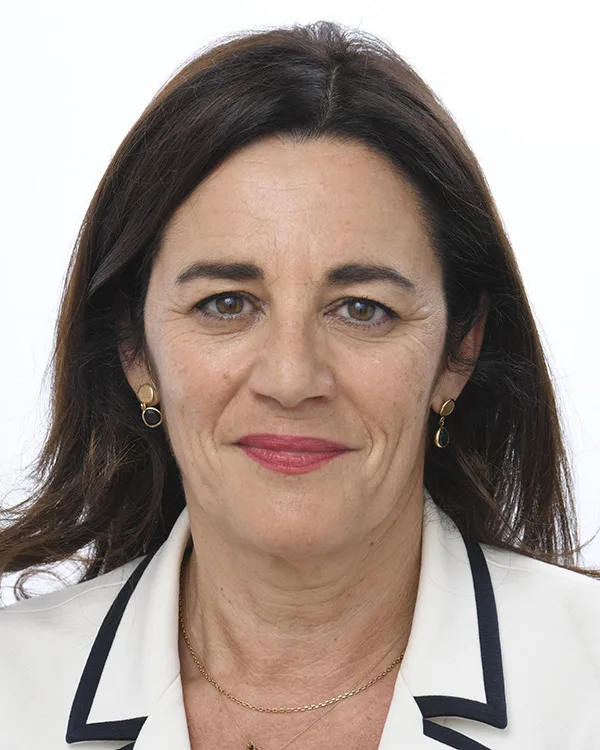

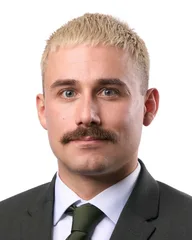
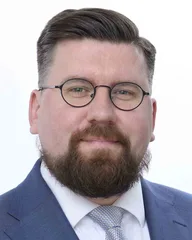
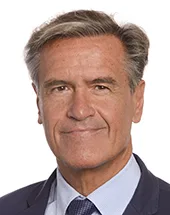
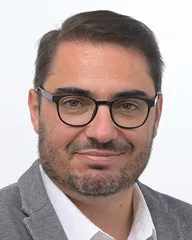
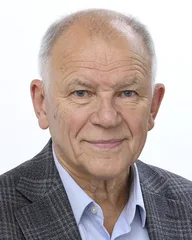
| Rank | Name | Country | Group | Speeches | |
|---|---|---|---|---|---|
| 1 |
|
Lukas Sieper | Germany DE | Renew Europe (Renew) | 487 |
| 2 |
|
Juan Fernando López Aguilar | Spain ES | Progressive Alliance of Socialists and Democrats (S&D) | 454 |
| 3 |
|
Sebastian Tynkkynen | Finland FI | European Conservatives and Reformists (ECR) | 451 |
| 4 |
|
João Oliveira | Portugal PT | The Left in the European Parliament (GUE/NGL) | 284 |
| 5 |
|
Vytenis Povilas Andriukaitis | Lithuania LT | Progressive Alliance of Socialists and Democrats (S&D) | 273 |
All Speeches (61)
Creation of a European initiative for an annual designation of European capitals for children (debate)
Date:
13.03.2024 10:00
| Language: FR
Speeches
Madam President, Commissioner, ladies and gentlemen, the place of the child must be central in our society. We are well aware of this here in the European Parliament. We created the European Child Guarantee in 2021 to fund projects supporting children’s access to all essential services: health, education and good nutrition. But so much remains to be done for children, who are the first victims of poverty and domestic violence. We need to act in the fight against sexual abuse, against incest, for the protection of children online, for digital education. Yes, a capital would be a good initiative, but we must first and foremost make progress on the regulatory and social fronts. I support this idea, but I call for European policies for children to have a real place, beyond the new initiatives, which are struggling to exist. We already have the European Capitals for Youth, but without European funding they cannot develop. Instead, let us give these youth capitals real financial and logistical resources, and then create the European Capitals of the Child.
Mr President, Madam Vice-President, the Media Freedom Act now enshrines the right of European citizens to have free and pluralistic information. This is a major step forward for our democracy. It is also a weapon against disinformation. First, by allowing a quick reaction against foreign propaganda media that threaten our security, such as the Kremlin pharmacies Russia Today or Sputnik News. Then, by making all the transparency on capital structures and concentrations, which are the weapon of illiberal leaders to control the media, and therefore opinion. Finally, by ensuring that genuine news media are better protected against the abusive removal of Facebook, X and other platforms. I am also pleased that this text contains two measures that I was carrying out: a ban on AI-generated content without journalists' control and better consideration of regional media, which are so important for the good information of our fellow citizens.
Mr President, Commissioner, ladies and gentlemen, for a sovereign, innovative and inspired Europe, enlightened children are needed. The role of teachers is obviously crucial, and we must better recognize them, work better for them and with them. This is a serious time. We are going through a vocations crisis, and there are shortages of teachers everywhere, in all European countries. To remedy this, teachers must be trained, supported, and properly paid. If education policies are a matter for the Member States, we can work on them at European level. For the past four years, we have been talking about the European Education Area for common standards in education. Let's do it! We want to digitize all schools, everywhere, in all the most remote areas. Let's do it! We also need to work at European level on guidelines to create new opportunities for teachers – I am thinking in particular of the Tear Academies under Erasmus+ – to share the best in our different countries, to be inspired by each other. Finally, priority must be given to education. This is not an option, but an obligation.
Addressing urgent skills shortages and finding the right talents to boost job creation (European Year of Skills) (debate)
Date:
17.01.2024 21:55
| Language: FR
Speeches
Madam President, Commissioner, ladies and gentlemen, according to Commission data, labour shortages in sectors essential for the green transition doubled between 2015 and 2021. Several factors are involved: unsuitable curricula, a poorly mobile workforce, unattractive training, poor orientation of young people. In France, it is one in two young people who change career paths once they have obtained their professional degree, particularly in the fields of industry. This is proof that there is a lack of alignment between the curricula, the aspirations of young people and the reality of the world of work. I believe that the Erasmus+ programme has a key role to play through alliances of European universities, long mobility of apprentices, but also centres of excellence for learning. In the report on the implementation of the Erasmus+ programme, which we largely adopted yesterday, we call on the Commission to present a clear vision of the future of centres of excellence for learning and alliances of European universities. They must, in my opinion, become the catalysts for the talents of tomorrow and a real tool for long-term skills management.
Madam President, Commissioner, ladies and gentlemen, a month ago I visited India and my political group was the most represented on this official mission. The reason is that we believe that cooperation with India is strategic, and even geostrategic, vis-à-vis China. So, I particularly welcome this balanced report, which highlights the opportunities for stronger relations between India and the European Union, without hiding anything of the progress to be made for the climate and more particularly for human rights. However, one topic I would like to focus on is India’s investment in education. India has 1 400 000 000 inhabitants, 40% of whom are under 25 years of age. It has lifted 400 million people out of poverty in 15 years. And it is now a country of engineers that irrigates the largest US tech companies. Let's take an example and above all strengthen our academic partnerships. Beyond trade, we need exchanges of skills and know-how to innovate in Europe. India is a designated partner and interlocutor.
EU strategy to assist young people facing the housing and cost of living crisis (topical debate)
Date:
13.12.2023 14:00
| Language: FR
Speeches
Madam President, Commissioner, ladies and gentlemen, imagine: you are 21 years old, you find your first job in a remote city, and you have to leave your parents' home. Unfortunately for you, they are not able to help you financially, and housing is rare and expensive. It is a trivial story, too trivial: 80% of 18-24-year-olds and almost 40% of 25-29-year-olds have to stay with their parents, even though access to independence depends mainly on leaving family housing. Not to mention these young people who have to live in unsanitary housing, too small, poorly isolated, for lack of a family solution. That is why, together with my political group, we are making youth housing a priority. In our Renew Pact for Youth, we call for the use of part of the ESF+ for the creation of a housing support programme for young people, in order to cope with overly high bonds and the demand for strong guarantors. Another aspect of the housing crisis that strikes me is that, in recent years, some cities have been calling on students not to come and study at home in Erasmus, as there are no more student housing available. How did we get there? Within the framework of European regional funds, a specific initiative should be set up to support the construction and renovation of affordable student housing in university cities. While the precariousness of young people has increased sharply with the health crisis and inflation, we need to enable young people to start their adult lives in the best possible conditions. Having a place to live, a roof over your head, is the first of these conditions.
Proposals of the European Parliament for the amendment of the Treaties (debate)
Date:
21.11.2023 16:34
| Language: FR
Speeches
Mr President, Commissioner, in June 2022, our Parliament called for the opening of a convention to reform our European Treaties. Today, we are taking a crucial step with the vote on our proposals. "More Europe" and "better Europe" is what we want. This is above all what citizens asked us at the Conference for the Future of Europe. This is the end of unanimity in the Council, it is a stronger Europe, it is a more reactive Europe. Because there are many challenges ahead for Europe: enlargement, European defence, protection of our democratic values, role of the EU in the world. This strong Europe will not happen without united and enlightened citizens. We must give every means to understand our history and our institutions, and to resist nationalist disinformation, from an early age. How can we be Europeans without knowing it? To achieve this, every citizen must have access to a minimum of European civic education in each Member State and this calls for more shared competences in this area. This is a big step we are taking here, with this request, and this is what I have always been committed to.
The new European strategy for a better internet for kids (BIK+) (debate)
Date:
05.10.2023 10:40
| Language: FR
Speeches
Madam President, Madam Vice-President, ladies and gentlemen, 13 is the minimum age for registering on the main social networks used by young people. And yet, for example in France, 63% of young French people under the age of thirteen are present on social networks and 80% of parents say they do not know what their children are doing on these social networks. In Europe, 23% of European children have experienced online harassment. These children are not aware of their visibility or vulnerability online. From their room, on Snapchat, TikTok, Instagram, they navigate unattended in a world whose codes they do not have and whose reach they do not measure. While digital tools are of course an opportunity for them, it is also a very large risk factor: exposure to violent, pornographic, cyber-harassment or risk of child pornography. I therefore welcome the European Commission’s commitment to establish a European standard for online age verification by 2024. This is a complex issue on which France has already started working under its Digital Majority Act of last July. A European framework will therefore be more than welcome. Yes, our children must be able to benefit from digital tools. Depriving them of it would be counterproductive, but the Internet for children must have rules and surveillance measures.
Madam President, Madam Vice-President, ladies and gentlemen, this Media Freedom Regulation is a major step forward in affirming our European values, for the freedom to inform and for the protection of journalists at EU level. Madam Vice-President, we can be particularly proud of this, because it is the victory of our Renew political group. It is at our initiative that European legislation now includes a right for all Europeans to have free, independent and pluralistic information. It is also through our action that we will now be able to investigate media concentrations more effectively and question them, when it comes to the seizure of illiberal powers or private groups seeking dubious influence. I am also particularly pleased that my amendment to ban AI-generated content without human editorial control is now included in this text. This is crucial for the fight against disinformation and the future of quality journalism.
Violence and discrimination in the world of sports after the FIFA Women’s World Cup (debate)
Date:
14.09.2023 10:23
| Language: FR
Speeches
Mr President, Commissioner, ladies and gentlemen, a kiss on the mouth without consent is not a mutual and consensual act. No, Mr Rubiales, this is an intolerable attack. Fortunately, this gesture by the former president of the Spanish Football Federation on Jenni Hermoso was filmed, which earned the international player the support of public opinion. Without it, he would never have resigned, protected by his federation and a sense of impunity that was too entrenched. But how many more silent attacks, how many sportsmen and sportswomen victims of coaches, doctors, abusive supervisors, how many pains stifled by sports federations? However, sexual assault is reprehensible throughout the European Union. It is the omerta that still reigns in sport up to the top of the federations and destroys women and men. The law exists and is not respected. It is up to us parliamentarians to enforce it, to put pressure on major sports organisations such as FIFA, to bring the voices of victims to bear, to promote the feminisation of sports supervision, to promote consent education from an early age, and to harmonise our judicial instruments ever more closely. Because never again must a man smear the victory of women.
Parliamentarism, European citizenship and democracy (debate)
Date:
14.09.2023 09:33
| Language: FR
Speeches
Mr President, Commissioner, ladies and gentlemen, this report on parliamentarism and European citizenship is crucial. On the eve of the European elections, he recalled that this Parliament was the heart of European democracy. He reminded that we MEPs represent citizens directly. But do the citizens know this? How do we empower them to resist nationalist disinformation, the rhetoric that attacks the European Union, yet so protective through every crisis? The solution is in this report: This is European civic education. This is a necessity. How can you know that you are a European citizen if you do not know the functioning of the European Union and its fundamental values? Citizens asked us directly about European Civic Education at the Conference for the Future of Europe. But for everyone to have access to a minimum of European civic education in each Member State, this calls for more shared competences in education, and this is again an objective of this report: go further with institutional reform, including the reopening of the Treaties for an even more effective Europe for our fellow citizens.
This upstream phase, during which all our cultural heritage is accessible, is a big topic. It is questionable what feeds the basics. And then perhaps, because I am not in favour of reopening copyrights, if it is an implicit question, but perhaps for compensation, why not in the form of a tax, which could feed creation and finance real artists for their works in the future?
Mr President, Madam Vice-President, ladies and gentlemen, yes, there is a need for global convergence on generative artificial intelligence, and I welcome the fact that the European Union is taking the lead. The AI act we initiated a few weeks ago will undoubtedly serve as the basis for a global standard. Nevertheless, generative AI poses sectoral challenges, as in the world of culture and creation. How to distinguish a work produced by artificial intelligence from a real work created by an artist with the help of AI? What legal status should be given to these works? How can we ensure that our European creators are compensated for the works that are sucked into the training bases of these models? It is up to us Europeans to weigh in the global debate to reconcile intellectual property, innovation and democratisation. It is up to us Europeans to make culture a leading factor in the global regulation of AI. (The speaker agreed to answer a blue card question)
Madam President, Commissioner, ladies and gentlemen, being able to do a traineeship is a real stepping stone for the future. Yet, too often, young people have to give up internships because they are not paid or not paid enough. All the young people I met, especially during the European Year of Youth and now in this European Year of Skills, make paid traineeships a priority. We heard them. With this report, we therefore call for post-study traineeships in Europe to be remunerated and for traineeships during studies to be compensated for. This is fair, consistent and legitimate. I am therefore very surprised by the amendments tabled by the right-wing Members of our Chamber, and more particularly by the amendments tabled by ID and the French of the Rassemblement National, who nevertheless pride themselves on listening to the social concerns of citizens. Their amendments simply aim to remove this demand for fair remuneration for traineeships. It is appalling, and I sincerely hope that these amendments will be rejected in the vote tomorrow.
Madam President, Madam Vice-President, ladies and gentlemen, the European Union will make a major step forward this week. We are indeed the first institution and the first continent in the world to set rules for artificial intelligence. This text is ambitious; it is the result of two years of work by the Commission and Parliament. It has been put back on the job to respond to the upheavals of generative AI, of which ChatGPT is an example. It will establish responsibilities for designers and suppliers by classifying risks, to guarantee our fellow citizens trustworthy AI, which respects our values. This is a start. This revolution must lead us to almost philosophical reflections on the future of our civilisation. As a humanist, I ask for AI that is always framed by human intelligence. We must be trained to master these tools to innovate and transform our jobs, not to destroy them. We must quickly have a framework for cultural creation that builds on and complements the achievements of the Copyright Directive, so that machinery never replaces what is unique in human sensitivity and that copyrights are preserved.
Fighting cyberbullying of young people across the EU (debate)
Date:
10.05.2023 18:38
| Language: FR
Speeches
Mr President, Commissioner, ladies and gentlemen, the European Union is a pioneer in digital regulation. With the Digital Services Act, we have made illegal online what is illegal offline and we have put net giants – such as Google, Amazon, Facebook, Instagram – under new obligations to ensure that our businesses and citizens can be safe online. Yes, we have strong, unique rules, but one priority remains: Put an end to the law of the strongest. The fight against cyberbullying is an emergency because we are facing real tragedies that we discover too late. What to say to children who are harassed at school and whose ordeal continues at home on the Internet? What to do for teenagers who can be threatened, insulted on social networks, blackmailed, staged in pornographic "deepfakes" as happens to many video game streamers? Finally, what can we say to parents - thank you, Mrs Fox, for your initiative - what can we say to parents whose children have decided to end their lives because of cyberbullying? We now need to move from a state of affairs to a rule of law. This requires a strong will, a European will, because this harassment knows no borders. Yes, the Digital Services Act needs to be strengthened. Awareness of the consequences of cyberbullying must be raised from an early age. Particular attention must be paid to young girls and, above all, to listening to innovation and preparing for the various forms of harassment that will occur, particularly in the context of the metaverse. These challenges call for a strong European strategy that we must ensure to protect our children.
Madam President, Minister, Commissioner, ladies and gentlemen, vocational training is finally regaining its nobility. With this European Year of Skills, of course, but above all with the great changes we are making to reindustrialise our continent and to create the jobs of the ecological transition. We need new skills in building, digital, tourism, industry, energy and transport. Everywhere, there are rewarding career opportunities for young people. This requires companies to engage in mentoring and paid internships. There is also a need to take greater advantage of the opportunities offered by Erasmus, which, it should be remembered, is open to learning and vocational training. To better share our European skills and because the employment pools are on both sides of our European borders. Finally, we are, of course, counting on you, Commissioner, for this Year of Skills to be made up of concrete achievements.
Implementation of the Audiovisual Media Services Directive (short presentation)
Date:
08.05.2023 20:31
| Language: FR
Speeches
Mr President, Commissioner, ladies and gentlemen, the Audiovisual Media Services Directive is a real European success story, a first step towards our cultural sovereignty. By asking streaming giants – Netflix, Amazon Prime, Disney plus, etc. – to highlight 30% of European works in their offerings and requiring them to finance our production, we are formally recognising our audiovisual culture and its ability to shine, gather and move. The icing on the cake is that American platforms have discovered that Europe has talent and they are asking for it again. Today, we must go further, take into account the upheavals in our creative methods such as artificial intelligence, invest in new cultural spaces such as metaverses, these virtual worlds with many challenges. The AVMSD lays down virtuous rules. We can go further in quotas by generalising high levels of funding in all Member States to project our creators and audiovisual to the 21st century.
Question Time (Commission) - Legacy of the European Year of Youth
Date:
18.04.2023 16:09
| Language: FR
Speeches
Madam President, thank you to Mrs Gabriel for that answer. I wanted to bounce back, because I think there are indeed a lot of topics that need to be discussed with young people themselves, especially as we are making the switch today with the European Year of Skills. We have a communication on the whole of the decarbonised industry, with a lot of room for training. I believe that there is room now to include young people in this reflection on the jobs of tomorrow. I wanted to know whether you were already making the link between these two years – because there is so much coherence between them – and in particular by consulting young people directly?
Question Time (Commission) - Legacy of the European Year of Youth
Date:
18.04.2023 16:05
| Language: FR
Speeches
Madam President, Commissioner, ladies and gentlemen, this European Year of Youth, full of promise and so important after COVID-19, leaves me with an unfinished taste. Yes, we have had events, forums, but no concrete progress, no new legislative proposals. Yet there are so many topics: the mental health of young people, the housing crisis, fair remuneration for traineeships, support for settling into working life, equality between women and men... There are many projects and they have already been reminded by young people during the Conference on the Future of Europe. Young people are in demand. I am happy to see so many in this Chamber today. I would also like to return to one point in particular: the clause of a youth pact, the famous Youth Test, which was announced to us by President von der Leyen. It is both a tool for consulting young people ahead of legislative proposals, but also a tool for assessing the impact of European policies on young people. We really need to make sure that we include not only associations, but also young Europeans, even the most remote ones. I wanted to know how you were going to put in place this very important tool to ensure that European policy meets the expectations of young people.
Consumer protection in online video games: a European Single Market approach (debate)
Date:
17.01.2023 12:50
| Language: FR
Speeches
Mr President, Commissioner, ladies and gentlemen, this is the second time in a few weeks that we have had a debate on video games here and it is a very good thing. This sector is booming. It is a particularly important resource for our digital skills, for our cultural industries and therefore for our international influence. It concerns one in two Europeans, which is why we must be very vigilant when it comes to protecting players. The European Union is the relevant level for this – as can be seen from the PEGI system, which clearly indicates the age at which a game is aimed and the nature of its content. We can go further, as this report recommends, to protect minors from potentially misleading business practices. We also need to go further to ensure that women can play in a healthy and respectful world. And yes, we must ensure that business models are virtuous and transparent to users. But we must also go further, more generally, to build a real European strategy in favour of video games. An ambitious and forward-looking strategy that I advocated in a previous report that has been widely voted on here.
Madam President, Commissioner, ladies and gentlemen, yes, it was a good idea to make 2022 the European Year of Youth. I defended this idea when it was presented by President von der Leyen. We were in the middle of COVID. Young people had suffered heavily from confinement in their daily lives. It turned their daily lives upside down. Yes, it was a good idea, but we can’t stop there. So yes, there has been progress. There has been progress in involving young people, but nothing concrete has been achieved. And this is the worst in politics: the unfulfilled promises of those who make the abstentionists, who make the citizens turn away from us. For example, we called for fulfilling the commitments on the Conference on the Future of Europe by consulting young people on key policies that affect and affect them. We expected this announcement during Ursula von der Leyen’s State of the Union address, but it did not come. We have called for a European framework for high-quality and well-paid traineeships. We also called for a framework for youth mental health. Nothing concrete has been announced. So I am particularly proud, together with my Renew Group, my colleagues Dragoş Pîslaru, to have set up a working group that puts young people at the heart of political consultation and our reflections. We're moving forward together. But at the level of the European Union, the work remains to be completed. That is why the European Year of Youth must continue for another six months, and that is what we are calling for in this resolution.
Situation of human rights in the context of the FIFA world cup in Qatar (debate)
Date:
21.11.2022 19:48
| Language: FR
Speeches
Madam President, Commissioner, ladies and gentlemen, yesterday we were hoping for a gesture from FIFA, a tribute to the 6,500 workers who died building in Qatar, in inhumane conditions, disproportionate, air-conditioned stadiums in the middle of the desert. The tribute did not take place. Today, FIFA is putting direct pressure on players to give up wearing a cuff in support of LGBT people, whose rights are being flouted in Qatar. Gentlemen of FIFA, there are limits to compromise. While we should celebrate the great football festival, we are ashamed to live this choice made in 2010 and tainted with suspicions of corruption. It is true that the current FIFA President was not there in 2010. But where are his regrets when he says he wants to open big competitions to countries like, I quote, North Korea? The last World Cup in Russia or the Olympic Games in China did not change anything. But in the end, the World Cup acted as a huge revealer. Qatar’s seduction operation has turned into a global ‘bad buzz’. And the message is clear to FIFA: reform your bodies, reconnect with the values of equality, tolerance, transparency and universality. The true values of sport.
Mr President, thank you very much for your contributions. We can see how the opportunities offered by the sector are attracting interest in all our Member States and at EU level. In conclusion, I wanted to add a final word on the major challenges facing the sector. Some of my colleagues have talked about it. We have the issue of feminisation, which is a key element in video games, as the sector has 50% female players but only 22% female employees. There is no doubt that we must do better. We need to ensure that women have career opportunities in this sector, but also a digital environment that is harassment-free and respectful of EU values – and I know that today our European Union has the tools to do so: we have just had a debate, particularly in France, on the harassment of female streamers, and we are better equipped to combat this phenomenon. Prevention, on the other hand, must remain at the heart of our priorities to ensure that video games remain a pleasure, without content unsuited to the player’s age, and that they do not become isolated in a digital environment. For this, we already have the proven pan-European PEGI system, which must continue to be supported. We must also pay attention to compliance with European rules on unfair business practices. Finally, video games and e-sports must also contribute to the green transition, not only by reducing their CO2 emissions, but also by using the power of this medium to educate and raise awareness among players – we know that the immersion value of video games can deliver a lot of messages. We are therefore convinced that: video games and e-sports are assets for the future. The European Union, by taking its digital destiny into its own hands through more investment in this sector, will be able to give a true European culture to the digital worlds.
Mr President, Commissioner, ladies and gentlemen, just fifty years ago, a very simple pattern appeared on screens all over the world: they were two vertical bars and a pixel moving between them. The concept of this game – it was called – was very simple: return the ball and score as many points as possible against his opponent. This simple game marked the beginning of the video game revolution. Fifty years later, video games have become a major industry for Europe, worth €23 billion and employing nearly 100,000 people. Video games are the most dynamic sector in our cultural and creative industries, the only one that has grown during the COVID-19 period. Video games have become an essential cultural practice for one in two Europeans and a full-time profession for e-sports professionals. However, we still do not have a European vision for this sector. Therefore, we, the European Parliament, are today formally calling for a European strategy for this sector, a strategy to promote an industry that has constantly reinvented itself artistically. Because yes, video games are an art, and even a total art. It develops unique narratives, often based on our European history. He calls on graphic designers, musicians of great talent. It is also a mine of technological innovations. From virtual reality to metaverse architecture, it contributes to our digital sovereignty. Thousands of successful video games are developed every year by European companies and are highly successful internationally. The Witcher, Assassin’s Creed, A Plague Tale, Minecraft: we can do more to make our nuggets known to the world, with – why not? – the creation of a European video game label – this is a recommendation. We must also have a strategy to protect. Protecting our games, studios, talent and publishers, fostering European investment. Many of our companies, like many in the cultural and creative sector, have strong growth potential, but are the target of foreign buyouts due to the lack of European investors. I welcome the Media Invest plan announced by the European Commission, but, I repeat here, there is an urgent need: In the period of consolidation that we are going through, our video games are strategic cultural assets, and they must remain in the European fold. We also need a strategy to educate, because video games are a great medium, which, when combined with educational programmes, make learning easier at any age, for young and old alike. It gives taste to scientific knowledge, but also to reading. Thus, the European Union needs a European strategy for video games, but it should also have a common approach to e-sports, because e-sports is a discipline in its own right, unlike any other. It brings players together around the same passion: practice video games in competition. More than in any other discipline, Europe transcends borders. It is therefore logical for the EU to embrace this phenomenon by promoting our European values, by giving a fair place to women, by providing clear rules on the status and visas of professionals. I am particularly pleased to see that global competitions are planned for 2023 on our continent. But we can do even better, insisting on the role of cities and regions to develop a new leisure offer for more and more players and thereby develop their attractiveness. Colleagues, I would like to thank the CULT Chair for her support and the shadow rapporteurs for their work. Video games and e-sports have important economic and societal challenges to address. Thus, with this report, we mark the first step towards genuine consideration of the sector at European level.